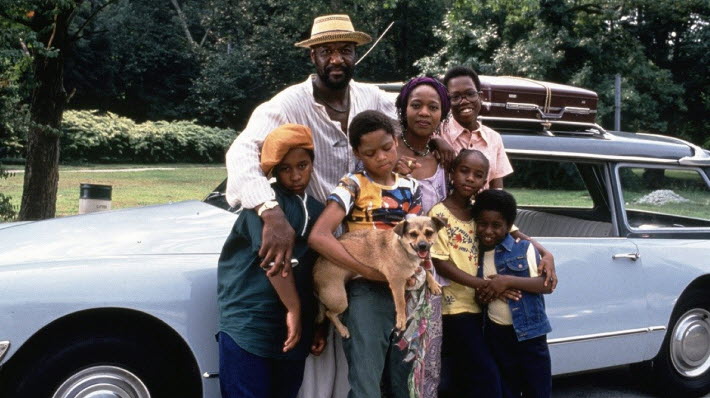
Spike Lee’s 1994 film “Crooklyn” is a little but charming family drama which is often interesting for its semi-autobiographic elements. Written by Lee and his two siblings Joie Susannah Lee and Cinqué Lee, the movie certainly feels quite personal in many of its intimate human moments, and we observe these lovely moments with some amusement and interest as appreciating more of the tender and sensitive sides of Lee’s storytelling skill.
Although the movie does not specify much of its period background, it does not take much time for us to see that the story is set in the Bedford–Stuyvesant neighborhood of Brooklyn, New York City around the early 1970s. During the opening scene, the movie gives us a series of cheerful moments showing kids playing here and there in the neighborhood, and the lightweight spirit of this scene will probably make you reflect a bit on how things became worse there during the next several decades due to poverty, crime, and drug.
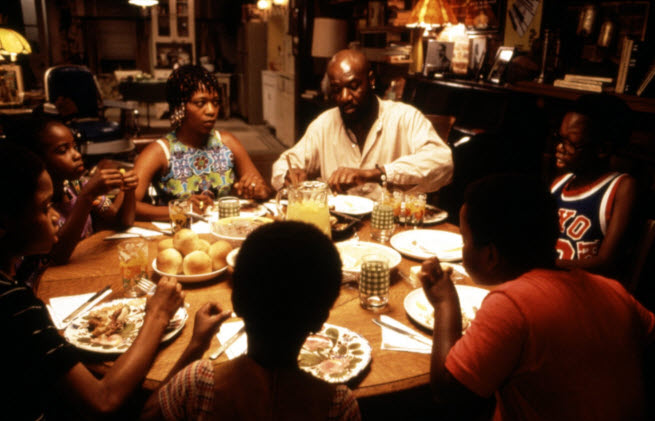
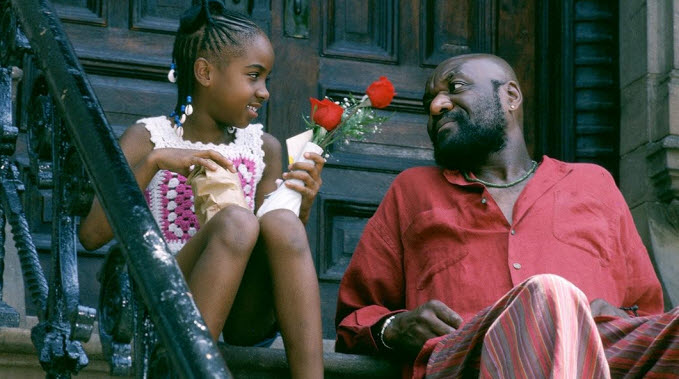
Well, things can often be bad for a young black girl named Troy (Zelda Harris ) and her four boisterous brothers due to their rather poor domestic environment, but their parents try their best for their children. While Woody (Delroy Lindo) is a musician struggling for any chance for career breakthrough, Carolyn (Alfre Woodard) works as a schoolteacher, and it is apparent to us from the beginning that she is the one taking care of almost everything in their house including paying all those bills. In fact, she often finds herself over-exhausted throughout the story, and there are a couple of intense moments when she reaches to a sort of breaking point.
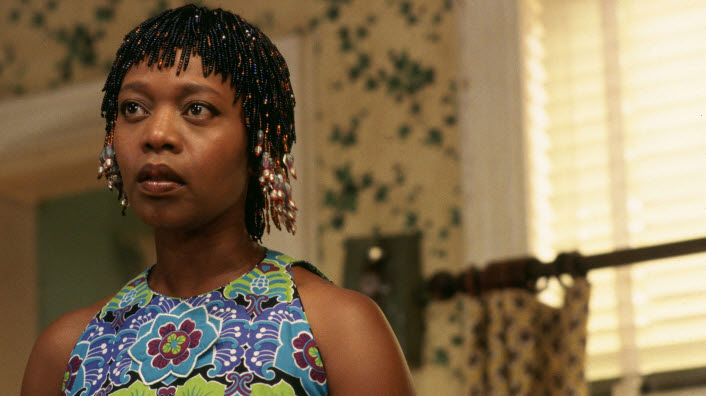
Nevertheless, she and her husband have taken care of their children fairly well on the whole. While Woody is more or less like a jolly big brother for their children, Carolyn alternates between loving care and some tough love, and she also loves her husband dearly even though she often finds herself quite frustrated with him usually paying more attention to his career than earning enough for paying the bills.
Meanwhile, we see more of how Troy and her four brothers spend their ongoing summer days in one way or another. While her four brothers often hang out with other local boys, she mostly spends time with other local girls, and there is a little amusing moment when the boys clash with the girls a bit due to a little mean prank committed by the former. In their house, they usually get together for watching TV in the evening, and that is certainly not approved much by their parents.
Although the movie does not make any direct point, these and many other little comic moments in the story indirectly remind us more of how the American society has become quite harsh and dangerous for black people and their kids during last 40 years. For example, when Troy attempts a bit of shoplifting at a local bodega at one point, we cannot help but become a bit nervous, but she only gets mildly reprimanded when she soon gets caught by the bodega owner. If you are familiar with the killing of Latasha Harlins in 1991 and many other similar tragic cases out there, you will certainly observe this rather humorous moment with some bitterness.
And there is also a subplot involved with a rather disagreeable white neighbor living right next to Troy and her family. Although this dude often clashes with not only the kids but also their parents, this conflict fortunately does not lead to any serious outcome in the end. There are some arguments between Troy’s parents and him, but, to my little relief, he does not commit any physical violence at least. If you watched recent Oscar-nominated Netflix documentary “The Perfect Neighbor” (2025), you know how such a situation like this can become a lot worse in our time.
Later in the story, the movie stumbles a bit when Troy comes to spend several days in the house of her affluent relatives living outside New York City. Just for emphasizing her sense of disorientation caused by their luxurious environment, Lee uses a deliberate visual distortion which may make you check your TV or projector right from the beginning. I understand his intention to some degree, but this often distracted me more than once during my viewing, and that is where my level of interest was decreased.
Nevertheless, the good performances from the main cast members of the film kept holding my attention. As Alfre Woodard and Delroy Lindo diligently hold the ground as required, Zelda Harris and several other young performers are natural in their interactions, and we instantly accept them as siblings who have closely been living together for years. Woodard, who has seldom disappointed us for more than 40 years, is particularly good as subtly suggesting her character’s frequent exhaustion and frustration, and Lindo, who recently got some belated recognition at last as shown from his Best Supporting Actor Oscar nomination for Ryan Coogler’s “Sinners” (2025), is also wonderful as ably handling his own little but crucial moments around the end of the story.
Overall, “Crooklyn” is not on a par with Lee’s best works such as, yes, “Do the Right Thing” (1989), and it is still worthwhile to watch for its funny and touching individual moments. Although I have no idea on how much the movie actually overlaps with Lee and his other siblings’ childhood, I think I came to learn a bit about their early years, and that was a pretty interesting experience in my humble opinion.