
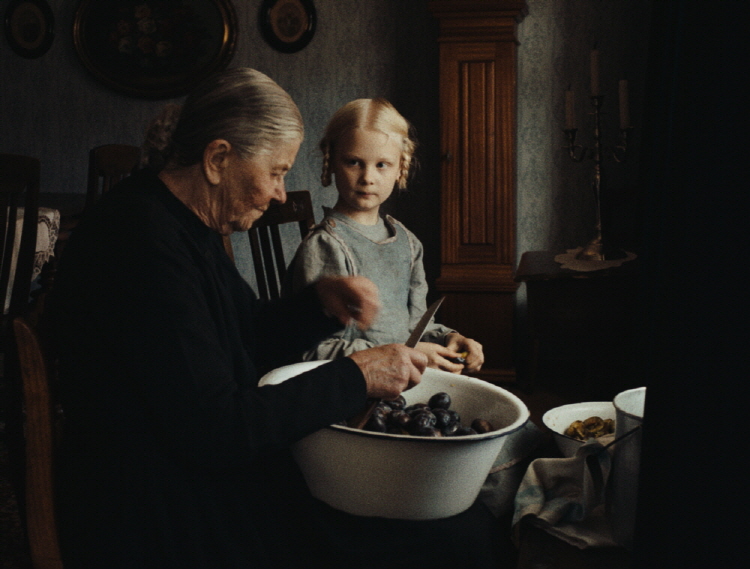
“Sound of Falling”, which was selected as the German submission to Best International Film Oscar in this year and then was included in the shortlist several days ago, is quite subtle and elusive about what it is about. This may baffle and frustrate you a lot throughout its first hour, but then you may gradually come to behold its indirectly disturbing presentation of female repression, and this may linger on your mind for a while once it is over.
The main background of the film is a farm in some rural region of Germany, and the movie shuffles several different female perspectives along the story. At the beginning, we are introduced to a young woman named Erika (Lea Drinda), and the opening scene shows a bit of her rather morbid behavior involved with her older brother. The movie subsequently shows how she and her big family lived around the late 1910s, and this is mainly presented via the innocently limited viewpoint of Erika’s younger sister Alma (Hanna Hekct).
Through the viewpoints of these two different young girls, we gradually get to know how things can be pretty oppressive for women during their respective periods. Although the movie does not emphasize anything at all, many females around them including their mother and maids are apparently repressed by their patriarchy system in many aspects, and this is exemplified well by their mother’s rather alarming medical symptom.

Meanwhile, the movie also adds two other different perspectives from different periods. One belongs to an adolescent girl named Angelika (Lena Urzendowsky), who is incidentally one of the descendants of Alma and Erika’s family. We gradually gather that her era is around the 1980s, and we also come to see how problematic her situation is. Like many other young boys and girls around her, she wants more freedom, but that seems virtually impossible mainly because she and her family are living in East Germany, and then we come to sense that she has actually been sexually exploited by one of her adult relatives.
The other perspective belongs to a young girl named Lenka (Laeni Geiseler), who is entering her adolescent period around the 2010s. Under her fairly open-minded parents, she and her several siblings seem to live a fairly good life in the farm, but she often feels unhappy and disaffected, and, to her frustration, nobody pays any particular attention to her growing discontent.
As freely juggling these four different perspectives along its free-flowing narrative, the movie slowly makes its point via small individual moments to notice and observe. While she does not know or understand whatever she happens to observe or witness, Alma’s rather innocent viewpoint often sharply conveys to us the toxic influence of the patriarchy system surrounding her and many other females around her, and this often resonates with all the systemic repressions Erika and many other women around her have to cope with in one way or another. In case Angelika and Lenka, things may look relatively better for them, but they also have to deal with each own female issues because of that lasting influence from the patriarchy system.
Never underlining its points at all, the movie frequently unnerves and then engages us via its exquisite sound design. As the sound effects of the movie are often dialed up or down throughout the film, we come to pay more attention to whatever is going on beneath or outside the screen, and the remarkable overall aural effect of the movie is sometimes reminiscent of Jonathan Glazer’s exceptional Oscar-winning film “The Zone of Interest” (2023), which frighteningly conveys to us the banality of evil right next to Auschwitz via a similar aural approach. Although the presentation of evil in “Sound of Falling” is more subtle in comparison, we gradually come to sense it thanks to the competent direction of director/co-writer Mascha Schilinski, who incidentally won the Jury Prize when the movie was premiered at the Cannes Film Festival early in this year (The movie won the award with Oliver Laxe’s “Sirāt” (2025), by the way).
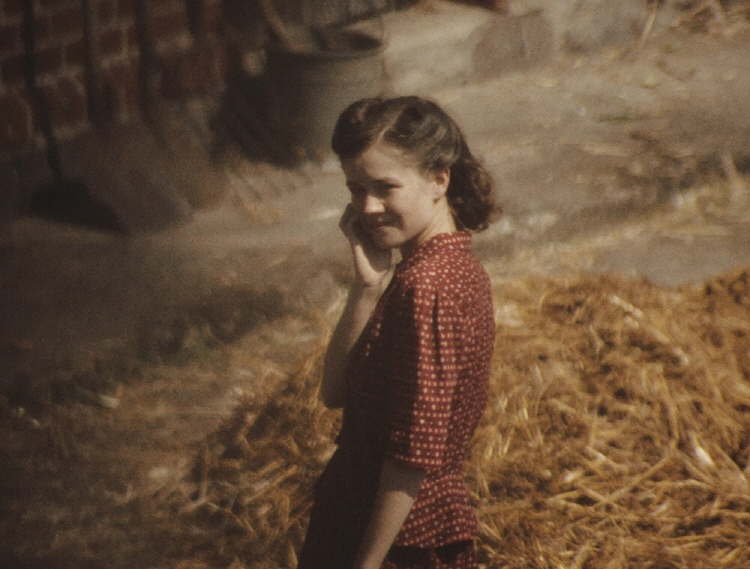
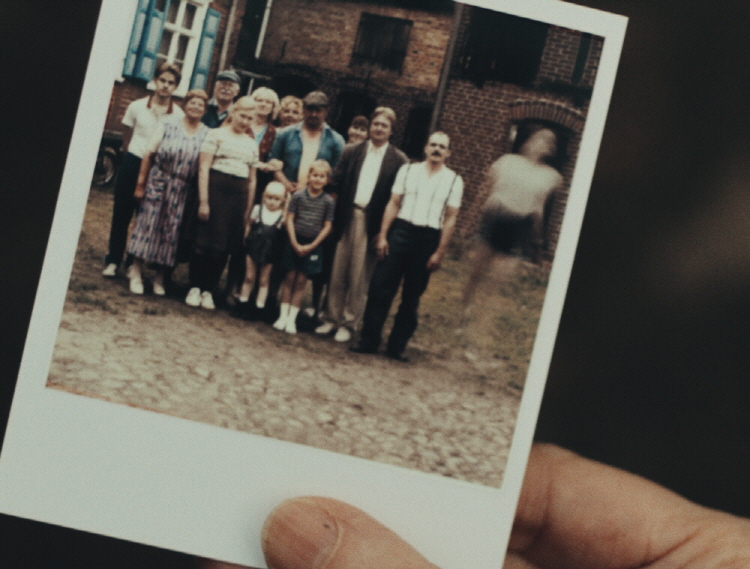
While firmly sticking to its clinical attitude from the beginning to the end, the movie shows a bit of poignancy from time to time. There is a distant but undeniably harrowing moment involved with one of Alma’s older sisters, who is cruelly victimized by her patriarchy system. When Angelika comes to join her many other family members including her sexual abuser for a group photograph, she becomes all the more tormented than before, and that leads to one of the most haunting visual moments in the film.
I must confess that I felt rather impatient with its glacial non-linear narrative more than once when I watched the movie during this afternoon. I am still not so sure about whether I understood everything in the film, but I also admire what is so strikingly achieved by Schilinski and her crew members including cinematographer Fabian Gamper and editor Evelyn Rack. They try to create a unique presentation of the persistent female repression under the patriarchy system, and I think they succeed fairly well even though the overall result is a bit too cold and distant for us at times.
Anyway, I recommend “Sound of Falling” mainly for its distinctive mood and style, and I am willing to revisit it soon for more understanding and appreciation. To be frank with you, I was not so surprised to see several audiences walking out of the screening room during my viewing, but the movie is much more interesting than that new Avatar flick at least, and, in my inconsequential opinion, you should give it a chance if you are open to any new cinematic possibility out there.


 Seongyong's Private Place