
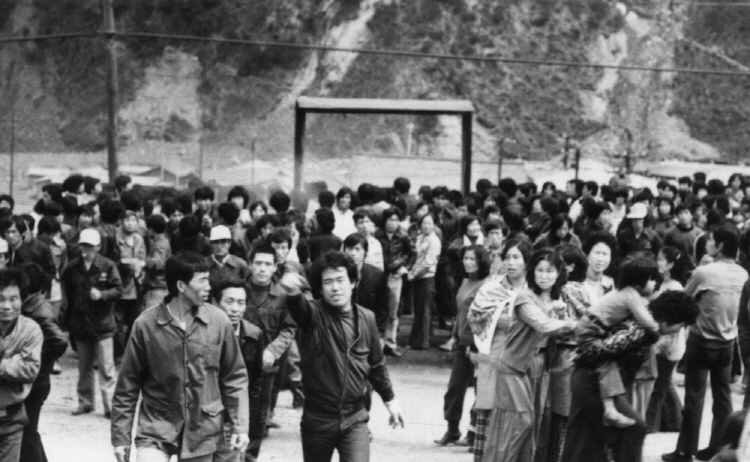
South Korean documentary film “1980 Sabuk” is about one large-scale labor uprising which happened in one little rural coal mine town in April 1980. Although the incident is almost forgotten at present, there are still many people who remember well what happened at that time, and the documentary focuses on their painful past as patiently presenting its big picture of systemic violence and injustice.
The documentary mainly revolves around the personal research on the incident by a friend of director Park Bong-nam. His friend is the son of a coal miner who worked in the big coal mine in Sabuk, Jeongseon County, Gangwon Province during the 1970-80s, and the documentary consists of the testimonies from various interviewees approached by him and Park during the production of the documentary.
At first, we get some background knowledge on that big coal mine in Sabuk, which was incidentally one of the largest ones in South Korea during its peak period. In this coal mine, around 3,000 coal miners worked day by day, but their working and living conditions were pretty poor to say the least. Besides not getting paid enough for their mostly relentless labor accompanied with a lot of risk and danger, they were mistreated a lot inside and outside their coal mine, but their employer did not do anything to improve their living and working conditions at all, even while earning a lot of money thanks to its greedy labor exploitation.
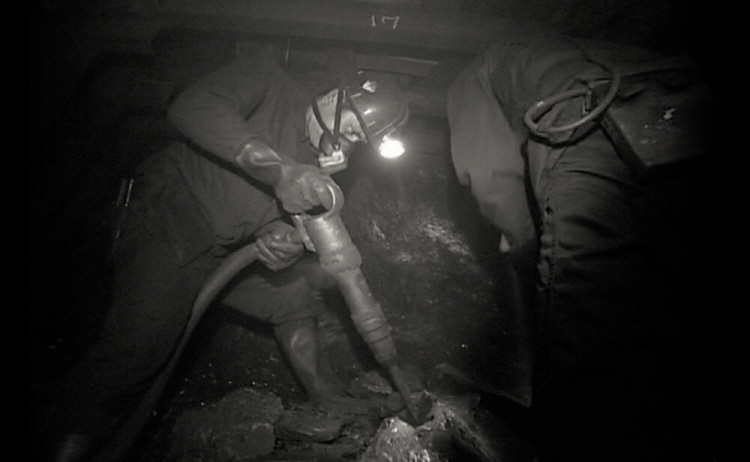
They did have a local union at that time, but the union and its leader, who had occupied his position for a fairly long time, were not exactly helpful to them, and that made them all the more frustrated and exasperated. In the end, there came a breaking point not long after that union leader got unfairly elected again, and many of the coal miners decided to fight against not only their employer but also the local police as defiantly shutting down their coal mine.
Via several interviewees who worked there at that time, the documentary tells us how volatile their situation was. They and many other coal miners clashed a lot with a bunch of policemen sent there for suppressing the uprising, and the consequence of this clash was quite devastating. As many coal miners violently tried to stop those policemen from entering their coal mine, many of the policemen were seriously injured, and one of them actually died. At one point in the documentary, an old man who was incidentally one of these policemen still vividly remembers that chaotically violent moment, and you can sense how traumatic it still is for him, though, as a guy who was also the son of a coal miner, he also understands well how desperate the coal miners were at that time.
Shortly after this serious clash between the coal miners and the local police, the South Korean government became more willing to squash the uprising by any means necessary, and the timing was not so good for the coal miners to say the least. When President Park Chung-hee was killed in October 1979, it initially seemed that the South Korean society would have a belated chance for democratization after many years of military dictatorship, but there soon came another military dictator who took over the South Korean government via his swift coup d’état a few months later, and this deplorable figure certainly did not welcome the uprising at all.
Thanks to the sincere efforts from the governor of Gangwon Province, the coal miners managed to get their several demands accepted after some negotiation a few days later, and their coal mine soon got back in business, but then, not so surprisingly, there came the brutal retaliation from the local police and the South Korean government. During next several weeks, those soldiers and policemen took away any person possibly associated with the uprising in one way or another, and those arrested coal miners and town people had to endure a lot of barbaric torture inside the local police station.
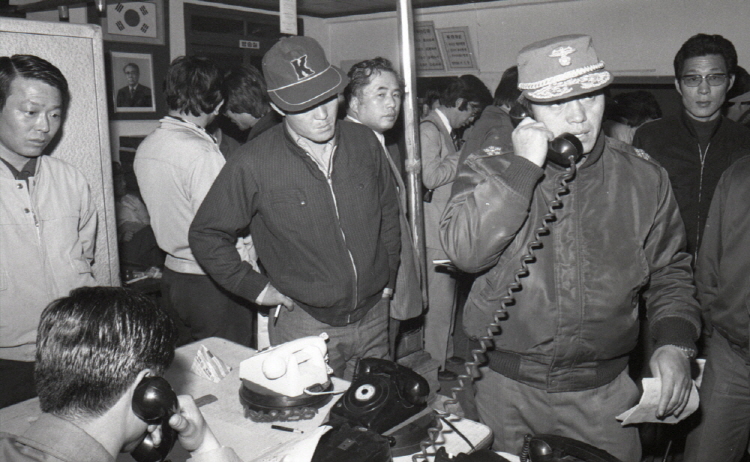
A number of survivors of this grim and horrific period phlegmatically talk about their respective experiences of torture, and their testimonies are quite harrowing to say the least. As they got cruelly tortured a lot, they were forced to say whatever their torturers wanted before eventually getting imprisoned during several years, and their minds and bodies are still reeling from what they had to endure during that time.
The documentary also pays some attention to many female employees and town people who were also tortured during that time. In case of one old lady, the documentary later presents a devastating testimony video clip of hers, and it is sad to see that she never received any official apology from the South Korean government or the local police before her death in 2019.
And there is also the wife of that union leader, who was unfortunately lynched and then held as a hostage by the coal miners during the uprising. From the coal miners’ viewpoint, her husband was responsible for what caused the uprising to some degree, but it is inarguable that she is also a victim as much as many other coal miners and town people, and you will empathize with her two sons as they bitterly and angrily talk about how much their family was devastated by the uprising and its following consequence. As briefly and sharply pointed out around the end of the documentary, the employer and the South Korean government are the ones truly responsible for all those enormous human pains and torments during the uprising and its aftermath, but neither of them has given any public apology yet even at this point.
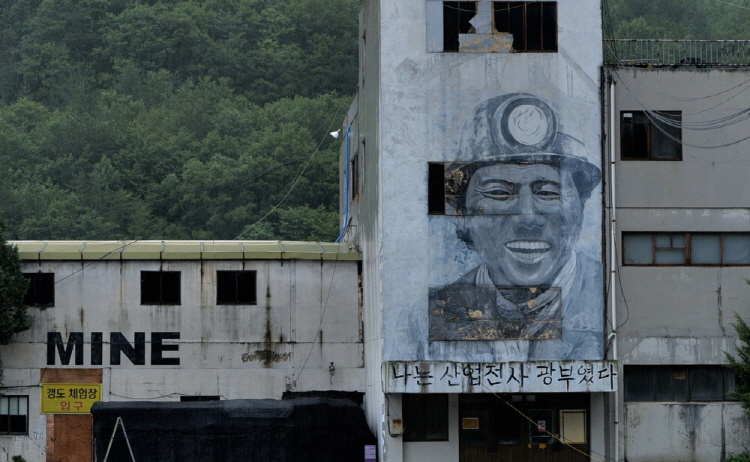
On the whole, “1980 Sabuk” is a modest but powerful documentary which did a commendable job of illuminating another hidden part of the South Korean labor history during the late 20th century. Now Sabuk is just a small plain rural town after its coal mine was eventually shut down in 2004, but the documentary vividly shows us how its painful history remains quite alive with the survivors of the uprising even at this point, and that will surely lead you to some serious thoughts after it is over. In short, this is one of the best South Korean documentaries of this year, and I sincerely recommend you not to miss a chance to watch this haunting documentary.









 Seongyong's Private Place