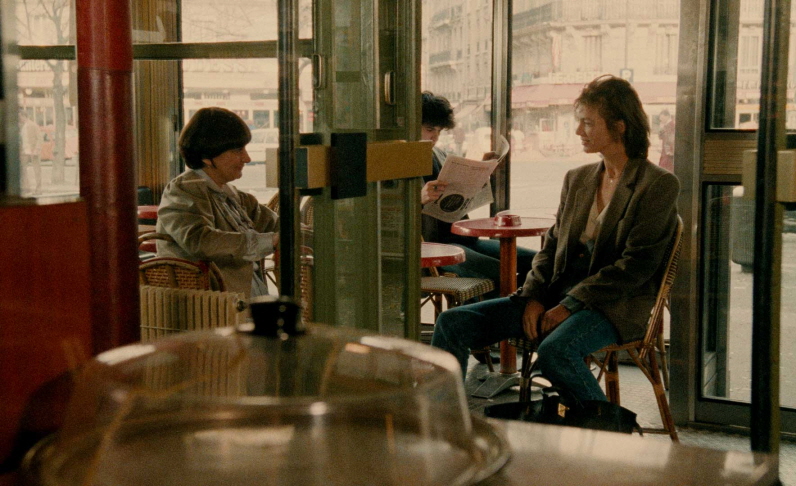
Jane B. for Agnes V. (1988) ☆☆☆(3/4): When Birkin and Varda played together

Agnès Varda’s 1988 docudrama film “Jane B. for Agnes V.”, which happens to be released in South Korean theaters a few weeks ago, is a charming playtime between its director and Jane Birkin, who also appeared in Varda’s another film “Kung Fu Master” (1988). As freely and spontaneously flowing from one moment to another, the movie is often brimming with an ebullient sense of fun around its two central figures, and we gladly follow their fun time even though occasionally baffled by its free-flowing style.

The film, which was produced along with “Kung Fu Master” as its sister project during that time, was conceived simply because of Varda decided to make a portrait of Birkin’s life and talent after Birkin confided to Varda on her growing concern on becoming 40. While Birkin might not be a great actress, she did have presence and talent as a photograph model who also appeared in a number of notable films such as Michelangelo Antonioni’s great classic film “Blowup” (1966), and Varda was willing to capture more of Birkin’s life and talent via her little impulsive personal project.

At first, Birkin tells a bit about her early years and her husbands and children, but the film soon comes to shift its focus more on her acting talent, and we are accordingly served with a series of creative moments generated from her frequent interactions with Varda throughout the film. While there are several loving moments which show the natural grace and beauty of Birkin as a photograph model, there are also some amusing scenes where she lets the line between fiction and reality blurred a bit in front of the camera, and Varda often adds humorous touches such as a big pink ribbon put upon an old house to be explored by them.
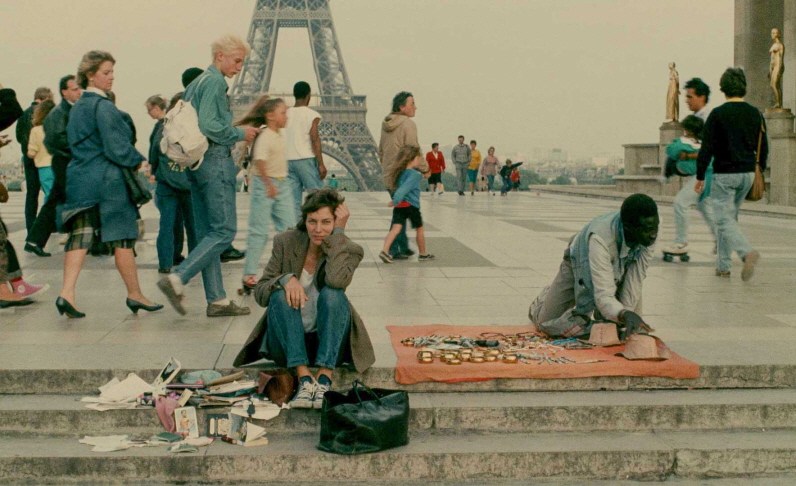
You may be confused a bit as Varda and Birkin casually hop from one scene after another without any apparent narrative direction, but you will probably admire the considerable spontaneity of their creative process. Whenever an idea comes upon them, they promptly embark on developing that impulsive idea in the very next scene, and I particularly enjoyed a little impromptu comedy sketch scene which is clearly a homage to Laurel and Hardy. While they may not be that good at comedy, Varda and Birkin willingly throw themselves into a series of silly comic moments, and we accordingly get a fair share of amusement from their joint efforts.

In addition, Birkin and Varda also try a bit on crime noir film around the beginning and end of the film. I must say that Varda is not exactly a suitable filmmaker for this genre while Birkin is not a very good action movie performer either, but I am sure that they were giddy about shooting a couple of action scenes featuring lots of gunshots and some fake blood. Yes, the result is quite rudimentary to say the least, but their joy of filmmaking behind and in front of the camera is palpable to us at least.

Birkin and Varda also talk a bit about which performer Birkin is eager to act with. Because Birkin’s No.1 pick, which is a certain famous American actor, is too expensive to recruit, Varda and Birkin consider several alternatives, and their eventual choice gives another inspired moment in the documentary. When Birkin later suggests making a short film about an adult woman attracted to a young adolescent boy, Varda recommends her young son Mathieu Demy, who incidentally appeared along with Birkin in “Kung Fu Master”, but both of them eventually decide that their story material is too uncomfortable to handle.
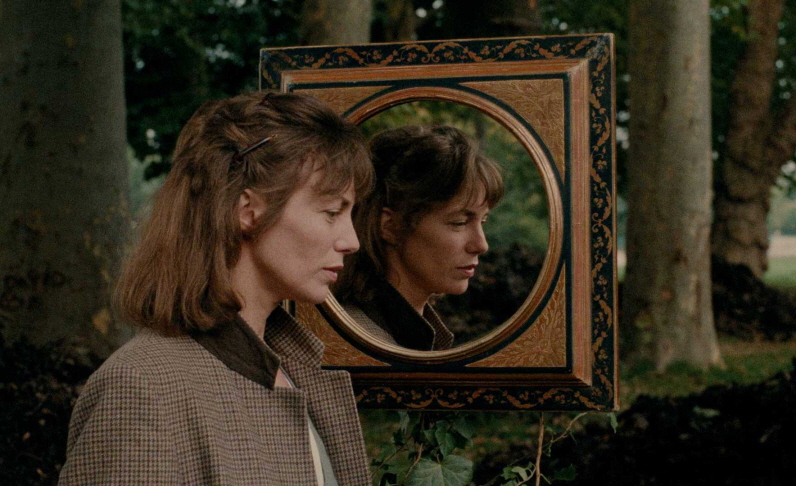
Although the film seems to be running out of ideas around its last several segments, the mutual admiration between Varda and Birkin keeps things rolling as before. As an actress and a filmmaker, they naturally discuss on the relationship between artists and their Muses at one point, and they come to respect each other more around the end of their creative journey. Yes, Birkin would get aged more and more as time passed by during next 35 years, but Varda gave a sincere tribute to her undeniable beauty and talent, and she was right when she told Birkin that it was the perfect time for that (However, Birkin’s daughter Charlotte Gainsbourg did not like much Varda and her crew camping in the family home for making the film and “Kung Fu Master”.)

In the end, Varda gives a wonderful gesture of affection as congratulating another birthday of Birkin, and this moment feels more poignant at present. Now both of these two wonderful female artists are not with us anymore, and the film becomes a time capsule recording the prime periods of their respective artistic careers. Because I remember Birkin, who sadly passed away in last year, mainly for “Blow Up” and that brief appearance of hers in Hong Sang-soo’s film “Nobody’s Daughter Haewon” (2012), I was entertained by watching Birkin trying many other things in front of the camera, and Varda, who died in 2019, always delighted me whenever gamely appearing along with Birkin on the screen.

Although it is relatively less impressive than Varda’s similar subsequent works such as “The Gleaners and I” (2000) and “Faces Places” (2017), “Jane B. For Agnes V.” is still engaging thanks to its bouncing charm and spirit. Although I belatedly came to know about Varda’s works around the late 2000s, I admired her more and more as watching more of her works, and this modest but likable film reminds me again that she was too great to be merely remembered as the “Grandmother of the French New Wave”. As Martin Scorsese once said, she was indeed “one of the Gods of Cinema”, and I am glad to watch one of her films on the big screen today.

Posted in Movies | Tagged , , , | Leave a comment

American Fiction (2023) ☆☆☆(3/4): A little mild satire to enjoy

“American Fiction”, which won the People’s Choice Award when it was shown at the Toronto International Film Festival in last year and then garnered five Oscar nominations including the one for Best Picture in last month, is a little mild satire to enjoy. As a foreign audience outside US, I am not totally sure about whether I understand all the nuances and details in the film, but I was often amused by a number of acerbic moments in the film, and my only complaint is that it does not push its story and characters further for more laughs and insights.

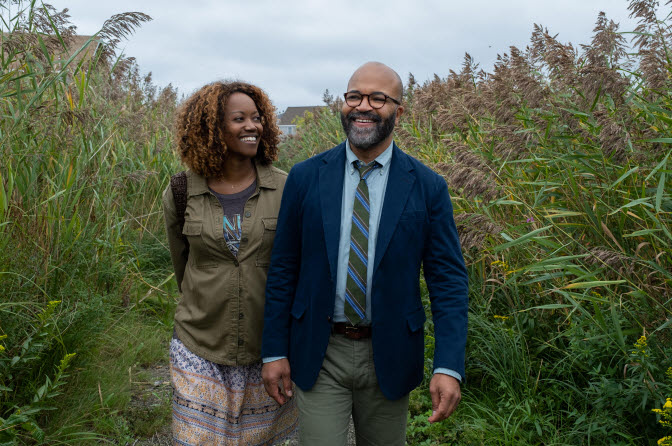
Jeffrey Wright, an ever-dependable African American actor who finally received an overdue Oscar nomination for this film after many years of variously wonderful performances such as his memorable breakout turn in Julian Schnabel’s “Basquiat” (1996), plays Dr. Thelonious “Monk” Ellison, a black writer/professor who has taught literature in LA. Although his novels have received enough acclaims and he has been known well in his field, they sadly do not sell that well in public, and he becomes all the more frustrated when his latest manuscript is rejected for not being “black enough”.

After one unpleasant incident in the middle his lecture, which is involved with that six-letter racist word I cannot possibly type here, Ellison is virtually forced to take a break, and then he goes to Boston for not only attending a literary seminar to be held there but also visiting his upper-class African American family. Although he has not been particularly close to his family, his gradually senile mother welcomes him nonetheless along with her longtime housekeeper, and so does his medical doctor sister Lisa (Tracee Ellis Ross).

While reminded again of how distant he has been to his family especially after one unfortunate incident, Ellison also becomes quite frustrated as seeing how obscure he and his novels are at that literary seminar. As a matter of fact, many people at the seminar are more drawn to an African American female writer named Sintara Golden (Issa Rae, who brings a lot to her rather under-developed role) for her latest novel about African American ghetto life, and this pisses off Ellison a lot. In his opinion, African American writers definitely have the rights to write and publish any other things besides those “black trauma porns”, and, alas, many non-black readers are understandably more drawn to such ones like Golden’s novels, while Ellison’s books are not even regarded as a part of African American literature.

In the end, Ellison decides to throw a little naughty joke to many readers and publishers out there. Hiding behind a pseudonym, he casually writes “My Pafology”, a deliberately “black” novel which is not so different from Golden’s popular novels in terms of language and texture. Although he intends to write a very bad novel, he cannot help but driven by his writer’s instinct, and we accordingly get a humorous moment when he tries to imagine the dialogues for his two main characters broadly played by Keith David and Okieriete Onaodowan.

Without much expectation, Ellison hands his supposedly trashy novel to his agent, but, what do you know, it turns out to be a huge success beyond their imagination. A major publishing company instantly approaches to him and his agent with a considerable amount of cash, and Ellison cannot say no easily because he happens to need the money right now for moving his mother to a fairly nice facility for old people.

As Ellison struggles to handle this unexpected consequence which keeps going out of his control, the screenplay by director/writer/co-producer Cord Jefferson, which is based on Percival Everett’s book “Erasure”, doles out one sharply humorous moment to another. Once he makes a deal with that big publishing company, Ellison has to assume a certain African American stereotype for covering up himself more, and that certainly annoys and frustrates him a lot. Sure, there comes a point where he decides that enough is enough, but then the people of that big publishing company are so eager to publish his novel that they even willingly accept the new title of the novel deliberately demanded by him to our little amusement (Again, I cannot possibly type it here in this review).

In the meantime, the movie also pays considerable attention to what is going on in Ellison’s private life. His plastic surgeon brother Cliff (Sterling K. Brown), who got recently divorced after his ex-wife found out his homosexuality, causes another headache for Ellison as carelessly throwing himself more into hedonistic lifestyle, and that leads to more conflict between him and Ellison. In addition, Ellison comes to befriend a woman who lives right across from his family beach house, and we get a few tender moments as he opens up himself a bit more to her. Although this part feels relatively weak compared to those satiric moments in the movie, Wright ably provides the ground for his several fellow cast members, and Tracee Ellis Ross, Erika Alexander, Leslie Uggams, and Sterling K. Brown, who receives a Best Supporting Actor Oscar nomination for this film, have each own moment to shine.

Overall, “American Fiction” works as a witty and intelligent satire supported well by its competent direction and a number of solid performances including Wright’s stellar acting. It could be more acerbic and hilarious, and I do not think its finale works as well as intended, but it made me reflect more on my own experience with African American literature at least after I watched it at last night. It did its job anyway with interesting stuffs to be savored, and I may enjoy it more when I revisit someday.
Posted in Movies | Tagged , , , | 1 Comment

Ferrari (2023) ☆☆☆(3/4): Calm and detached just like its hero

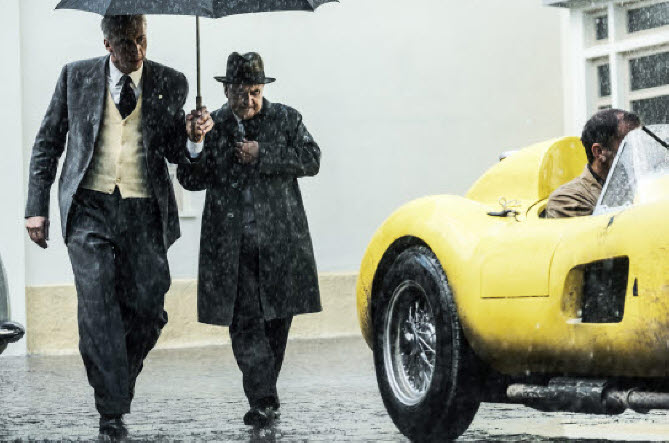
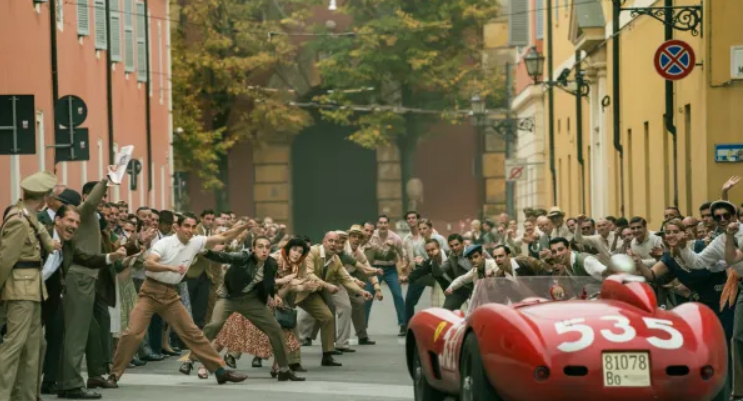
Michael Mann’s new film “Ferrari” is calm and detached just like its hero, who builds a wall around whatever he feels and thinks inside as he says at one point in the story. As a sort of antithesis to James Mangold’s “Ford v Ferrari” (2019), the movie is more like a distant character study rather than an exciting sports drama movie, and it fortunately has enough style and personality to hold our attention despite a number of narrative deficiencies.

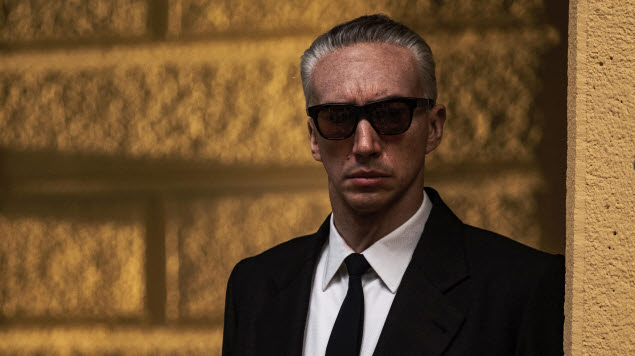
Adam Driver, who has been one of the most interesting new American actors as appearing in a number of acclaimed films such as Jim Jarmusch’s “Patterson” (2016), plays Enzo Ferrari, who founded the Italian car manufacturer Ferrari S.p.A. in 1947 along with his wife. The story, which is set in the middle of the summer of 1957, opens with Ferrari quietly waking up and then leaving for his work, and the movie subsequently observes him and his associates paying attention to a certain important event associated with their main competitor while attending a Catholic mass along with many others as required.

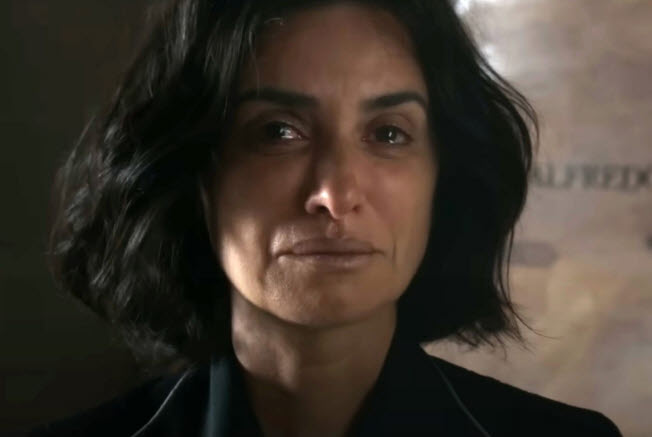
Once their main competitor succeeds with a new record via their latest sports car, Ferrari and his associates instantly embark on beating their main competitor as soon as possible, but things do not look that good for Ferrari and his company. Besides losing its top racer due to an unfortunate accident, his company has been mired in a serious financial trouble despite the diligent efforts of his wife/business partner Laura (Penélope Cruz), and it is undeniable that the company needs a considerable amount of capital to avoid the possible bankruptcy right now.

Of course, drawing more capital for the company requires more promotion via winning at those prestigious car races, and Ferrari is certainly well aware of that. While ridiculed and criticized by the media for a series of recent unlucky events striking his company, he is more determined to beat his main competitor at the 1957 Mille Miglia because that will draw more attention from those possible financial backers out there. Everyone around him naturally worries about this risky business gamble, but he remains calm and focused as before, and we later get a quietly intense moment when he coldly criticizes his racers for not having enough grit and determination compared to the racers of his main competitor.

Meanwhile, Ferrari also has to handle a big private matter in his life. Although he is technically married to his wife, they have been quite distant to each other mainly due to their grief on the recent death of their only son, and Laura does not mind him having affairs behind his back as long as he keeps his appearance in front of her and his old mother. However, Ferrari has been deeply involved with a woman named Lina Lardi (Shailene Woodley) for more than 10 years, and he is hiding from his wife that there is a young son between him and Lardi. While Linda has no problem with leading a secret private life with him, she wants him to acknowledge his son officially, but he hesitates as becoming more occupied with saving his company from its current crisis.

This is surely another typical tale of a flawed but brilliant and ambitious male figure, but Mann and his screenplay writer Troy Kennedy Martin keep the distance from the hero of their movie without making any cheap excuse, and so does Driver’s phlegmatically unflappable acting. While not often signifying much on the surface, Driver subtly depicts a man who has experienced enough for not caring too much as going all the way for being on the top of his business field, and we come to pay more attention to whenever Ferrari happens to show a bit of his feelings and thoughts along the story.

Driver’s solid performance is complemented well by his co-star’s more passionate supporting acting. Whenever they share the screen together, Penélope Cruz brings considerable intensity as a strong-willed woman who has not just put up with her husband’s many flaws, and she and Driver are convincing in their characters’ complicated personal/business relationship. In contrast, Shailene Woodley is limited by a thankless role which only demands her to look generous and supportive, and many other notable cast members in the film including Jack O’Connell and Patrick Dempsey are also under-utilized due to their flat supporting characters.

In case of those car race sequences in the film, Mann and his crew members including cinematographer Erik Messerschmidt and editor Pietro Scalia did a competent job on the whole, but I must point out that these sequences are one or two steps down from the sheer intensity of “Ford v Ferrari”. While mostly looking as realistic as required, they sometimes show the heavy-handed utilization of CGI to our distraction, and, most of all, the movie stumbles a lot in developing Ferrari’s racers into figures we can really care more about. Around the end of the story, the movie looks around the devastating human cost Ferrari comes to face for his business goal, but he simply moves on in the end, and so does the movie.

In conclusion, “Ferrari” is not entirely without flaws, but it will probably make a nice double feature show with “Ford v Ferrari”, considering how their respective stories overlap with each other to some degree. Although his prime time may have passes, it is nice to see that Mann is still a master filmmaker to watch despite being rather silent for several years since his previous film “Blackhat” (2015), and I sincerely hope that he will keep going for a while at least.

Posted in Movies | Tagged , , , | Leave a comment

Priscilla (2023) ☆☆☆(3/4): Lost in Graceland

Since her first two feature films “The Virgin Suicides” (1999) and “Lost in Translation” (2003), Sofia Coppola has consistently adhered on her artistic territory. Her subsequent notable works such as “Marie Antoinette” (2006), “Somewhere” (2010), and “The Beguiled” (2017) are a sort of acquired tasted, but they leave an indelible sense of isolation and wandering on us via their distinctive mood and texture, and I admire these interesting movies even though feeling rather distant to them.

In case of “Priscilla”, which is based on the memoir book “Elvis and Me” by Priscilla Presley and Sandra Harmon, Coppola sticks to her own stylistic methods as much as Baz Luhrmann did in “Elvis” (2022). The movie is as thin and superficial as “Elvis” in terms of story and character, but, in contrast to all those bells and whistles in Luhmann’s movie, it is calm and detached as dryly observing the uncomfortable aspects of Presley and her famous musician husband’s romance. Not so surprisingly, Coppola mostly focuses on Presley’s isolated wandering under her husband’s control, and you will appreciate that if you are familiar with Coppola’s previous works.

The early part of the film is about how Presley, played by Caillee Spaeny, happened to encounter Elvis (Jacob Elordi) in Hamburg, Germany in 1959. During that time, Presley was a 14-year-old girl who was the daughter of an officer in the US military base in Hamburg, and Elvis was one of the young soldiers in the base. After she encounters Elvis via a soldier friend of his at another evening party held in his residence, Elvis comes to show more interest in her, and she does not mind this at all because, well, he is Elvis.

Of course, Presley’s parents, played by Ari Cohen and Dagmara Domińczyk, are not so pleased about this. Although Elvis personally promises to them that he will not do anything bad to their daughter, they cannot help but worry because, after all, there is a considerable age gap between their daughter and Elvis, and they are all the more concerned as watching their daughter becoming more serious about her ongoing romantic relationship with Elvis.

And it turns out that Elvis is also serious about their relationship. When he eventually goes back to US, Presley is naturally saddened by their separation, but, what do you know, Elvis eventually invites her and her parents to his big residence in Memphis, Tennessee a few years later. After having a fun time along with him in Las Vegas, Nevada, Presley becomes more attached to Elvis, and she eventually begins to live with him after getting the reluctant permission from her parents.

Around that point, the mood becomes creepier as expected. As promised to her parents, Presley, who is incidentally not married to Elvis yet, continues her study at a local Catholic school for girls, and she surely draws a lot of attention from many other students. When she is not in the school, she is mostly stuck inside Elvis’ big residence without many things to do, and Elvis is frequently absent due to another concert tour or another movie to shoot in Hollywood.

While watching Presley constantly insulated from the outside world, you can clearly discern what attracted Coppola from the beginning. Just like the heroine of “Marie Antoinette”, Presley is a young, innocent, and confused girl thrown into an isolated environment of affluence which constantly grooms and limits her under its control, and the movie deliberately sticks to her limited viewpoint from the beginning to the end. Although we sometimes hear and observe a bit about whatever is happening beyond her viewpoint, the movie never delves much into that, and we come to sense more of the sense of isolation around her as she struggles to settle and define herself in her alien new world.

In the end, there eventually comes a sort of maturation process shortly after Presley marries her husband in 1967, but that is mostly out of Coppola’s main interest, so this part feels as perfunctory as the finale of “Marie Antoinette”. We simply get a series of episodic moments of more disappointment and disillusion for her, and then there finally comes an inevitable point where she decides that enough is enough.

Spaeny’s good performance, which won the Best Actress award when the movie was shown at the Venice International Film Festival in last year, is pitch-perfect to the overall tone of the movie. While mostly looking subdued on the surface, Spaeny palpably conveys to us her character’s growing pain and confusion along the story, and she also deftly handles a number of subtle moments of character development. Opposite to Spaeny, Jacob Elordi, who recently appeared in Emerald Fennell’s “Saltburn” (2023), often towers over his co-star as required without trying too much on Elvis impersonation (The movie understandably sidesteps the need to use those numerous songs performed by Elvis, by the way), and that is the main point of his rather distant acting.

Overall, “Priscilla” requires some patience because of its slow story pacing and detached atmosphere, but it is still another interesting work from Coppola. Although I am not totally enthusiastic, it feels to me like a tranquil counterpoint to “Elvis” in addition to being a bit better in comparison, and maybe they will make a nice double feature show for me someday.

Posted in Movies | Tagged , , | Leave a comment

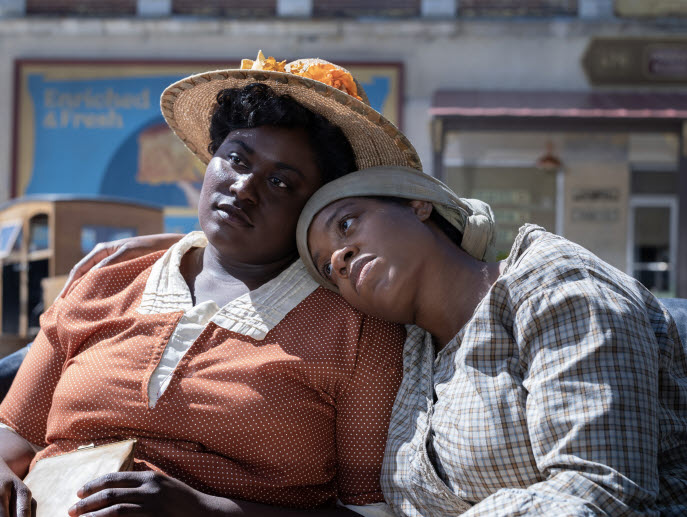
The Color Purple (2023) ☆☆☆(3/4): A lighter song and dance version

“The Color Purple”, based on an acclaimed Broadway musical which was developed from Alice Walker’s Pulitzer-winning novel of the same name, cannot help but get itself compared with its predecessor. Although it is not totally without flaws, Steve Spielberg’s “The Color Purple” (1985), which was directly adapted from Walker’s novel, is still a powerful drama film to remember, and I must confess that my mind often went to Spielberg’s film while watching its musical junior.

This is probably because 1) I happened to revisit Spielberg’s film a few weeks ago and 2) the adapted screenplay by Marcus Gardley is frequently not so far from Spielberg’s film on the whole, though the dark and unpleasant aspects of Walker’s novel are toned down more in comparison. After all, all those lively musical numbers in the movie could feel quite jarring to us if the movie presented more graphic depictions of the frequent moments of domestic violence and abuse in Walker’s novel and Spielberg’s film.

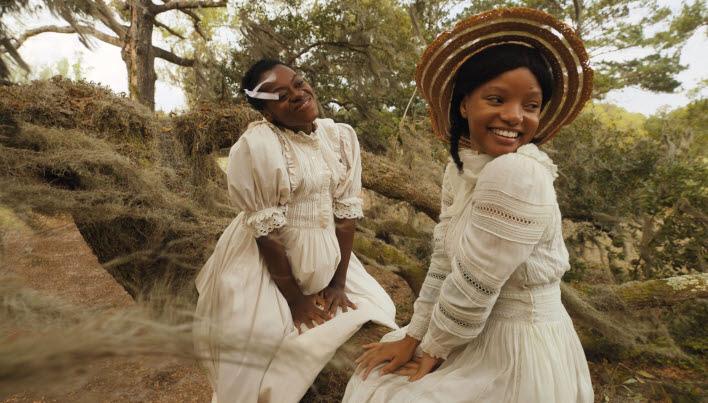
The early part of the film, which often visually evokes Julie Dash’s “Daughters of the Dust” (1992), is mainly driven by the sisterhood between Celie (Phylicia Pearl Mpasi) and Nettie (Halle Bailey), two young black girls living in a little town of Georgia, 1909. Although Celie is going through another physical plight due to their monstrous father, she and Nettie support each other as usual, and things looks fine and hopeful at least when they are together.

However, Celie soon gets separated away from her sister when some black dude, whom Celie comes to call “Mister” (Colman Domingo, who surely looks less nice compared to his recent Oscar-nominated performance in “Rustin” (2023)), initially comes for marrying her sister but then takes away Celie instead because of her father’s insistence. It soon turns out that Mister is no better than her father, and he later does a very cruel thing to his wife not long after Nettie eventually comes to stay along with her.

With no one else to support or comfort her, Celie manages to endure during next several passing years. Now played by Fantasia Barrino from this point, she simply works and works under Mister’s cruelty day by day, and her docile passivity surely makes a big contrast with Sofia (Danielle Brooks), a young feisty woman who confidently comes along with Mister’s soft-hearted son Harpo (Corey Hawkins, who feels less intense compared to his breakout turn in “Straight Outta Compton” (2015)) for living with him and then marrying him. Unlike Celie, she surely shows others including Harpo that she is not someone to be beaten down easily, but then her hot temper causes a very big trouble for her later.

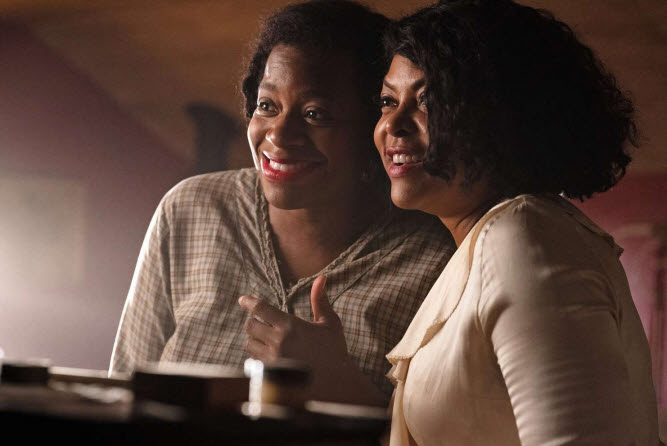
On one day, Celie finally encounters Shug Avery (Taraji P. Henson), a hot and beautiful blue singer who has been the object of affection for Mister for many years. Mister still tries to woo her despite being a married man at present, and she has no problem at all with staying with him for a while, but then, what do you know, she and Celie find themselves forming a relationship which will change their respective lives forever.

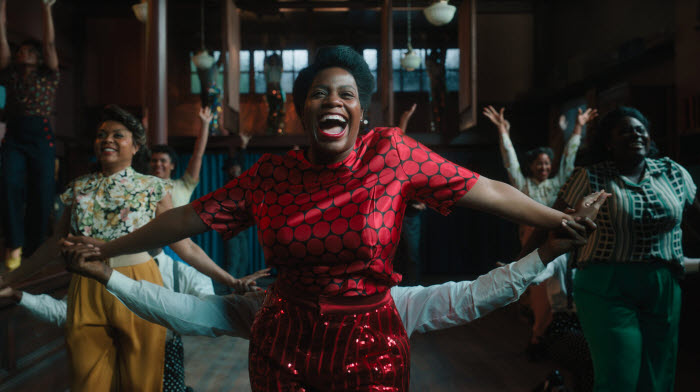
As Celie’s life is gradually brightened up by her affectionate relationship with Shug (Just like Spielberg’s film, the movie stays in the area of PG-13 even while a bit more frank about the apparent sexual attraction between them), musical numbers come and go as before, and director Blitz Bazawule, who previously directed “Black Is King” (2020) with Beyoncé, and his crew members including Oscar-nominated cinematographer Dan Laustsen did a splendid job of imbuing these musical scenes with enough spirit and skill. The songs written by Brenda Russell, Allee Willis, and Stephen Bray may not be that memorable, but they effectively serve the story and characters nonetheless, and the mood surely becomes more cheerful as Celie comes to open up herself more than ever along the story.

However, even while enjoying a number of well-made musical moments in the movie, my mind kept going back to comparing the movie to Spielberg’s film. Sure, they are a lot different from each other in terms of many things including mood and style, but as sharing so many story elements between them, the movie sometimes felt to me like what Spielberg’s film would look like if it were sugar-coated with song and dance.

At least, the main cast members of the movie provide considerable gravitas as well as bouncing spirit to the story and characters. While Fantasia Barrino, who incidentally makes a movie debut here, is convincing in her character’s gradual transformation along the story, Taraji P. Henson, Danielle Brooks, Colman Domingo, Corey Hawkins, H.E.R., Phylicia Pearl Mpasi, Halle Bailey, David Alan Grier, Aunjanue Ellis-Taylor, and Louis Gossett Jr. are well-cast in their respective parts, and the special mention goes to Brooks, who often steals the show as balancing her colorful character well between comedy and drama (She deservedly got Oscar-nominated in last month, just like co-producer Oprah Winfrey did for her equally good supporting performance in Spielberg’s film many years ago).

Overall, “The Color Purple” may not reach to the flawed but unforgettable greatness of its predecessor, but it has enough engaging elements to hold our attention during its rather long running time (141 minutes) at least. It does not impress me a lot, but this is a competent musical movie at least, so I will not grumble for now.

Posted in Movies | Tagged , | 1 Comment

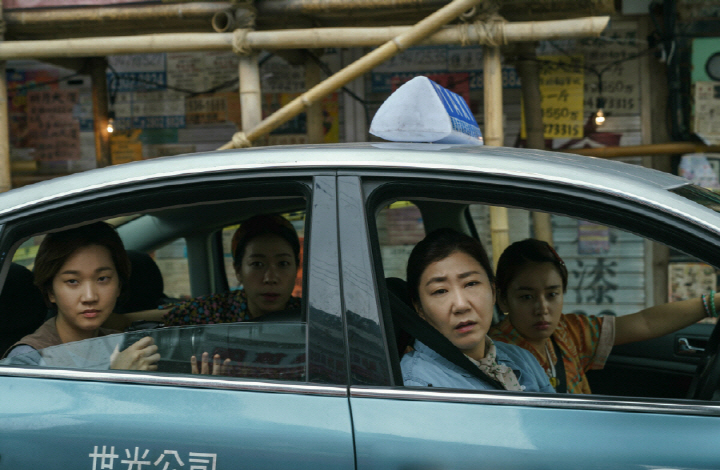
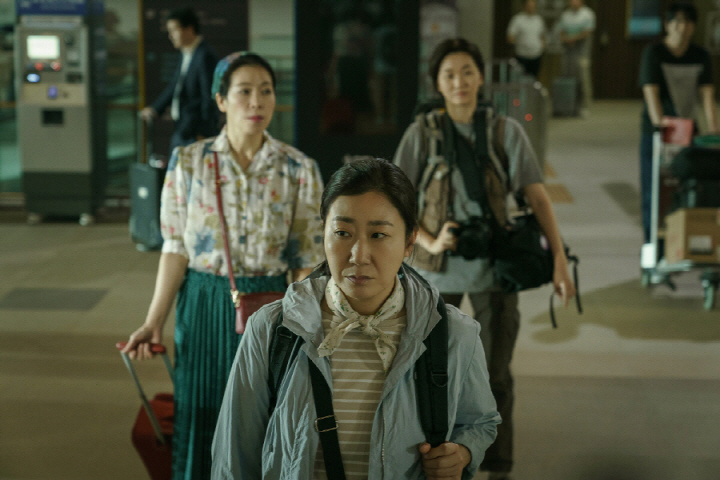
Citizen of a Kind (2024) ☆☆☆(3/4): Ra Mi-ran rules again

It seems to me that South Korean actress Ra Mi-ran is one of the rare performers who can sell almost anything to audiences. Although I did not like her recent comedy film “Honest Candidate” (2020) and its following 2022 sequel much, I admired her considerable star qualities nonetheless, and this wonderful actress, who made a movie debut in Park Chan-wook’s “Lady Vengeance” (2005) almost 20 years ago, is the main reason why her latest film “Citizen of a Kind” works despite trying a bit too much at times.

The movie, which is loosely based on a remarkable real-life voice-phishing case in 2016, opens with how Ra’s working-class single mother character, Deok-hee, is unwittingly victimized by a big voice-phishing organization. She happened to be in the need of lots of cash due to her recent fire accident, so she did not hesitate at all when she was approached by a man who introduced himself an employee of some prominent local bank on the phone. Alas, she belatedly comes to realize that she got swindled by the voice-phishing organization behind this caller, and now she is now not only penniless but also stuck with lots of high-interest loan debt.

Just like many voice-phishing victims, Deok-hee pleads a lot to a cop assigned to her case, but the cop does not listen to her much as occupied more with handling some big fraud case. While becoming more desperate and frustrated than ever, Deok-hee struggles to find any solution for her dire situation, but the situation gets worse and worse, and she even finds herself getting separated away from her dear kids later.

In the meantime, there comes an unlikely chance for Deok-hee. That caller calls her again, and this person is willing to provide some crucial information about his voice-phishing organization mainly because he is also a victim of this detestable criminal organization. Although she does not believe this person that much at first, Deok-hee cannot resist this unexpected chance, especially after coming across the police public poster promising a considerable amount of financial reward for helping them catch any voice-phishing organization.

Through her unexpected source of information, Deok-hee comes to find that the voice-phishing organization responsible for her current plight has been operating somewhere in Qingdao, China. However, when she approaches to that cop again, he ignores her again as making petty excuses as before, but that makes her more determined that before. After discussing a bit with her two close colleagues Bong-rim (Yeom Hye-ran) and Sook-ja (Jang Yoon-ju), she decides to handle the matter for herself in Qingdao, and Bong-rim and Sook-ja gladly accompany her for more help and support. After all, Bong-rim, who is incidentally a Korean Chinese, has a younger sister working in Qingdao as a taxi driver, and her younger sister, Ae-rim (Ahn Eun-jin), is certainly ready to take them to here and there in the city.

As these four ladies clumsily search for the exact location of the voice-phishing organization, the movie cheerfully bounces along them for more laughs. Although its sense of humor may be a little too cartoonish for your taste, Ra and her fellow actresses are constantly engaging in their characters’ comic interactions, and we certainly come to root more for their characters along the story.

Meanwhile, the movie also often delves into the brutal depravity of the voice-phishing organization. Under its truly vile and vicious leader’s cutthroat management, Deok-hee’s informant and many other young Korean lads, who were all duped by the false promise of easy money and then have been enslaved for quite a long time, are savagely pushed into their deplorable criminal job, and you may be a little relieved to see that there is not any woman in this horrible slave group. To be frank with you, I do not dare to imagine whatever the movie would show us if there were any woman there.

The movie is entirely successful in its juxtaposition of broad comedy and grim violence as leaving a rather jarring impression on me, but I still appreciate how Ra’s strong presence holds everything together to the end. During the last act, the movie apparently diverges from its real-life story as adding lots of conventional moments including the heroine’s desperate but defiant stand against that big bad guy, but Ra forcefully advances toward the eventual finale along with the movie, and we do not have much problem in accepting some artificially dramatic moments such as the one when Ra’s character comes to locate her target via sheer coincidence in a big and wide public space full of many different people.

Director Park Yong-ju places a number of colorful performers around Ra. While Yeom Hye-ran, Jang Yoon-ju, and Ahn Eun-jin have each own moment to shine as Deok-hee’s mostly dependable friends, Gong Myung is believable in his character’s sheer desperation, and Park Byung-joon acquits himself well despite his rather thankless supporting role. As the main villain of the film, Lee Mu-saeng is frighteningly and disgustingly effective, I was disappointed that the movie punishes his loathsome character too easily during the expected payback moment around the end of the story (Is this a spoiler, folks?).

On the whole, “Citizen of a Kind” is a bit too violent and intense to be labeled as a feel-good movie, but you will be entertained and then exalted as enjoying how its plain but strong-willed heroine and her friends bring justice to their criminal opponents for themselves. In short, it does exactly what it intends to do as generating some fun and entertainment, and that is fine with me for now.

Posted in Movies | Tagged , , , , | Leave a comment

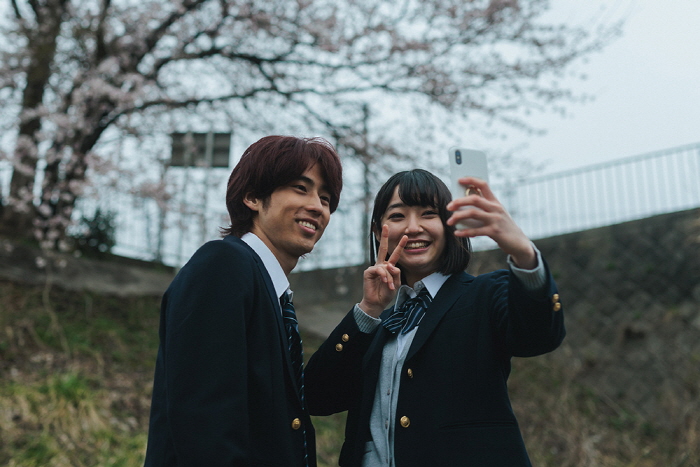
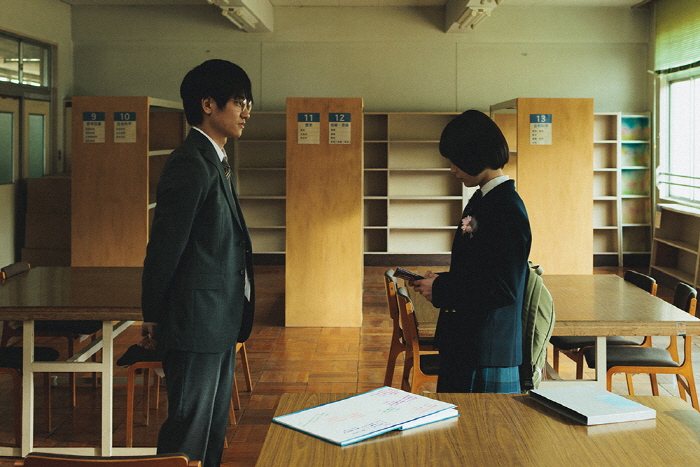
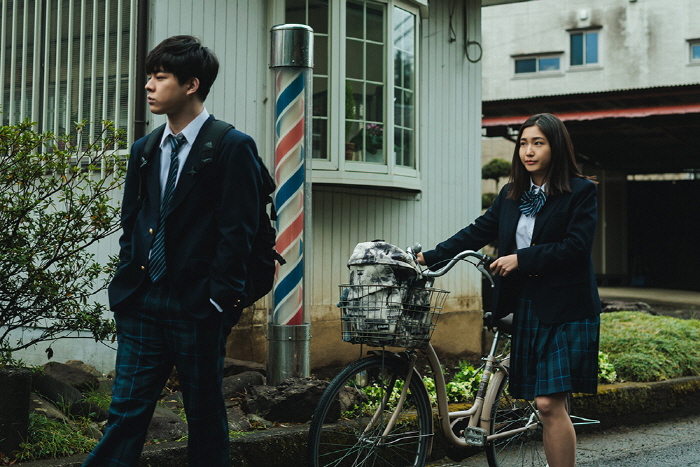
Sayonara, Girls. (2022) ☆☆1/2(2.5/4): Before their graduation

Japanese film “Sayonara, Girls”, which is released as “Girls Don’t Graduate” in South Korea as it was in Japan a few months ago, is so gentle and vanilla that I quickly lost my patience during my viewing. Probably because I do not have much nostalgia on my high school years full of ups and downs, I could not connect that well with its gently clean-cut presentation of high school life from the beginning, and I was also disappointed with its rather thin storytelling and flat characterization.

The main background of the movie is an old rural high school which is going to be closed after its last graduation ceremony. Now only one day is left before their eventual graduation, many of senior students in the school are quite excited to say the least, and the first half of the film is mainly about how their last school day slowly passes by.

During its opening part, we are introduced to its four main female characters one by one. First, we meet a quiet girl supposed to deliver a speech on the behalf of her fellow senior students during the upcoming graduation ceremony. From her rather silent appearance, we gradually gather that she has some serious emotional issue behind her back, but then she is brightened up a little when she later has a little private time with a certain male student. As observing their affectionate interactions, we clearly sense how much they love and care about each other, though she does not tell much about her little romantic relationship to others.

In case of a no-nonsense girl who has incidentally managed a musician circle in the school, she must handle a tricky matter involved with a concert to be held right after the graduation ceremony. Her musician circle consists of three bands, and all of them are expected to perform on the stage, but one of them, which is your average mediocre heavy metal rock band, turns out to be a very big problem. First, all of its band members do not know how to play their instruments at all, and they have not even prepared for the concert at all. As a matter of fact, they have usually done a lip-syncing to pre-recorded music, and they are surely aware of that they will be bound to become a butt of joke once they try to ‘perform’ on the stage. Mainly because she has been secretly fond of the band leader since their middle school years, the girl tries her best for helping his band, but, not so surprisingly, there soon come several setbacks in front of them, so there is some suspense on whether they can actually succeed in the end.

The movie also focuses on the complicated situation between one ex-couple in the school. Because she has aspired to pursue her dream more in Tokyo, the girl will soon leave the town right after the graduation, and the boy, who decides to stay and then study for being a teacher in the town, is naturally not so happy about that. The girl sincerely tries to tell him that her feeling toward him remains same as before, but the boy is not particularly willing to talk with her for now, and that makes her frustrated at times.

Another part of the film involves with a nerdy female student who still cannot confide her longtime romantic feeling to the supervisor teacher of the school library. As her time at the school is being over, she feels more urged to get closer to her favorite teacher, but she also knows well how inappropriate it will be for both her and that teacher, who incidentally turns out to be happily married.

Leisurely rolling these four plotlines, the movie soaks the screen with its warm and mild ambiance mainly represented by those beautiful blossoms of cherry trees, and we get to know a bit more about its main characters. In case of the girl preparing for the graduation ceremony speech, we eventually come to learn that she has been constantly haunted by something quite traumatic which occurred some time ago, and we are not so surprised by a little twist involved with her boyfriend later in the story. In case of that nerdy girl, she clumsily tries to be a little more active around her classmates as advised by her favorite teacher, and you may be amused a little when a certain classic high school horror film is mentioned at one point.

However, the screenplay by Shun Nakagawa somehow fails to bring more life and personality to its main characters, who remain rather plain and boring archetypes instead of becoming real human figures to touch or interest us. Furthermore, all of the four main plotlines arrive at their respective expected endings without much surprise or revelation for us, and I can only admire how it tactfully handles the risky emotional circumstance between that nerdy girl and her favorite teacher at least.

Nevertheless, the four lead actresses of the film acquit themselves on the whole. While Yuumi Kawai, who was memorable in another Japanese high school drama film “It’s a Summer Film!” (2020), surely draws more attention, Rina Ono, Rina Komiyama, and Tomo Nakai are equally solid, and the movie could utilize their considerable talent more in my inconsequential opinion.

Overall, “Sayonara, Girls” attempts to be a sincere and intimate adolescent drama film, but it does not succeed as much as intended as lacking enough personality and substance to distinguish itself. While you may enjoy it more than me for its casual gentle quality, I have to point out that there more interesting Japanese adolescent drama films including “It’s a Summer Film!”, and I am already considering revisiting “It’s a Summer Film!” for appreciating its undeniable charm and spirit more.

Posted in Movies | Tagged , , , , | Leave a comment

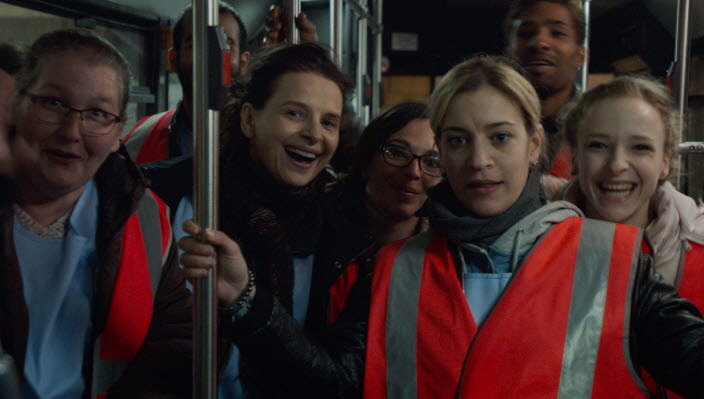
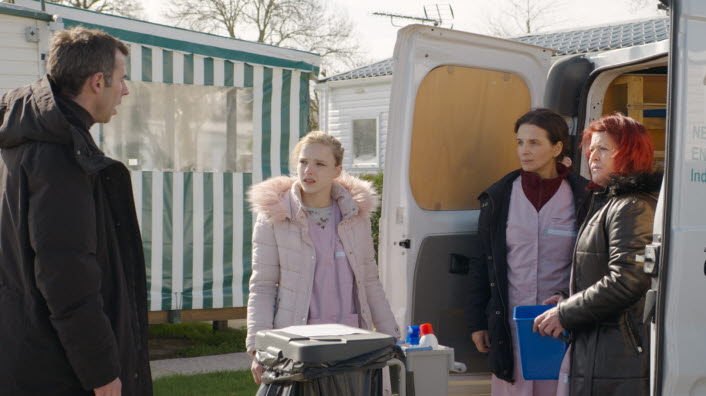
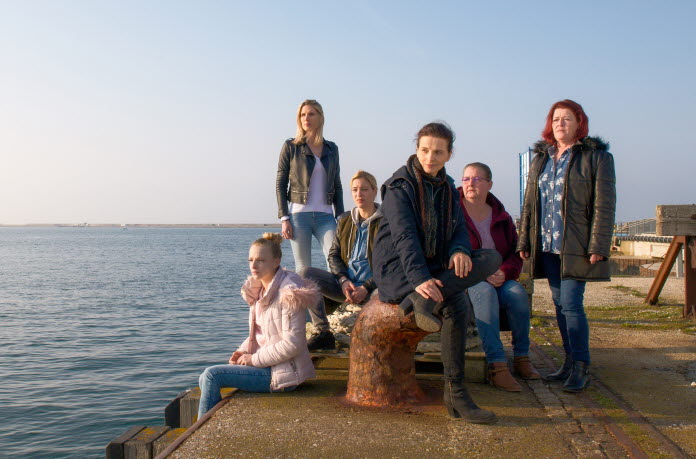
Between Two Worlds (2021) ☆☆1/2(2.5/4): An observer with no stake at all

What French film “Between Two Worlds” is about is important and relevant to say the least, but I also found it problematic for how it is about. Mainly driven via a privileged observer with no stake at all, the movie often undermines its supposedly sincere exploration of the hard and difficult reality of working-class people often crushed by their menial temporary jobs, and it does not even know how to handle its considerable contradiction despite often openly recognizing that.

During the opening scene, the movie, which is set in the northern port region of France, looks promising as following a young woman in one desperate situation. As a single mother trying to raise three kids alone besides trying to earn a living for her and her kids, this young woman surely depends a lot on social welfare, but, alas, there seems to be some mistake in handling her submitted documents, and she really has to meet and talk with a civil servant who might help her a bit.

Not so surprisingly, her desperate plea is promptly ignored right from her arrival at the civil service office, but the center of the story is not her but a woman who happens to be there for some other reason. On the surface, Marianne Winckler (Juliet Binoche) is simply a middle-aged woman who really needs to earn her living for herself right now, but it soon turns out that she is actually a Parisian journalist who goes undercover for getting enough materials for her upcoming book on the world of the working-class people struggling in their demanding menial temporary jobs day by day. After managing to deceive that civil servant during the following interview, Marianne soon begins to delve into the main subject of her book, and it goes without saying that what she will witness and record is not very pretty to say the least.

As she vividly experiences the daily life of those poor and desperate working-class people, Marianne gradually befriends several persons willing to help her more without knowing anything about her true purpose, and one of them is incidentally that desperate young woman she encountered during the opening scene. Things have been fortunately less desperate for Christèle (Hélène Lambert) since their accidental encounter, but she still works hard in her latest job while not getting paid enough day by day, and Marianne decides to help Christèle a bit. She luckily borrowed a shabby old car via one of her new ‘friends’, so she offers her driving service to Christèle in exchange of getting her hired at where Christèle is working at present.

Once they make a deal, Christèle immediately gets Marianne employed at her current workplace, which is a big ship going back and forth between France and UK several times every day. Whenever the ship arrives at the pier, Christèle and Marianne and several other employees must be fully ready for their quite demanding tasks including cleaning more than 200 cabins in the ship within less 2 hours, and Marianne surely comes to experience much more than whatever she expected at first.

As she gets accustomed to her new job day by day, Marianne comes to befriend more not only Christèle but also several other employees. In case of a young plucky girl named Marilou (Léa Carne), she often brightens up the mood among her co-workers while looking less weary compared to Christèle and other employees. At one point later in the story, these two ladies happen to be stuck in the ship along with Marianne, and that leads to a little fun moment for them even though they are well aware of the considerable risk of getting fired at any chance.

However, we are also often reminded that Marianne remains in her privileged position no matter how things often get very hard and difficult for her. While she is probably sincere and passionate in her supposedly good-willed intention, she is virtually a tourist to the hardships of her “friends”, and this troubling aspect is already quite clear to us when her deception is exposed a bit early in the story. As one supporting character sharply points out, she is actually taking away the job opportunity from whoever needs much more than her right now, but the screenplay by director Emmanuel Carrère and her co-writer Hélène Devynck, which is loosely based on Florence Aubenas’ nonfiction book “The Night Cleaner”, usually steps back from many inherent ethical questions in the story without really confronting them at all.

Furthermore, the movie also suffers from its thin characterization. While Juliette Binoche tries to fill her character with life and personality as much as she can, her character remains a blank figure who does not interest us a lot, and the movie unfortunately comes to focus more on her character’s writing process along the story. In the end, what Marianne did for her book looks opportunistic and exploitative to us, and we are more reminded of how she should have not crossed the ethical lines from the very beginning.

At least, the movie shows some genuine sense of life around the fringe of its story thanks to the good supporting performances from Hélène Lambert and Léa Carne. Their characters are actually far more interesting than Binoche’s superficial lead character, and I wonder whether the movie should have simply put their realistic characters at the center instead of Marianne.

In conclusion, “Between Two Worlds” is surely well-intentional, but it is sadly hampered by its several inherent flaws including its ethically questionable lead character, and I can think right now of several better French films which handle its important social issues in much better ways. If you have not seen “The Measure of a Man” (2015) or “Full Time” (2021) yet, I sincerely recommend you to watch either of them instead, and I assure you that you will be more satisfied with some enlightenment.

Posted in Movies | Tagged , , | Leave a comment

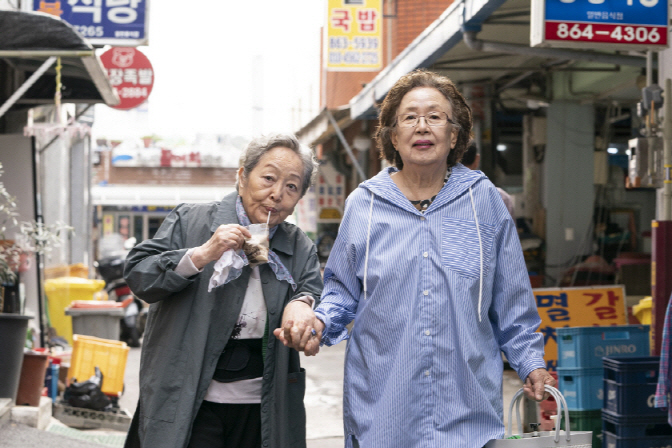
Picnic (2023) ☆☆☆(3/4): Returning to the hometown with her best friend

South Korean film “Picnic” is an unabashedly sappy character drama which actually earns some poignancy in the end. While it sometimes feels quite blatant in the attempts to pull our heartstrings, the movie is thankfully anchored well by two strong lead performances at its center, and you may forgive a number of shortcomings in the story as touched by the genuine emotional bond between its two main characters.

The movie begins with how things suddenly do not go that well for Eun-sim (Na Moon-hee), a fairly affluent old lady who has lived well alone in her nice apartment located somewhere in Seoul. Her only son made another big financial mess from his latest business attempt, so he and his wife come to Eun-sim’s apartment for asking for the money to solve his problem, but Eun-sim is not particularly willing to do that after seeing how selfish both her son and his wife really are, though she still feels conflicted as a good mother would.

Anyway, she is also visited by her old hometown friend Geum-soon (Young-ok), who is incidentally the mother of Eun-sim’s daughter-in-law. Delighted by this sudden visit of her dear old friend, Eun-sim eventually decides to go down to their old hometown along with Geum-soon for cooling off her mind a bit for a while, and Geum-soon gladly lets her friend stay in her old house.

While having some bittersweet feelings on how much their old hometown have been changed, Eun-sim comes across several persons in her past, and one of them is an old dude named Tae-ho (Park Geun-hyung), who once had a crush on her during their good old school days. He gladly invites her to a little evening drinking party, and Geum-soon surely feels all the more nostalgic as meeting some of their old schoolmates.

However, we also come to gather that lots of bad things happened during Eun-sim’s past in her hometown. One of her old schoolmates still does not like Eun-sim much with lots of resentment against her, and the mood becomes a bit tense when this spiteful schoolmate talks a bit about some unpleasant facts in Eun-sim’s past. It turns out that Eun-sim and her mother, who died at a rather young age, became pariahs in their town due to an unfortunate accident which killed not only her father but also several other town people. In addition, there also seemed to be something scandalous involved with Eun-sim and Geum-soon’s close friendship during that time, though nobody is willing to specify that in details.

Regardless of whether they are actually aware of whatever has been lying beneath their longtime relationship, Eun-sim and Geum-soon are just happy for being together in their hometown, and Tae-ho, still fond of Eun-sim even after all those passed years, is eager to spend more time with them. Surely feeling like being back in that good old time, they enjoy each other’s company more and more, and it looks like their fun time will be continued at least for a while.

Of course, there is already the harsh reality to be accepted by all of them in one way or another. At one point, they come to visit an old friend of theirs who has been left alone in a facility for old people by her own family, and they are reminded again of how helpless they will be sooner or later. As already revealed by herself early in the film, Eun-sim has been struggling with the early stage of Parkinson’s disease, and, not so surprisingly, both of her two friends turn out to have each own serious matter of mortality later in the story.

Around that narrative point, the movie becomes a little too heavy-handed for burdening its main characters with more conflict and frustration, and that is where I became more aware of the plot mechanism of the screenplay by Jo Hyun-mi. The subplot involved with Eun-sim’s pathetic son feels redundant and distracting while only existing for generating more misery for his mother, and the same thing can be said about another subplot associated with Geum-soon’s equally pathetic son. In case of the utterly sentimental finale, the movie is not honest and courageous enough to handle a certain choice made by Eun-sim and Geum-soon, and that consequently hurts the emotional potential of the finale.

Despite these and other weak aspects of the film, I was engaged enough in its story and characters thanks to the presence and talent of two veteran actresses who diligently carry the movie like troupers. Na Moon-hee, another grand dame of South Korean cinema who deserves to be mentioned along with Youn Yuh-jung (She was the mother character in Kim Ji-woon’s black comedy film “The Quiet Family” (1998), by the way), and Kim Young-ok, who has continued her own long acting career for many years just like Na, do a good job of establishing the long history of their old relationship right from their very first scene in the film, and the movie works whenever it focuses more on how their characters come to depend more on each other along the story. In contrast, many of the supporting characters in the film are under-developed, but Park Geun-hyung, another familiar figure of South Korean cinema to me and many other South Korean audiences, humbly holds his own place well while never overshadowing Na and Kim.

Overall, “Picnic”, directed by Kim Yong-gyun, is not entirely successful, but its strong elements including the wonderful chemistry between Na and Kim are good enough to compensate for its glaring weak points at least. Right from the beginning, I knew it was going to be quite sappy, but I did not mind at all while actually moved by its sincere drama about aging and friendship, so I will not grumble for now as reflecting more on whatever I am going to do about the last years of my life.

Posted in Movies | Tagged , , , | Leave a comment

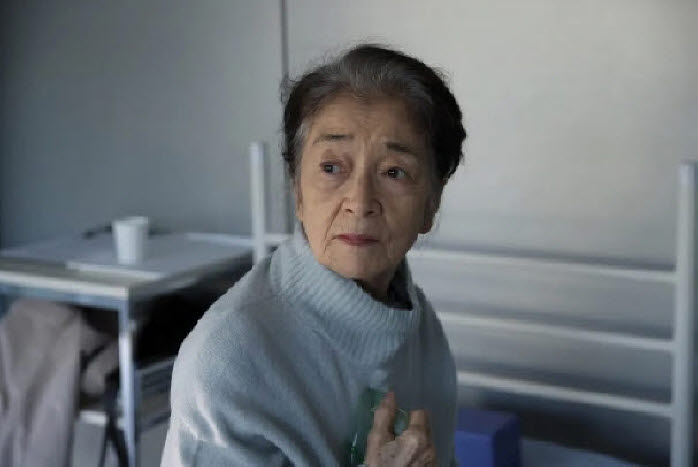
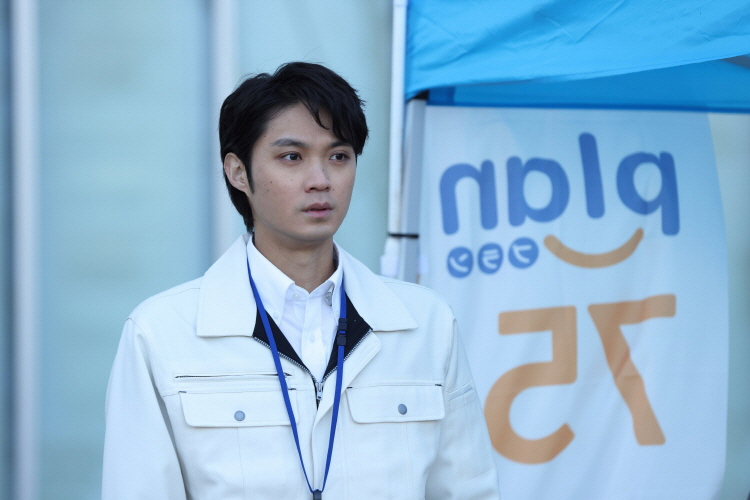
Plan 75 (2022) ☆☆1/2(2.5/4): No Country for Old People

Japanese film “Plan 75”, which was selected as the Japanese entry for Best International Film Oscar in 2022, is calm and dispassionate about its gloomy dystopian subject. While its main subject is certainly thought-provoking to say the least, the movie often feels so clinical and alienating that it is a bit difficult for me to care about its story and characters despite the horror and sadness beneath the surface.

After the dry but shocking opening scene, the movie slowly establishes its grim story promise. Due to the growing problems from the rapidly aging population in the Japanese society, the government eventually decides to launch a legal public program called “Plan 75”, which recommends and provides free euthanasia services to old citizens over 75. While it causes lot of controversy at first, “Plan 75” has been gradually accepted in the public, and more aging people willingly accept it due to many reasons including their growing financial difficulties.

In case of a 78-year-old woman named Mishi Kakutani (Chieko Baisho), she does not feel any particular need for euthanasia because she has been doing fairly well in her ongoing daily life. While she has lived alone in her small shabby apartment, she is an independent lady who has diligently worked at a local hotel along with several colleagues around her age, so dying right now is the last thing she wants at present.

However, Mishi’s situation gets worse bit by bit. When one of her close colleagues becomes suddenly ill later, she and the other close colleagues of hers are requested to retire, and they have no choice at all. Mishi subsequently tries to get employed again, but, not so surprisingly, nobody wants to employ an old woman like her. To make matters worse, she will have to leave her apartment as the apartment building is going to be demolished sooner or later, so she begins to consider accepting Plan 75.

Meanwhile, we also observe two different persons involved with Plan 75. In case of a young man named Himoru Okabe (Hayato Isomura), he is one of the civil servants handling those old people applying for euthanasia, and he believes that he and his colleagues are really helping those old people, but then he begins to have doubts when he comes across an old man who turns out to be an estranged brother of his diseased father. While his uncle is ready to die once he has his 75th birthday, Himoru cannot help but feel conflicted, probably because his uncle is the only living part of his past.

In case of a Filipino immigrant named Maria (Stefanie Arianne), she becomes involved with Plan 75 mainly because she needs to earn the money for her ill daughter as soon as possible. Regardless of how she feels about her new job at a facility where old people will be euthanized, she is willing to do whatever is demanded to her, though getting enough money for her daughter still looks like a distant possibility.

Shuffling among its three main plotlines, the screenplay by director/writer Chie Hayakawa, which is based on the story written by Hayakawa and her producer Jason Gray, steadily builds up its dystopian background surrounding its main characters, and there are a number of small moments of poignancy. After applying for euthanasia, Mishi comes to befriend a young counselor who turns out to be more caring than expected, and this young counselor surely feels guilty when Mishi is eventually about to go to that facility for euthanasia. When Himoru takes his uncle to the same facility, Himoru tries his best for his uncle’s last day, but he is only reminded that he is actually not that ready to let his uncle go.

While everything in the story is handled with restrained sensitivity, its cold and opaque storytelling approach keeps us from emotionally involved more in the story and characters. For example, we never get to know that much about any of its main characters, so we feel rather distant to whatever is churning behind their phlegmatic façade. As a matter of fact, the part associated with Maria is mostly shallow and redundant, and Stefanie Arianne’s earnest acting is under-utilized as a result.

At least, the movie is not entirely without interest. Under Hayakawa’s competent direction, the dystopian background of the film looks and feels believable in terms of mood and details. Although she does not seem to be signifying much on the surface, Chieko Baisho fills her role with life and personality to observe, and her nice low-key performance is particularly effective when her character shows a bit of the will to live more around the end of the story. While Hayato Isomura does as much as he can do with his rather plain role, Yuumi Kawai and Takao Taka are solid in their respective supporting roles, and Kawai has her own small moment when her character’s silent face speaks volumes at one point later in the story.

In conclusion, “Plan 75” is not entirely satisfying for me, but it shows that Hayakawa, who received the Special Mention award in the Caméra d’Or competition of the Cannes Film Festival in 2022, is another good filmmaker to watch. Although this is her first feature film, the movie shows her considerable potential, and I will certainly check out whether she will advance more in her next work.

Posted in Movies | Tagged , , | Leave a comment