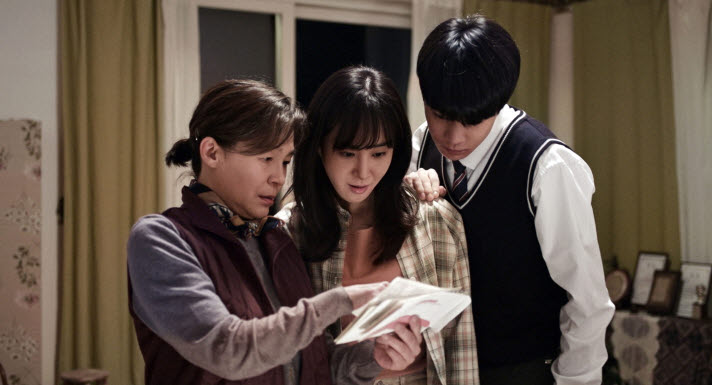
Kokomo City (2023) ☆☆☆1/2(3.5/4): Their experiences as Black transgender sex workers

Documentary film “Kokomo City”, which won the NEXT Innovator award when it was premiered at the Sundance Film Festival early in last year (It also won the NEXT Audience award, by the way), is exceptional as closely listening to the experiences of several Black transgender sex workers. As they tell each own personal story, we come to understand and empathize more with how they and many others struggle day by day, and the documentary comes to function as a powerful empathetic window to people different from many of us.

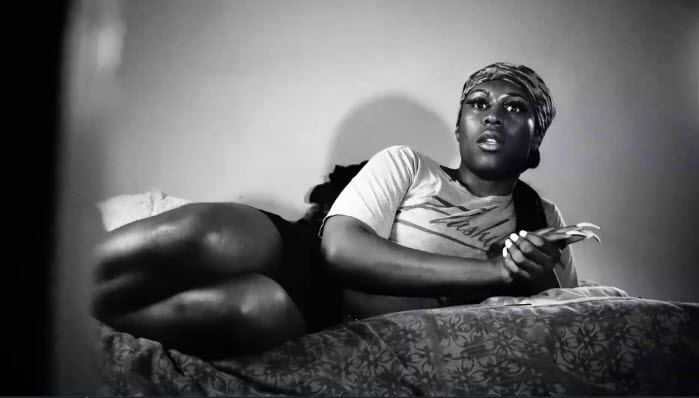
At first, director D. Smith, a female transgender filmmaker who also serves as the co-producer/editor/cinematographer of her documentary, introduces four different Black female transgender workers one by one. They are Daniella Carter, Dominique Silver, Koko Da Doll, and Liyah Mitchell, and each of them has interesting stories to tell in front of Smith’s camera. In the opening scene, Mitchell tells us about a rather funny sexual encounter with one Black rapper, and you may be amused a bit by how that dude still wants to see her again despite their unpleasant first encounter.

It is also fascinating to watch these four ladies talking frankly about the sexual taste of their clients, many of whom are actually attracted to them for exactly who they are. Not so surprisingly, those dudes are mostly reluctant to be honest about themselves in their mind even though their bodies cannot help but attracted to what they desire, and the documentary focuses a bit on several Black guys openly talking about their sexuality – and how often their Black communities are oppressive to anything queer. Mainly because of Black people having virtually been second-rated citizens in the American society, many Black communities cannot easily accept sexual minority people as often driven toward being your average model citizen good enough for those White people with power and money, and the documentary sharply recognizes the disparity and hypocrisy resulted from that.
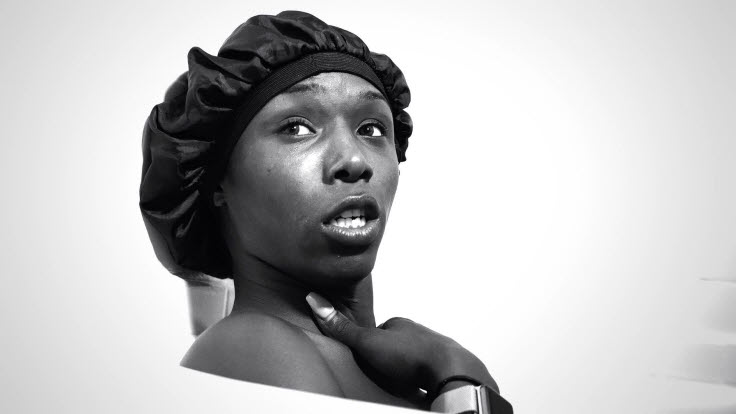
In case of Michael Carlos Jones, a male singer/songwriter who is known as “Lo”, he openly talks about his first experience with a transgender woman, and the story on how he gradually came to accept his sexuality is one of the more interesting parts in the documentary. He surely hesitated at first, but he eventually jumped across the line between hypocrisy and honesty, and now he sincerely hopes to meet that transgender woman again someday, while being more comfortable with his sexuality than before.

All of the four Black transgender women in the documentary have had each own difficult personal struggle as just trying to be themselves in front of others. Not so surprisingly, most of them have been distant to their respective families, and they all had no choice but to survive on streets and alleys for themselves. With a very few options for earning money for themselves, they naturally came to sell their bodies, but none of them feels any shame about that as being true and honest to themselves. Nevertheless, as shown later in the documentary, they have some different opinions on their work and those clients out there, and we get a very compelling moment as the documentary goes back and forth between two of them strongly expressing their respective opinions.

Needless to say, their life is constantly with a lot of risk and danger, and they do not deny at all. They all have some horrific stories from themselves and some of their colleagues, and that reminds me again of how socially vulnerable transgender people have often been for many years. They get frequently targeted outside just for the hate and prejudice against them, and they recently become all the more vulnerable thanks to those vile politicians and hateful public figures such as the author of the Harry Potter series. As a matter of fact, KoKo Da Doll was murdered not long after the documentary was shown at the Sundance Film Festival, and that makes her several key moments in the documentary quite poignant to say the least.

x

The documentary was certainly a very personal project for Smith, who once had a fairly successful career in the music industry (She worked with Lil Wayne, Ciara, Keri Hilson, Billy Porter and André 3000, for instance) but got ostracized once she began her transition process. Eventually becoming homeless without much money, Smith became interested in making a documentary about Black female transgender sex workers as wondering whether she would resort to prostitution for supporting herself, and that was the beginning of her little precious project.

While making sure that her four main figures of the documentary, to whom she initially approached via social media applications, feel comfortable in front of her camera, Smith occasionally adds some stylish touches in addition to shooting the documentary in black and white film, and that brings some extra spirit to the overall result. At one certain point, Mitchell and her boyfriend willingly allow Smtih to shoot their very intimate moment in front of the camera, and Smith did a commendable job of presenting this moment with care and respect without feeling too voyeuristic.

On the whole, “Kokomo City”, which won the Panorama Audience Award at the Berlin International Film Festival early in last year, is seemingly modest but utterly unforgettable for its sincere and honest presentation of Black female transgender experience. In short, it is one of the better documentaries of last year, and I wholeheartedly recommend it because it will definitely open your eyes more to its main subject.

Posted in Movies | Tagged , , , , | Leave a comment

Frida (2024) ☆☆☆(3/4): Via her own words

Documentary film “Frida”, which is currently available on Amazon Prime, presents the life and career of legendary Mexican artist Frida Kahlo mainly via her works and words. Although it may not inform you that much if you are familiar with its main subject, the documentary is still a fairly interesting presentation of Kahlo’s life and career, and you may want to check out more of her works after watching it.

The narrative flow of the documentary is mainly driven by the excerpts from Kahlo’s personal letters and diaries, which are narrated by Fernanda Echevarría. Director/co-editor Carla Gutierrez frequently juxtaposes the narration of her documentary with a number of various visual elements ranging from archival photographs and footage clips to the colorful animations based on many of Kahlo’s works, and we are accordingly served with a kaleidoscopically vibrant portrayal of her immense personality and talent.

At the beginning, the documentary gives us a brief summary on Kahlo’s early years. Mainly influenced by her photographer father who had lots of artistic sensibility besides being quite sophisticated, young Kahlo showed rebellious streaks even during her childhood years, and this tendency of hers only grew much more when she later went to a prep school for studying to become a doctor. As she and several other classmates of hers tell us, she was your average wild rebel who did not give much damn about any social rule or convention, and that aspect of hers is quite evident from a photograph showing her confidently wearing a male suit. Not so surprisingly, she later became a staunch socialist just like her friends and colleagues, and she certainly stuck to her strong political belief to the end.

However, Kahlo happened to have a devastating traffic accident when she was 18, and her consequent physical injury became a personal demon which haunted her throughout the rest of her life. While quite frustrated with being much less physically active than before, Kahlo came to pay more attention to her artistic passion as going through her following recuperation period, and that was the beginning of her artistic career.

Around that time, Kahlo approached to Diego Rivera, a prominent Mexican artist who was quite famous for a number of murals where he boldly mixed his artistic ambition and political belief. When he was approached by Kahlo, Rivera was instantly attracted to Kahlo’s spirit and talent, and it did not take much time for him to get romantically involved with her. When he eventually proposed to her later, Kahlo did not hesitate because she was deeply in love with him despite knowing well how promiscuous he had been – how unfaithful he would be even after their wedding.

Anyway, things went fairly well between them during next several years thanks to their mutual understanding on Rivera’s frequently infidelity. When Rivera was invited to US around the early 1930s, Kahlo went along with her to New York City, and she focused more on developing her own artistic field while her husband was often more occupied with a series of ambitious artistic projects. However, she eventually got tired of being in New York City and other American cities, as often discerning the superficial hypocrisy of those rich members of the American high society.

In the end, Rivera and Kahlo returned to Mexico after his infamous mural at the Rockefeller Center of New York City was canceled due to his blatant political touch, and then their marital relationship got gradually deteriorated as they became more distant to each other. While Rivera committed more infidelity here and there, Kahlo also got romantically involved with a bunch of different women and men including Leon Trotsky, and Rivera often could not help but become jealous even though they agreed on their open relationship from the beginning.

When Rivera did something almost unforgivable to her, Kahlo came to decide that enough is enough. After her eventual divorce, she went on her own artistic way as she always wanted, and the documentary naturally provides us several striking visual moments via the animation presentation of several works of hers during that period. Thanks to a French artist friend of hers, her works came to draw lots of attention in both New York City and Paris, and she also received some praises from many prominent artists including Pablo Picasso and Joan Miró. While she was regarded as a part of the surrealism movement during the 20th century, she was not pleased with being categorized like that, and she also had a strong negative opinion on how art was often almost monopolized by male artists who never regarded her as their equal.

The main weak point of the documentary is its rather deficient last part involved with the last years of Kahlo’s life and career. Considering how she somehow kept moving on despite her declining physical status, this part should be quite poignant and harrowing to say the least, but the documentary often seems to scratch the surface instead of fully delving into Kahlo’s painful later years, and that is a bit disappointing in my humble opinion.

In conclusion, “Frida” is not entirely without flaws, but I enjoyed its vivid and colorful visual presentation of Kahlo’s life and career at least, and it is certainly recommendable if you only vaguely know about her works. She was indeed a trailblazing artist who surely deserves all the acclaims and praises upon her many distinctive works at present, and, considering a biting quote from her around the end of the documentary, she would quite be amused if she were alive now.

Posted in Movies | Tagged , , , , | Leave a comment

Dolphin (2023) ☆☆1/2(2.5/4): Reluctant to live her family house

South Korean film “Dolphin” is a bit too plain and simple for me in terms of story and characters. The movie often tries to delve into the complicated emotional circumstance between its ordinary young heroine and several other main characters around her, but it somehow fails to develop its story and characters enough for holding our attention during its rather short running time (90 minutes), and that is a shame considering the good efforts from its main cast members.

At the beginning, the movie gradually establishes the current situation of Na-yeong (Kwon Yuri), a young woman who has lived her whole life in a small seaside village. When her parents suddenly died a long time ago, Na-yeong was taken by her father’s ex-wife Jeong-ok (Kil Hae-yeon), and then she grew up in Jeong-ok’s house along with Seong-woon (Hyeon Woo-seok), the son from Jeong-ok’s subsequent marriage which was also ended in divorce. Now she is an adult woman who works at a local newspaper, but Na-yeong remains attached a lot to her family, and she frequently prepares the lunch for not only her family but also a few guys working at Jeong-ok’s factory.

However, she and her family will soon have to go through some big change. Jeong-ok recently decided to marry a dude who is incidentally the editor of that local newspaper, and Na-yeong does not mind her stepmother’s upcoming marriage at all, but then her stepmother notifies to her that their family house will be sold sooner or later. After all, Jeong-ok will move into her new husband’s residence while Seong-woon is eager to leave for Seoul right after his upcoming high school graduation, and Jeong-ok thinks it is better for her and her family to sell the house as soon as possible.

However, Na-yeong is not so pleased about that for an understandable reason. To her, the house has always been an important personal place full of old memories, and it is evident that she has put a lot of efforts on maintaining the house for many years. She is adamantly against selling the house even though Jeong-ok is willing to get a new place to live for Na-yeong, but, because her stepmother has the right to sell it as its sole owner, there is really nothing Na-yeong can do, no matter how much she protests about that. Nevertheless, she continues to prepare the lunch for her family and her stepmother’s employees as usual, while hoping that her stepmother may change her mind later.

In the meantime, Na-yeong happens to be assigned to writing the article on a local bowling alley run by a woman named Mi-sook (Park Mi-hyun). Although the place is often empty, Mi-sook is still determined to run her bowling alley as long as possible, and Na-yeong comes to befriend this plucky woman after trying bowling for the first time in her life. While she is certainly quite clumsy during her first attempt, she soon gets more interested in bowling, which gradually functions as a sort of emotional ventilation for her.

In addition, there also comes a possibility of romance to Na-yeong via a young man who recently moved from Seoul for working at her stepmother’s factory. He does not seem to be bored by the quiet uneventful atmosphere of the village, and he looks like a good match for Na-yeong as they come to spend more time together, but Na-young is more occupied with how she can prevent the family house from being sold in the end.

Unfortunately, the screenplay by director/writer/co-editor Bae Du-ri simply meanders from one moment to another without developing enough story substance to engage us. For example, we do not get to know that much about Na-yeong’s family history, so we usually observe her stubborn position from the distance without much care or interest. In addition, several other main characters are not developed that well despite some interesting human moments between them and Na-yeong, and that is why the expected big melodramatic moment during the last act does not work as well as intended.

Nevertheless, the movie is not a total failure at all thanks to its main cast members, who come to us as convincing human characters under Bae’s competent direction. They are often demanded to fill some gaps and holes in the story, but, at least, their result is mostly solid enough for us to sense some life and history from their respective characters.

As the center of the story, Kwon Yuri steadily carries the film to the end, though I still think her character could be more engaging and sympathetic if the movie supported her diligent performance with more detail and substance to put on her character. In case of several other main cast members around Kwon, Kil Hae-yeong, Hyeon Woo-seok, and Park Mi-hyeon acquit themselves fairly well despite their underdeveloped supporting roles, and Kil is particularly effective during her several key scenes with Kwon.

In conclusion, “Dolphin”, whose title incidentally does not refer to a certain marine mammal but actually refers to a certain term used in bowling game, is dissatisfying due to its rather deficient storytelling, but it has some good elements to be appreciated, and it also shows the considerable potential from Bae, who made her feature film debut here. I cannot recommend the film for now, but it may be regarded later as the first small step in the career of another interesting South Korean female filmmaker to watch, and I will certainly wait for whatever will come next from her.

Posted in Movies | Tagged , , | Leave a comment

Okiku and the World (2023) ☆☆☆(3/4): A Japanese period drama with lots of sh*t

Japanese film “Okiku and the World” may amuse you to some degree if you are not that squeamish about its smelly main story subject. I must warn you that the movie often pays a lot of attention to a dirty but undeniably necessary business involved with human excrement, and you may be relieved a bit because nearly all of these deliberately disgusting moments are presented in black and white film at least.

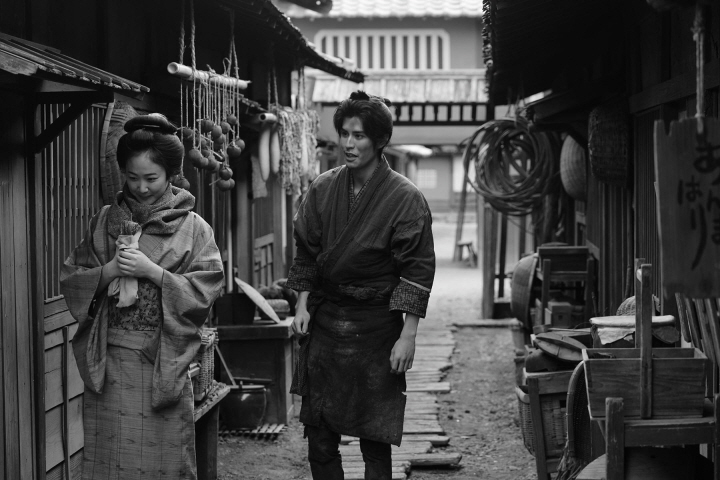
The story, which is set in Tokyo not long before the Meiji Restoration in the late 19th century, opens with introducing its three main characters one by one. At first, we observe how a young common man named Yasuke (Sôsuke Ikematsu) collects buckets of human excrement from a toilet outside one local temple, and you may cringe more than once as watching how he casually does his job without any hesitation. In fact, he collects heaps of sh*t from many places in Tokyo, and then he sells all of his collected sh*t as the manure to be used in many farms outside the city.

Anyway, Yasuke happens to encounter another lad named Chuji (Kanichiro), who has earned his meager living via collecting used papers. Because his current job has been not going well, Chuji eventually becomes Yasuke’s business partner even though it takes some time for him to get accustomed to a number of occupational hazards including that disgusting smell.

One of Yasuke and Chuji’s main business spots is a sort of community house resided by many different people, who all need Yasuke and Chuji’s service day by day because, well, they all sh*t just like all of us. At one point, their common toilet unfortunately becomes overflowed due to a sudden downpour, and I assure you that what you are going to behold at this point is not so pretty to say the least (I am still shuddering as recollecting that again, to be frank with you).

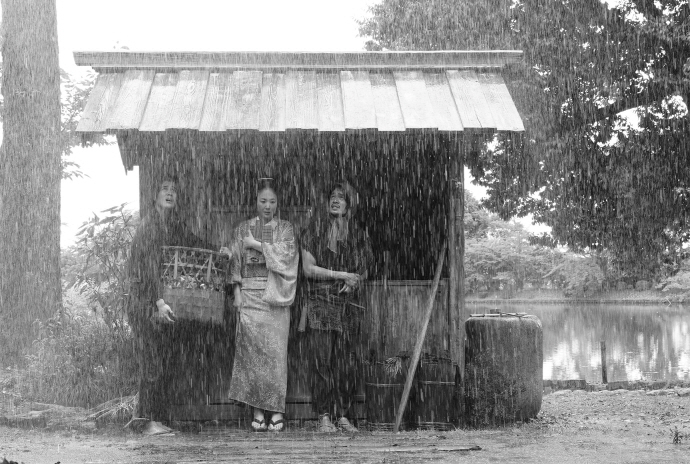
One of these residents is a young woman named Okiku (Haru Kuroki), who incidentally encountered Chuji and Yasuke during the opening scene when they all try to avoid getting wet due to a sudden raining. Although her father is a rather poor samurai who recently lost his position for some unspecified trouble, Okiku maintains her plucky attitude coupled with some pride, and she has actually earned some money to support herself and her father as teaching writing and reading at the local temple.

However, there soon comes a tragic incident which devastates Okiku a lot. Not only becoming alone by herself but also not being able to speak anymore, Okiku begins to isolate herself within her residence, and that certainly makes many of her neighbors and acquaintances quite concerned about her. In the end, she is persuaded to resume her teaching, though she needs some extra assistance from now on.

Meanwhile, the screenplay by director/writer Sakamoto Junji also focuses on how Yasuke and Chuji continue their sh*t business as usual. We see how they are often avoided by many people due to their occupation, and we also watch how they frequently struggle to get paid enough for their collected human excrement. While Yasuke tries to endure and prevail via his own offbeat sense of humor, Chuji sometimes gets tired of being stuck with loads of sh*t, but there is no other option for both of them, so they must bite the bullet from time to time.

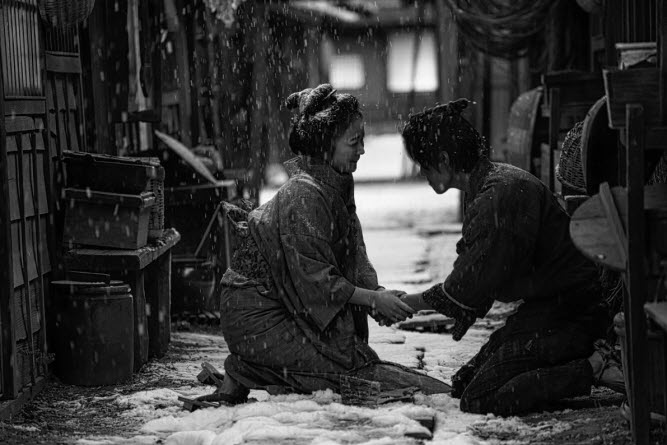
And then there comes an unexpected possibility of romance between Chuji and Okiku. When Chuji visits for a little personal matter between Yasuke and Okiku, Okiku unexpected finds herself attracted to Chuji, who surely often smells but is fairly good-looking at least. While Okiku comes to grow her romantic feelings toward Chuji, it gradually turns out that Chuji is also pining for her, but he understandably does not tell anyone about that mainly because of the apparent class difference between them.

Instead of hurrying its main characters to the expected conclusion, the movie takes more time for letting us appreciate more of its period mood and details. Cinematographer Kasamatsu Norimichi did a splendid job of presenting small and big details in crisp visual quality, and a number of key moments in the film are dramatically accentuated as shifting to color film for a while (By the way, one of these color film moments is involved with one of those toilets in the movie, so you will probably have to watch the film with empty stomach just in case).

The main cast members tune themselves well to the restrained overall tone of the movie. Although Haru Kuroki and Kanichiro do not generate much romantic vibe on the screen, they are effective nonetheless when their characters eventually reveal their mutual feeling to each other later in the story. Sôsuke Ikematsu provides some levity to the story as required, and a number of supporting performers including Renji Ishibashi, Claude Maki, and Kôichi Satô are well-cast on the whole.

In conclusion, “Okiku and the World” may make your stomach very uncomfortable for good reasons, but it somehow generates poetic moments of beauty and poignancy to remember at least. Sure, this is literally sh*tty here and there, but it somehow remains engaging enough even while being drenched with human excrement, and that is certainly something to admire in my inconsequential opinion.

Posted in Movies | Tagged , | Leave a comment

Godland (2022) ☆☆☆(3/4): A priest struggling in malformed land

“Godland”, which was the Icelandic submission to Best International Film Oscar and then included in the shortlist around the end of the last year, is relentlessly cold, rigid, and bleak from the beginning to the end. I often felt distant to the story and characters due to its glacial narrative pacing and rather thin characterization, but I admired at least how its impressive technical aspects serve well its icy artistic vision on the screen. Yes, this is not exactly something called “entertaining”, but you cannot easily forget its numerous striking visual moments for a long time.

The story, which is mainly set in Iceland during the late 19th century, opens with the conversation between a young Danish priest named Lucas (Elliot Crosset Hove) and his direct supervisor. Lucas is soon going to be sent to Iceland for establishing a church in one remote rural settlement, and he seems quite eager to prove himself there as a man of God. In fact, he decides to travel across the vast wasteland area of Iceland just because he simply wants to know and understand more of Iceland and its people, though, as one character points out later in the story, he could just go directly (and comfortably) to that rural settlement by ship instead.

When he subsequently arrives in one beach area of Iceland, everything seems to be going fairly well for Lucas at first, but we observe more of how unprepared he actually is in many aspects. While the wasteland region of Iceland turns out to be much harsher than he expected, there is also a constant language barrier between him and those local guys hired to help him, mainly because he cannot speak Icelandic that much. One of those local guys, Ragnar (Ingvar Eggert Sigurðsson), kindly tries to help Lucas as much as possible, but the language barrier between them always remains between them, and this failure to communicate only comes to exacerbate the growing sense of isolation around Lucas.

Among a number of stuffs Lucas brought from Denmark, there is an old big camera he is going to use for recording the land and people of Iceland from time to time. Just like the photographs of his camera, the movie is presented in the film ratio of 1.33:1 coupled with some old-fashioned visual touches, and cinematographer Maria von Hausswolff’s camera often sticks to its static position unless it pensively pans across the spaces occupied by the main characters. As they go deeper into the wasteland area of Iceland, the movie gives us a number of overwhelmingly vast and bleak landscape shots to behold, and this further accentuates its hero’s growing emotional turmoil along the story. No matter how much he tries to stick to his faith in God, Lucas finds himself pushed closer and closer to his breaking point, and the mood becomes a bit feverish when something inevitable happens to him in the end.

At that narrative point, the movie jumps forward to its second half, which focuses on how Lucas tries to go on in that rural settlement after going through a recovery period. As receiving some support from many of those local people including a Danish farmer named Carl (Jacob Lohmann), he may be able to settle there as their spiritual leader, but he is still struggling with his doubts and vulnerabilities, and we are not so surprised when he seems interested in getting closer to one of Carl’s two daughters.

In the meantime, we also observe the accumulating tension between Lucas and Ragnar, who sincerely approaches to Lucas for getting any spiritual help but only finds himself coldly rejected. Their mutual animosity becomes all the more palpable to us when they happen to do a bit of wrestling together in the middle of a local wedding party, and that eventually culminates to a somber but undeniably powerful scene where Ragnar phlegmatically confides a lot of personal feelings in front of Lucas.

Around that point, the movie goes for more despair and bleakness, but director/writer Hlynur Pálmason keeps things rolling as before. The finale may be a bit too nihilistic for some of you, but the sheer visual power of the movie continues to hold our attention even though we still observe the story and characters from the distance. There is a stunning moment which chillingly conveys to us how that starkly moody world inhabited by the main character keeps moving on without much care at all just like it has always done for many centuries, and the movie only shows a brief gesture of pity before its very last scene.

The main cast members are solid in their respective parts. While Elliott Crosset Hove dutifully holds the center as required, Jacob Lohmann, Vic Carmen Sonne, and Ída Mekkín Hlynsdóttir are effective in their substantial supporting roles, and the special mention goes to Ingvar Eggert Sigurðsson, who previously collaborated with Pálmason in “A White, White Day” (2019). Right from his very first scene, Sigurðsson imbues his character with a genuine sense of life and personality, and he naturally steals the scene along with that plucky dog in the film.

On the whole, “Godland” certainly requires some patience from the very start as your average arthouse theater movie, so it may not turn out to be your cup of tea, but I think you should take a chance with it someday. Once you accept what and how it is about, you may appreciate its considerable artistic/technical achievement, and you will probably have some expectation on whatever will come next from its evidently talented director.

Posted in Movies | Tagged , , | Leave a comment

FAQ (2023) ☆☆☆(3/4): The girl who listens to a bottle of rice wine (no kidding)

Dear my little niece who will be one year old in this November

I recently watched South Korean independent film “FAQ”, which was released at local movie theaters in last week. To be frank with you, I could not help but reflect on not only what I went through many years ago but also what you will endure sooner or later once you grow up more. In our country, numerous kids are relentlessly pushed by their parents to study and then excel themselves day by day without having much fun at all, and the satiric fantasy of “FAQ” often outrageously and sharply reminds me of this very depressing reality of our society.

Because you already seem smart enough to recognize and understand your little world, you will grow up to become a pretty smart girl several years later. I am sure that my younger brother and his wife will provide you lots of education as much as possible, but I am seriously wondering whether you will be emotionally burdened as much as the little young heroine of “FAQ”. Dong-choon (Park Na-eun) is as clever as you might become someday, and, boy, how hefty and joyless her daily life is as she is constantly demanded to study even after her official school time. Once her school time is over, she must study lots of extra stuffs ranging from high school math to Taekwondo before the time to sleep eventually comes, and she is even pushed to study Farsi later just because her domineering mother believes that Farsi will be another necessity in her education.

It is no surprise that Dong-choon sometimes enters her little fantasy world which looks sunny and cheerful with a couple of colorful imaginary figures. These figures look pretty much like those silly figures you will encounter via many TV shows for young children out there, but they seem quite real to Dong-choon nonetheless because she has no real friend around her. In fact, they often provide her some sensible support and guidance her parents cannot give, and this certainly means a lot to her.

On one day, Dong-choon comes across a sudden unexpected thing which will change her life forever. In the middle of her school field trip, she happens to get a plastic bottle of traditional rice wine, and she decides to put some of rice wine into a smaller glass bottle just because of being curious about that. Like I and my younger brother once were, you will be curious about what adults often drink, and I am sure that you will see yourself from Dong-choon’s impulsive decision to keep a bit of rice wine to herself.

And then this small transgression of hers leads to a really strange happening. Dong-choon begins to hear the popping sounds generating from her rice wine sample, and, what do you know, it turns out that these popping sounds are actually a series of Farsi messages conveyed via Morse code. Fortunately, Dong-choon already learned Morse code, so her growing curiosity motivates her Farsi study much more than before.

My niece, that reminds me of how I quickly became quite fluent in English during my high school years. Because of my growing curiosity on movies, I was quite determined to learn more via the Internet, so I came to study English a lot more than before just for getting much more information on the Internet. As a matter of fact, that eventually led me to my friend/mentor Roger Ebert and several other foreign colleagues/friends who are very passionate about movies just like me. Unlike many of my family members, they have sincerely accepted me for who I am (Let’s talk later about my openly gay life, kiddo), and I really wish that, as studying one thing after another in the future, you will eventually find something you will happily and enthusiastically study and learn at any time. Believe me, that will give you some air whenever you feel pressured or suffocated at any time in the future.

Anyway, the rest of the movie follows how Dong-choon lets herself delve more into what might not merely be a pigment of her rich imagination. After one particular message from her rice wine sample turns out to be true, she willingly follows whatever is instructed by her rice wine sample, and one of the most amusing scenes in the film comes from how she later attempts a bit of brewery for hearing more from her rice wine sample.

During its last act, the story becomes all the more outrageous as fully revealing a fantastic hidden conspiracy at last. My niece, you will probably come to question its young heroine’s sanity more than before, but, unlike a pointlessly toxic and delusional flick named “Joker” (2019), the movie is really ready to take a leap along with its young heroine without looking back at all, and you will really understand and empathize with her inner despair. Maybe she is indeed crazy, but how can’t possibly she go insane in such a constantly pressuring circumstance like hers?

If you like movies more someday, you will appreciate more of the good efforts from director/writer Kim Da-min and her main cast members. Park Na-eun confidently carries the film with her likable natural performance, which is absolutely crucial in making us care more about her character’s wild emotional journey. In case of several adult performers around her, Park Hyo-joo and Kim Ji-hoon are sometimes frighteningly realistic as your average South Korean parents, and Kim Hee-won provides some extra comic relief as another substantial adult character in the story.

My niece, I have lots of concern for your future because of how our society has gotten worse and worse for kids and many other socially disadvantaged people including myself during last several decades, and I can only hope that you will never lose the capability of empathy and generosity despite whatever will happen to you during next several years. Perhaps you will watch “FAQ” with me someday, and who knows? You may be capable of more empathy and understanding in addition to realizing that you are not alone at all.

Posted in Movies | Tagged , , , | 1 Comment

Amiko (2022) ☆☆☆(3/4): Here is Amiko

Japanese film “Amiko” is a dry but painful coming-of-age tale about one odd and socially awkward young girl who often clashes with the increasingly gloomy reality surrounding her. While it is quite uncomfortable to observe how frequently she struggles to process and understand her situation via her limited viewpoint, the movie calmly sticks to its detached attitude without losing any of its restrained empathy toward her, and we come to understand accept more who she is, instead of simply regarding her as an embarrassing case study.

During the early part of the story, the movie, which is set in a suburb neighborhood outside Hiroshima, slowly establishes its young heroine and several supporting figures surrounding her. We see how Amiko (Kana Ôsawa) does not behave that properly in front of others including her schoolmates and her family, and you may wonder whether her parents have ever sent her to any child psychiatrist. It is fortunate for her that her parents and older brother can tolerate many of her socially inappropriate behaviors, but they do not seem to really understand her despite caring about her enough, and there is always the gap between them and her.

As a guy who was diagnosed to be on the autistic spectrum 12 years ago, I easily recognized certain typical behavioral traits from Amiko, but the movie thoughtfully avoids making her into a stereotypic case of autism or personality disorder. Sure, I constantly felt an urge to call a specialist as she often reminded me of some painful and embarrassing moments in my childhood and adolescent years, but she came to me as a very believable human character nonetheless because director/writer Yusuke Morii, who adapted the novella of the same name by Natsuko Imamura, brings specific details to his little heroine bit by bit along the story. She is indeed often quite annoying and willful to say the least, but there is always irrepressible innocence behind her socially awkward behaviors, and you can sense how her family have tolerated her to some degree for years.

Following the examples from the works of Hirokazu Kore-eda, Morii and his crew members including Hiroshi Iwanaga slowly immerse us into the mundane reality surrounding Amiko via subtle scene composition and color scheme, while often limiting the movie inside Amiko’s narrow viewpoint. For example, it takes some time for us to learn how devastated Amiko’s stepmother becomes after one serious personal incident, and we naturally brace ourselves when Amiko commits something quite unwise thing which inadvertently breaks her stepmother’s heart. Iwanaga’s camera just plainly presents this very painful moment in medium shot as distantly observing all of the figures on the screen from their back, but its melodramatic aspect is conveyed to us so well that we do not need any unnecessary close-up shot at all in this case. As a matter of fact, late film critic David Bordwell, who once pointed out how many of modern movies thoughtlessly indulge in too many close-up shots these days, would appreciate the emotional effectiveness of this seemingly plain but undeniably harrowing scene a lot in my inconsequential opinion.

After her huge mistake, everything becomes much more serious around Amiko. While her father becomes colder and more distant to her than before, her older brother is somehow turned into your average juvenile delinquent, and a local boy who is supposed to be her best friend comes to distance himself away from her due to that big mistake of hers. Things naturally get worse when Amiko begins her first high school year, and the only consolation for her is that she is merely ostracized than bullied due to her older brother’s, uh, notoriety among her schoolmates.

In addition, she gets herself delving into her own world. After frequently hearing weird sounds, Amiko comes to believe that a ghost is hanging around her family house, and her attempts to cope with this strange happening certainly annoys others including her father a lot. As a matter of fact, she even makes a little song for chasing away the ghost, and that leads to an offbeat musical fantasy moment, which is incidentally one of a few heavy-handed touches in the film.

Nevertheless, we still care and fear for Amiko as observing more of her pain and confusion along the story, and young newcomer Kana Ôsawa did a remarkable job here in this movie. Besides deftly handling a number of understandably shrill moments which will definitely make you cringe, she fills her character with enough sense of life and personality, and her engaging performance comes to function as the beating human heart of the film.

Morii also draws good performances from several main cast members around Ôsawa, who tactfully fill their respective spots without overshadowing her commendable efforts at all. Arata Iura and Machiko Ono are solid as the two substantial adult characters who have each own matter of heart to deal with, and the other young performers in the film besides Ôsawa are effective in their natural unadorned acting.

In conclusion, “Amiko” turns out to be a much tougher stuff than I expected, but I admire Morii’s skillful handling of story and characters at least in addition to being quite impressed by Ôsawa’s strong lead performance. Probably because it touched upon my old experiences and memories a bit too much, I am not so willing to revisit this little film for now, but I recommend it nonetheless for its considerable emotional power and sensitive storytelling, and you will never forget this little odd girl while also hoping for the best for the next chapter of her life to come.

Posted in Movies | Tagged , | Leave a comment

My Prediction on the 96th Academy Awards

So here comes the end of another Oscar season. As usual, some of the best films of last year received well-deserved nominations while other excellent films were unfortunately ignored, but I and many of you remain interested in which movie will be the eventual winner of this Oscar season. So far, the overall picture is building up day by day, so we have a pretty good idea about the outcome, but, of course, there will be always some surprise for us in the end. And, folks, I love surprise even if my prediction is wrong.

Anyway, it is quite more evident that Christopher Nolan’s another ambitious film “Oppenheimer” will be the biggest winner at the ceremony. I predict that it will win at least 8 Oscars including Best Picture, and it will be a really big shock if any other nominee actually ends up beating “Oppenheimer” on March 10th. In my inconsequential opinion, most of Best Picture nominees will be rewarded in one way or another, so there will not be much complaint about it.

Now, I give you my trivial prediction on each category. I have been never entirely correct in my prediction, so there is considerable chance for you to beat me, and you may try to outguess me although there is no prize for that.

Continue reading
Posted in Movies | Tagged , | 1 Comment

Exhuma (2024) ☆☆☆(3/4): A bad grave

Good horror movies usually need a substantial amount of conviction for making themselves work, and South Korean horror film “Exhuma” has plenty of that. While I do not believe much of what its main characters talk about, the movie did a competent job of intriguing and then scaring us, and that is fairly enough for compensating for a number of weak aspects including its rather convoluted plot which feels a little too preposterous at times.

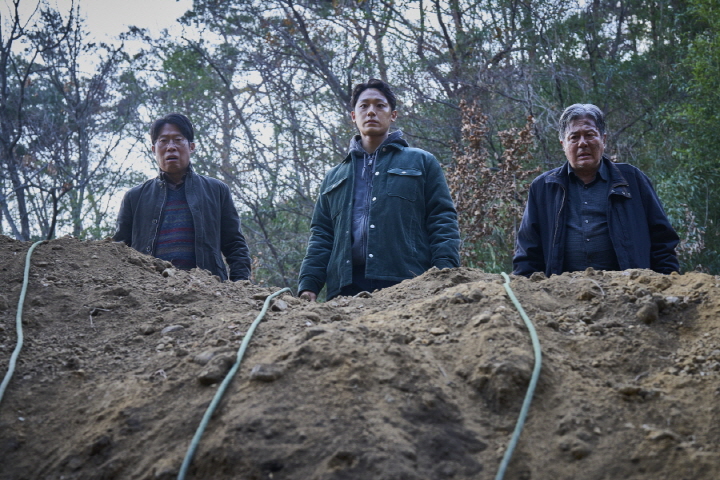
The movie opens with two young shamans heading to LA for their latest job to handle. Some very rich Korean family living there is having an inexplicable family problem which may be associated with some bad spirit, and Hwa-rim (Kim Go-eun) and Bong-gil (Lee Do-hyun) soon come to conclude that their client and his family’s ongoing trouble is caused by the ghost of a certain dead family member, who has incidentally been buried in some remote rural spot in South Korea. All they will have to do next is digging up the grave of that dead family member in question, and they are going to hold a ritual for appeasing the ghost for the peace for not only the ghost but also the client and his family.

For this grave-digging ritual, Hwa-rim recruits Sang-deok (Choi Min-sik), a well-experienced “geomancer” who knows a lot about how to choose auspicious places for graves and buildings. While he is not particularly interested in accepting Hwa-rim’s request at first, Sang-deok eventually agrees to do the job for Hwa-rim, and he soon comes to that grave spot in question along with his undertaker friend/colleague Yeong-geun (Yoo Hae-jin), who will handle the whole process of digging the grave for Sang-deok and Hwa-rim.

Of course, it does not take much time for Sang-deok and Hwa-rim to sense that something is not so right about that grave and its surrounding area. While it seems to be at a fairly good spot, it has several very suspicious signs including its rather odd tombstone, and, above all, the client and his family do not seem to tell everything about that dead family member from the beginning.

This makes their job feel much riskier than before, but Sang-deok and his colleagues begin to work on their grave-digging job mainly because they will get paid a lot for their service, and director/writer Jang Jae-hyun, who previously directed “The Priests” (2015) and “Svaha: The Sixth Finger” (2019), gradually builds up more ominous tension on the screen. Around the point where Hwa-rim performs an exorcism ritual for protecting several hired gravediggers from whatever is associated with the grave, the movie pulls all the stops for more tension and spookiness, and you may be unnerved by some bloody details involved with Hwa-rim’s exorcism ritual (Note: No animal was harmed or harassed during the shooting of this film).

Around that narrative point, Jang’s screenplay takes an unexpected plot turn as its main characters belatedly discover that there was actually more than the coffin of that dead family member below the grave. This will probably sound quite outrageous for some of you, but I was rather amused by that, and the movie is willing to go further with that for more moments of horror and dread. When its main characters happen to spend a night at a small nearby temple along with their unexpected discovery, we clearly see a bad sign right from the beginning, and the movie does not disappoint us at all with an effectively disturbing sequence which eventually reveals an unspeakable secret hidden below that grave.

As its main characters try to deal with their utterly serious situation, the movie has many supernatural elements to be explained to us here and there, and that is where it becomes a bit too shaky to engage us. Even during the climactic part which is a little too long in my humble opinion, the movie still has some more stuffs to explain, and that hurts to some degree what has been steadily built up to that point.

Nevertheless, the movie still works thanks to its strong conviction in the story and characters, and its four main cast members play their broad archetype characters as straight as demanded. As one of the most notable South Korean actors during last two decades, Choi Min-sik surely draws your attention first, and he reminds us that he is still as charismatic as he was in a number of well-known South Korean films including Park Chan-wook’s “Oldboy” (2003). Kim Go-eun, who made an impressive debut in Jung Ji-woo’s “A Muse” (2012), is unflappable as a strong-willed shaman determined to get the job done to the end, and she is especially good when her character must take a huge risk alone by herself later in the story. Lee Do-hyun is also solid as Hwa-rim’s dependable partner, and Yoo Hae-jin, an ever-reliable character actor who can easily switch back and forth between drama and comedy, provides occasional small moments of humor to the story as required.

In conclusion, “Exhuma”, which will be one of the major local box office successes of this year considering its satisfying current result at this point, is entirely without flaws, but it still works well on the whole thanks to its good direction and the commendable efforts from its several main cast members. To be frank with you, I still do not give a damn about all those mumbo-jumbos about geomancy just like I do not care much about exorcism, but the movie held my attention enough to make me go along with a number of good scary moments, so I will not grumble for now.

Posted in Movies | Tagged , , , , | Leave a comment

Dune: Part 2 (2024) ☆☆☆1/2(3.5/4): …and a prophecy is fulfilled

Denis Villeneuve’s “Dune: Part 2” gives us much of what its predecessor promised to us a few years ago. Yes, his previous film “Dune” felt to me like an exercise rather than an entertainment, but I still admired many of its many spectacular technical qualities nonetheless, and I came to have more expectation on that. To my delight and excitement, “Dune: Part 2” exceeds my trivial expectation besides being more intriguing and thought-provoking, and I am glad to see it on the big screen along with many other audiences in last evening.

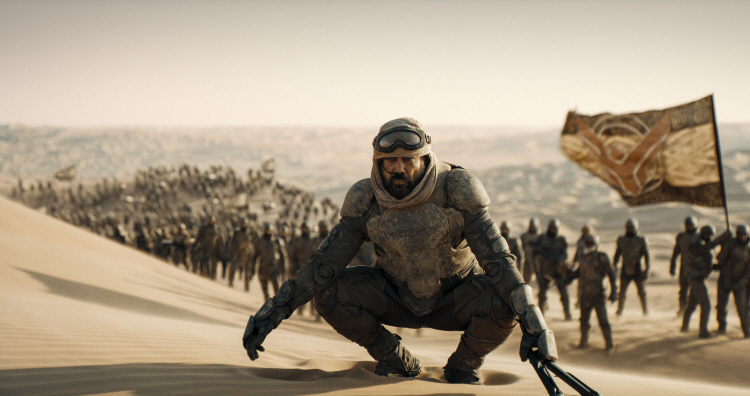
The movie begins at the point not so long after the finale of “Dune”. After being forced to exile into the vast desert world of a planet named Arrakis due to the ruthless scheme of Baron Vladimir Harkonnen (Stellan Skarsgård) and the Emperor, Paul Atreides (Timothée Chalamet), a young space nobleman who promptly succeeded his betrayed father, and his mother Lady Jessica (Rebecca Ferguson) come to join the Fremens, the local desert people of Arrakis who have resisted against whoever trying to control Arrakis from the outside for a certain precious material existing only in Arrakis. Despite the considerable support from Stilgar (Javier Bardem), the leader of the Fremen tribe at Sietch Tabr, many other Fremen people are not particularly willing to accept these two outsiders at first, so Paul and Lady Jessica must do some work for proving their worth to their new allies.

As already shown to us in detail, Paul has shown the considerable potential of becoming a figure to emerge from whatever has been planned for many generations by Bene Gesserit, a shady and powerful organization for which Lady Jessica has served for years. Since his arrival in Arrakis, he becomes more aware of not only his emerging power and but also the destiny to be unfolded right in front of him, and that makes him more driven to his vengeance upon all of his sworn enemies out there, though he is often reluctant for what may happen because of him and his power.

Nevertheless, things keep rolling him and others toward the inevitable, and the screenplay by Villeneuve and his co-writer Jon Spaihts, which is adapted from the second half of the novel of the same name by Frank Herbert, gradually adds more complexity to its story and characters. As he comes to prove himself more and more, his mother’s smart religious strategy over the Fremen people all around Arrakis sets the ground for him step by step, and Stilgar and many other Fremen people become more eager to worship and support them than before, but he cannot help but unnerved as sensing more of the possible danger in his and his mother’s rapidly growing influence over the Fremen people. They are virtually igniting what has been accumulated so much via these desperate people’s fundamentalistic belief, and we become more aware of several uncomfortable aspects of their plan for survival and revenge.

Yes, Paul can be regarded as your average white savior hero just like T.E. Lawrence in “Lawrence of Arabia” (1962), and the movie thoughtfully shows some doubt and question on Paul’s eventual ascendancy as the prophesied messiah, or mahdi, throughout the story. During a certain big scene where Paul finally decides to go all the way in front of many others for whatever is to be fulfilled by him in the end, Hans Zimmer’s ever-overpowering score becomes quite aggressively disturbing instead of sounding merely glorious, and this ominous impression lasts on us to the end of the movie.

These and other interesting ideas and questions in the film are often enriched by the first-rate technical achievement of Villeneuve and his crew members, some of whom incidentally won Oscars for the previous films. While the production design by Patrice Vermette and Patrice Vermette and the costume by Jacqueline West are constantly awesome to say the least, the cinematography by Greig Fraser is so grand and magnificent in every shot that I will not be surprised if he garners another Oscar in the next year. Around the expected big finale, the movie surely throws lots of stuffs including those giant sandworms across the screen, but the result does not look messy or confusing at all under Villeneuve’s masterful direction, and you will not probably mind much when the movie leaves some possibility for the next film to come.

As the center of the story, Timothée Chalamet does his duty as much as required. While he sometimes looks a little deficient in case of several big crowd scenes to be galvanized by his character’s charismatic leadership, he is more convincing as a young man still not so sure about his destiny, and he is particularly effective in his character’s complicated inner conflict along the story.

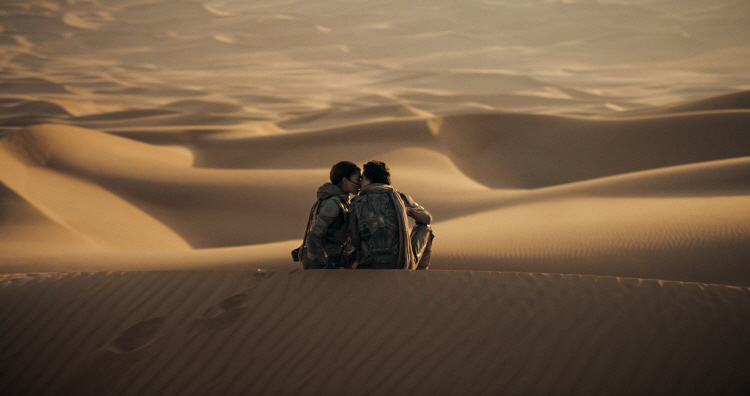
Around Chalamet, a number of various performers ably fill their respective colorful spots. Zendaya is suitably feisty and spirited as a young Fremen woman with whom Paul comes to fall in love, and it is a bit shame that the movie does not delve more into her character’s mixed feelings about Paul and what he comes to represent. Rebecca Ferguson, Javier Bardem, and Josh Brolin have each own moment to shine as Paul’s main supporters, and Ferguson is especially terrific when Lady Jessica comes to show more scheming sides of hers later in the story. On the other side, Austin Butler, Dave Bautista, Christopher Walken, Florence Pugh, Léa Seydoux, and Charlotte Rampling bring more intrigue to the story, and Stellan Skarsgård has a lot of fun again with his strikingly baroque villain character.

On the whole, “Dune: Part 2” is more impressive and entertaining compared to its predecessor, and it is definitely one of the main highlights of this year. Although it looks and feels a lot more serious than what I timidly imagined when I read the first four Dune novels 24 years ago, “Dune” and “Dune: Part 2” captivated and mesmerized me for their sheer cinematic power, and I sincerely hope that whatever will come next will be good enough to reach to the high standard of these two movies at least.

Posted in Movies | Tagged , , | 2 Comments