Kinds of Kindness (2024) ☆☆1/2(2.5/4): Kinds of Self-indulgence

I sometimes found Yorgos Lanthimos’ early films such as “Dogtooth” (2009) a bit too dry and vicious for me, and his latest film “Kinds of Kindness”, which is currently available on Disney+ in South Korea, shows him back in his good old nasty mode in a rather self-indulgent way. While it surely strikes us hard with sudden moments of absurd violence from time to time, the movie also feels overlong and excessive at times during its 164-minute running time, and it is not even helped that much by its triptych narrative structure.

The movie consists of three different stories vaguely connected to each other by a certain minor figure named “R.M.F”. At the beginning of the first story, “The Death of R.M.F.”, we see this figure coming to a big house where he gets paid for doing something later, and we soon come to see what he is exactly required to do for that.

Around that narrative point, we are introduced to a guy named Robert (Jesse Plemons), who is the actual hero of the first story. At first, he seems to have everything he wants for his life on the surface, but then it is gradually revealed that he is thoroughly controlled by his eccentric boss Raymond (Willem Dafoe) everyday in exchange for his affluent suburban life. Day by day, Robert must follow every instruction from his boss, and he has had no problem with that during last several years, but then, what do you know, there eventually comes a point where he becomes quite conflicted when his boss demands to do something quite unethical to say the least.

What follows next is how Robert struggles to handle the absurd consequence from his refusal to follow that certain demand of his boss. Inevitably coming to realize that he actually prefers to be under constant control to being totally free, Robert desperately tries to regain his former position, but, of course, there is a big price for that, and the movie certainly has some naughty fun with how far he is willing to go.

In case of the second story, “R.M.F. is Flying”, it starts with how things have been gloomy from a young police officer named Daniel (Jesse Plemons). His wife Liz (Emma Stone) was recently gone missing at sea along with several colleagues of hers, and it is quite possible to him that he will have to prepare for the worst scenario. While his colleague/best friend Will (Mamoudou Athie) tries his best for providing some emotional support, Daniel still finds himself brooding over the possibility of his wife’s death, and this certainly affects his work a lot.

And then his wife is eventually found, but Daniel only comes to have a rather morbid delusion instead of being delighted by her miraculous return. He suspects that she is an impostor, and the situation becomes more disturbing when his sudden paranoid gets worse day by day. Jesse Plemons, who received the Best Actor award when the movie was premiered at the Cannes Film Festival early in this year, is quite effective as slowly dialing up his character’s madness along the plot, and Emma Stone, who was absolutely stunning in her Oscar-winning performance in Lanthimos’ previous film “Poor Things” (2023), is also convincing while never overshadowing Plemons’ excellent acting.

Compared to the first two stories, the third story, “R.M.F. Eats a Sandwich” is more glacial and distant in comparison. At first, we are introduced to Emily (Emma Stone) and Andrew (Jesse Plemons), the two young members of an odd religious cult who have been looking for someone very special according to their charismatic leader. After their another failure, Emily and Andrew go back to their headquarters, and we get some glimpses of how strange and absurd their religious belief really is.
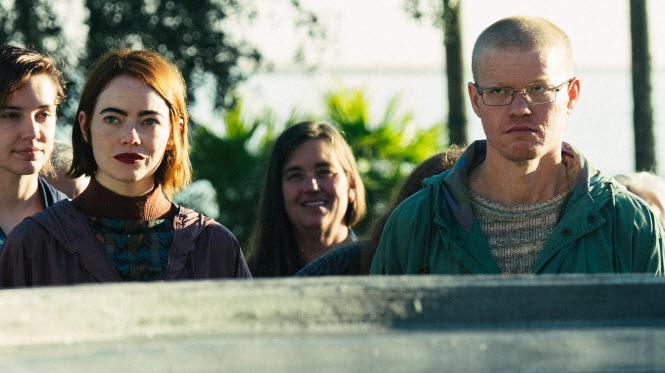
Anyway, after getting thrown out the group due to her unfortunate night with her ex-husband, Emily meets Rebecca (Margaret Qualley), a young woman who previously approached to Emily and Andrew and claimed that her twin sister is the one they are looking for. Although she did not believe Rebecca at that time, Emily comes to see that Rebecca’s twin sister may help her get back in the group, and we are served with several extreme moments as Emily finds herself going much further than expected for her desperate goal.

However, the story fails to develop its broad characters more for engaging us, and so are the other two stories, which are a bit more amusing but mostly end up scratching the surface. At least, the screenplay by Lanthimos and his co-writer Efthimis Filippou, who previously collaborated with Lanthimos in “The Lobster” (2015) and “The Killing of a Sacred Deer” (2017), provides heaps of stuffs to play for Plemons, Stone, and several other cast members, who surely have some ball with their nasty and absurd materials. Willem Dafoe and Margaret Qualley, both of whom also incidentally appeared in “Poor Things”, are clearly savoring every moment of theirs, Joe Alwyn, Hong Chau, and Mamoudou Athie also have each own moment to shine.

In conclusion, “Kinds of Kindness” is a letdown considering how much Lanthimos achieved in “Poor Things” and “The Favourite” (2018), but it has some distinctive touches which will remind you again of why he is one of the most interesting filmmakers of our time. As a matter of fact, he is already ready to move onto the next project at present, and I sincerely hope that his next film will be more controlled and interesting compared to this indulgent exercise in style.

Posted in Movies | Tagged | Leave a comment

Eileen (2023) ☆☆1/2(2.5/4): That unnerving attraction between them

William Oldroyd’s second feature film “Eileen” is a rather uneven mix of noir thriller and coming-of-age drama. The movie is fairly compelling during its first two acts thanks to its good mood and storytelling as well as the two talented actresses at the center, but, alas, it stumbles a lot as taking a left turn during its last act, and the finale feels quite unsatisfied without enough sense of resolution.

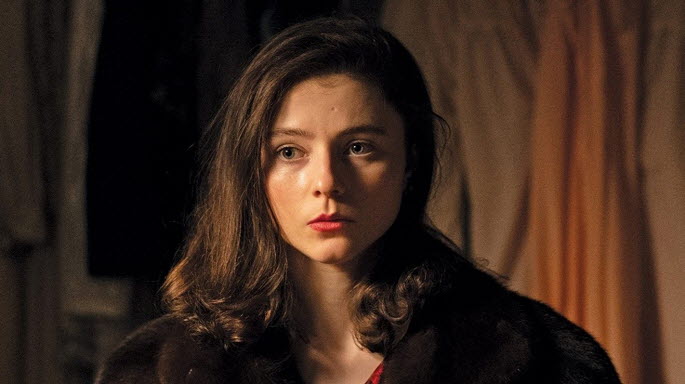
Thomasin McKenzie, a promising actress who has steadily advanced during last several years since her breakout turn in Debra Granik’s “Leave No Trace” (2018), plays Eileen Dunlop, a young woman who has been hopelessly stuck in her little hometown in Massachusetts for many years. While she does not like much her office job at a nearby correction facility for adolescent boys, she also has to deal with her alcoholic father Jim (Shea Wingham) everyday. Sadly, there is not anyone who can support or comfort her at all, and it seems that she is destined to be imprisoned in her ongoing misery and loneliness for the rest of her life.

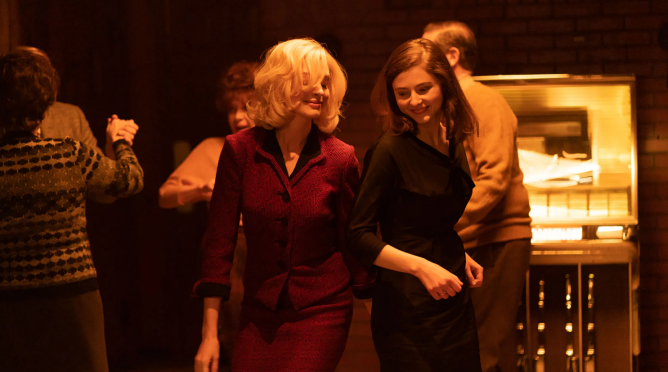
And then there comes an unexpected change via Rebecca (Anne Hathaway), a beautiful and confident female psychiatrist who starts to work in the aforementioned correction facility. While watching how Rebecca holds her own place well in front of many male staff members of the correction facility, Eileen cannot help but become more impressed by Rebecca, and Rebecca seems to be aware of that even though she does not interact with Eileen that much at first.

When Rebecca later suggests a little drinking night between them, Eileen cannot possibly be excited more. Although the end of their rather wild drinking night does not end up that well for Eileen, she is glad for finally having someone she may actually lean on, and she finds herself becoming more mesmerized by Rebecca’s beauty and confidence, which certainly reminds her more of how she has looked plain and inconsequential throughout her whole life.

Meanwhile, as keeping making one trouble after another as before, Elieen’s father slowly begins to sense some change in his daughter, and, not so surprisingly, he does not approve of that much. Eileen becomes more concerned about him when it turns out later that he will die sooner or later due to his worsening alcoholism, but her father also feels more like a burden to her than before, and we can easily sense a trouble to come when she is asked to keep a certain old item of her father under her care just for the safety of him as well as anyone around him.

The screenplay by Luke Goebel and Ottesa Moshfegh, which is based on the novel of the same name by Moshfegh (She also participated in the production of the film, by the way), adds more tension to the story and characters when Rebecca comes to pay more attention to a certain young inmate in the correction facility. It looks like there is something hidden behind his horrible murder case, and Rebecca is quite determined to get to the bottom of it even though she cannot get any cooperation from the mother of the inmate.

While unfortunately hampered by several narrative hiccups during its last act, the movie continues to hold our attention at least due to its solid technical aspects. Thanks to cinematographer Ari Wagner, who previously worked with Oldroyd in his debut film “Lady Macbeth” (2016) and then was deservedly Oscar-nominated for Jane Campion’s stellar masterwork “The Power of Dog” (2021), the stark and gloomy atmosphere surrounding its main characters is constantly palpable on the screen, and we come to get more understanding on its titular character’s misery and despair with her life – and how she is irresistibly attracted to her new friend. As they subtly revolve around each other, the movie sometimes feels like a psychological thriller novel Patricia Highsmith could have written if she had had more artistic freedom during that time, and McKenzie and her co-star ably convey to us enough emotional undercurrents around their characters.

Diligently carrying the film to the end, McKenzie did a commendable job of embodying her character’s quietly desperate status, and her low-ley acting is complemented well by Hathaway’s natural star quality. With her character’s striking blonde hairdo and chic attire, Hathway instantly draws our attention right from the beginning, and it is a shame that the movie fails to explore more of her character’s relationship with Eileen when they find themselves in a very tricky situation during the last act. Despite his rather thankless task, Shea Whigham brings some bitter human qualities to his hopelessly damaged character, and the special mention goes to Marin Ireland, a relatively unknown veteran character actress who has appeared here and there in a number of notable films such as “Hell or High Water” (2016) and “The Irishman” (2019). She must be quite believable during one key scene later in the story, and I must tell you that she did much more than holding her own small place well between McKenzie and Hathaway.

On the whole, “Eileen” is another disturbing female drama film from Oldroyd, but it is not as successful as his previous film “Lady Macbeth”, a chilling period drama about one young married woman’s ruthless descent into evil and corruption. Yes, the movie is engaging to some degrees thanks to a number of admirable elements including the commendable performances from its main cast members, so you will not be bored a lot, but it could do its job better in my humble opinion.

Posted in Movies | Tagged , , | Leave a comment

Beetlejuice Beetlejuice (2024) ☆☆☆(3/4): Still zany and rambunctious

Tim Burton’s new film “Beetlejuice Beetlejuice” is as quintessential as you can expect from Burton. The story itself is more or less than a mere ground for many odd, quirky, and grotesque stuffs to be presented here and there, but it is clear that Burton and his cast and crew have a spirited fun together for making this movie, and you may overlook its many flaws including those blatantly nostalgic touches if you have some soft heart for its 1988 predecessor.

The story is set in 36 years after what happened in “Beetlejuice” (1988). Lydia Deetz (Winona Ryder) is now a weary and seasoned adult woman in contrast to that gloomy high school girl in the 1988 movie, and the opening scene shows her shooting her TV show which has promoted her psychic talent, though nobody believes that much even though she can really see dead people like that young kid in “The Sixth Sense” (1999).

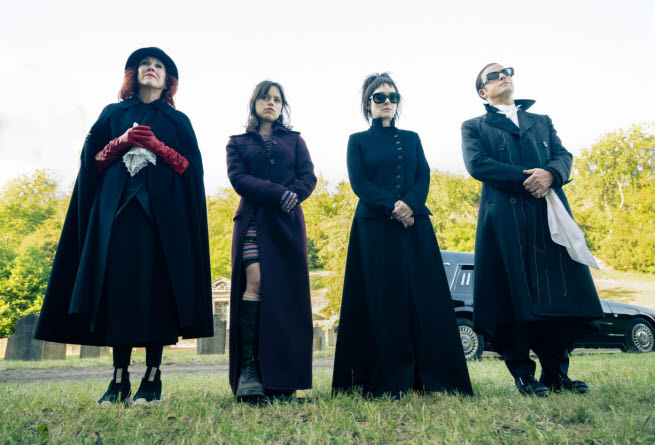
The early part of the movie quickly establishes how things have been messy for Lydia during several recent years. While her stepmother Delia (Catherine O’Hara) is mostly occupied with her self-absorbed artistic activities, she has also been estranged from her adolescent daughter Astrid (Jenna Ortega) since her environmentalist husband’s death, and then there comes the shocking news of her father’s death (Her father was played by Jeffrey Jones in the 1988 film, and, probably due to Jones’ current criminal status, the movie chooses a rather amusing way for presenting his character’s gruesomely unfortunate demise and the following afterlife condition of his).

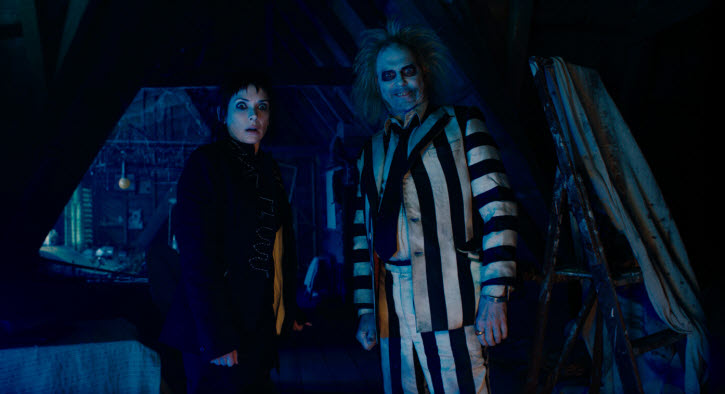
And there is also a sudden supernatural issue involved with, yes, Betelgeuse (Michael Keaton), a ghoulish demonic entity who is still quite eager to approach to Lydia as before. This amusingly putrid dude is now running a little bio-exorcism agency in the realm of afterlife, but then he finds himself in a big trouble due to when a certain fearsome entity returns to threaten not only him but also the whole realm of afterlife.

While busily juggling a lot of these and other things, the screenplay by Alfred Gough and Miles Millar, which is developed from the story they wrote with Seth Grahame-Smith, often loses its narrative focus and momentum, but Burton and his crew members including cinematographer Haris Zambarloukos and composer Danny Elfman, who was always dependable as working in almost all of Burton’s films, keep things bouncing from one weirdly funny moment to another. Just like its 1988 predecessor, the film is packed with lots of style and detail to be cherished, and Burton wields more of his own distinctive touches here than he did during last 12 years since his Oscar-nominated animation film “Frankenweenie” (2012). Although the realm of afterlife does not feel that fresh while often looking like being stuck in the 1970s or 1980s, you may chuckle a bit as observing a number of inspired moments such as the one which is clearly influenced by a certain famous American musical variety television show from the 1970s.

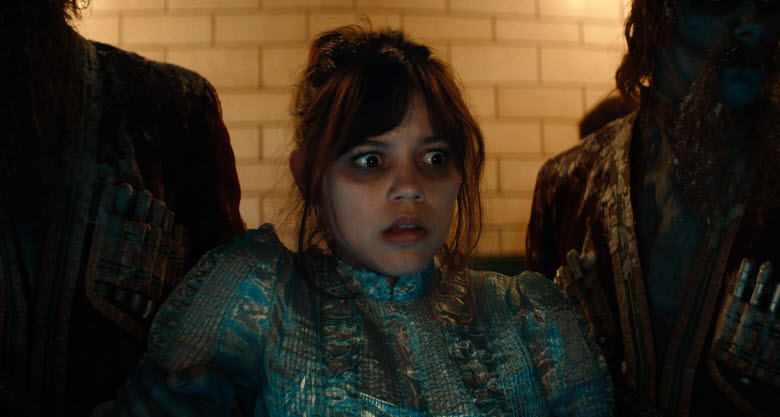
Above all, the movie has several engaging characters we can actually care about. While the relationships among Lydia and her surviving family members are problematic to the core, they eventually stick together when Astrid inadvertently gets herself involved with the realm of afterlife later in the story, and her and her mother’s eventual reunion with a certain key figure in the story turns out to be more sincere than expected, even though we cannot help but get tickled by this figure’s current afterlife status.

While the movie comes a bit too late in my humble opinion, it surely comes to Winona Ryder at the right moment at least. Although she had to endure a pretty low point in her career in the early 2000s, Ryder’s career was unexpectedly boosted by her wonderful supporting turn in recent Netflix drama series “Stranger Things”, and she is clearly enjoying herself as imbuing her familiar character with neurotic weariness. On the opposite, Catherine O’Hara and Jenny Ortega, who is no stranger to looking moody thanks to her lead performance in recent Netflix comedy series “Wednesday”, complement Ryder in each own way, and O’Hara delightfully chews every moment of hers as making her narcissistic character somehow quite endearing.

Above all, the movie is always energized by Michael Keaton, who willingly throws himself into his very unpleasant and wacky character with sheer gusto as he did in the 1988 film. Whenever Keaton appears on the screen, Burton does not hesitate to pull out all the stops, and he and Keaton do not disappoint us at all during the climactic sequence, which is quite overstuffed to say the least but also undeniably entertaining for its shamelessly zany and rambunctious qualities.

In case of several other cast members of the film, they are rather under-utilized while leaving an impression to some degree. Although her villain character is not that memorable, Monica Bellucci has a few moments to shine at least. Danny DeVito, Justin Theroux, Burn Gorman, and Willem Dafoe are well-cast in their respective supporting parts, and Dafoe and DeVito certainly feel right at home with Burton’s gothic sensibility.

On the whole, “Beetlejuice Beetlejuice” does not surpass its predecessor much, but its redundant aspects are compensated by the genuine spirit felt from the good efforts from Burton and its cast and crew members. Although he seems behind his prime from time to time, Burton shows here that he has not lost his artistic energy and creativity yet, and that is certainly a nice thing to watch.

Posted in Movies | Tagged , , | Leave a comment

Mother’s Kingdom (2024) ☆☆☆(3/4): Their kingdom to collapse

South Korean independent film “Mother’s Kingdom” is a somber but unnerving family drama about those tricky questions of belief and doubt. How much are you willing to go along with what is supposed to be a truth? And what are you going to do if that actually turns out to be a lie? As observing its main characters’ quiet but intense personal struggles along the story, the movie slowly reveals whatever has been lying among them beneath the surface, and you will come to reflect more on its main subjects after it is over.

At first, we are introduced to Kyeong-hee (Nam Gi-ae), a middle-aged beautician who has run an old, small beauty salon in her neighborhood for many years. She has lived with her adult son Ji-wook (Han Ki-jang) in their little residence, and the opening scene shows them going through another day of their plain daily life.

However, we begin to notice a number of odd behaviors and symptoms from Kyeong-hee. While she is frequently forgettable, her mind sometimes seems to be gone to somewhere to the bafflement of others including her son. Naturally, he takes her to a hospital for medical examination, and, what do you know, it soon turns out that her mind has been going through the early onset of dementia. While quite confused and devastated, Ji-wook tries his best for taking care of her more as her devoted son after she eventually shuts down her beauty salon. However, Kyeong-hee’s mind irreversibly becomes more deteriorated as days go by, and this certainly frustrates him a lot.

And then she blurts out something very unexpected, which is associated with her husband’s sudden disappearance in her and her son’s past. Maybe what Kyeong-hee says is merely another symptom of her increasingly confused mind, but Ji-wook cannot help but reflect more on that, and then he comes to question what had been told to him during his childhood years. Was his father just vanished for no apparent reason at that time? Or, was his mother actually responsible for that as she says?

While his mother becomes more distant to him due to her worsening dementia, there comes another crucial figure in the story. This person in question is a pastor named Joong-myeong (Yu Seong-ju), and he is the younger brother of Ji-wook’s father. Although having been quite ill due to his terminal kidney disease, Joong-myeong becomes more determined to find what really happened to his older brother, and he certainly bothers both Kyeong-hee and her son a lot when he later approached to them, respectively.

Now this looks like a familiar setup for melodramatic mystery, but the screenplay by director/writer Lee Sang-hak, who makes a feature film debut here after making several short films, takes its time for building up its three characters more along the story. As Kyeong-hee’s mind often goes astray into her repressed memories from the past, we come to gather how unhappy and frustrating she was during that time, which looks like a strong motive for murdering her husband. We also get some little amusement from how Joong-myeong uses ventriloquism as the main part of his church sermon, because he often looks like ventilating his hidden feelings and thoughts through his hand puppet and its squeaky voice. In case of Ji-wook, who has incidentally been earning his meager living via selling his self-help book, he slowly gets imploded inside his mind as becoming more confused about what he has accepted as a truth for years, and this difficult situation of his ironically resonates with his promotional speech on the difference between truth and fact early in the story.

During its last act, the movie becomes a bit more tense as one thing after another is eventually revealed to Ji-wook. There is a disturbing scene unfolded within a certain abandoned space in his and his mother’s residence, and it will probably take you back to one particular short horror story by Edgar Allen Poe. Although the finale is rather ambiguous without wholly clarifying everything in the story, it still chills us to some degree as conveying to us more about how much Ji-wook and his mother have been bound together by those secrets and lies between them.

As a small chamber character drama, the movie surely depends a lot on the talent and presence of its three main cast members, who all are convincing in their respective roles. While ably sticking to a seemingly neutral mode, Han Ki-jang diligently holds the center for his two co-stars’ relatively more prominent acting. Nam Gi-ae depicts well her character’s gradually elusive state, and she is especially wonderful when Kyeong-hee comes to have a morbid but harrowing moment of some inner peace for her around the end of the movie. Yu Seong-ju is also effective in his nuanced acting, and he and Nam did a good job of subtly suggesting a lot of history between their characters during a certain key scene of theirs.

On the whole, “Mother’s Kingdom” may feel a bit too dry and slow at first, but it eventually comes to us as a darkly intriguing tale about belief and faith, though it never spells out its religious aspects at all. In my inconsequential opinion, this is one of more interesting South Korean films of this year, and it will be interesting to see whatever may come next in its promising director during next several years.

Posted in Movies | Tagged , , , , | Leave a comment

Fly Me to the Moon (2024) ☆☆(2/4): An uneven hodgepodge of comedy and drama

“Fly Me to the Moon” tries to be a lot of things at once, but it fails to work as any of them on the whole. While it busily swings back and forth between comedy and drama as intended, both of its comedy and drama do not work enough due to a number of glaring weak aspects here and there, and the result is an incoherent hodgepodge which does not leave much impression on the whole.

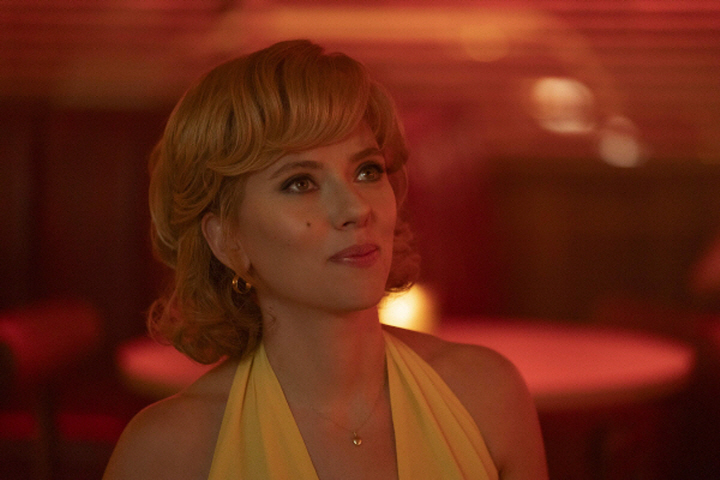
The fictional story of the movie is set in US during the 1960s, and its comic part mainly revolves around Kelly Jones (Scarlett Johansson), a young and confident female advertising executive who can be quite sneaky and deceptive for her business goals. The opening scene shows her skillfully persuading several male executives to make a deal with her, and you may be a bit amused by how wily she can be for getting her job done.

Anyway, not long after this successful job of hers, Jones is approached by a shady government agent named Moe Berkus (Woody Harrelson), who offers her what may be the biggest job in her rising professional career. While they are in the middle of the Apollo Program, the folks in NASA really need to improve their public image for getting more fund for beating the competing space program of the Soviet Union, and that certainly requires Jones’ particular set of skills. Mainly because the offer turns out to be something she cannot possibly refuse due a little personal reason, Jones agrees to work for NASA, and she soon goes to the NASA headquarters in Florida along with her female assistant.

Of course, things do not look that promising from the beginning, and the public opinion on NASA keeps going down as the American society is riddled with many other social/political issues such as the Vietnam War, but Jones is not daunted by that at all. She soon does a pretty good job of improving the public image of NASA much more than before, and that makes the public more interested and enthusiastic about NASA and its ongoing space program.

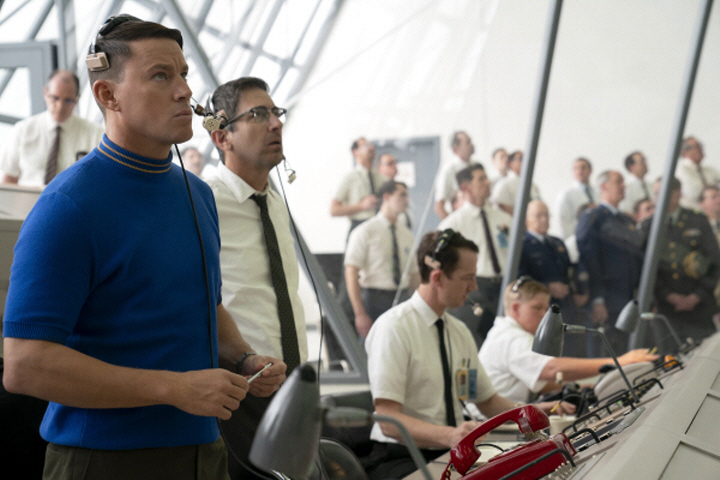
However, one particular person in NASA is not so pleased with what Kelly is doing, and that person in question is Cole Davis (Channing Tatum), the launch director at the Kennedy Space Center of NASA. He and many other technicians under his supervision have been really trying their best for the success of the Apollo 11, and he certainly does not want to get their process interrupted by Kelly’s relentless PR stuffs including the blatant commercials associated with those three astronauts of Apollo 11.

Naturally, Jones and Davis clash a lot with each other right from when their first day in NASA, but, what do you know, they also find themselves attracted to each other as they constantly push and pull each other during next several months. As coming to recognize that they are in the same team after all, they come to open themselves a bit more to each other, and some possibility of romance is accordingly suggested to us.

However, the movie sadly lacks any kind of chemistry between its two lead performers. While he can be effectively serious or funny as shown from “Foxcatcher” (2014) or “The Lost City” (2022), Channing Tatum somehow looks merely stiff and bland here, and he also fails to generate some gravitas in case of his character’s personal story involved with that infamous accident during the early years of the Apollo Program. In case of Scarlett Johansson, who incidentally also participated in the production of the movie, she surely has more stuffs to handle for her more colorful performance, but her good efforts are frequently dulled by Tatum’s rather blunt counteracting, and the possible romance between their characters becomes less believable as a result.

Meanwhile, the screenplay by Rose Gilroy, which is developed from the story by Bill Kirstein and Keenan Flynn, gets more distracted as clumsily changing its direction during its last act, where Berkus makes Jones make the fake video clip of the Moon Landing just in case. There is some suspense as Jones and Davis try to stop this fake video clip getting broadcast all over the world instead of the real one, but everything in this part is so predictable to the core that you will not be so surprised to see how a certain black cat comes to function as something equivalent to Chekhov’s gun.

Besides Johansson and Tatum, the rest of the main cast members do as much as required by their respective roles, though they are mostly under-utilized to our disappointment. While Woody Harrelson provides some comic relief as expected, Ray Romano looks fairly serious as Davis’ close colleague, and Jim Rash has the most fun in the film as a neurotic gay filmmaker hired to shoot that fake video clip of the Moon Landing.

In conclusion, “Fly Me to the Moon”, directed by Greg Berlanti, is dissatisfying as failing to develop enough any of its comic potential, and your mind will probably keep going back to a number of much better films associated with NASA. While “The Right Stuff” (1983) and “Apollo 13” (1995) surely come first, “Hidden Figures” (2016) and “First Man” (2018) are also both compelling and entertaining in each own way, and I must tell you that all of these films are sometimes actually more humorous than whatever I saw from “Fly Me to the Moon”. Believe me, you will have a more productive time with any of these films, and you may thank me for that.

Posted in Movies | Tagged , , | Leave a comment

Moongyeong: More than Roads (2024) ☆☆☆(3/4): Her Journey with a monk

South Korean film “Moongyeong: More than Roads” follows a little journey of healing between two different women who happen to accompany each other by coincidence. Although it will require some patience from you as your average slow movie, it will gradually engage you once you go along with its slow and reflective narrative, and you will be moved by how much they are healed and then changed around the end of the story.

At first, the movie establishes the stressful situation of one of its two main characters. Moon-gyeong (Ryu Abel) is a young woman working in some big company located somewhere in Seoul, and her little department only has two female employees besides her, but we slowly begin to sense the tension among them as they busily work on their latest company project. While it is evident that the eventual success of that project is due to the considerable efforts from one of Moon-gyeong’s two co-workers, this young woman does not receive any appreciation or recognition at all, and she is even about to be let go just because her contract period is soon going to be over.

When this young woman eventually shows her longtime discontent in front of many others in the company, she is callously disregarded by their male boss. Moon-gyeong immediately comes to defend her co-worker, but, alas, she is already too drunk, and then she finds herself hospitalized due to her serious stomach problem, which was probably caused by her ongoing stressful circumstance.

Fortunately, Moon-gyeong returns to her workplace a few days later, but that co-worker of hers is already gone, and that prompts her to do something about that. She decides to take an impromptu 3-day vacation for locating her co-worker, but she really has no idea on how to find her co-worker, because she only knows that her co-worker’s hometown is a rural town which is also named Moongyeong (The movie surely makes a bit fun of that, by the way).

Anyway, Moon-gyeong goes down to Moongyeong, and then we are introduced to a young female monk named Ga-eun (Cho Jae-kyeong), who happens to be ready to go her own way right after finishing her novice period in a big temple near to Moongyeong. She and Moon-kyeong come across each other via a little accident involved with one cute stray dog, and they soon find themselves going around here and there in the town for locating the owner of that injured stray dog. Yes, they can simply take it to a nearby animal shelter after going to a local veterinarian, but the local veterinarian tells them that it will likely get euthanized several days later, and that is certainly the last thing they want. After all, they already named it “Gil-soon”, and the dog already becomes quite friendly to them.

As these two women come to spend more time with each other as taking care of Gil-soon together, the movie slowly immerses us into the soothing rural atmosphere surrounding them, and we are not so surprised when Moon-gyeong and Ga-eun come to open themselves more to each other as two different persons with each own emotional scar to deal with. While Moon-gyeong is still concerned a lot about her co-worker, Ga-eun later confides to Moon-gyeong about how she decided to become a monk after one terrible incident which still haunts her mind, and they come to bond more with each other as becoming more reflective about their current status.

The main subject of the story becomes more evident to us when Moon-gyeong and Ga-eun subsequently come to stay at the house of one generous old lady who happens to mistake Gil-soon for her recently lost dog. This old lady has lived with an adolescent granddaughter of hers, and it is apparent from the beginning that her dear granddaughter has some serious emotional issue. As she and Ga-eun come to spend more time with their kind host, Moon-gyeong becomes more curious about this young troubled girl, and, what do you know, she later gets to know a little more about this young troubled girl mainly thanks to Gil-soon.

Although the mood becomes a bit melodramatic around the finale, the movie sticks to its pensive attitude as showing more care and attention to its main characters, and its two lead actresses diligently carries the movie together. Ryu Abel, who previously appeared in South Korean independent film “Seire” (2021), ably depicts her character’s exhausted mental condition, and that is why it is touching to see how her character gets more brightened and relaxed bit by bit along the story. On the opposite, Cho Jae-kyeong, who incidentally makes a debut here in this film, effectively complements her co-star with her gentle tranquility, and we will probably see more of her considerable talent during next several years. In case of several main cast members of the movie, Choi Soo-min, Chae Seo-an, and Kim Ju-a are also solid in their respective supporting parts, and the special mention must go to that dog in the film, which effortlessly steals the show whenever it is on the screen.

Overall, “Moongyeong: More than Roads” is a typical road movie, but its slow journey is packed with enough mood and details under the competent direction of director/writer Shin Dong-il, who drew my attention for the first time with “Host & Guest” (2005) and “My Friend & His Wife” (2006) but has been less active during last several years since “Come, Together” (2016). Although this is not his best work in my humble opinion, it is still good enough for recommendation, and you certainly should check it out if you want to be soothed a bit for a while.

Posted in Movies | Tagged , , , | Leave a comment

Divertimento (2022) ☆☆☆(3/4): To become a conductor

French film “Divertimento” is a competent feel-good drama film inspired by one remarkable real-life story. While there are some expected conventional moments, the movie casually flows along with its ambitious young heroine as she struggles to find her own personality and strength as a future orchestra conductor, and the overall result is engaging enough to hold our attention while surely earning its lovely finale.

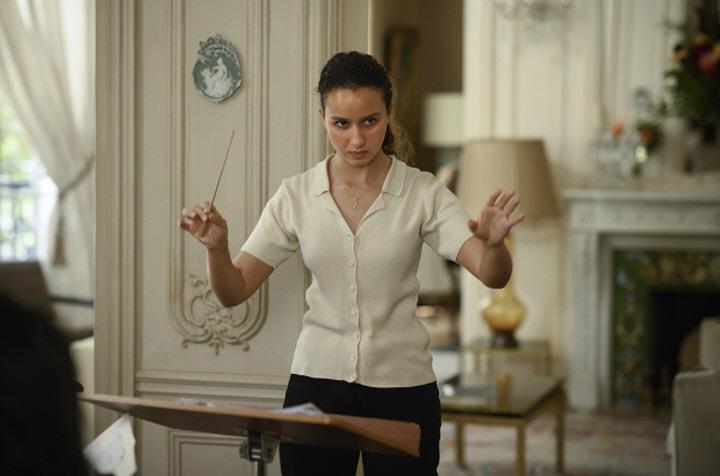
The story is about the early years of Zahia Ziouali (Oulaya Amamra), who, as shown to us around the end of the film, has been well-known as one of few female orchestra conductors in France (and the world, of course). Even when she was very young, she was quite interested in music, and her Arab immigrant parents gladly encouraged her and her younger twin sister Fettouma (Lina El Arabi) to pursue their growing interest in music.

When they become 17, Zahia and Fettouma are ready to go further as beginning to practice their respective musical skills at some prestigious conservatory in Paris, but, of course, things are not easy for them at all from the very first day. Besides going back and forth between Paris and their little local city outside Paris everyday, they instantly feel the social/economic gap between them and many others at the conservatory, most of whom regard them in rather condescending ways.

Furthermore, Zahia finds herself more disregarded and ridiculed by others due to her ambition for becoming a first-class professional orchestra conductor someday. Many of other students are not so serious about her even when she is allowed to practice in front of others, and she becomes quite frustrated to find herself being pushed aside for her male competitor due to sexism.

And then, what do you know, there comes an unexpected chance for her on one day. She and other students happen to attend a lecture by one legendary conductor, and this famous conductor, Sergiu Celibidache (Niels Arestrup), happens to take a notice of Zahia when she boldly presents her conducting skill in front of Celibidache and others. Although she is not that good enough in his standard, Celibidache instinctively discerns her considerable raw skill and potential, and, to her delight, he promptly decides to teach her.

Of course, Celibidache is alternatively demanding and encouraging right from her first day with him, and that certainly frustrates her a lot at times. Nevertheless, Zahia keeps trying to improve her natural skill with more principle and style under Celibidache’s guidance, and she even comes to decides to assemble a little local orchestra for herself and several other enthusiastic colleagues of hers, which is named, yes, “Divertimento”

Again, Zahia comes upon one obstacle after another along the story, but the screenplay by director Marie-Castille Mention-Schaar and her co-writer Clara Bourreau thankfully avoids being too melodramatic about its heroine’s small and big struggles in the story. While her parents and other family members including Fettouma are supportive as usual, her colleagues come to show more comradeship to her, and Celibidache continues to impart his wisdom to his promising pupil even though he can be very strict to her from time to time.

Regardless of how much the movie is actually close to its real-life story, there are a number of individual moments which will touch you in one way or another. While I particularly like a small moment when Zahia finds a way to teach one mentally disabled kid how to play a musical instrument, I assure you that you will be quite touched by an unexpected moment of reconciliation which Zahia arranges for one of her orchestra members and his estranged father, and you will also come to cheer for her a lot when she eventually discovers what is absolutely necessary for moving her talent and career up to the next level.     

The movie is constantly fueled by its heroine’s growing determination about her future professional career, and her spirit and personality are vividly conveyed to us via the earnest performance of Oulaya Amamra. Besides looking quite committed during several key scenes where her character conducts an orchestra, Amamra is also believable in her character’s artistic struggles, and we can actually sense her character’s gradual artistic growth along the story.

Around Amamra, several other main cast members play each own part well without overshadowing her at all. While Lina El Arabi has her few moments to shine as her character goes through her own artistic struggles, Zinedine Soualem and Nadia Kaci bring some warmth to the story as Zahia’s caring parents, and Niels Arestrup, whom I still remember well for his unforgettable supporting turn in Jacques Audiard’s great film “A Prophet” (2009), provides the movie a touch of class as required.

 In conclusion, “Divertimento” handles its conventional elements better than expected, and it also did a splendid job in case of the soundtrack, which is packed with many different classic pieces including a certain famous work by Maurice Ravel. Although it does not exceed my expectation, the movie achieves as much as intended with enough heart and skill, so I will give it a good grade without much complain.

Posted in Movies | Tagged , , , , | Leave a comment

Love According to Dalva (2022) ☆☆☆(3/4): The observation of a troubled young girl

“Love According to Dalva” closely observes the emotional turmoil of a troubled young girl who feels quite hurt and confused for understandable reasons. While it is sometime difficult to watch during a number of emotionally intense scenes, the movie depicts her constant emotional struggles with enough care and sensitivity, and it surely earns a small but significant moment of recovery and empowerment around the end of the story. 

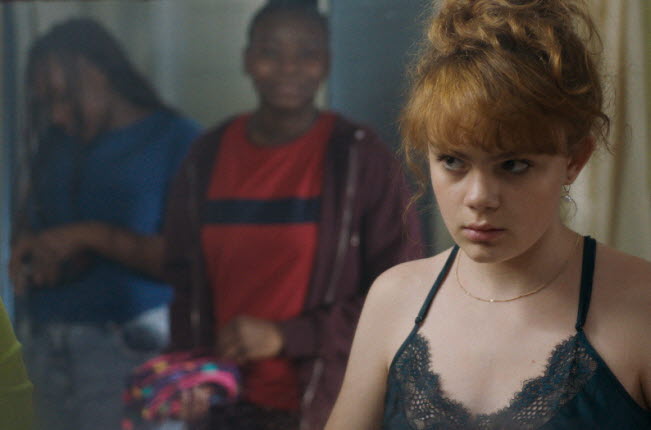
The movie begins with the striking opening scene showing how things are suddenly turned upside down for Dalva (Zelda Samson), a 12-year-old girl who turns out to have been sexually abused by her father for several years. When the police promptly take away her father from her shortly after one of their neighbors reported to the police, she becomes quite upset due to having been emotionally dependent on her abuser for a long time, and she even demands to see him again while still being oblivious to what he has done to her.

After she is examined for any more sign of physical abuse, Dalva is sent to a facility where kids without any legal custodian are temporarily sheltered, and she surely draws much attention right from the first day due to her rather adult appearance. Not realizing yet how she looks odd with her adult attire and makeup, she wants to believe that she is a grownup woman, but we soon observe how naïve and vulnerable she really is – especially when she later has her first experience with menstruation.

At least, there are several people who care about her despite her stubborn refusal to face what happened to her body and mind. Although their first encounter is not exactly agreeable, her roommate, a feisty black girl named Samia (Fatna Guirassy), helps Dalva in one way or another, and many other kids in the facility are also fairly nice to Dalva because, well, they all have each own issue just like her. In case of the employees of the facility, they are all dedicated professionals, and Dalva’s handler comes to show more compassion and understanding than expected, though he knows too well how tough and tricky it is to handle very troubled kids like her.

What follows next for our little heroine is a classic progress of anger, denial, bargaining, depression, and acceptance. At first, she angrily rejects any help or support from others as frequently demanding to see her abuser again. After that, she insists that her and her abuser really loved each other, though it goes without saying that her abuser groomed her a lot for his truly deplorable purpose. When her mother, who incidentally left her husband before he took away their daughter, shows up, Dalva still clings on her misguided notion on her sexually exploited status, and she naturally comes to show more anger and frustration at others around her.

 Of course, there comes a point where she has no choice but to face the truth, when she seems to get what she wants at last after some bargaining. I will not go into details here, but I must tell you is that I was marveled by the dynamic raw performance from Zelda Samson. Despite being a young newcomer who had no previous movie acting experience, she ably swings from one emotional mode to another during this crucial scene without any single false note, and she is particularly harrowing as her character consequently goes down into a very depressed status.

During its second half, the screenplay by director/writer Emmanuelle Nicot, who collaborated with Jacques Akchoti and Bulle Decarpentries for writing her screenplay, shifts to a more reflective mode as its young heroine struggles to recover bit by bit. While she comes to look more brightened than before, Dalva still has remaining emotional issues to deal with, and we come to observe more of her emotional vulnerability. She just wants to be a plain normal girl, but that is sometime not so easy for her as shown from a couple of rather alarming moments, and that inevitably leads to the conflicts between her and her friends and supporters.

However, the movie never loses its compassion toward Dalva as usually sticking close to her limited viewpoint, which is further accentuated by the screen ratio of 1.33:1. As the camera of cinematographer Caroline Guimbal always hovers around her, the movie generates a considerable degree of verisimilitude, and we accordingly become more engaged in Dalva’s frequently troubled state of mind.

While Samson’s fierce natural acting the heart and soul of the film, she is also supported well by several good cast members surrounding her. Alexis Manenti, who has mainly known for his substantial participation in Oscar-nominated French film “Les Misérables” (2019), balances his character well between care and principle, and Fanta Guirassy, who is also a young non-professional performer just like Samson, is excellent in her several key scenes with Samson.

On the whole, “Love According to Dalva” is a modest but undeniably engaging coming-of-age drama, and Nicot, who previously made short film “À l’arraché” (2016), made a commendable feature film debut here. While its realistic mood and storytelling approach are apparently reminiscent of the works of the Dardenne brothers, her movie distinguishes itself with enough substance and sensitivity, and it will be interesting to see what will come next from this talented filmmaker to watch.

Posted in Movies | Tagged , | Leave a comment

IF (2024) ☆☆1/2(2.5/4): A mishmash of wonder and melodrama

As far as I can remember, imaginary friend was something quite alien and abstract to me during my childhood years. As a matter of fact, I came to learn a bit about imaginary friend via one episode of a Disney TV animation series when I was around 10, and I wondered whether I was just an exception. After all, my young autistic mind was already quite busy with reading one book after another (I voraciously absorbed the works of Agatha Christie and Stephen King while occasionally touching those trashy works of Sidney Sheldon, for instance), so I guess I did not feel the need for any kind of imaginary friend to play with.

Therefore, I was ready to open my mind more for John Krasinski’s latest film “IF”, but, sadly, the movie did not engage me much due to a number of glaring flaws in terms of story and characters. While it wants to fly higher with the power of imagination, most of its fantasy scenes somehow feel flat and unimpressive despite a bunch of notable talented people in front of and behind the camera, and, above all, they are not supported by enough gravitas to generate any poignancy. While there is a sense of melancholy around the more realistic part of the movie, this part does not mesh that well with the fantasy part of the story, and the overall result is an unfortunate mishmash of fantasy and melodrama.

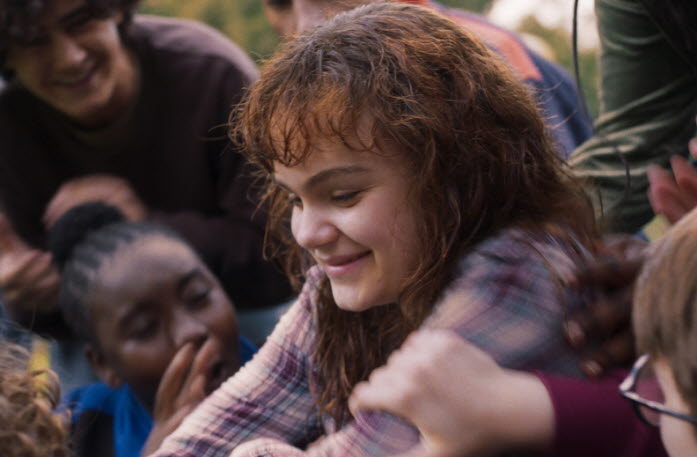
The opening part of the movie establishes how its young heroine has hardened her heart during last several years. When her father, played by Krasinski, is going to have a surgery due to his serious heart problem, Bea (Cailey Fleming) is certainly concerned a lot about him, but she chooses to be distant from whatever she is feeling right now. As a girl who was once quite brokenhearted when her mother passed away too early for her and her father, she knows well how painful it can be if her father dies, and she cannot go along that well with how her father tries to cheer her up during her hospital visits.

Anyway, Bea comes to stay in the apartment of her grandmother, who also tries to cheer her up as much as possible. When she gladly shows Bea a bedroom full of Bea’s old childhood stuffs, Bea is not that impressed, and we sense more of the distance between her and her grandmother despite her grandmother’s caring efforts.

Meanwhile, Bea encounters something strange on one day. She notices a weird figure which later goes inside her grandmother’s apartment building, and then she sees this odd entity again on the next day. This time, this figure happens to be with some guy, and Bea watches them quietly entering a certain young girl’s bedroom for handling some urgent matter to deal with.

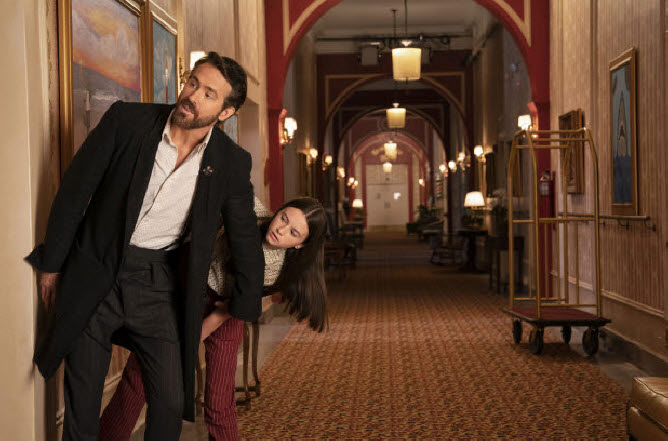
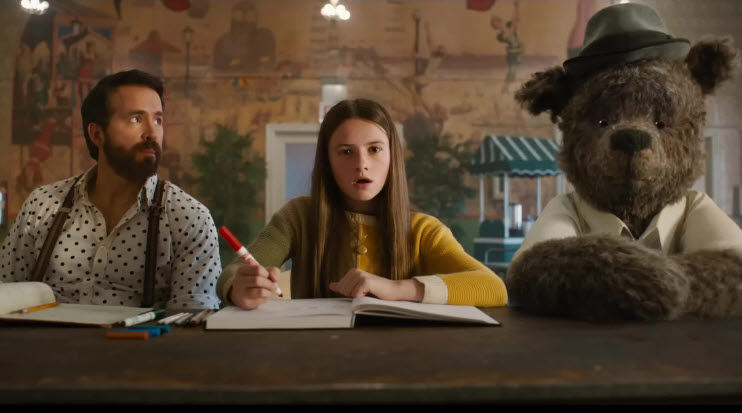
That guy in question is Cal (Ryan Reynolds), who is running a sort of agency for abandoned imaginary friends (IF) on an apartment right above the apartment of Bea’s grandmother. Cal and his IF assistant Blossom (Phoebe Waller-Bridge) are trying to stop an IF named Blue (Steve Carell) from making a big mistake on that little girl, and Blue reluctantly agrees to leave even though it has been desperate for belonging to any kid to embrace it.

Although she cannot wholly believe what she encounters, Bea soon finds herself delving more into the hidden world of IFs along with Cal, Blossom, and Blue. At one point, Cal shows her a retirement home for abandoned IFs who will be inevitably faded away sooner or later, and we are accordingly served with a group of various IFs who are incidentally voiced by many notable performers ranging from George Clooney and Matt Damon to Richard Jenkins and late Louis Gossett Jr., who sadly passed away early in this year (The movie is one of his last films, by the way).

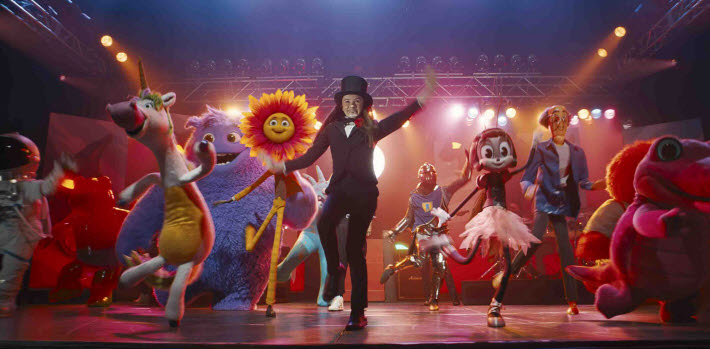
Once she comes to realize how she can boost the world of IFs via her imagination as shown in the following musical sequence, Bea decides to help Cal and Blossom’s agency more. After seeing how Blossom can be reconnected with its old creator, she subsequently tries to help Blue reconnect with an adult who created it a long time ago, and, what do you know, that turns out to be more successful than expected.

However, Krasinski’ s screenplay only comes to stumble a lot during its second half. While it is surely sincere to the core, it also often fails to balance itself between reality and fantasy, and its characters are rather superficial archetypes without much depth. As a consequence, we do not care that much about the story and characters even when the movie eventually goes for some melodramatic moments as expected.

As the center of the movie, Cailey Fleming acquits herself well while showing considerable potential, and I hope we will see more of her talent during next several years. While Krasinski brings some warmth to his several scenes with Fleming, Fiona Shaw, Alan Kim, and Ryan Reynolds fill their respective spots as required, though Reynolds seems rather strained as trying to distance himself more from that famously (and successfully) vulgar superhero played by him. In case of the voice cast members of the film, Steve Carell and Phoebe Waller-Bridge have some fun with their characters’ goofy side, but many of the other voice cast members just come and go without leaving much impression, and that is another disappointment in the film.

In conclusion, “IF” is a bland letdown despite Krasinski’s sincere efforts for trying something different from his debut feature film “A Quiet Place” (2018) and the following 2020 sequel. Now I wonder whether it would be more effective if it were an animation feature film, and that takes me back to recent Japanese animation film “The Imaginary” (2023), which did a better job of handling the same story subject with more style and imagination. This Japanese animation film is available on Netflix now, and I think you should check it out instead of becoming disappointed with “IF”.

Posted in Movies | Tagged , , | Leave a comment

Because I Hate Korea (2023) ☆☆1/2(2.5/4): Away from Korea for happiness

South Korean film “Because I Hate Korea” did not surprise or interest me enough despite its acerbic viewpoint on the South Korean society. Yes, I and many people have been well aware of how things can be hellish for many of us due to numerous social/economic reasons, and the movie sometimes makes some sharp points on why we usually call the South Korean society “Hell-Korea”. However, the movie is rather thin and aimless in terms of story and character, and I came to observe its story and characters from the distance instead of getting engaged more along the story.

Go Ah-sung plays Gye-na, a young woman in her late 20s who suddenly decides to leave South Korea as getting more tired of struggling to live in the South Korean society. After the opening scene showing her departure, a series of flashback scenes show how much she gets frustrated in one way or another, and it seems that everything will get better for her once she begins to start her life again in New Zealand.

Of course, like anyone trying to settle in a foreign land, Gye-na finds herself struggling more than expected. While she luckily gets some help besides a temporary place to stay during next several months, she certainly needs to do any menial job for earning her living day by day, and she also has to do some college study for getting a better job some time later.

As she goes from one menial job after another, Gye-na becomes more conflicted about whether she can actually live there in New Zealand. While feeling quite isolated and anxious at times due to her increasingly loneliness, she is often reminded of her status as a minority person in the country, and there is not anyone to support or console her except a very few people including a young fellow expatriate named Jae-in (Joo Jong-hyuk), who was rather rude to her during their first encounter but eventually becomes friendlier to her.

And Gye-na’s mind sometimes reflects on her current situation as comparing that to how things are miserable for her in South Korea. In her previous job in South Korea, she often felt quite suffocated, but she tried to endure and then prevail for having more economical stability someday. In case of her rather poor family, they do not support her that much except providing a place to live, and we come to gather that there is not much hope to her aging parents, who desperately hope to sell their shabby residence and then move to some better place when their neighborhood eventually gets re-developed someday.

In case of her long relationship with a lad named Ji-myeong (Kim Woo-gyeom), several flashback scenes between them show more of how careless and thoughtless he can be despite his sincere love and affection toward Gye-na. When she is invited to a dinner with his parents, she instantly feels how patronizing they are to her, and she becomes more displeased when she talks about her feelings with Ji-myeong later.

These and other bad memories of hers in South Korea keep Gye-na moving in her ongoing struggle for settlement in New Zealand, but happiness still seems beyond her reach even though she feels a bit better about being outside the South Korean society. Sure, her jobs are menial and difficult at times, but she gets fairly paid without any particular inconvenience at least, and she may succeed in her eventual goal in the end.

However, the screenplay by director/writer Jang Kun-jae, which is based on the 2015 novel of the same name by Chang Kang-myoung, only scratches the surface without delving more into its main subject and characters. We are surely reminded more than once about how many young people in South Korea are very unhappy, but it simply points out the extremely competitive sides of the South Korean society without recognizing the causes of this alarming social trend in South Korea. In addition, many of the characters in the story besides Gye-na are not particularly developed well, and we never really get to know any of them much even at the end of the story.

Anyway, the main cast members of the film try their best with their rather superficial roles. Go, who has steadily advanced during last two decades since her notable supporting turn in Bong Joon-ho’s “The Host” (2006), conveys well her character’s constant anxiety and frustration to us via her calm but undeniably expressive face, and her good performance often keeps things rolling even when the movie feels quite meandering. In case of several supporting performers around her, Joo Jong-hyuk, who was quite memorable in his electrifying performance in “Iron Mask” (2023), fills his thankless role with enough presence and personality, and Kim Woo-gyeom manages to make his character more sympathetic even though we can clearly see that his character is not so suitable for Gye-na despite his genuine sincerity.

Overall, “Because I Hate Korea” does not work as well as intended mainly due to its weak narrative and characterization, and this is quite a letdown compared to Jang’s previous film “A Midsummer’s Fantasia” (2014), which was incidentally one of the best South Korean films in 2015 in my trivial opinion. Its message is certainly clear, direct, and relevant to me and many other South Korean audiences, but, folks, it did not engage me enough on the whole.

Posted in Movies | Tagged , , | Leave a comment