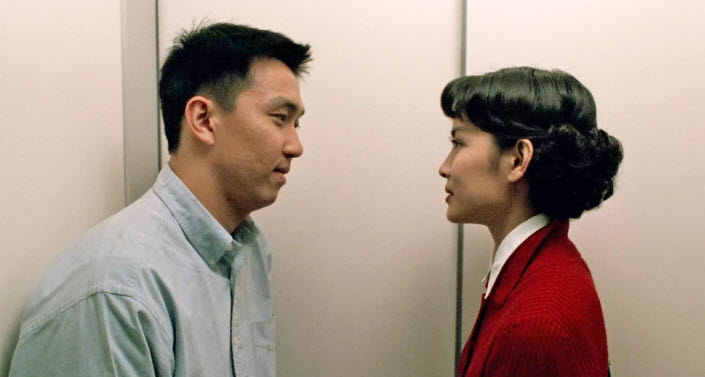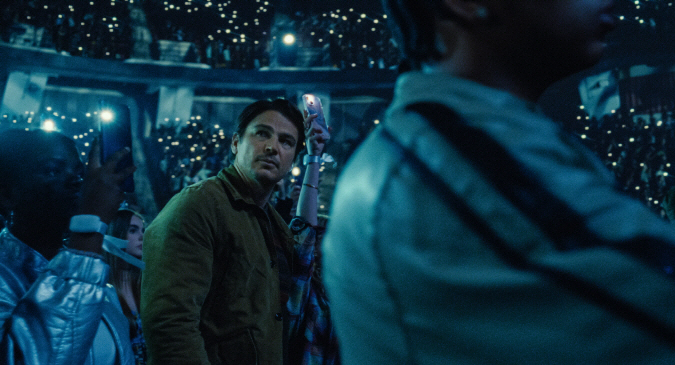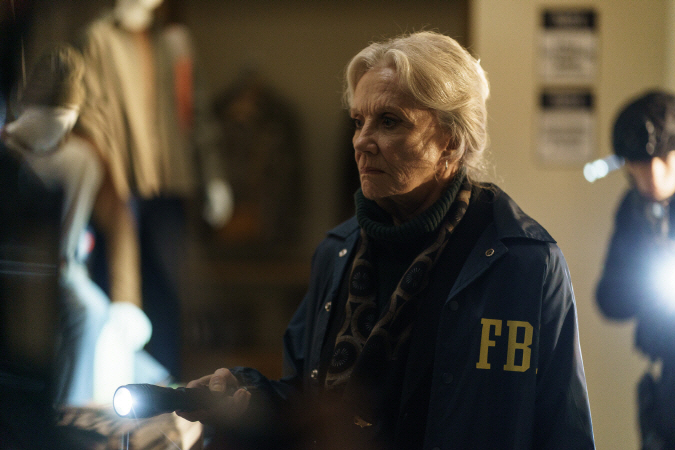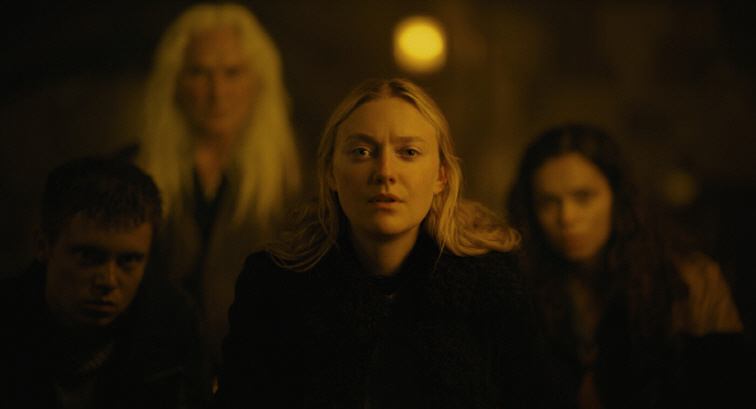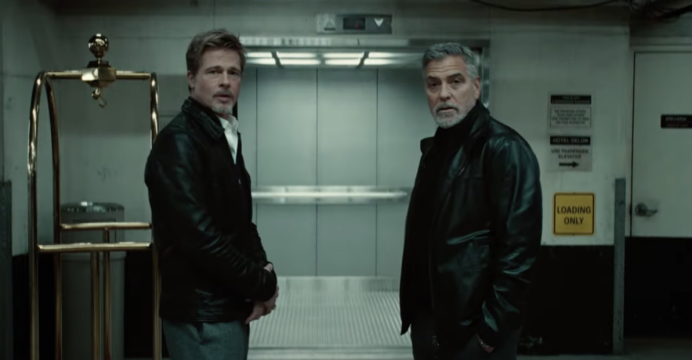
Wolfs (2024) ☆☆1/2(2.5/4): Two fixers stuck with each other

“Wolfs”, which was released on Apple TV+ in a few days ago, works best whenever it simply focuses on whatever is exchanged between its two charismatic star actors. Having actually worked together more once in several notable films, they constantly click well with each other with considerable chemistry, and that is why it is rather disappointing to see that their good efforts are not supported well by the movie itself.

George Clooney, who still can be engaging even though his acting career has been relatively less prominent during last several years, plays an unnamed professional fixer who is called by a very well-known public figure played by Amy Ryan at the beginning of the story. Ryan’s character happens to have a very serious trouble while having a little naughty fun with some younger man in the penthouse suite of an expensive hotel located in the middle of New York City, and she desperately wants Clooney’s fixer character to sweep up all those incriminating things in the penthouse suite including the body of that young man, who looks dead due to a very unfortunate accident. 

It seems at first that things will be quickly handled within a fairly short time, but, of course, there comes a trouble via the unexpected appearance of another professional fixer, who is played by Brad Pitt. Both of these two professional fixers are naturally quite perplexed by this weird situation, but they have no choice but to work together as instructed by whoever hires Pitt’s fixer character, and Ryan’s character soon steps out of the ongoing situation because she now has to cover up her own trace as swiftly as possible.  
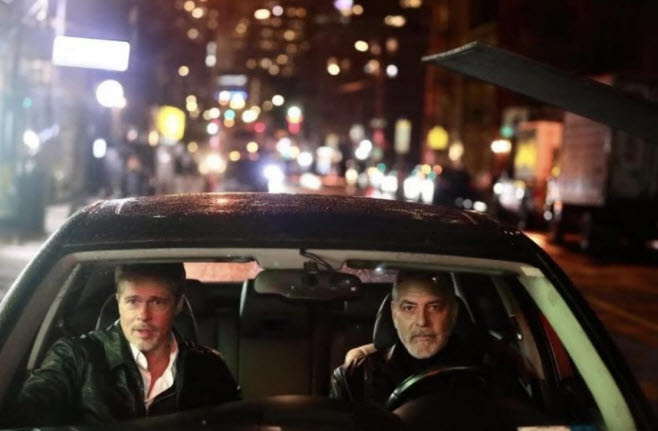
As they work together for a while, our two fixer characters frequently clash with each other in one way or another, and that is the main source of amusement for us during the first act of the film. Pitt and Clooney, who appeared together in not only Steven Soderbergh’s Ocean’s trilogy but also the Coen Brothers’ “Burn After Reading” (2008), are effortless as their characters frequently bicker with each other for handling their joint assignment, and Clooney’s weary appearance, which may take you back to his effective low-key performance in Anton Corbijn’s “The American” (2010), is complemented well by Pitt’s casually sardonic attitude.

While it could actually be developed into a standard two-hander between its two lead actors, the movie subsequently takes a left turn in the middle act instead as adding several additional characters into the story. For example, that lad is later revealed to be involved with a serious case of drug business, and that surely leads to more things to be handled by our two fixer characters. They eventually go to someone who may give them some help, and we get a bit amused as they are reminded again that they are not so different from each other in many aspects. Both of them firmly believe that a person of their criminal profession must work and live alone just like a lone wolf, but, what do you know, they only come to find more of common things between them even though they are reluctant to admit that to each other. 

As these two guys keep conflicting with each other, their situation keeps getting more and more complicated. Due to several packs of drug supposed to be delivered by that lad, our two fixer characters come to get involved with more than one criminal organizations in the town. At one point, they must enter a big party held by the boss of one of these criminal organizations, and they have to be quite careful because, well, the boss happens to know both of them.

While its two main characters bounce from one narrative point from another, the movie provides several competent sequences including the one where they chase after a certain substantial character. As shown from his breakthrough independent film “Cop Car” (2015) as well as the three Spider-Man movies including “Spider-Man: Homecoming” (2017), director/co-producer/writer John Watts knows how to shoot action scenes, and he skillfully dials up and down the level of tension and humor during that impressive chase sequence.
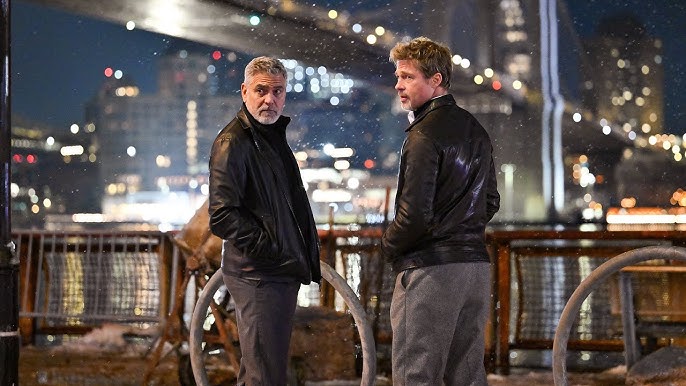
However, Watt’s screenplay stumbles more than once in case of character development. Its two main characters’ relationship arc along the story is pretty obvious from the beginning, and they remain to be rather bland archetypes even though Clooney and Pitt try their best for filling their respective roles. Around the end of the story, the movie tries a few plot turns for surprise, but we already saw them coming from the distance, and the final scene, which is clearly influenced by that iconic last scene of George Roy Hill’s classic film “Butch Cassidy and the Sundance Kid” (1969), feels perfunctory instead of being dramatically impactful.

Around Pitt and Clooney, the movie place several notable performers, but most of them are under-utilized on the whole. While Amy Ryan simply exits even before the first act is over, Austin Abrams, Poorna Jagannathan. Zlatko Burić, and Richard Kind manage to have each own moment, and Frances McDormand. who incidentally appeared along with Clooney and Pitt in “Burn After Reading”, provides a brief voice performance early in the film.

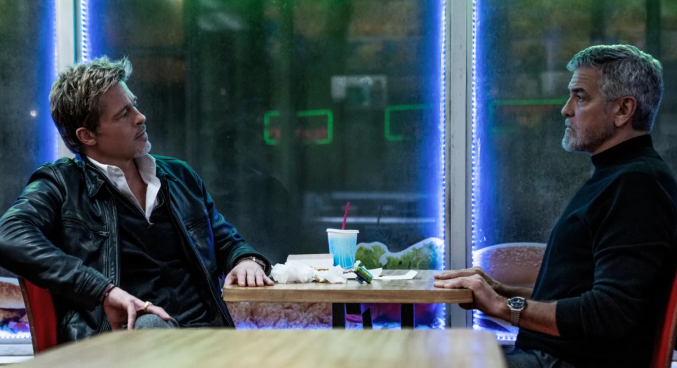
Overall, “Wolfs” is not a total waste of time mainly thanks to the solid joint efforts from its two lead performers, but it is often hampered by thin narrative and superficial characterization. Although I was mildly entertained during my viewing, it is already getting faded out in my mine, and I do not bother at all as being ready to move onto what I am soon going to watch next.

Posted in Movies | Tagged , , , | 1 Comment

Will & Harper (2024) ☆☆☆(3/4): On the road with his transgender friend

Netflix documentary film “Will & Harper”, which was released on last Friday, follows a little road journey of one famous American comedian and his transgender friend. Simply focusing the frank and earnest interactions between them, the documentary gives us a series of poignant personal moments to observe, and these touching moments will probably make you reflect more on the civil and human rights of many transgender folks out there.

That American comedian in question is Will Ferrell, who incidentally participated in the production of the documentary as one of its co-producers. For many years, he has been a close friend to a writer named Harper Steele, who was crucial for Ferrell’s early stardom when they were the employees of “Saturday Night Live” (SNL) during the 1990s. During their first years at SNL, nobody paid much attention to Ferrell, but Steele, who was Andrew during that period, saw the considerable comic potential from Ferrell as one of the SNL staff writers, and that eventually led to the beginning of Ferrell’s stardom in TV and movie.

Not long after when “Eurovision Song Contest: The Story of Fire Saga” (2020), which was co-written by Steele, was released on Netflix in the middle of the COVID-19 pandemic, Steele sent an e-mail to Ferrell and several other close friends of hers. For many years, Steele had been quite conflicted about her sexual identity (She even married and had two daughters, for example), but she eventually came out of her closet as being quite open about her true sexual identity, and she subsequently took the first step of her following gender transition in addition to changing her first name to Harper.

While being surprised and then gladly accepting his friend’s true sexual identity just like her other close friends, Ferrell was willing to get to know more about his friend, and that was how they came to plan a road trip across the US continent. Quite willing to support his friend, Ferrell also had the crew members of the documentary accompany them during this special road trip, and Steele did not object to this at all while appreciating a sincere and generous gesture of friendship and support from her close friend.

Where they are going to pass or drop by are actually very familiar places to Steele, because she frequently had a road trip across the US continent when she was Andrew. Nevertheless, she cannot help but become nervous at times because she is now an openly transgender woman, and that is the main reason why she is thankful to her friend (and his documentary crew) accompanying her from the beginning to the end.

At the beginning, everything mostly feels fine for both Ferrell and Steele. After Steele picks up Ferrell, they go together to New York City, where they naturally visit several notable SNL figures including Tina Fey and Ron Michaels, who all wholeheartedly greet their old friend without much awkwardness even though she looks quite different from when she presented herself to them as a male. As they casually talk with her and Ferrell, Steele feels a bit better about being herself in public, and she and Ferrell become more relaxed as they are about to go through several more conservative states including Indiana.

And, what do you know, their road trip turns out to be less eventful than expected. While they surely draw a lot of attention as shown from when they go to a National Basketball Association (NBA) game held in Indiana and then watch the whole game on the front row, many of people they come across during their journey are mostly nice to them, but it must be pointed out that Ferrell and his documentary crew often functioned as a sort of public protection for Steele. For instance, they encounter the governor of Indiana in the middle of that NBA game, and the governor does not say anything mean or hateful in front of the camera even though he is an openly anti-transgender Republican politician.

While honestly recognizing the frequent examples of hate and prejudice against Steele and many other transgender people out there, the documentary sometimes surprises us with a number of moving human moments of acceptance and tolerance. Steele’s older sister shows some genuine understanding and support to Steele just like Steele’s two daughters, and there is also a lovely scene where Steele and Ferrell come to have an unexpected moment of hospitality at a bar located somewhere in Oklahoma.

Meanwhile, Steele comes to show more of personal feelings and thoughts insider herself, and Ferrell, who can be often jolly and goofy but is also quite sincere and caring about his friend nonetheless, wisely steps aside for listening more to his friend. Not long after they eventually arrive in California, they drop by a shabby abandoned house bought by Steele several years ago, and Steele quietly and bitterly confides to her friend on how this house could have been a little private place where she could be a lot more comfortable with who she is.

In conclusion, “Will & Harper”, which is directed by Josh Greenbaum (He previously directed “Barb and Star Go To Vista Del Mar” (2021), by the way), presents Steele and her longtime friendship with Ferrell with lots of care and respect. Although this is a rather modest personal documentary which shows nothing new for the members of LBTGQ+ communities like me, it succeeds as much as intended in my trivial opinion, and I sincerely wish that Steele and Ferrell’s beautiful friendship in the documentary can actually change the mind of many people in the serious need of watching it right now.

Posted in Movies | Tagged , , , , | Leave a comment

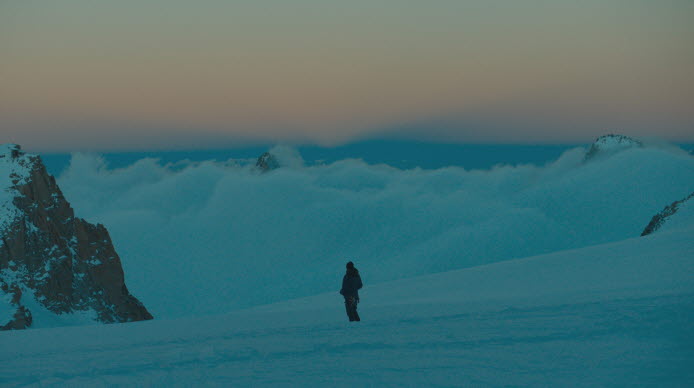
The Mountain (2022) ☆☆☆(3/4): The Call of the Mountain

French film “The Mountain” impressed me a lot for a number of breathtaking shots to behold, but then it baffled me a lot as taking a sudden left turn in the middle of the story. While several audiences including a friend of mine were not so pleased with this when we watched it at a local movie theater yesterday, I will not deny that I was rather amused by this sudden narrative turn, which will be remembered along with its many stunning visual moments in my mind for a long time.

At first, the movie looks like a modest character study as introducing Pierre (Thomas Salvador, who also served as the director/co-writer of the movie), a Parisian engineer who is about to go to some resort spot in the French Alps for demonstrating the latest prototype machine developed by him and his co-workers. Not long after successfully finishing his presentation, he cannot help but notice those tall mountains outside the window, and, what do you know, he decides to stay a bit longer for seeing more of the mountains.

However, Pierre only ends up spending more time around the mountains. At first, he simply tries to spend a night on the mid-slope of one mountain, but that does not feel enough for him at all. He later goes to the peak of that mountain via a cable car, and he looks around the surrounding landscapes covered with lots of snow and ice, but, no, that is not still enough for him at all. He soon goes to the peak of a higher mountain, and then he comes to stay at a nearly snowy slope area for exploring more of the surrounding area.

Not so surprisingly, Pierre’s sudden change flabbergasts others. As he keeps being absent during next several days, his company has no choice but to fire him. Not long after he sends a postcard to his family, his mother and two brothers come to see him, and his older brother shows some understandable concern, but his mother and younger brother do not feel concerned that much once discerning that Pierre seems happy and content to stay there. 

Steadily maintaining its calm and restrained attitude, the movie slowly gets us immersed into its pensive mood, and we come to have more questions on what actually drives Pierre to the mountains. Although never clarifying whatever has been going on inside Pierre’s mind, the movie simply observes whatever he explores here and there day by day, and that is surely something worthwhile to watch from a big screen. Cinematographers Alexis Kavyrchine and Victor Pichon did a commendable job of vividly capturing all those coldly crisp and beautiful sights of nature on their cameras, and, to be frank with you, I sometimes wondered how they actually shot several key scenes on those rather challenging locations shown in the film.

Around the middle act of the story, the screenplay by Salvador and his co-writer Naïla Guiguet, who incidentally received the SACD award together when the movie was shown at the Cannes Film Festival in 2022, begins to develop an accidental relationship between Pierre and a woman who works at the restaurant in the observatory at the peak of the mountain. At first, he simply requests her to buy some groceries for him, but then we sense some mutual feeling between them as they interact more with each other along the story.

However, the movie unexpectedly changes its narrative direction not long after that, and that is where it becomes really, really, really strange to our surprise. I will not go into details for avoiding any spoiler, but I can tell you instead that Pierre comes to experience something very odd when he later attempts to explore a certain place not so far from his staying spot, and you may not be totally sure about what he goes through next. Is it just a mere delusion in his mind? Or, is it something truly extraordinary?

Anyway, I admire how the movie pushes the story and character more as uncompromisingly maintaining its calm and distant attitude as before, and I also appreciate how much Salvador throws himself into his committed efforts behind and in front of the camera. I have no idea on how much he actually endured during the shooting, but Salvador, who previously made a feature film debut with “Vincent” (2014) after making several short films, looks fairly believable in his low-key performance which subtly suggests a lot behind Pierre’s phlegmatic appearance, and that is the main reason why a certain key sequence later in the film works even though it looks rather outrageous at times.

In case of Louise Bourgoin, who plays the sole substantial character in the story besides Pierre, she brings little precious warmth to the story, and she and Salvador click well together during their several scenes in the film. Later in the story, they must play one important scene as straight as possible in addition to generating enough sense of intimacy between them, and the result never looks ridiculous at all even though it feels quite baffling at times.

On the whole, “The Mountain” brings a bit of surprise and interest to its seemingly simple and familiar story while also often making us marvel at all those gorgeous sights unfolded across the screen. As far as I can from its result, Salvador demonstrates here that he is a skillful filmmaker who knows well how to interest and engage audiences, and it will be interesting to see whatever will come next from him.

Posted in Movies | Tagged , | Leave a comment

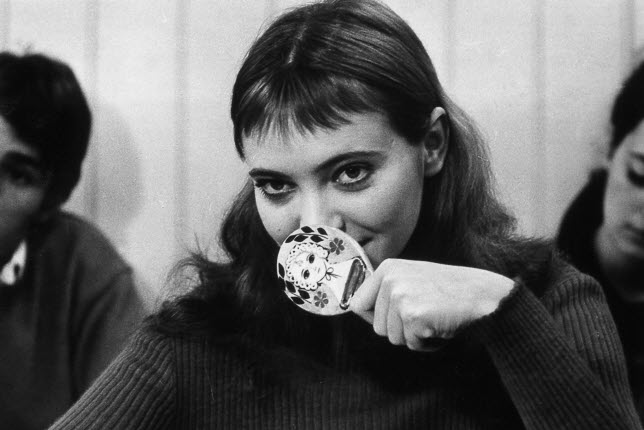
Band of Outsiders (1964) ☆☆☆1/2(3.5/4): When Godard was really cool

Jean-Luc Godard was at the height of his artistic creativity when he was young and bold in the 1960s. After making a huge milestone spot in the cinema history with his great film “Breathless” (1960), he gave us a number of other interesting films including “Vivre sa vie” (1962) and “Weekend” (1967), but then, alas, he began to go down around the 1970s as becoming less cool than before, and the rest of his filmmaking career was filled with deliberately impenetrable experiments such as “Film Socialisme” (2010).

I still remember how much I was frustrated with Godard’s two last works “Goodbye to Language” (2014) and “The Image Books” (2018), so it is rather heartening to observe the lightweight charm and style of “Band of Outsiders”. Here, Godard was just a young ambitious filmmaker who simply tried something new and different while being less serious about himself compared to what he eventually became later in his career and life, and I was delighted by its several charming moments before being a bit saddened by the inevitable ending waiting for its main characters.

The story, which is an adaptation of the 1958 novel “Fools’ Gold” by American author Dolores Hitchens, mainly revolves around three young people who happen to get involved with each other via an English class they have attended for a while. The opening scene introduces us to Franz (Sami Frey) and Arthur (Claude Brasseur), and we come to gather that these two lads are planning something criminal because, well, they are just bored with their uneventful daily life.

Their target is a certain house located somewhere in Paris, which belongs to some rich man who may have lots of cash inside his house. This rich man in question lives with his wife and his wife’s young niece, and that young niece, Odile (Anna Karina), is the one attending the English class attended by Franz and Arthur. During another lesson time for them and several other students, Arthur attempts to seduce her a bit without getting noticed by their teacher, and it looks like Odile is also drawn to him even though her beautiful face does not signify much on the surface.

Anyway, Odile lets herself get more involved with Franz and Arthur after the class, because she is also frustrated with the ennui of her daily life just like them. She willingly looks for any cash in the house later as requested by them, and, what do you know, she does discover a considerable amount of cash hidden in a certain room. How the cash is hidden will probably remind you of that famous short mystery story by Edgar Allen Poe, which is incidentally mentioned in the middle of the film.

As these three young people prepare a bit for their little act of crime, the movie sticks to its dry and distant attitude with Godard’s frequently phlegmatic narration, while also often upending the expected genre clichés and conventions. They do not plan much about how they are going to steal the cash from the beginning, so there is not much tension around their rather simple plan, and the movie simply rolls along with them as they spend their time together in one way or another. At one point, they suddenly decide to dance a bit together at a local cafe, and, as many of you know, this impromptu moment of fun has been quite iconic while influencing a number of notable films including Quentin Tarantino’s “Pulp Fiction” (1994). Yes, that famous dance scene between John Travolta and Uma Thurman is an indirect homage to this scene, and Tarantino even named his production company after the title of the movie.

Of course, there comes a point later in the story where the situation becomes far less fun for Odile and her two friends, and this eventually culminates to the finale filled with some bitter irony. In my humble opinion, the following epilogue feels rather artificial, but Godard does not lose any of his wit at all even during this part, as closing the film with his sarcastic narration.

While revisiting the movie, which happens to be re-released in South Korean theaters in this week (It is probably for its 60th anniversary, I guess), I noticed how the movie overlaps with François Truffaut’s “Jule and Jim” (1962) to some degree, another notable work of the French New Wave during the 1960s. Like the heroine of “Jule and Jim”, Odile’s heart often seems to go back and forth between the two different men she happens to be associated with, and we are frequently uncertain about her thoughts and feelings. Yes, she looks like enjoying her time with Arthur and Franz, and she seems to be more drawn to Arthur, but she looks like being also attracted to Franz, though she never clarifies that to him or herself even when they happen to be together without Arthur. As Sami Frey and Claude Brasseur steadily hold the ground for her, Anna Karina, who was Godard’s first wife and also his frequent leading actress during the 1960s, fills her archetype role with enough charm and beauty, and the constant romantic tension generated between her and her two co-stars steadily holds our attention even though the movie remains dry and distant as usual even during the finale.

Overall, “Band of Outsiders” may not be as great as “Breathless” or “Vivre sa vie”, but it is packed with enough style and charm as well as some youthful energy to be cherished. To be frank with you, I usually prefer Truffaut’s films to Godard’s, but I admire a lot many of Godard’s early works nonetheless, and “Band of Outsiders” reminds me again that there was indeed a time when Godard and his movies were really cool.

Posted in Movies | Tagged , , | Leave a comment

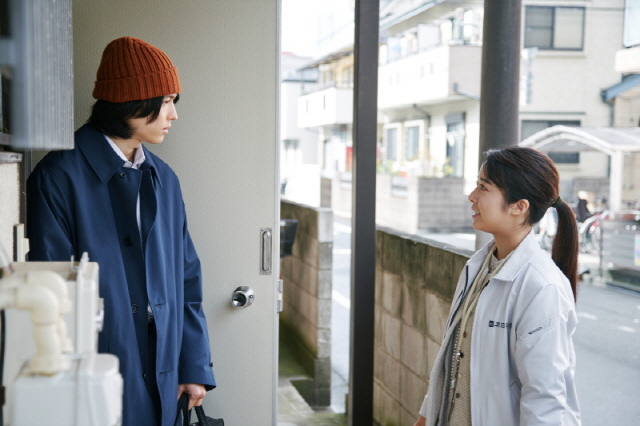
All the Long Nights (2024) ☆☆☆(3/4): As they help and support each other

Japanese filmmaker Shô Miyake’s latest film “All the Long Nights” is a calm and somber character drama between two different troubled people who come to help and support each other more than expected. Although it feels predictable at times, the movie leisurely takes its time in building up its main characters along the story with considerable sensitivity and realism, and it surely earns a little sign of hope and optimism around the end of the story.

At the beginning, we are introduced to a young woman named Misa Fujisawa (Mone Kamishiraishi), and we get to know a bit about her longtime medical problem. Since her adolescence period, Misa has often suffered Premenstrual Syndrome (PMS), and the opening part shows us how she becomes quite stressed out due another severe incident of PMS. At least, she has received considerable support from her caring mother for years, but things still do not get better at all despite her efforts, and she eventually quits her new job as getting stigmatized for the troubles caused by her medical problem.

Five years later, Misa is now working at a little company which manufactures a number of scientific instruments for kids, and she seems a bit more well-adjusted than before. While she still suffers PMS from time to time, she is mostly on good terms with her co-workers, and they surely appreciate her generosity when she hands out sweets to them.

However, one particular employee does not respond that much to her generosity. That person in question is a lad named Takatoshi Yamazoe (Hokuto Matsumura), and we observe how distant he is to others at the workplace. Although he is a fairly nice employee who works as much as required just like others around him, but he is usually quiet and introverted, and Misa becomes more curious about him especially after a rather awkward interaction between them.

It soon turns out that Takatoshi has a really serious problem behind his back just like Misa. He has often had a serious bout of panic attack for a while, and we come to learn that he quit his previous job mainly because of that. While his former boss and co-workers are willing to take him back at any time, his panic attack problem has not been alleviated at all, and he has an embarrassing moment in front of others when he happens to be overwhelmed by another incident of panic attack.

After getting to know more about Takatoshi’s panic attack problem, Misa comes to care more about him as a person who has had a fair share of difficulties due to a medical condition beyond control. As approaching to him with more care and empathy, she comes to show more of herself to him, and he appreciates that while also giving some valuable help to her PSM problem. When she happens to have another bout of PSM on one day, he takes her outside, and that is followed by an unexpectedly calm moment between them as they focus on doing something together for a while.

Now this sounds like the setup for a typical romance tale, but the screenplay by Miyake and his co-writer Kiyohito Wada, which is based on the novel of the same name by Maiko Seo, does not force its two main characters into a romantic relationship at all, while simply adding more human details to the story as its two main characters try to go on day by day. We observe how Misa tries to remain close to her mother as before despite her mother’s recent illness, and there is a little touching moment when her mother gives Misa a little gift she made for herself. In case of Takatoshi, he is visited by a young woman who is also a former co-worker of his, and we see how much she still cares about him even though there is now considerable distance between them due to his current medical problem.

We also get more engaged in the mundane daily business of Misa and Takatoshi’s workplace, which later happens to be enlivened a little by two local kids occasionally visiting the company for a little school project of theirs. During the interviews conducted by these two kids, Misa and her co-workers have to explain a bit about their work, and that naturally leads to a few humorous moments to tickle us.  

As they interact more with each other as well as others around them, Misa and Takatoshi slowly come out of their respective shells. Later in the story, they actively participate in a local event planned by their company, and we get a lovely sequence where Misa eagerly gives a bunch of people a little presentation on the constellations in the night sky. Although we can only see the faces of Misa and others around her in dim light for a while, the mood is surprisingly soothing nonetheless, and we cannot help but notice how much Misa looks and feels different compared to how troubled she was around the beginning of the story.

Ably complementing each other throughout the film, Mone Kamishiraishi and Hokuto Matsumura diligently carry the film together, and they are also supported well by a number of good supporting performers in the film. They all look convincing in their unadorned natural acting, and that is particularly evident from what is casually but touchingly shown around the end of the film. The camera simply watches from the distance, but we are quite touched nonetheless, as watching the characters going through another day as usual.

Overall, “All the Long Nights” is another interesting work from Miyake, who previously drew my attention for “Small, Slow But Steady” (2022). Although it is relatively milder compared to his previous film, the result is still realistic and intimate enough to impress us, and I guess I can have more expectation on his promising filmmaking career.

Posted in Movies | Tagged , | 1 Comment

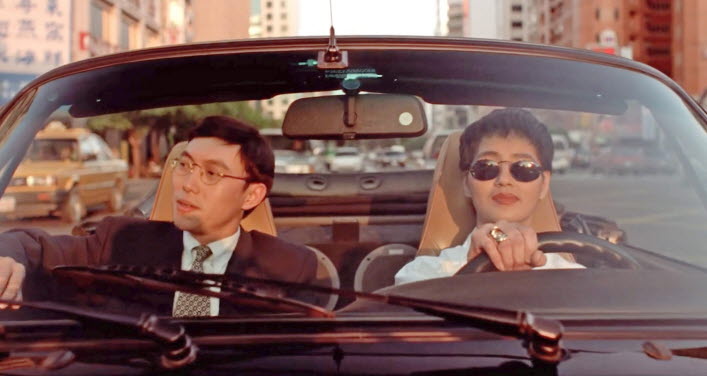
A Confucian Confusion (1994) ☆☆☆1/2(3.5/4): A cheerful confusion

During last several years, I and South Korean audiences have been fortunate to watch the works of Edward Yang (1947 ~ 2007), who was one of the leading figures in the Taiwanese New Wave during the 1980s alongside Hou Hsiao-hsien and Tsai Ming-liang. While “A Brighter Summer Day” (1991) and “Yi Yi” (2000) came first, “That Day, on the Beach” (1983), “Taipei Story” (1985), and “Terrorizers” (1986) happened to be released in local movie theaters one by one not long after the aforementioned two movies were re-released, and now here comes “A Confucian Confusion”, whose recent 4K restoration version was released here a few days ago.

The movie is a contemporary satiric comedy about the confusions and conflicts among a bunch of young people living and working in Taipei, and it will probably take some time for you to get accustomed to how the movie busily juggles and shuffles its many main characters. While you may be initially baffled a bit about what and how it is about (Full Disclosure: I was during my viewing), the movie will gradually let you to discern the whole picture of the rather complicated relationships and interactions among them, and you then will be quite amused for good reasons.

The center of the story is a small entertainment company run by a young woman named Molly (Suk Kwan Ni), which has been incidentally financed by her wealthy fiancé Akeem (Bosen Wang). Although Molly’s company looks pretty successful on the surface with the two main ongoing projects, it actually is pretty problematic to say the least as Akeem’s accountant Larry (Danny Dun) notifies to Molly later in the story, and Molly does not know what to do about that while maintaining her feisty appearance in front of others as usual.

At least, Molly has Qiqi (Chen Shiang-chyi), her faithful assistant who has also been her best friend. Qiqi is always the one who takes care of any latest trouble for Molly and her company, and their latest trouble turns out to be rather tricky. They have been promoting a cocky young playwright named Birdy (Yeming Wang), but Birdy, who is incidentally an old college colleague of theirs, was recently accused of plagiarism, and this potentially serious circumstance happens to be involved with the novelist husband of Molly’s older sister, who has been enjoying her success as hosting a popular TV show promoted by Molly’s company.

Meanwhile, Qiqi has a few serious issues behind her back. She has been close to a young public servant named Ming (Weiming Wang), and they are expected to marry soon, but Ming, who has incidentally known both Ming and Qiqi since their college years, also turns out to have some personal issues to handle. We see how much he dislikes his father because his father left his mother for some other woman who is simply called “Auntie” (Elaine Jin), and there is also a subplot involved with his co-worker.

Frequently showing its wry comic attitude via a series of intertitles, the screenplay by Yang and his co-writer Hung Hung, who also played a crucial supporting character in the film, cheerfully hops from one humorous moment to another. As the main characters of the film come to clash with each other due to their silly misunderstanding as well as their apparent failure to communicate, the movie makes some sharp points on human nature and relationship, but it also gradually fleshes out its seemingly broad main characters, who may all live fairy well on the surface but are not so happy in addition to being confused and conflicted. While Molly becomes more uncertain about whether she can keep running her company as before, Qiqi may have to choose between her boss/best friend and her boyfriend, and several other main characters also come to have each own conflict in one way or another.

As taking time in developing each of its multiple plotlines more, the movie immerses us more into their lives and their society, and the movie often comes to function as the realistic presentation of the Taiwanese society during the early 1990s. As he did in his other films including “A Brighter Summer Day”, Yang did a deft job of filling the screen with vivid mood and details to be appreciated, and it is often engaging to observe how he and his cinematographer Longyu Li effortlessly achieved that. In many of the key scenes in the film, the camera often looks like statically observing the characters and their situations without much interruption, but it actually makes some subtle moves here and there for indirectly drawing more attention from us, and that is especially evident during a hilarious sequence where Akeem’s pathetic attempt to confront one certain character leads to a series of unexpected comic happenings. Again, the camera is calm and observant, but it does not overlook the absurdities surrounding the characters at all, and we become all the more amused as a result.

The main cast members of the film are all effective in their well-rounded acting. While Suk Kwan Ni and Chen Shiang-chyi hold the center as required, several other performers including Bosen Wang, Chen Limei, Yeming Wang, Danny Dun, and Weiming Wang, have each own moment to shine along the story, and Elaine Jin is particularly good when her busybody character shows more human depth than expected around the end of the story.

In conclusion, “A Confucian Confusion” is a funny human comedy to be admired for its witty and thoughtful storytelling, and it surely demonstrates well the more lightweight side of Yang’s masterful filmmaking. Although he only made seven feature films before he died in 2000, his achievements are quite impressive as far as I can see from “A Confucian Confusion” and his several other works, and I am already ready to revisit them someday for more appreciation and admiration.

Posted in Movies | Tagged | Leave a comment

Trap (2024) ☆☆1/2(2.5/4): He gets trapped…

M. Night Shyamalan’s latest film “Trap” seems willing to be trapped along with its hero for a while during its first half. As its hero tries to get away from his increasingly claustrophobic circumstance, the movie steadily dials up and down the level of tension for our entertainment, and we gladly go along with its naughty fun, but then the movie lets down us a lot as suddenly loosening its tight grip on us during its problematic second part. 

At the beginning, we meet Cooper (Josh Hartnett), an ordinary family guy who is taking his adolescent daughter to a big concert of a famous pop singer named Lady Raven (Saleka Night Shyamalan, who is Shaymalan’s another daughter besides that filmmaker daughter of his). While his daughter is quite excited about the concert just like many other young fans entering the stadium where that concert will be soon held, Cooper understandably looks rather disinterested in contrast, and he gets more distracted when he comes across the annoying mother of one of his daughter’s schoolmates.

Meanwhile, as going inside the stadium, Cooper begins to notice something odd. There are lots of security guards and police officers placed here and there inside the stadium, and it also becomes clear to him that the stadium is heavily surrounded by more police officers outside. When he later asks a stadium employee about what is going on, the employee tells him that the police is looking for a notorious local serial killer nicknamed “the Butcher”, who has already killed no less than 12 people.

Cooper becomes quite alarmed for a good reason, because, well, he is actually the one the police is searching for. As a matter of fact, this is not much of a spoiler because his true identity is revealed within the first 10 minutes of the movie, and its promotion poster does not even hide this ‘surprise twist’ at all as shown from the tagline (“30,000 fans. 300 cops. 1 serial killer. No escape.”).

As the camera of cinematographer Sayombhu Mukdeeprom, who previously did a stellar job in Luca Guadagnino’s “Challengers” (2024) early in this year, fluidly follow its evil hero. the movie accordingly attempts to build up suspense as Cooper attempts to evade the police search in one way or another. While he manages to remain one or two steps ahead the police for now, his opponents keep getting closer to him minute by minute as blocking almost all of possible way outs inside the stadium, and he must also pay some attention to his daughter, who slowly begins to sense something wrong about her father even though her mind is mostly occupied with the ongoing concert.    

However, instead of bringing more tension to this intense cat-and-mouse game, Shyamalan’s screenplay takes a left turn in the middle of the story. I will not go into details here, but I can tell you instead that the movie shifts its focus from Cooper around that point, and that is where the movie unfortunately comes to lose its narrative momentum. It provides several competent moments including an unnerving sequence where a certain supporting character must be very careful about whatever Cooper may do next in front of her and others at the spot, but these moments are less thrilling compared to the claustrophobic suspense of the first half, and the eventual finale is pretty contrived to say the least.       

Nevertheless, the movie is carried fairly well by the commendable efforts from Josh Hartnett, who seems to be about to have an unexpected career resurgence as appearing in a number of recent notable films including Christopher Nolan’s “Oppenheimer” (2023). Although I still remember how forgettable he was Michael Bay’s disastrous war drama film “Pearl Harbor” (2001), he is a good actor capable of many other things including Ridley Scott’s “Black Hawk Down” (2001), and he shows here that he can be alternatively charming and cunning as he was in Tim Blake Nelson’s “O” (2001). Although Cooper is quite an unpleasant character to say the least, Hartnett steadily holds our attention as his character smartly handles one obstacle after another while busily keeping looking for any possible way out, and he also bring some sense of dark humor to his character at times. 

In contrast to Hartnett’s diligent efforts, most of the other cast members in the movie simply fill their respective spots without much to do. Ariel Donoghue is suitably plucky for her role, but she becomes quite under-utilized as her character is eventually put aside later in the story. Although two certain famous pop singers appear to support her, Saleka Night Shyamalan is still not as charismatic as, say, Taylor Swift or Beyoncé, and she struggles more than once when her character becomes more substantial along the story. While Alison Pill is mostly stuck with her thankless role, Hayley Mills, a British actress who has been mainly known for the 1960 Disney film “Pollyanna” (She received the Academy Juvenile Award for that, by the way), brings a little touch of class to the film even though her character is more or less than a tool for several obligatory moments of exposition.

In conclusion, “Trap” is not entirely a failure mainly thanks to Hartnett’s compelling performance and Shyamalan’s competent direction, but the movie could be tauter and more intense in my trivial opinion. Sure, this is not as bad as “The Last Airbender” (2010) or “After Earth” (2013), but Shyamalan can do better than this considering some of his several recent works such as “Knock at the Cabin” (2023), and I can only hope that he will soon move onto better things to come after this flawed genre piece.

Posted in Movies | Tagged , , | Leave a comment

The Watchers (2024) ☆☆(2/4): They are being watched…

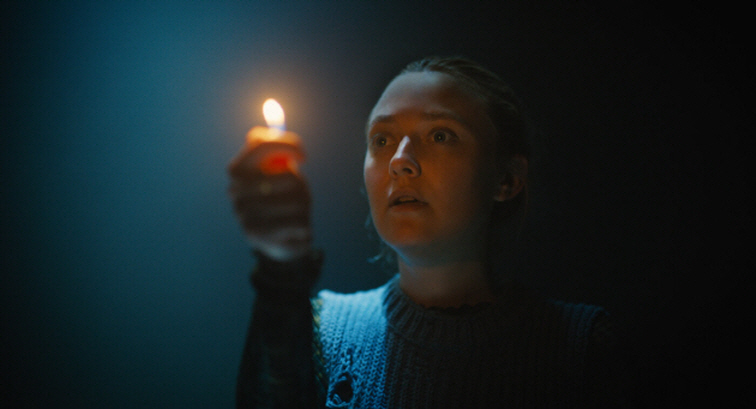
“The Watchers” looks promising with an interesting story promise shrouded in a good mood and background. As the nervous score by Abel Korzeniowski is swirling on the soundtrack with the heroine going to some very remote area, we can clearly sense that something bad is going to happen sooner or later, so we naturally come to have some expectation, but, alas, the movie does not deliver as much as it promised at the beginning.

Dakota Fanning, who unfortunately has not fully used her considerable talent yet despite her breakthrough turn in “I Am Sam” (2001), plays Mina, a young American girl who has lived in a rural town of Ireland for some time due to a personal reason to be revealed later in the story. She is currently working in a small pet shop, but she does not seem that interested in doing her job as shown from her first scene in the movie, and she does not even respond to the call from her sister living in US.

On one day, Mina is requested to deliver a little precious bird to a certain spot far away from the town. As she drives her car down the road which lead will lead to that spot, cinematographer Eli Arenson vividly captures the vast green scenery of the rural areas of Ireland, and the sense of isolation becomes more palpable as Mina’s car eventually enters some big and wide forest area.

Not so surprisingly, her car suddenly has a serious problem, and Mina soon finds herself getting lost in the forest as trying to get out of the region as soon as possible. As the night is coming, she begins to sense something scary somewhere inside the forest, and, of course, her growing fear turns out to be quite true once the sun goes down.

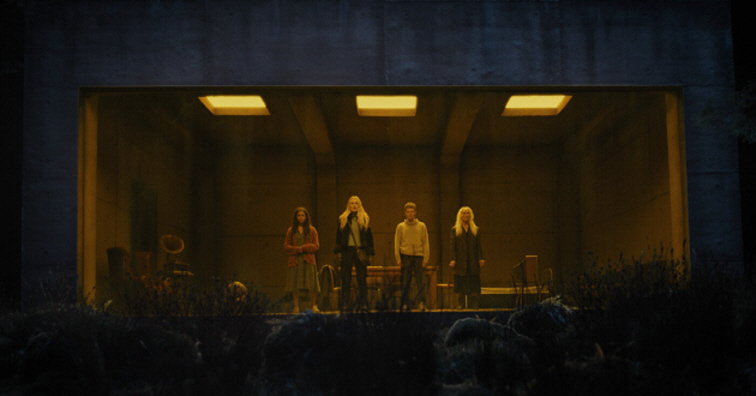
Fortunately, Mina comes across a shelter at the last minute, where three other people have already been stuck. They are Ciara (Georgina Campbell), Madeline (Olwen Fouéré), and Daniel (Oliver Finnegan), and they tell her about a few rules for surviving day by day. First, though they can be outside during daytime, they must be inside their shelter, which is called “the Coop”, at any chance after the sunset due to the mysterious scary entities called “the Watchers”. Second, they must present themselves in front of the mirrored window to be observed by the Watchers every night, because the Watchers want to watch them for some unknown reason.

While still befuddled by her rather unbelievable circumstance, Mina gradually gets herself accustomed to that as getting to know a bit more about her fellow prisoners, and she and they also try to find any possible way out for them, though that seems quite impossible for good reasons. For example, the forest region surrounding the Coop is too wide to escape from before the sunset, and, above all, the Coop and the forest region are completely isolated from the world outside.

In addition, Mina comes to witness more of how insidious the Watchers are. It becomes more apparent to her (and us) that the Watchers have a certain nasty motive, and she and her fellow prisoners become more desperate as the Watchers come to threaten them more than before. While these disturbing creatures are rarely shown on the screen, the various sounds they make outside the Coop unnerve Mina and her fellow prisoners in one way or another, even though they cannot see whatever is happening outside the Coop (Several scenes in the film surely remind you a bit of the similar scenes in Alfred Hitchcock’s “The Birds” (1963), by the way).

However, the screenplay by Ishana Night Shyamalan, which is based on the novel of the same name by A. M. Shine, often stumbles in case of plot and character development. While it tries to give more character background to its heroine, Mina and several other characters in the story feel mostly flat and bland, and we do not care that much about whatever may happen to them, even though they come across an unexpected possibility of survival later in the story. Some of you may be surprised by this plot turn, but this makes the story all the more preposterous than before, and the eventual finale feels rather overlong despite another plot turn you may easily expect in advance.

The main cast members try as much as possible with their respective parts. Where she has a few moments where she flexes her acting muscle, Fanning often finds herself limited by her mediocre character, and the same thing can be said about Georgina Campbell and Oliver Finnegan. In case of Olwen Fouéré, this Irish veteran actress has a bit more things to do as her character becomes more crucial along the story, and we become engaged to some degree whenever she steals the show.

On the whole, “The Watchers” is dissatisfying in more than one aspect, and that is a shame because Shyamalan, who is, yes, one of the daughters of M. Night Shyamalan (He also participated in the production of the film, by the way), shows some potential here especially during the first half of the movie. She is not a bad filmmaker at all, but I sincerely wish that she may advance a lot more from this failure, and I will be surely glad if she eventually makes her father proud as much as David Cronenberg has been proud of his filmmaker son Brandon Cronenberg these days.

Posted in Movies | Tagged , , , | Leave a comment

By the Stream (2024) ☆☆1/2(2.5/4): A minor misfire from Hong Sang-soo

South Korean independent film “By the Stream”, which is another film from Hong Sang-soo during this year after “A Traveler’s Needs” (2023), sadly did not engage me much as frequently feeling rather thin and vague in terms of story and character. While it is a bit interesting for being Hong’s another notable work mainly driven by female characters, the movie merely plods from one moment to another without much intrigue or amusement for me, and it only ends up being a disappointing misfire compared to the lightweight charm of “A Traveler’s Needs”.

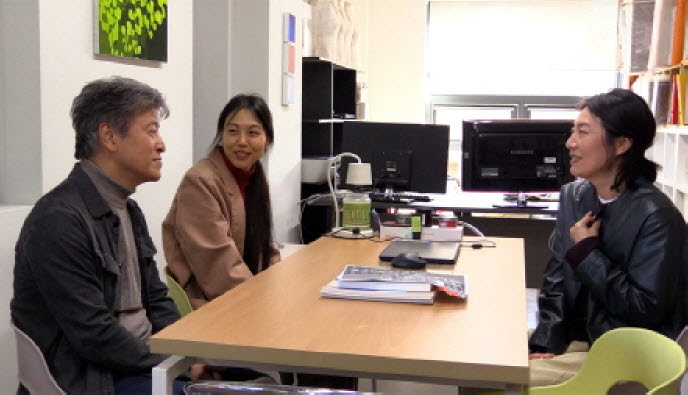
At first, we are introduced to a young female college lecturer named Jeon-im (Kim Min-hee) and her middle-aged uncle. Jeon-im’s several female students have been preparing for a little skit for the upcoming skit competition in their college, but the guy supervising her students had to be let go due to his inappropriate behavior with some of her students. Because only 10 days are left at present, Jeon-im needs anyone who can supervise her students instead, and she requests her visiting uncle to do the job mainly because he was once quite famous as an actor/director before getting blacklisted for some unspecified reason.

Fortunately, Jeon-im’s uncle is willing to take the job, and we see how he works along with Jeon-im’s female students, who are all eager to work under him even though what they are going to do will be quite different from what they have prepared up to that point. He quickly comes to click well with these students, and Jeon-im is certainly relieved to see how her students enthusiastically collaborate with her uncle.

Meanwhile, Jeon-im introduces her uncle to Professor Jeong (Jo Yoon-hee) mainly because Professor Jeong turns out to be a big fan of his works. When Jeon-im and her uncle come to her office, Professor Jeong cannot help but show more admiration to him, but she and Jeon-im’s uncle somehow never delve much into how he became blacklisted at that time (It is only said that he made some very sensitive comments which must have angered many influential figures in his field).

Anyway, they all eventually go to a little nearby restaurant which happens to be located by a local stream, and, like many of Hong’s movie characters, they drink and talk a lot for a while. Although their conversation often feels a bit too superficial without revealing that much about themselves, the performers fill this conversation with considerable spontaneity at least, and you may wonder whether they actually drank during the shooting just like many performers allegedly did during the shooting of Hong’s films.

On the next day, Jeon-im comes across that guy fired by her, and we are accordingly served with a comic moment of pettiness you can expect from Hong’s works. As he attempts to get employed again by Jeon-im, he keeps trying to avoid his responsibility for whatever happened between him and some of her female students, and, not so surprisingly, there comes a point where Jeon-im comes to draw the line between her and this pathetic dude.

While the situation becomes a bit more absurd when this guy appears again later in the story, the new skit by Jeon-im’s uncle goes through its short but smooth preparation. Although the movie is adamantly very ambiguous about what his skit is really about, Hong’s camera simply watches Jeon-im’s female students performing together on the stage without any interruption, and I must say that this is surely something we do not usually get from Hong’s movies.

However, Hong’s screenplay sadly fails to develop these young female characters more along the story. When one of them turns out to be quite close to the aforementioned dude, this moment looks so dim in its nocturnal background that we are not very sure about which of these young ladies is the one associated with him. Around the last act of the film, Jeon-im’s uncle encourages them to express their respective feelings about themselves at their little celebration party, but their words mostly feel bland and perfunctory, and we still remain distant to them despite the earnest efforts from the four good actresses playing them (They are Kang So-yi, Park Han-bit-na-ra, Oh Yoon-soo, and Park Mi-so, by the way).

In case of several other main cast members, who are incidentally Hong’s usual collaborators, they have more materials to handle in comparison. Kwon Hae-hyo, who has virtually been Hong’s alter ago as appearing in a number of Hong’s recent films including “Walk Up” (2022), is effortless in his several comic moments in the film, and he and Jo Yoon-hee, who previously appeared along with Kwon in “A Traveler’s Need”, did a good job of suggesting whatever is being exchange between their characters beneath the surface. Kim Min-hee, who received the Best Performance Award when the movie was shown at the Locarno Film Festival in last month, ably fills her rather broad role with her own charm and presence, and I wish the movie explored more of her character’s modest but intriguing artistic activity, which is incidentally associated with the title of the film to some degree.

In conclusion, “By the Stream” is not as enjoyable as “A Traveler’s Need”, and that reminds me again of how I have become relatively less engaged in Hong’s works during last several years. It is admirable that he continues to try new stuffs, but the result feels rather shallow to me like “In Water” (2023) or “In Our Day” (2023), and I am already quite ready to move onto whatever he will give us in the next year.

Posted in Movies | Tagged , , | 1 Comment

Sing Sing (2023) ☆☆☆1/2(3.5/4): As they prepare for another show in their prison

It is always fascinating for me to observe different people and lives via good movies, and “Sing Sing” is one of such terrific films. Although most of its main characters are quite different from me in many aspects, I observed their collective artistic efforts with considerable interest and fascination, and I was touched a lot by how they try to endure and prevail under their imprisoned status – and how the movie illustrates their little drama with a lot of human understanding and empathy.

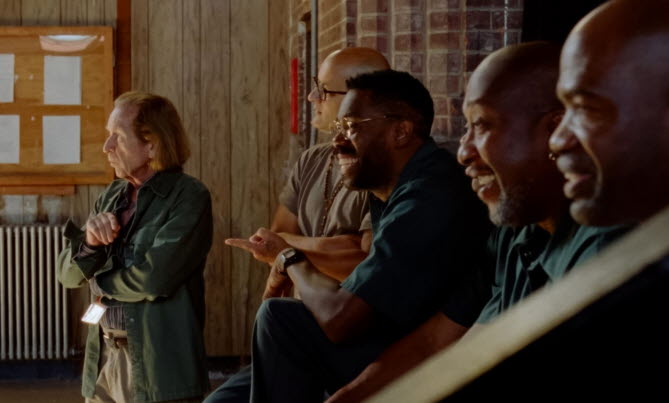
The main background of the story is Sing Sing Maximum Security Prison, which is located in the New York state of US. At the beginning, we see John “Divine G” Whitfield (Colman Domingo) and his fellow inmates doing a little stage performance together as the members of Rehabilitation Through the Arts (RTA) program, and they all are delighted and excited as they finish their latest project pretty well on the whole, though they will soon have to go back to their respective cells after taking off those stage costumes and then wearing their prison uniforms.

Anyway, Divine G and his fellow RTA members are already ready for another show to come while supervised by their civilian director Brent Buell (Paul Raci) as usual, and we are a bit amused as they discuss about what they will do next. After some heated discussion, it is eventually decided that they are going to do something more lightweight, and Buell is willing to provide a little comic science fiction play he wrote some time ago.

What follows next is how Divine G and the other RTA members prepare for their new show during next several days. After reading Buell’s play (It is titled “Breakin’ the Mummy’s Code”, by the way), Divine G, Buell, and several other RTA members hold the audition, and we watch each of their colleagues trying their best for getting the roles they respectively want to play.

One of the RTA members going through the audition is Clarence “Divine Eye” Maclin, who incidentally plays himself here just like many of the cast members of the film. Although he did not seem that interested in acting when he was recruited by Divine G, Divine Eye gradually comes to show more interest and passion as being often encouraged more by Divine G and the other RTA members, and he eventually gets himself cast as a certain key character in Buell’s play, though Divine G is not that pleased with that for an understandable reason.

Nonetheless, Divine G keeps things rolling for the group along with Buell, who may be a little annoyed at times but still respects Divine G’s leadership. Whenever Divine Eye struggles in one way or another, Divine G and the other RTA members are always willing to help and support Divine Eye, and there is a little poignant moment when one of them shows more of himself to cool down Divine Eye a bit in the middle of their rehearsal.

And we also observe more of why Divine G and his colleagues have been so passionate about their theater program for years. Most of them have been incarcerated for many years without much hope for getting released from the prison someday, and we come to understand that their artistic activities have been a sort of personal therapy process for themselves. Plainly but vividly conveying to us their despairing status of imprisonment throughout the film, the cinematography by Pat Scola, who shot the movie on the 16mm film in 1.66:1 ratio, sometimes sticks very close to the main cast members of the movie, and we come to pay more attention to their expressive faces, which often give us the glimpses of their life stories even when they do not seem to signify that much on the surface.

It goes without saying that the movie depends a lot on its main cast members, and director/co-writer/co-producer Greg Kwedar, who wrote the screenplay with co-producer Clint Bently (It was developed from the story written by them, Maclin, and Whitfield himself, which is based on Buell’s aforementioned play and John H. Richardson’s 2005 Esquire article “The Sing Sing Follies”), draws stellar natural performances from his cast members. Needless to say, Colman Domingo, who has been more prominent thanks to his recent Oscar-nominated performance in Netflix film “Rustin” (2022), surely draws our attention first with another superlative performance to watch, but he does not overshadow at all his fellow cast members, who are all convincing as filing their respective parts with enough life and personality to observe. Maclin, who is a definite standout in the bunch, and his fellow RTA members click well together whenever they pull or push each other during a number of key scenes among them, and Paul Raci, who has been more notable thanks to the well-deserved Oscar nomination for his wonderful supporting turn in “Sound of Metal” (2020), and Sean San José flawlessly get themselves mingled into the ensemble even though they are professional actors just like Domingo.

Overall, “Sing Sing” is one of the most impressive movies of this year due to its considerable emotional power, and it will move you a lot while also making you reflect more on that transformative power of art – especially when it shows a series of archival footage clips of the various stage performances from Whitfield, Maclin, and their fellow RTA members. To be frank with you, I have no idea on how much the movie itself is close to their real-life stories, but it sublimates their real-life stories into something quite memorable mainly thanks to their active joint participation in its production, and it is surely something you should check it out as soon as possible.

Posted in Movies | Tagged , , , | 2 Comments