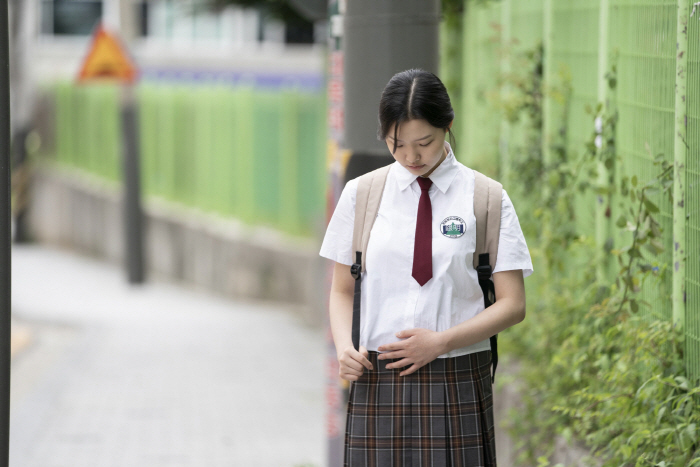
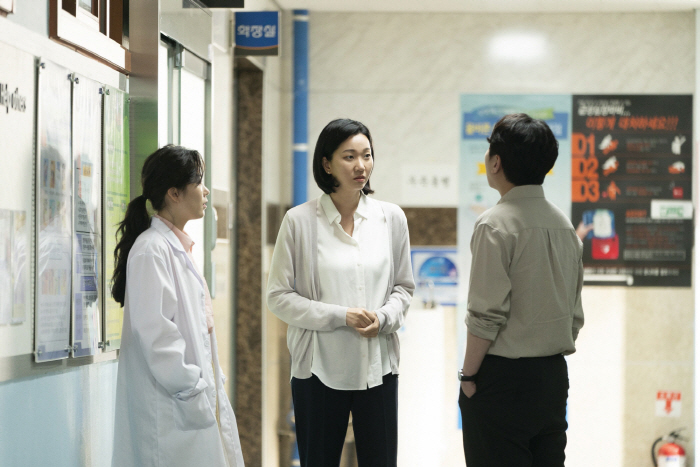
Dark Nuns (2025) ☆☆☆(3/4): It’s the time to bring nuns…

South Korean horror film “Dark Nuns”, which is a spin-off of “The Priests” (2015), is another typical exorcism flick with a bit of refreshing element. Again, the Catholic Church comes forward for fighting with the supernatural force of evil, but the movie has a couple of nuns instead, and, to our little amusement, they even do not hesitate to use everything ranging from local shamans to tarot cards for doing their holy job to the end.

The movie begins with a very intense exorcism ritual performed upon one adolescent boy clearly possessed by one of those infernal demons. When two Catholic priests eventually find themselves cornered by this stinking devil, an experienced nun named Sister Junia (Song Hye-kyo) promptly enters the scene, and she manages to chase away the devil from that poor boy, though he is not yet totally free from that devil yet.

Sister Junia subsequently seeks for the permission to continue the exorcism ritual for that boy, but the head of the Catholic Church in Seoul and other old priests are not so willing to give the permission. After all, the exorcism ritual of the Catholic Church is quite a sensitive matter, and they do not want to get into any more trouble. Besides, Sister Junia is not ordained yet, and she also officially cannot perform an exorcism because, well, she is not a priest but a nun (The movie often reminds us that the Catholic Church has virtually been a boys’ club which usually disregards women, by the way).

Although it is decided that the boy is going to be sent to a local Church hospital for getting some medical treatment under the supervision of Father Paolo (Lee Jin-wook), a priest/psychiatrist who firmly believes that the boy will be soon cured via his medical treatment instead of exorcism. With his protégé Sister Michaela (Jeon Yeo-been), who is also a psychiatrist, he is going to do his best for that boy, and the interference from Sister Junia is the last thing he wants right now.

However, still quite determined to save the boy from that powerful demon, Sister Junia is not deterred at all, and she actively approaches to Sister Michaela once she notices that Sister Michaela has a sort of sixth sense to sense the force of evil just like her. Needless to say, Sister Michaela does not want to get herself associated with Sister Junia, but then she only gets drawn more into the dark world of demon and exorcism because, as shown from the occasional flashback scenes, she actually had a fair share of experiences associated with exorcism and other supernatural stuffs a long time ago.

When the situation becomes all the more disturbing later, Sister Junia persuades Sister Michaela to do something as soon as possible without Father Paolo’s permission, and that is where the movie becomes rather amusing. They take the boy to a professional shaman who was once a nun just like them, and this shaman is willing to give some extra help once she sees that the boy does have a really serious spiritual problem. 

Of course, their infernal opponent turns out to be much more powerful than expected, and we are certainly served with a series of unnerving moments suggesting the evil influence surrounding that boy. While these dark moments will not surprise you much if you have seen “The Exorcist” (1973) and many of its countless juniors, they are intense and creepy enough to hold our attention for a while at least, and the movie steadily sticks to its utterly serious attitude as going all the way along with its two main characters. 

Around the last act, everything in the story culminates to an expected showdown between good and evil, and director Kwon Hyeok-jae and his crew members including cinematographer Choi Chan-min naturally pull all the stops for more shock and intensity. Although the overall result stays inside its familiar genre territory, the movie keeps focusing on what is being at stake for its main characters, and we come to care more about what may eventually happen to them.

It goes without saying that the movie depends a lot on the presence and talent of its two lead performers at its center. Song Hye-kyo, whom you may recognize for her brief but crucial supporting turn in Wong Kar-wai’s Oscar-nominated film “The Grandmaster” (2013), is believable as a woman quite dedicated to her spiritual battle with the force of evil, and she also did a good job of conveying to us the growing vulnerability behind her character’s intensely unflappable attitude. On the opposite, Jeon Yeo-been is effective as her co-star’s counterpart, and she certainly has a lot more things to do here in this film compared to her recent appearance in “Harbin” (2024). In case of several other cast members in the film including Lee Jin-wook, Moon Woo-jin, and Huh Joon-ho, they dutifully fill their respective spots around Song and Jeon, and you may be amused a bit by the special appearance by one of the main cast members of “The Priests” around the end of the film. 

In conclusion, “Dark Nuns” does not surpass “The Priests” or many of its seniors out there, but it is still a solid genre piece packed with enough thrill and entertainment. As your average seasoned moviegoer, I was not scared that much during my viewing, but I was intrigued and entertained enough on the whole, and that is enough for recommendation for now.
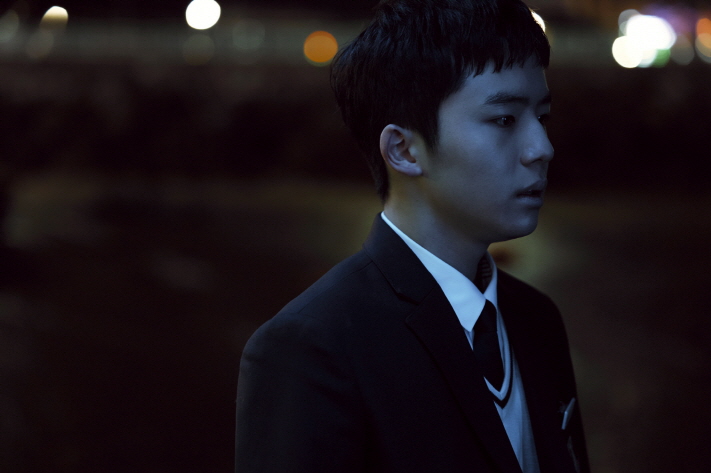
Posted in Movies | Tagged , , , , , , | Leave a comment

Handling the Undead (2024) ☆☆1/2(2.5/4): Facing an inexplicable happening

Norwegian film “Handling the Undead” is a dry and detached genre piece simply going all the way for its unsettling mood. Without explaining a lot about its story premise, the movie calmly and distantly observes its several main characters facing an inexplicable happening which gradually disturbs them along the story, and this is interesting for a while before eventually spinning its wheels around its inevitable conclusion.

 The early part of the film establishes the respective grieving status of the main characters. At first, we are introduced to a young woman and her aging father, and we come to gather that they have been quite devastated by the recent death by her young son. Both of them are so isolated in each own grief that they barely speak with each other, and the movie phlegmatically depicts how they go through each own daily life as struggling more and more with each own grief.

In case of one stand-up comedian, he and his two children happen to be suddenly struck by an unexpected bad news. His wife has a serious car accident, and she is already dead when he hurriedly arrives at a local hospital. While he is at a loss about how to deliver this bad news to his children, something quite unbelievable happens right in front of him. His wife’s body shows some movement, and it looks like she comes back from death.

Meanwhile, a similar thing happens to the aforementioned young woman and her old father. While grieving over his grandson’s grave, the old man hears something from the ground beneath the grave, and he soon begins to dig up the grave. What do you know, his grandson looks alive again, and we subsequently see him washing his grandson in his and his daughter’s apartment.

Needless to say, his daughter is quite shocked to see her son back in the apartment. As a matter of fact, she even thinks she is going crazy due to her immense grief, but she eventually comes to see that she is not crazy at all. Although she does not know what to do about her son just like her father, both of them are a bit glad to get back him again, and they are willing to keep him as much as possible.

Another part of the story involves with an aging lesbian couple. After one of them died, her partner is quite overwhelmed by the sense of loss, but then her dear spouse soon returns from death to her surprise. Just like the other “undead” people in the story, her dear spouse merely shows little signs of life while looking not so capable of communication, but she is happy to get her spouse back nonetheless, and there is a poignant but unnerving scene where she is trying to make her spouse eat a bit.

The screenplay by director Thea Hvistendahl and her co-writer John Ajvide Lindqvist, which is based on the novel of the same name written by Lindqvist, leisurely rolls the story and characters under the ominously ambiguous atmosphere. It turns out that there are many other cases of people returning from death, but the movie does not go into details on how this can happen, and we can only guess that this happening is associated with a mysterious incident which occurred right before that.

The tension of the movie comes from how the main characters feel conflicted about how they should respond to their respective circumstances. While the young woman and her father become more protective of her “undead” son, we cannot help but notice the decomposed status of his body, which is frequently emphasized by the buzzing sound of flies around him. In case of that old lesbian couple, the living partner of that “undead” woman tries to make everything comfortable for her “undead” spouse, but she is reminded more of the disturbing aspects of her circumstance.

Not so surprisingly, there come some nasty moments during the last act as expected, and that is where the movie begins to lose its tension and narrative momentum. As consequently entering familiar genre territories, the movie coldly disturbs us more, but we remain distant to the story and characters because of its rather thin storytelling and flat characterization, and that is the main reason why its last scene feels more like a mere whimper instead of being emotionally devastating.

At least, the main cast members fill their respective roles with some genuine emotions. While Renate Reinsve, who surely had a busy year as appearing in several other films including “A Different Man” (2024) and Apple+ TV drama series “Presumed Innocent”, and Anders Danielsen Lie, who incidentally appeared along with Reinsve in Joachim Trier’s Oscar-nominated film “The Worst Person in the World” (2021), are the most notable members in the cast, the other cast member including Bjørn Sundquist and Bente Børsum are equally solid in their substantial part, and Børsum deftly handles her several wordless but effective moments in the film. 

On the whole, “Handling the Undead”, which is Hvistendahl’s second feature film after “The Monkey and the Mouth” (2017), is admirable to some degree for its dry handling of familiar genre elements, but I must say that I felt impatient more than once during my viewing because of its glacial narrative pacing and shallow characterization. Anyway, Hvistendahl shows some potential as a good filmmaker, and I can only hope that her next film will interest and engage me more.

Posted in Movies | Tagged , | Leave a comment

A Different Man (2024) ☆☆☆1/2(3.5/4): A humorously ironic comedy on identity and appearance.

“A Different Man”, which won the Best Picture award at the Gotham Awards ceremony a few months ago, is often quite amusing as cheerfully exploring the issues of identity and appearance. After patiently building up its comic momentum during the first half, the movie is unexpectedly absurd and hilarious at times during its second half, and a number of humorous moments will surely make you more reflect on whether we are defined more by appearance or personality.

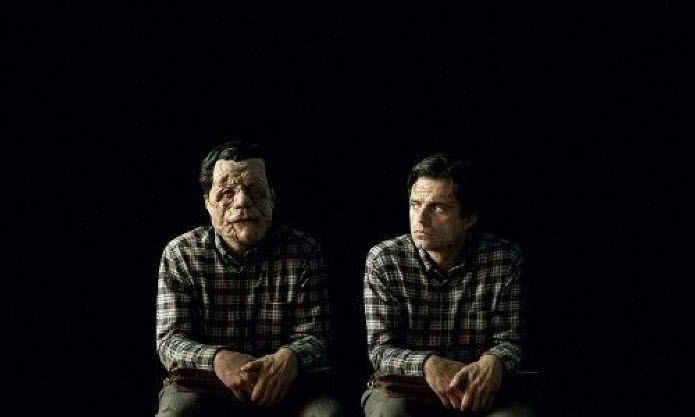
At the beginning, we meet Edward (Sebastian Stan), a struggling New York city actor whose face is considerably disfigured due to neurofibromatosis. He is recently hired along with a bunch of other disfigured people for the production of some educational video, but he usually does not feel that right about himself, and he understandably hesitates a lot when he happens to befriend Ingrid (Renate Reinsve), one of the neighbors in his apartment building who is incidentally an aspiring off-Broadway playwright.

However, there comes an unexpected opportunity which may change Edward’s life. He happens to participate in the clinical test of some new drug which seems to alleviate his current medical condition, and he initially does not expect much, but, what do you know, this drug in question turns out to be as amazing as, say, that drug in Coralie Fargeat’s “The Substance” (2024). After going through a brief moment of body horror, Edward’s old face is gone, and now he looks as dashing as the actor playing him.

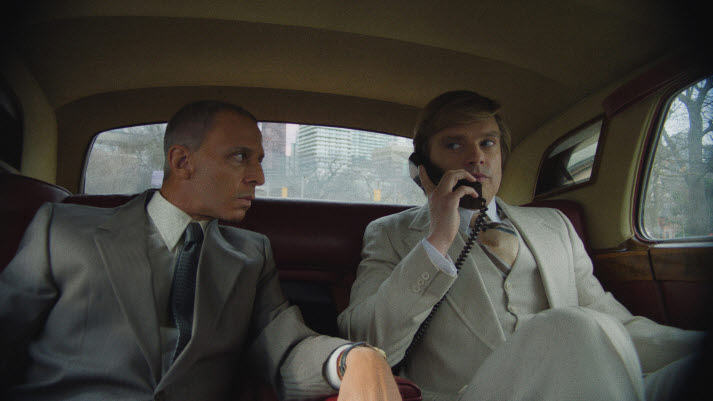
Once its hero finds how things become different around him thanks to his new face, the movie moves forward to some time later. After completely leaving his old life behind, Edward is now working as a real estate salesman named “Guy” (Is this actually a nod to the actor’s other recent performance in Ali Abbassi’s “The Apprentice” (2024), I wonder?), and he looks much less socially awkward than before in addition to being quite successful in his job.

On one day, Edward comes across the audition for the lead role in the off-Broadway production of the latest play written by Ingrid, which is simply titled “Edward”. Needless to say, this play of hers is based a lot on Edward’s old self, so Edward decides to apply for the audition with a mask modeled after his old face at the beginning of that clinical test, and what do you know, he eventually gets the part thanks to his newly gained confidence.

As Edward subsequently collaborates with Ingrid during next several weeks, they become closer to each other than expected, but, of course, things become a bit more complicated than expected. While Edward is still hiding his old secret from Ingrid, Ingrid becomes more serious about her play, and she cannot help but wonder whether she should be more sensitive and thoughtful about her play. For example, shouldn’t she have cast a real disfigured guy instead as she intended from the very beginning, instead of casting a non-disfigured guy like “Guy”?

Around that narrative point, another unexpected thing happens in the story. When a disfigured guy named Oswald (Adam Pearson) comes to the ongoing rehearsal, he immediately draws the attention of Ingrid, and Edward comes to befriend Oswald when they happen to encounter each other again at a local bar. While also having neurofibromatosis just like Edward once did, Oswald is effortlessly funny and charming to others around him, and this certainly makes Edward feel conflicted about discarding his old self.

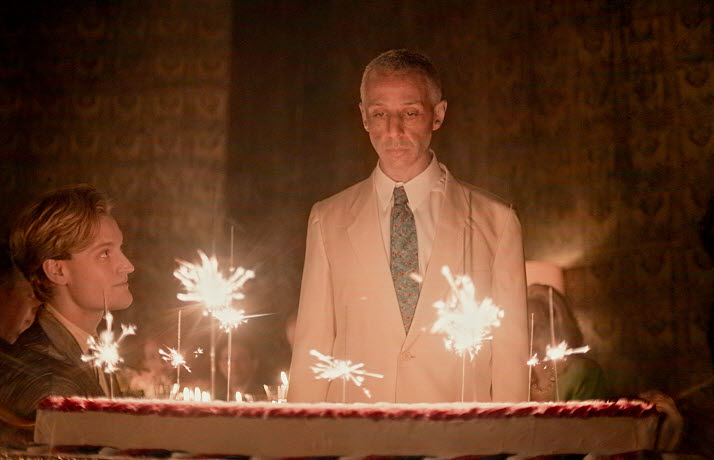
Director/writer Aaron Schimberg, who is no stranger to exploring appearance and identity as shown from his previous film “Chained for Life” (2018), keeps the story and characters rolling via the absurd comic logic of the plot, and there are several genuinely funny scenes I will let you watch for yourself. For instance, a certain very famous actor makes a surprise appearance later in the story, and this reminds me again that he really should utilize his singular intense persona more in comedy (After all, being absolutely serious is usually a necessary requirement for any good comedy film, right?).

The movie certainly depends a lot on the excellent comic lead performance from Sebastian Stan, who deservedly received the Silver Bear for Best Leading Performance at the Berlin International Film Festival early in last year (He also won the award for the Best Performance by a Male Actor – Musical or Comedy at the Golden Globe Awards a few weeks ago, by the way). Deftly balancing his role between comic irony and dramatic inner conflict, Stan did a fabulous job of building up his character even while wearing a lot of makeup during the first half of the film, and he gets funnier as willingly leaping from his established ground for more humor and laugh.

The two other main cast members in the film are equally engaging in their respective roles. While Renate Reinsve, who has been quite busy after her breakout performance in Joachim Trier’s Oscar-nominated film “The Worst Person in the World”, brings enough wit and intelligence to her part, Adam Pearson, who was utterly unforgettable in his brief appearance in Jonathan Glazer’s “Under the Skin” (2013) and previously collaborated with Schimberg in “Chained for Light”, steals every moment of his in the movie besides being an effective counterpart to Stan, and he surely deserves all the praises and recognitions he has so far received for the film during last several months.

Overall, “A Different Man” is both funny and thought-provoking because of its witty storytelling and compelling performances, and it also took me back to a person I happened to notice a few days ago. She was a woman whose face was as disfigured as Edward’s old self and Oswald, and I observed how she seemed totally fine with herself despite that. Now I am wondering how she may feel and think about the movie, and, in my trivial opinion, she will probably enjoy it as much as I did.

Posted in Movies | Tagged , , , | 1 Comment

The Apprentice (2024) ☆☆1/2(2.5/4): The early years of one deplorable figure

Ali Abbasi’s latest film “The Apprentice” looks into the early years of one deplorable figure who has been exerting toxic influences over not only the American society but also the whole world during last several years. While it surely drew a lot of attention when it was premiered at the Cannes Film Festival early in this year, the movie is merely superficial without providing much new insight into what makes this vile dude tick, and that is quite a disappointment considering the good efforts from the two performers at its center.

That figure in question is Donald J. Trump (Sebastian Stan), and the first half of the movie is set in New York City in the middle of the 1970s, when Trump was just a banal real estate developer trying to help his family business in deep trouble. His father, Fred Trump Sr. (Martin Donovan) and his company are recently sued for racial discrimination against many of the tenants of an apartment building built by his company, and it seems like the company will inevitably lose and then sink into bankruptcy.

However, Trump happens to encounter someone who may help him. He is a lawyer named Roy Cohn (Jeremy Strong), and Trump recently joined an exclusive club in New York City mainly for people with power and money like Cohn, who has incidentally been one of the most powerful figures in the city since his career was boosted by that infamous communist witch hunt by Joseph McCarthy in the 1950s. Once he comes to discern as Trump as another source for more power and money to him, he gladly befriends Trump, and Trump willingly seeks some legal help from Cohn, who certainly does not disappoint Trump at all as taking care of that difficult legal battle of his company.

As closely watching how Cohn does his jobs, Trump virtually becomes his, yes, apprentice, and Cohn shows all those nasty tactics of his for gaining more power and influence. At one point, he lectures a bit on his three main principles to Trump, and Trump soon begins to impress his mentor more as absorbing and then following these three principles as much as possible. In fact, he learned so well from Cohn that even Cohn cannot help but feel rather alarmed as Trump becomes much greedier and nastier as the American society subsequently entered the era of the Ronald Reagan administration in the 1980s. He ruthlessly and selfishly goes for any opportunity for more money and power without any shame and guilt at all, and this also influences not only his relationship with Cohn but also his marriage with his first wife Ivana (Maria Bakalova), whom he might have really loved at first but only comes to disregard her more and more as their marriage gradually gets crumbled.            

During its second half, the screenplay by Gabriel Sherman unfortunately comes to spin its wheels. While the first half is fairly engaging as examining how Trump was “educated” by Cohn, the second half is less interesting as hurriedly moving forward to the 1980s and then arriving at the completion of Trump’s vulgar public image. We surely see the foreshadowings of his shocking political rise in the middle of the 2010s, but they are more or less than footnotes, and the movie only ends up repeating more of what we have known about this despicable figure.

At least, the movie does not feel deficient in terms of style and performance. For getting us immersed more into the period mood of the American society during the 1970-1980s, Abbassi and his cinematographer Kasper Tuxen presented the film in deliberately low visual quality, and the movie effectively utilized several period pop songs to accentuate the authentic period details show on the screen.

The two main performers did as much as they could do with their rather broad roles. Sebastian Stan, who has shown more of the considerable range of his acting talent since he got his first break thanks to several Marvel Cinematic Universe flicks, willingly hurls himself into his character’s vulgar banality, and he did a commendable job on the whole, though he gave a more interesting performance in “A Different Man” (2024) in the same year. On the opposite, Jeremy Strong, who has been more notable since his Emmy-winning turn in HBO drama series “Succession”, is equally committed as Trump’s evil mentor, and his best moments in the film come from when his character finds himself betrayed by the human monster he willingly created. As many of you know, Cohn adamantly denied his homosexuality even when he was dying because of AIDS, and, as reflected by one key scene later in the story, Trump showed no real pity or compassion to his mentor at all while remaining as shameless and impertinent as before.  

Several other cast members in the film are under-utilized in one way another. While Maria Bakalova, who has steadily advanced since her Oscar-nominated breakthrough performance in “Borat Subsequent Moviefilm: Delivery of Prodigious Bribe to American Regime for Make Benefit Once Glorious Nation of Kazakhstan” (2020), is utterly wasted, Martin Donovan, Catherine McNally, and Charlie Carrick simply come and then go as Trump’s several family members, and Donovan is only required to look disapproving during most of his scenes in the film.

In conclusion, “The Apprentice” is dissatisfying for failing to illuminate anything new about Trump, and it is all the more disappointing compared to Abassi’s two previous films “Border” (2018) and “Holy Spider” (2022), which are more interesting in my inconsequential opinion. Yes, it is really depressing to think about how this reprehensible bastard will ruin our world more during next four years, and being merely reminded again of his evil and detestable sides is the last thing I want for now.
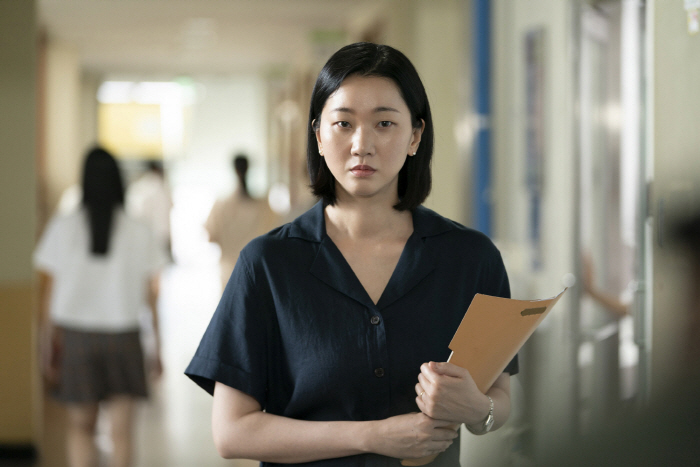
Posted in Movies | Tagged , , , | 1 Comment

Ripples (2023) ☆☆☆(3/4): The ripples in her mind

Japanese film “Ripples”, which happens to be released in South Korean theaters in this week, is a distant but occasionally amusing character study to observe. Although you may not like its rather neurotic heroine that much, you will also observe her behaviors with some fascination at least, and you will come to wonder more about what may happen in the end.

The opening part, which is set in 2011 March, introduces us to a middle-aged housewife named Yoriko Sudo (Mariko Tsutsui), and the movie observes how her daily life is abruptly disrupted in more than one way. As the whole nation is being shaken by the Fukushima nuclear accident, Yoriko tries to continue her daily life as usual despite being concerned about drinking water as much as her neighbors, but then her husband is suddenly gone missing for no apparent reason.

The story immediately moves forward to around 10 years later. After her husband’s inexplicable disappearance, Yoriko had to take care of her remaining family members including her dying father-in-law, and we later come to learn that she inherited everything from her father-in-law after his death. After her son eventually left for his college study, she has lived alone in the family house while working at a local supermarket for earning her living, and we often observe how she is particularly fastidious about the maintenance of a little Japanese dry garden inside her residence.

However, there is one serious matter in Yoriko’s daily life. Not long after her husband’s disappearance, she came to join a rather silly cult group strongly believing in a certain special water supposed to have a spiritual cleaning/healing power. Regardless of how much she actually believes, she has showed considerable devotion to her cult group, and we cannot help but amused by how she and several other cult members easily let themselves deceived by their questionable leader.

And then something unexpected happens on one day. When she returns to her residence, she is approached by her husband, and it turns out that he has been ill due to a very serious case of cancer. According to him, he needs to be treated with some very expensive medicine, and he certainly needs his wife’s help as having been virtually penniless and homeless during last several years.

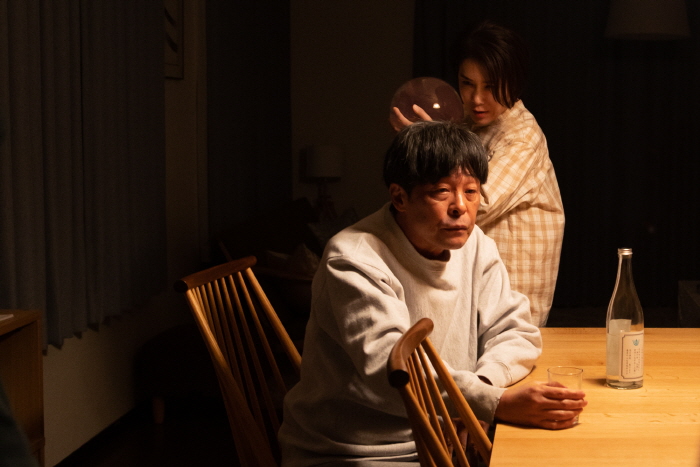
It goes without saying that Yoriko does not welcome her husband’s return at all, but she lets him stay in the house, and he certainly begins to annoy her in one way or another. Besides rudely behaving as if he is entitled to live there, he often looks around here and there in the house for finding anything to benefit him, and, above all, he does not show much consideration on his wife’s religious activities. Naturally, Yoriko comes to lean more on her cult group and its leader, but the leader only sees more chance to deceive and then control Yoriko more than before.

As advised by her leader, Yoriko tries to be nice and good as suppressing any dark thought and feeling inside her, but, of course, that turns out to be not so easy to her frustration. Her husband keeps behaving like a jerk, and there is also a very rude old customer who often bullies Yorko and other supermarket employees. In addition, her son has some surprise news when he visits her residence later, and Yoriko cannot accept what he is soon going to do regardless of whether she approves of that or not.

Meanwhile, there comes an unexpected moment of friendship from a middle-aged janitor at Yoriko’s workplace. Whenever she spends some time with her unlikely new friend, Yoriko feels a little better mainly due to the no-nonsense attitude of her friend, though it subsequently turns out that she also has a fair share of personal issues just like Yoriko.

As one audience sitting near me during the screening observed, there is not any normal person in the story, but the movie continues to engage us even while continuing to maintain its distant attitude toward its heroine’s mental struggles along the story. As the camera of cinematographer Hideo Yamamoto often calmly sticks to its static position, we become more aware of the subtle emotional tension beneath the screen, and that is evident whenever Yoriko does her routine maintenance work on her dry Japanese garden.

The screenplay by director/writer Naoko Ogigami, who has steadily built up her filmmaking career since her first feature film “Yoshino’s Barber Shop” (2004), depends a bit too much on symbolism during several key scenes in the story, but it did a good job of steadily building the characters along the story, and the main cast members are mostly solid in their low-key performance. While Mariko Tsutsui firmly holds the center, several other main cast members including Ken Mitsuishi, Midoriko Kimura, and Hayato Isomura have each own moment to shine around Tsutsui, and Kimura is particularly fun to watch when her character casually provides some common sense to Yoriko at one point.

On the whole, “Ripples” works as a dryly wry mix of comedy and drama, though it may require some patience from you at first due to its rather slow narrative pacing. I must confess that I often got baffled or impatient during my viewing, but the movie is interesting enough on the whole, so I recommend you to give it a chance someday.

Posted in Movies | Tagged , , , | Leave a comment

A Real Pain (2024) ☆☆☆1/2 (3.5/4): A tour about pain

“A Real Pain” really amused and touched me more than once, and that is quite an achievement in my trivial opinion. While it initially seems fairly simple as a familiar buddy road comedy-drama film, the movie is often surprisingly funny and poignant as deftly balancing itself between humor and pathos along with its two main characters. Like any good character comedy-drama movies, the movie brings out more human depth and insight than expected along its thoughtful and sensitive story, and we really get to know a lot about both of them when the story eventually arrives at the end of their little journey.

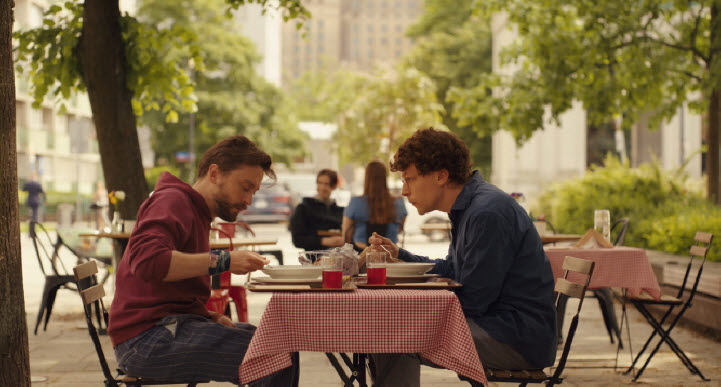
In the beginning, the movie quickly establishes the very different personalities of its two main characters. As shown from the very first scene, David Kaplan (Jesse Eisenberg) is often anxious and fastidious about almost everything in his life, but his cousin Benjamin “Benji” Kaplan (Kieran Culkin) is more casual and laid-back in comparison, and their personality difference is all the more evident when they meet at the JFK International airport outside New York City.

David and Benji are going to have a tour associated with the Jewish culture and history in Poland, and the main reason for their tour is quite personal to say the least. Besides a certain important cause involved with what recently happened in Benji’s life, he and David want to honor of the memory their Jewish grandmother who is no longer with them at present, and they are also going to visit where she once lived around the end of their tour.

The first half of the movie frequently generates small and big humorous moments as David and Benji show more of their contrasting personalities in front of us and several other people joining their tour under a British guide quite knowledgeable about the Polish Jewish history. Right from their first meeting, Benji lightens up the mood for everyone, but David seems rather embarrassed about his cousin’s carefree behavior, and this interesting behavioral pattern of theirs continues even when they finally have a time to have some rest before beginning another day of their tour.

As these two main characters and their fellow travelers go around here and there in Poland, the movie shows a number of interesting sights associated with the Polish history. We see several old buildings which are clearly the remains of the communist era during the late 20th century, and we also get to know a bit about the Jewish culture and history in Poland, which is actually more than, yes, the Holocaust and the World War II.

The purpose of the tour is getting to know and feel more of the Jewish history and culture in Poland, but Benji cannot help but express his thoughts and feelings on how the tour is about. When he and the other travelers visit a very old Jewish cemetery, he shrewdly points out to the British guide that he should do more than merely doling out bits of historical facts, and what he and the other travelers eventually do next actually means a lot for themselves.

Meanwhile, mainly via David’s frequently guarded attitude, we come to gather that there is something quite problematic about Benji. When they and the travelers have a little nice dinner together after visiting one of those infamous concentration camps during the World War II, both David and Benji come to show more of themselves as interacting more with the guide and their fellow travelers, and that is when David eventually lets out what has troubled him so much since what happened to his cousin.

Although the mood surely becomes quite melodramatic around that point, the screenplay by Jesse Eisenberg, who also directed and co-produced the film besides handling his lead role in front of the camera (This is his second feature film after “When You Finish Saving the World” (2022), by the way), dexterously swings around many different feelings including pain and joy while staying focused on the personalities of its two different main characters as before. While we come to have more understanding of David’s constant anxiety, we also get to have more empathy on Benji’s frequent mood swings, and we eventually come to care more about them just like their fellow travelers, who are incidentally more than mere background characters surrounding them.

Most of all, the movie depends a lot on the presence and talent of the two excellent actors at its center, and both of them did a fabulous job of illustrating credible characters to remember. Eisenberg, who is always natural whenever he is required to embody human anxiety, is flawless as subtly conveying to us David’s deep concern about himself as well as his cousin, and he is often complemented well by the equally nuanced performance from Kieran Culkin, who will surely get Oscar-nominated for giving one of the best performances in his commendable acting career. Although he was initially known as the younger brother of Macaulay Culkin (Remember that little cousin in “Home Alone” (1990), by the way?), Culkin has diligently built up his own career during last several decades as shown from his Emmy-winning turn in HBO TV drama series “Succession”, and his movingly complex human portrayal here in this film deserves every award and recognition he has received during this Oscar season.

In conclusion, “A Real Pain” shows a lot of understanding and empathy toward two different human figures who could look like, yes, a real pain in the ass. Although it is rather short in its running time (90 minutes), it succinctly and precisely did almost everything it can do with its two main characters, and they will probably stay inside your mind for a long time after it is over. Yes, many things remain uncertain for both of them even at the end of the story, but they come to recognize what and how they feel, and that is surely the start, isn’t it?

Posted in Movies | Tagged , , | 2 Comments

Nosferatu (2024) ☆☆☆1/2(3.5/4): A grim and intense remake

Robert Eggers’ new film “Nosferatu” is something he has been destined to make. After all, his three previous films, “The Witch” (2015), “The Lighthouse” (2019), and “The Northman” (2022), are all intensely gothic in one way or another, and his remake of F.W. Murnau’s 1922 classic silent horror film “Nosferatu: A Symphony of Horror” certainly confirms to us again that he is indeed a grim and intense wunderkind of horror.

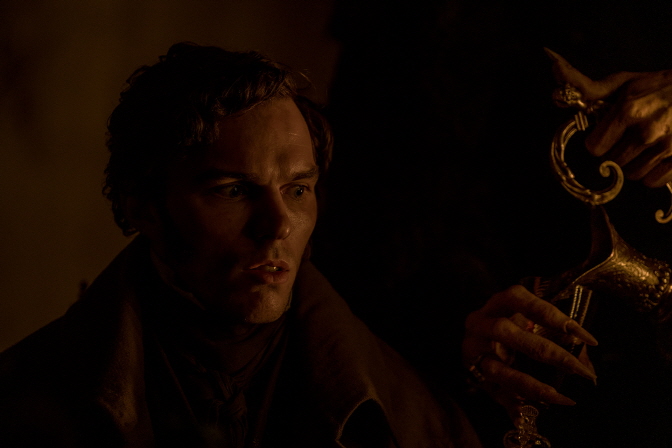
The story, which is set in 1833, closely follows the footsteps of its 1922 senior. A promising young lawyer named Thomas Hutter (Nicholas Hoult) is instructed by his new employee to visit a shabby big castle located somewhere in the rural region of Transylvania, because he needs to handle the contract documents to be signed by the mysterious owner/occupant of that castle. Needless to say, that figure is question, Count Orlok (Bill Skarsgård), is an old vampire who has been quite eager to be set loose onto the world outside, and Hutter soon finds himself confronting the unspeakable horror of his fiendish host.

Besides spreading his evil influence all over the outside world, Count Orlok, who surely looks as spooky and grotesque as required, also has the other purpose behind his back. As shown from the opening scene of the film, Hutter’s wife Ellen (Lily-Rose Depp), who happens to have a sort of supernatural sense, got her mind connected with Count Orlok in the middle of one of those unstable night of hers some years ago, and she inadvertently beckoned him at that time.

After her husband left their city for Romania, Ellen soon finds herself overcome by the unfathomable sense of dread, and her mental condition gradually gets worsened as Count Orlok is already reaching to her from the distance. Quite concerned about her, Hutter’s friend Friedrich Harding (Aaron Taylor-Johnson) and his wife Anna (Emma Corin), who is incidentally Ellen’s best friend, call for Dr. Wilhelm Sievers (Ralph Ineson), and, after very perplexed and disturbed by the increasingly disturbing symptoms shown from Ellen, Dr. Sievers eventually decides to get some second opinion from his eccentric mentor Professor Albin Eberhart Von Franz (Willem Dafoe), who has a fair share of knowledge on the certain areas ignored by modern science.

Around this narrative point, the movie dials up more the level of tension and dread across the screen, and we are served with a number of darkly disturbing moments including the ones clearly influenced by Murnau’s 1922 film. We see more of how Hutter gets more terrified by the creepy aura of doom from Count Orlok. We watch the doomed voyage of a cargo ship which happens to carry something very important to Count Orlok. And we also behold how Count Orlok unleashes his evil influence across the city once he eventually arrives (The movie did a nice homage to another famous classic silent horror film of Murnau, by the way).

All these and many other insidious moments are vividly and strikingly presented on the screen by Eggers and his crew members. His frequent cinematographer Jarin Blaschke, who was Oscar-nominated for “The Lighthouse”, often evokes the qualities of black and white film especially during numerous nocturnal scenes in the film, and the resulting moody visual texture of the film is further accentuated by the oppressive score by Robin Carolan, who previously collaborated with Eggers in “The Northman”.

The movie surely relies a lot on its titular character, and Bill Skarsgård, who has been a frequent performer for playing evil characters since his diabolical villain performance in Andy Muschietti’s “It” (2017) and “It Chapter Two” (2019), has some grim fun with playing one of the creepiest monsters in the movie history. While mostly covered with a lot of makeup and CGI, Skarsgård deftly exudes evil and menace even when the camera does not show much of his character, and the result is another impressive performance in his advancing acting career.

On the opposite, the other main cast members function as the counterparts to Skarsgård, but they hold each own place well in their respective spots. While Nicholas Hoult, who incidentally played Count Dracula’s servant in “Renfield” (2023), is quite convincing in his character’s accumulating terror and dread along the story, Aaron Taylor-Johnson and Emma Corrin manage to bring some personality to their rather thankless roles, and Ralph Ineson, who previously appeared in “The Witch”, and Simon McBurney are well-cast in their crucial supporting characters. In case or Lily-Rose Depp, who is, yes, the daughter of Johnny Depp, she shows a lot of admirable commitment a la Tobe Hopper’s SF horror film “Lifeforce” (1985) as her character goes through a series of ups and downs throughout the film, and Willem Dafoe surely brings a touch of class to his rather hammy role as he previously did in “The Lighthouse” (You may be also amused to remember that he was Oscar-nominated for playing a real vampire playing Count Orlok in E. Elias Merhige’s overlooked black comedy horror film “Shadow of the Vampire” (2000)).

On the whole, “Nosferatu” is another interesting genre work from Eggers. Although I thought “The Lighthouse” and “The Northman” were mildly interesting genre exercises compared to his first feature film “The Witch”, I admire their technical qualities enough at least, and “Nosferatu” shows some more progress in my humble opinion. I must point out that this is a rather tough stuff you cannot easily enjoy, but it will leave some indelible impression, and you will surely admire it more if you have watched its 1922 senior.

Posted in Movies | Tagged , | 1 Comment

Let the Right One In (2008) ☆☆☆1/2(3.5/4): A vampire girl on the next door

Is there any vampire movie as sad and poignant as the 2008 Swedish film “Let the Right One In”? This is a hauntingly chilly romance horror tale of loneliness and desperation, and I am glad to report to you that it does not lose any of its dark emotional power at all even though more than 15 years have passed since it came out.

The story is set a suburban neighborhood of Stockholm, Sweden in 1982, and the early part of the film succinctly establishes how things have been miserable for a 12-year-old boy named Oskar (Kåre Hedebrant). Probably because of his rather fragile appearance, he has been often bullied at his elementary school, but he has been neglected at both his home and school, and the opening scene shows him struggling to process his deep anger and resentment alone in his room during one cold night.

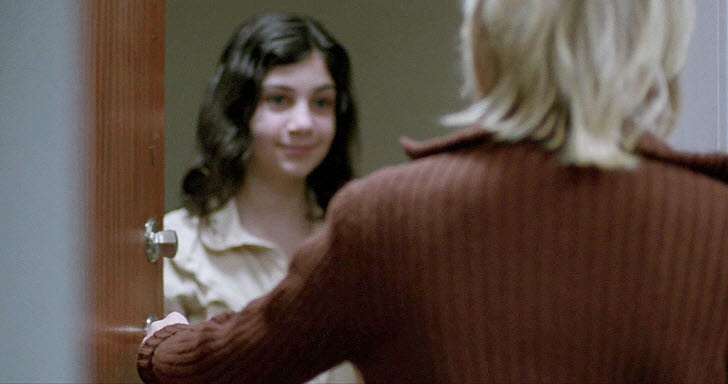
And that is when he notices the two figures moving into an empty apartment right next to the one where he and his divorced mother live. It is apparent that there is something suspicious about these two mysterious figures, and Oskar subsequently encounters one of these two figures, who turns out to be a young girl around his age. Her name is Eli (Lina Leandersson), and, though their first encounter is not exactly cordial, she and Oskar come to befriend each other more as discerning the deep loneliness in each other.

While spending more time with each other, Oskar finds himself more smitten with Eli, but, as it is gradually revealed to us along the story, Eli is not a normal girl at all. She is actually a vampire who has lived for several centuries at least, and we come to gather that her guardian, who is incidentally a middle-aged man, is not her father but actually her servant who often kills people for getting some human blood to satiate her unspeakable hunger.

Patiently rolling the story and characters, the screenplay by John Ajvide Lindqvist, which based on the novel of the same name written him, doles out a number of familiar genre conventions. While having some supernatural power, our vampire girl cannot eat anything besides human blood, and she must always avoid sunshine. Above all, as reflected by the title of the movie, she can get inside only after being invited, and we later see what can happen to her if she ever breaks that time-honored rule for vampires like her.

It does not take much time for Oskar to learn the horrific secret of his new friend, but, despite his initial horror and surprise, he does not mind this much because, well, he still likes Eli and both of them are comforted a lot by their unlikely relationship. Sure, Eli is actually quite much older than Oskar, but that does not matter much to both of them as they come to sense more of the kinship between them, and we later wonder whether this is actually the beginning of another chapter in many centuries of Eli’s existence.

However, the movie never forgets its horror story elements as Eli often gets hungry again, and the overall mood is darkened more by not only the stark ambiance of winter night but also the glum mood shared by the adults residing in Oskar’s neighborhood. While his mother is often too busy with her work to pay attention to her son, his father, who currently lives alone at some remote spot outside the city, disappoints Oskar a lot when a friend of his visits for some night drinking. In case of many other adults in the neighborhood, most of them are pathetic losers who usually spend their nighttime at a local bar, and their several scenes reflect how depressing things were many people in Sweden during that time due to the failure of their social system.

In such a barren and melancholic environment like that, the budding romantic relationship between Oskar and Eli feels somewhat touching to us, and the chilly aspects of their unlikely romance are often accentuated by the cold poetic beauty of the cinematography by Hoyte van Hoytema, who would eventually move onto a number of notable Hollywood films including several works of Christopher Nolan (He won an Oscar for Nolan’s latest film “Oppenheimer” (2023) early in last year, by the way). He and director Thomas Alfredson, who also became more prominent as directing “Tinker Tailor Solider Spy” (2011) later, frequently fills the screen with the palpable sense of coldness and loneliness, and you may want to hold a hot cup of coffee or tea while watching the film.

The movie also depends a lot on the unadorned good chemistry between its two young lead performers, who incidentally made a movie acting debut here in this film. While Kåre Hedebrant is alternatively disturbing and harrowing as the deeply trouble young hero of the story, Lina Leandersson balances her character well between icy beauty and bloody horror, and they ably illustrate the dramatic relationship development between their characters along the story. In case of several adult performers surrounding them, they are all believable in their respective supporting parts, and the special mention goes to Per Ragnar, whose horrific character is somehow more sympathetic to us as we reflect more on the very last scene of the movie.

In conclusion, “Let the Right One In”, which happens to be re-released in South Korean theaters in the same week when Robert Eggers’ “Nosferatu” (2024) arrives in South Korea, is still a powerful vampire film to be appreciated and admired, and its considerable achievement shines more and more after we survived those Twilight flicks. As a matter of fact, I was rather tired when I watched the movie yesterday evening, but I soon got quite engaged as I did many years ago, and that says a lot about the undeniable emotional power of this very special film.

Sidenote: Yes, the movie was followed by the 2010 American remake version. That is also a fairy good one, but I still prefer the original version a bit more.

Posted in Movies | Tagged , , , | Leave a comment

My Best, Your Least (2024) ☆☆☆(3/4): Her pregnant student

South Korean film “My Best, Your Least” handles its rather sensitive social subject with more sensitivity and thoughtfulness than I expected, and I appreciate that. Mainly revolving around a complex teacher and student relationship, the movie powerfully delivers its important social messages via a number of genuine emotional moments, and it is also supported well by the two strong lead performances at the center.

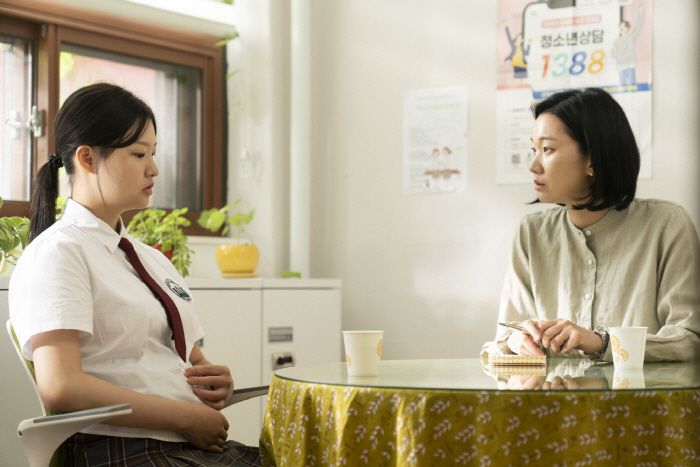
At first, we are introduced to Hee-yeon (Jang Yoon-ju), a young married female teacher working in some female high school. When she is assigned to a first-year classroom, everything seems to be going well in the classroom, but it gradually turns out that there is a serious problem hidden behind one of her students. That student in question is Yoo-mi (Choi Soo-in), and she has actually been pregnant for last several months due to her boyfriend. While not knowing well what to do about her pregnancy just like her boyfriend, Yoo-mi tries to hide that as much as possible, but Hee-yeon eventually comes to know that once Yoo-mi gets examined by the school nurse, and Hee-yeon must handle this tricky situation as carefully as possible for not only her student but also the school.

However, the situation only becomes a lot more complicated for a number of reasons. First, the current status of Yoo-mi’s pregnancy turns out to be a bit too late for abortion, and she also wants to remain in the school, especially after her father beats her when he belatedly learns about her pregnancy. Nevertheless, Hee-yeon advises Yoo-mi that she should submit a letter of resignation for 1) saving the reputation of the school and 2) making the situation less painful and problematic for Yoo-mi.

However, Yoo-mi is not so willing to follow her teacher’s advice, and that is where the movie becomes a little more complex. While she comes to care about her student more than before, Hee-yeon cannot help but become exasperated about her student’s stubborn position, and their eventual clash certainly causes more trouble for both of them.

And we get to know more about Hee-yeon’s serious personal problem, which makes an interesting contrast with Yoo-mi’s increasingly difficult circumstance. She and her husband, who is incidentally also a schoolteacher, have been struggling to have a baby for a while, but they have failed again and again to their frustration. As a matter of fact, it seems possible to us that they will adopt Yoo-mi’s baby instead, especially after Yoo-mi is subsequently sent to a temporary shelter for pregnant adolescent girls like her. As spending the next several months, Yoo-mi is reminded more and more of how things can be more difficult for her, and that certainly makes her more conflicted about what she should do next for her and her baby.

To our little surprise, the screenplay by Kim Soo-yeon continues to roll the story and characters with more obstacles to come, and that naturally leads to more thoughts on the human rights associated with teen pregnancy. Yes, Yoo-mi did make a serious mistake, but she does not deserve at all to be blamed or discriminated just because of that, and the movie surely makes a clear point to us when her teacher willingly steps forward for Yoo-mi’s human rights as much as possible, regardless of whether she agrees to Yoo-mi’s decision on her life and baby.

I must point out that the movie pulls out its ending a little too easily, but I must also admit that it earns the little but precious optimism shown from the last scene. Yes, things will probably remain quite challenging for Yoo-mi despite that, but she receives the unexpected support from others around her willingly showing some solidarity, and it is apparent that she will never forget this no matter what will happen next in her life.

The two lead performers of the film diligently carry the film with their commendable efforts. As Jang Yoon-ju, who was excellent as one of the three titular characters in “Three Sisters” (2020), steadily holds the ground, Choi Soo-in, who was unforgettable as the young heroine of “The World of Us” (2016), deftly handles her character’s dramatic arc along the story, and it is constantly compelling to observe the dynamic relationship development between their complicated human characters. As Hee-yeon and Yoo-mi push or pull each other along the story, there come some touching moments of empathy and understanding, and we are moved to observe how much they are respectively changed around the end of the story, while also reminded more of why it is always important to recognize and respect the human rights of many pregnant adolescent girls out there.

Overall, “My Best, Your Least” is a solid mix of character and social drama, and Kim Hyun-jung, who previously made a feature film debut with “On the Sand House” (2023), confirms to us her that she is a good filmmaker who knows how to handle story and characters well enough to engage and then move us. In short, this is one of better South Korean films in my humble opinion, and it will make an interesting double feature show with “Sister Yujeong” (2024), another recent South Korean drama film which also handles teen pregnancy with considerable compassion and consideration. To be frank with you, I came to learn a bit more about teen pregnancy via these two good movies, and I am sure that they will leave you something to think about.

Posted in Movies | Tagged , , , , | Leave a comment

Efterskole, Going to the Wonderland Korea (2024) ☆☆☆(3/4): Their freedom to look to the side

While watching South Korean independent documentary film “Efterskole, Going to the Wonderland Korea”, I could not help but reflect on how I was often driven by myself and my parents to do more and more study during my childhood and adolescent years. Just like many other young South Korean students, I was often expected to get good grades for going to a better university someday, and I simply did what I was demanded to do without much doubt or question.

Anyway, I was not particularly unhappy at least because I was fairly smart enough to get good grades, but that is not the case in case of an adolescent girl named Joo-yeon, who simply cannot study more as becoming more anxious and depressed about getting good grades. When she finally came to have a sort of mental breakdown, her parents were surely quite surprised, but they tried to help her as much as possible, and they eventually found an alternative for their daughter.

That alternative in question is a little one-year private transitional school, which is modeled after those “efterskoles” in Denmark. In this small but extraordinary school, the students are allowed to have the “freedom to look to the side” instead of busily studying for advancing further, and the documentary shows us how free and casual the mood is inside the school. While there are some rules for everyone, each of the students freely go for whatever interests them, and they come to have more ideas and thoughts on what they really want to do for their upcoming adult life.

As observing their several free activities including singing and dancing, I was reminded that I was really fortunate to have something to occupy myself in the middle of that strenuous academic process to grind me and many other schoolmates of mine. In exchange for getting good grades, I was allowed to enjoy books and movies whenever there was free time, and I must tell you that I am sometime happier as a movie reviewer than I work as a researcher in some biotechnology company, though my living depends a lot on the latter and I do like my current job. 

The founder of this transitional school, which is incidentally called “Ggumtle efterskole”, is a decent middle-aged man who really cares about his students. He got an idea of establishing his special school after coming to learn and then experience those efterskoles in Denmark, and we see him giving a little lecture to the students of some other school. As a matter of fact, he has done such a lecture like that for more than 1,000 times during last several years, and he is still passionate about introducing alternatives to many students out there who may need some help from his school.

Since it was established in 2014, Ggumtle Efterskole has been fairly successful in helping and supporting its students. We meet an adolescent girl clearly interested in theater, she goes to a theater high school after spending some time in Ggumtle efterskole, and now she is the stage director of a play to be performed in front of the students and teachers. In case of one teenager boy, he had a rather difficult relationship with his father, who comes to open his mind more to his son after watching how much his son has been changed after going to Ggumtle Efterskole. At one point later in the documentary, the father reads a little personal letter to his son in front of many others including his son, and that leads to a very emotional moment for everyone at the spot.

Of course, everything is not rosy and optimistic for Ggumtle Efterskole, and that is evident when its founder and several teachers have a meeting around the end of its another year. As the founder frankly admits, the school has been struggling with a considerable amount of deficit since it was established, and they are all aware that their school can be closed at any time due to its ongoing financial problem.

Nevertheless, the documentary maintains its optimistic tone as observing how hopeful the students of Ggumtle Efterskole are. In case of Soo-yeon, she becomes less unhappy thanks to her time in Ggumtle Efterskole, and she is now planning to spend some time in Denmark for getting to know life and the world more before eventually deciding whatever she is going to do about her own life. Her parents are certainly supportive of her choice, and there is a little touching moment when she and her father look for any suitable gift for her host in Denmark.  

Overall, “Efterskole, Going to the Wonderland Korea” is an engaging documentary which will make you muse more on the inherent problems of the demanding South Korean education system, and you may also want to give some support those good alternative schools like Ggumtle Efterskole. Its running time is rather short (75 minutes), and I wish the documentary showed more of its interesting main subject, but director Yang Ji-he did a good job of presenting its main subject with enough care and respect at least.

By the way, I am now considering showing the documentary to my younger brother and his wife later, who incidentally have a little young daughter at present. After watching it, they may discern that there are always other ways besides pushing her all the way to a better university, and that will probably help her in my inconsequential opinion.

Posted in Movies | Tagged , , , | Leave a comment