Porcelain War (2024) ☆☆☆(3/4): Artists in the middle of the ongoing war in Ukraine

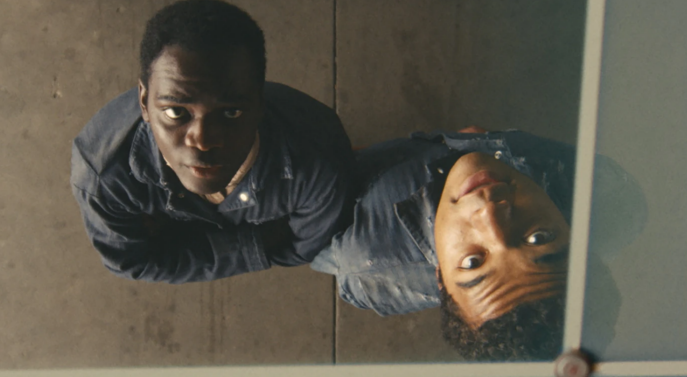
Documentary film “Porcelain War”, which won the U.S. Documentary Competition Grand Jury Prize at the Sundance Film Festival early in last year and then was recently nominated for Best Documentary Oscar, looks at the activities of several Ukrainian artists in the middle of the ongoing war in their country. While their country is constantly being disrupted and devastated by the war every day, they all try to maintain their art and culture as much as possible whenever they are not fighting against their enemy, and their artistic defiance is sometimes touching to watch.

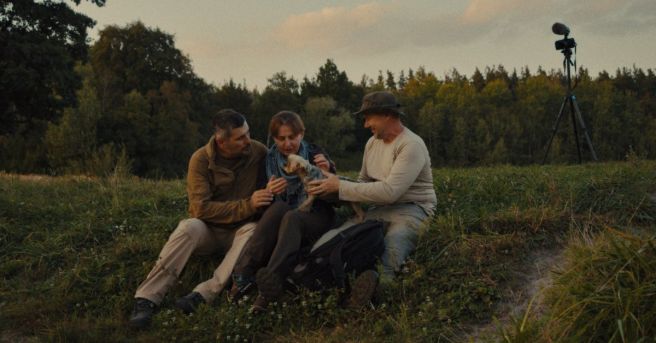
At first, we are introduced to three different local artists: Slava Leontyev, Anya Stasenko, and Andrey Stefanov. They all once resided in the Crimea region of Ukraine before they had to leave due to the Russian occupation in 2014, and then all of them joined the Ukrainian defense when Russia invaded their country further in 2022. In case of Leontyev, who incidentally co-directed the documentary with Brendan Bellomo, he became a machine gun trainer, and we later observe his considerable dedication as he trains other volunteers.

When he is not working for his country, Leontyev usually spends time with his longtime partner Anya Stasenko, who has known him for many years since their childhood years. Whenever Leontyev makes a number of porcelain figurines, Stansenko paints these figurines bit by bit, and their lovely results certainly make a big contrast with what is happening in the city where they currently reside. As one of several cities quite close to the frontline, the city is frequently attacked by the Russian military, and we are not so surprised when there eventually comes a point where the horror of the war gets a lot closer to Leontyev and Stansenko’s cozy home than before.

Nonetheless, both of these two talented artists do not give up hope and resistance as continuing their artistic activities as usual, and the documentary sometimes provides lovely animation scenes based on their little precious figurines. Their porcelain works certainly look fragile, but these works also show resilience as well as artistic spirit inside them, while expressing each own stories via their individual shapes and paintings.

Meanwhile, the documentary also shows how things are getting worse for Ukraine and its people via what Leontyev and many other soldiers have to endure and then survive. We see them operating a number of drones which will drop some bombs on their enemy, and we also get a closer look into how they manage to stop their enemy’s advance at least for a while.

Many of the footage clips in the documentary were shot by Stefanov, and he tells his harrowing personal experience at one point later in the documentary. As the city became more dangerous due to the war, he reluctantly accepted the offer from a friend living in Lithuania, who was ready to take care of Stefanov’s two children for protecting them from more trauma to come. While his two daughters safely arrived in Lithuania in the end, he and his family had to go through a lot of risk before that, and he also feels guilty about his present absence even though recognizing that his daughters are now safe at least.
As showing more of the horror and sadness from the war, the documentary seems to lose its focus in my humble opinion. Sure, what Leontyev and Stansenko are trying to do during their private time is nobly defiant, but these intimate artistic moments of theirs are inevitably overshadowed by those more intense moments in the documentary from time to time. For example, there is a gritty and striking sequence which closely follows several soldiers trying to handle their emergency situation, and that is certainly one of the most memorable moments in the documentary. However, I must point out that such a tensely urgent moment like this does not get mixed that well with the relatively milder scenes observed from Leontyev and Stansenko’s personal life.

Perhaps, this jarring impression I got from the documentary is actually its whole point. Even though the circumstance around them and many others in the city becomes all the more despairing later, Leontyev and Stanskenko are not deterred at all as trying to keep going as usual in one way or another, and we are often moved as observing more of their defiant spirit and determination. There is a brief but precious warm moment when they take a walk along with their plucky pet dog in a nearby forest for getting some mushrooms, and the mood remains peaceful and pleasant even while they occasionally locate and then mark a hidden land mine here and there in the forest.

On the whole, “Porcelain War” does not surpass the harrowing urgency shown from recent Oscar-winning documentary “20 Days in Mariupol” (2023), but it will surely be remembered as one of the notable documentaries about the ongoing war in Ukraine. Considering the current status of the war at this point, I seriously wonder whether all those artistic efforts of Leontyev and Stasenko during the wartime may actually mean anything at all in the end, but the documentary reminds me that art itself has always been an act of defiance against all the senselessness and meaningless throughout our frequently chaotic human history. Therefore, I can only sincerely hope that they and their art will prevail – no matter what will happen to them during next several years.

Posted in Movies | Tagged , , , , , | Leave a comment

It’s Okay! (2023) ☆☆☆(3/4): You will like this girl in the end

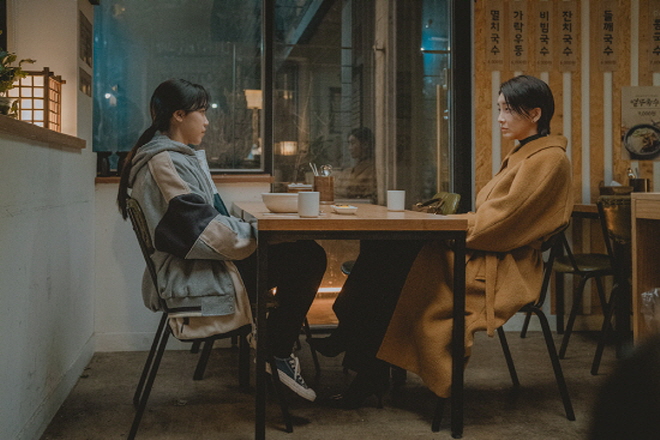
South Korean film “It’s Okay!” amused and then touched me with its plucky young heroine. You may wince from time to time as watching how irrepressibly spirited and optimistic she really is, but you will come to root for her more as getting to know her more along the story. Believe me, you will smile at times while observing how her big, open heart affects others around her in one positive way or another.

She is a high school girl named In-yeong (Lee Re), and the opening part of the film shows a sudden tragedy which happens while she and her fellow dancing members of the Seoul International Arts Company are ready for another big public performance of theirs. Not long after her phone conversation with her mother, her single mother sadly dies due to an unfortunate car accident, and In-yeong is consequently left alone without any close family member to take care of her.

After one year, we see how In-yeong has tried to go on by herself alone. She still lives in a house where she and her mother resided, but the situation is not so good for her at present. Not long after evading the social workers looking for her, the landlord of the house notifies that she will be soon evicted due to failing to pay her rent during last several months, so she must find another place to stay while going on with her high school life as usual.

Eventually, In-yeong comes to stay inside the building of the Seoul International Arts Company at every night, but then she happens to be discovered by Seol-ah (Jin Seo-yeon), a former dancer who has been newly appointed as the head choreographer of the company. Probably because she feels a bit sorry for In-yeong, Seol-ah eventually takes In-yeong to her big modern house, and In-yeong is certainly grateful as she is allowed to stay there during next several days at least.

However, In-yeong and Seol-ah soon find themselves clashing with each other due to their considerable personality difference. As a cold, fastidious woman who has devoted almost all of herself to her profession for years, Seol-ah cannot help but annoyed by In-yeong’s cheery attitude at times, but she also feels sorrier to In-yeong as remembering how much In-yeong was devastated by the news of her mother’s death at that time. In addition, In-yeong’s mother was actually one of Seol-ah’s old colleagues, and that makes Seol-ah more protective of In-yeong, though she remains tough and strict to not only In-yeong but also all of the other young members of the company.

Because they must prepare for the upcoming 60th anniversary performance, everyone in the company becomes quite anxious – especially as Seol-ah pushes all of them harder day by day. In case of Na-ri (Chung Su-bin), this young girl has been quite determined to take the center of the performance, but it is apparent to us from the very beginning that she is struggling a lot with amounting anxiety and pressure behind her haughty attitude. In contrast, In-yeong simply enjoys herself throughout a series of training sessions regardless of whether she is better than others or not, and her carefree attitude certainly makes a big contrast with Na-ri’s.

Because In-yeong has been often ostracized by Na-ri and several other young company members, we can easily sense a growing trouble between In-yeong and Na-ri, but the screenplay by director Kim Hye-young and her co-writer Cho Hong-jun surprises us more than once. Yes, there eventually comes a sort of catfight among In-yeong and several other young girls as expected, but it is unexpectedly moving to watch how this conflict of theirs is resolved via In-yeong’s positive influence on them, and this will probably remind you again that girls usually know better than boys.

Furthermore, In-yeong also indirectly makes Seol-ah realize what is really important for herself as well as In-yeong and other young company members. Thanks to In-yeong, Seol-ah comes to get a chance to relax and enjoy her life a bit, and one of the most humorous moments in the film comes from when Seol-ah tries a bit on In-yeong’s favorite food. 

It goes without saying that the movie depends a lot on the presence and talent of its lead actress, and Lee Re, a promising young actress who surely grows up a lot compared to her likable child performance in “How to Steal a Dog” (2014), did a commendable job of filling her character with enough life and personality. While never overlooking the deep sadness behind In-yeong’s vivacious façade, Lee makes her character into a walking life force, and we come to like her more even while occasionally rolling our eyes at her uninhibited spirit.

On the opposite, Jin Seo-yeon ably complements Lee throughout the film, and she also did a good job of conveying to us her character’s gradual inner changer over the story. In case of several other main cast members, Chung Su-bin is surprisingly sympathetic later in the story, and Lee Jeong-ha and Son Suk-ku hold each own small place well as the two other substantial supporting characters in the movie.

In conclusion, “It’s Okay!”, which won the Crystal Bear award at the Generation KPlus section of the Berlin International Film Festival early in last year, is a pleasant and poignant coming-of-age tale, and I wholeheartedly welcomed its optimistic vibe more than expected. As things seem to be getting worse in our world, we really need some healthy dose of positive energy at times for not resorting to cynical nihilism, and I assure you that the movie will give you plenty of that at least for a while.

Posted in Movies | Tagged , , | Leave a comment

Starlet (2012) ☆☆☆(3/4): Between two very different people

Sean Baker’s 2012 film “Starlet”, which happens to be available in South Korea via a local streaming service, is about the unlikely relationship between two very different people. Although their first encounters are rather awkward to say the least, they come to understand and care more about each other along the story, and we are touched by a series of realistic human moments observed from them.

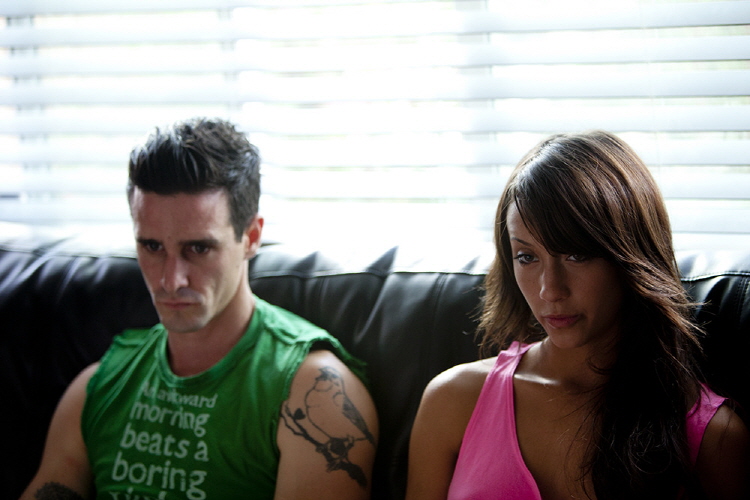
At the beginning, the movie, which is mainly set in the San Fernando Valley area of California, introduces us to Jane (Dree Hemingway), a young woman who has resided in a little apartment rent by her friend/colleague Melissa (Stella Meave) and Melissa’s boyfriend Mikey (James Ransone). On one day, Jane goes to a yard sale held in front of some old lady’s house in their neighborhood because she needs some pieces of furniture to decorate her own little place for herself and a little pet dog named Starlet, but she only ends up buying a little Thermo bottle instead.

Not long after she returns to her place, Jane discovers something hidden inside the Thermo bottle. There are actually a bunch of rolls of hundred dollar bills, so she decides to spend some of them just because she needs to buy some stuffs, but then she feels like stealing the money from that old lady. Therefore, she subsequently goes to that old lady’s house again, but the old lady simply rejects her right from the start.

Nevertheless, Jane is not deterred at all, while feeling more guilt about the old lady. She approaches the old lady more actively in the next time, and the old lady, who is named Sadie (Besedka Johnson). reluctantly accepts a little kindness from Jane despite her reservation. It goes without saying that Sadie naturally becomes more suspicious about whatever this supposedly kind young woman wants from her, but she eventually opens her heart more to Jane, and then Jane finds herself spending more time with Sadie.

And we get to know more about both of these two very different people. As a longtime widow who has lived alone by herself in her little suburban house, Sadie often feels lonely, but things have recently been rather hard for her. Just because she has no one to take care of her around her, her insurance company often demands more safety restrictions on her house, and that means she may have to give up a lot in case of her small but precious private garden.

Meanwhile, the movie gradually shows more of how Jane, Melissa, and Mikey earn their living day by day. All of them are associated with the local adult film industry in one way or another, and we come to gather that both Jane and Melissa are fairly well-known for their sex work, though Melissa is relatively less diligent compared to Jane. As a matter of fact, she gets suspended by their company boss for making one trouble after another, and that consequently leads to some promotion for Jane.

Considering its main subject, you may expect the movie to become quite seedy, but many of its adult film production scenes in the film are actually dry and realistic with enough thoughtfulness and restraint. Besides casting several real adult film professionals in a number of minor roles for some extra authenticity, Baker, who wrote the screenplay with Chris Bergoch, imbues these key scenes with considerable verisimilitude as wisely avoiding making them too exploitative or voyeuristic, and we observe more of how casual Jane and others around her are about their another working day. They are simply there for earning another paycheck, and there is nothing particularly terrible or special about that in their viewpoint. As a matter of fact, Jane’s company boss turns out to be a fairly sensible businessman with some professional ethics and principles, and he even advises Jane that she should distance herself more from Melissa and Mikey (And he turns out to be right, by the way).

Regardless of how she actually feels about her current profession, Jane chooses not to tell that much about her work to her new friend, and that is another source of suspension in the story. As getting to know more about Sadie, Jane really wants to do something really special for her later in the story, and that leads to more tension later in the story – especially after Melissa eventually discovers the money in Jane’s room.

While the movie inevitably arrives at the narrative point where its two main characters confront what lies beneath their relationship in one way or another, it also surprises us with the emotional poignancy observed from the following choices made by them, respectively. I will not go into details here, but I can tell you instead that the eventual ending of the film will take you back to the simple but sublime final touches of those great short stories by Raymond Carver, and you will reflect more on how they will go on with their respective free will.

The two actresses at the center of the film click with each other well as the contrasting duo in the story. While Dree Hemingway brings considerable life and personality to her supposedly plain archetype role, Besedka Johnson ably complements her co-star at every moment of their crucial scenes, and her unadorned performance is all the more touching because this non-professional actress died not long after the movie was released in late 2012. Around Hemingway and Johnson, Stella Meave and James Ransone are also solid in their respective supporting parts, and you may be amused to see Karren Karagulian, who would work with Baker again in Oscar-winning “Anora” (2024).

On the whole, “Starlet”, which is incidentally Baker’s fourth feature film, is an engaging mix of comedy and drama, and you can clearly discern how Baker already established his own artistic style and territory even at that time. As subsequently making “Tangerine” (2015) and “The Florida Project” (2017), he advanced much further than before, and, as many of you know, the rest is the history.

Posted in Movies | Tagged , , | Leave a comment

The Royal Tenenbaums (2001) ☆☆☆1/2(3.5/4): Anderson’s early dollhouse play

Revisiting Wes Anderson’s 2001 film “The Royal Tenenbaums”, I was reminded again of how consistent Anderson has been during last several decades. While this movie and many subsequent works of his are basically his own little dollhouse plays, they are all packaged with an ample amount of distinctive style and personality, and most of them are actually very funny and touching behind their frequently unflappable appearance.

“The Royal Tenenbaums” was incidentally Anderson’s third feature film, which came after “Bottle Rocket” (1996) and “Rushmore” (1998). While these first two feature films of his are more or less than a warm-up exercise because he still needed to hone his own idiosyncratic style and sensibility more at that time, “The Royal Tenenbaums” shows Anderson taking the first real big step at last, and it has almost everything to define a Wes Anderson movie. 

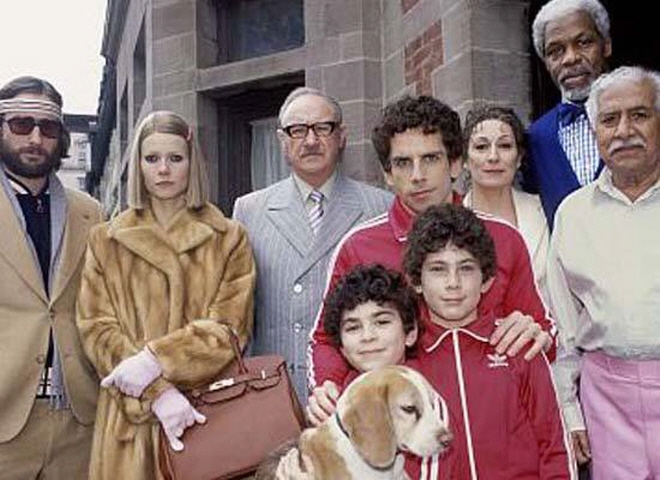
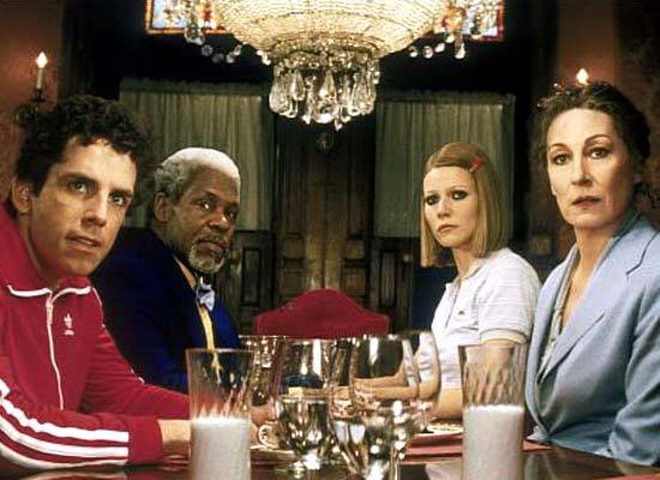
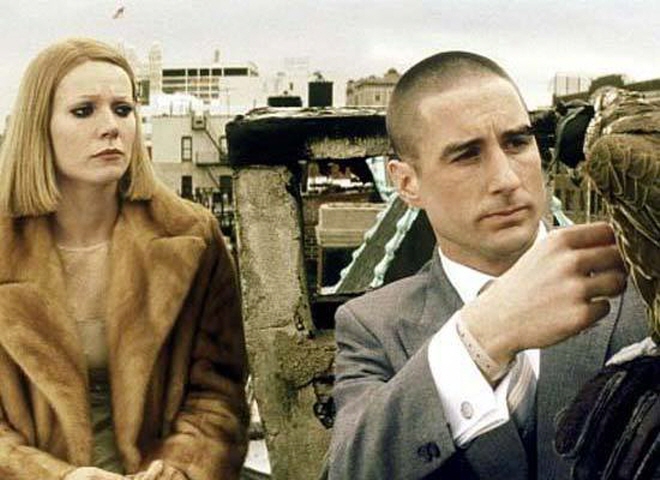
The story, whose amusing narrative frame will be evolved further in Anderson’s subsequent films including “The Grand Budapest Hotel” (2014) and “Asteroid City” (2023), revolves around one dysfunctional family living in New York City. Although they were once promising bright kids wholeheartedly nurtured by their caring mother Etheline Tenenbaum (Anjelica Huston), Chas (Ben Stiller), Margot (Gwyneth Paltrow), and Eli (Owen Wilson) were damaged in one way or another by their selfish and insensitive father Royal (Gene Hackman), and we are not so surprised when his wife eventually decides that enough is enough and then kicks him out of their family house. 

After more than 15 years passed, Etheline begins to consider having a divorce at last as finding herself falling in love with her accountant Henry Sherman (Danny Glover), and that is not a very good news for Royal. In addition to being on the verge of going totally broke, he recently gets kicked out of an expensive hotel room where he has resided for years, and he certainly needs to depend on Etheline more than ever.

For getting more sympathy from his wife and kids, Royal impertinently lies to them that he is going to die sooner or later. Chas, who is still very resentful about what a bad father Royal was to him in the past, strongly objects along with Margot, who is not so amused to see her father again for the same reason (He has always reminded her that she was adopted, which becomes a sort of running gag throughout the film). In contrast, Eli, who still cares about Royal despite having his own fair share of disappointment with his father, insists that they should give their father another chance, and Etheline eventually agrees to let her husband return to their family house.

Needless to say, Royal is quite a pathetic figure, but we also observe more of how his kids have equally been pathetic as your typical cases of arrested development. While he was a little but brilliant businessman during his childhood, Chas becomes a neurotic man who has been quite fastidious about the safety of his two sons after his wife’s tragic death. While she distinguished herself as a child playwright, Margot is now going nowhere as being stuck with her psychiatrist husband who shows more passion in analyzing his latest case. While he was also quite famous as a tennis prodigy, Eli is now coasting on his retirement life without any plan or direction, and it later turns out that he has actually yearned for getting closer to Margot. 

Now this surely looks like your average dysfunctional family story, but the movie distinguishes itself a lot from many other similar films via its sheer wit and style. Quite formal in its narrative structure, the screenplay by Anderson and his co-writer Owen Wilson, who is incidentally Luke Wilson’s older brother and also plays one of the main characters in the film, doles out unexpected quirky moments along the plot, and they are all the more amusing for the deadpan attitudes of the main characters. Regardless of how much they are aware of the absurdities of their comic situations, many of them remain flatly unflappable except a few sudden moments of emotional outbursts, which make a striking contrast with the phlegmatic overall tone of the movie.

At the same time, there are also the underlying pain and pathos around their deadpan comedy, and they prevent the film from becoming merely whimsical. Not so surprisingly, Royal comes to face more of how much he ruined his kids’ childhood, but there is not much he really can do about his damaged relationship with them, and he knows that too well – especially after his deception is eventually exposed later in the story (Is this a spoiler?). In case of his children, they still have to deal with how their respective lives got ruined by not only their father but also themselves, and the most harrowing moment in the film comes from when Eli feels quite betrayed and devastated after learning more about what Margot has been hiding behind her back.                       

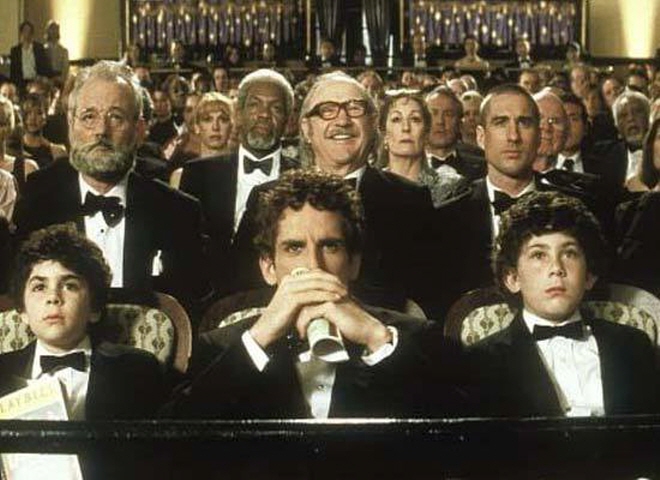
Nevertheless, the movie keeps maintaining its lightweight tone before eventually arriving at the finale where it strikes the right balance between humor and poignancy, and it is supported well by its well-rounded ensemble performance. While Ben Stiller, Gwyneth Paltrow, and Luke Wilson ably bring enough life and personality to their sibling characters, Anjelica Huston and Danny Glover provide some necessary gravitas as required, and Bill Murray, Owen Wilson, and Kumar Pallana, who often steals the show as a longtime family employee, flawlessly slip into their respective supporting parts.

In case of Gene Hackman, who sadly passed away in last week, this legendary actor gives one of the rather rare comic performances in his long and illustrious career, and it is constantly entertaining to watch how he effortlessly tickles us while subtly illustrating his complicated character with nuances and details to be observed. Yes, Royal is indeed a bastard as his wife says at one point, but he is also somehow likable despite all those numerous human flaws of his, and Hackman did a fantastic job of fully embodying many human contradictions of his character without any misstep at all. In short, this is his last great performance, but the Academy Awards failed to nominate him at that time, and that was incidentally one of its biggest mistakes during last 30 years.  

 On the whole, “The Royal Tenenbaums” is still a milestone point in Anderson’s career besides being one of the finest moments in the distinguished career of a great American movie actor, and you will admire more of how Anderson has steadily gone his way during last 24 years. After finally getting an Oscar thanks to his Netflix short film “The Wonderful Story of Henry Sugar” (2023), he is already working on his next project, and I am sure that he will find more fun and amusement from his own rich genre territory.

Posted in Movies | Tagged , , , | Leave a comment

Take Out (2004) ☆☆☆(3/4): One day of a Chinese delivery guy

Sean Baker and Shih-Ching Tsou’s 2004 film “Take Out”, which was released on DVD and Blu-ray by Criterion in US a few years ago, is a modest but engaging immigrant drama which gradually draws you into its plain hero’s one particularly desperate day. Although it does not show and tell a lot about him, you will feel like getting to know him and his harsh daily reality more around the end of the film, and you may also admire how the movie handles his story with enough sensitivity and thoughtfulness while not ending up being your average misery porn.

The movie, which is set in a time not long after the 9/11 incident, opens with showing how things are quite bad for Ming Ding (Charles Jang), a young Chinese illegal immigrant who has worked as a delivery man at some little take-out restaurant located somewhere in the middle of the upper Manhattan neighborhood of New York City. He is a hard-working dude dreaming of having a better future along with his wife and their child who may come to US someday, but, alas, he currently owes a considerable amount of money to a local loan shark, and now he must pay those vicious criminals no less than 800 dollars before the end of the day.

At least, Ming’s situation turns out to be a bit better than we expected in the beginning, because there are some people willing to help him to some degree. First, he manages to obtain 500 dollars from a family member of his who is also very busy with earning her meager living just like many others like them. Second, Young (Jeng-Hua Yu), a fellow delivery man who is also Ming’s closest friend, is quite willing to step aside for allowing Ming to do more deliveries during that day after learning about Ming’s big imminent trouble.

What follows next is a series of brief episodic moments where Ming is diligently and desperately trying to earn as much as possible during next several hours. Although it frequently rains outside, that does not deter him at all, and we often watch him hurriedly delivering those packaged Chinese dishes here and there in the surrounding neighborhood.

As he encounters one customer after another along the story, you will be reminded more of how diverse New York City really is in terms of people – and how Ming and many other delivery guys out there are often disregarded and under-appreciated. The handheld camera of Baker, who also did the cinematography besides writing, producing, and editing the movie with Tsou, usually sticks around Ming, but we seldom see his face as he faces his customers one by one, and we become all the more aware of his frequently marginalized status in the city.

Although its production budget was no less than 3,000 dollars, the movie does not look limited that much by its very small production budget. While it surely feels raw and rough from the beginning to the end, Baker and Tsou did a commendable job of imbuing it with a lot of realism and verisimilitude, and the result is as vivid and impressive as other similar New York City immigrant films such as Ramin Bahrani’s “Man Push Cart” (2006). As a result, you may sometimes feel like watching a real slice of life being unfolded on the screen, and that is why we get more absorbed in its hero’s ongoing struggle.

You will also probably admire how Baker and Tsou’s screenplay allows some humor and humanity as Ming and several other main characters around him busily work hour by hour. Although they do not tell a lot about themselves as struggling to go through another day of their hard and difficult life as usual, they all come to us as realistic human figures to observe, and there is a little warm and humorous moment when they have a casual lunch break together later in the story.

During its last act, the movie expectedly throws another setback upon our struggling hero, but it does not lose any of its deep care toward its hero at all, and that is where its emotional power lies. From what it has steadily built up before that narrative point, the movie dexterously pulls out a little but precious moment of solidarity and compassion, and this feels all the more relevant considering how our global world and many of us have been crushed more and more by the worst sides of the humanity these days.

The movie certainly depends a lot on its lead actor, and Baker and Tsou found the right one for their film. Although he is actually a Korean American who can also speak Chinese, Charles Jang, who incidentally made a brief appearance in Baker’s recent Oscar-winning film “Anora” (2024), mostly looks natural in his unadorned embodiment of his character’s growing weariness and desperation, and he also clicks with several main cast members including Jeng-Hua Yu, Wang-Thye Lee, and Justin Wan, who respectively bring some colorful human details to the story without being too showy at all.

On the whole, “Take Out” shows how Baker already demonstrated his considerable potential as a new American independent filmmaker to watch. Mainly because of the timeless aspects of its immigrant drama, the movie still does not look that dated at all even at this point, and it is really remarkable to see how far he has advanced during last 20 years since this small but interesting low-budget film. Both “Take Out” and “Anora” show that he has always cared a lot with interest, understanding, consideration, and compassion, and you will agree that he is indeed one of the best American filmmakers of our time.

Posted in Movies | Tagged , | Leave a comment

My Prediction on the 97th Academy Awards

I have often grumbled a bit about how the Oscar season has been predictable during the last two decades. Especially after the season got shorter and tighter around 20 years ago, it has been much easier to detect whether there will be any sudden surprise from the outcome of the ceremony, and I can only remember a couple of times where I was genuinely surprised as watching the ceremony on live TV (Remember when Tilda Swinton quite unexpectedly won her Best Supporting Actress Oscar for “Michael Clayton” in 2008?)

In case of this year, the Oscar race has been quite dramatic week by week. At first, “Anora” seemed to be a definite front runner, but then there came a considerable chance for “The Brutalist” and “Emilia Pérez” after the Golden Globe Award ceremony. However, both of them subsequently suffered each own controversy while “Anora” rose again with its resurgence in PGA, DGA, WGA, and the Critics’ Choice Awards, and now “Conclave” suddenly becomes another possible winner after showing more prominence at the BAFTA Award ceremony and then winning the Best Ensemble award at the SAG Award ceremony a few days ago.

So, what will happen during the upcoming Oscar ceremony on March 2nd? As usual, there are a number of categories about which I am quite certain, but then there are also many other categories about which I am still scratching my head. Nevertheless, I am still having a fun with checking how much accurate or inaccurate I am in this trivial Oscar season game, and you can try to outguess me if you want, though there is no prize for that.

Continue reading
Posted in Movies | Tagged , | Leave a comment

Mickey 17 (2025) ☆☆☆1/2(3.5/4): More than one Pattinson presented by Bong Joon-ho

Bong Joo-ho’s films always have his own offbeat sensibility to be cherished. Even his phenomenal Oscar-winning film “Parasite” (2019), which is incidentally the most mainstream work in his career, shows that odd and interesting quality at times behind its almost perfect genre exercise, and his latest film “Mickey 17” continues that trend. While it initially looks like another typical Hollywood SF flick on the surface, the movie also cheerfully wields numerous offbeat touches here and there along with its fearless lead performer, and it shows us that Bong will continue to go his way even after the unexpectedly enormous success of his previous film.

Robert Pattinson, who gives his most humorous performance since his deliberately hammy supporting turn in David Michôd’s Netflix film “The King” (2019), plays Mickey Barnes, a young man who has been a literally expendable employee of some big corporation. He and many other people were sent to some inhabitable alien planet located somewhere in the space, and the first act of the film shows and tells us how he has got himself cloned again and again during last several years. Whenever he is sacrificed as a human guinea pig in one way or another, Mickey gets promptly cloned and then injected with the memories from his previous self via some high-tech equipment, and he has been already cloned no less than 16 times at the beginning of the story.
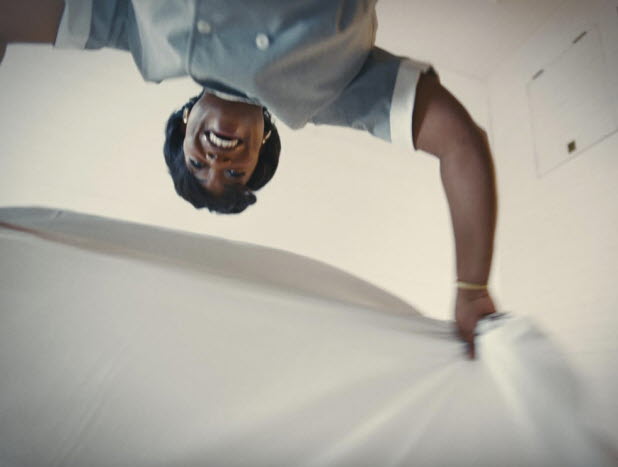
As he is probably going to die soon as “Mickey 17”, the story, which is based on Edward Ashton’s SF novel “Mickey7”, frequently goes back to how things were pretty bad for Mickey even before that. He and his friend/business partner Timo (Steven Yeun) could be killed by some very vicious loan shark at any point, so they decided to join the space travel just for getting away from that loan shark as far and quick as possible. Unfortunately, there was no other option for Mickey except being hired as an “expendable” to be cloned and then discarded during the space travel and the following colonization of that alien planet.

The whole process is supervised by Kenneth Marshall (Mark Ruffalo), a superficial politician who will instantly remind you of not only that orange-faced prick currently living again in the White House but also a certain egomaniacal South African billionaire associated with that prick. This dude is so vain and obtuse that he does not realize at all that he is often controlled and manipulated by his devious wife, who certainly enjoys every moment of being the power behind the throne unless she is occupied with making any new delicious sauce to be savored.

While certainly toiling a lot under the corrupt leadership of Mr. and Mrs. Marshall just like many others in the spaceship, Mickey found some solace from Nasha Adjava (Naomi Ackie), a young woman who incidentally works in the security department. As shown from several flashback scenes, Nasha actually cares a lot about Mickey besides being carnally attracted to him, and there is an amusing moment as they discuss a bit on how to get more pleasure from their developing relationship.

Although its first act often feels a bit slow as looking like merely warming up for whatever may follow next, the movie is constantly buoyed by Bong’s distinctive offbeat touches. Just like “Okja” (2017), it does not hesitate to go for sheer absurdity and ridiculousness, and this brings some unconventional qualities to its familiar genre territory. The resulting quirky sense of black humor is often contrasted with the inherent pathos in Mickey’s gloomy human condition, and the juxtaposition between these two different elements brings some extra personality to the story and characters, though the result is not always successful in my inconsequential opinion.

It certainly helps that the story is driven by another rich performance from Pattinson, who surely has a ball here as playing more than one different version of his character. Just like his director, he frequently brings out an unexpected moment of humor or pathos as many different versions of his character struggle in one way or another along the story, and he ably holds the movie together even when the movie stumbles a bit during the last act where a lot of things happen here and there.

Around Pattinson’s multi-faceted acting, Bong assembles a bunch of notable performers, who also embrace Bong’s offbeat sensibility as much as they can. As Mickey’s love interest, Naomi Ackie clicks well with Pattinson during several key scenes, and I was particularly tickled by when she demonstrates that she can be as sexy and daring as Zendaya in Luca Guadagnino’s “Challengers” (2024). While Steve Yeun is suitably obnoxious as Mickey’s opportunistic friend, Mark Ruffalo and Toni Collette are quite committed as chewing every scene of theirs as much as Richard E. Grant and Sandra Bernhard in Michael Lehmann’s “Hudson Hawk” (1991), and Holliday Grainger, Anamaria Vartolomei, Thomas Turgoose, Cameron Britton, and Steve Park are also well-cast in their small supporting roles.

In conclusion, “Mickey 17” is another interesting work from Bong, who is incidentally already working on the next work to be released around the next year. While it does not reach to the level of his better works including “Parasite”, it is equipped with an ample amount of wit, style, and personality besides being commendable for its top-notch technical aspects including the cinematography by Darius Khondji. It did not surprise me a lot, but it amused and entertained me much nonetheless, and, just like many of Bong’s works, I may look back on it more as time goes by.

Posted in Movies | Tagged , , , , | 2 Comments

Nickel Boys (2024) ☆☆☆1/2: A singular African American film to admire

My late mentor/friend Roger Ebert said that the movies are like a machine that generates empathy, and that is quite true in case of RaMell Ross’ latest work “Nickel Boys”, which was recently Oscar-nominated for Best Picture. Quite closely sticking to the viewpoints of two plain African American adolescent boys at the center of the story, this singular African American film often generates powerful human moments along their sad and poignant story, and their poetically empathic qualities will haunt your mind for a long time after the movie is over.

At the beginning, a series of free-flowing episodic moments establish the character background of one of those two African American boys in the story. His name is Elwood Curtis (Ethan Herisse), and we observe how he has grown up under his caring grandmother Hattie (Aunjanue Ellis-Taylor) in Tallahassee, Florida during the early 1960s. As the Civil Rights Movement is beginning in the country, Elwood naturally becomes more aware of the racial discrimination against him and many other African American people around him, but that does not deter him at all from his growing hope for doing something great in the future, and his grandmother is certainly willing to support her grandson’s hope and ambition as much as possible.

When he subsequently gets an opportunity to go to a college for promising young African American students like him, both Elwood and his grandmother are certainly happy and excited. However, he inadvertently gets himself into a big trouble when he is heading to that college, and this unfortunate incident eventually sends him to the Nickel Academy, a big state reform school for juvenile delinquents which is actually the fictional version of one of the most notorious reform schools in US. 

Up to this narrative point, the movie seldom shows Elwood to us because, well, the camera of cinematographer Jomo Fray, who should have been Oscar-nominated for his exceptional work here in this film, virtually functions as Elwood’s subjective viewpoint. This may sound very limited and suffocating to you, but, as effortlessly and dexterously unfolding whatever he sees or remembers on the screen, the movie gradually immerses us more into his thoughts and feelings, and we become all the more empathic to his ongoing plight.

 We eventually see Elwood via another main viewpoint in the story, and that belongs to Turner (Brandon Wilson), one of the boys in the section for African American boys. When many of other boys are cold or hostile to Elwood, Turner willingly shows some kindness to Elwood, and that is the beginning of their friendship, which gradually becomes something they desperately hold onto as they and many other boys are frequently exploited or abused day by day under their heartless (and corrupt) White superintendent.

Never overlooking the systemic racism and corruption surrounding its two young main characters, the screenplay by Ross and his co-writer Joslyn Barnes, which is based on Colson Whitehead’s second Pulitzer-winning novel “The Nickel Boys” (His first Pulitzer-winning novel “The Underground Railroad” is already adapted into a superb TV miniseries by Barry Jenkins, by the way), handles the dark aspects of the story with enough thoughtfulness and restraint. We do not see much during some of the darkest moments in the film, but the human pain and horror inside them are succinctly and effectively conveyed to us nonetheless, and we become more aware of what may happen to Elwood and Turner at any point if they are not careful.

And that is why the occasional small moments of unexpected warmth and sensitivity shine and then touch us a lot. Ross and Fray did a commendable job of imbuing these wonderful moments with a considerable amount of lyrical realism, and this may sometimes take you back to those memorably beautiful moments in Ross’ Oscar-nominated documentary film “Hale County This Morning, This Evening” (2018).

However, the movie wisely does not resort to any easy closure for its two main characters’ story as another crucial viewpoint enters the picture later in the story. Although many years have passed since that horrible time at the Nickel Academy, older Elwood, played by Daveed Diggs, cannot help but feel quite troubled when he reads the articles on the belated discovery on many atrocities committed there, and the emotional scars on his heart and soul are evident to us even though the camera mostly observes him from the behind.

I will not go into details how the movie pulls out a little surprise and then one of the most moving endings I have ever seen during last several years, but I can tell you instead that I come to admire more of how Ross and his cast and crew members stick to his artistic vision to the end. While ably functioning as the heart and soul of the film, Ethan Herisse and Brandon Wilson are often harrowing in their unadorned performance, and they are also supported well by several notable performers including Hamish Linklater, Fred Hechinger, Jimmie Fails, and Aunjanue Ellis-Taylor, who always provides extra warmth to the story whenever she appears on the screen.

On the whole, “Nickel Boys” is definitely one of the best films of last year, and Ross surely advances further than what he achieved so remarkably in “Hale County This Morning, This Evening”. With these two exceptional works, he firmly establishes as one of the best American filmmakers at present, and he will be always remembered for their significant achievement, regardless of whatever may come next from him in the future.

Posted in Movies | Tagged , , | 2 Comments

Lucca’s World (2025) ☆☆(2/4): She’s simply trying her best for her son…

Netflix film “Lucca’s World”, which was released in last month, is unabashedly sincere and sentimental without much honesty or human depth for becoming something more than “the disability of the week” movie. The movie is certainly pleasant and appealing to some degree, but I observed its story and characters with accumulating skepticism and cynicism during my viewing, and that was not a good sign at all.

As shown from the very beginning, the movie is a fictional presentation of the unbelievable real-life story of Bárbara Anderson (Bárbara Mori) and her first son Lucca (Julián Tello). When she is about to give birth to her son, Anderson is certainly hopeful and excited to say the least, but, alas, she and her son come to have a very serious medical situation at the time of her delivery, and this unfortunately leads to considerable brain damage to him.

As a result, Lucca has suffered a serious case of cerebral palsy during next several years, and we see how Anderson and her husband have devoted a lot of themselves to Lucca’s welfare. While she continues to work for supporting the family instead of her currently unemployed husband, she is always ready for more help and support to her dear son, and her second son is also quite supportive of his disabled older brother.

Nevertheless, things later get direr for Lucca and his family due to his more frequent seizures, and then Anderson happens to learn about a certain newly developed medical treatment which may actually help Lucca. Although nothing is definite at all about this new medical treatment which is incidentally being developed in some private clinic in India, Anderson soon becomes determined to take a chance with that, and this naturally leads to more financial burden on her and her husband. 

Nevertheless, her husband supports her determination as usual, and what follows next is how Anderson and her husband try to get their son to that private clinic in India as soon as possible. Although Lucca’s doctor understandably shows some sensible skepticism, he eventually provides some guide on how to handle Lucca’s increasingly fragile medical condition during the long flight to India. In case of Anderson’s husband, he gets the money enough for the family’s trip to India via the mortgage on their big apartment, and Anderson certainly appreciates her husband’s efforts.   

Even when she and her family eventually arrive in that private clinic in India, Anderson is not totally sure about whether she is really doing the right thing for her dear son, but, what do you know, her son actually shows considerable progress after going through a number of treatment sessions. Needless to say, she and her husband rejoice for this unexpected outcome, and then she considers getting her son treated more in Mexico.

Around that narrative point, the screenplay by director Marina Chenillo and her co-writer Javier Peñalosa unfortunately becomes quite shaky to our distraction. As trying more for the government authorization on using that new medical treatment on her son, Anderson comes to sense that there is something very suspicious about a Mexican doctor supposedly trying to get the authorization on the upcoming clinical trial in Mexico and US, but the movie is rather murky about this character to the end, and I also became all the more skeptical after coming to learn more about how much it actually fictionalized its real-life story. Sure, as shown to us at the end of the film, Lucca did show considerable progress after having that medical treatment in question, but, folks, I must emphasize that there has not been any official confirmation on whether his progress was directly resulted from that medical treatment, which I came to find all the more questionable after reading a recent Guardian article quite critical on the movie

Furthermore, the movie merely scratches the surface in case of whatever Anderson and her family have endured for more help and support to Lucca for many years. Except one scene where she faces how her longtime devotion to Lucca negatively affects her professional career, we do not get to know that much about her own emotional toil, and that is why those supposedly feel-good moments later in the story where Anderson come to accept more of Lucca’s medical condition are quite contrived instead of giving more human dept to the story and characters. 
At least, the main cast members of the film try their best, and their good efforts sometimes compensate for its many weak aspects. While Bárbara Mori carries the movie well with her earnest performance, Juan Pablo Medina dutifully stands by her as required even though there is not much to do for him except looking considerate or concerned, and young performer Julián Tello holds his own small place well between his two adult co-stars.   

 Overall, “Lucca’s World” is not totally intolerable because of some sincerity inside it, but I must point out that there are many better films out there which handle their inherently melodramatic medical matters with more thoughtfulness and sensitivity. In my humble opinion, not many of them can top the emotional power of George Miller’s Oscar-nominated film “Lorenzo’s Oil” (1992), and I sincerely recommend you to watch that excellent movie rather than watching this blandly passable Netflix product.

Posted in Movies | Tagged , , , | Leave a comment

The Gorge (2025) ☆☆☆(3/4): What lies between them

“The Gorge”, which was released on Apple TV+ a few weeks ago, focuses on its two main characters first before eventually going for your average video game action, and I must confess that I enjoyed this process more than expected. While it is a bit slow in building up the story and characters at first, the movie is supported well by not only enough sense of fun but also the good chemistry between its talented lead performers, and we actually come to root for their survival.

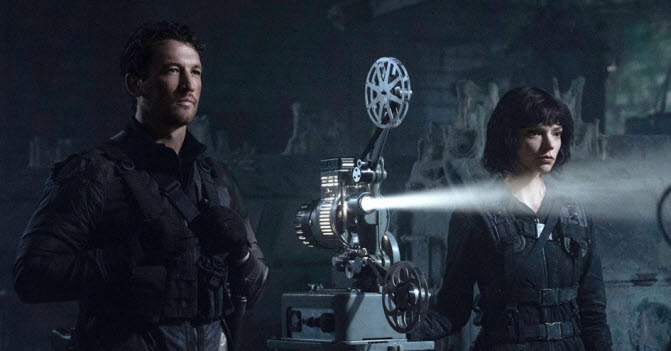
The early part of the film patiently and succinctly establishes the two main characters of the story. After the opening scene, we meet a young ex-marine dude named Levi Kane (Miles Teller), and the movie provides a bit of background information on how he was selected as an ideal candidate for a certain clandestine operation supervised by the shady figure played by Sigourney Weaver, who certainly brings some authority to her character as she did around the end of “The Cabin in the Woods” (2011).

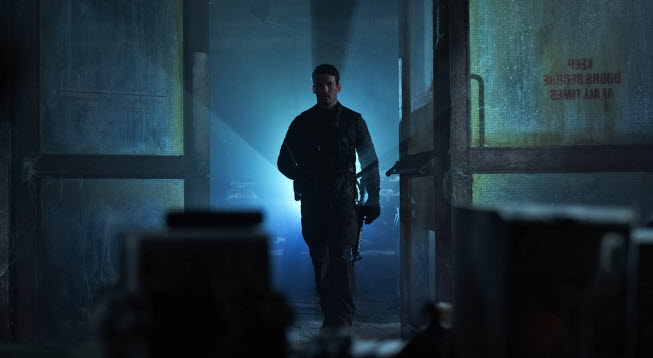
What Levi is supposed to do seems pretty simple on the surface. After being taken to some unknown remote area, he is going to replace his predecessor played by Sope Dirisu, who gamely handles a thankless job of explaining the mission during his brief appearance. During one year, Levi will work as the guard on a big and tall watchtower looking over a wide gorge full of fog, and he must be watchful about something inside the gorge all the time. According to his predecessor, his job is pretty much like guarding the gate of hell due to whatever exists beneath the foggy surface of the gorge, which is incidentally nicknamed “hollow man”.

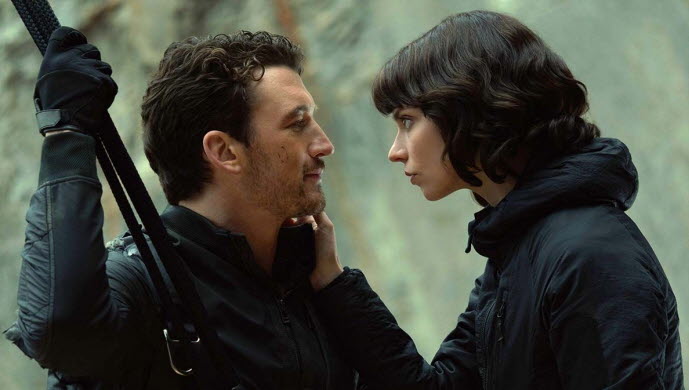
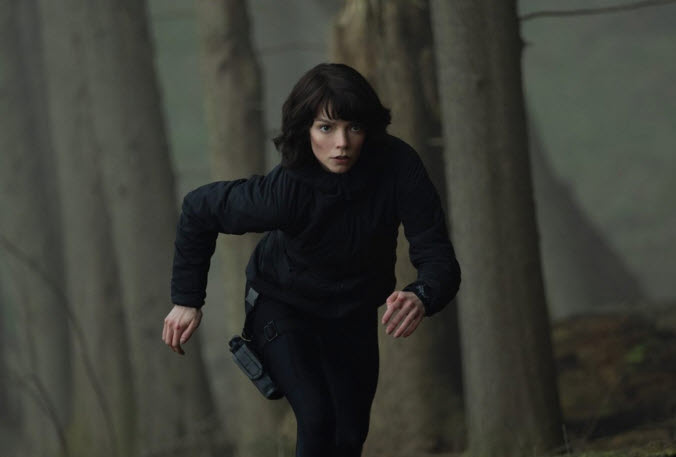
Anyway, as he begins the first days of his mission, Levi becomes more aware of another watchtower on the opposite side of the gorge, which is also guarded by someone who has just arrived there just like him. That figure in question is a young woman named Drasa (Anya Taylor-Joy), and, as shown from her first scene early in the film, she is also a mercenary with a particular set of skills. Just because she is quite bored, she tries a bit of communication between her and Levi, and, what do you know, something instantly clicks between them as they admire their respective first-rate snipe skill.

As days and months go by without much event, Levi and Drasa come to find more emotional comfort from each of them, and the movie throws some humorous touches on how they kill time together at times. If you remember how Miles Teller and Anya Taylor-Joy became more prominent via their respective breakthrough turns, you will certainly be tickled by when their characters play chess – or when they try a bit on banging drums.

Meanwhile, Drasa and Levi become more aware of what kind of threat they must handle from time to time. While they are fortunately equipped with a number of good weapons for defending their respective watchtowers, those “hollow men” still frequently climb along the walls of the gorge, and they look certainly as aggressive and frightening as those zombie figures in those Resident Evil flicks.

Nevertheless, as the people who probably experienced a lot of danger in one way or another, Levi and Drasa continues their mission as usual, and their mutual affection only grows stronger as they work together for fighting against the “hollow men” from time to time. In the end, Levi decides to do something quite risky just for one real good time between him and Drasa, and, not so surprisingly, that unfortunately leads to a very, very, very perilous circumstance for both of them.

Around that point, the movie naturally becomes a little less interesting as its two lead characters come to learn a lot more about the gorge than expected. Yes, Drasa and Levi shoot a lot of hideous CGI figures popping out here and there around the screen, and what we accordingly get is pretty much like the slick demonstration clip of a latest video game to sell – especially whenever it is accompanied with Trent Reznor and Atticus Ross’ electronic score.

However, the film manages to distinguish itself from those Resident Evil flicks and many other similar action thriller movies to some degree, because it keeps focusing on the characters in the story as usual. While it surely provides a number of competent action sequences under director Scott Derrickson’s skillful direction, the movie also brings extra depth to its two main characters as they stick together more for their survival, and that is the reason why we continue to care about them even when they are chased by a lot of grotesque CGI figures.

Right from their very first scene, Teller and Taylor-Joy are effortless in their characters’ interactions while also filling their archetype roles with each own presence. While Teller hits the right note between intensity and amiability, Taylor-Joy is often charming with her own impish quality, and we can clearly see why Teller’s character cannot easily take his eyes away from her character from the beginning.

In conclusion, “The Gorge” is a solid piece of entertainment which has enough good elements besides the game efforts from its two lead performers. Although there is nothing particularly new or fresh here for you especially if you are familiar with its numerous similar predecessors, the movie has a fair share of fun within its modest playground at least, so I will not grumble for now.

Posted in Movies | Tagged , , | Leave a comment