Brokeback Mountain (2005) ☆☆☆1/2(3.5/4): A classic tale of star-crossed romance 

Ang Lee’s 2005 film “Brokeback Mountain” has endured the test of time pretty well during last 20 years to my little surprise. While I regarded it as a major breakthrough in several aspects at that time, I also wondered whether it would get eventually aged as opening the door for its numerous juniors to come, but, what do you know, it still works as a classic tale of star-crossed romance with a lot of sincerity and sensitivity.

The early part of the movie, which is set in a rural area of Wyoming, 1963, begins with the first encounter between two different young men: Ennis Del Mar (Heath Ledger) and Jack Twist (Jake Gyllenhaal). They happen to be hired by some cranky rancher to take care of a big herd of sheep on Brokeback Mountain during next several months alone by themselves, and the movie observes how difficult and demanding their job is as they begin their first days on the mountain.

And we get to know these two lads bit by bit. Ennis is quite taciturn while usually focusing on doing his job day by day, but Jack is relatively more flexible about their work while being often quite open about whatever he feels or thinks right now. As a matter of fact, we gradually sense something being developed between Jack and Ennis, as the camera often lingers a bit more on how Jack looks at Ennis.       

In the end, Ennis comes to open himself a bit more to Jack, because, well, there is no one else to talk with besides his partner right now. Both of them come to see more of how lonely they have been in one way or another, and then there eventually comes a fateful moment when they find themselves quite attracted to each other. As observing how they instantly follow their sexual urge once they feel more of their mutual attraction, I was reminded of how I did not hesitate at all in my first sexual experience with a boy around my age in the middle of one night in early 1997. I certainly felt afraid, but I wanted to do that, and I and he immediately followed our urge without thinking anything else.
We subsequently told ourselves that we were not gays, like Jack and Ennis did after their first sex, but we continued our little secret relationship for a while, and that is why I am always a bit amused as observing how Ennis and Jack become more attracted to each other along the story. They surely want to look away from what they cannot totally understand or accept, but they also cannot help but follow what their hearts want, and the movie handles their clumsy but unadorned romance with tender thoughtfulness.

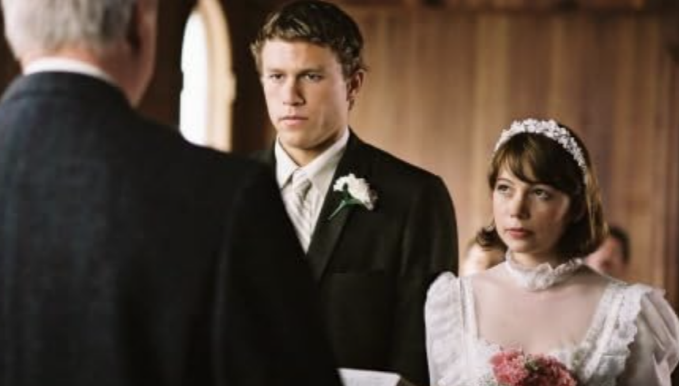
Some time later, Jack and Ennis come to part ways as their work is eventually over, but they cannot forget each other even after they respectively get married. While Ennis marries his longtime girlfriend Alma (Michelle Williams), Jack marries Lureen (Anne Hathaway), the daughter of some rich businessman in Texas. Both of them try to be happy with their respective married lives, but they only find themselves becoming more distant from their spouses, and Ennis does not hesitate at all when Jack tries to reach him later.

While being always happy to be with Jack during their “fishing trips”, Ennis still hesitates to go further because he is still not so comfortable with his homosexuality as haunted by one traumatic childhood incident involved with a murdered gay man. This tendency of his is continued even after he divorces Alma, and this certainly frustrates Jack, who really wants to have a real honest life with his lover someday.  

The screenplay by Larry McMurtry, who is no stranger to loneliness considering his several acclaimed novels such as “Lonesome Dove” and “The Last Picture Show”, and Diana Osana, which is based on the short story of the same name by Annie Proulx, handles several inherently melodramatic moments during the second half of the movie with considerable empathy and honesty. While we come to know and understand its two heroes more than before, we also come to have some sympathy toward their respective spouses, who have to deal with a fair share of emotional issues due to their increasingly distant husbands. 
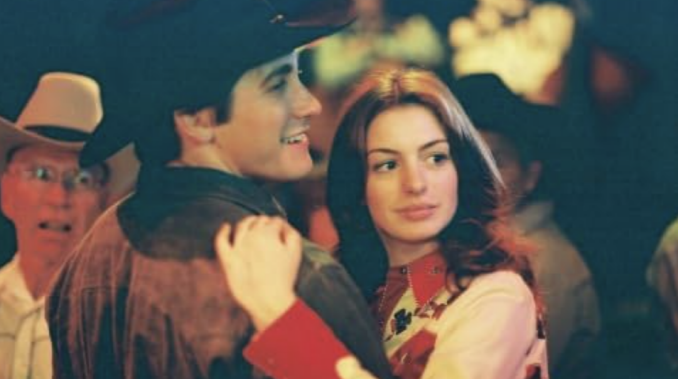
Lee’s handling of the story and characters seems quite plain and transparent on the surface, but his deft direction makes us pay more attention to small but crucial emotional moments, and he and his crew members including cinematographer Rodrigo Prieto did a stellar job of filling the screen with an ample amount of mood and details to observe. As Prieto’s camera vividly and crisply captures the remote landscapes surrounding Ennis and Jack, we are more reminded more of how lonely they are – and how desperately they need each other. The sparse score by Gustavo Santaolalla, who won an Oscar for this film (The movie also won Best Director and Best Adapted Screenplay Oscar, by the way), effectively reflects the tentative yearning inside Jack and Ennis, and its best moment comes from when Ennis becomes a bit more honest about his feelings around the end of the story.

The movie was a major breakthrough for its four main cast members. While Heath Ledger, who would give us another memorable performance in “Dark Knight” (2008) right before his unfortunate death, is touching in his subtle embodiment of Ennis’ conflicting emotions, Jake Gyllenhaal ably complements his co-star, and Michelle Williams and Anne Hathaway do more than holding each own place around the story. Williams is particularly good when her character is quite confused and devastated after unexpectedly discovering Ennis’ big secret, and Hathaway has a brief but important moment when her character has a short phone conversation with Ennis later in the story. Randy Quaid, Linda Cardellini, and Anna Farris are also effective in their small supporting roles, and you may be amused by the brief appearances of David Harbour and Kate Mara, both of whom were starting their respective careers at that time.

While it may look a bit tame compared to many subsequent LGBTQ+ films ranging from “Carol” (2015) to “All of Us Strangers” (2023), “Brokeback Mountain” is still a powerful love story both universe and specific, and it also remains one of the best works from Lee, whose filmmaking career is as diverse as that of, say, Sidney Lumet. It does not seem so easy to find any common ground among “Sense and Sensibility” (1995), “Crouching Tiger, Hidden Dragon” (2000), “Hulk” (2003), “Lust, Caution” (2007), and “Life of Pi” (2012), but it is clear that he is a master filmmaker who always pays attention to story and characters first, and it is a shame that he has been rather quiet since the critical and commercial failure of his last two films “Billy Lynn’s Long Halftime Walk” (2016) and “Gemini Man” (2019). At least, he gave us a number of excellent movies besides “Brokeback Mountain”, and he certainly deserves our admiration as before.

Posted in Movies | Tagged , , | Leave a comment

Sally (2025) ☆☆☆(3/4): Her personal sacrifice for being a trailblazer

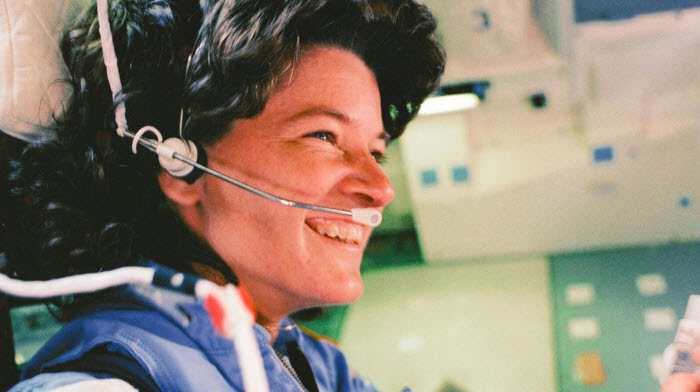
Documentary film “Sally”, which is currently available on Disney+, presents the complex life story of Sally Ride, who was one of the most famous female trailblazers in US during the 20th century. She really tried hard to become a notable figure in the NASA history, and she did succeed in getting recognized and respected for her significant achievement, but she also had to sacrifice a lot of her personal feelings for understandable reasons.

On the surface, Ride was like an almost perfect model example showing that women can do anything as much as men. Thanks to her progressive parents, she and her younger sister were often encouraged to follow their hopes and dreams as much as they could, and, despite frequently daunted by all the bias and discrimination against girls, young Ride kept going before eventually applying for the NASA astronaut program around the late 1970s.

Fortunately, Ride was at the right time for her big aspiration. As shown in 2018 Netflix documentary film “Mercury 13”, NASA actually considered sending female astronauts to the space in the 1960s, and those female candidates selected at that time turned out to be more qualified than many of male astronauts, but, sadly, their hope and dream were discarded in the end due to a lot of sexism in the male-dominated environment of NASA. As shown in recent documentary film “The Space Race” (2023), which is also available on Disney+, NASA belatedly considered more inclusion for women and minority races in the next decade, and that was how Reid and five other women were eventually allowed to join NASA.

Of course, Ride and her fellow female astronauts were all aware well of how much they had to try and work for making that historical moment for women someday. Besides enduring the frequent sexism from many male astronauts and engineers in NASA, they also had to compete with each other everyday just because NASA allowed only one of them to go to the space, and, as her several surviving colleagues remember, Ride was quite competitive to say the least. Compared to her main competitor Judith Resnik, she was usually more focused without being that social, and that calmly professional attitude of hers eventually helped her earn that coveted opportunity in the end.

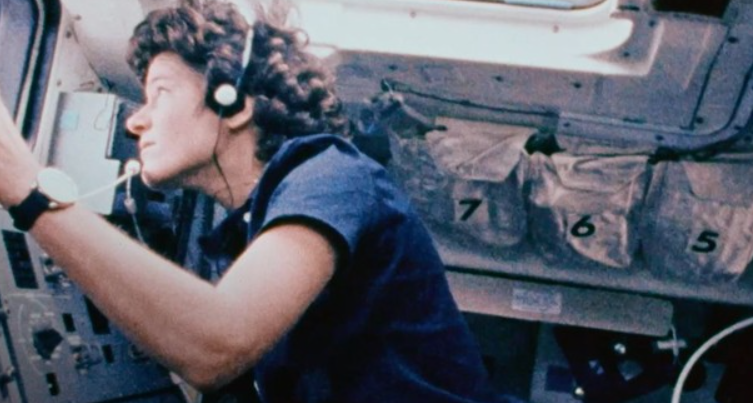
Of course, as she frankly admitted later, Reid was quite nervous as preparing for her first time in the space along with several male astronauts during several months of 1983. After all, anything could have gone quite right wrong once the launch of the space shuttle was started, but she stayed cool as demanded by her historical moment to come, and she succeeded in accomplishing her first space mission in the end. 

After returning from the space, Ride quickly became one of the most famous women in the world, and she enjoyed this sudden public fame to some degree, but there was a serious personal matter behind her. Around the time when she entered her adolescent period, she became aware of her homosexuality, and she actually had a girlfriend during her college years before joining NASA, though she did not tell anyone about that homosexual relationship of hers.  

In the middle of her NASA period, Ride married one of her male colleagues, but her ex-husband, who eventually divorced her several years later, frankly reveals that they were pretty much like roommates instead of a real married couple mainly because both of them were frequently busy with their respective jobs. In addition, Ride also found herself getting attracted to Tam O’Shaughnessy, an old friend of hers who had been a lot more honest about being a lesbian than Ride. At first, they frequently hung around with each other as close friends, but then they became franker about their mutual attraction, and that was the beginning of their long partnership, which turned out to be much more enduring than expected.

Nevertheless, Ride kept hiding their relationship from others in public to her partner’s growing frustration. When she subsequently left NASA after getting quite devastated and disillusioned due to a shocking tragic accident in 1986 which killed several NASA astronauts including Resnik, Ride became less burdened about her closeted status than before, but she still hesitated to come out of her closet. This led to a big crisis in her relationship with O’Shaughnessy, but, after a serious personal conversation between them, her partner chose to continue to live with Ride because, well, Ride still could make her laugh as before.
Ride did appreciate her partner’s patient understanding, and her last few years poignantly show that it is never too late as long as you are still alive. Becoming far less afraid of what others think about her around that point, Ride finally decided to do what should have been done for her as well as her dear partner, and O’Shaughnessy stood by her to the end as they showed more love and appreciation to each other. 

Although it could go deeper into its main subject for more insight, “Sally” provides us fairly enough enlightenment on Ride’s life and career at least, and director/co-writer/co-producer Christina Constantini handles her human subject with enough care and respect on the whole. It is often sad to observe how much she hid and sacrificed behind her strong and confident appearance, but Ride did her best for her life and career nonetheless, and that is certainly admirable in my inconsequential opinion.

Posted in Movies | Tagged , , , , | Leave a comment

Nausicaä of the Valley of the Wind (1984) ☆☆☆1/2 (3.5/4): Miyazaki’s first big break

Hayao Miyazaki’s 1984 animation feature film “Nausicaä of the Valley of the Wind”, which happens to be re-released in South Korean theaters a few days ago, is still a rich and enchanting work of awe, wonder, and interest. Although it was only his second animation feature film, the style, mood, and ideas observed from many of subsequent works from Miyazaki are already evident here this film, and it is all the more amazing to observe how much he has advanced from his first big break during last four decades.

Although the logo of the Studio Ghibli appears at the beginning of the film, “Nausicaä of the Valley of the Wind” is actually not the first official Ghibli animation film, though its commercial success contributed a lot to the subsequent foundation of the Studio Ghibli. After the disappointing local box office result of his first animation feature film “The Castle of Cagliostro” (1979), Miyazaki went through a brief period of professional slump, but, thanks to the encouragement from his future Ghibli producer Toshio Suzuki, he began to write a manga series titled, yes, “Nausicaä of the Valley of the Wind” in 1981, and the following considerable success of this manga series eventually led to Miyazaki adapting it into an animation feature film. 

As revisiting the film at a local theater with a friend of mine yesterday, I was impressed a lot again by its bountiful imagination and ideas. While it looks like your average post-apocalyptic tale at first, its backgrounds and characters are presented with an ample amount of style and personality to observe, and even the sights of those vast and bleak landscapes in the film often shine with mood and details to notice. Furthermore, the film wisely takes its time for establishing not only the story and characters but also its alien but interesting post-apocalyptic background more, and we find ourselves already quite immersed in this strange but compelling world when it goes for more action later in the story.

The heroine of the story is Nausicaä (voiced by Sumi Shimamoto), the strong-willed princess of a little kingdom located in the Valley of the Wind. Around 1,000 years ago, the human civilization and the Earth were destroyed a lot by not only some big war but also environmental pollution, and the remaining humans have struggled a lot for their survival under a very harsh condition. The main obstacle for their survival is those big and wide fungi forests called the “sea of decay”, and the Valley of the Wind is one of a few places safe from the toxic gas and dangerous spores from the sea of decay, mainly thanks to the constant presence of wind.

While many others in her kingdom try to stay away from the sea of decay as much as possible, Nausicaä has been quite curious about whatever is living inside the sea of decay besides those gigantic mutant bugs which sometimes threaten the remaining human survivors. As a matter of fact, it subsequently turns out that she has steadily studied the ecology of the sea of decay, and we come to learn later that she actually discovered something important about this supposedly dangerous place.

Meanwhile, the situation becomes quite troublesome for Nausicaä and her little kingdom. Not long after a big aircraft crashes into the Valley of the Wind, she and many others in the kingdom are threatened by those fungi spores which came along with that crashed aircraft, and they also find themselves stuck in a very tricky position in the middle of the ongoing battle between two other kingdoms out there.

These two battling kingdoms are mainly represented by Asbel (voiced by Yōji Matsuda) and Kushana (voiced by Yoshiko Sakakibara), respectively. While both of them are fairly reasonable persons capable of following their better sides, they are also quite willing to stop each other by any means necessary, and the film does not hesitate to show or imply the devastating consequences of their violent actions committed along the story.

Eventually placed among these two conflicting groups and the giant mutant bugs also willing to do anything for protecting the sea of decay as well as themselves, Nausicaä, who is incidentally a strong female character which will make many Disney Princess characters look quite docile and passive to say the least, tries her best even though all seems lost for her and her people, and she adamantly follows her pacific belief as before. Her following actions of goodwill and courage are depicted with earnest poignancy to touch us, and you may also be reminded of why we should not stop caring at any chance even though things have become a lot grimmer and more pessimistic these days.
Although I place it one or two steps below the greatness of “My Neighbor Totoro” (1988) and “Spirited Away” (2001), “Nausicaä of the Valley of the Wind” is still one of the better Ghibli animation films, and I was often entertained as noticing more of how much it has subsequently influenced not only Miyazaki himself but also many other filmmakers out there. Many of its elements eventually became the recurring ideas and themes of his later works such as “Princess Mononoke” (1997), and those big alien creatures in Bong Joon-ho’s recent movie “Mickey 17” (2025) are clearly inspired by the huge mutant bugs in the film. In short, this is a lot more than a mere milestone in Miyazaki’s career, and I assure you that you will soon embrace its awe and wonder.

Posted in Movies | Tagged , , , , | Leave a comment

F1 (2025) ☆☆☆(3/4): Driving fairly well along a familiar course 

“F1” drives fairly well along a familiar course, and I enjoyed that to some degree. Although predictably following numerous genre conventions and clichés, the movie gives us a series of top-notch car racing sequences definitely worthwhile to watch on big screen, and they will probably make you overlook its generic story and characters at least for a while

The hero of the movie is Sonny Hayes (Brad Pitt), a middle-aged racer who was once a promising Formula One (F1) driver many years ago before his professional career was struck by one devastating accident. The opening scene shows him working as a freelance racer in a 24-hour racing competition in Daytona Beach, Florida, and we see how deftly he accomplishes an important task for his current team.   

When he is ready to leave and then look for another team to hire him, Hayes is approached by his old colleague Ruben Cervantes (Javier Bardem). Cervantes is currently owning and running his own F1 team, and he needs some help from Hayes right now because his F1 team has been rather underachieving to say the least despite its rookie star racer Joshua Pearce (Damson Idris). Cervantes believes that Hayes can help the team as a more experienced racer to complement Pearce, and Hayes eventually agrees to accept his old friend’s request because he comes to realize that he is still hoping for being back in F1 someday despite getting older day by day.

Needless to say, Hayes and Pearce do not get along that well with each other right from the beginning due to many differences between them. However, we all know in advance that 1) Hayes will come to recognize Pearce’s aspiration and commitment as seeing a lot of himself from Pearce, 2) Pearce will also come to listen and learn from Hayes after clashing with him more than once along the story, and 3) they will come to work together more harmoniously for their common goal around the end of the story despite several setbacks for them their team.

Another predictable aspect of the story is involved with Kate McKenna (Kerry Condon), who is the technical director of Cervantes’ F1 team. Yes, besides trying to find a way to improve those racing cars for Hayes and Pearce, she surely must do some extra work for preventing any more conflict between these two willful boys who need to step back a bit for their team work, and Hayes naturally comes to admire her more than before. Yes, McKenna flatly emphasizes to Hayes that she does not want to get involved with him in more than one way, but, what do you know, she and Hayes only find themselves quite ready to cross the line between them later in the story.

Despite all these and other clichés on its back, the movie drives fast and furiously whenever it is on a race track along with its main characters, and director/co-producer Joseph Kosinski, who also wrote the story with screenplay writer Ehren Kruger, and his crew members including cinematographer Claudio Miranda and editor Stephen Mirrione did a terrific job of placing us right in the middle of several car racing sequences in the film. These sequences are constantly packed with considerable realism and verisimilitude besides expectedly providing us a lot of rapid thrill and excitement, and Kosinski, who previously impressed us a lot with “Top Gun: Maverick” (2022), demonstrates here again that he is a competent movie director who really knows how to engage and then electrify us via well-made moments of speed and action.     

The story itself is still less engaging in comparison, but that is compensated by the enduring star quality of Brad Pitt, who seems to be in the need of reminding us that he has not lost any of his vigor and charisma yet just like Tom Cruise has done again and again in “Top Gun: Maverick” and several recent Mission: Impossible flicks. Although the movie does not delve that much into Hayes’ supposedly troubled past, this sometimes resonates with Pitt’s problematic personal life during recent several years, and he ably generates enough gravitas to support his role while occasionally exuding his natural charm and charisma.

It is a bit disappointing that several other notable cast members do not have much to do around Pitt. Damson Iris complements his co-star well with his youthful confidence, but his character remains a generic archetype even though the story tries to bring more inner life to his role. While Javier Bardem, another star actor in the film who can be charismatic as Pitt, is mostly stuck in his thankless part, Tobias Menzies is suitably sleezy and sneaky as a rich businessman associated with Cervantes, and Kerry Condon, who has been more notable thanks to her recent Oscar-nominated supporting turn in “The Banshees of Inisherin” (2022), manages to overcome her clichéd character, though you may often notice a considerable age gap between her and Pitt (She is currently 42 while he is 61 at present, by the way).

On the whole, “F1” works quite well in technical aspects, and I was not that bored during its rather long running time (156 minutes) despite frequently recognizing many of its shortcomings including its predictable narrative course and superficial characterization. Although it is not better than “Top Gun: Maverick” or another recent car racing film “Ford v Ferrari” (2019), it is certainly two or three levels up from the recent Fast & Furious flicks at least, so I will not grumble for now.

Posted in Movies | Tagged , , | 1 Comment

Kneecap (2024) ☆☆1/2(2.5/4): Meet Irish rappers

“Kneecap”, which was selected as the Irish entry to Best International Film Oscar in last year, is a typical rapper movie with some local flavor. While it has a substantial amount of irreverent wit and bouncy energy to hold our attention, the movie feels rather flawed at times due to some plot contrivance and thin characterization, and that is rather disappointing considering its interesting main subject.

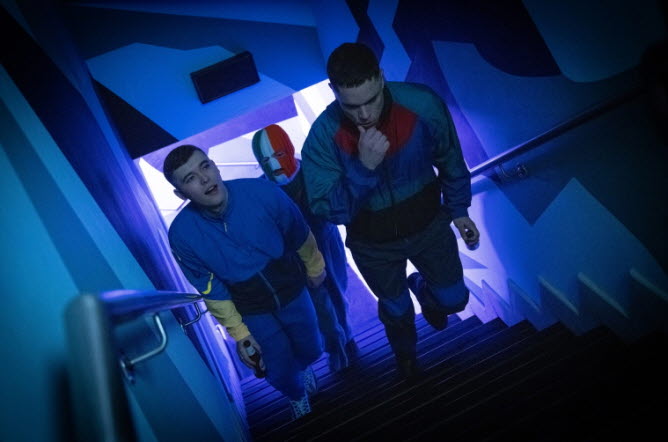
The movie is a fictional story loosely based on Kneecap, a real-life Irish hip-hop trio from Belfast, Northern Ireland. I have no idea on how much the movie is actually based on their real-life story, but the members of Kneecap, Liam Óg Ó hAnnaidh, Naoise Ó Cairealláin, and JJ Ó Dochartaigh, play themselves in the film besides writing the story with director/screenplay writer Rich Peppiatt, and I guess they bring a lot of themselves to the film in more than one way.

At the beginning, the story, which is set in Belfast around the 2010s, depicts how things are not so good for Liam and Naoise. two wild local lads who have not thought much about their future as throwing themselves into a lot of fun and drug. When they were little boys, Naoise’s father, played by Michael Fassbender, often reminded that they tried to speak Irish more as being prouder of their heritage, but he eventually left Naoise and her mother for evading the police due to his political activities during that time, and this certainly hurts both Naoise and his mother, who has never left their house since that point.

When Liam and Naoise are going through another hedonistic night of drug and music along with many other young people during one evening, the police ambush them all, and Liam is arrested while Naoise manages to escape. At the police station, Liam pretends that he does not know English at all, and that is how JJ, who incidentally works as a music teacher at some local school, is brought to the police station for functioning as a translator instead of his activist wife.

During the interrogation, JJ takes away Liam’s little notebook as asked by Liam, and that notebook contains something to interest JJ. After reading several song lyrics written in Irish, JJ attempts to juxtapose one of them with one of a piece of beat music created by himself, and, what do you know, the result is good enough to prompt him to do more. After subsequently meeting Liam and Naoise, they decide to make more hip-hop songs together in JJ’s little private space, and they also do a lot of drug just for more fun and excitement for themselves

Their first public performance, which is held at a little local pub, is not so successful to say the least, but, of course, someone eventually shoots their modest performance, and their music soon goes viral on the Internet in addition to causing the unexpected controversy in Belfast. As JJ’s wife and many other local activists and people demand that Irish should be recognized as a public language, the music and lyrics of Kneecap certainly draw more attention due to the sensitive contents, and that makes JJ quite conflicted – even while hiding his identity in public because he may lose his job because of his little musical activity.

In case of Liam and Naoise, they also find themselves facing a big problem as their popularity grows more and more day by day. A local republican paramilitary group is not so pleased about Kneecap because Kneecap causes a lot of trouble via not only its wild rap songs but also drug, and they are certainly ready to suppress Kneecap as much as possible just like the local police.

Around that narrative, we should care more about the main characters of the film, but the movie does not seem to have much thought and point on the serious aspects of their reckless musical activities. Sure, their music can bring some life and attention to their local language for the younger generation, but, as reflected by the rather disapproving stance of JJ’s wife, it can also be regarded as the thoughtless vandalism on Irish, and, not so surprisingly, Naoise’s father is not so amused by what his son is doing.

During the last act, the movie leans more on plot contrivance, but it is still supported well by its fairly good soundtrack. When everything culminates to what is going to be a major public breakthrough for Kneecap, Peppiatt and his crew members including cinematographer Ryan Kernaghan pull all the stops as demanded, and the result is fun and exciting as expected.

Regardless of how much their performances in the film are actually overlapped with their real lives, the three lead actors of the film are engaging in their unadorned acting, and the chemistry among them is always palpable whenever they perform together on the screen. In case of several supporting performers around them, Josie Walker, Fionnuala Flaherty, Jessica Reynolds, and Simone Kirby are rather under-utilized due to their underwritten characters, and the same thing can be said about Fassbender, who simply fills his thankless role as much as possible.

In conclusion, “Kneecap”, which received the NEXT Audience Award when it was premiered at the Sundance Film Festival early in last year, could be more improved in terms of story and character, and, after observing what is shown during its end credits, I wonder now whether their story would be more interesting if it were presented via a documentary instead. Sure, I had some fun during my viewing, but, folks, the movie could delve into its main subject more in my trivial opinion.

Posted in Movies | Tagged , , , , | Leave a comment

Naked Lunch (1991) ☆☆☆(3/4): Welcome to Interzone

David Cronenberg’s 1991 film “Naked Lunch”, which happens to come to South Korean theaters shortly after the local theatrical release of Luca Guadagnino’s “Queer” (2024), tackles on an impossible task, and the result is alternatively interesting and baffling. Loosely based on William S. Burroughs’ controversial novel of the same name and his own messy (and dopey) life, the movie attempts to present a despairing hell of addiction driven by a stream of drugged conscience, and you may admire its bold cinematic experience even while often feeling repulsed or disoriented a lot during your viewing. 

The early part of the film effectively sets its dryly petrified tone right from the beginning. It is 1953, New York City, and William Lee (Peter Weller), who is virtually a fictional version of Burroughs himself, has earned his meager living as a bug exterminator, but things have not gone particularly that well for him and his wife Joan (Judy Davis). It turns out that he frequently runs out of bug powder during his worktime, and, what do you know, both he and his wife, who happen to be addicts still far from clean and sober, are seriously addicted to bug powder (Don’t ask me how the hell that toxic substance can make them high).

When his mind does not crave for another dose of drug, Lee often spends time with his two fellow Beat Generation writer friends, who are apparently the fictional version of Jack Kerouac and Allen Ginsberg. They talk and discuss a lot about writing, but Lee’s mind seems mostly disaffected and disinterested, and he finds himself more and more addicted to the bug powder – even after he attempts to get some medical help from a shady local doctor introduced to him later by one of his colleagues.

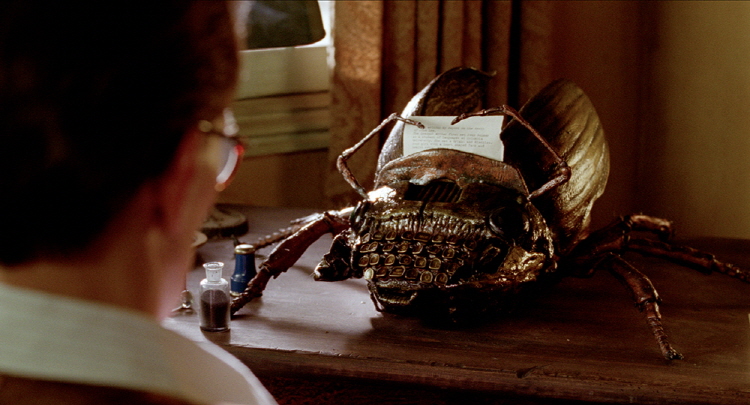
 In the end, there comes a shocking tragic incident which did happen in Burroughs’ real life. While quite high and dopey due to their latest moment of drug abuse, Lee attempts what he and his wife call “William Tell Game”, and this accidentally leads to his wife’s unfortunate death, which consequently turns his life upside down. Around that point, Lee is so addicted to the bug powder and some other substances that he begins to experience one hallucination after another, and one of them features a big bug talking to him via a big rear orifice which does look more like a sphincter on big screen due to some little hairy details. 

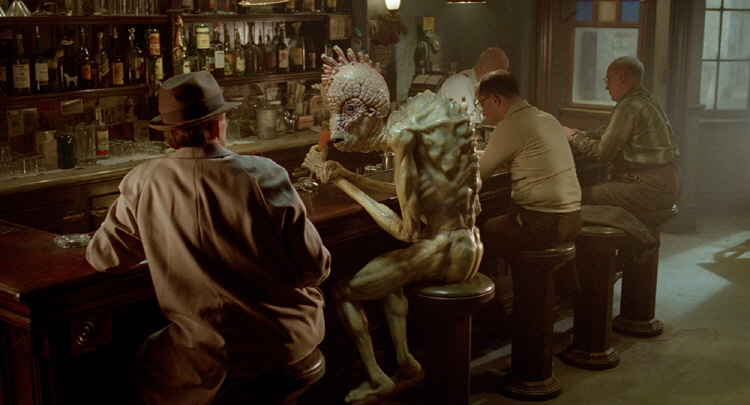
Now you may sense that Lee is not only a junkie but also a conflicted gay dude not so comfortable with his sexuality as reflected by the morbidly sexual aspects observed from some of his crazy hallucinations in the film. As depending more and more on his substances of choice, Lee’s mind eventually enters a place called “Interzone”, and this supposedly imaginary exotic place, which often looks like a secondhand version of Casablanca, Morocco, is packed with handsome local gay lads as well as a bunch of odd people who come and then go around Lee as fueling his anxiety and paranoid more and more.

One of these strange figures, who is also a writer just like him, has a wife who exactly looks like Lee’s wife and is also played by Davis. Lee naturally gets attracted to this woman who seems relatively sharper than his dead wife, and the movie later gives us a very strange moment of writing and sex as they try a bit on a kinky Arabic typewriter belonging to her husband.

Around that narrative point, I kept scratching my head again as wondering more about Lee’s actual state of mind, but I admire Cronenberg’s uncompromising exploration on what makes Lee (and Burroughs) tick. Because of Burroughs’ deliberately random writing style coupled with a lot of morbid and freakish sexualization beyond NC-17 rating, the faithful movie adaptation of his novel is nonsense from the start, so Cronenberg chooses to go for the collage of the fragments of the novel and Burroughs’ life instead, and you will appreciate that more if you are familiar with his life and writing career. Thanks to cinematographer Peter Suschitzky, the overall atmosphere of the film is deliberately drab and dispirited with a palpable sense of misery, fear, and despair beneath the surface, and that is further accentuated by the ominous score by Howard Shore, who closely collaborated with legendary jazz musician Ornette Coleman for injecting some free jazz style to the film.

The main cast members flawlessly tune their performance to the detached overall tone of the movie. Peter Weller ably embodies the pathetically hollow state of his character’s mind, and it is clear that he studied a lot of that distinctive appearance and speech pattern of Burroughs, who was incidentally still alive when the movie was made. On the opposite, Judy Davis, who came to show the considerable range of her immense talent via this film and the Coen Brothers’ “Barton Fink” (1991) in the same year, is terrific in her dual performance, and several notable performers including Ian Holm, Julian Sands, and Roy Scheider are also solid as some of those odd denizens of Interzone. 

On the whole, “Naked Lunch” is often interesting for its mood, detail, and performance, but I must warn you that it can also be a little too weird and distant for some of you. I do not think it is one of Cronenberg’s best works, but, like many of Cronenberg’s cult films such as “Videodrome” (1982), it will definitely make you quite uncomfortable and baffled, and you will probably never forget all those weird stuffs in the movie.

Posted in Movies | Tagged , , | Leave a comment

Saving Private Ryan (1998) ☆☆☆1/2(3.5/4): Just for one private

Steven Spielberg’s 1998 film “Saving Private Ryan”, which happens to be re-released in South Korean on this Wednesday, definitely earns its own place in the pantheon of war movies via its stupefyingly stunning opening battle sequence, but it is much more than that. This is a seemingly modest but undeniably powerful drama about nobility, brutality, vulnerability, and humanity, and its somber but indelible human qualities do not age at all just like a number of impressive battle sequences in the film.

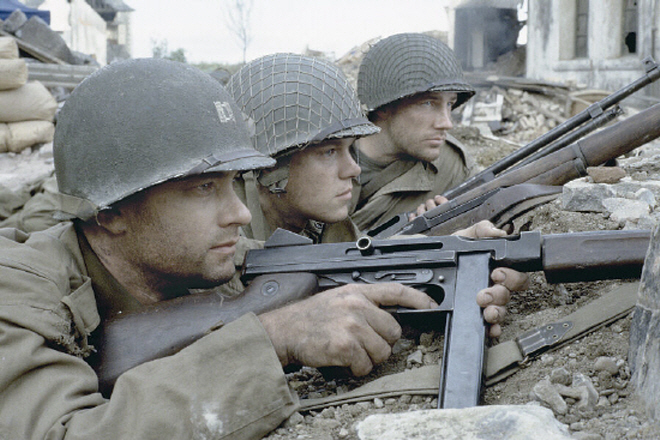
After the brief prologue scene, the movie goes straight into in the middle of the Normandy Landings on June 6th, 1944. While this big military operation of the Allied Forces was quite successful enough to change the course of the World War II on the whole, hundreds of soldiers were killed right from when they arrive at the beach of Normandy, and the movie often overwhelms us with its horrifyingly realistic depiction of chaos, violence, and death as steadily following Captain John H. Miller (Tom Hanks) and many other American soldiers around him. Yes, there had already been many movies showing that war is indeed hell, but Spielberg and his crew members including editor Michael Kahn and cinematographer Janusz Kamiński, both of who deservedly won an Oscar for this film, pushed the envelope for more visceral verisimilitude, and the commercial/artistic success of the movie opened the door for its numerous juniors ranging from Ridley Scott’s “Black Hawk Down” (2001) to Mel Gibson’s “Hacksaw Ridge” (2016).     

Not long after Captain Miller and several soldiers under his command manage to survive and then win their big battle in the end, they receive an unexpected assignment. One mother living in some rural area of Iowa, US happened to lose three of her four enlisted sons within a short time, and the Chief of Staff of the US Army eventually decides that one remaining son, Private James Francis Ryan (Matt Damon), must be safely returned to his mother right now. However, Private Ryan was already sent to somewhere around Normandy along with many other soldiers of his division, and it is Captain Miller’s job to locate and then retrieve him as soon as possible.

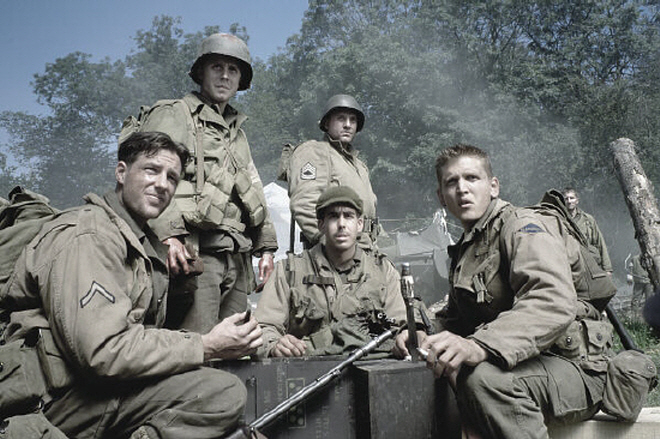
As Captain Miller and several soldiers selected by him for this little but supposedly important mission move from one dangerous region after another for finding Private Ryan, some of his men naturally come to have questions and doubts on whether their mission is really necessary from the beginning. Yes, they are simply following the order as demanded, and they are supposed to do the morally right thing for Private Ryan’s dear mother, but putting no less than 8 men into a lot of danger just saving one person does not make sense much to them – especially whenever they face more of how risky their mission can be. 

Along their perilous journey, the movie expectedly gives us one battle sequence after another, and these battle sequences are skillfully handled under the masterful direction of Spielberg, who incidentally won his second Best Director Oscar for this film (The movie lost to John Madden’s “Shakespeare in Love” (1998) in case of Best Picture Oscar, by the way). Each of them is intense and compelling in one way or another, and the restrained score by Spielberg’s another usual collaborator John Williams wisely steps back completely, while mostly focusing more on the enormous human cost of war reflected by their bitter aftermath.

Between these striking battle sequences, Spielberg and his screenplay writer Robert Rodat gradually and thoughtfully develop several main characters in the story, and these characters’ little personal moments are balanced well between humor and drama. Yes, they do merely look like familiar archetypes expected from your average war drama flick at first, but they come to show their personality and humanity along the story bit by bit, and that is why we come to pay more attention to what is being at stake for them as they go through one peril after another.

And we also come to know and admire more of Captain Miller’s quiet but aching human aspects. Tom Hank is surely no stranger to playing a man of decency and integrity just like James Stewart, but his earnest low-key performance here in this film, which received an Oscar nomination, is one of the best moments in his career. Even when his rather taciturn character does not seem to signify much on the surface, we clearly sense a plain good man dutifully trying to do his best for not only accomplishing his mission but also surviving the war, and Hanks ably exerts a gentle but strong leadership over the other main cast members around him.

As revisiting the film yesterday, I was particularly impressed by how a bunch of recognizable performers are effectively cast in their respective supporting roles. Tom Sizemore, Edward Burns, Jeremy Davies, Vin Diesel, Adam Goldberg, Barry Pepper, and Giovanni Ribisi are believable along with Hanks as one solid bunch, and Matt Damon, who just rose to his emerging stardom after winning a Best Screenplay Oscar for Gus van Sant’s “Good Will Hunting” (1997) along with his best friend Ben Affleck, is an almost perfect casting choice. In addition, you may also notice Ted Danson, Harve Presnell, Nathan Fillion, Bryan Cranston, and Paul Giamatti appearing in small but crucial supporting parts, and it is fun to see how Giamatti, who eventually became one of the best character actors working in Hollywood, showed considerable potential even at that point (He also appeared in Peter Weir’s “The Truman Show” (1998) in the same year, by the way).

On the whole, “Saving Private Ryan” is one of the best films from Spielberg besides remaining as an excellent war drama film to be admired and appreciated. Besides recognizing the huge human sacrifice behind the biggest war in the 20th century, the movie also makes a humble but poignant human answer to the central question of the story, and, considering how our world may be entering another grim time of brutality and inhumanity right now, that is something we should always remember regardless of whatever will happen to us and our world next.

Posted in Movies | Tagged , , | Leave a comment

Alphaville (1965) ☆☆☆(3/4): A literally distant SF noir from Godard

It is ironic that Jean-Luc Godard’s 1965 film “Alpaville”, whose 4K remastered version is being shown in South Korea at this point, is quite dry, distant, and abstract to the end without much feeling to sense. While the story itself seems to emphasize the importance of human emotion and spirit, this is another clinically cerebral exercise in style and genre from Godard, and I become more aware of its glaring flaws while admiring its striking style and mood enough for recommendation.

I must confess that “Alpaville” is one of the few films which actually made me quite drowsy more than once. When I watched it for the first time in 2002, I somehow fell asleep in the middle of the film, and that happened again when I revisited it a few years later. This time, I fortunately did not become drowsy, probably because everything felt bigger and louder as I watched it along with a few audiences in a fairly big screening room,

Oh, yes, just like some of Godard’s works, the movie draws our attention with its striking presentation of images and sounds right from the beginning, and it goes on and on. While we are served with plenty of philosophical/political statements, there are also a lot of other stuffs thrown to us here and there, and these stylish moments surely show us how much the movie is conscious of itself – or full of itself, shall we say.

The story is set in a futuristic world called “Alphaville”, which is supposed to located somewhere in the space outside the Earth. The people of Alphaville have been thoroughly dominated and controlled by an omnipresent supercomputer which is virtually your average AI computer just like HAL 9000 in Stanley Kubrick’s “2001: A Space Odyssey” (1968), and they are not allowed to show or have any kind of emotion while only following the cold and emotionless logic of their technology.

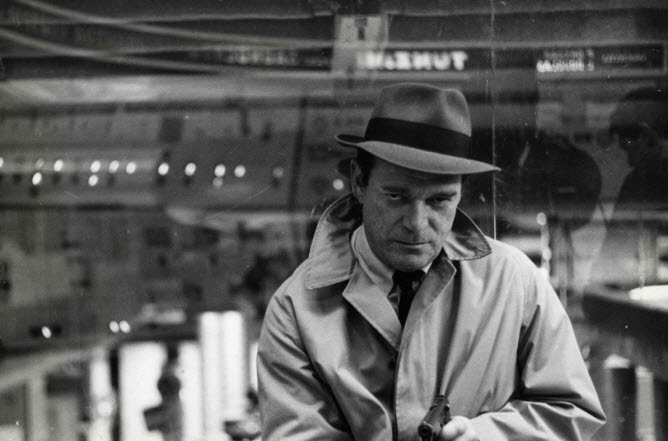
The movie opens with the arrival of Lemy Caution (Eddie Constantine), an undercover agent who incidentally disguises himself as a journalist. Right from his arrival at a nice big hotel located in the middle of Alphaville, Caution, who is your typical film noir tough guy, is baffled a lot by the behaviors of the denizens of Alphaville, and there is an absurd moment when he adamantly refuses the service from a female hotel employee who is willing to provide sex if that is necessary.

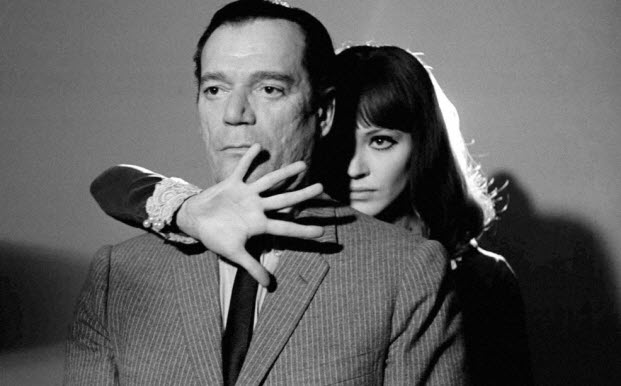
As Caution works on his secret mission, we get to know more about the absurd aspects of Alphaville via Natacha von Braun (Anna Karina, who divorced Godard around the time when the movie was released in 1965), a young beautiful woman who turns out to be the daughter of a certain important scientist working behind that supercomputer. At one point later in the story, she takes Caution to a special government ceremony where a group of subversives are executed just for being emotional, and that is one of the most chilling moments in the film. 

 Around that narrative point, Caution comes to face that supercomputer as expected. As the supercomputer asks him a series of supposedly important questions, we notice several microphones moving above his head more than once, and you may wonder what the hell the point of this actually is. Don’t ask me, because I can only tell you that Godard probably wants us to be more conscious of how the movie is about.

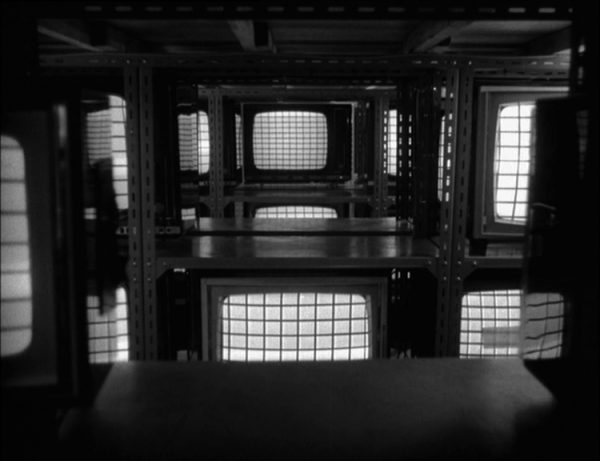
And the movie will always keep you alerted about how it is about. As going back and forth between the words of Caution and that supercomputer, it frequently inserts a number of various images and signs for no apparent reason, and it will continue to disorient you as before, but you may appreciate how Godard and his frequent cinematographer Raoul Coutard establish the distinctively alien mood and background on the screen. They deliberately shot the streets and alleys of Paris in extreme high contrast, and the overall result is often quite striking with the dryly ominous ambience surrounding the main characters in the film. Sure, you may be occasionally amused by some tacky details including those big and ungainly computer machines, but you become more intrigued as getting more immersed in its odd futuristic world.

However, I also must tell you that it is still hard and difficult to care more about the story and characters. For example, Caution is supposed to be a man more emotional than others around him, but he simply comes to us as a callous dude often wielding blatant sexism and misogyny along with the movie, which reminds me again of that unmistakable gender limit of many European white filmmakers during the 1960s. As far as I can see from the film, most of female figures in the film including Natasha are sexually objectified in one way or another throughout the story, and I would not be surprised at all if they all turned out to be female robots instead of real human beings. Furthermore, Eddie Constantine and Anna Karina do not generate much feeling between them although their characters are supposed to be gradually attracted to each other along the story, and that is the main reason why the last scene is not as emotionally effective as intended. 

In conclusion, “Alphaville” is worthwhile to watch for its intriguing style and mood, but I still feel rather ambivalent about it for the reasons mentioned above. Yes, any serious moviegoer needs to watch a Godard film at movie theater at least once, but I would select “Breathless” (1959) or “Vivre sa vie” (1962) instead, and I sincerely advise you to be fully aware of what and how the movie is about in advance.

Posted in Movies | Tagged , , , | Leave a comment

Queer (2024) ☆☆1/2(2.5/4): That frustrating object of lust

Luca Guadagnino’s latest film “Queer”, which came out not long after his previous film “Challengers” in the same year, often frustrated and baffled me. While this is another distinctive work of Guadagnino which is packed with an ample amount of mood and details, the movie is sometimes too languid and distant to engage me on the whole, and I got rather bored even when it belatedly interested me to some degree around its last act.

The movie is based on the novella of the same name by William S. Burroughs, a Beat Generation writer mainly known for his wild dopey works such as “Naked Lunch”, which was also adapted into a feature film by David Cronenberg in 1991. I still vividly remember when I came across the 1991 film via a cable TV movie channel at one late night in 2001, and, even though I am not so sure whether I love it or not, it was fairly interesting as a loony and weird mix of fiction and Burroughs’ messy personal life.

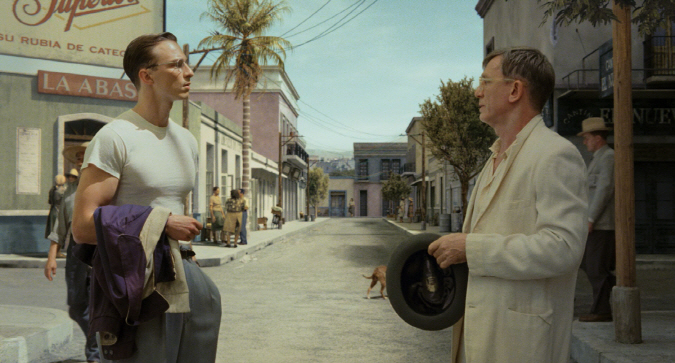
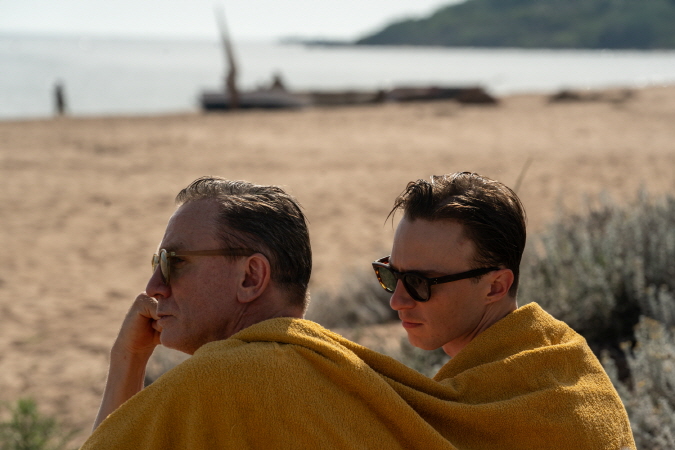
Like that film, “Queer” has a hero who is a fictional version of Burroughs. William Lee (Daniel Craig) is an American expatriate staying in Mexico City in the early 1950s, and the early part of the movie is mainly about how aimlessly he spends one day after another unless his mind focuses on drug or sex. There are always local young guys bound to attract his attention at local bars, and we later see him having a sex with one of those local lads in a shabby hotel.

On one day, Lee comes to notice one handsome American lad which instantly draws his attention. This young American in question is Eugene Allerton (Drew Starkey), and, regardless of whether Allerton is really gay or not, Lee finds himself more attracted to him, and Allerton seems to be aware of this, even though he does not signify that much while usually flirting with some young woman right in front of Lee.

Eventually, there comes a point where Lee finally gets his wish, and we are accordingly served with an obligatory sex scene as expected, but, not so surprisingly, Lee finds himself still lonely and miserable as usual. Although he simply demands Allerton to hang around with him as much as he can, Allerton remains beyond his reach at times without making any genuine emotional connection between them, and this certainly annoys and frustrates Lee. Sure, he knows too well that Allerton is the one holding the power over their relationship, and he certainly tries to live with that, but, not so surprisingly, this makes him all the more discontented than before. 
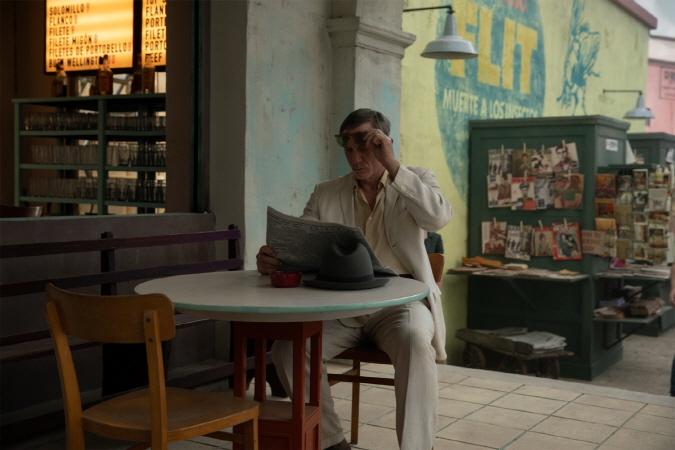
As a consequence, Lee comes to depend more on his drugs of choice, and then he becomes interested in using a certain South American natural drug, which may open his mind and will also probably help him connect more with Allerton. Although Allerton is not so willing at first, he agrees to accompany Lee when Lee decides to travel to somewhere in Ecuador, and the change of scenery seems to make Lee a bit better, though his drug addiction problem soon turns out to be more troublesome than expected.

Around that narrative point, we are supposed to be more engaged in Lee’s despair and frustration, but the screenplay by Justin Kuritzkes, who previously collaborated with Guadagnino in “Challengers”, does not delve that deep into its two main characters. Lee remains as a merely pathetic figure going down further toward the bottom of addiction just like Burroughs did in real life, and we never get to know anything about Allerton, who frequently looks like being beyond Lee’s reach as well as ours. In the other word, he is more or less than a distant object of desire like that pretty boy who captures the heart of the artist hero of Luchino Visconti’s “Death in Venice” (1971).

At least, Guadagnino and his crew members including cinematographer Sayombhu Mukdeeprom, who did a first-rate job in “Challengers”, decorate the screen with a lot of stylish elements to be appreciated. The first half of the movie is filled with a palpably languid sense of ennui and anxiety, and Daniel Craig, who is already moving onto the next phase of his career after his last James Bond film, and several other main cast members including Jason Schwartzman, who is rather unrecognizable due to his chubbier appearance here in this film, look believable as the unhappy inhabitants of their little hedonistic world. Although he does not have much to do except looking handsome and distant at first, Drew Starkey manages to fill his character to some degree, and his performance gets a little more interesting when his character goes into a remote Ecuadorian jungle area along with Lee later in the story.

With the delightfully hammy supporting turn by Leslie Manville, who plays a loony American botanist who may help Lee get that South American natural drug in question, the movie becomes more energized than before, but it is still too late in my trivial opinion. A series of following hallucinogenic moments may not impress you that much if you have seen “Naked Lunch”, and the last scene does not have enough emotional ground to be genuinely poignant from the beginning.

Overall, “Queer” is the first time Guadagnino disappoints me, and that is a shame because he has seldom disappointed me since “I Am Love” (2009), which was incidentally one of the best films I saw in 2010. At this point, he is already preparing to release a new movie a few months later, and I sincerely wish I will be more entertained.

Posted in Movies | Tagged , , | Leave a comment

Queen of Katwe (2016) ☆☆☆(3/4): An unlikely chess player in Uganda

Mira Nair’s 2016 film “Queen of Katwe”, which is currently available on Disney+ presents a remarkable story about one extraordinary female chess player in Uganda. She was born in a slum neighborhood of Kampala, Uganda, but she and several other neighborhood kids came to find their unexpected talent and potential thanks to their dedicated chess coach, and, as touchingly shown at the end of the film, that did change their lives a lot.

The story mainly revolves around a 10-year-old girl named Phiona Mutesi (Madina Nalwanga), and the early part of the film focuses on how things have been difficult and desperate for her and her family. After losing her husband and eldest child some years ago, Phiona’s mother Nakku Harriet (Lupita Nyong’o) has struggled a lot with the following economic hardship, and Phiona and her younger brother often have to sell maize on the streets of Katwe, a slum neighborhood outside Kampala, along with their mother for supporting their family as much possible.

Meanwhile, the movie also pays attention to Robert Katende (David Oyelowo), a young man who has worked as a soccer coach at a local youth center as trying to get hired as an engineer someday. On one day, he decides to start a little chess club for those poor kids in Katwe because 1) he sincerely wants the kids to go for more intelligence and confidence 2) he happens to have considerable knowledge on chess. Although the first day of his chess club is not that promising, the kids gradually show more interest in chess, and this draws the interest of Phiona when she comes to the chess club along with her younger brother.  

While she does not even know how to read, Katende willingly lets Phiona into the chess club, and we see how she gets to know the rules of chess game bit by bit and then begins to surprise everyone around her. Within a short period of time, she becomes the most prominent chess player in the group, and Katende is willing to support not only her but also several other considerably talented kids as much as he can. Although there is not any available money for allowing his talented kids to participate in a big local junior chess tournament, he manages to get the money in the end, and, of course, Phiona and her fellow chess players prove themselves more at that tournament.

However, the movie never overlooks that there is still the harsh reality for Phiona and her family whenever she is not playing chess – especially when they get much poorer due to an unexpected incident. As things become all the more desperate for her and her family, Phiona naturally comes to wonder whether chess can really help her and her life, but she keeps getting supported by her coach as well as her mother, who does not know that much about chess but is always ready to do anything for her children’s welfare.              

Clearly recognizing the complex aspects of its young heroine’s situation, the screenplay by William Wheeler, which is based on the nonfiction book of the same named by Tim Crothers, patiently builds up the story and characters along its engaging narrative. Yes, there eventually comes a point where our young heroine comes to have some painful lesson about life and chess, but this and several expected moments in the film are handled with enough thoughtfulness and sensitivity, and we come to root more for not only her but also several supporting characters around her. There is a little touching moment when Katende shows more of his goodwill and sincerity to Phiona as a man who also had a fair share of childhood hardship, and then we get a poignant scene when her mother eventually decides to make some sacrifice for helping Phiona more. 

In case of several chess game scenes in the film, they do not reach to what is so electrifyingly shown in recent Netflix miniseries “The Queen’s Gambit” as having less detail and excitement in comparison, but the movie stays focused on character and drama as before, while occasionally showing some humor via Phiona’s fellow chess players. They may be less skillful than her, but they are bright and colorful kids nonetheless, and that is another reason why the obligatory epilogue part of the film feels so inspiring. 

Above all, the movie is anchored well by the unadorned natural performance by young performer Madina Nalwanga. Although she did have any previous acting experience before, Nalwanga did a commendable job of imbuing her role with enough spirit and pluck besides holding her own place well between her two much more experienced co-starts, and several other young cast members in the film are equally splendid in their respective supporting parts. In case of David Oyelowo, who incidentally became more notable after his substantial supporting performance in Kevin Macdonald’s Oscar-winning film “The Last King of Scotland” (2006), Lupita Nyong’o, their understated actings ably embody their characters’ decency and dignity. and they are particularly wonderful when their characters come to have a serious conversation on Phiona’s future at one point in the middle of the story.    

On the whole, “Queen of Katwe” is recommendable for its solid storytelling and good performances to watch, though it is less impressive than director Mira Nair’s previous acclaimed works such as “Salaam Bombay!” (1988) and “The Namesake” (2006). It is really a shame that she has been relatively quiet during last several years since “Queen of Katwe” came out, and I sincerely hope that she will soon be back in action.

Posted in Movies | Tagged , , , , | Leave a comment