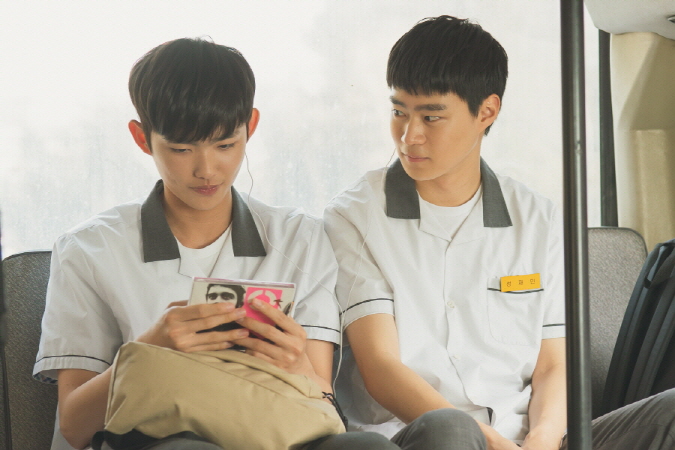
404 Still Remain (2024) ☆☆☆(3/4): As they share their favorite Japanese pop songs

South Korean independent film “404 Still Remain” made me feel a bit nostalgic for good reasons. Set in early 2000s, this little coming-of-age drama movie is filled with the period details to notice here and there, and I can tell you that it did a fairly good job on the whole. In addition, the emotional struggles of its two main characters resonated a lot with me because I was a repressed gay boy just like them around that time, and I must tell you that there are several moments which came particularly close to me.

The movie opens with the arrival of a high school student named Kyeong-hwan (Sim Hyun-seo) and his parents in Daegu, one of the big local cities in South Korea. He and his parents moved from some rural town just because of some better business opportunity for both of his parents, and we soon see him starting his first day at his new school.

Needless to say, Kyeong-hwan feels quite awkward among his new classmates, but then he receives some help and support from Jae-min (Hyeon Woo-seok), the popular class president who happens to sit right next to him. Mainly thanks to their enthusiasm on Japanese pop songs, they instantly befriend each other, and they come to spend more time with each other as sharing a lot of Japanese pop songs between them via Kyeong-hwan’s MP3 player (Are you old enough to remember what it is, by the way?).
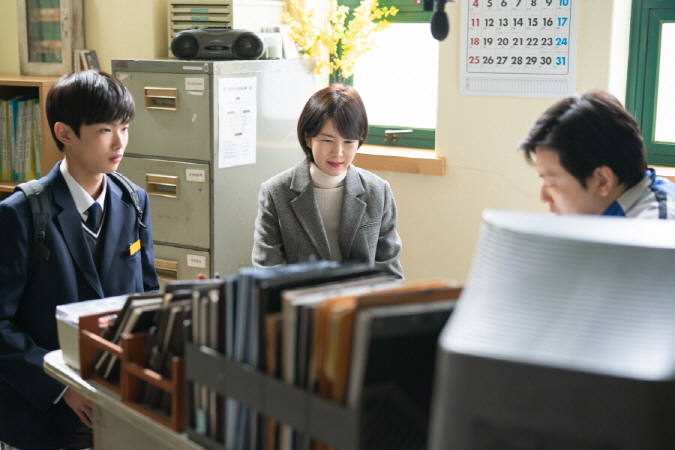
Meanwhile, they and many other classmates of theirs have to prepare a lot for the college entrance examination as usual, and Kyeong-hwan soon comes to distinguish himself a lot as becoming the No.1 student of the class. As a result, he becomes a little more popular in his class than before, and Jae-min does not seem to mind this at all even though he has been frequently pressured by his mother to excel himself.

As getting closer to Jae-min more and more, Kyeong-hwan finds himself quite attracted to Jae-min. It later turns out that he had a little trouble due to his homosexuality before moving to Daegu, and that makes him very hesitant about revealing himself more to Jae-min, but it seems that Jae-min likes Kyeong-hwan more than he can admit on the surface. For example, he often touches Kyeong-hwan a lot, and this looks like a merely friendly gesture, but Kyeong-hwan comes to wonder more about whether Jae-min has actually repressed himself just like he has for years.

While Kyeong-tae remains conflicted about his relationship with Jae-min, the screenplay by director/writer Uhm Ha-neul, who incidentally made a feature film debut here in this film, doles out one episodic moment after another for more plot and character development. We get to know a bit about some of Kyeong-hwan’s classmates, and then we also observe how his parents’ marriage crumbles for some unspecified reason. In the end, his father leaves after the divorce, and his mother has to support her and her son alone by herself, but then there comes a big trouble for her and her fellow merchants in the neighborhood.

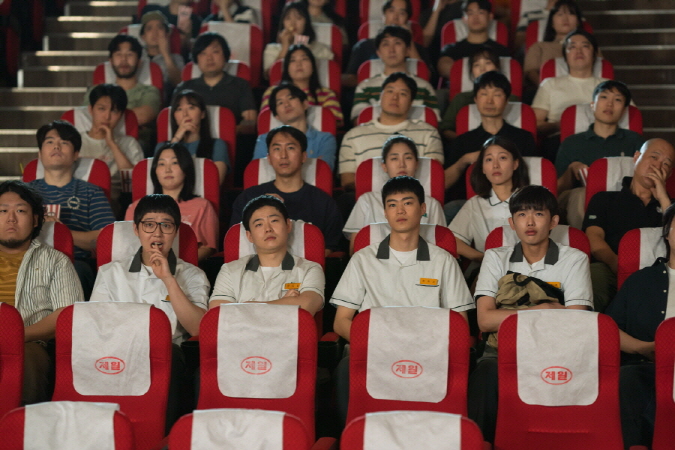
It is not much of a spoiler to tell you that Kyeong-hwan eventually shows Jae-min his romantic feelings toward him later in the story, and you will not be surprised that much by the following consequence Kyeong-hwan has to deal with. Jae-min suddenly becomes quite distant to him, and Kyeong-hwan also finds himself frequently bullied and ostracized by many of his classmates once the gossip about his homosexuality is spread around his class.
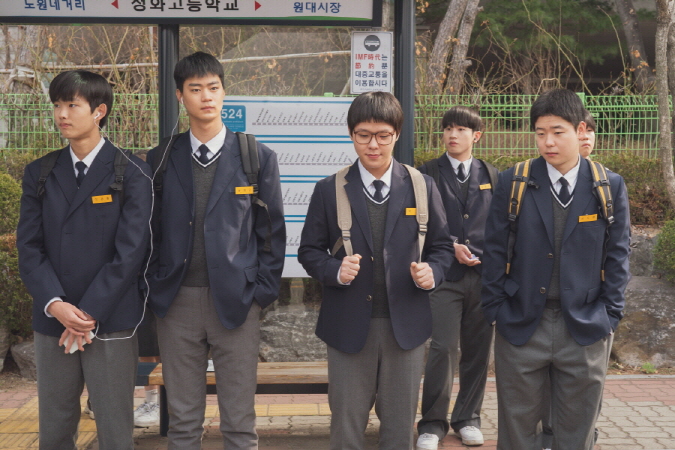
While there are several heavy-handed moments involved with your typical homophobia, the movie handles Kyeong-hwan’s emotional struggle with enough care and sensitivity at least. There is a little touching scene after Kyeong-hwan finally reveals his homosexuality to his mother, and then there is also a powerful moment as Kyeong-hwan listens to Jae-min’s favorite Japanese pop song and then comes to sense and understand more of whatever Jae-min is holding behind his back. In case of the epilogue part, it feels rather redundant at first, but then there comes an unexpected moment of poignancy which will linger on your mind for a while after the movie is over.

The movie certainly depends a lot on the good chemistry between its two lead performers. Besides looking young enough on the screen, Sim Hyun-seo and Hyeon Woo-seok are believable in their characters’ relationship development along the story, and Shim is particularly harrowing when his character must endure a lot just because of being honest to himself. On the opposite, Hyeon effectively complements his co-star via his more subdued acting, which often speaks volumes even though his character does not seem to signify much on the surface. In case of several substantial supporting performers, Gong Min-jung has a few good scenes to notice as Kyeong-hwan’s struggling mother, and On Joo-wan makes a brief appearance around the end of the story.

In conclusion, “404 Still Remain”, whose title is derived from a certain Internet message with which many of you are quite familiar, is an engaging high school drama to be appreciated for mood, storytelling, and performance. Along with two recent South Korean films “3670” (2025) and “Homeward Bound” (2025), this is another notable South Korean queer film of this year, and I sincerely hope that it will bring some comfort and support to many sexual minority adolescent kids out there in the South Korean society.

Posted in Movies | Tagged , , , , | Leave a comment

Esper’s Light (2024) ☆☆(2/4): Their little online fantasy world

 In my inconsequential opinion, I am not an ideal audience for South Korean independent film “Esper’s Light”. While it is probably one of the most singular South Korean films of this year, I often felt distant and confused for more than 2 hours, and that impression of mine does not go away even after I later learned more about what and how it is about.

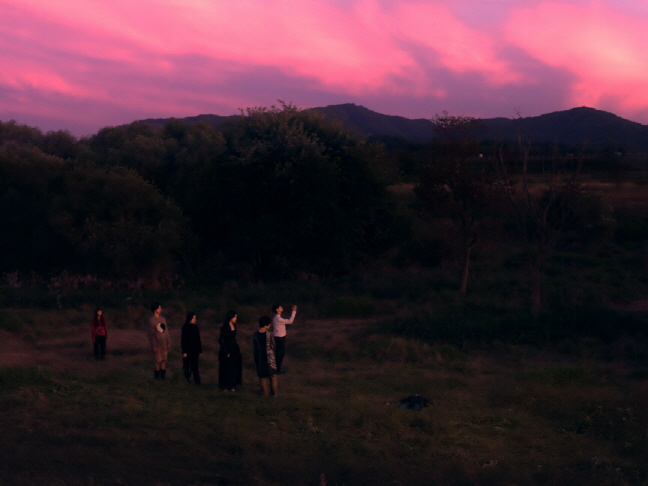
The movie consists of three different science fiction fantasy stories which, as far as I remember, are connected with each other to some degree. At the beginning of the first story, it is explained to us that a bunch of boys and girls happen to be pursued by the government due to their special powers, and the opening scene shows some of them hiding inside their safe house while being helped a bit by some other boy.

The plot thickens when their safe house is not safe anymore. They have to run away as soon as possible, and there are several options for them. While some of them go to several other remote spots which may be safer from the ongoing pursuit of the government, others go to an underground tunnel which eventually leads them to a futuristic city. Needless to say, the government continues to chase after them as usual, and we soon see some of them captured or cornered by the government agents.

Now the movie feels like your average tabletop role-playing games (TRPG) such as, yes, “Dungeons & Dragons”. As a matter of fact, director Jung Jae-hoon wrote the screenplay along with a bunch of adolescent kids who are the members of an online TRPG community on Twitter (It now becomes “X”, you know), and the movie alternates between their stories and the documentary footage clips of these young writers. Whenever the story comes upon a conflict or crisis under the guidance of their story master, they instantly respond to that via their smartphones, and then the story advances more via their imagination and storytelling skill.

I am not sure whether their writing is really good, but the movie tries to convey their enthusiasm to us via its modest cinematic ways. Whenever the mood gets weird or tense, the soundtrack is naturally filled with odd sound effects while the screen is packed with a lot of light and shadow. Besides often baffling us a lot, the overall result surely covers up the production budget limit of the movie to some degree, and you may appreciate some nice creative visual touches shown from the screen.

In case of the second story, it is simply set in some isolated background occupied by several adolescent characters who are your average fantasy archetypes. Just like the main characters of the first story, they have each own superpower, and the story mainly revolves around one girl who must protect a certain precious object despite a lot of pain inflicted upon her because of that.

We see how several other characters try to handle her problem as she screams very, very, very loud in her continuing agony, but the story is unfortunately deficient in many aspects just like the first one. For instance, we never get to know that much about its main characters and their motives, and the story is also quite murky and confusing about its rules and conditions as it is handed from one community member to another.

The third story is probably the best one in the bunch, mainly because it is a bit more dramatic compared to the two other stories. The four android robots are sent to a remote island where some four young girls have lived together without anyone else, and the robots soon come to discover that there is something magical in the island. As a matter of fact, it is so special that some of the robots cannot help but become emotional along the story, and that naturally leads to a big conflict in the story.

What eventually happens at the end of the story will not surprise you that much, but you will be more aware of those young community members behind the story. From time to time, the movie shows these kids going through their respective daily lives, and we observe how serious they are about the story and characters created by them day by day.

However, the movie does not delve much into who these young community members are, and that is the main reason why it feels too superficial at times. Yes, their stories are understandably clumsy at times, and I am totally fine with that, but the movie does not share their interest and enthusiasm with us that much. Without enough emotional ground to support their stories, the movie ultimately becomes a merely shallow exercise in style, and that makes us all the more distant to whatever is being presented on the screen. 

On the whole, “Esper’s Light” did not intrigue or stimulate my mind enough for recommendation. Yes, my mind kept going somewhere else when I watched it yesterday, but this is a distinctive cinematic experiment which deserves some admiration, and you will probably appreciate it more if you have ever had any TRPG experience (Full disclosure: I haven’t). Considering that it will not be released on video on demand (VOD), maybe you should check it out if you are a serious movie fan like me, but please be aware of what and how it is about in advance.

Posted in Movies | Tagged , , , , , | Leave a comment

The Woman in the White Car (2022) ☆☆☆(3/4): A little chilly female mystery thriller

South Korean film “The Woman in the White Car” is a little female mystery thriller with chilly sensitivity to be savored. While you may easily guess what it is about right from the very beginning, the movie will gradually engage and then surprise you as slowly delving into its main characters’ emotional struggles along the story, and you will eventually find yourself alternatively chilled and touched by how it is about. 

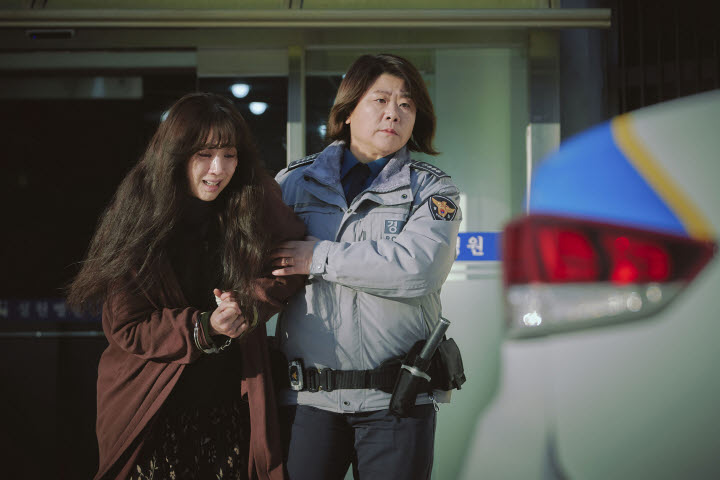
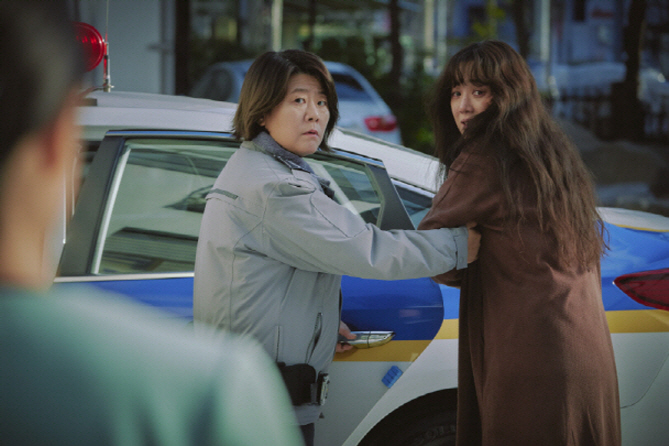
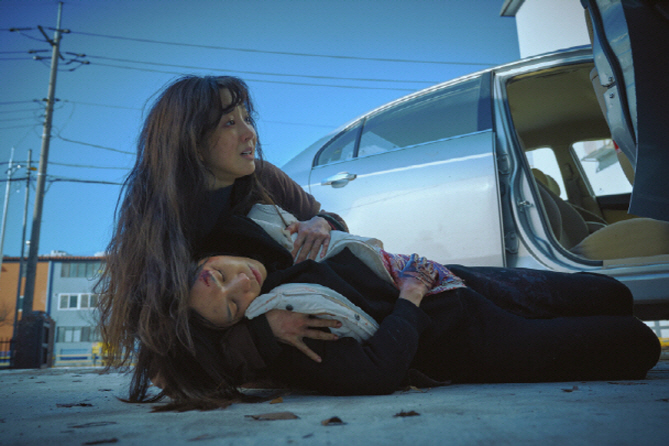
The movie, which is set in some rural mountain region in the middle of one snowy winter, opens with a sudden disturbing incident. A car quickly arrives at a local hospital, and one of the two figures inside the car hurriedly comes out and then desperately cries for help. It turns out that the other figure in the car is in the serious need of medical treatment due to a severe physical injury, and we soon see this figure quickly taken into the hospital for emergency surgery.  

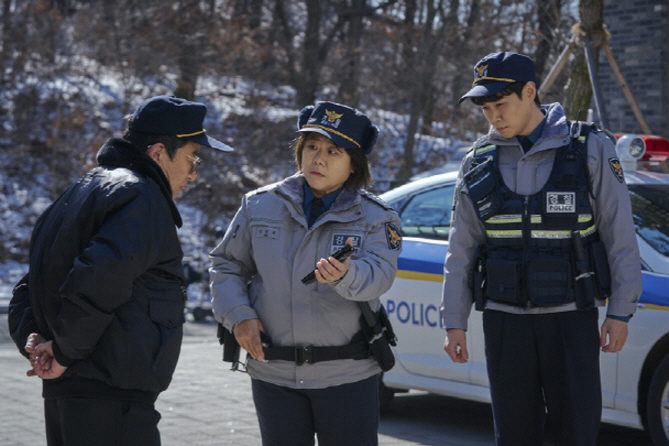
The two local police officers, Hyeon-joo (Lee Jung-eun) and her rookie partner Yong-jae (Lee Hwi-jong), subsequently arrive at the hospital for the following investigation, but then they are quite baffled about what exactly happened. On the surface, it seems that those two figures in question are Do-kyeong (Jung Ryeo-won) and her older sister, but then it is revealed that the injured woman brought by Do-kyeong is clearly not his older sister. After all, her older sister once worked as a nurse at the hospital, and her older sister’s former colleagues do not know at all who the hell that injured woman is.  

Do-kyeong claims that her “older sister” was actually stabbed by her husband, and the movie gives us a flashback scene showing how that occurred. According to Do-kyeong, her older sister’s husband was pretty nasty and abusive to say the least, and she testifies to the police officers that her older sister happened to be injured in the middle of a violent physical clash between them and that loathsome dude. 

However, Hyeon-joo is skeptical about Do-kyeong’s testimony for good reasons. Although she was once a promising young novelist who was also quite successful, Do-kyeong was put under her older sister’s care due to a serious mental problem not long after losing their parents, and this certainly makes her testimony rather unreliable. In addition, her “older sister” has been unconscious after her emergency surgery while her husband is currently gone missing, so there is no one to confirm whether Do-kyeong told the truth or not.

As a woman still haunted by those painful memories of abuse in her past, Hyeon-joo instinctively senses how damaged and traumatized Do-kyeong really is. Her instant sympathy toward Do-kyeong makes Hyeon-joo all the more determined about finding what really happened to Do-kyeong, but then she only encounters more baffling questions about the case. For example, it later turns out that Do-kyeong’s real older sister was not actually living with Do-kyeong, and she was somehow disappeared not long before Do-kyeong came to the hospital along with that mysterious woman.

While she comes to sense more of how fishy her case is in many aspects, Hyeon-joo also begins to reflect more on her dark past from which she is still reeling. She was frequently abused by her alcoholic father who often exerts some toxic influence on her even at present, and there is an unnerving moment showing how she tries to calm herself in a way not so far from what her father often did to her during that time.

What is eventually revealed during the last act is a bit too contrived in my humble opinion, but the screenplay by Seo Ja-yeon keeps holding our attention via focusing on the subtle emotional drama unfolded between Hyeon-joo and Do-kyeong. Although she often looks rather elusive, it is apparent that Do-kyeong is struggling with whatever she is hiding behind her back, and there is a little poignant moment when she chooses to open herself a bit more to Hyeon-joo later in the story.    

The movie is carried well by the solid performances from its two wonderful main cast members. While often looking as distant and baffling as required, Jung Ryeo-won skillfully handles her several key scenes in the film, and her ambiguous presence is contrasted well with the more straightforward acting of Lee Jung-eun, who has been one of the most dependable character actresses in South Korean cinema since her breakthrough supporting turn in Bong Joon-ho’s Oscar-winning film “Parasite” (2019). Even when the movie stumbles a bit with some preposterous plot turns, Jung and Lee hold it together to the end, and they are also supported well by several other main cast members including Jang Jin-hee, Kang Jun-woo, Lee Hwi-jong and Kim Jung-min.  

In conclusion, “The Woman in the White Car”, which received considerable attention when it was shown at the Bucheon International Fantastic Film Festival in 2022 (Jung received the Korean Fantastic Best Actress Award, for instance) but then was belatedly released in South Korean theaters on last Wednesday, is a competent genre film, and I enjoyed how it distinguishes itself via its good mood, storytelling, and performance. Although she has been mainly directing a number of local TV drama series episodes, director Christine Ko shows here that she is a promising filmmaker with some potential, and it will be interesting to see what may come next after this commendable feature film debut of hers.

Posted in Movies | Tagged , , , | Leave a comment

Predator: Badlands (2025) ☆☆☆(3/4): You will root for this alien lad a lot

“Predator: Badlands”, the latest installment from the Predator franchise, is another surprisingly solid piece of entertainment to admire and enjoy. Like its two recent predecessors “Prey” (2022) and “Predator: Killer of Killers” (2025), the movie tries some refreshing and interesting variations with what has been so familiar to us for years, and the overall result is successful enough to bring more energy and spirit to the franchise.

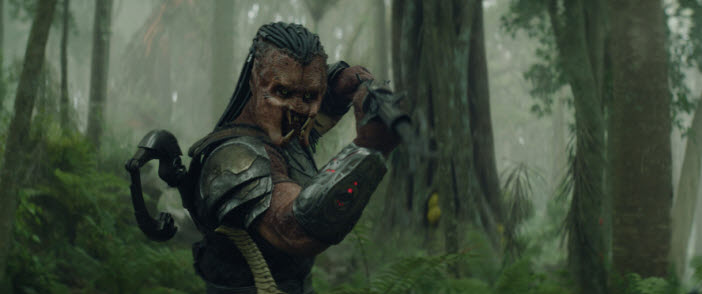
At the beginning, we are introduced to Dek (Dimitrius Schuster-Koloamatangi), a young Predator who has been eager to prove himself although he is relatively more imposing than many of his clan members including his father. Despite his earnest efforts, his father, who is incidentally the chief of their clan, is already ready to eliminate him, but he manages to escape from his home planet at the last minute, and he eventually finds himself stranded in some other alien planet.

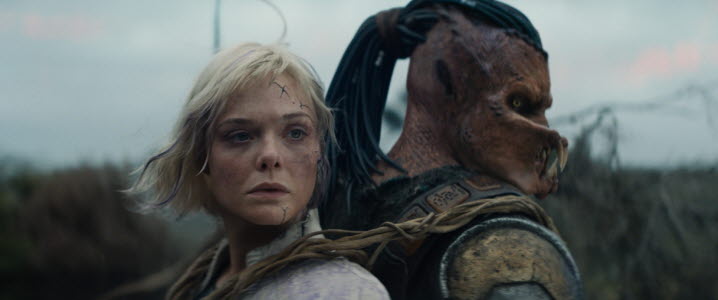
However, this alien planet is quite dangerous to say the least. There are many different creatures on the planet, and, as Dek soon comes to learn, most of them are pretty lethal as your average predators. In the end, he really needs someone to help him, and then he comes across Thia (Elle Fanning), a damaged android robot sent from the Earth. Although she lost the lower half of her body, Thia is fairly functional on the whole, and she is also willing to help Dek locating a certain local creature.

That local creature in question has been regarded as something quite challenging even for more experienced Predators like Dek’s father. Nevertheless, Dek is very determined to hunt and then kill it for proving himself, so he accepts Thia’s offer despite his initial reluctance. While Dek is often quite serious and rather humorless, Thia is programmed to be plucky and sensitive, and we are often amused by this humorous personality contrast of this mismatched duo – especially when they are later joined by a little creature which somehow looks both cute and ungainly.

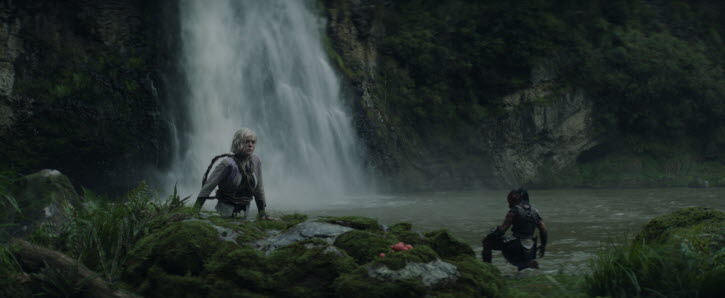
As Dek and Thia continue their risky quest, the movie fills its alien world with vivid mood and details to observe and appreciate. While being reminiscent of James Cameron’s “Avatar” (2009) to some degree at times, the alien world of “Predator: Badlands” actually looks much richer than its subtitle suggests, and the movie often lets us get immersed more into its alien world whenever it is not on action mode. In addition, it also pays a lot of attention to the relationship development between its two very different main characters along the story, and it is poignant to observe how Dek comes to bond with his unexpected companion a lot more than he can admit.

Meanwhile, the situation becomes a bit more complicated as another main figure enters later in the story. That figure in question is Tessa, Thia’s twin android robot who is also played by Fanning. After being restored and reprogrammed by the supervising computer of that evil corporation in the Alien franchise, Tessa is ready to get their mission accomplished by any means necessary, and it goes without saying that she will eventually stand on Thia and Dek’s way.

During the last act, the movie provides a lot of action, and we are surely thrilled and excited as expected, but we also come to care more as the movie stays focused on what is going on among its main characters as before. Via his strained but meaningful relationship with Thia, Dek comes to learn that care and compassion are not a weakness at all, and we are not so surprised when he changes his mind after learning something about his hunting target.

The two lead performers are terrific as ably complementing each other from the beginning to the end. Although his acting is accompanied with a lot of CGI and voice manipulation, newcomer Dimitrius Schuster-Koloamatangi brings enough physicality and personality to his character, and his strong performance here in this film is the main reason why the movie works as an engaging coming-of-age drama. On the opposite, Elle Fanning, who will impress us again in this year with her recent acclaimed supporting turn in Joachim Trier’s “Sentimental Value” (2025), has a lot of fun with swinging back and forth between her two opposing characters, and her compelling double performance always brings some extra charge to the movie.

The movie is directed by Dan Trachtenberg, who drew our attention with his first feature film “10 Cloverfield Lane” (2016) and then made “Prey” and “Predator: Killer of Killers”. While “Prey” unexpectedly brought some unexpected fresh air of change to the franchise, “Predator: Killer of Killers” generated more potential for the franchise as a stylish animation film, and both these two films and “Predator: Badlands” certainly show us together that Trachtenberg is a talented filmmaker willing to take a chance for going further with the franchise he clearly respects and loves.

In conclusion, “Predator: Badlands” is recommendable for not only its exciting action scenes but also its compelling storytelling coupled with enough mood and personality. As reflected by what is brief shown around its end credits, there will certainly be more Predator flicks during next several years, but the movie recharges the franchise as well as its two recent predecessors, and you may come to have more expectation after it is over. In short, this is one of the more enjoyable Hollywood blockbuster products of this year, and I assure you that you will root for this alien lad a lot.

Posted in Movies | Tagged , , , , | 1 Comment

Save the Green Planet! (2003) ☆☆☆1/2(3.5/4): An odd South Korean mixed bag

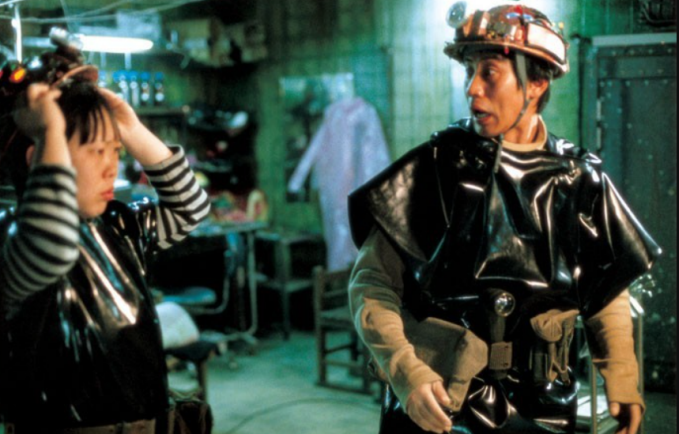
South Korean filmmaker Jang Joon-hwan’s 2003 debut feature film “Save the Green Planet”, which recently received more attention thank to the recent American remake version directed by Yorgos Lanthimos, is probably one of the weirdest mixed bags I have even encountered during last 30 years. So wildly swinging among many different genre modes ranging from absurd horror comedy to harrowing melodrama, the movie was destined to be a cult classic from the very beginning, and it is not so surprising that the movie was not received that well even by local audiences at that time.

Although around 20 years have passed since I watched it via a DVD copy (I somehow missed the chance to watch it at movie theater, by the way), the movie remains quite an oddball piece of work to me. While there are many outrageous moments which may make your eyeballs roll at times, we also get numerous moments of stark horror to unnerve and then chill you, and you will be all the amazed by how it even attempts a bit of genuine pathos and poignancy as busily trying to balance itself among those contrasting genre elements in the story.

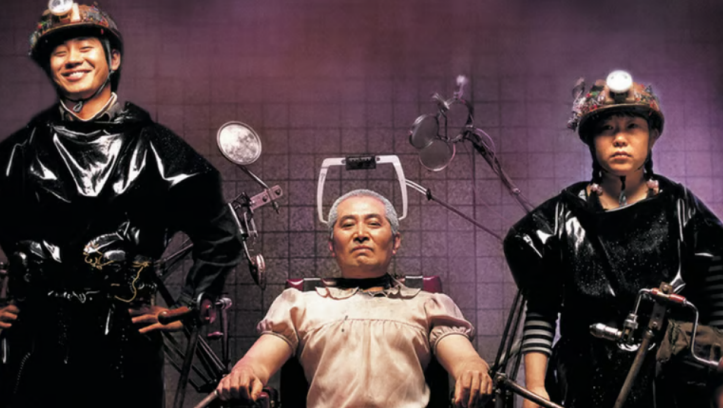
The story begins with the kidnapping planned by its supposedly unhinged hero and her girlfriend. For some time, a young beekeeper named Lee Byeong-gu (Shin Ha-kyun) has been obsessed with a wealthy and powerful businessman named Kang Man-shik (Baek Yoon-sik) just because he has zealously believed that Man-shik is actually an alien in human disguise, and his rather simple-minded girlfriend Su-ni (Hwang Jeong-min, a wonderful veteran character actress who should not be confused with a more famous South Korean actor of the same name at any chance), is willing to assist his kidnapping plan without having any doubt at all.

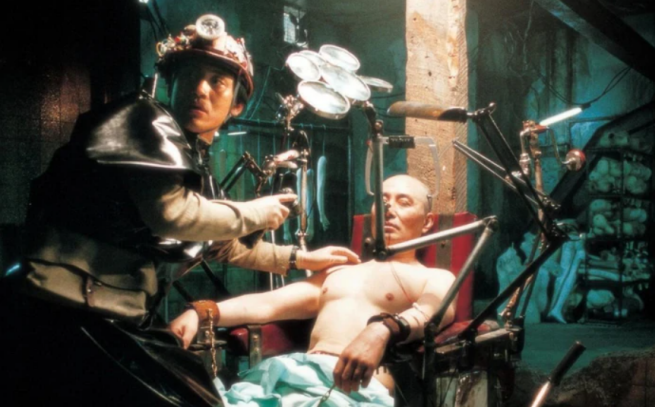
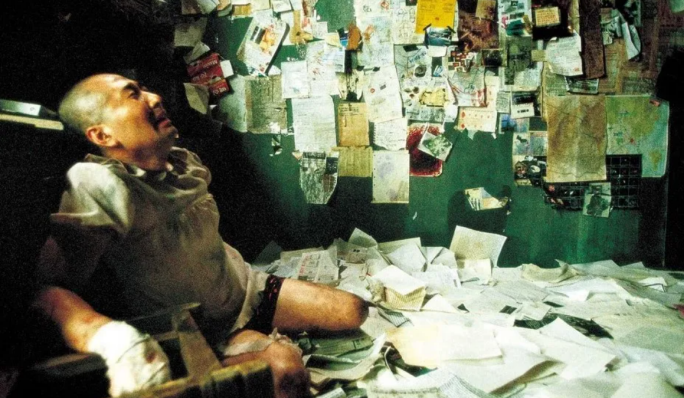
After he and his girlfriend manage to succeed in kidnapping Man-shik and then taking him to their little isolated place located in the middle of some rural mountain area, Byeong-gu is ready to extract the confession from Man-shik by any means necessary, and that is where the movie goes for more horror and absurdity. You may laugh a bit at times as observing more of how loony Byeong-gu is, but then you are also quite horrified by how willing he is to go further and further for saving, yes, a green planet called the Earth. At one point later in the story, we get a chilling moment of sheer horror as Man-shik comes to learn more of what Byeong-gu has done behind his back during last several years, and this makes us all the more unnerved than before.

Nevertheless, we also come to have some pity on this deranged lad as much as, say, the main villain of Park Chan-wook’s “Oldboy” (2003). As shown from a flashback sequence in the middle of the film, his life has been full of misery, pain, and torment for many years, and now he becomes more desperate as he may lose someone very dear to him sooner or later. The movie does not wisely make any cheap excuse on his barbaric acts of cruelty and violence, and that is why we often find ourselves constantly going back and forth between repulsion and sympathy.

In case of his captive, we feel ambivalent about him as much as Byeong-sik. Sure, Man-shik is one of those unlikable “1% people” who usually regard others below him with contempt and apathy, but we come to care a bit about his increasingly despairing struggle for survival, even when we begin to have doubt on whether he is merely another target of Byeong-gu’s worsening madness. 

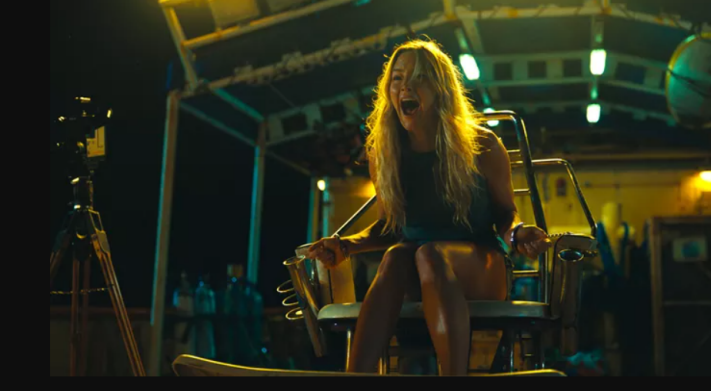
Frequently toying with that nagging possibility to the end, the movie continues to throw one memorably weird moment after another. The part with involved with a seasoned detective getting closer to Byeong-gu culminates to an outrageous payoff moment involved with those countless bees taken care of by Byeong-gu, which is still darkly hilarious to me. Above all, there is a truly wacky sequence somewhere between Stanley Kubrick’s “2001: A Space Odyssey” (1968) and Mike Hodges’ “Flash Gordon” (1980), and all I can tell you here is that this is definitely something you have to see for yourself.

The movie loses some of its narrative momentum as being on the verge of becoming an overkill more than once, but it remains supported well by the strong performances from its three main cast members. Shin Ha-kyun, who rose to more prominence after Park Chan-wook’s “Sympathy for Mr. Vengeance” (2002), did a good job of going along with the wild genre swings of the movie, and Hwang Jung-min provides a little precious sincerity to her archetype character. In case of Baek Yoon-sik, he masterfully handles several tricky key moments solely depending on his acting talent, and his memorable performance here in this film certainly boosted his movie acting career to a considerable degree.

In conclusion, “Save the Green Planet!” remains as one of the most notable South Korean films during the 2000s, and now I reflect more on what a fantastic time it was for South Korean audiences in 2003. Besides “Save the Green Planet!” and “Oldboy”, we also had Kim Ji-woon’s “A Tale of Two Sisters” (2003), Kim Ki-duk’s “Spring, Summer, Fall, Winter… and Spring” (2003), and Bong Joon-ho’s “Memories of Murder” (2003), and this was just the beginning for many highlights to come from South Korean cinema including, yes, that dramatic victory of Bong’s iconic 2019 film “Parasite” at the Academy Awards.

Unfortunately, Jang could not ride on this cultural wave that much due to the big commercial failure of his first feature film, and he only made “Hwayi: A Monters Boy” (2013) and “1987: When The Day Comes” (2017) during last two decades. Nevertheless, “Save the Green Planet!” is still a compelling achievement on the whole, and I sincerely hope that this undeniably offbeat genre film will get more appreciation thanks to the American remake version.

Posted in Movies | Tagged , , , | Leave a comment

Dangerous Animals (2025) ☆☆☆(3/4): A serial killer with sharks

“Dangerous Animals” is another typical horror film with a lot of sharks, but there is one thing to distinguish itself a bit among many other shark flicks which came out after Steven Spielberg’s “Jaws” (1975). It has a crazy serial killer who has been obsessed with sharks, and you may enjoy how it has some twisted fun with the juxtaposition of these two different horror genre elements.

The main story of the movie begins with your average Meet Cute moment. In the Gold Coast area of Queensland, Australia, two different young people come across each other, and we observe how different they are from each other in many aspects. While Moses (Josh Heuston) is a local lad from some affluent family, Zephyr (Hessie Harrison) is a young American woman who simply prefers to be alone while wandering around here and there, but it does not take much time for them to get attracted to each other more as sharing their enthusiasm on surfing.

In the end, they end up having a romantic time inside a van where Zephyr has lived for a while, and Moses is willing to be more serious about their relationship, but Zephyr, who turns out to have a very unhappy past, hesitates. As a result, she leaves him while he is absent, and then she goes to a certain beach area previously recommended by him.

When Zephyr happens to encounter a stranger there, we get nervous because the opening scene already showed us how dangerous this figure is. While he just looks like a rather eccentric due running his little tourism business involved with those sharks in the sea near the Gold Coast, Tucker (Jai Courtney) is actually a serial killer who incidentally has a very morbid idea about sharks, and he chooses Zephyr as his next victim.

Not long after she is suddenly ambushed by Tucker, Zephyr wakes up to find herself locked up inside Tucker’s boat along with a young woman who has already been trapped there for a while. As your average tough girl, Zephyr naturally tries to find any possible way out, but Tucker is already preparing for another killing, and it seems that all is lost for her.

The movie does flinch at all as depicting how crazy Tucker is about sharks. To him, people are just pieces of meat to be sacrificed to what has fascinated him for years since his unfortunate encounter with a shark during his childhood years. In contrast to Robert Shaw’s shark-hating character in “Jaws”, this dude admires and worships sharks in his own insane way, and we are more chilled when the movie eventually presents his ritual of killing on the screen. 

As Zephyr keeps struggling for her survival, the movie provides a series of intense moments between her and her captor. Although the situation becomes all the more hopeless, Zephyr comes to show some resourcefulness, and that leads to a serious setback for Tucker to our little amusement. After he loses something important due to Zephyr’s little act of defiance, she comes to have more time and opportunity for her survival, and then it looks like there is actually a really good chance.

This suspenseful drama between Zephyr and Tucker is intercut with a part involved with Moses’ search for Zephyr, which often feels like a filler material in my trivial opinion. We just watch Moses looking baffled and then worried as continuing to look for Zephyr, and then there eventually comes a point where he comes upon something which may lead him to her.

Around the last act, the screenplay by Nick Lepard is hampered a bit by some plot contrivance, but it does not disappoint us at all as presenting a lot of sharks on the screen. It goes without saying that they are CGI creatures, but they do look scary as our heroine becomes more terrified along the story, and we come to brace more for whatever may happen in the end.

The main performers in the film are well-cast in their respective parts. As the eventual center of the story, Hassie Harrison is engaging as her character comes to more of vulnerability as well as strength, and she is particularly convincing when her character comes to make a very drastic decision not so far from the climactic part of Danny Boyle’s Oscar-nominated film “127 Hours” (2010). Although he is merely required to play a nice-looking lad, Josh Heuston has a little but precious chemistry with Harrison, and that makes their intimate scene early in the film sweet enough for us to care about their characters.

Needless to say, Jai Courtney has a horribly colorful character to play with gusto, and his committed performance is certainly the best thing in the film. Although he has been rather bland and passable in many of his previous films including “Suicide Squad” (2016), he finally finds a really interesting role for him here, and he willingly chews every moment of his in addition to bringing menacing insanity to several key scenes of his in the movie.

On the whole, “Dangerous Animals” is a solid genre piece to enjoy, and director Sean Byrne, who previously directed “The Devil’s Candy” (2015), did a competent job of maintaining the level of suspense to the end. It does not reach to the level of “Jaws” (Well, how can that be possible?), but it has some enjoyable stuffs to remember, and that is enough for me for now.

Posted in Movies | Tagged , , | Leave a comment

Black Phone 2 (2025) ☆☆☆(3/4): He’s back, of course.

“Black Phone 2” is a sequel which is seemingly unnecessary at first but turns out to be more entertaining than expected. While it is closely connected with its predecessor in terms of story and characters, the movie wisely avoids being repetitive as trying to do something different for another good dose of thrill and dread for us, and you will gladly go along with that.

At first, the movie, which is set in 1982, focuses on how things are still not that good for Finney (Mason Thames) and his younger sister Gwen (Madeleine McGraw) several years after what happened in “The Black Phone” (2021). In that movie, Finney was kidnapped by a notorious local serial killer nicknamed “the Grabber” (Ethan Hawke), but he managed to not only survive and but also kill his captor thanks to some unexpected help from the ghosts of the previous victims and Gwen, who incidentally has some psychic ability. However, Finney has struggled with the remaining trauma from that horrible experience of his during last several years, and both Gwen and their recovering alcoholic father Terrence (Jeremy Davies) do not know what to do about that.

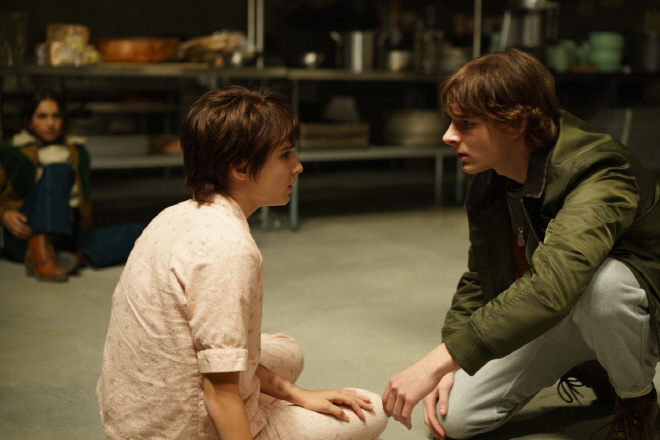
And then something odd happens to Gwen. She begins to have a series of disturbing dreams about several kids horribly murdered at some remote spot, which turns out to be an old Christian youth camp connected with her and Finney’s dead mother. After learning that their mother worked there 27 years ago, Gwen becomes all the more determined to find the reason behind those unnerving dreams of hers, but Finney is understandably not so eager to accompany her and her boyfriend Ernesto (Miguel Moa), who is incidentally the younger brother of one of the Grabber’s victims. However, he eventually decides to go to that Christian youth camp along with them, and we soon see these three kids arriving at that place on one particularly snowy day.

Right from their arrival at the camp, the mood is pretty moody to say the least. Due to the ongoing snowstorm, the camp is virtually empty except its owner Armando (Demián Bichir) and his very few main staff members including his plucky daughter. In addition, Gwen has to sleep alone in a separate cabin not so far from the one for Finney and Ernesto due the camp regulation, and she certainly becomes all the more nervous as she is about to sleep.

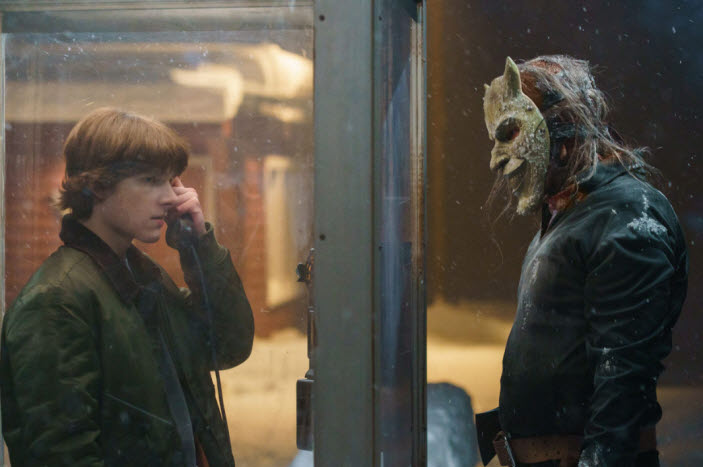
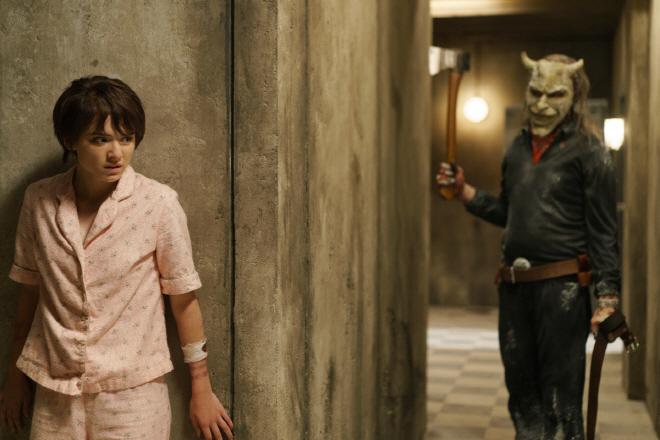
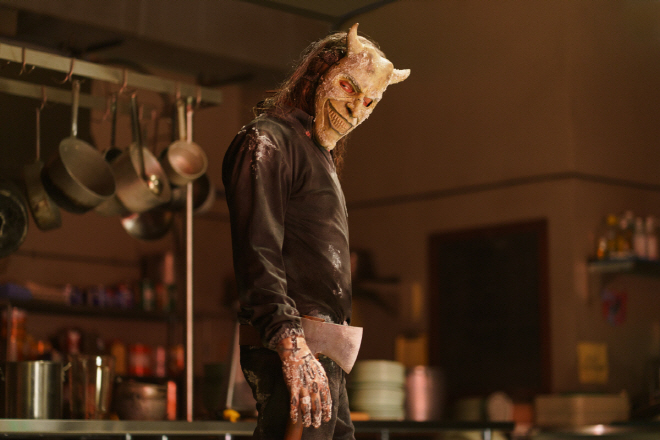
 Of course, more strange things soon happen around Gwen and her brother, and they eventually come to learn something quite terrifying. Although he is dead now, the Grabber has been hovering over the camp and its surrounding region as a malevolent spirit, and he turns out to be capable of coming into their dreams just like Freddy Krueger in Wes Craven’s classic horror film “A Nightmare on Elm Street” (1984). As the Grabber menaces Gwen more and more in her dreams, she and Finney must find a way to defeat their powerful opponent, but then they and several others around them are cornered by the Grabber in one way or another along the story.         

As its several main characters embark on their fight against the Grabber, the movie constantly fills the screen with a chilly sense of dread. Whenever Gwen gets asleep, the movie adds a nice visual touch for accentuating the rather hazy condition of her unconsciousness, and we seldom get confused even when it busily goes back and forth between reality and dream. While surely often reminiscent of Craven’s aforementioned movie and its several sequels, the movie distinguishes itself with a number of effective moments to unnerve or thrill us, and it does not disappoint us at all when everything in the story culminates to the climactic sequence unfolded across a big frozen lake.

Most of all, the movie did a good job of making us care about its main characters more. While it touchingly handles the ongoing drama surrounding Gwen and Finney’s strained relationship, there are also some extra warmth and personality via several other main characters around them, and I especially like a quietly moving moment when Armando gives Finney a sincere and thoughtful advice on his ongoing personal struggle.

As the center of the story, Mason Thames and Madeleine McGraw diligently carry the film to the end. While Thames is convincing in his character’s gradual inner transformation along the story, McGraw brings genuine poignancy to several key scenes of hers in the film, and they are also supported well by a number of good performers placed around them. Miguel Mora, who previously played a supporting character in the previous film, has a couple of sweet scenes between him and McGraw, and Demián Bichir and Jeremy Davies are reliable as usual while imbuing their respective supporting roles with enough sense of life. In case of Ethan Hawke, he has another naughty fun with his uncompromisingly evil character, and it is clear that he relishes every minute of his despite being mostly masked throughout the movie just like he was in the previous film.

In conclusion, “Black Phone” has its own dark fun just like its predecessor, and director/co-writer/co-producer Scott Derrickson, who wrote the screenplay with co-producer C. Robert Cargill, adds another solid genre film to his filmmaking career, which was incidentally started with “Hellraiser: Inferno” (2000). Although it is not totally necessary, the movie accomplishes its goal fairly well on the whole, and I will not grumble for now.   

Posted in Movies | Tagged , , , , | Leave a comment

Babygirl (2024) ☆☆1/2(2.5/4): Her object of kinky desire

“Babygirl” is about the risky sexual transgression of a woman supposed to have all. While not fully delving into what really makes her tick, the movie intrigues us with the oddly dynamic interactions between her and her much younger sex partner, and it is a rather shame that the movie hesitates to go further with its lurid and disturbing sexual elements later in the story.  

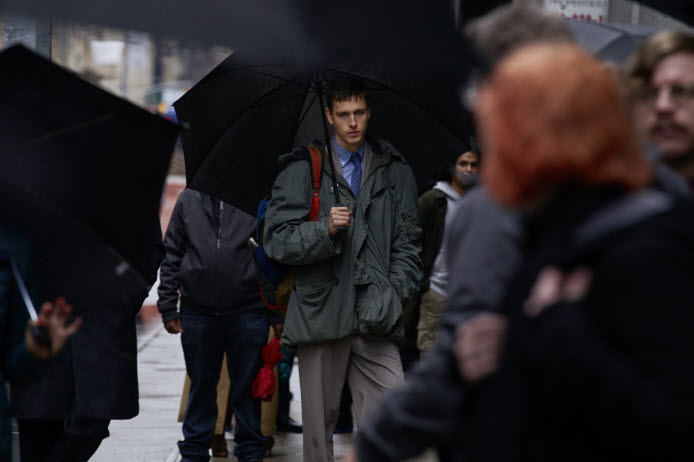
 Nicole Kidman plays Romy Mathis, the female CEO of some promising robotic automation company in New York City. As preparing for a very important moment for her company, she is introduced to a bunch of new interns, and her attention is drawn to Samuel (Harris Dickinson), a handsome lad she incidentally encountered not long before the formal introduction between them. At that time, something about him tantalized her, and he seems to be aware of that even though he does not signify much on the surface.

After Romy is assigned to Samuel as his mentor during the following internship, we come to sense more of the weird sexual tension between them. As Romy gets attracted more to him, Samuel seems to toy with her in one indirect way or another. As they continue to push and pull each other, it looks like he wants to play some morbid game of power and desire, and she is quite willing to go along with that when he makes a small but significant forward move later.  

What happens between them in a rather cheap hotel room will alternatively fascinate and disturb you for good reasons. It is apparent from the beginning of the story that Romy has nurtured a kinky sexual fantasy involved with subjugation and obedience, and Samuel seems to be the one who may fully satisfy her at last. Even though she hesitates more than once, she cannot help but do whatever she is driven to do by him, and he seems to be enjoying this as much as she does.

Needless to say, their relationship is totally inappropriate in more than one aspect, but Romy still cannot help herself. No matter how much she tries to draw the line between herself and Samuel, she always finds herself attracted to their kinky play of sex and power, and then, to her little dismay, Samuel also begins to cross some lines bit by bit.

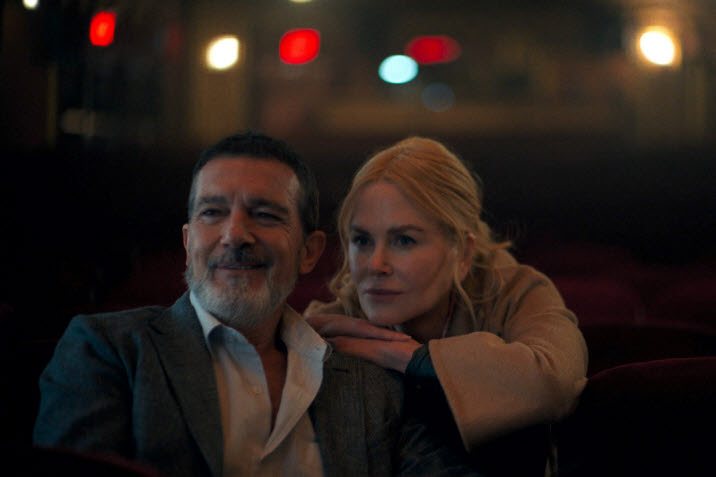
 As observing more of how happy and stable Romy’s private life with her husband Jacob (Antonio Banderas) and their two daughters, we wonder more about the psychological motivation behind her increasingly tricky sexual transgression. At one point, it is implied that she had a rather unconventional childhood in the past, and that seems to be the origin of her growing desire for being subjugated, but the screenplay by director/writer Halina Reijn, who previous made “Bodies Bodies Bodies” (2022), does not provide any simple explanation. It simply presents her behaviors and feelings on the screen, and this surely generates more intrigue for us.

However, the movie stumbles more than once during its last act, where the situation between its two main characters becomes rather mellow and soapy. Compared to all those odd and kinky moments unfolded between them, what eventually happens later in the story feels quite anti-climactic in comparison, and it looks like the movie itself gets scared right before going further along with its two main characters. In case of a subplot involved with one of the female employees working under Romy, it ends up being half-baked despite some interesting potential shown at the beginning, and that is another disappointment in the movie.

Nevertheless, there are still some good elements to engage us, and one of them is the committed performance of Kidman, who incidentally received the Best Actress award when the movie was shown at the Venice International Film Festival in last year. Although we never get to know much about what is really behind her character’s dark impulse, Kidman ably handles several key moments of naked emotions besides showing considerable commitment, and the result is another notable performance to be added to her admirable acting career. 

On the opposite, Harrison Dickinson, who has been more notable during last several years since his breakthrough turn in Eliza Hittman’s “Beach Rats” (2017), is simply fabulous as subtly suggesting the unpleasant sides of his elusive but compelling character. Right from his very first scene in the film, he holds his own place well in front of his co-star, and he is particularly effective whenever his character says one thing but also seems to be suggesting the other thing.

Around Kidman and Dickinson, Reijn places a number of good performers, though most of them are limited by their rather thin supporting parts. While Antonio Banderas, who could have played Dickinson’s character if the movie had been made around 30 years ago, is mostly stuck with his thankless role, Sophie Wilde, Vaughn Reilly, and Esther McGregor (Yes, she is the daughter of Ewan McGregor) leave some impression despite their under-developed characters.

Overall, “Babygirl” attempts to be a mix of Luis Buñuel’s “Belle de Jour” (1965), Michael Haneke’s “The Piano Teacher” (2001), and a bit of Stanley Kubrick’s “Eyes Wide Shut” (1999), but the result is not satisfying enough for recommendation. Although its first two acts are fairly tantalizing, what followed next fizzles to my disappointment, and I would rather recommend any of the three films mentioned above.

Posted in Movies | Tagged , , | Leave a comment

The Godfather Part II (1974) ☆☆☆☆(4/4): An ambitious sequel equal to its predecessor

Francis Ford Coppola’s 1974 film “The Godfather Part II”, which was re-released in South Korean theaters not long after “The Godfather” (1972) was shown first, tries to do two different things together at once. Whether this is really successful is rather debatable, the movie is an ambitious sequel equal to its predecessor in terms of scope, and it surely has a number of great elements to shine inside its darkly epic crime drama.

The movie consists of two main stories. The first one, which is actually the real center of the story considering that it occupies around the two thirds of the running time (200 minutes), illustrates what happens several years after the ending of “The Godfather”. It is 1958, and Michael Corleone (Al Pacino) and his criminal organization have grown much with more power and influence since they moved to Nevada from New York City. During the sequence clearly reminiscent of the opening sequence of “The Godfather”, Michael meets a number of various people in private while the big party for his son’s First Communion is being held outside his big house, and we are introduced to some new characters besides Tom Hagen (Robert Duvall) and several other notable supporting characters from the first film.

Everything feels fine on the surface with Michael quietly exerting his power and influence over others around him just like his father did, but, of course, there soon comes a big problem. Probably because of the ongoing expansion of his criminal business, Michael is ambushed by a sudden attack on him and his wife, and he must find whoever is associated with this attack, while also trying to close a big upcoming business deal with Hyman Roth (Lee Strasberg), an aging but powerful Jewish mob boss who once worked under Michael’s father.

Just like the predecessor, the film juggles numerous characters along its story, which becomes more complicated as unfolding its sprawling narrative among several different places besides Nevada. Michael later goes to Cuba for finally settling his business with Roth, but the situation becomes much trickier than expected due to the increasingly unstable political mood in Cuba. Not long after his return from Cuba, there come two different bad news for Michael, and they make him all the more paranoid and suspicious about everything around him, though he still mostly keeps his thoughts and feelings to himself as usual.

Although the story sometimes becomes a bit too murky and complex for us to process and understand the ongoing plot against Michael, the screenplay by Coppola and his co-writer Mario Puzo, which is partially based on Puzo’s bestseller novel of the same name, keeps things rolling via excellent writing and solid characterization. As Michael descends further into his criminal darkness, the story doles out small and big moments between him and several other characters around him, and we become more engaged in his drama even though we are often chilled or devastated by how much he lets himself driven by his ruthless pursuit of power and safety.

In contrast, the other part of the story, which depicts the past of Michael’s father, sometimes looks like something solely existing for lightening up the overall mood a bit. We see how his father had to leave his hometown in Sicily, Italy in 1901. We see how he entered the world of crime after growing up and then trying to raise his own family in New York City in 1917. And we see how he eventually took the first steps toward his powerful status shown in the first film.

On paper, the criminal ascent of Michael’s father is supposed to be a dramatic part to complement Michael’s moral descent, but, as revisiting the film at a local movie theater at last night, I felt that the former interrupts the narrative flow of the latter to some degree as they are intertwined with each other throughout the movie. Robert De Niro, who won a Best Supporting Actor Oscar, did a good job of embodying the recognizable aspects of Marlon Brando’s Oscar-winning performance in the first film without cheaply imitating them at all, but his character’s drama does not have much surprise compared to Micheal’s, and I also heard that De Niro’s Italian speaking in the film has not been received that well by many native speakers (This is why I do not have much objection on the AI-correction on the Hungarian speaking in Brady Corbet’s “The Brutalist” (2024)). At least, it is clear that Coppola’s production designer Dean Tavoularis had a field day as filling the screen with vivid period atmosphere and details to bring more epic qualities to the movie, and he deservedly won an Oscar (The movie garnered total six Oscars including the ones for Best Picture and Best Director, by the way).

In the end, the restrained but undeniably powerful performance by Al Pacino, who was Oscar-nominated again after “The Godfather” and Sidney Lumet’s “Serpico” (1973), is the one which ultimately takes the center. Although we become more and more distant to his character along the story, Pacino keeps engaging us with subtle nuances to observe, and that is why several striking moments of his character in the film are so effective.

In case of a bunch of other supporting performers around Pacino, they are all splendid as having each own moment to stand out. While Lee Strasberg and Michael V. Gazzo, who were Oscar-nominated along with De Niro in the same category, are terrific in their respective parts, Diane Keaton, Robert Duvall, Talia Shire, who also received a well-deserved Oscar nomination, and John Cazale are equally wonderful as being effortlessly back in their familiar roles, and Keaton, who sadly passed away a few weeks ago, and Shire provide some female perspective on the adamantly male-dominant qualities of the movie.

On the whole, “The Godfather Part II” may be one small step down from the almost perfect achievement of its predecessor, but it has firmly and steadily occupied its position during last five decades. Coppola surely reaches for more greatness here, and the result may not be entirely successful, but I was totally absorbed in the story and characters again. That says a lot about its own greatness, folks.

Posted in Movies | Tagged , | Leave a comment

Stiller & Meara: Nothing Is Lost (2025) ☆☆☆(3/4): Remembering his famous parents

Documentary film “Stiller & Miller: Nothing Is Lost”, which was released on Apple TV+ a few days ago, presents an intimate personal perspective on the life and career of one famous American husband-and-wife comedy team. Although their life and career were often riddled with one issue after another, they stuck together to the end via a lot of love, respect, and understanding, and the documentary is often engaging as closely examining their life and career with considerable care and honesty.
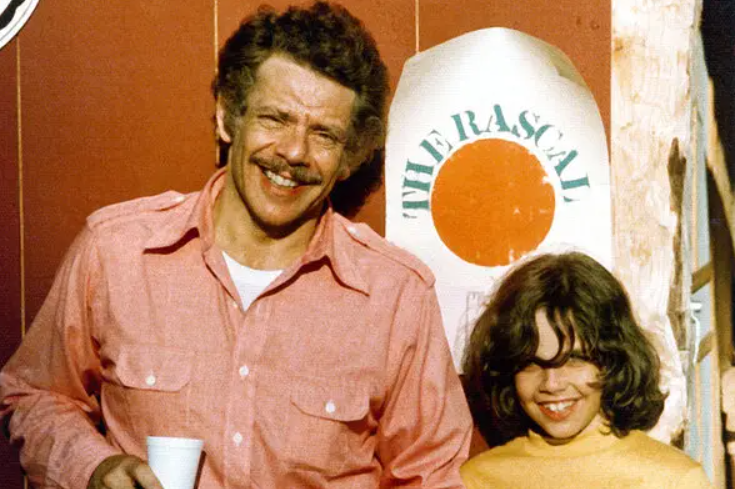
They are Jerry Stiller and Anne Maera, who are incidentally the parents of director/co-producer Ben Stiller. When his father died several years after his mother passed away in 2015, Stiller and his older sister decided to sell their family apartment in New York City, and we see him looking into a bunch of archival records left by his parents. His father often recorded a lot of stuffs here and there throughout his and his wife’s life and career, and the documentary is mainly driven by the excerpts from those numerous recordings and home video clips made by his father.

The early part of the documentary focuses on how Stiller’s parents became quite famous not long after they came across each other in the 1950s. As they got closer to each other and then eventually married in 1954, they came to find the comic potential between their talent and presence. Although Anne wanted to be a serious actress, Jerry instantly saw her natural talent and how she could be a perfect comic counterpart for him, and they quickly distinguished themselves together as an excellent comic duo during next several years. 

When they came to have two kids in the 1960s, they became more determined to have more success for their career, and they eventually got a big break thanks to appearing in the Ed Sullivan Show. While they were certainly very, very, very nervous right before their very first appearance in this legendary American variety TV show, they deftly impressed and entertained millions of audiences out there in the end, and, what do you know, they were frequently invited to the show while enjoying more success to come into their career.

However, there were also a number of issues in their career as well as their private life, and the documentary does not pull any punch on that. As your average perfectionist, Jerry was frequently driven toward being quite fastidious, and that often exasperated Anne, who was more relaxed and natural compared to her husband. While this personality contrast between them was crucial in the success of many of their humorous skits, they could not help but clash a lot with each other, and Stiller and his older sister still remember well those frequent clashes between their parents during their childhood years.

And they also remember how usually their parents were absent in their childhood years due to their busy career. Although Jerry and Anne sometimes let their kids a bit more into their life and profession, they were mostly too occupied with their works, and Stiller, who has also been a busy and consummate entertainer for many years just like his parents, ironically sees a lot of his parents from himself as reflecting more on the considerable distance between him and his own family in the past. When he talks with his wife and two kids respectively, Stiller is touchingly frank about the flawed aspects of his private life, and his family members respond to his honesty with warm recognition and acceptance.

The documentary later delves a bit into how unhappy Jerry and Anne were during their respective early years. While Jerry’s father did not support much of his aspiration to become a good comedian, Anne was deeply traumatized by her mother’s suicide which happened during her childhood years. Nevertheless, both of them really tried hard for being good parents to their kids, and Stiller and his older sister are certainly thankful to their parents’ efforts, though they were sometimes burdened a lot by their parents’ fame and success.

Around the 1980s, Jerry and Anne eventually found how to balance their relationship between life and career as they respectively tried something different outside their comedy team. Anne actively pursued her longtime aspiration to be recognized as a serious actress and the following results were quite rewarding for her (She received a Tony nomination for her supporting performance in the 1993 Broadway production of “Anna Christie”, for instance). Jerry also ventured into a number of movies and TV series alone by himself, and some of you probably remember well his Emmy-nominated guest performance in TV comedy series “Seinfeld”.    

I must point out that “Stiller & Meara: Nothing Is Lost” becomes rather repetitive especially during its second half, and its frequent change in the screen ratio feels a bit too distracting in my trivial opinion. Fortunately, this and several other weak aspects are mostly compensated by its undeniably sincere and respectful attitude. While clearly recognizing and accepting many human flaws of their parents, Stiller, who will incidentally become 60 in the next month, also shows a lot of affection and respect toward his parents, and that is why his documentary works as a wonderful personal tribute to his loving parents. They were indeed talented people besides being quite interesting to observe, and you may want to know more about their considerable achievements after watching this solid documentary.

Posted in Movies | Tagged , , , , , | Leave a comment