Come See Me in the Good Light (2025) ☆☆☆1/2(3.5/4): After a terminal diagnosis

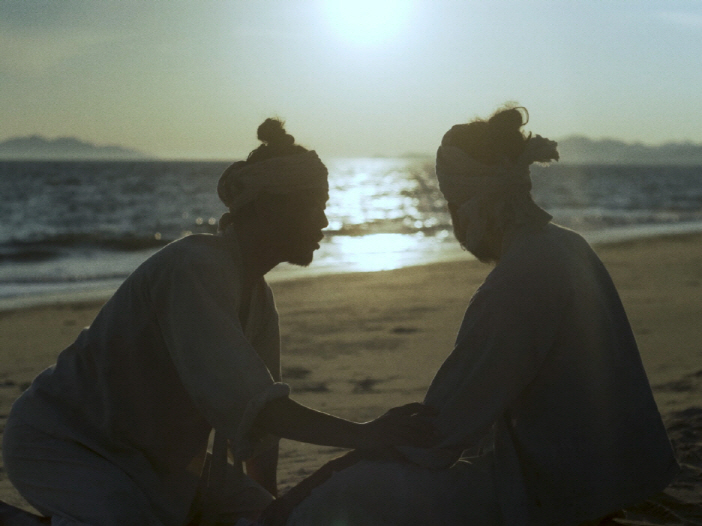
Documentary film “Come See Me in the Good Light”, which was released on Apple TV+ a few days ago, is about one loving couple coping with the impending end of their long relationship due to a terminal illness. As following how they actively try to live together as long as possible during several years, the documentary often touches us with a number of sincere and intimate moments observed from this interesting couple, and it surely earns some tears in the end as handling their powerful love story with a lot of care and respect. 

The couple in question are poet/activist Andrea Gibson and their spouse Megan Falley, and the documentary opens with this couple working a bit on Gibson’s latest poem. As a fellow poet of theirs who is also her spouse’s editor, Falley often functions as the whetstone for Gibson’s creative process, and we are amused a bit as watching how they pull and push each other over some little details on Gibson’s latest work. As Gibson admits later, Falley is usually right in her objective assessment on her spouse’s works, and Gibson respects that even though they cannot help but feel hurt in their ego at times.

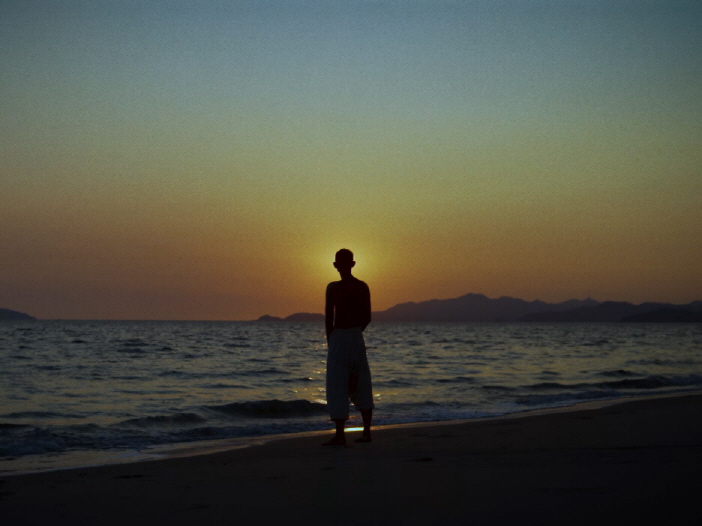
Anyway, the documentary soon goes straight into that big problem in Gibson and Falley’s daily life. In 2021, Gibson was diagnosed with malignant ovarian cancer, and they subsequently went through one surgery and two periods of chemotherapy during next several years. Alas, their cancer returned not long after that, and it is already metastasized around many parts of their body. In other words, they came to have only a few years to live even under the best condition, and that was certainly a devastating news for not only them and Falley but also many of their close friends and colleagues.
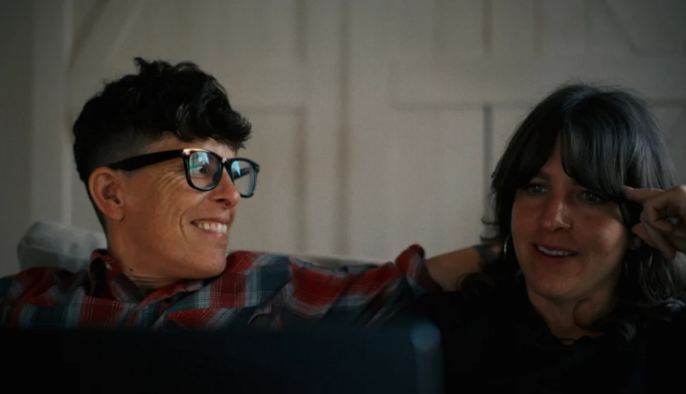
Nevertheless, Gibson and their spouse decided to try more for extending Gibson’s remaining life as long as possible. Besides paying more attention to the physical condition of their body, Gibson also tried one new therapy after another, and Falley, who was almost close to leaving Gibson for some other personal issue between them before Gibson’s terminal illness, was ready to stand by her spouse to the end. Knowing well that they did not have much time between them, Gibson and Falley came to spend more time together in their little residence in Colorado, and there is a genuinely joyful scene where they come to have a little fun dinner talk with an invited friend of theirs. 

Both Falley and Gibson are quite frank about themselves in front of the camera, and they certainly talk a lot about their respective pasts. Although they did not know much about sexual minority people during their childhood and adolescent period, Gibson became more aware that they were different from many other girls around them, and then they became interested in poetry. Although they did not know much about poetry at first, they were eventually drawn to slam poetry, and the following creative activities of theirs helped them a lot in becoming more certain and confident about their sexual identity.

As Gibson became quite prominent as an artist of slam poetry during next several years, they got romantically involved with one person after another, and then there came Falley. As they spent more time together as fellow poets, Gibson found themselves more attracted to Falley, and Falley was rather surprised mainly because she was not so confident about her body. Thanks to her following romance with Gibson, she came to have much more self-esteem than before, and she and Gibson eventually came to live together.
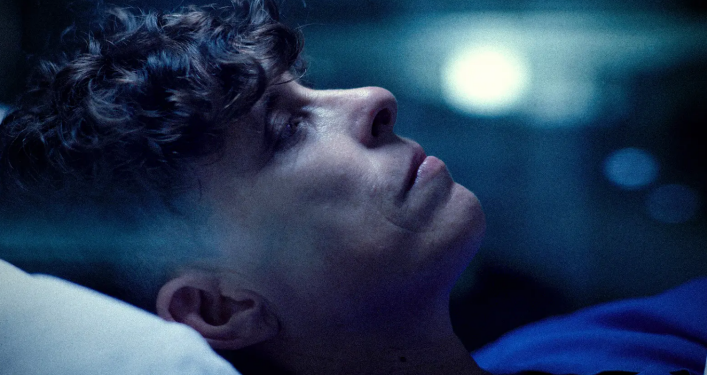
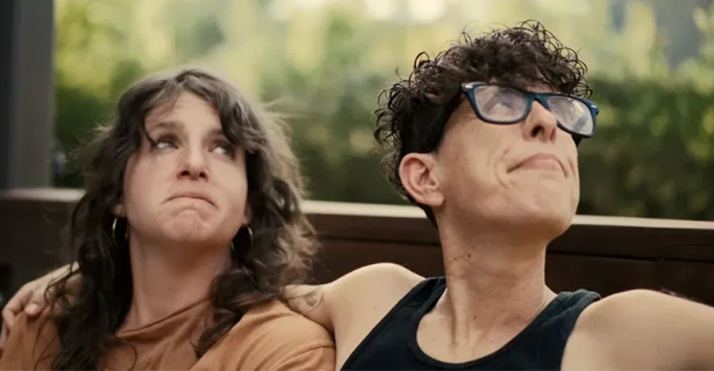
While often conscious of the camera observing them, Gibson and Falley do not hesitate to show more of their personal feelings and thoughts on how their relationship can be ended at any point. Whenever they are about to check the latest medical examination result on Gibson’s body, both Gibson and Falley cannot help but become quite nervous, but that makes them appreciate more of another day to live together for them. They are certainly willing to try anything for more time for them, but then they confront a serious dilemma because the latest therapy for Gibson may seriously affect their ability to speak, and both they and their spouse become conflicted about whether they can actually take this considerable risk or not. 

As going up and down along with Falley and Gibson over its free-flowing narrative, the documentary effortlessly alternates between humor and sadness, and everything in the narrative eventually culminates to when Gibson tries what turns out to be the last slam poetry performance in their life (They sadly died several months after the documentary was premiered at the Sundance Film Festival early in this year, by the way). Although their body is becoming more fragile day by day, Gibson try their best nonetheless, and we see how much their presentation of their several works moves their audiences as well as Falley.        

Overall, “Come See Me in the Good Light”, which deservedly received the Festival Favorite Award at the Sundance Film Festival, is one of the better documentaries of this year, and director/co-producer Ryan White, who previously made a number of acclaimed documentaries including “Ask Dr. Ruth” (2019) and “Good Night Oppy” (2022), did a commendable job of bringing a lot of intimacy and sensitivity to his documentary. In my inconsequential opinion, this is one of the best documentaries of this year, and I sincerely recommend you to check it out as soon as possible.
Posted in Movies | Tagged , , , , , | 2 Comments

The Desert of the Tartars (1976) ☆☆☆(3/4): Waiting for the barbarians

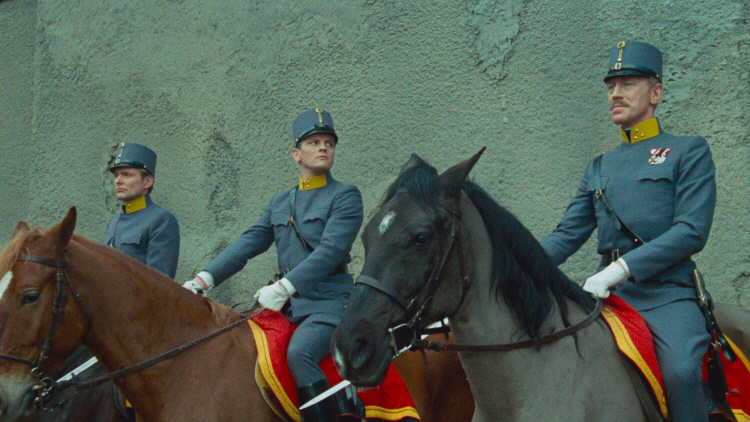
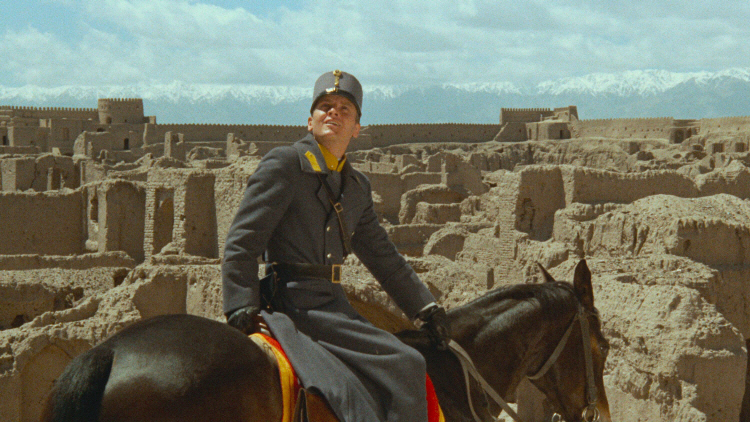
Valerio Zurlini’s 1976 film “The Desert of the Tartars”, which happens to be released in selected arthouse movie theaters in South Korea in this week, is interesting for its odd mix of bleak beauty and dark absurdity. While dryly and slowly illustrating its hero’s increasingly absurd plight, the movie doles out a series of awesome moments of stark beauty unfolded across the screen, and we are often mesmerized by its striking visual qualities, even while observing its hero’s plight from the distance.

The story begins with the seemingly promising status of Lieutenant Drogo (Jacques Perrin), a young officer who is about to take the first step of his military career. He has recently been assigned to an old fortress located in the middle of some remote border area of his country, and we soon see him leaving his hometown after saying goodbye to a close friend of his.

However, things do not look that optimistic to him as he enters that border area in question. When he eventually arrives in the fortress, he is welcomed by the commander of the fortress and several other officers, and then he befriends some of these officers, but it does not take much time for him to see that many of these officers have been stuck there for a long time without much hope or prospect. While they are supposed to be constantly ready for the possible attack from those barbaric Tartar folks beyond the border, there has not been any attack for years, so there is not much possibility for transfer or promotion for the officers in the fortress.

The movie phlegmatically observes how the officers of the fortress have coped with their frustrating state. While the commander simply occupies himself with maintaining the status quo of the fortress, some officers merely wait for any possible way out, and others including Major Matis (Giuliano Gemma) and Captain Ortiz (Max von Sydow) adamantly stick to their codes and rules. At one point, Major Matis coldly orders the killing of an unfortunate soldier who cannot give a password before going inside the fortress, and he is not so pleased at all when the comrades of that dead soldier do a defiant act of protest together.

While he tries his best for finding any possible way out, Lieutenant Drogo only ends up being mired in ennui and despair just like many other officers and soldiers around him. With some generous help from Surgeon Major Rovine (Jean-Louis Trintignant), he gets a chance for transfer later in the story, but then his precious chance is dashed in one way or another, and this makes him all the more despaired and frustrated than before.

Meanwhile, he and the other officers in the fortress notice a series of disturbing signs from the distance. While the commander and many of his officers are not particularly alarmed as casually going through their another uneventful day, Lieutenant Drogo becomes gradually obsessed about one particular sign which may be the prelude for a major attack, but nobody pays much attention to him as the fortress remains in stalemate as usual.

The movie, which was mostly filmed in Arg-e Bam, Iran, frequently looks around the bleakly vast landscapes surrounding the fortress. Cinematographer Luciano Tovoli did a splendid job of filling the screen with a haunting sense of existential emptiness, which is further accentuated by the terse but effective score by Ennio Morricone. While occasionally providing some lyrical touches, Morricone’s score remains as detached as the movie itself, and we become all the more distant to the story and characters as a result.

Nevertheless, we also somehow remain engaged as often amused by the sheer absurdity surrounding Lieutenant Drogo and several other main characters. When one of the officers finally gets an opportunity to leave the fortress, it turns out that he does not know what to do next after spending so many years in the fortress, and we are not so surprised by what eventually occurs next. Around the end of the story, there comes a real good chance for its hero at last, but then the movie throws a morbid irony upon him to our little dark amusement.

As watching the film, I could not help but think of J.M. Coetzee’s 1980 novel “Waiting for the Barbarians”, which is also about a hero trapped by utter absurdity in a remote border region and was incidentally inspired by Greek poet Constantine P. Cavafy’s 1898 poem “Waiting for the Barbarians”. The movie is based on Dino Buzzati’s 1940 novel “The Tartar Steppe”, and I was not so surprised to learn later that Buzzati’s novel was also inspired by Cavafy’s poem. Because I have not read Buzzati’s novel yet, I cannot tell you about how much his novel is actually overlapped with Coetzee’s novel in terms of idea and theme, but I can tell you instead that the mood and texture of the movie is not so far from what I felt as reading Coetzee’s novel a few years ago. 

 In conclusion, “The Desert of the Tartars”, which was Zurlini’s last film before his death in 1982, may require some patience from you mainly due to its dryly slow storytelling, but it is still a rewarding cinematic experience on the whole. To be frank with you, I did not know anything about the movie or its director at all, so I am glad to get a chance to watch this fascinating work at a local arthouse movie theater today, and now I am willing to explore more of Zurlini’s rather obscure filmmaking career.

Posted in Movies | Tagged , , | Leave a comment

Sprout (2013) ☆☆☆1/2(3.5/4): A little early work by Yoon Ga-eun

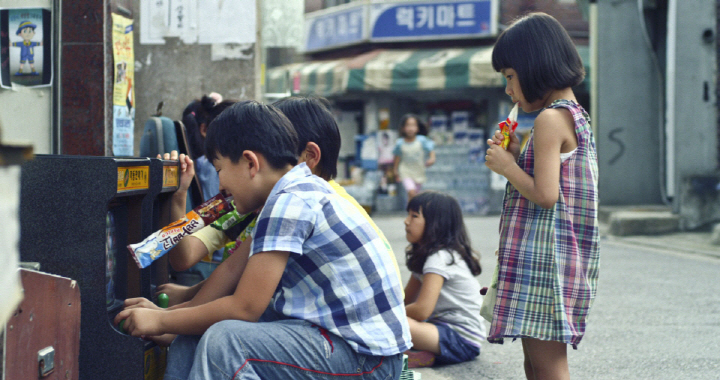
Yoon Ga-eun’s 2013 short film “Sprout”, which happens to be released in selected theaters in South Korean on this Wednesday, is still remarkable in many aspects. This simple but precious piece of work shows that Yoon was already quite a talented filmmaker even before drawing our attention with her excellent first feature film “The World of Us” (2016), and I was impressed again by how deftly she handles the story and characters for generating a considerable amount of emotional impact within less than 20 minutes.

The story mainly revolves around the viewpoint of a little young girl named Bo-ri (Kim Su-an), and the opening scene shows her watching her adult family members including her mother busily preparing for the ancestral offering ceremony for Bo-ri’s deceased Grandfather in the house belonging to one of the adult family members. When it turns out that they forgot to buy bean sprouts, they consider having Bo-ri go outside for buying bean sprouts from a nearby market, but then they decide not to do that because Bo-ri seems too young for the task.

Nevertheless, Bo-ri soon becomes quite serious about buying bean sprouts. She quickly gathers some pocket money, and then she goes outside the house while nobody is looking. Not so surprisingly, she soon finds herself getting lost in the surrounding area, and then she comes to have a series of small and big happenings as wandering from one spot to another.

While watching her rather aimless wandering, we naturally become concerned about this little young girl’s safety, but the overall mood of the film is sweet and tender with a lightweight sense of humor. When she comes across a dog at one point, Bo-ri is understandably afraid of that dog even though it does not look that threatening, and this reminds me of how I was sometimes afraid of dogs when I was very young. I instantly empathized with her little fear again, and I was amused by when she managed to find a way to pass by that dog.

In the middle of the story, Bo-ri gets involved with a bunch of kids around her age, and that is when the story becomes more cheerful. As hanging around with these kids more and more, Bo-ri comes to forget her task for a while, and the film vividly conveys to us her joy and excitement before something happens to make her cry a lot.     

Another funny moment comes from her accidental encounter with several middle-aged people having a little afternoon drinking time together. Not long after she has some drink by mistake, Bo-ri willingly entertains herself as well as them, and I was reminded of what my parents still remember well. When I was just a little toddler in the early 1980s, one of my uncles gave me a bit of drink just for a little amusement in the middle of a family meeting, and, according to my parents, everyone enjoyed my little drunken dancing even though my drinking was not so wholesome to say the least.

During its second half, the movie becomes a bit more serious when Bo-ri follows after one old man after noticing something from him. She eventually goes to his house, and the old man shows her some generosity even though he is a total stranger to her. Just like many other small moments in the film, this looks merely accidental, but then there comes an unexpected moment during the very last scene. The movie does not wisely explain too much as simply sticking to its heroine’s viewpoint as usual, and her little but eventful quest along the story comes to feel all the meaningful than before. 

Everything in the movie depends a lot on the direct and unpretentious acting of its young lead actress. While she is now an adult actress who has appeared in a number of notable South Korean films, Kim Su-an has never surpassed what she achieved so well under Yoon’s skillful direction here in this film, and her terrific acting reminds us again of how deft Yoon has been in case of handling child performers. Like Abbas Kiarostami or Hirokazu Kore-eda, she really knows how to draw natural performances from her young performers, and her latest film “The World of Love” (2025) shows that to us again via several key scenes involved with the little younger brother of its young heroine. 

 In conclusion, “Sprout” remains as an important early point in Yoon’s career, which has steadily advanced since “The World of Us”. When I watched it in 2016, I chose “The World of Us” as the best film of that year without any hesitation, and I was certainly delighted when Yoon impressed me and others more with “The House of Us” (2019), which was one of many wonderful works from South Korean cinema in that year besides, yes, Bong Joon-ho’s “Parasite” (2019). In case of “The World of Love”, Yoon excels herself again to our excitement, and she certainly deserves to be regarded as one of talented new local filmmakers to carry South Korean cinema after Bong and several other master South Korean directors of our time.

By the way, I have observed how many of those emerging South Korean filmmakers including Yoon are female. Considering how male-dominant South Korean cinema has been for many years, these wonderful female artists will certainly bring some fresh air to their field, and I truly believe that the future of South Korean cinema lies on their undeniable talent. Although the current situation is not so bright for them mainly due to the frequent lack of support inside their field, we must show them more support and encouragement in my humble opinion, and then they may keep South Korean cinema alive and exciting during next several decades at least. After all, girls can do anything, can’t they?

Posted in Movies | Tagged , , | Leave a comment

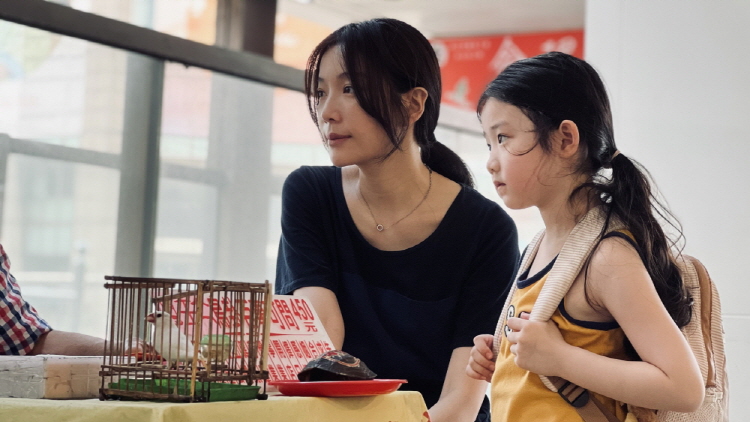
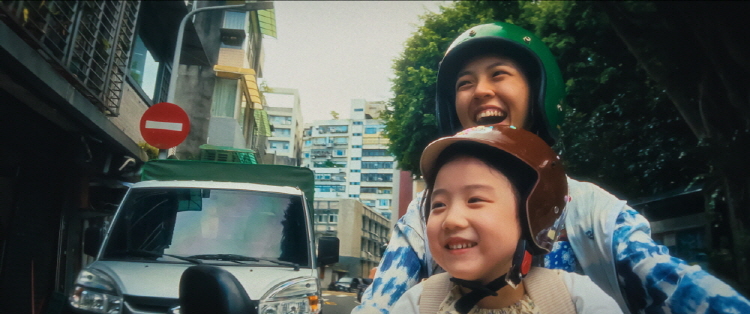
Left-Handed Girl (2025) ☆☆☆1/2(3.5/4): Her left hand

“Left-Handed Girl” is a little but superlative coming-of-drama to admire and cherish. Mostly sticking to the innocent viewpoint of its young heroine, the movie gradually immerses us into her small world along its free-flowing narrative, and it alternatively amuses and touches us as we get to know more about her and several figures around her.

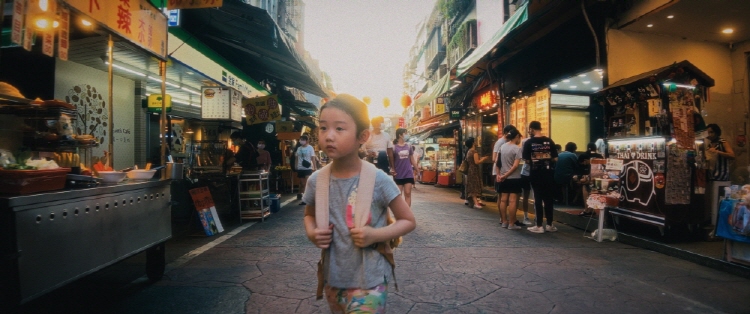
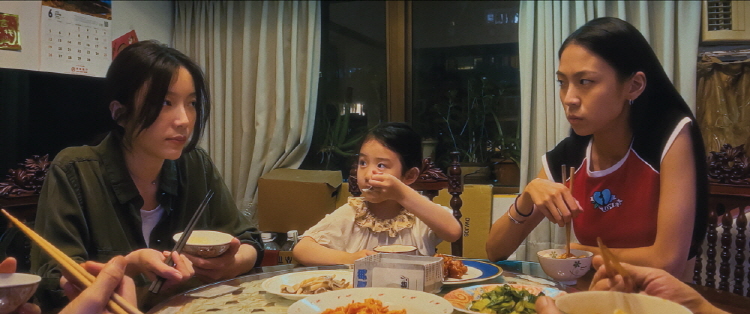
The movie, which is set in Taipei, Taiwan, opens with the arrival of a young girl named I-Jing (Nina Ye) and her two close family members in the city. Her single mother Shu-fen (Janei Tsai) wants to have a new start for not only her but also I-Jing and her older sister I-Ann (Shih-Yuan Ma), but things do not look that optimistic for them to say the least. For example, their residence in the city looks quite stuffy and shabby, and it later turns out that Shu-fen borrows a considerable amount of money from her mother for moving into this residence. She tries to run a small restaurant in a nearby marketplace, but her and her family’s economic situation is not improved a lot despite her hard efforts.

Meanwhile, I-Ann gets a part-time job at a place where she handles an illegal drug business under some seedy dude. While her mother does not ask her too much because they need any kind of income right now, I-Ann does not tell her mother at all about having an affair with her boss behind her back, and we sense a trouble when he later hires some other young woman to assist I-Ann

Understandably, I-Jing does not know well how much her mother and older sister struggle to earn their living day by day, and the movie often observes her doing her little exploration around the marketplace. As the camera of cinematographers Ko-Chin Chen and Tzu-Hao Kao closely follows her, the movie fills the screen with a considerable amount of verisimilitude, and we often feel like a fellow explorer of our little heroine.

And then there comes a little internal conflict for I-Jing. When she is notified that her ex-husband is dying, Shu-Fen decides to see him again regardless of however she feels about him now, so I-Jing comes to spend a few days with Shu-Fen’s parents. The grandmother is fairly nice to I-Jing, but the grandfather is not so interested in befriending her, and, just because of an old superstition, he does not approve that much of her being left-handed.       

When he subsequently tells her about that superstition, I-Jing comes to regard her left hand as something evil, and that prompts her to commit a little transgression. As trying to use her left hand as little as possible, she also begins to steal small stuffs with her left hand here and there in the marketplace, and she comes to believe more of what her grandfather told her.

And we see more of how her mother and older sister are often too occupied with their respective issues to cope with. After her ex-husband eventually dies, Shu-Fen chooses to pay for his funeral just because he has been penniless, even though this choice of hers is going to bring another financial burden upon her. She asks for more financial help from her family members, but her mother and sisters are not so willing to do that just because of a petty reason associated with patriarchy.  

In case of I-Ann, she later comes to realize how unreliable her boss is, and that is followed by several intense moments including a brief but painful scene where she makes a hard choice for herself. Again, she does not tell anything to her mother, and they become more distant to each other without noticing I-Jing’s growing problem. 

While never overlooking the harsh reality surrounding its main characters, the movie also shows some sense of humor at times. In case of one particular scene involved with a pet animal given to I-Jing, some of you may wince a lot, but then you will also probably be tickled a bit by what follows next. When I-Jing decides to steal something very important later in the story, the mood becomes a little more tense, but then there comes a humorous plot turn to amuse you. 

After carefully establishing and then developing its main characters along the story, the movie throws an unexpected dramatic moment of surprise and revelation during its last act, but this does not feel jarring at all, while also making us look back more on what has been shown to us up to that point. In the end, we come to discern more of the complicated relationships among its three main characters, and that makes the very last scent of the film quite poignant.   

Director/co-writer/co-producer Shih-Ching Tsou draws stellar performances from her main cast members. While young actress Nina Ye’s unadorned natural performance holds the center, Janel Tsai and Shih-Yuan Ma have each own moment to shine around Ye, and Brando Huang provides extra warmth and humor as a vivacious shop owner who genuinely cares a lot about Shu-Fen’s economic struggle.  

On the whole, “Left-Handed Girl” is a commendable solo work from Tsou, who has been mainly known for her close collaborations with her co-writer/co-producer/editor Sean Baker in several acclaimed works including “Take Out” (2004). She demonstrates here that she is a talented filmmaker to watch just like Baker, and it will be interesting to see how much she will advance further from this impressive starting point.

Posted in Movies | Tagged , , | 1 Comment

The Crow (1994) ☆☆☆1/2(3.5/4): “It can’t rain all the time”

Alex Proyas’ 1994 film “The Crow” is a darkly compelling comic book movie full of style, mood, and details to be appreciated. While it has been mainly remembered as the last film of its ill-fated lead actor, the movie exudes its palpably moody visual power across the screen even after more than 30 years, and this is an exemplary example of how a comic book movie can be both dark and interesting.

The story is set in Detroit, Michigan, but I must say that the city in the movie looks more like a lovechild between Tim Burton’s “Batman” (1989) and David Fincher’s “Seven” (1995). Under the stark night sky, those shabby buildings in the city often look and feel quite seedy and ominous in their dark appearance, and the gloomy atmosphere surrounding them is further accentuated by the frequent rain poured from the sky.

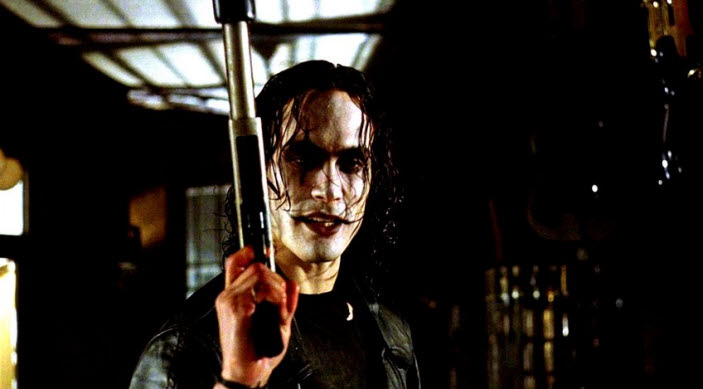
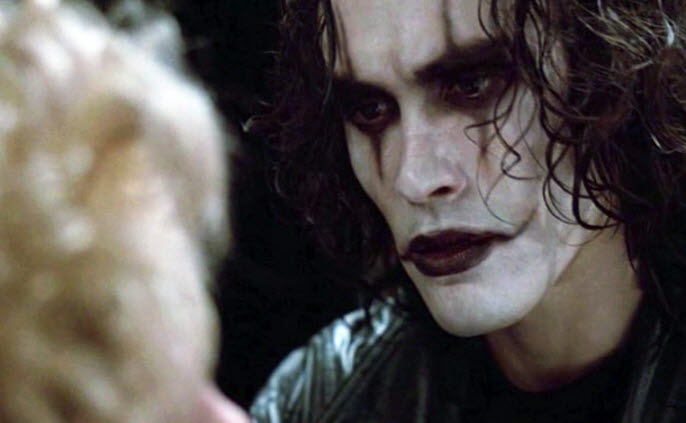
In this rather hellish urban environment riddled with a lot of crime and poverty, there was a young couple who tragically died on the day before their wedding day, which was incidentally Halloween. Just because his fiancée stood against some unfair treatment against them and several other tenants in their apartment building, Eric Draven (Brandon Lee), who was a promising young rock band leader, was brutally murdered along with his fiancée, and their unjust death certainly shocked many of their neighbors including a young girl who was very close to them.

One year later, something unbelievable happens. Via some supernatural power associated with a mysterious crow, Draven returns from death, and we see how he gradually remembers not only who he was but also how he died along with his fiancée. Needless to say, he soon becomes quite vengeful to say the least, and then we soon see him trying a bit of white clownish makeup on his face, which surely makes him look a bit like Batman’s infamous arch-nemesis.   

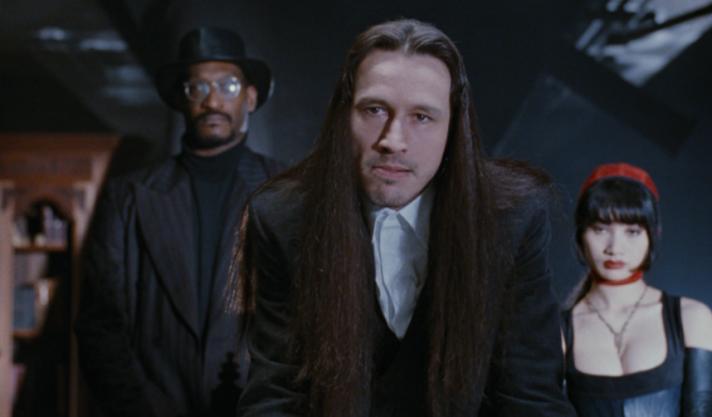
His main targets are those four thugs directly responsible for his and his fiancée’s death. As he eliminates these deplorable criminals one by one thanks to his considerable superpower, Draven comes to draw the attention of Top Dollar (Michael Wincott), a powerful and ruthless crime lord who has virtually had Draven’s neighborhood under his control. It goes without saying that Top Dollar is not very amused by the trouble caused by Draven, and he is certainly quite determined to take care of the latest problem in his area.

Meanwhile, the movie provides a bit of warmth as also focusing on that young girl and Sergeant Albrecht (Ernie Hudson), a veteran police officer who also knew well Draven and his fiancée before their death. After respectively coming to learn about Draven’s miraculous return, both of them get themselves involved more with Draven’s quest for vengeance later in the story, and we come to brace for ourselves when the girl is held as a hostage later in the story (Is this a spoiler?).

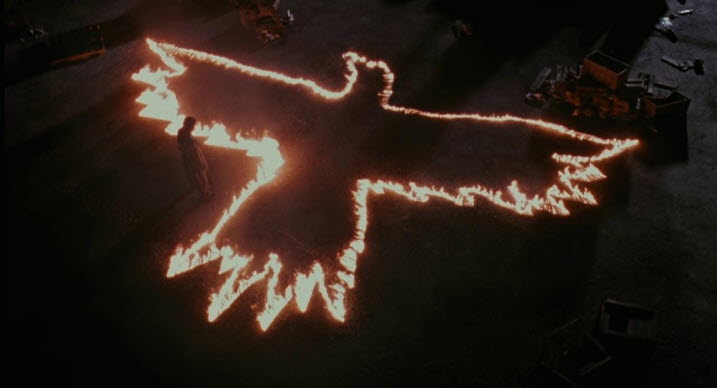
As its main characters roll toward the expected climax, the movie, which is based on the comic book series of the same name by James O’Barr, gets itself more drenched in its strikingly noirish ambiance coupled with some Gothic touches, and cinematographer Dariusz Wolski, who would move onto a series of notable works including Proyas’ very next film “Dark City” (1998), provides a number of impressive moments to linger on your mind for their strong visual qualities. We get thrilled whenever that crow, which often serves as another pair of eyes for Draven along the story, sweeps around many dark buildings in the city, and the movie also provides a fair share of well-executed action scenes to excite us more (Chad Stahelski, who would be more prominent as the director of “John Wick” (2014), works as one of the stunt performers in the film, by the way). In addition, a number of rock songs are effectively utilized during several key scenes in the movie, and these songs are flawlessly mingled with Graeme Revell’s tense electronic score on the soundtrack.   

Because of Bradon Lee’s very unfortunate death on the set which occurred not long before the end of its shooting period, the movie drew a lot of attention even before it was completed. Although Proyas and his crew had to depend on stunt double and digital special effects to a considerable degree, the result still does not look that awkward on the whole, though you may sense some few gaps and holes in the overall narrative flow.

Anyway, Lee, who is incidentally the son of Bruce Lee, demonstrates here that he had enough presence and potential, and he could actually have become a solid action movie actor after this movie. He also did a good job of bringing harrowing poignancy to his character as well as the story, and his charismatic acting comes to function as the darkly pulsating heart of the story.

Just like any other stylish comic book movies, the movie depends a lot on broad but colorful archetypes for generating some humor and fun, and a number of good performers surrounding Lee ably fill their respective spots. Michael Wincott, Jon Polito, Tony Todd, Bai Ling, and Ernie Hudson are certainly dependable as expected, and Wincott, who recently delighted us in Jordan Peele’s “Nope” (2022), has some understated fun with his insidious villain character.

In conclusion, “The Crow” is one of the better comic book movies of the 1990s in addition to being one of a few highlights in Proyas’ filmmaking career. Sadly, he has never surpassed what he achieved so brilliantly in “The Crow” and “Dark City”, but both of them have endured the test of time as wonderful cult films to be savored at least. Although I think is “Dark City” is better as a great film, “The Crow” also deserves some attention, and I am glad to report to you that it becomes timeless enough instead of becoming old and dated.

Posted in Movies | Tagged , , , , | Leave a comment

Bugonia (2025) ☆☆☆(3/4): A nasty and clinical remake by Yorgos Lanthimos

Yorgos Lanthimos’ latest film “Bugonia”, the American remake of South Korean cult film “Save the Green Planet!” (2003), is as nasty and clinical as you can expect from his work. While trying to push its darkly absurd story premise as much as possible, the movie often jolts or shocks us with a fair share of disturbing violence and barbarity, and it is surely another deeply uncomfortable but undeniably distinctive genre piece from Lanthimos.

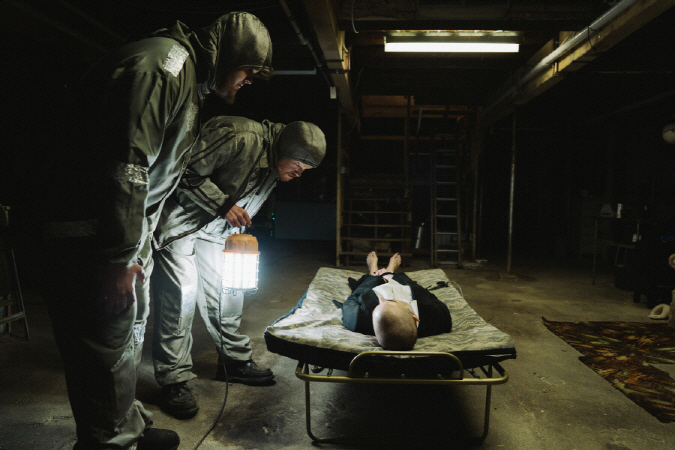
Right from the beginning, the movie does not hide at all how unhinged and unstable its hero is. Teddy Gatz (Jesse Plemons) is a young beekeeper who is also your average conspiracy theory-obsessed paranoid, and the opening part shows him planning a kidnapping plan along with his intellectually-disabled cousin Don (Aidan Delbis). Their target is the female CEO of a major pharmaceutical company, and Gatz has strongly believed that this figure is actually an alien in disguise.

After she is eventually kidnapped and then taken to the basement of Gatz’s house, Michelle Fuller (Emma Stone) soon comes to realize how impossible her situation is. No matter how much she tries to convince Gatz that she is not an alien, Gatz is quite adamant in his loony conviction, and their first conversation is naturally going nowhere, while Don becomes more uncomfortable about what is going on between his cousin and Fuller. He sincerely wants to help his cousin as much as possible, but he is still not so sure about whether his cousin is really right about Fuller.

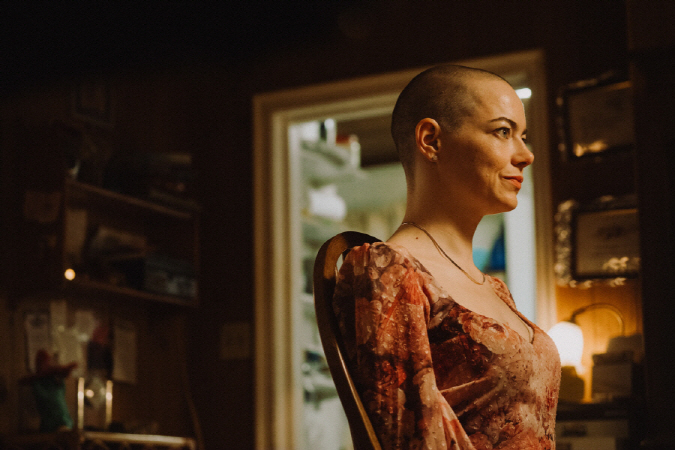
As Gatz goes further with his crazy plan, the movie delivers a number of darkly absurd moments which are also very unnerving. For example, he gets Fuller’s head shaved just because he thinks her alien race can transmit signals via hair. In addition, he also has her body constantly covered with hand cream for lessening her psychic power somehow, and that surely makes her look as white and pale as the vampires in those Twilight flicks.

This is not so far from William Wyler’s classic thriller film “The Collector” (1965) and many other similar flicks out there, but Lanthimos and screenplay writer Will Tracy try to dial down the sexually disturbing aspects of the story setting as much as possible, and they did that with some extra black humor. Sure, it is not so pleasant to watch a woman held in captivity by two men, but Tracy’s screenplay blocks any possibility of sexual tension between Gatz and Fuller right from the start in a rather amusing way. In addition, the situation becomes more ambiguous as there comes some reasonable doubt on whether Gatz is really wrong about Fuller’s identity.

And the movie also lets us sense more of how pathetic and desperate its hero really is. He does reveal a lot about himself, but it is apparent that Gatz’s life has been quite unhappy and miserable for years, and we are not so surprised when it is revealed later that kidnapping Fuller is just his latest drastic attempt to fix his damaged life.

As Gatz’s state of mind goes up and down along its plot, the movie frequently accentuates his warped and isolated reality, and Lanthimos and his crew often have some naughty fun with that. As cinematographer Robbie Ryan’s camera steadily imbues the screen with clinical atmosphere, the score by Jerskin Fendrix sometimes becomes quite overblown as blatantly underlining Gatz’s frequent mood swings, and you may also be amused a bit by the recurring image associated with a certain nutty conspiracy theory.

I must point out that the movie stumbles more than once during its last act as heading to its eventual finale, but I appreciate how it presents the finale with a bit more edginess compared to the original South Korean version. As watching this part, I am reminded again that 1) Lanthimos is sometimes as mean and misanthropic as some other European filmmakers such as Michael Haneke and 2) our species has looked incorrigibly unpleasant and horrible for many centuries despite showing some better sides from time to time.

The movie is supported well by the solid performances from its three main cast members. Jesse Plemons, who previously won the Best Actor award at the Cannes Film Festival thanks to his good performance in Lanthimos’ previous film “Kinds of Kindness” (2023), did an effortless job of balancing his deeply troubled character between pathos and madness, and his excellent acting is matched well by another fearless work from Emma Stone, who has steadily collaborated with Lanthimos since “The Favourite” (2018) and recently won her second Best Actress Oscar for “Poor Things” (2024). Between Stone and Plemons, Aidan Delbis holds his own small spot well, and he is especially effective when Don becomes all the more conflicted about what he really should do later in the story.

In conclusion, “Bugonia” is definitely not something you can casually watch, but I recommend it mainly for its skillful direction and good performance. Although the overall result does not surpass the oddball sensibility of the original South Korean version, I admire how Lanthimos brings his own style and touch to the remake version, and I think he had a fairly productive time as giving us no less than three distinctive works in row during last three years. I heard that he is planning to have a long rest now, and I guess we can all agree that he deserves that.

Posted in Movies | Tagged , , | 2 Comments

1980 Sabuk (2025) ☆☆☆1/2(3.5/4): It’s still painful for them…

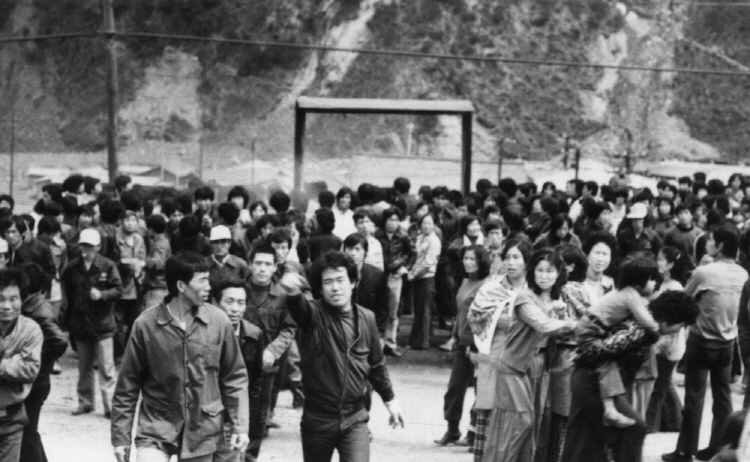
South Korean documentary film “1980 Sabuk” is about one large-scale labor uprising which happened in one little rural coal mine town in April 1980. Although the incident is almost forgotten at present, there are still many people who remember well what happened at that time, and the documentary focuses on their painful past as patiently presenting its big picture of systemic violence and injustice.

The documentary mainly revolves around the personal research on the incident by a friend of director Park Bong-nam. His friend is the son of a coal miner who worked in the big coal mine in Sabuk, Jeongseon County, Gangwon Province during the 1970-80s, and the documentary consists of the testimonies from various interviewees approached by him and Park during the production of the documentary.

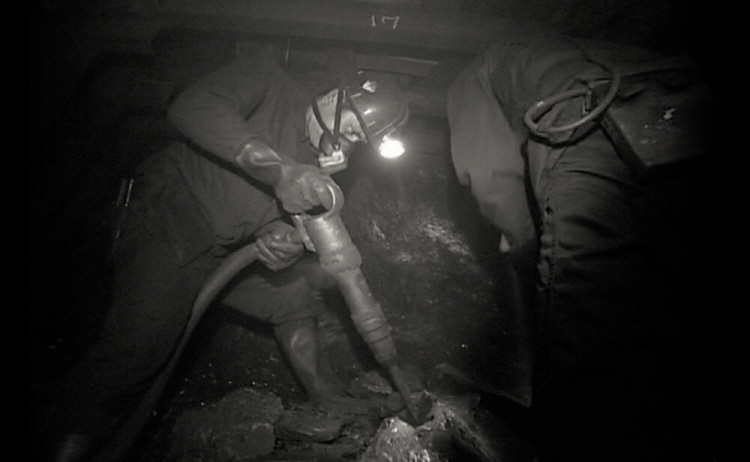
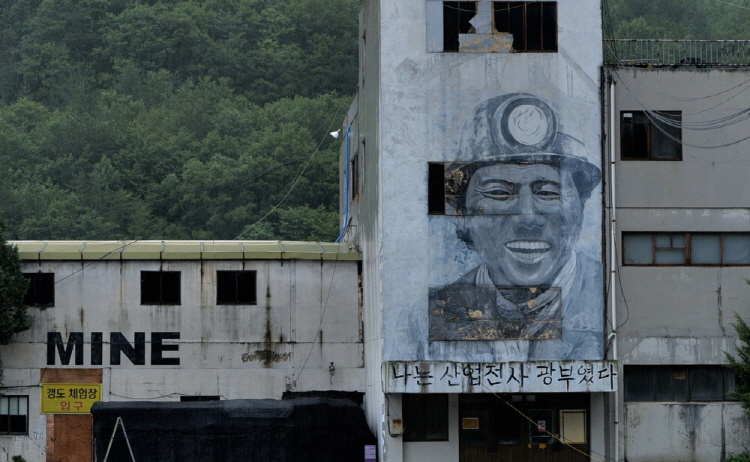
At first, we get some background knowledge on that big coal mine in Sabuk, which was incidentally one of the largest ones in South Korea during its peak period. In this coal mine, around 3,000 coal miners worked day by day, but their working and living conditions were pretty poor to say the least. Besides not getting paid enough for their mostly relentless labor accompanied with a lot of risk and danger, they were mistreated a lot inside and outside their coal mine, but their employer did not do anything to improve their living and working conditions at all, even while earning a lot of money thanks to its greedy labor exploitation.

They did have a local union at that time, but the union and its leader, who had occupied his position for a fairly long time, were not exactly helpful to them, and that made them all the more frustrated and exasperated. In the end, there came a breaking point not long after that union leader got unfairly elected again, and many of the coal miners decided to fight against not only their employer but also the local police as defiantly shutting down their coal mine.

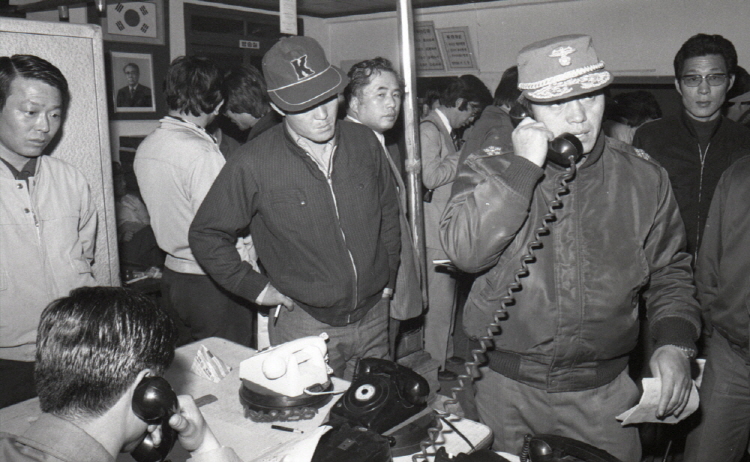
Via several interviewees who worked there at that time, the documentary tells us how volatile their situation was. They and many other coal miners clashed a lot with a bunch of policemen sent there for suppressing the uprising, and the consequence of this clash was quite devastating. As many coal miners violently tried to stop those policemen from entering their coal mine, many of the policemen were seriously injured, and one of them actually died. At one point in the documentary, an old man who was incidentally one of these policemen still vividly remembers that chaotically violent moment, and you can sense how traumatic it still is for him, though, as a guy who was also the son of a coal miner, he also understands well how desperate the coal miners were at that time.

Shortly after this serious clash between the coal miners and the local police, the South Korean government became more willing to squash the uprising by any means necessary, and the timing was not so good for the coal miners to say the least. When President Park Chung-hee was killed in October 1979, it initially seemed that the South Korean society would have a belated chance for democratization after many years of military dictatorship, but there soon came another military dictator who took over the South Korean government via his swift coup d’état a few months later, and this deplorable figure certainly did not welcome the uprising at all.

Thanks to the sincere efforts from the governor of Gangwon Province, the coal miners managed to get their several demands accepted after some negotiation a few days later, and their coal mine soon got back in business, but then, not so surprisingly, there came the brutal retaliation from the local police and the South Korean government. During next several weeks, those soldiers and policemen took away any person possibly associated with the uprising in one way or another, and those arrested coal miners and town people had to endure a lot of barbaric torture inside the local police station.

A number of survivors of this grim and horrific period phlegmatically talk about their respective experiences of torture, and their testimonies are quite harrowing to say the least. As they got cruelly tortured a lot, they were forced to say whatever their torturers wanted before eventually getting imprisoned during several years, and their minds and bodies are still reeling from what they had to endure during that time.

The documentary also pays some attention to many female employees and town people who were also tortured during that time. In case of one old lady, the documentary later presents a devastating testimony video clip of hers, and it is sad to see that she never received any official apology from the South Korean government or the local police before her death in 2019.

And there is also the wife of that union leader, who was unfortunately lynched and then held as a hostage by the coal miners during the uprising. From the coal miners’ viewpoint, her husband was responsible for what caused the uprising to some degree, but it is inarguable that she is also a victim as much as many other coal miners and town people, and you will empathize with her two sons as they bitterly and angrily talk about how much their family was devastated by the uprising and its following consequence. As briefly and sharply pointed out around the end of the documentary, the employer and the South Korean government are the ones truly responsible for all those enormous human pains and torments during the uprising and its aftermath, but neither of them has given any public apology yet even at this point.

On the whole, “1980 Sabuk” is a modest but powerful documentary which did a commendable job of illuminating another hidden part of the South Korean labor history during the late 20th century. Now Sabuk is just a small plain rural town after its coal mine was eventually shut down in 2004, but the documentary vividly shows us how its painful history remains quite alive with the survivors of the uprising even at this point, and that will surely lead you to some serious thoughts after it is over. In short, this is one of the best South Korean documentaries of this year, and I sincerely recommend you not to miss a chance to watch this haunting documentary.

Posted in Movies | Tagged , , , , , , | 1 Comment

Bird (2024) ☆☆☆1/2(3.5/4): One feisty girl and her birdy friend

“Bird” is another raw coming-of-age drama from Andrea Arnold, who previously gave us “Fish Tank” (2008) and “American Honey” (2016). Closely following its young heroine’s small and big struggles, the movie presents a rough but vivid slice of life which engages and then touches us more than expected, and we do not mind at all even when it tries a bit of magic realism later.

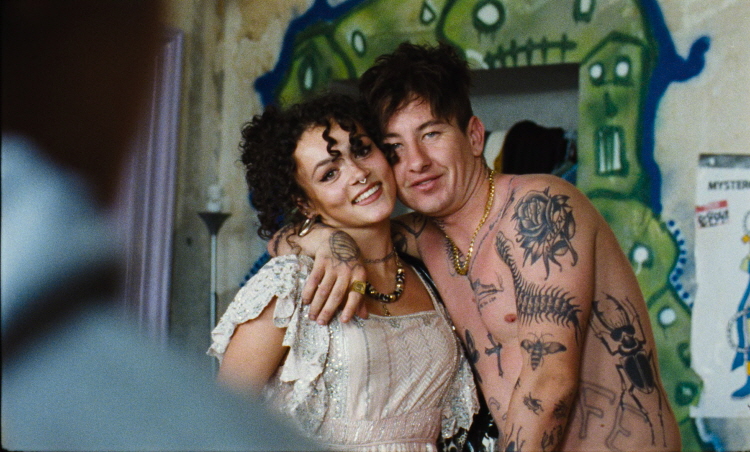
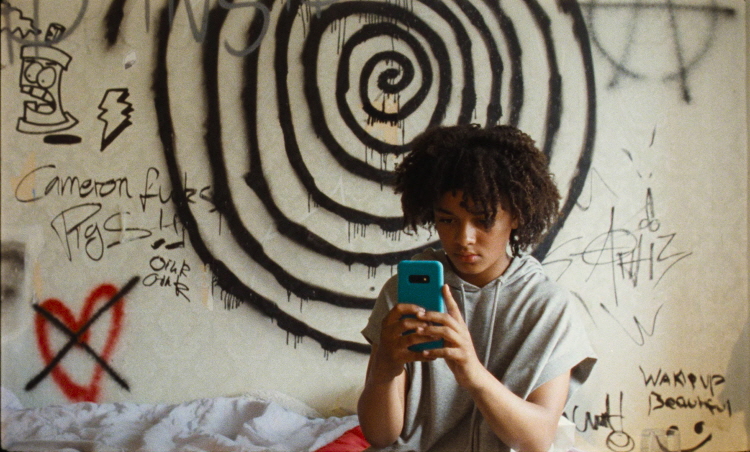
At the beginning, the movie quickly establishes the shabby daily life of Bailey (Nykiya Adams), a 12-year-old girl living with her young father Bug (Barry Keoghan) and her older half-brother Hunter (Jason Buda). While he is your average working-class bum, Bug has a little business plan which looks rather outrageous to say the least, and he is also planning to marry his current girlfriend Kayleigh (Frankie Box), who incidentally comes with her little daughter.

Not so surprisingly, Bailey does not like his father’s upcoming marriage at all, and she clashes a bit with Bug on a little matter involved with his wedding ceremony. Feeling quite suffocated and frustrated with her daily life, she becomes more interested in a little vigilante activity involved with her older half-brother, but Hunter does not let her participate in that activity because, after all, she is still too young for that.

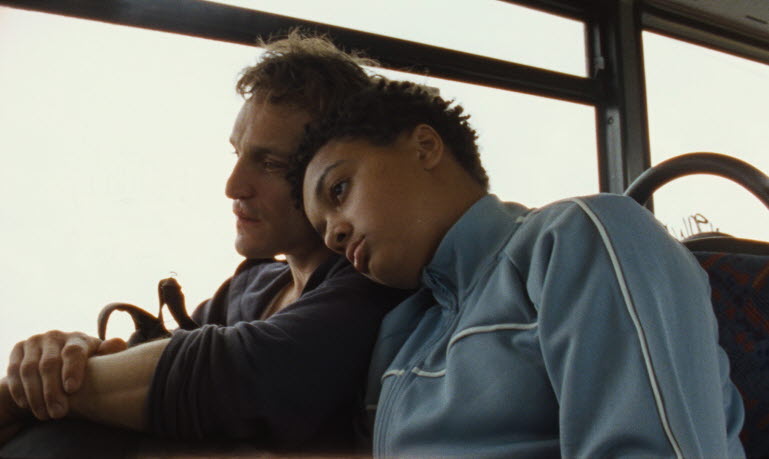
Feeling more alienated and lonelier than before, Baliely comes to spend the following night in a field outside her neighborhood, and that is how she comes to encounter an odd guy who simply introduces himself as “Bird” (Franz Rogowski). He has been looking for his parents he lost many years ago even though he does not remember much about them, and Bailey decides to help this weird guy even though he is a total stranger to her from the start.

As she gets more involved with Bird, Bailey notices more of how strange he is. While he does not talk much about his past except his lost parents, he also shows some weird behaviors which are not so far from what we usually observe from birds, and that makes Baliey all the more curious about him. As a fellow loner, she cannot help but become more sympathetic to him, and Bird seems to appreciate her help and support as revealing more of a wounded child behind his distant attitude.

These two different main characters’ growing relationship certainly feels unconventional. Despite their considerable age gap, they become more aware of something common between them, and Bailey becomes more determined to help her unexpected friend even though she is burdened with several other issues besides her father’s upcoming wedding. When she visits her mother for getting more information about Bird’s parents, she sees how her mother and her half-siblings have been quite miserable due to her mother’s current boyfriend. She seriously considers getting some help from her older half-brother and his fellow vigilantes, but Hunter happens to have a serious issue of his own to deal with right now.

Freely rolling its main characters from one narrative point to another, the movie immerses us more into the shabby working-class environment inhabited by its young heroine and many others around her, and Arnold and her crew members including cinematographer Robbie Ryan, who has steadily collaborated with her since her first feature film “Red Road” (2006), did a commendable job of bringing a lot of palpable sense of life to the film. Although it often feels quite shaky, Ryan’s handheld camera vividly and intimately captures the raw emotional intensity of several key dramatic scenes in the film, and that makes us all the more engaged in our young heroine’s drama.

By the way, you will probably be caught off guard by what happens during its last act due to a sudden dose of magic realism. It may feel a bit too jarring at first, but this unexpected moment somehow works thanks to what has been established so realistically up to that point, and it is also touching to observe how this part leads the story and its young heroine toward a bit of genuine hope and optimism during the following ending.

As usual, Andrea draws an impressive natural performance from her lead actress. Although she did not have any movie acting experience before this film, Nykiya Adams ably holds the center with her unforgettable performance while demonstrating considerable potential here as another new talented actress to watch, and she is also supported well by several good supporting performers. While Frankie Box, Jasmine Jobson, and Jason Buda are well-cast in their respective roles, Barry Keoghan and Franz Rogowski bring extra personality to the movie without overshadowing Adams at all, and both of them remind us again that they are two of the most reliable character actors in our time. Keoghan, to whom I have paid attention since I noticed his small but crucial supporting turn in Yann Demange’s “’71” (2014), effortlessly brings human qualities to his rather childish character, and Rogowski, who has seldom disappointed since his breakthrough turn in Michael Haneke’s “Happy End” (2017), is simply perfect for his role due to his own offbeat qualities.

On the whole, “Bird”, which belatedly came to South Korean theaters as “Bailey and Bird” on last Wednesday, is an excellent coming-of-age drama to be cherished for its vivid realism and several strong performances to watch. While being relatively less edgy than “Fish Tank” and “American Honey”, this is another terrific achievement from Arnold, and you will surely look forward to watching her next film after it is over.

Posted in Movies | Tagged , , | Leave a comment

Isle of Snakes (2023) ☆☆☆(3/4): On a strange and beautiful isle

South Korean independent film “Isle of Snakes”, which was released in local theaters a few years after it was premiered at the 2023 Busan International Film Festival, alternatively baffled and intrigued me. While simply starting with three broad characters stuck in one mysteriously isolated location, the movie often caught me off guard with a series of odd moments, but it also mesmerized me with a lot of mood and beauty to be savored. To be frank with you, I still have no idea on what it is exactly about, but I also admire how it is about nonetheless, and that makes the movie fairly interesting in my humble opinion.

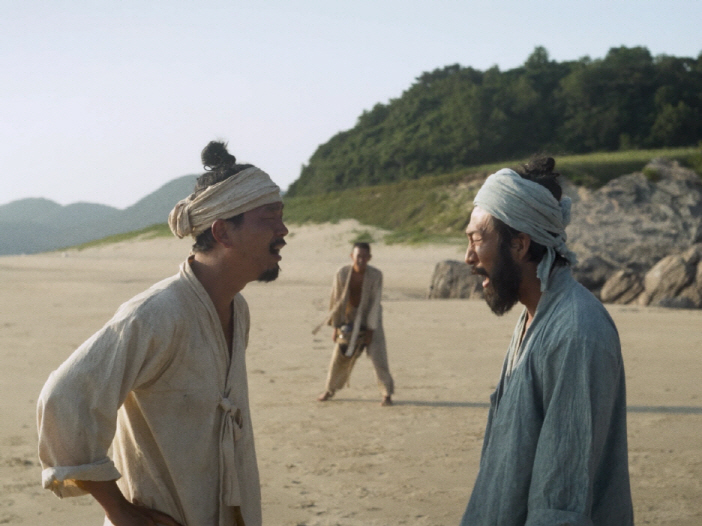
Although it does not show or tell much about its setting, the movie gradually lets us gather its specific period background at the beginning. It is around the middle of the war between Korea and Japan in the late 16th century, and its three main characters are sailors who worked in a warship belonging to the Korean Navy. After their warship was sunken due to a typhoon, they find themselves stranded on a small, uninhabited island, and they have no choice but to wait for any possibility of rescue at least during next several days.

Fortunately for these three able-bodied seamen, the island is not barren at all. While they can get some supply of clean water to drink, they also can find several edible things including mushrooms and fish around the island. At one point in the story, a jar of alcohol is discovered by one of them, and that naturally leads to a little merry night among them.

And we get to know a bit about these three dudes. While Chang-ryong (Kim Ki-tae) is an artilleryman, Mong-hwi (Lee Sang-hoon) is a rower, and Kkeock-soe, who is incidentally the youngest one in the bunch, is sometimes a bit too simple-minded in his behaviors. Needless to say, his foolish deeds annoy both Chang-ryong and Mong-hwi from time to time, and that leads to some amusing comic moments to tickle us.

However, Chang-ryong and Mong-hwi cannot help but become more despaired as being reminded again and again of how hopeless the situation is for them and Kkeock-soe. They keep trying to reach for any chance for rescue day by day, but they only find themselves still struggling in their continuing ennui. As observing how their conversations go nowhere in an increasingly repetitive pattern every day, you may be reminded of Samuel Beckett’s classic absurdist play “Waiting for Godot”. In fact, you will not be that surprised when they later find themselves getting quite confused about how long they have actually been stuck in the island.

Meanwhile, the movie also tries some surreal stuffs to flabbergast you for good reasons. Not long after the skeletal remains of some woman is found by Kkeok-soe, a number of strange things occur around him and his two colleagues, and it looks like they meddled with something disturbing in the island. At first, they are amused a bit just because of how things have been quite uneventful for them, but then they come to feel more that they need to get out of the island as soon as possible.

Although it never clarifies what is exactly hovering over the island, the movie continues to hold our attention with its vivid atmosphere filled with natural beauty to admire. Director/writer Kim Eu-min, who incidentally made a feature film debut here in this film, and his crew fill the screen with numerous stunning visual moments, and their vast scale often emphasizes the increasing sense of isolation surrounding the main characters in the film. Around the point where the story reveals a bit more of whatever is lurking inside the island, the movie goes for more surrealistic mood, and there is even an utterly phantasmagorical sequence clearly inspired by those Korean traditional lacquerwares decorated with mother-of-pearl.

Despite frequently being quite elusive and ambiguous, the movie also shows a surprising amount of lightweight humor along the story – especially in case of several key scenes involved with Kkeok-seo, who somehow reminds me of that weird boy in Cormac McCarthy’s novel “Suttree”. Due to his careless handling of his toenails, something quite weird happens to him later, and you will enjoy how the movie pushes his situation further for more amusement.

The main cast members keep their acting straight while also sounding fairly convincing in their dialogues, which are heavily ridden with old dialects (The movie thankfully provides the subtitle for me and other South Korean audiences, by the way). While Lee Chung-bin is certainly the showiest member in the bunch, Kim Ki-tae and Lee Sang-hoon are equally solid in their respective parts, and the comic chemistry between these three good actors is one of the main reasons why the movie can engage us to the end. As another substantial part of the film, Jeon Hee-hyeon has a little fun during one particular scene where she plays three different figures at once, and her solid performance adds some spookiness to the story.

In conclusion, “Isle of Snakes” is a rather challenging arthouse film, but it is filled with enough style, mood, and humor for keeping us interested up to its finishing point. Even at this point, I am not totally sure about a lot of things in the movie, but it was a fairly interesting experience, and I think it is more successful than “Esper’s Light” (2024), another recent South Korean film which also baffled me a lot. While the latter left me feeling rather empty and hollow in the end, the former left me feeling somehow satisfied and entertained enough, and I am already willing to revisit it for admiring more of how it is about.

Posted in Movies | Tagged , , , | 1 Comment

404 Still Remain (2024) ☆☆☆(3/4): As they share their favorite Japanese pop songs

South Korean independent film “404 Still Remain” made me feel a bit nostalgic for good reasons. Set in early 2000s, this little coming-of-age drama movie is filled with the period details to notice here and there, and I can tell you that it did a fairly good job on the whole. In addition, the emotional struggles of its two main characters resonated a lot with me because I was a repressed gay boy just like them around that time, and I must tell you that there are several moments which came particularly close to me.
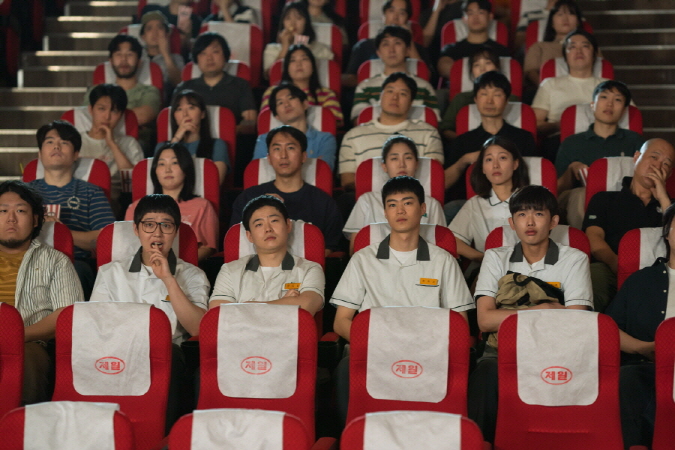
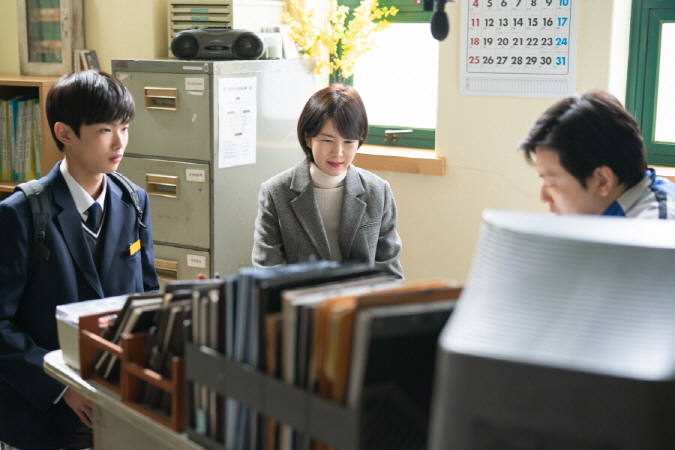
The movie opens with the arrival of a high school student named Kyeong-hwan (Sim Hyun-seo) and his parents in Daegu, one of the big local cities in South Korea. He and his parents moved from some rural town just because of some better business opportunity for both of his parents, and we soon see him starting his first day at his new school.

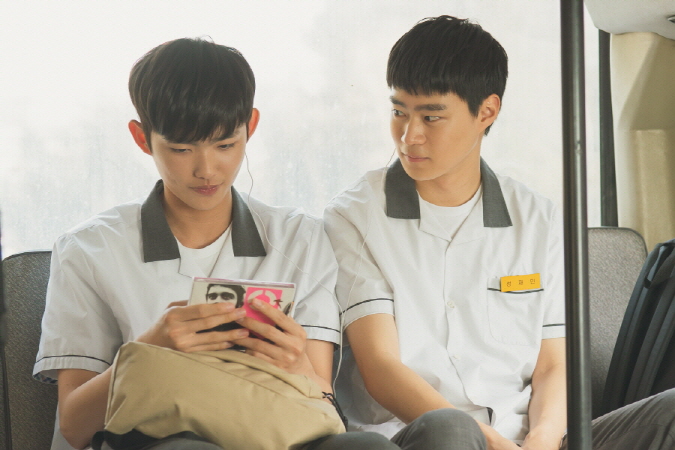
Needless to say, Kyeong-hwan feels quite awkward among his new classmates, but then he receives some help and support from Jae-min (Hyeon Woo-seok), the popular class president who happens to sit right next to him. Mainly thanks to their enthusiasm on Japanese pop songs, they instantly befriend each other, and they come to spend more time with each other as sharing a lot of Japanese pop songs between them via Kyeong-hwan’s MP3 player (Are you old enough to remember what it is, by the way?).

Meanwhile, they and many other classmates of theirs have to prepare a lot for the college entrance examination as usual, and Kyeong-hwan soon comes to distinguish himself a lot as becoming the No.1 student of the class. As a result, he becomes a little more popular in his class than before, and Jae-min does not seem to mind this at all even though he has been frequently pressured by his mother to excel himself.

As getting closer to Jae-min more and more, Kyeong-hwan finds himself quite attracted to Jae-min. It later turns out that he had a little trouble due to his homosexuality before moving to Daegu, and that makes him very hesitant about revealing himself more to Jae-min, but it seems that Jae-min likes Kyeong-hwan more than he can admit on the surface. For example, he often touches Kyeong-hwan a lot, and this looks like a merely friendly gesture, but Kyeong-hwan comes to wonder more about whether Jae-min has actually repressed himself just like he has for years.

While Kyeong-tae remains conflicted about his relationship with Jae-min, the screenplay by director/writer Uhm Ha-neul, who incidentally made a feature film debut here in this film, doles out one episodic moment after another for more plot and character development. We get to know a bit about some of Kyeong-hwan’s classmates, and then we also observe how his parents’ marriage crumbles for some unspecified reason. In the end, his father leaves after the divorce, and his mother has to support her and her son alone by herself, but then there comes a big trouble for her and her fellow merchants in the neighborhood.

It is not much of a spoiler to tell you that Kyeong-hwan eventually shows Jae-min his romantic feelings toward him later in the story, and you will not be surprised that much by the following consequence Kyeong-hwan has to deal with. Jae-min suddenly becomes quite distant to him, and Kyeong-hwan also finds himself frequently bullied and ostracized by many of his classmates once the gossip about his homosexuality is spread around his class.

While there are several heavy-handed moments involved with your typical homophobia, the movie handles Kyeong-hwan’s emotional struggle with enough care and sensitivity at least. There is a little touching scene after Kyeong-hwan finally reveals his homosexuality to his mother, and then there is also a powerful moment as Kyeong-hwan listens to Jae-min’s favorite Japanese pop song and then comes to sense and understand more of whatever Jae-min is holding behind his back. In case of the epilogue part, it feels rather redundant at first, but then there comes an unexpected moment of poignancy which will linger on your mind for a while after the movie is over.

The movie certainly depends a lot on the good chemistry between its two lead performers. Besides looking young enough on the screen, Sim Hyun-seo and Hyeon Woo-seok are believable in their characters’ relationship development along the story, and Shim is particularly harrowing when his character must endure a lot just because of being honest to himself. On the opposite, Hyeon effectively complements his co-star via his more subdued acting, which often speaks volumes even though his character does not seem to signify much on the surface. In case of several substantial supporting performers, Gong Min-jung has a few good scenes to notice as Kyeong-hwan’s struggling mother, and On Joo-wan makes a brief appearance around the end of the story.

In conclusion, “404 Still Remain”, whose title is derived from a certain Internet message with which many of you are quite familiar, is an engaging high school drama to be appreciated for mood, storytelling, and performance. Along with two recent South Korean films “3670” (2025) and “Homeward Bound” (2025), this is another notable South Korean queer film of this year, and I sincerely hope that it will bring some comfort and support to many sexual minority adolescent kids out there in the South Korean society.

Posted in Movies | Tagged , , , , | Leave a comment