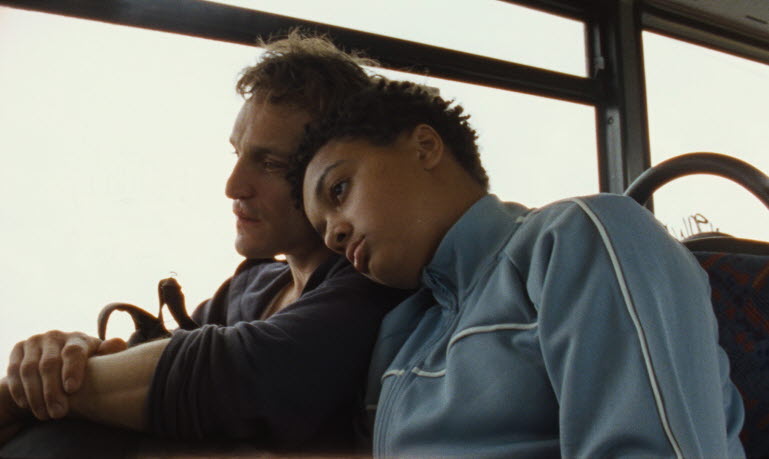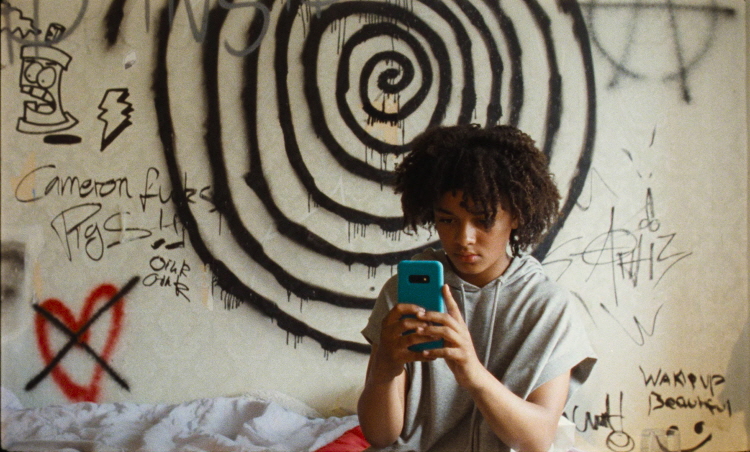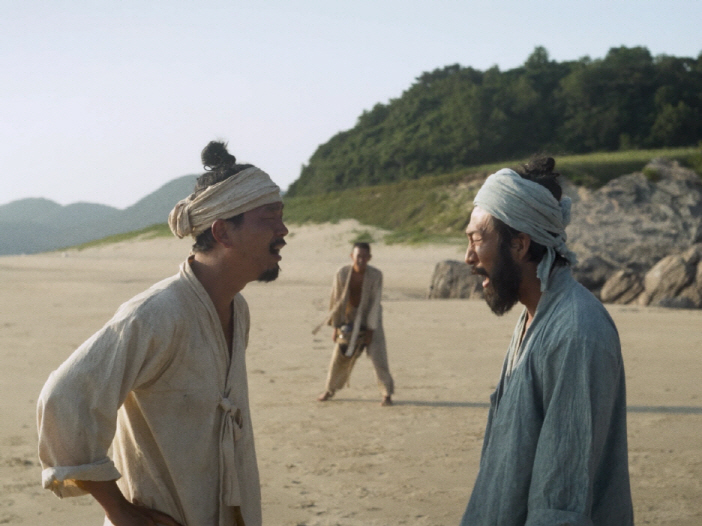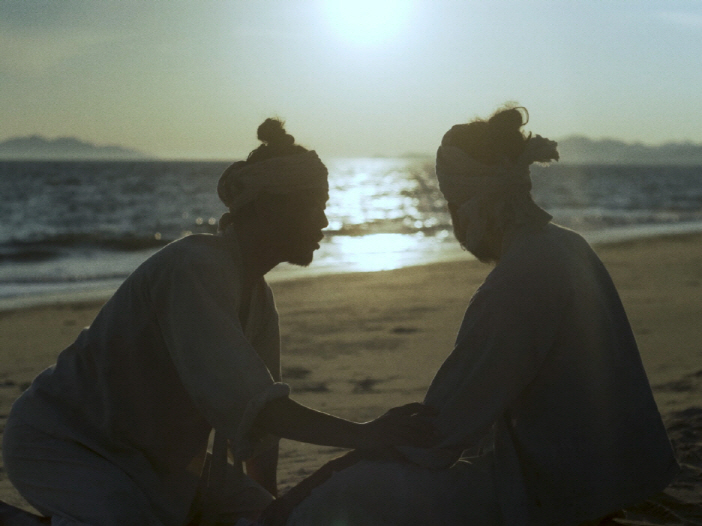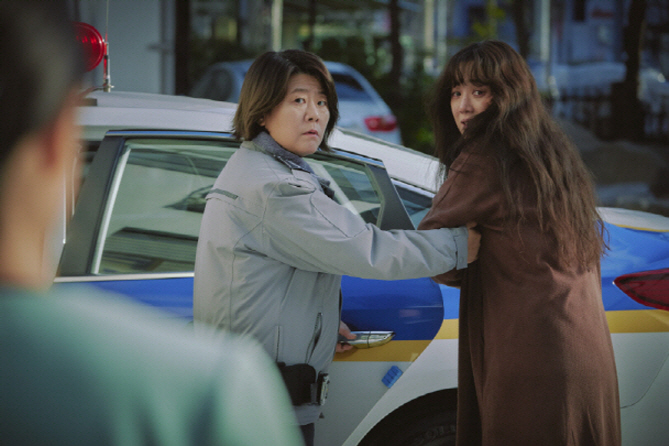
The Perfect Neighbor (2025) ☆☆☆(3/4): One neighborhood dispute

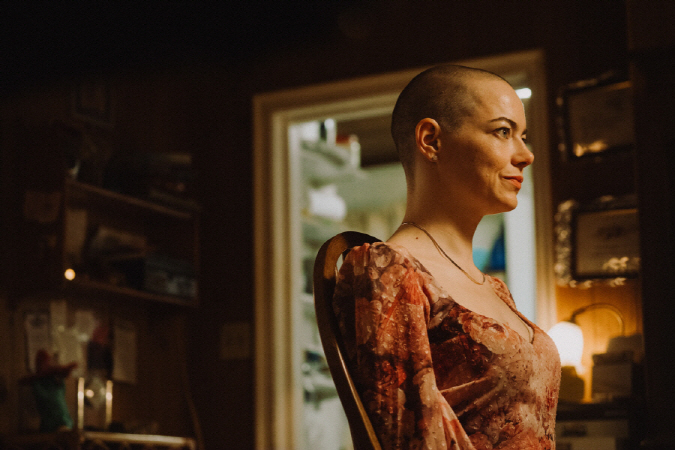
Netflix documentary film “The Perfect Neighbor”, which was incidentally released yesterday, focuses on one small neighborhood dispute which led to a devastating outcome for everyone involved with that. Mainly driven by a series of archival footage clips, it does not make any direct comment on this tragic incident on the surface, but it eventually makes a clear and strong point on how the American legal system failed to prevent that from the beginning, and it will surely make you reflect more on the serious social problems in the American society behind this alarming failure.

During the first half of the documentary, a number of police bodycam footage clips show us what occurred during several months before what happened in one neighborhood of Ocala, Florida on June 2nd, 2023. In that neighborhood, a middle-aged white lady named Susan Lorincz had kept making a fuss just because she was annoyed by a bunch of neighborhood children playing near her residence, and she frequently called the local police as accusing these kids of trespassing on the front yard of her residence.

Needless to say, many other residents in the neighborhood including the kids’ parents disliked Lorincz a lot. Whenever police officers came to neighborhood after receiving her call, they were not so amused to say the least, as reflected by several moments between them and police officers. Understandably, they all expected her to move away to somewhere else sooner or later, but she somehow did not do that all, even though she frequently said that she would leave the neighborhood someday.

While observing more of the neighborhood, we gradually become more aware of the racial aspects of the dispute between Lorincz and many other residents in the neighborhood. Many of her neighbors are black, and it is indirectly implied to us that her increasing hostility toward others in the neighborhood was fueled by the fear driven by her racial prejudice. 

 As Lorincz kept making more troubles and headaches for her neighbors and their kids, the local police did not do much for resolving this accumulating dispute while merely sticking to its neutral position. Those police officers simply listened to both sides and then just went away after giving some warning or advice, and it is clear that they did not take this matter seriously from the very start. As a matter of fact, Lorincz showed some other alarming behaviors besides her ongoing dispute with her neighbors, but they did not arrest her at all while just warning her a bit.

In the end, something really serious happened on that day of June 2023. When Lorincz harassed one of her kids, a young black mother named Ajike “AJ” Shantrell Owens, who already clashed with Lorincz more than once, decided that enough is enough, so she came to confront Lorincz again, but, unfortunately, she was shot and killed by Lorincz shortly after she angrily knocked on the front door of Lorincz’ residence.

What follows next, which is already shown a bit at the beginning, is the most harrowing part of the documentary. Not only Owens’ family members but also many of her neighbors were quite devastated by what had just happened, and their immense shock and sorrow are palpable despite the raw and rough visual qualities of police bodycam footage clips.

Of course, Lorincz was immediately arrested once the local police arrived, but the local police simply let her go after questioning her for a few hours at the police station, and that certainly brought more anger from Owens’ family members and neighbors. In addition, considering a certain state law on self-defense, Lorincz would not go to jail in the end, and it goes without saying that her status as a white woman could increase that possibility.

Because her sister-in-law was one of Owens’ close friends, director/co-producer Geeta Gandbhir and her partner and fellow producer Nikon Kwantu could get close access to the case, and the result is often alternatively compelling and infuriating. While firmly sticking to the calm and phlegmatic attitude of their documentary, Gandbhir, who deservedly received the U.S. Documentary Directing Award when it was shown at the Sundance Film Festival early in this year, and her crew members never lose the human dimensions of their main subject, and they also did a splendid job of assembling various archival footage clips into a vivid picture of social injustice and systemic failure. As many of you know too well, Owens’ case was just one of the numerous similar cases which occurred in the American society during many years, and the documentary makes a brief but sharp point on that right before the end credits which somberly presents Lorincz’s court trial.

 On the whole, “The Perfect Neighbor” may not surprise or shock you that much if you are already familiar with those countless similar cases including the killing of Trayvon Martin in 2012, but it is still worthwhile to watch for how it vividly and thoughtfully presents its main subject while balancing itself well between compassion and objectivity. Sadly, things have only gotten worse in the American society without much sign of change, but I can only hope that people will become more aware of its social/racial issues via such good documentaries like this one.

Posted in Movies | Tagged , , , | 1 Comment

Weapons (2025) ☆☆☆1/2(3.5/4): After they are gone…

“Weapons” is a creepy horror thriller film which works best if you do not know a lot about the story and characters before watching it. After drawing your attention with a substantial amount of creepiness and anxiety on the screen, it gradually builds up the story and characters step by step before eventually revealing the chilling darkness hidden at its center, and the result is quite compelling to watch.

As the opening narration establishes an ominous undertone, we see how one plain suburban neighborhood is disturbed by one mysterious incident. In the middle of one night, no less than 17 children were suddenly disappeared without any trace, and, to everyone’s bafflement, it looked like they simply walked out of their houses and then ran away to somewhere at the exact same time. Because they all happen to be the students of the same class in a local elementary school, their class teacher Justine (Julia Garner) comes to receive a lot of attention as the local police embark on the following investigation, and many of the parents of the missing children including Archer (Josh Brolin) blame and suspect her more and more as the investigation is going nowhere,

Consisting of several chapters, the movie slowly develops the story and characters as shifting from one main character to another, and its first chapter focuses on how things have become quite problematic for Justine since the incident. No matter how much she tries to keep going as usual, she only finds herself facing more unjust blame and accusation despite some protection from the school principal, and her resulting frustration drives her to more alcohol and a few unwise choices including the one involved with James (Alden Ehrenreich), a local police officer who is also her ex-boyfriend. 

While the situation becomes messier for her later, Justine comes to pay more attention to one particular boy in her class, who is incidentally the only one who came to the class when all of the other class students were gone missing at that time. Just because of sensing that this boy seems rather troubled after the incident, Justine sincerely tries to approach to him and his parents even though this can be another unwise choice to make her life worse, and then she comes across something very baffling and unnerving to say the least. 

And the story becomes more interesting around the point where it subsequently shifts onto the viewpoint of Archer, who has become quite fixated on finding whatever really happened to his dear son and the other missing kids. When he happens to notice something odd from a surveillance video clip showing a glimpse of whatever occurred at the time of his son’s disappearance, a certain unlikely theory begins to form in his mind, and he is ready to go for that as his mind struggles more with grief and anxiety.

Patiently fleshing out these two main characters and several other main characters in the story including Paul along its emerging narrative, director/writer/co-producer Zach Cregger, who also composed the score along with Ryan and Hays Holladay, provides a number of striking moments to shock or baffle you. Cinematographer Larkin Seipie steadily fills the screen with a creeping sense of dread and uncertainty, and the deftly efficient editing by Joe Murphy keeps us constantly engaged although the plot often changes its course as hopping from one main character to another.

Around the point when the movie fully presents what has been insidiously lurking inside the story, the mood becomes more intense than before, and the movie also makes us care more about what may happen to several main characters in the end. Once everything is set and ready for its eventual climactic part, the movie goes all the way for a full-throttle horror mode, and it also provides some truly nasty fun during a number of key moments including the one featuring a certain kitchenware.

Cregger draws solid performances from his main cast members. They effectively fill their respective spots in the film, and some of them are quite believable as human characters trying to cope with an inexplicable happening in one way or another. Julia Garner, a wonderful actress who was simply unforgettable in “The Assistant” (2019), ably embodies her character’s accumulating anxiety and frustration along the story, and her edgy acting makes a good contrast with the stoic presence of Josh Brolin, who comes to hold the ground steadily along with Garner later in the story. In case of several other main cast members in the film, Alden Ehrenreich, who has been more prominent since his scene-stealing supporting turn in the Coen Brothers’ “Hail Caesar!” (2016), Austin Abrams, Benedict Wong, and Amy Madigan are also well-cast in their respective supporting parts, and the special mention goes to young performer Cary Christopher, who did a splendid job of conveying to us whatever his character is not so willing to reveal.   

  On the whole, “Weapons” is a top-notch work which deserves to be admired for its superlative mood and stellar performances, and it surely shows that Cregger, who previously drew our attention with “Barbarian” (2022), is a skillful filmmaker who does know how to engage and then thrill us. In short, this is one of the more impressive genre films of this year, and I assure you that you will not be disappointed at all once you give it a chance.

Posted in Movies | Tagged , , | 1 Comment

The Nature Man (2022) ☆☆1/2(2.5/4): Two YouTubers stuck in a remote place

To be frank with you, the most impressive part of South Korean independent film “The Nature Man” is its end credits. You will instantly see that its director did a lot of stuffs during the production of the film, and you will surely admire that even though the movie is a one-joke comedy which goes on a bit too long in my humble opinion.

The story mainly revolves around In-gong (Byun Jae-shin) and Byeong-jin (Jung Yong-hoon), two young YouTubers who are going to some remote rural mountain area at the beginning of the story. The main subject of In-gong’s YouTube channel is haunted places, and he was recently approached by some guy who claimed that he saw ghosts around his house. Although he does not believe this guy’s claim much, In-gong decides to go there anyway mainly because he desperately needs more subscribers and viewers right now, and Byeong-jin accompanies him just because this may also help his own YouTube channel.

However, as they get closer to where that “man of nature” lives, things do not go that well for them in one way or another. As they go deeper into that remote rural mountain area, they become more isolated from the outside world, and then some of the electronic equipments including their smartphones get broken due to a little unfortunate incident. While understandably being quite annoyed, In-gong keeps going anyway, and Byeong-jin has no problem with that at all.

When they finally encounter the man of nature, In-gong and Hyeong-jin are caught off guard a bit by his rather ominous appearance, and that is just one of many things to baffle them. Although he willingly takes them to his little residence and then shows them some hospitality, he is often rather gruff and aggressive for no apparent reason, and he also shows a number of bizarre behaviors. For example, his daily diet is pretty simple on the whole, but then In-gong witnesses him eating something else at night. When the host eventually tells a spooky experience he supposedly had some time ago, In-gong cannot help but wonder whether the host really tells him everything, and that makes the host look more suspicious than before.

In contrast, Byeong-jin simply goes along with this increasingly weird circumstance while casually enjoying more of their host’s hospitality, and this often makes In-gong quite annoyed and frustrated. No matter how much he tries to be nice to the host, those odd behaviors of the host continue to exasperate him in one way or another. Understandably, In-gong becomes a bit paranoid, and he even comes to suspect whether Byeong-jin is actually hiding something behind his back – especially when he sees Byeong-jin cheerfully having some private talk with the host at one point.
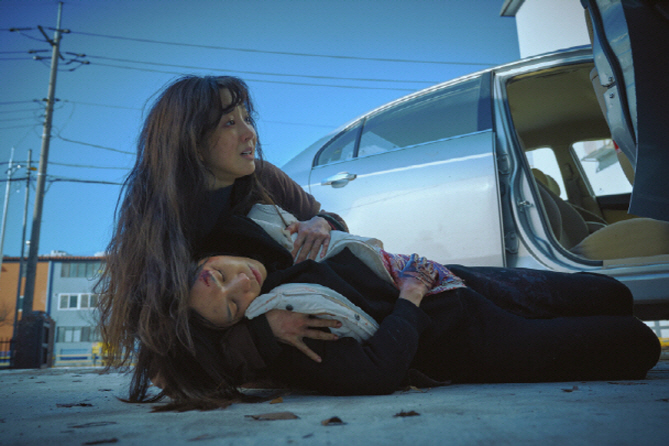
The screenplay by director/writer Noh Yong-seok, who handled many other things in the production of the film besides editing, music, and cinematography, also seems to be merely stuck with its main characters with no apparent direction, but then their situation becomes a little more interesting with an unexpected plot turn during the second half of the film. With more absurdity surrounding him along the story, In-gong eventually tries to get away as soon as possible, but, of course, he only gets stopped by one thing after another, while becoming all the more unnerved and confounded by whatever is going on around him.

However, it was rather hard for me to care about the story and characters. As sensing more of the repetitive aspect of its narrative, I could not help but feel impatient during my viewing, and I was not so particularly surprised by what is eventually revealed around the end of the story. Sure, this neatly explains almost everything in the story, and I also came to have some understanding on what the movie is actually about, but I think it would be more effective if it were delivered by a tighter narrative.

Moreover, the main characters of the film are a little too superficial to engage us. While In-gong and Byeong-jin remain to be your average banal YouTubers even at the end of the story, their host is simply defined by a bunch of strange behaviors without much interest to hold our attention, and we come to observe these three main characters from the distance without much care or attention. Considering how they play their scenes as straight as possible, I am sure that the main cast members of the film are good performers, but their mostly solid efforts are not supported enough on the whole, and that is another disappointing aspect of the movie.

In conclusion, “The Nature Man”, which was recently released in South Korean theaters despite being completed several years ago, is fairly amusing at times, but it is less successful compared to Noh’s first feature film “Daytime Drinking” (2008). Although it is clearly influenced by the works of Hong Sang-soo, that film amused me a lot more than expected, and it looked to me like the starting point of another promising South Korean filmmaker to watch at that time.

Sadly, Noh has been rather dormant during last several years after his second feature film “Intruders” (2013), and “The Nature Man” is not a satisfying comeback work, but I still admire his considerable efforts behind it. He will probably move onto making the next film, and I can only hope that I will be more entertained by whatever will come from him.

Posted in Movies | Tagged , , | Leave a comment

Annie Hall (1977) ☆☆☆1/2(3.5/4): Keaton still shines despite that

Several years ago, one South Korean critic said that it is a shame that we cannot enjoy Woody Allen’s 1977 film “Annie Hall” like we did for many years. Sure, the movie itself is still very witty, funny, and touching in addition to being one of the definite New Yorker comedy films from Allen, but now his iconic public image is not welcomed much in these days because we come to pay more attention to what has always been there in many of his notable works. After the #MeToo movement, I and many others became much more aware of what he allegedly committed behind his back in the past, and most of us consequently have stayed away from his works as much as possible while noticing their indubitable sexual aspects.

However, it is undeniable that Allen gave many of his actresses some of the best moments in their acting career. Yes, regardless of whether she likes it or not, it is really difficult to talk about Mia Farrow’s career without mentioning a number of Allen’s films she appeared, and one of the main pleasures of his films is how a bunch of many different talented actresses ranging from Diane Wiest to Cate Blanchett excel themselves in one way or another.

Some of these wonderful actresses deservedly won an Oscar for their significant contribution to Allen’s films, and one of such cases is Diane Keaton in “Annie Hall” (The movie also won Best Picture, Best Director, and Best Screenplay, by the way). Right from her very first scene in the film, Keaton, who sadly passed away a few days ago, instantly draws our attention with her natural charm and spirited presence, and her iconic performance remains as the best thing in the film even at present.   

As cheerfully bouncing along its non-linear narrative, the movie follows how Alvy Singer, played by Allen, struggles to process his thoughts and feelings on his relationship with his former girlfriend Annie Hall, played by Keaton. As wondering how their relationship was ended, Alvy’s mind naturally goes here and there among the memories of his past as well as his relationship, and it is still amusing to watch several absurd moments from Alvy’s childhood.

Throughout the film, Allen frequently talks directly to us in front of the camera, and I cannot help but observe how that becomes less funny than before. We were once amused a lot by how humorously he wields his neurotic comic persona on the screen, but now he often reminds more of all those allegations against him, and his character’s confusion and anxiety about those colorful young women in the film understandably look rather creepy at times.

However, Keaton constantly brings a lot of life and personality to her character besides that famously quirky attire of hers in the film, and her character comes to us a smart and independent young lady who knows a bit better about the matters of heart compared to her boyfriend. As revisiting the movie at last night, I noticed how much Keaton’s character was depicted through the viewpoint of Allen’s character, but Keaton’s charming performance easily jumps over that inherent storytelling limit, and her character eventually becomes the other half of the story.

Above all, she and Allen effortlessly click well with each other during their several comic key scenes to be savored and appreciated. During one certain scene, the movie suddenly uses subtitles to show what Alvy and Annie respectively think as talking with each other more and more. This may look like a mere attempt for a bit more laugh, but it is enhanced to a considerable degree by the good comic timing between Allen and Keaton, and that is why it is one of the most memorable moments in the film.

I must point out that several other comic moments in the movie including one particular animation scene are rather dated compared to what is wonderfully transpired between Keaton and Allen. These moments belong more to those early comedy films of Allen such as “Take the Money and Run” (1969) and “Bananas” (1971), which are fairly amusing but often feel a bit too thin as mainly driven by gags and jokes instead of story and character. After getting more recognition and praise thanks to “Annie Hall”, Allen wisely moved onto more sophisticated areas, and that led to not only a series of solid comedy films but also several surprisingly serious drama films such as “Interiors” (1978) and “Another Woman” (1986).

Around Allen and Keaton, several notable performers including Tony Roberts, Carol Kane, Shelley Duvall, and Collen Dewhurst come and go as providing some extra amusement to the movie. Christopher Walken, who would advance further with his Oscar-winning supporting turn in Michael Cimino’s “Dear Hunter” (1978), gives a brief but hilariously uncanny moment as Annie’s rather disturbed brother, and you may also notice Jeff Goldblum and Sigourney Weaver when they respectively appeared for a few seconds later in the film.  

In conclusion, “Annie Hall” is still a definite career high point for both Allen and Keaton even though its reputation has been irreversibly tarnished to some degree by the allegations against Allen during last several years. Although she sided with Allen even after the #MeToo movement, it is inarguable that Keaton was one of the greatest American actresses of our time, and I am glad to see that she still shines in “Annie Hall” as before.

Posted in Movies | Tagged , , , | Leave a comment

Reds (1981) ☆☆☆1/2(3.5/4): An epic left-wing period drama by Warren Beatty

While revisiting Warren Beatty’s 1981 film “Reds” at last night, I observed how it stays focused on ideas and emotions behind its grand and ambitious attempt to illustrate the life and career of its real-life left-wing American journalist hero. Yes, there are a number of epic moments to reflect the big historical changes surrounding him, but the movie is ultimately about his complicated relationship with a smart and interesting woman who tried to understand and deal with his left-wing idealism, and it handles their rather messy love story with a lot of care, intelligence, and sensitivity.

The hero of the movie is John Silas “Jack” Reed (1887 ~ 1920), who is incidentally played by Beatty himself. Although he was quite famous for his 1919 book “Ten Days That Shook the World” during his time, he was mostly forgotten when Beatty became interested in making a movie about him in the late 1960s, and it is really amazing that Beatty managed to get the production of this passion project of his green-lighted inside Hollywood around 10 years later, especially considering how the American society came to take a big right turn with the election of President Ronald Reagan in 1980.

The first act of the film establishes Reed’s relationship with Louise Bryant (Diane Keaton), who was quite a progressive liberal lady despite being married to some boring dentist in Oregon, Portland in 1915. At the beginning, Bryant simply encounters Reed as a writer/journalist interested in writing about him and his left-wing ideology, but, what do you know, they click so well with each other as they talk and talk with each other during next several hours. Eventually, Bryant agrees to go to New York City along with Reed, though she makes it quite clear to him from the beginning that she will not be a mere lover to elope with.

Once they come to New York City, Bryant soon finds herself often overwhelmed by the wild and passionate political mood among Reed’s artist and activist friends including Emma Goldman (Maureen Stapleton). In addition, despite being a caring lover, Reed is frequently absent due to his constant journalistic assignments here and there in the country, and that makes her all the more frustrated about their relationship. Even after they eventually move to a quieter place outside the city, Reed cannot help but driven more by his work and left-wing idealism, and this consequently leads to Bryant’s affair with Eugene O’Neill (Jack Nicholson), a legendary playwright who is a close friend of Reed but has been smitten with Bryant right from when he sees her for the first time.

In the end, Bryant decides to go for her own journalist career for herself without Reed’s help or support, but then they meet each other again in 1917 when they are reporting on the final chapter of World War I. When Reed suggests that they should go to Russia for reporting on the ongoing Bolshevik Revolution, Bryant hesitates at first, but she eventually accompanies him, and they come to have the most productive time in their relationship as enthusiastically reporting on one of the biggest historical moments in the early 20th century.

Around that narrative point, the movie immerses us more into the story of Reed and Bryant, and Beatty and his crew members including cinematographer Vittorio Storaro, who deservedly won his second Oscar for this film, throws a series of big and impressive moments which surely take you back to David Lean’s classic film “Doctor Zhivago” (1965). Never losing its personal perspectives, the movie vividly and dramatically conveys to us how the Bolshevik Revolution intrigued and excited many left-wing American figures like Reed during that time, and it also does not overlook the following frustration and disillusionment experienced by Reed and several other figures around him.

Meanwhile, the story is often intercut with the interview clips of a bunch of real-life figures who are simply presented as “the Witnesses”. As the people who knew Reed and Bryant during that time, they all surely have something to tell, and what they willingly tell provides extra insight on Reed, Bryant, and that interesting period surrounding them, while also bringing genuine human poignancy to the story.

Although the screenplay Beatty and his co-writer Trevor Griffiths trudges a bit during its last act, the movie continues to engage us up to its somber but powerful final scene under the excellent direction of Beatty, who won a Best Director Oscar for his movie (The movie received the total 12 nominations at that time, though it lost the Best Picture award to Hugh Hudson’s “Chariots of Fire” (1981)). The movie is certainly one of the high points in his legendary movie career, and it is a bit shame that he did not direct many movies after this remarkable achievement.

Beatty also gives an effective lead performance as the center of the story, and he is complemented well by the equally interesting performance by Diane Keaton, who sadly passed away a few days ago. From the beginning to the end, Beatty and Keaton are convincing as their characters pull or push each other along the story, and their good chemistry on the screen is one of the main reasons why the movie keeps engaging us despite its long running time (195 minutes).

Around himself and Keaton, Beatty assembles a bunch of notable performers to enjoy. Jack Nicholson, who ably dialed down himself here a lot right after his full-throttle manic performance in Stanley Kubrick’s “The Shining” (1980), has several sensitive moments with Keaton, and that led to another Oscar nomination for him. Although her appearance in the film is rather short. Maureen Stapleton quietly and effortlessly steals every moment of hers, and she rightfully garnered a Best Supporting Actress Oscar for that. While Gene Hackman briefly appeared early in the story, several recognizable performers including Edward Herrmann and Paul Sorvino are well-cast in their respective supporting parts.

On the whole, “Reds” may require a bit of patience from you as taking its time for developing its main characters and building up the big historical picture surrounding them, but it is still worthwhile to watch for its many top-notch aspects to be admired and appreciated. It may not be a great film, but it is an epic work to remember, and it deserves some more attention in my humble opinion.

Posted in Movies | Tagged , , , , , , , | Leave a comment

Demon Slayer: Kimetsu No Yaiba Infinity Castle (2025) ☆☆☆(3/4): A lot of actions in the middle of infinity

Japanese animation feature film “Demon Slayer: Kimetsu No Yaiba Infinity Castle”, which is still being shown in South Korean theaters despite being released in two months ago, keeps things rolling during its rather long running time (155 minutes), and I enjoyed that even though I often struggled to understand the story and characters during its first half. Just like another recent Japanese animation film “Chainsaw Man – The Movie: Rese Arc” (2025), it simply tries to entertain its main target audiences, but you may be entertained by its vivid style and striking action even if you have no background knowledge in advance like me.

The film is a direct sequel to the fourth season of the anime TV series “Demon Slayer: Kimetsu No Yaiba”, which is based on the manga series of the same name by Koyoharu Gotouge. Thanks to the huge popularity of the anime TV series, there also came several feature films such as “Mugen Train (2020)”, “To the Swordsmith Village” (2023), and “To the Hashira Training” (2024) during last several years, and “Demon Slayer: Kimetsu No Yaiba Infinity Castle” is actually the first chapter of the ambitious trilogy project to be completed.

The opening part of the film hurriedly establishes what happens not long after the end of the fourth season of the anime TV series. Thanks to a very, very, very powerful demonic figure who is the leader of many different demons against which they have been battling, a bunch of demon slayers are thrown into a dangerous area called the Infinity Castle, which is a seemingly infinite and constantly dynamic third-dimension labyrinth of castles and halls.

As these demon slayers, who happen to be divided into several groups as they are separately hurled into the Infinity Castle, try to find a way out in addition to slaying one demon after another, the film busily juggles several narrative lines before eventually focusing on the three different conflicts. The first one is associated with a smiling but fearsome demon, and his opposing female demon slayer certainly comes to test her limit to the end, while not only fighting against this demon but also dealing with some personal issues inside her mind. As their dynamic fight is continued, the film often tells and shows us whatever is going on in their respective minds within a few seconds, and that may allow you to catch some breath amid a series of busy actions rapidly unfolded between these two opposing figures.

The second conflict is set between two dudes who were brothers but now come to fight with each other as a demon slayer and a demon, and the mood surely becomes melodramatic as these two brothers come to confront their complicated past of love and hate. Although one seems more disadvantaged compared to the other, their fighting skills turn out to be more equal than expected, and it is not much of a spoiler to tell you that this part eventually culminates to when one of them discovers a way to overpower the other at the last minute.

In case of the third conflict, two certain demon slayers confront one of the most powerful demonic figures in the Infinity Castle, who seems to be quite invincible for a good reason. No matter how much these two demon slayers try to defeat him, this mighty dude can always evade or suppress their attacks in advance, and it does not take much time for one of the demon slayers to realize more of how mighty their opponent really is.

Around the point where their desperate fight against their seemingly unbeatable opponent expectedly reaches to a dramatic point, the story becomes surprisingly melodramatic with some genuine poignancy via a series of flashback scenes. I will not go into details for not spoiling any of your entertainment, but I can tell you instead that you may feel a bit sorry for that powerful demonic figure as observing how he let himself fallen into evil and darkness as understandably driven by anger and hate many decades ago.

Because I am a relatively less knowledgeable audience, it was often difficult for me to process and understand its every part, but the film kept holding my attention with a considerable amount of visual power and action nonetheless. Your eyes will be marveled whenever the film looks over the endlessly vast scale of the Infinity Castle, and it also adds some extra intrigue to the story as a trio of young little but very special girls are busily working on drawing the intricate maps of the Infinity Castle for helping those demon slayers trapped inside it. The action scenes in the film are presented with a lot of style and spirit to dazzle you from the beginning, and they are certainly more than enough for exciting you and then leaving you some expectation around the time when it arrives at its predictable cliffhanger ending.

In conclusion, “Demon Slayer: Kimetsu No Yaiba Infinity Castle”, directed by Haruo Sotozaki (He previously directed the anime TV series version as well as “Mugen Train”, by the way), feels inherently incomplete as the opening chapter for its trilogy, but it is fairly entertaining enough to compensate for its several weak aspects including the overlong running time. Thanks to not only this film but also “Chainsaw Man – The Movie: Rese Arc”, Netflix animation film “KPop Demon Hunters” (2025), and South Korean animation film “Exorcism Chronicles: The Beginning” (2024), I and many other South Korean audiences got served with a lot of demon slaying during this year, and I can only hope that we will be entertained again by whatever will come after “Demon Slayer: Kimetsu No Yaiba Infinity Castle”.

Posted in Movies | Tagged , , , | Leave a comment

A House of Dynamite (2025) ☆☆☆1/2 (3.5/4): Nobody can possibly be prepared for this

Kathryn Bigelow’s new film “A House of Dynamite”, which is being shown in South Korean theaters before being released on Netflix two weeks later, is quite tense and disturbing to say the least. Closely and vividly following how its many different characters respond to an unthinkable crisis for which nobody can possibly be prepared, the movie makes a very chilling point on its fearful main subject without any compromise, and the overall result is both riveting and thought-provoking from the beginning to the end.

Consisting of the three chapters, the movie begins with a sudden unexpected emergency for US. When everyone is going through another usual day at a military base in Alaska, an unidentified Intercontinental ballistic missile (ICBM) is suddenly detected in the air, and everyone is quite baffled at first. So far, they have not received any warning or notice about this happening, and the mood becomes more tense once it becomes quite apparent that this unidentified ICBM is heading toward somewhere in US.

Needless to say, this happening has already been reported to the White House Situation Room, and that is followed by an emergency zoom meeting among a number of top-ranking military generals and government officials. While it is quite possible that the missile was launched by one of those enemy countries such as Russia or China, they have no idea on why this is happening, let alone how they should respond right now. When it turns out that the missile is going to strike one of the big major cities in US, they naturally become all the more pressured than before, and time keeps running out for them second by second as before.

In the end, everything depends on the final decision from the US president, but he is also as confused and conflicted as many others serving under him. As some of those top-ranking generals suggest, he may have to authorize an immediate retaliation via those nuclear missiles ready to be launched at any second, but he is also well aware of how tricky the ongoing situation is for his government and country. First, they still do not know anything about which country is really behind this shocking attack, so he must be really careful about the scale of the retaliation, but there is not much time for him and others around him right now, while it only becomes clearer to everyone that he is stuck between two very impossible choices with no possible way out.

Occasionally filling its main characters with some little human details to observe, the movie keeps focusing on how they struggle to do their best for avoiding the worst outcome of their rapidly developing crisis. As some of them bitterly admit, no one has ever imagined such a circumstance like this before, and their reactions and responses may remind you of the chaos and confusion in the US government and its country right after the 9/11 incident in 2001.

And the situation only gets grimmer despite their frantic efforts for getting their situation under control. Their defense system unfortunately fails to stop the incoming missile, and it becomes quite undeniable that their country cannot possibly avoid an unprecedented scale of disaster. Once notified about this, the people at the Federal Emergency Management Agency (FEMA) instantly follow their protocol as expected, but they are also woefully unprepared just like others, and that adds more confusion and chaos to the ongoing circumstance.

Gradually fleshing out the narrative via its multiple viewpoints, the screenplay by writer/co-producer Noah Oppenheim completes its big sobering picture step by step, and Bigelow, who is no stranger to tension and pressure at all as shown from her Oscar-winning film “The Hurt Locker” (2008), and her crew members including cinematographer Barry Ackroyd and editor Kirk Baxter did a splendid job of generating more suspense and verisimilitude along the story. As Ackroyd’s handheld camera steadily focuses on the amounting suspense and pressure on everyone in the story, Baxter’s taut and efficient editing never allows us to get lost and confused amid the multiple plot lines in the film, and the score by Volker Bertelmann adds extra tension to the screen at times.

Furthermore, Bigelow assembles a bunch of talented performers who can instantly fill their respective roles with detail and nuance. A number of more notable performers such as Rebecca Ferguson, Jares Harris, Tracy Letts, Anthony Ramos, Gabriel Basso, Greta Lee, Jason Clarke, Gbenga Akinnagbe, Renée Elise Goldsberry, and Kaitlyn Dever will surely draw some attention from us right from the start, but they all come to function as the plain but crucial parts of the ensemble in one way or another, and Iris Elba, who incidentally played the British Prime minister in recent Amazon Prime movie “Heads of State” (2025) a few months ago, eventually takes the center as the US president while the story is approaching to its inevitable arrival point.
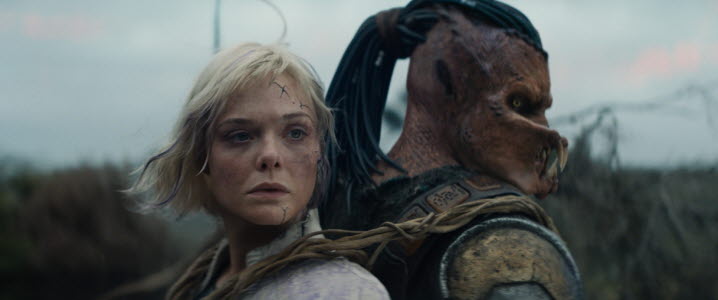
In conclusion, “A House of Dynamite” is an effective thriller film which can unnerve and then chill us a lot as sharply and devastatingly reminding us of how our world is still stuck inside what can be regarded as, yes, a house of dynamite which can be detonated at any chance even at this point. After watching how even fairly competent professionals and politicians can quickly become quite helplessly confused and pressured under such as a grim and terrifying circumstance like that, you will have a lot of understandable concern considering how our global world has been very unstable and volatile thanks to those evil or incompetent politicians during last several years, and I can only tell you that you are not alone at all.
Posted in Movies | Tagged , , , | 1 Comment

Chainsaw Man – The Movie: Reze Arc (2025) ☆☆☆(3/4): A middle chapter packed with enough style and action

I must confess that I am not a main target audience of Japanese animation feature film “Chainsaw Man – The Movie: Reze Arc”, which happened to be released in South Korean theaters in last month. In fact, right before watching the film itself, I only knew that it is the direct sequel to the first season of the anime television series “Chainsaw Man”, which is based on Tatsuki Fujimoto’s popular manga series of the same name.

Although I do not think I wholly understand everything presented during the rather short running time (100 minutes), the film still engaged me nonetheless thanks to its colorfully vibrant mix of style and action. Sure, it took some time for me to absorb and then process the background information of the main characters of the story, and I must point out that the movie seems to spin its wheels at times during the first half. However, there come a series of spectacularly electrifying action sequences to behold during the second half, and that is more than enough to compensate for several notable shortcomings including its rather thin characterization.

The center of the story is a 16-year-old boy named Denji (voiced by Kikunosuke Toya), who has worked as one of the demon hunters under the special branch of the National Police Agency in Japan. As revealed later in the story, Denji is actually a hybrid entity between human and demon, and his heads and limbs can be transformed into chainsaws whenever he has to confront those demonic entities out there.

Anyway, the story begins not long after the end of the first season of the TV series (Please don’t ask me anything, because I have not watched that yet). Denji’s witch supervisor Makima (voiced by Tomori Kusunoki) decides to separate Denji from his demon partner Power (voiced by Fairouz Ai) for a while because Power needs to decrease her power fueled by an excessive amount of blood right now, and Denji is not so amused about being assigned to a shark demon named Beam (voiced by Natsuki Hanae) because, well, his new partner is too eager to accompany and assist him all the time.

When Makima also seems very interested in getting closer to Denji despite officially being his supervisor, Denji cannot possibly say no because he has been smitten with her for some time. During his movie marathon date with Makima, Denji is surprised to discover that his demon heart can actually feel something, and that certainly makes him feel a little better about his peculiar existence at present.
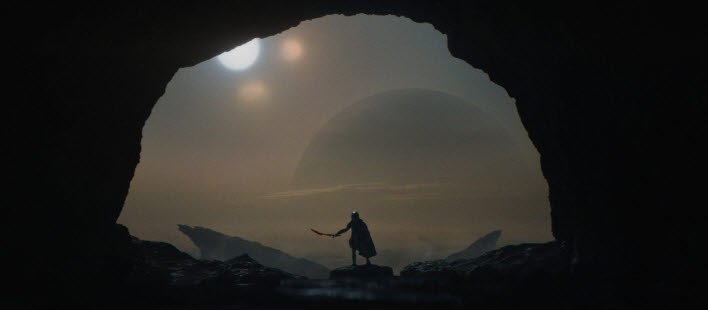
However, he also finds himself quite attracted to a pretty young girl suddenly coming into his life. Her name is Reze (voiced by Reina Ueda), and it seems that she is really interested in getting to know him right from their first encounter at her little workplace. While still liking Makima as before, Denji also cannot help but drawn more to Reze, and we later get a silly but intimate scene where they happen to spend their little private time at the swimming pool of a nearby high school. As a boy who has never had a normal life throughout his whole lifetime, Denji finds some solace and comfort from Reze, and it seems Reze is quite ready to respond more to his growing affection toward her.

Meanwhile, the story also focuses on whatever is going on between that special branch for demon hunting and those powerful and dangerous demons out there. Aki Hayakawa (voiced by Shogo Sakata), who is another close colleague of Denji besides Power and is as gruff and stoic as Keanu Reeves’ character in “Constantine” (2005), happens to be assigned with an entity named Angel Devil (voiced by Maaya Uchida), and they do not get along that well with each other right from the start. Despite her considerable power and ability, Angel Devil is usually aloof and uncooperative without much care or attention, and this certainly exasperates Aki more than once.

These two main plots eventually converge upon the climactic part driven by heaps of chaotic action unfolded across the screen, and that is where the film pulls all the stops simply for captivating and then exhilarating us. I especially like a certain lethal female figure with a deliberately grotesque head which will instantly remind you of “Alien” (1979), and the movie does not disappoint its main target audiences at all once its hero finally reveals his freakish qualities hidden behind his boyish appearance. Some of you may think the finale is a bit too excessive, but the resulting excess of style and action gives us a number of stupefying moments of visual and sound to remember, and I admire how flexible the animation style of the film is during this part. Like Oscar-winning animation film “Spider-Man: Into the Spider-Verse” (2018), it is quite willing to embrace its busy and chaotic energy to the end, and it also shows some little poignancy as arriving at the ending which expectedly opens the door for the upcoming season of the TV series (Please stay until its end credits is over, by the way).

On the whole, “Chainsaw Man – The Movie: Reze Arc”, directed by Tatsuya Yoshihara, will require you to have some background knowledge before watching it, but it is another entertaining animation film of this year besides Netflix animation film “KPop Demon Hunters” (2025), which is also incidentally about demons and some mighty hunters coming after them. I wish it took more time for more depth to engage us in terms of story and characters, but I was constantly impressed by its stylish mood and striking visual moments from throughout its running time, and that is enough for recommendation in my inconsequential opinion.

Posted in Movies | Tagged , , , | 2 Comments

People and Meat (2025) ☆☆1/2(2.5/4): Three naughty old people

South Korean film “People and Meat” works best whenever it is buoyed by the solid chemistry among its three main cast members. These old but wonderful performers embody their respective roles so well that it is disappointing that the movie does not trust them enough while only resorting to blatant melodrama and cheap plot contrivance in the end.

The early part of the film illustrates how its three main characters come across each other on one day. Hyeong-joon (Park Geun-hyung) and Woo-sik (Jang Yong) are two old and poor senior citizens who have earned their meager solitary living via collecting and then selling paper trashes, and they happen to clash with each other due to their territory conflict before they are eventually stopped by Hwa-jin (Ye Soo-jung), an old lady who has supported herself and her only grandson via selling vegetables on street for years.

Anyway, Hyeong-joon later suggests that Woo-sik should have a cup of coffee along with him at his house, and Woo-sik reluctantly agrees. As talking more with each other, these two old dudes decide to have a little lunch together, and then they consider having a bowl of meat and radish soup, though neither of them knows anything about how to cook that. While Woo-sik is a lifelong bachelor, Hyeong-joon only remembers how nice it was to taste a bowl of meat and radish soup cooked by his currently diseased wife. In the end, they seek some help from Hwa-jin, who surely shows them how to cook meat and radish soup well.

After having a nice meal together in Hyeong-joon’s house, Woo-sik suggests that they should go to a meat restaurant. Needless to say, all of them do not have enough money to pay for what they are going to eat at a local meat restaurant, but Woo-sik turns out to have one naughty idea. Once they finish eating meat, they are all going to sneak out of the meat restaurant while no one is paying attention to them, and, what do you know, this turns out to be much easier than Hyeong-joon and Hwa-jin worried at first.

The mood surely becomes a bit more cheerful as these three old people commit their little crime here and there in the city. Needless to say, they never visit the same meat restaurant twice, and they always select very successful targets for feeling less guilty about their criminal activity. While still concerned about getting caught at any chance, Hyeong-joon and Hwa-jin cannot help but feel more alive than before, and that is why they cannot often say no whenever Woo-sik suggests another criminal dinner of theirs.

However, they are still reminded of how things are usually sad and depressing for them and many other old people around their age. At one point, Hyeong-joon goes to an old friend of his after receiving a call from him, and it soon turns out that this friend of his, who has also lived alone by himself just like Hyeong-joon, is preparing to die after feeling so miserable and frustrated with his declining life condition. At the following funeral of this poor old dude, Hyeong-joon and his two friends come to reflect more on how things have been hard and difficult for them mainly due to their ongoing aging, and the movie later becomes quite sentimental as they come to talk more about their respective pasts in the middle of their latest criminal dinner.

Around that narrative point, the screenplay by Lim Na-moo begins to falter more than once as clumsily swinging back and forth between comedy and melodrama. While it is not much of a spoiler to tell you that its three old main characters eventually get caught later in the story, the movie throws unnecessary melodrama after this inevitable moment, and it also feels quite heavy-handed and indecisive when it attempts to make some points on the prejudice against many aging people out there. Yes, its three old main characters deserve some understanding and sympathy just like thousands of marginalized old people in the South Korean society, but the movie makes too much excuse on their undeniably criminal activity in my humble opinion.

In addition, the story also stumbles a lot in case of a subplot involved with Hwa-jin’s grandson. At first, he looks like your average ungrateful kid, but then his attitude toward his grandmother becomes quite different for no apparent reason after the aforementioned melodramatic moment, and we never get to know much about what this lad really thinks and feels about his grandmother even at the end of the story.

At least, the three main cast members of the movie diligently carry the story and their characters to the end. While Park Geun-hyung, who recently gave a good supporting performance in “Picnic” (2023), steadily holds the ground as required, Jang Yong and Ye Soo-jung bring some life and personality to their respective characters, and Ye, who was unforgettable in “An Old Lady” (2019), demonstrates again that she is indeed one of the best senior actresses working in South Korean cinema at present.

On the whole, “People and Meat”, which was somehow shown at the Tribeca Festival early in this year, is not satisfying enough for recommendation, but it is enjoyable to some degree thanks to its three main cast members, and I must point out that It is much better than director Yang Jong-hyeon’s previous film “Kill Me” (2009), which was incidentally one of the worst films I watched during 2009. I would rather recommend “Picnic” and “An Old Lady” instead, but, considering the active reactions from an old couple sitting behind me, the movie may appeal a lot to its target audiences, and I would love to know how my aging parents will respond to it.

Posted in Movies | Tagged , | Leave a comment

Maru (2024) ☆☆☆(3/4): Circle, Circle, Circle…

I still remember when I visited the contemporary art section in the Art Institute of Chicago during one day of April 2010. I must confess that most of those exhibited artworks were a bit too plain and simple to my eyes, and I wondered whether they were profoundly simple or simply profound, though it goes without saying that they were all valued pieces of art.

That interesting experience of mine always comes to my mind whenever I watch any good film about the creation or evaluation of art, and Japanese comedy film “Maru” is one of the recent cases. As leisurely rolling its absurd story promise, the movie has some dry fun with its artist hero’s quirky creative struggles along the story, and I enjoyed that enough even though I struggled to grasp what and how it is about at first. 

At first, we are introduced to a young struggling artist named Sawada (Tsuyoshi Domoto), who has been virtually exploited by some prominent male artist along with several other young artists. Without teaching or helping them at all, that artist dude simply uses the labor of Sawada and the other employees for the production of more artworks from his studio, and, not so surprisingly, he takes all the credits for these manufactured artworks.     

While some of his colleagues naturally express some discontent and exasperation about this impertinent labor exploitation, Sawada does not seem to mind at all. When he happens to get his right arm injured due to a little bicycle accident, he is promptly fired, but he is not so angry or miserable about that, and then he gets employed as a part-time worker in a local convenience store because, well, he needs to earn his meager living as usual.

Sawada lives alone in a small shabby apartment, and we observe how he languidly goes through one day after another when he is not working. Paying attention to his little pet animal from time to time, he mumbles several supposedly meaningful excerpts from some Buddhist books, and that is sometimes disrupted by the sudden loud noises caused by whoever is living right next to his little apartment.

Because his financial status is still difficult despite working at that convenient store, Sawada often sells a number of trivial stuffs inside his apartment, but then he comes to try something different. On one day, he happens to have sort of artistic inspiration via a very tiny happening, and, what do you know, he soon begins to draw a number of very simple paintings, all of which just have only one big black circle drawn on white paper (The title of the movie means “circle” in Japanese, by the way). When he sells these paintings under his name, he does not expect a lot, but, surprise, they are regarded as the profound pieces of (don’t laugh) minimalist Buddhist art once they draw the attention of some prominent art dealer.

As the value of him and his paintings is subsequently skyrocketing in both Japan and the whole global world, Sawada is naturally perplexed. While he does not mind doing whatever his dealer suggests, he still does not know what is exactly happening to him and his life, let alone what really motivated him to draw those very simple paintings. 

While its hero wanders with more doubt and confusion, the movie provides a series of amusing moments to tickle you in one way or another. At one point, Sawada finally befriends his noisy neighbor who is also a struggling artist just like he once was, and his neighbor certainly envies how Sawada attains his ongoing success so easily and quickly. At one point, they have a lunch together in a local restaurant, and it is rather hilarious to see how Sawada’s new friend cannot help but express his petty envy and inferiority complex as Sawada simply listens to him without saying that much.

In his rather passively docile attitude, Sawada usually looks rather distant to us, but we gradually understand and then empathize with his growing artistic struggle, even when we cannot help but amused by his constant bafflement. However, when he finally comes to realize why those simple drawings of his feel so special to many others, the movie becomes a bit more serious along with its hero than before, and what follows next, which incidentally evokes the action painting of Jackson Pollock, makes me realize one really important thing about art. Regardless of whether it is simple or complex or whatever, art is always based on human emotion and spirit, and that is the main reason why those numerous instant artworks by artificial intelligence feel instantly phony and vulgar to many of us. In my humble opinion, there always should be the human agony and ecstasy of creation to be communicated between creators and us (Is this the ultimate purpose of art, isn’t it?), and artificial intelligence will probably never be able to reach to that point unless it truly understands and then experiences our everlasting matters of heart.

On the whole, “Maru”, which is directed/written by Naoko Ogigami, requires a bit of patient at first, but it will gradually intrigue and amuse you while also leading you to some musing on art and creation. In short, this is another solid work from Ogigami after “Riverside Mukolitta” (2021) and “Ripples” (2023), and I will certainly look forward to whatever will come next from this interesting Japanese filmmaker.

Posted in Movies | Tagged , , | Leave a comment