
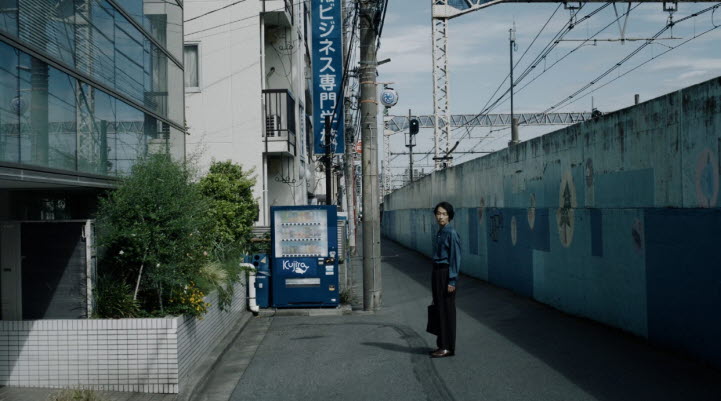
Kiyoshi Kurosawa’s 2024 short film “Chime”, which was released in South Korean theaters in last week, is as baffling and disturbing as you can expect from him. Just like many of his works such as “Cure” (1997) and “Creepy” (2016), it catches us off guard with a sudden shocking disruption of mundane reality, and then we find ourselves constantly confounded and then chilled about what is exactly going on.
At the beginning, we are introduced to Takuji Matsuoka (Mutsuo Yoshioka), a cooking teacher working in Tokyo. When he is teaching a group of students as usual, one of them, a young man named Ichiro (Seiichi Kohinata), begins to look rather disturbed for no apparent reason. This lad later asks Matsuoka whether Matsuoka can also hear a sound of chime from somewhere, but, just because he cannot hear anything at all, Matsuoka simply ignores him without much care.
However, this turns out to be the mere prelude to an incident much more disturbing. When Matsuoka is doing another cooking class some time later, Ichiro looks all the more disturbed than before. He believes that sound of chime is sort of message sent to his brain under some mysterious mind control, and he eventually commits a shocking act of violence, which certainly horrifies Matsuoka and his other students a lot.
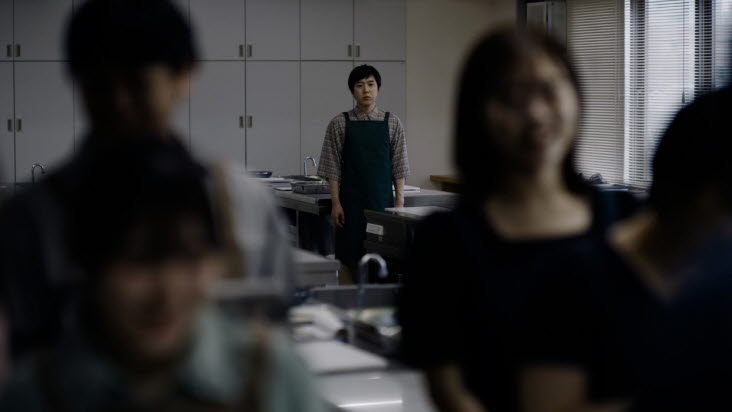
After this point, we observe how Matsuoka’s reality is gradually smeared with the insidious sense of madness. For some unknown reason, that horrible incident ignites something inside him, and we sense more of how much he has been frustrated and dissatisfied with his current status of life. We see him spending some domestic time with his wife and their only son, but there is not much interaction among them. We also see him trying to get hired as the new chef of some prestigious French restaurant, but it is apparent to us that he is not going to be hired at any chance.
In the end, Matsuoka reaches to his own breaking point just like that disturbed student of his did at that time. I will not go into details here, but I can tell you at least that Kurosawa will not disappoint you at all if you admire his works as much as I have. As he sets the stage for what will happen sooner or later on the screen, we become more unsettled step by step, and we are all the more chilled by the clinical attitude of the cinematography by Koichi Furuya, who did a commendable job of imbuing the screen with the gray moodiness reminiscent of the texture of stainless steel kitchen utensils.
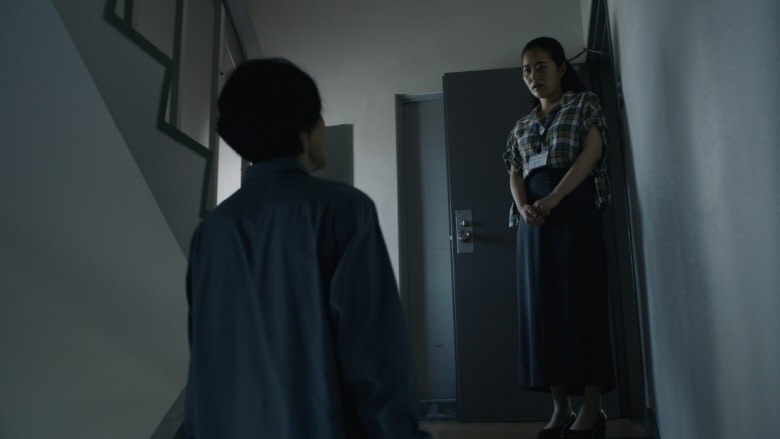
Later in the film, things get all the weirder around Matsuoka, and we naturally come to have more doubt on his increasingly unhinged viewpoint. He constantly feels cornered more and more for not only what he committed but also several other reasons, and he cannot feel safe or comfortable at all even when he is inside his residence. His wife and son become all the more distant from him than before, and the mood becomes a bit more tense when he seems to consider doing something drastic before opening the door of his son’s room at one point later in the story.
Even during the very last scene of the film, Kurosawa does not resort to any easy answer or resolution for his hero, and the film continues to confound us more. He and Furuya deliberately shot this scene on 16mm film, and the resulting grainy texture makes a striking atmosphere contrast with the rest of the film. While this can be interpreted as another shock to the system for its hero, the film remains adamantly ambiguous about whatever he is going to do next after its very last shot, and I was amused a bit to learn later that Kurosawa regards this as a sort of optimistic ending. In the interview clip shown right after the end of the film, he says that Matsuoka eventually becomes much less anxious than before, and that is certainly a lot more optimistic than what I imagined after watching the last shot of the film.
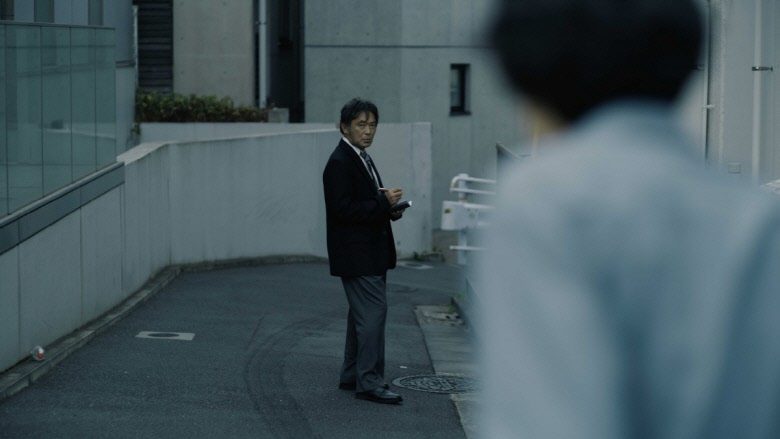
Kurosawa draws effective performances from his cast members. While Mutsuo Yoshioka, who previously played minor roles in some of Kurosawa’s works such as “Cloud” (2024), is subtly disturbing as his character’s reality is slowly imploded with more madness along the story, several other cast members including Hana Amano and Ikkei Watanabe are also solid in their respective supporting parts, and Seiichi Kohinata contributes a lot to the overall tone of the film during his brief but striking appearance.
In conclusion, “Chime” is another typical work from its director, but it will surely satisfy any of his fans and admirers within its short running time (45 minutes). As watching him talking a lot about his work during the following interview clip, I came to appreciate his considerable filmmaking skill more than before, and I also became more interested in watching “Serpent’s Path” (2024), which is another work from him in 2024 and is incidentally the remake of his own 1998 film of the same name.
By the way, after having a very productive year with “Chime”, “Cloud”, and “Serpent’s Path” in 2024, Kurosawa already moved onto making his next film, which is currently going through the post-production period and will be released in Japan around this year. According to him, it is a period drama film filled with samurais, and he will probably surprise us again as he did many times before. After all, how can we possibly expect less than that from him?


 Seongyong's Private Place