
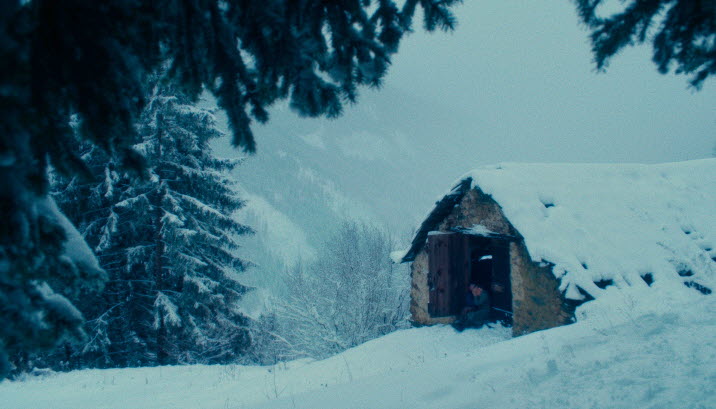
“Vermiglio”, which was selected as the Italian submission to Best International Film Oscar in last year (It was later included in the December shortlist, by the way), is an immersive experience to remember. Slowly and patiently developing the mood and characters along the calm narrative, the movie works as the vivid and realistic presentation of a family life in one small Northern Italian mountain village during the 1940s, and we become more engaged as understanding more of the female repression inside the family at the center of the story.
At first, the movie gradually lets us get to know what has been going on in that village in question. The World War II is being over outside in 1944, and Cesare Graziadei (Tommaso Ragno), a middle-aged man who works as a teacher for young kids as well as illiterate adults in the village, and many other villagers are simply waiting for the end of the war in their rather isolated mountain region, and the opening part of the film somberly illustrates their another cold and snowy winter day of theirs.
And we come to gather that Cesare and the village people have been hiding two deserters for a while. One of these two figures is the son of one of the villagers, and the other is Pietro Riso (Giuseppe De Domenico), a Sicilian lad who saved his fellow deserter not long before they ran away together. Although many of the villagers do not trust him that much just because he is an outsider, Pietro has not caused much trouble as hiding in a barn outside the village, and he has virtually been an open secret among Cesare and many other villagers.
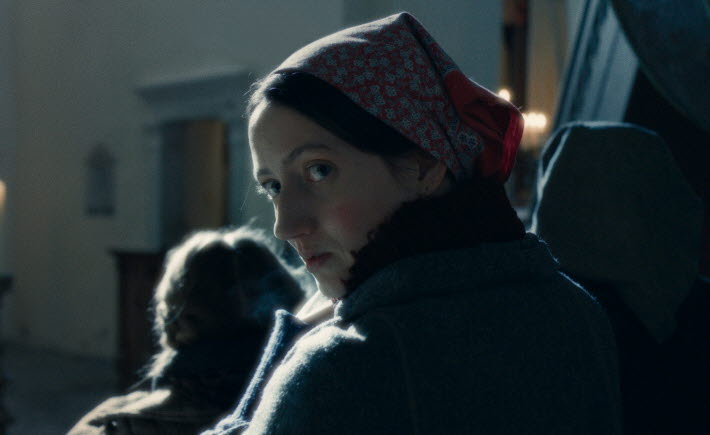
However, not so surprisingly, we soon sense a little trouble to come. As he appears more in the village, Pietro becomes interested in getting closer to one particular beautiful young woman in the village, and that is none other than Lucia (Martina Scrinzi), the eldest daughter of Cesare. They just regard each other at first, but then they get more attracted to each other, and then we get a little amusing moment when Pietro, who is an illiterate trying to learn how to read and write under Cesare’s tutelage, tries to express his love toward Lucia.
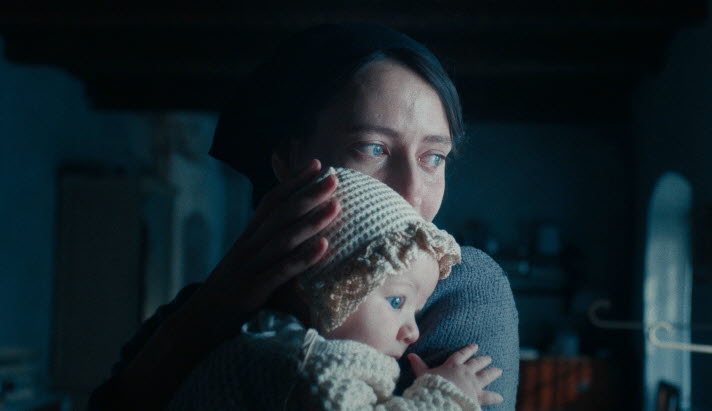
Needless to say, it does not take much time for Cesare and his wife Adele (Roberta Rovelli), who recently gave birth to their ninth child, to see what is going on between Lucia and Pietro. While not particularly pleased about this situation, Cesare is not so angry about that either, mainly because, as a young unmarried female adult, Lucia must leave the family in one way or another, and it looks like to Cesare that Pietro can be a fairly good husband for her.
As days goes by with some seasonal change, we get to know more about Lucia’s family – and how many of them are often unhappy and discontented under their patriarchy system. When Adele is devastated later for being about to lose her young baby due to some unspecified but serious illness, Cesare does not console her much just because the village doctor tells him that she is already pregnant again. While most of Lucia’s younger brothers and sisters are still too young and innocent to sense how their future will be stuck in their village, Ada (Rachele Potrich) and Dino (Patrick Gardner) have been quite frustrated about that, and Ada is particularly displeased when her father does not let her have more education for an understandable but petty reason.
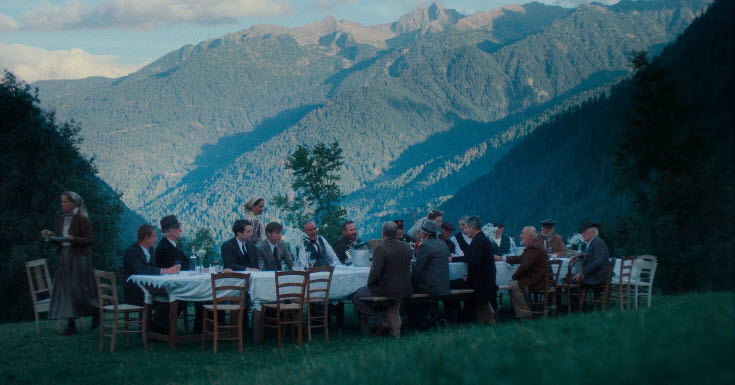
The somber personal drama among the main characters of the film is often accompanied with the crisp presentation of the wide landscapes surrounding them, which often accentuates their seemingly constant isolated life condition. As a matter of fact, they sometimes seem stuck in an older period, and we are surprised a bit when we see a modern bridge and a big bus later in the film. Director/writer/co-producer Maura Delpero, who deservedly received the Grand Jury Prize when the movie was premiered at the Venice International Film Festival in last year, and her cinematographer Mikhail Krichman did a commendable job of bringing a palpable sense of life and people into the screen, and we find ourselves getting more immersed into that while often noticing small and big details on the screen.
It also helps that the main cast members of the film are believable in their respective roles. They all look like they have lived in the background of the movie for years, and we come to care more about some of their characters as these figures go through each own emotional conflict later in the story. We are disgusted more about Cesare’s callous attitude to the women in his family and the hidden hypocrisy behind that, and then we are also saddened more as observing what his wife and daughters have to suffer under their patriarchy system.
In addition, Delpero also handles well her several young performers, who feel quite natural during several key scenes of theirs. Whenever their characters faintly whisper to each other during their bedtime, we observe more of how much they see and hear despite still being young and innocent to what is really going on around them, and that brings a little poignancy to the story.
Overall, “Vermiglio”, which is incidentally Depelro’s second feature film after “Maternal” (2019), is one of those “slow” arthouse film which requires some patience from you at the beginning, but it will engage and then impress you more than expected once you go along with its patient storytelling approach. In short, this is one of the more impressive works I watched during this year, and I think you should give it a chance someday.


 Seongyong's Private Place