
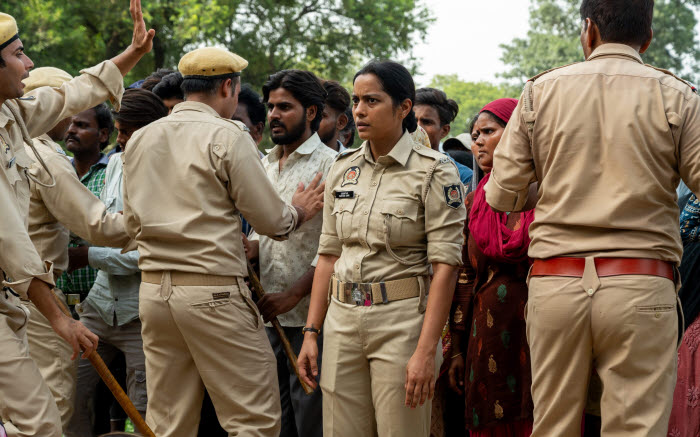
“Santosh”, a Hindi-language film which was incidentally selected as the British entry for Best International Film Oscar in last year (It was subsequently included in the December shortlist, by the way), is a dry but engaging police procedural drama. As following the viewpoint of a young female rookie police officer struggling with many obstacles including systemic corruption and discrimination, the movie vividly and powerfully presents a number of serious social issues in the Indian society, and we gradually get its points as observing the very murky moral situation surrounding its increasingly conflicted heroine.
At first, the movie quickly establishes how things have been quite difficult for Santosh Saini (Shahana Goswami), a young woman living in somewhere in north India. She was once happily married to her husband who worked as a local police officer, but her husband recently got killed when he and other police officers attempted to suppress a big riot, and she has been quite devastated by this sudden death of his.
When she is notified that she will not get any compensation for her husband’s death and also will have to move out from their current residence, Santosh becomes all the more desperate, but there comes a seemingly nice option for her. All she will have to do is inheriting her deceased husband’s job under a process called “compassionate recruitment”, and we soon see her beginning to work as a new police officer in some rural region.
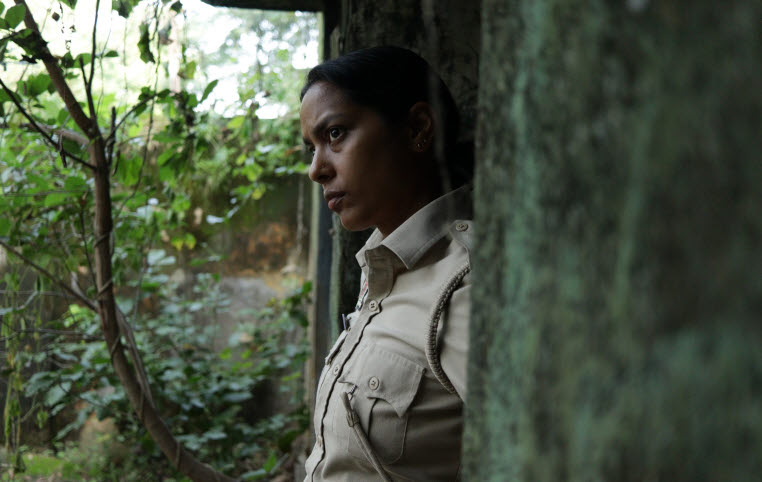
However, not so surprisingly, Santosh soon comes to see how difficult it often is for her to work as a female police officer. For example, her station chief does not care much about whether she can be a good police officer or not, and he does not even hesitate to have her stay in his residence just for helping his wife a bit. While there is one female police officer in the police station, she is not so friendly to Santosh, and Santosh does not approve much of how her female colleague handles their menial cases. For example, when they catch some lad for a minor misdemeanor involved with a girl around his age, that female colleague deliberately humiliates him just for setting an example for other young people, and Santosh cannot do or say anything as a rookie police officer.
Meanwhile, Santosh comes across a desperate request from a guy from local “Dalit” neighborhood (It is a term used for untouchables and outcasts, who represent the lowest stratum of the castes in the Indian subcontinent). A few days ago, his 14-year-old daughter was suddenly disappeared for no apparent reason, but nobody in the police station is particularly willing to help despite some subsequent efforts from Santosh.
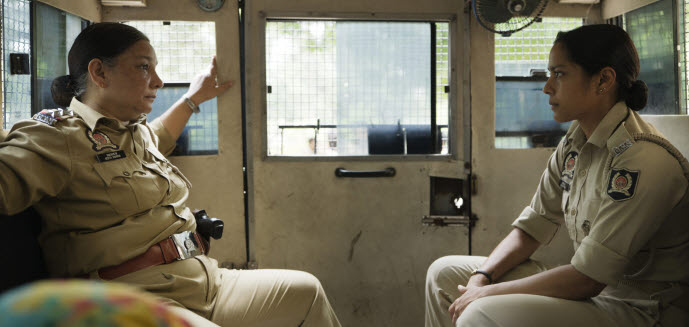
In the end, the situation becomes much more serious when the dead body of that missing girl is eventually found and then leads to a lot of public criticism on how the police mishandled her case from the very beginning. As a result, a new chief comes to the station, and Santosh comes to have some expectation, mainly because the new chief, Geeta Sharma (Sunita Rajwa), is a female police officer who looks experienced enough to handle such a sensitive case like this.
Along with Geeta, Santosh goes further in their ongoing investigation, and it does not take much time for them to focus on a certain figure who looks like a very possible suspect. When it turns out that this figure in question was also disappeared not long after that girl’s death, Santosh becomes more determined to catch this suspect, and Geeta seems to be willing to help and assist her junior as much as possible.

Needless to say, the case turns out to be a bit more complicated than it seemed at first, and the screenplay by director/writer Sandhya Suri, a British-Indian female filmmaker who makes a feature film debut here after making a couple of documentaries and a short film, enters rather murky moral areas along with its heroine as she comes to see more of how problematic her system is in many aspects. While almost everyone in the police station wants to close the case as soon as possible without looking back at all, there is also the pressure from a prominent public figure with considerable power and influence, and many people in that dead girl’s village, who have always been disregarded and discriminated throughout their whole life just because of their caste background, do not trust Santosh and many other police officers at all for good reasons.
In the end, there comes an inevitable point where Santosh gets herself involved in the case much more than she wanted, and this only leads to more conflict and disillusion for her. As her character becomes more unnerved and conflicted along the story, Shahana Goswami’s good performance firmly holds the center as required, and her earnest acting is complemented well by the more seasoned appearance of Sunita Rajwar, who ably suggests whatever her deeply jaded character had to endure and then accept in the past.
In conclusion, “Santosh” feels rather modest at first, but its several quiet but powerful moments will linger on your mind for a while after it is over. It does not surprise us much as we can clearly see where the story is going from the beginning, but it still holds our attention to the end, and that is more than enough for recommendation in my humble opinion.


 Seongyong's Private Place