
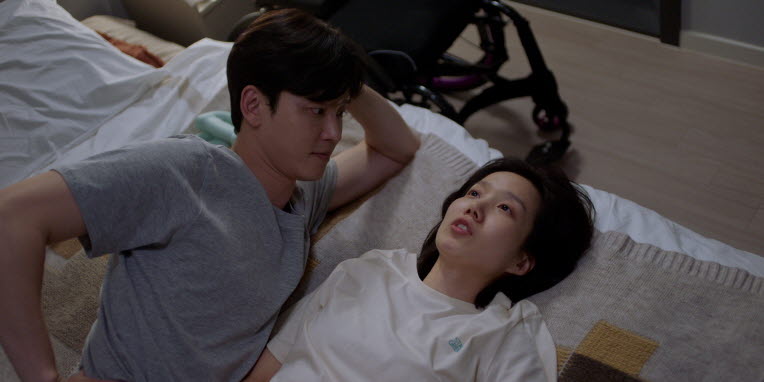
South Korean film “Between the Two of Us” is a sincere but flawed drama about one young pregnant woman with a disability. While it is fairly engaging to observe how much she is anxious and pressured due to her increasingly difficult circumstance, the movie becomes rather contrived for some melodramatic effect during its last act, and that is where I became rather distracted during my viewing.
At first, the movie establishes the loving relationship between Eun-jin (Kim Si-eun) and her husband Ho-seon (Seol Jung-hwan). Around when she was 18 years old, Eun-jin became wheelchair-bound due to some unspecified disability, and she has been quite accustomed to this changed life condition of hers, but she has to deal with many different obstacles in her daily life day by day. Nevertheless, Ho-seon has always stood by her for more than 10 years, and it is touching to see how caring he is to his wife during the opening part.
And then there comes an unexpected change. On one day, Eun-jin is notified that she has been actually pregnant for several weeks, and she becomes conflicted about whether she can go through her ongoing pregnancy and then give birth to her baby. For example, because of her disability, she always takes several different drugs day by day, and she is naturally concerned about whether this will jeopardize the growth and development of her baby.
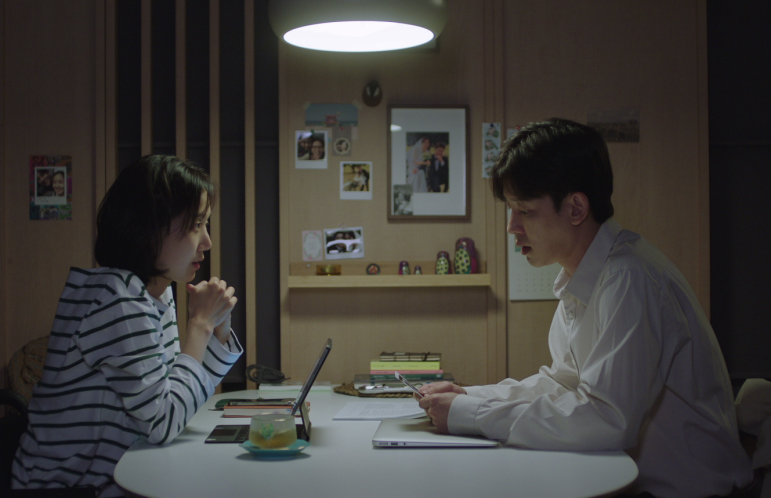
Eun-jin eventually tells everything to her husband, and Ho-seon tells her that he will respect whatever she decides to do, but this only makes Eun-jin more burdened and conflicted. As watching her baby growing in her womb week by week, she seriously begins to consider giving birth to her baby, but she is also worried about many issues she must confront during her pregnancy period. She may have to stop taking some of her routine drugs, and, above all, she will definitely need some medical assistance during her delivery.
In the end, Eun-jin chooses to have a baby instead of having an abortion, and she and her husband become optimistic about having a new family member in their house, but there soon come a series of complications and difficulties. For instance, she frequently wets their bed once she stops using a drug preventing that, and then she also comes to suffer a mild case of urinary tract infection. Although she knew well from the beginning that she is bound to have these and many other problems to cope with, she still cannot help but become more uncertain and anxious about having a baby, but her baby has already grown up to a considerable degree, and this makes her all the more hesitating.
In addition, we see how this increasingly burdening situation of hers affects not only Eun-jin but also her relationship with her husband more and more. Eun-jin has recently been trying to write some important article for some public association for the disabled, but she finds herself against writer’s block as her mind is often more occupied with her ongoing pregnancy. In case of her husband, he is ready to support his wife as much as possible as before, but then he becomes quite busy as trying to earn more money for paying all those medical bills involved with her pregnancy.
At least, there later comes some unexpected support and consolation for Eun-jin. Early in the story, she happened to share a hospital room with some young pregnant woman around her age, and they came to befriend each other a bit before this young pregnant lady eventually left. Not long after this accidental encounter, Eun-jin meets her again, and, what do you know, she and Eun-jin become closer to each other as sharing their respective difficulties from pregnancy.
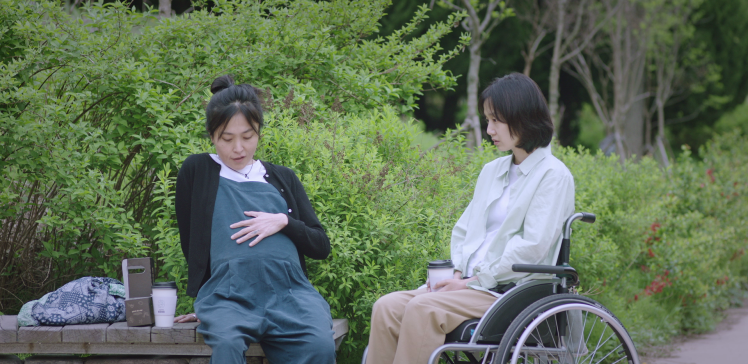
Around that narrative point, we are supposed to care more about the story and characters, but the screenplay by director/writer Sung Ji-hye, who incidentally made a feature film debut here in this movie, does not bring enough life and personality to its two main characters. While they are pretty nice and decent people, its two lead characters are a bit too flat to hold our attention at times, and that is the main reason why a rather blatant plot contrivance during the last act does not work that well. You may be surprised a bit, but this sudden plot turn only exists for accentuating Eun-jin’s amounting conflict and anxiety without providing any more depth to the story and characters.
Nevertheless, we can still admire the diligent efforts of its two lead performers. Kim Si-eun and Seol Jung-hwan have a solid low-key chemistry between them right from their very first scene, and they are believable as two different people who have loved and respected each other for years. In case of a few substantial supporting performers surrounding them in the film, Oh Ji-hoo, Kang Mal-geum, and Choi Ji-Youn are well-cast in their respective roles, and Choi is particularly good when her character lets out a bit of her old personal feelings in front of Eun-jin later in the story.
Overall, “Between the Two of Us” is surely well-intentioned as attempting to make us have more human understanding and empathy on its main subject, but the result is not as successful as intended in my trivial opinion. Nevertheless, considering how harsh and insensitive how the South Korean society has been to the disabled for many years, there should be more South Korean films about disability, and I sincerely hope that the movie will be soon followed by better ones.


 Seongyong's Private Place