
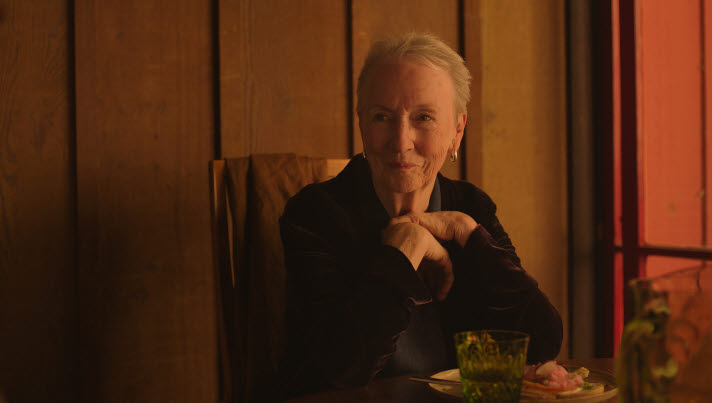
“Familial Touch” is a gracefully elegiac drama film which follows the gradual mental decline of its aging heroine. She knows well her mind is fading away, but then there inevitably comes the point where she is often not totally aware of what is happening to her increasingly senile mind, and the movie quietly and sensitively illustrates her growing confusion and frustration along the story.
At the beginning, Ruth (Kathleeen Chalfant) seems fine and well on the surface. She has lived alone by herself in a cozy little house belonging to her, whose warm and sunny interior suggests a lot about her fairy good later years. We see her preparing a lunch for her and her son who is soon going to visit her, and then we observe how sincerely her son cares about her welfare, as they subsequently have a lunch and some conversation together.
However, from the quiet concern shown from her son’s face, we gradually come to sense that Ruth is not fine at all. After their lunch, he suggests a drive for them, but he does not tell anything about where he is going to take her. After Ruth is in her car, he puts a trunk full of her belongings, and we are not so surprised when they come to a facility for old people. Of course, Ruth is not so pleased about this seemingly sudden change, but she does need special care and support, considering that, as her son reminds her, she actually decided to move to this facility some time ago.
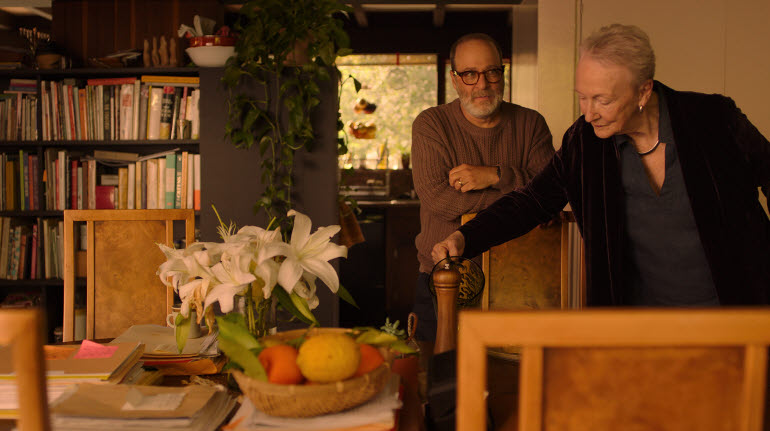
What follows next is how Ruth tries to adjust herself to this new environment of hers. She reluctantly accepts this considerable change, and the staff members of the facility are certainly ready to help her in addition to monitoring her mental condition day by day. As time goes by, she comes to befriend some of those residents in the facility, and she is also active in keeping her mind fine and stable as before.
However, despite her efforts and the constant support from the facility staff members, her senile mind only comes to show more symptoms of dementia. For example, she seems perfectly all right while examined by her doctor at one point in the story, but then her mind suddenly goes somewhere, and then she becomes quite confused about what she is doing right now – and whom she has been speaking with. During one morning, she suddenly comes into the kitchen just because she thinks she is a cook as she was many years ago, and then she quickly makes a little nice treat for everyone in the facility.
Now you will be reminded of many other similar films ranging from “Iris” (2001) to “Away from Her” (2006), but the movie sticks to its calm and somber mood even as things gets worse for Ruth. As her senile brain keeps getting wrong in one way or another, she certainly feels more confused and frustrated, and there is a brief but undeniably sad moment when she suddenly remembers her son’s name – and how she will forget that sooner or later.
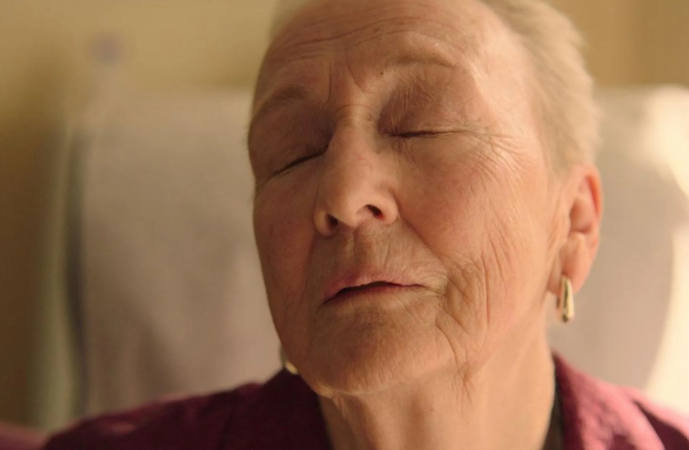
Without showing or telling a lot about its heroine’s life, the screenplay by director/writer/co-producer Sarah Friedland, who deservedly received the Venice Horizons Award for Best Director when it was shown at the Venice International Film Festival in last year (She also received the Someone to Watch award at the Film Independent Spirit Award early in this year, by the way), carefully adds one small human detail after another. As her brain experiences more error and confusion, her mind often goes back to her past, and there is a surprisingly tranquil scene where she gets relaxed a bit and then is swept by some old memories from the past. At one point later in the film, her son rummages her old stuffs a bit before selling her house, and the little glimpse into her life makes her mental decline all the more harrowing.
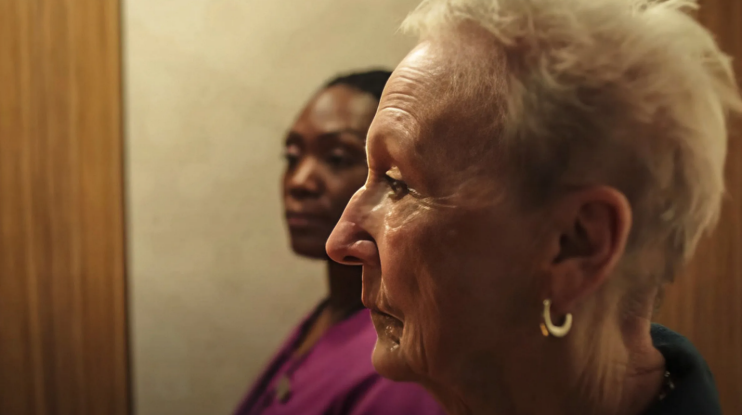
And the movie also pays some attention to the facility members, who really care about Ruth and many other old people’s welfare in the facility. From their calm and patient handling of Ruth, we come to gather that they have already seen many other cases like hers. When Ruth inadvertently causes a big trouble later in the story, they remain practical as before, and it is clear to both Ruth and us that she really has to depend on them more than before.
Everything depends a lot on the excellent lead performance by Kathleen Chalfant, who is simply superlative as subtly and exquisitely embodying her character’s gradual mental deterioration along the story. While never asking for pity or sympathy, Chalfant fills her role with a lot of inner life to observe and reflect on, and that is why the eventual finale feels quite sad and poignant. Around Chalfant, Carolyn Michelle Smith, Andy McQueen, and H. Jon Benjamin are also solid in their respective supporting roles, and Friedland also brings a considerable amount of authentic realism as shooting her movie at a Continuing Care Retirement Community in Pasadena, California and having some of its residents and staff members serve as the extras for the film.
On the whole, “Familiar Touch” may look modest on the surface, but its many recognizable human moments will linger on your mind for a while after it is over. Yes, its heroine’s mind will irreversibly fade away more from herself as well as others who care about her, but, as reflected by the very title of the film and its penultimate moment, her body may still remember a bit even at that point. In my inconsequential opinion, the movie is one of the little highlights during this year, and I assure you that you will reflect more on life and aging after watching this small but precious gem.


 Seongyong's Private Place
Pingback: 10 movies of 2025 – and more: Part 2 | Seongyong's Private Place