
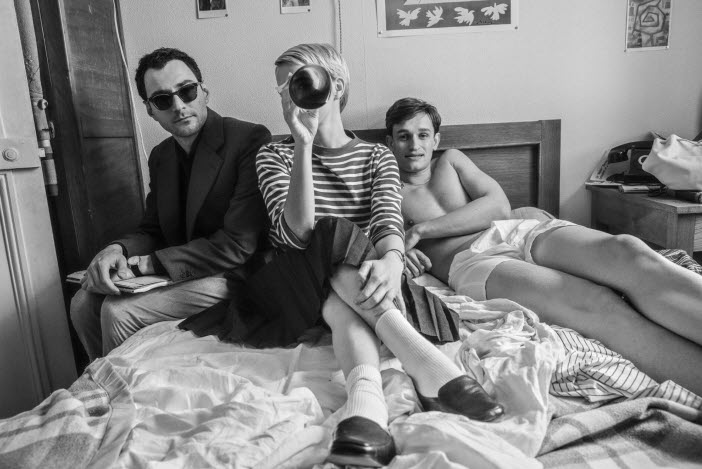
Richard Linklater’s “Nouvelle Vague”, which was released on Netflix in US several weeks ago, is a lightweight reenactment of how Jean-Luc Godard made one of the greatest films in the cinema history during a few weeks of 1959. While it does not delve that deep into him and many other notable figures around him, the movie is a vivacious pastiche to amuse anyone familiar with the Nouvelle Vague era of French cinema, and you may gladly overlook its rather superficial aspects.
The movie throws right into that exciting period surrounding Godard, played by Guillaume Marbeck, and his several fellow members of Cahiers du Cinéma, a legendary film magazine which was the starting point for not only their film criticism and filmmaking career but also many others in the group. Besides Godard, we are introduced to François Truffaut (Adrien Rouyard), Claude Chabrol (Antoine Besson), and Suzanne Schiffman (Jodie Ruth-Forest), and they certainly have a lot of things to talk about the latest film they watched together.
However, Godard feels like getting late as observing how many of his colleagues in Cahiers du Cinéma already and successfully moved onto filmmaking while he just made several minor short films. For example, Truffaut made a big critical/commercial success with his great film “400 Blows” (1959), and Chabrol and many others including Éric Rohmer (Côme Thieulin), Jacques Rivette (Jonas Marmy), and Agnès Varda (Roxane Rivière) are also beginning each own filmmaking career with more accomplishments compared to Godard.
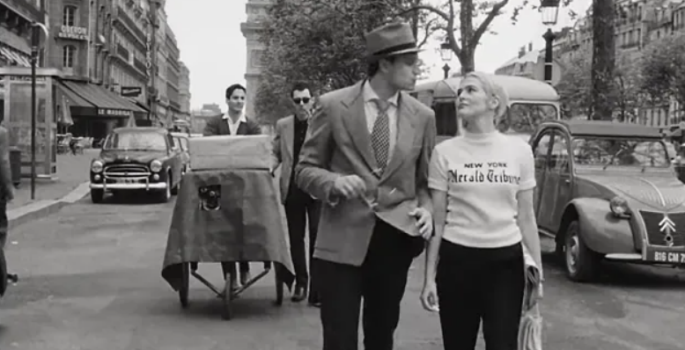
Needless to say, Godard becomes more determined to prove himself (and his genius) to everyone, and there eventually comes an opportunity for making his first feature film. When producer Georges de Beauregard (Bruno Dreyfürst) approaches to him for discussing on the possibility of the production of a film based on the story written by Godard and Truffaut, Godard is not so willing at first, but then he accepts the producer’s offer simply because he sees the possibility of doing something quite new and different.
After that, he and several others around him prepare for the shooting of, yes, “Breathless” (1960). Although he does not say anything about what and how it will be about except its basic character setting, many crew members including cinematographer Raoul Coutard (Matthieu Penchinat) agree to work with him mainly because they regard his little movie project as a challenging but interesting task. In case of Coutard, he surely knows a lot about improvisation and spontaneity as a guy who learned cinematography during his military years, and it goes without saying that he was the ideal guy for Godard’s own free-flowing filmmaking approach.
In case of the two lead performers of “Breathless”, they are as baffled as many others even before the shooting is started. Because he had some fun while working with Godard for his short film several years ago, Jean-Paul Belmondo (Aubry Dullin) has no problem with working with him again, and he generously tells his co-star Jean Seberg (Zoey Deutch) a bit about what it will be like working for Godard. Although she wants something different to help her burgeoning movie acting career, Seberg soon finds herself getting much more than she wished for, but she also tries to be game as much as possible, and her natural charm and presence make Godard more convinced that he did choose the right actress for his film, though it costs a lot for getting her cast for the movie.
The screenplay by Holly Gent and Vincent Palmo, which is adapted by Michèle Halberstadt Laetitia Masson, has a lot of fun with how Godard tries one thing after another without much clear direction for many others around him – or himself. During the next 20 days, he frequently baffles and confounds his cast and crew as reaching for something supposedly special, and, not so surprisingly, he eventually exasperates his producer a lot, who is not so amused by Godard’s casual handling of the production. Now my mind goes back to what Woody Allen told my late mentor/friend Roger Ebert on how he felt during the shooting of Godard’s later film “King Lear” (1987): “He was very elusive about the subject of the film. First he said it was going to be about a Lear jet that crashes on an island. Then he said he wanted to interview everyone who had done “King Lear”, from Kurosawa to the Royal Shakespeare. Then he said I could say whatever I wanted to say. He plays the French intellectual very well, with the 5 o’clock shadow and a certain vagueness. Meanwhile, when I got there for the shoot, he was wearing pajamas–tops and bottoms–and a bathrobe and slippers, and smoking a big cigar. I had the uncanny feeling that I was being directed by Rufus T. Firefly.”
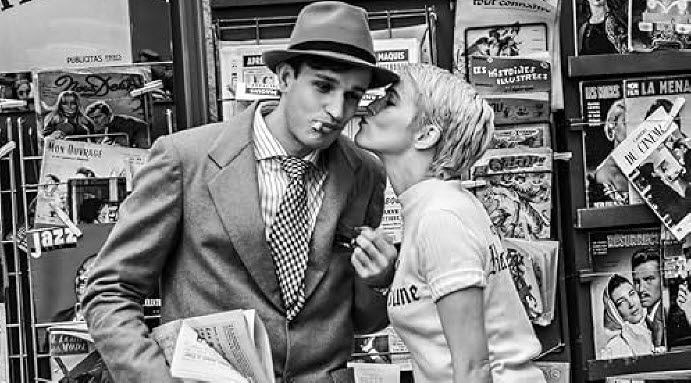
Nevertheless, something does begin to happen as days go by. Under Godard’s unorthodox direction coupled with some guerrilla filmmaking tactics, the cast and crew members come to enjoy themselves more as generating more chemistry generated among them, and the movie did a lovely job of recreating their joy of filmmaking across the screen. Shot on the grainy black and white film in the ratio of 1.33:1 by cinematographer David Chambille, the movie is filled with authentic period mood and details, and these elements instantly evoke the texture and spirit of “Breathless” and many other classic works of the Nouvelle Vague era.
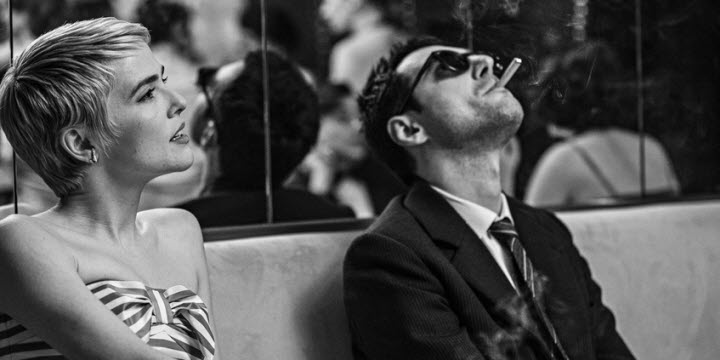
It surely helps that the movie has good performers effortlessly embodying their respective roles. Although we never get to know much about Godard as a human being even in the end, Marbeck has a dry fun with Godard’s lofty and distant attitude, and the movie reminds me again that Godard was a prick even when he was young and really talented. Zoey Deutch, Aubry Dullin, and Bruno Dreyfürst have some small but juicy moments, and Deutch brings extra charm to the film just like Seberg did to “Breathless”.
In conclusion, “Nouvelle Vague” will not show you anything particularly new especially if you admire “Breathless” a lot, but it is still entertaining mainly for its good mood and style. Although I prefer his other recent film “Blue Moon” (2025) more, “Nouvelle Vague” is a fairly good love letter to filmmaking, and Linklater certainly had a productive time as giving us these two well-made works during this year.


 Seongyong's Private Place
Pingback: 10 movies of 2025 – and more: Part 2 | Seongyong's Private Place