

During the first 20 minutes of Eva Victor’s first feature film “Sorry, Baby”, I observed that its heroine is living a wonderful academic life which would have been envied by my late mentor/friend Roger Ebert, who could have taught literature or writing at college if he had kept studying for his doctoral degree course instead of continuing to work in Chicago Sun-Times. She is a fairly young (and popular) literature professor in some liberal arts college in a rural New England region, and she also lives alone in a nice and cozy house where she can work or read alone by herself. Watching her surrounded by many books at home, I could not help but become a bit jealous of her – and Roger could have felt pretty much the same in my inconsequential opinion.
Although it feels a little spirited during its opening part, the movie turns out to be much more serious than expected as gradually delving into what she has lived for a while. Considering that the two reviews I read several months ago did not reveal that much to me, I will also try not to reveal too much here, but I strongly recommend you not to read further if you want to experience its dramatic impact as fully as possible.
The movie, which consists of several acts, begins with the casual weekend between Agnes (Eva Victor) and her best friend Lydie (Naomi Ackie) at Agnes’ house. Lydie, who is currently married, recently becomes pregnant via in vitro fertilization (IVF), and Agnes is certainly glad about that as her very close friend, but we come to sense that Lydie comes mainly for checking on Agnes’ current status – even when they frankly talk about sex and men.
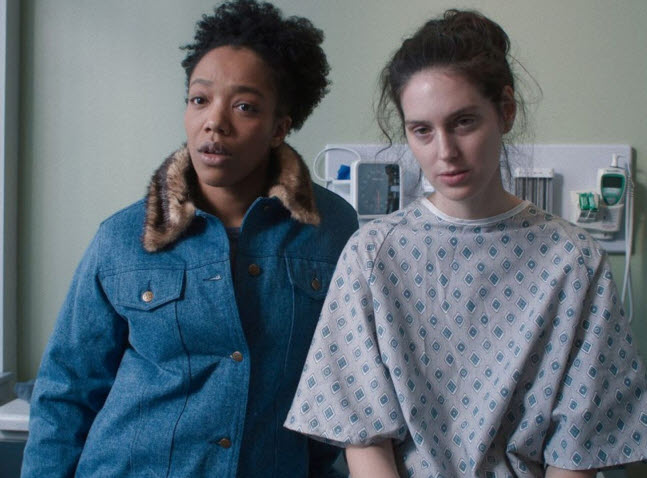
That becomes all the more evident to us when they later have a dinner with several others who studied along with them for their doctoral degree under some prominent professor some time ago. When one of them talks a bit too much about Agnes and their adviser, the mood becomes quite awkward to say the least, and Lydie makes some indirect criticism on that not long after Agnes suddenly leaves the spot for a moment.
The movie subsequently goes back to their graduate school years at the same liberal arts college where Agnes currently works. As their adviser keeps praising and encouraging her much more than the other students studying under him, Agnes certainly feels proud and excited, and she is not so concerned at all even when she recognizes to Lydie later that her adviser may actually be not so interested in her academic talent or potential.
In the end, there comes a moment which will affect Agnes and her life forever. The movie wisely distances itself from what happens to her, but the following dramatic impact is quite palpable to say the least. Although the camera simply watches her phlegmatically driving her car to her residence for a while, that is more than enough for us to sense how confused and devastated she really is.
As Agnes struggles to process what happened to her, the movie effortlessly swings between harrowing sensitivity and some dark humor. Fortunately, she gets full emotional support and consolation from Lydie, and that surely helps her a lot – especially when she comes to see that her school is more occupied with maintaining its reputation and avoiding any responsibility. Nevertheless, she does not lose her quirky sense of humor, and there are actually several little humorous moments including the one where Agnes frankly and blatantly confides to Lydie on what she could have done out of her anger and pain.
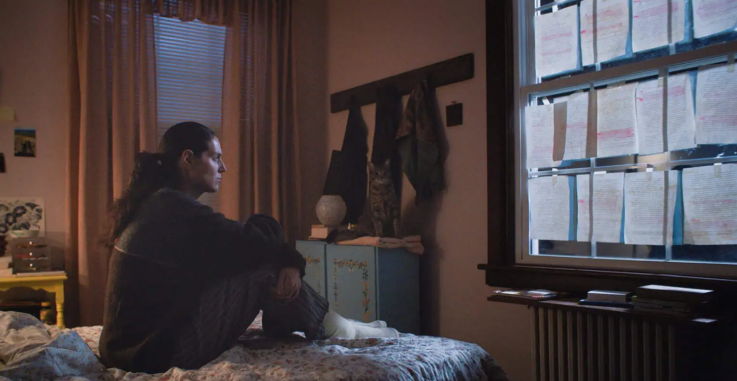
And we observe more of how complicated Agnes’ situation has been. As trying to leave behind what happened to her, she kept going in her graduate course, and she gets promoted quite quickly once she began her academic career there. However, as reflected by a brief scene between her and a bitter colleague of hers, she cannot deny that what happened to her is one of the crucial factors in her rather fast career advancement, even though it is also true that she earns her recent promotion via her talent and intelligence.
While clearly recognizing its heroine’s complex emotional state, Victor’s screenplay, which incidentally received the Waldo Salt Screenplay Award when it was premiered at the Sundance Film Festival early in this year, simply illustrates how she struggles to live more. There is a funny and intimate scene between Agnes and a male neighbor quite willing to accept a certain need of hers, and I was particularly touched by when Agnes finds an expected source of comfort at one point in the story, which will be appreciated a lot by any cat lovers out there (Full Disclosure: I am also a cat lover, though I am too busy with taking care of myself to have a cat).
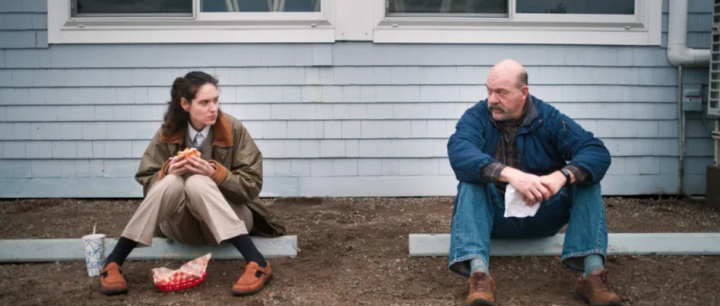
Victor’s strong lead performance ably holds the center, and this promising new filmmaker also draws good supporting performances from the main cast members of the movie. While Naomi Ackie, who was also wonderful in Bong Joon-ho’s “Mickey 17” (2025), brings extra warmth and humor to her several key scenes with Victor, Kelly McCormack, Lucas Hedges, Lucas Hedges, Hettienne Park, E.R. Fightmaster, and John Carroll Lynch are also effective in their respective supporting parts, and, though he only appears in one single scene later in the movie, Lynch reminds us again that he is indeed one of the most dependable character actors working in Hollywood at present.
In conclusion, “Sorry, Baby” is superlative for its thoughtful and sensitive storytelling as well as a number of stellar performances to remember. It surely shows that Victor is another promising American filmmaker to watch, and I will have some expectation on whatever may come next from this new interesting filmmaker after this remarkable debut work.


 Seongyong's Private Place
Pingback: 10 movies of 2025 – and more: Part 2 | Seongyong's Private Place