
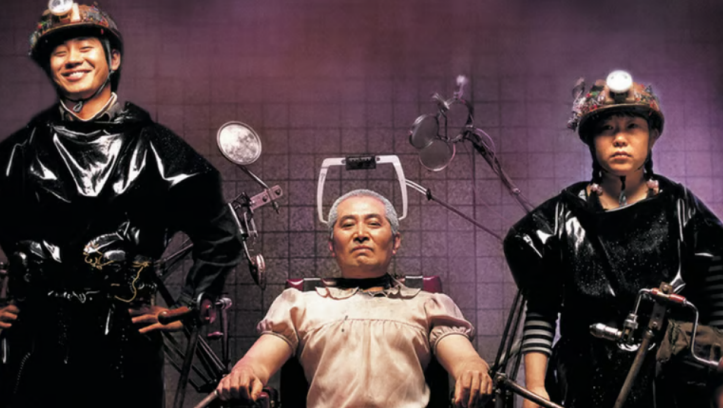
South Korean filmmaker Jang Joon-hwan’s 2003 debut feature film “Save the Green Planet”, which recently received more attention thank to the recent American remake version directed by Yorgos Lanthimos, is probably one of the weirdest mixed bags I have even encountered during last 30 years. So wildly swinging among many different genre modes ranging from absurd horror comedy to harrowing melodrama, the movie was destined to be a cult classic from the very beginning, and it is not so surprising that the movie was not received that well even by local audiences at that time.
Although around 20 years have passed since I watched it via a DVD copy (I somehow missed the chance to watch it at movie theater, by the way), the movie remains quite an oddball piece of work to me. While there are many outrageous moments which may make your eyeballs roll at times, we also get numerous moments of stark horror to unnerve and then chill you, and you will be all the amazed by how it even attempts a bit of genuine pathos and poignancy as busily trying to balance itself among those contrasting genre elements in the story.
The story begins with the kidnapping planned by its supposedly unhinged hero and her girlfriend. For some time, a young beekeeper named Lee Byeong-gu (Shin Ha-kyun) has been obsessed with a wealthy and powerful businessman named Kang Man-shik (Baek Yoon-sik) just because he has zealously believed that Man-shik is actually an alien in human disguise, and his rather simple-minded girlfriend Su-ni (Hwang Jeong-min, a wonderful veteran character actress who should not be confused with a more famous South Korean actor of the same name at any chance), is willing to assist his kidnapping plan without having any doubt at all.
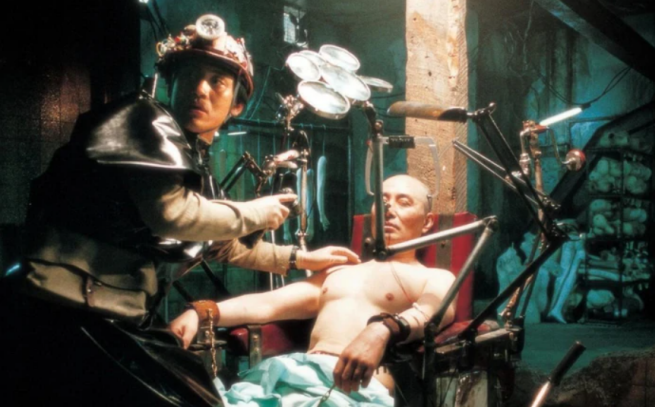
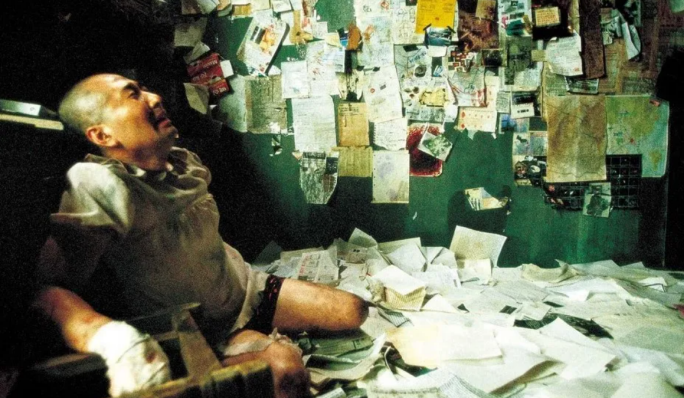
After he and his girlfriend manage to succeed in kidnapping Man-shik and then taking him to their little isolated place located in the middle of some rural mountain area, Byeong-gu is ready to extract the confession from Man-shik by any means necessary, and that is where the movie goes for more horror and absurdity. You may laugh a bit at times as observing more of how loony Byeong-gu is, but then you are also quite horrified by how willing he is to go further and further for saving, yes, a green planet called the Earth. At one point later in the story, we get a chilling moment of sheer horror as Man-shik comes to learn more of what Byeong-gu has done behind his back during last several years, and this makes us all the more unnerved than before.
Nevertheless, we also come to have some pity on this deranged lad as much as, say, the main villain of Park Chan-wook’s “Oldboy” (2003). As shown from a flashback sequence in the middle of the film, his life has been full of misery, pain, and torment for many years, and now he becomes more desperate as he may lose someone very dear to him sooner or later. The movie does not wisely make any cheap excuse on his barbaric acts of cruelty and violence, and that is why we often find ourselves constantly going back and forth between repulsion and sympathy.
In case of his captive, we feel ambivalent about him as much as Byeong-sik. Sure, Man-shik is one of those unlikable “1% people” who usually regard others below him with contempt and apathy, but we come to care a bit about his increasingly despairing struggle for survival, even when we begin to have doubt on whether he is merely another target of Byeong-gu’s worsening madness.
Frequently toying with that nagging possibility to the end, the movie continues to throw one memorably weird moment after another. The part with involved with a seasoned detective getting closer to Byeong-gu culminates to an outrageous payoff moment involved with those countless bees taken care of by Byeong-gu, which is still darkly hilarious to me. Above all, there is a truly wacky sequence somewhere between Stanley Kubrick’s “2001: A Space Odyssey” (1968) and Mike Hodges’ “Flash Gordon” (1980), and all I can tell you here is that this is definitely something you have to see for yourself.
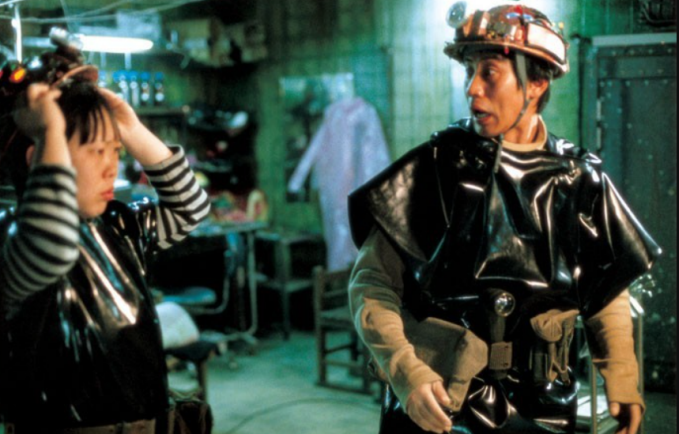
The movie loses some of its narrative momentum as being on the verge of becoming an overkill more than once, but it remains supported well by the strong performances from its three main cast members. Shin Ha-kyun, who rose to more prominence after Park Chan-wook’s “Sympathy for Mr. Vengeance” (2002), did a good job of going along with the wild genre swings of the movie, and Hwang Jung-min provides a little precious sincerity to her archetype character. In case of Baek Yoon-sik, he masterfully handles several tricky key moments solely depending on his acting talent, and his memorable performance here in this film certainly boosted his movie acting career to a considerable degree.
In conclusion, “Save the Green Planet!” remains as one of the most notable South Korean films during the 2000s, and now I reflect more on what a fantastic time it was for South Korean audiences in 2003. Besides “Save the Green Planet!” and “Oldboy”, we also had Kim Ji-woon’s “A Tale of Two Sisters” (2003), Kim Ki-duk’s “Spring, Summer, Fall, Winter… and Spring” (2003), and Bong Joon-ho’s “Memories of Murder” (2003), and this was just the beginning for many highlights to come from South Korean cinema including, yes, that dramatic victory of Bong’s iconic 2019 film “Parasite” at the Academy Awards.
Unfortunately, Jang could not ride on this cultural wave that much due to the big commercial failure of his first feature film, and he only made “Hwayi: A Monters Boy” (2013) and “1987: When The Day Comes” (2017) during last two decades. Nevertheless, “Save the Green Planet!” is still a compelling achievement on the whole, and I sincerely hope that this undeniably offbeat genre film will get more appreciation thanks to the American remake version.


 Seongyong's Private Place