

Paul Thomas Anderson’s latest film “One Battle After Another” is a full-throttle political genre mix to captivate and then entertain you in unexpectedly various ways. As he has always done during last three decades since his first feature film “Hard Eight” (1996), Anderson takes another surprising turn for his diverse filmography, and it is quite compelling to observe how ambitiously and brilliantly the movie swings back and forth across many different genre modes while also unabashedly wielding its political ideas on the screen.
The opening part of the film sets the gritty overall tone of the story. A left-wing revolutionary group named “the French 75” attacks a detention center in California for releasing many immigrants held there just for their illegal status, and we are introduced to its several key members including Perfidia Beverly Hills (Teyana Taylor), who is incidentally the fiercest member in the group. While she and her comrades swiftly overpower those soldiers and officers supervising the detention center, an explosive expert named Pat Calhoun (Leonardo DiCaprio) provides some assistance, and the movie does a slick and efficient job of letting us gather the details of their ongoing operation even as a lot of things happen here and there across the screen.
Perfidia and Pat gradually fall in love with each other as they continue to devote themselves to the political cause of their group, but then she gets pregnant. Because she is definitely not the one who can be the mother of the year, Perfidia cannot help but become quite frustrated as struggling to raise her little baby daughter later, but Pat becomes more inclined to settle down along with Perfidia and her daughter. In the end, Pat has to take care of her daughter alone while Perfidia keeps fighting for their political cause as before.
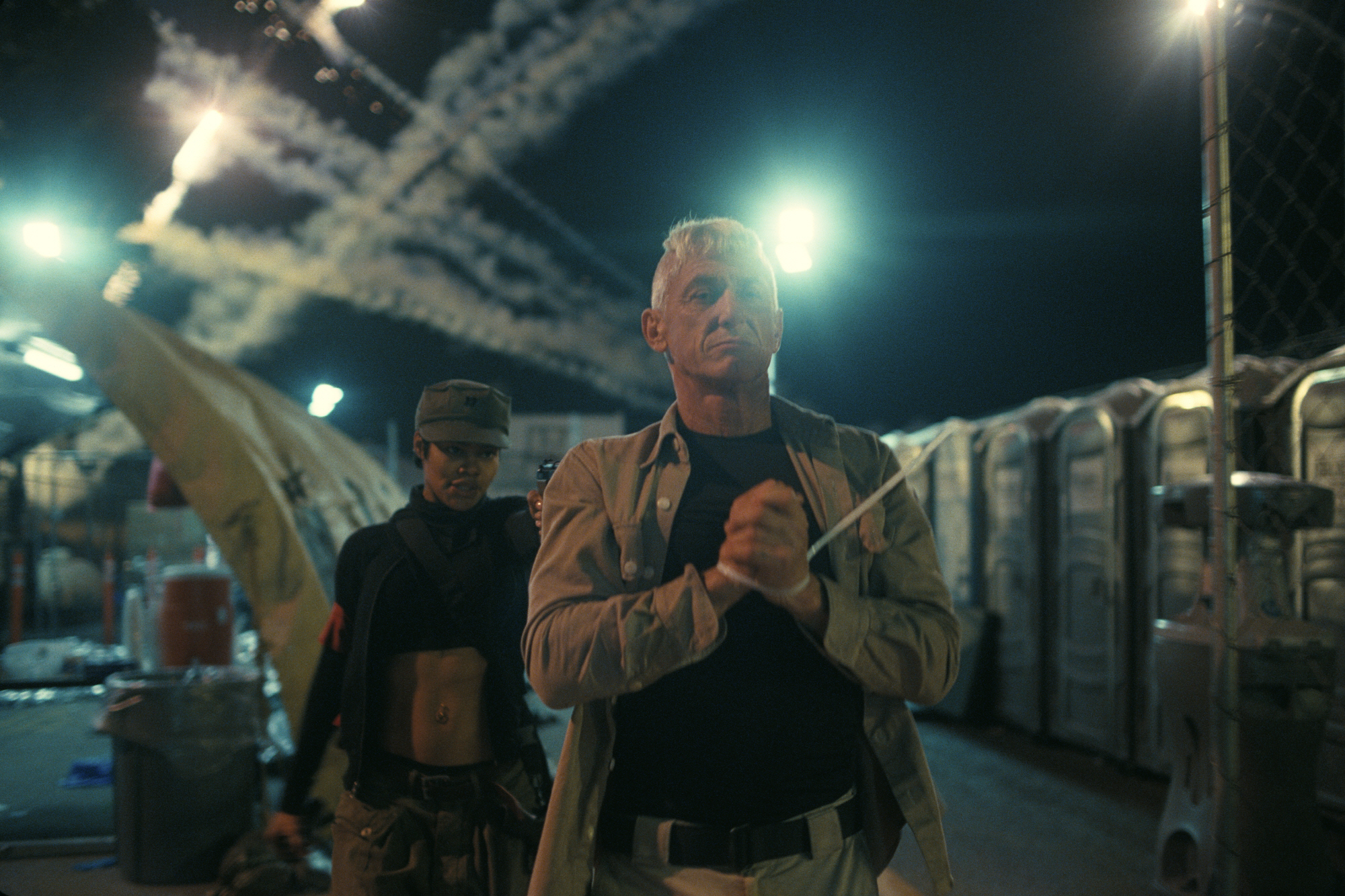
Unfortunately, their situation becomes a lot more serious due to Colonel Steven J. Lockjaw (Sean Penn), who was the supervisor of the detention center and never forgets how Perfidia alternatively humiliates and arouses him during their brief but intense encounter at that time. Quite obsessed with not only having his revenge on Perfidia but also getting his little private satisfaction from her, this sleazy racist dude eventually throws a thorough and ruthless retaliation upon the French 75, and Pat has no choice but to hide away along with Perfidia’s daughter in addition to being separated from Perfidia.
After 16 years, Pat and Perfidia’s daughter are still living under their false identities. Pat is now “Bob Ferguson”, and he becomes a bitter paranoid who is usually occupied with his substance abuse whenever he is not paying attention to his adolescent daughter, who has been quite accustomed to living as “Willa Ferguson” (Chase Infiniti).
On the opposite, Colonel Lockjaw is now more prominent with his anti-immigrant stance and is also about to join a certain powerful group mainly consisting of very rich and influential white guys. After he happens to get the information on the whereabouts of Pat and his daughter, he and his military men quickly go to the city where Pat and his daughter have been hiding for years, while pretending that they are just doing another operation against those numerous immigrants out there in the city.
Around this narrative point, the mood becomes quite tense and volatile to say the least. Many people in the city do not welcome Colonel Lockjaw and his military men at all, and the resulting chaos and pandemonium vividly presented during one particular sequence surely resonate a lot with how the American Society has been shaken up more and more by policemen and soldiers during last several months.
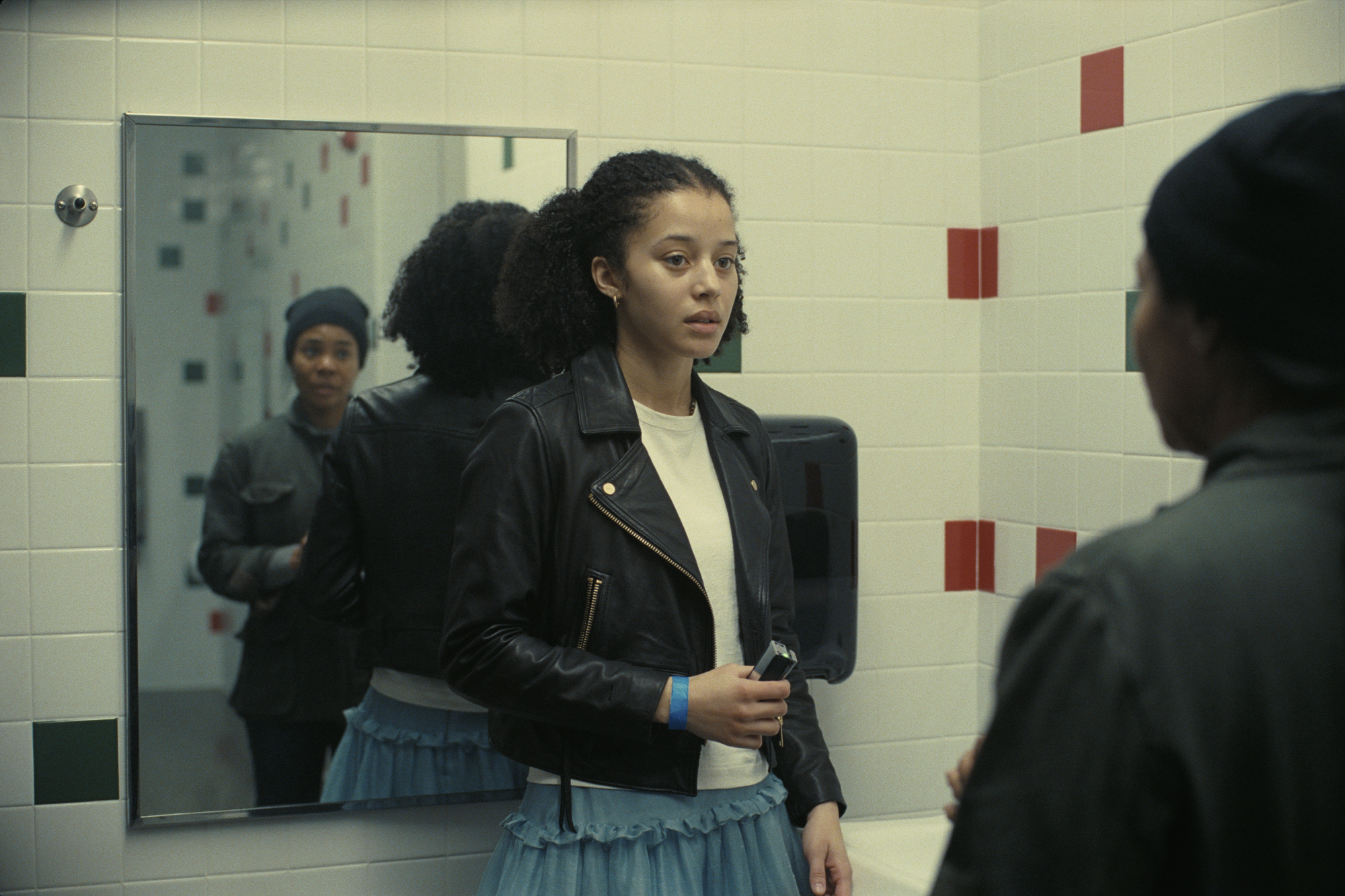
While relentlessly and dexterously juggling many different plot elements without getting lost among them at any point, Anderson’s screenplay, which is inspired by Thomas Pynchon’s 1990 novel “Vineland”, also shows a surprising amount of offbeat humor as Pat struggles to handle his increasingly chaotic situation. While he fortunately has several people to help him, his mind remains rather dopey, and the movie sometimes feels like a hyperactive version of Andersons’ previous film “Inherent Vice” (2014) – especially as there come more intrigue associated with that clandestine group of wealthy white dudes later in the story.
Furthermore, the movie also works quite well as an action thriller film, and this shows us another unexpected side of Anderon’s undeniably broad and immense talent. There are several pulse-pounding vehicle chase sequences in the movie, and all of them are flawlessly executed under Anderson’s firm and confident direction. Often reminiscent of those gritty American action movies of the 1960-70s such as Peter Yates’ “Bullitt” (1968) and William Friedkin’s “The French Connection” (1971), they are filled with a considerable amount of verisimilitude to rattle and then excite you, and they are further accentuated by another unconventional score by Jonny Greenwood, who will be probably Oscar-nominated early in the next year along with his several fellow main crew members including cinematographer Michael Bauman and editor Andy Jurgensen.
Anderson also assembles an impressive array of talented performers for his film. While Leonardo DiCaprio dutifully occupies the center, Sean Penn gives his best performance since his second Oscar-winning turn in Gus Van Sant’s “Milk” (2008) as fearlessly embodying his character’s many unpleasant aspects, and Teyana Taylor, who was utterly unforgettable in A.V. Rockwell’s “A Thousand and One” (2023), is electrifying enough to hover over the story even during her absence. In case of several other substantial cast members, Benicio del Toro, Regina Hall, Eric Schweig, Alana Haim, Wood Harris, and Tony Goldwyn have each own moment to shine, and newcomer Chase Infiniti is also terrific as ably showing considerable potential and talent.
On the whole, “One Battle After Another” is another distinctive work to be added to Anderson’s long and illustrious career. Some good movies can vividly reflect their respective eras in one way or another, and, considering how things become more chaotic and alarming in not only US and but also many other countries, and the movie will probably be regarded as one of the main representatives of our current era. In short, Anderson strikes again, and the result is one of the best films of this year.


 Seongyong's Private Place
Pingback: 10 movies of 2025 – and more: Part 1 | Seongyong's Private Place
Pingback: My Prediction on the 98th Academy Awards | Seongyong's Private Place