
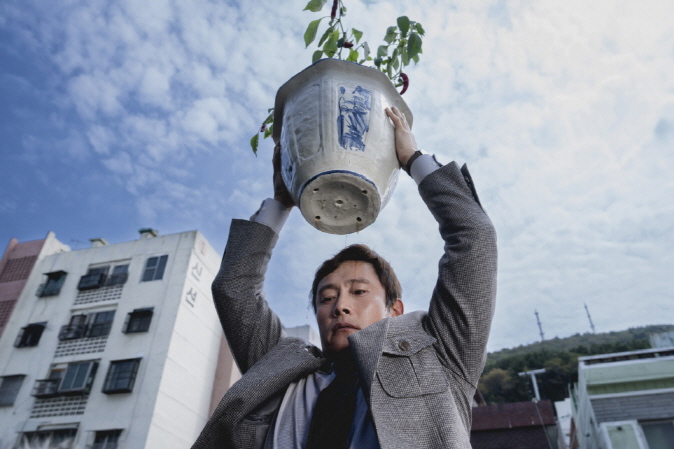
Park Chan-wook’s latest film “No Other Choice” is another dark and twisted genre piece you can expect from its director. Following its plain ordinary family guy’s murderous struggle for getting employed, the movie provides a series of morbidly humorous moments with an abundant amount of style and details to be appreciated, and that compensates for several weak aspects including its rather overlong running time (139 minutes).
Lee Byung-hun, who incidentally collaborated with Park in “Joint Security Area” (2000) 25 years ago, plays You Man-soo, a fortysomething dude who looks like having a fairly good life at the beginning of the story. He and his wife and two kids live in an old but well-decorated house, and the opening scene shows them cheerfully enjoying a little dinner party in the front ground of their house
However, it soon turns out that there is a serious problem at a big paper company where Man-soo has worked for more than 20 years. After recently acquired by a bunch of American businessmen, the company has gone through a lot of downsizing, and Man-soo belatedly realizes that he is one of numerous employees to be fired. During the next three months, he tries to get employed somewhere else in one way or another, but he only gets frustrated and again and again, while he and his family are going to lose their house and many other things for their increasingly difficult economic circumstance.
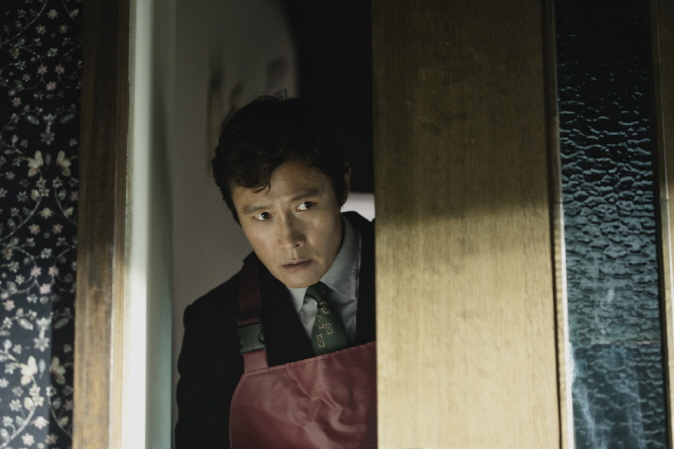
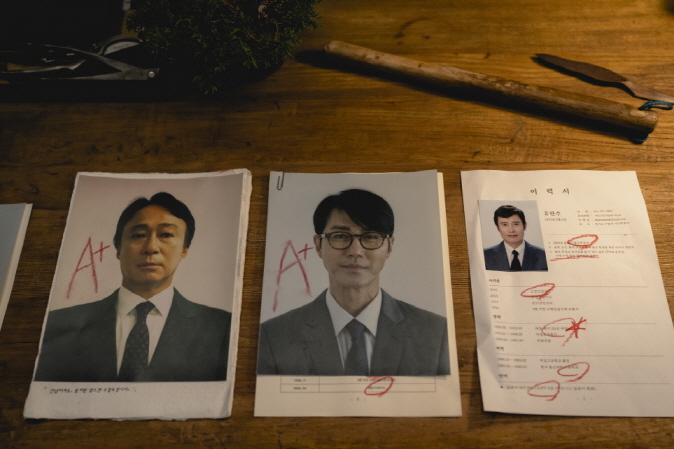
Not long after going thorough another moment of humiliation, Man-soo comes upon one possible idea. While there are a very few positions available for him, there are also many other desperately unemployed guys just like him, so he begins to consider eliminating several people who may be more likely to get employed than him. First, he posts a fake advertisement to lure a number of possible competitors out there, and we subsequently get an absurd scene where he thoroughly evaluates the résumés of these potential targets one by one for determining whom he must kill first.
The movie surely generates more uncomfortable laugh as its hero embarks on his killing plan in a rather clumsy way. He happens to have an old North Korean gun belonging to his dead father, which is incidentally more than 50 years old but seems to be still good enough for killing. He later spies on his first target for getting any chance to approach closer to this target, but, what do you know, he soon comes across a few setbacks which may jeopardize his plan.
Even while often recognizing how pathetic and desperate its hero is, the movie sticks to its detached attitude. While Man-soo is not so sympathetic from the beginning, most of man-soo’s several targets presented along the story are no better than him. As a result, we come to observe his following acts of killing from the distance without caring that much about him or others around him, and this aspect is more evident from how the movie presents the sequence showing Man-soo’s first attempt to kill under a deliberately loud sound background.
Nevertheless, the screenplay by Park and his co-writers Don McKellar, Lee Kyoung-mi, and Lee Ja-hye, which is based on Donald Westlake’s novel “The Ax” (It was already adapted once for the 2005 film of the same name by Costa-Gavras, to whom Park incidentally dedicates the movie), keeps engaging us with a lot of biting sense of black humor. At one point later in the film, Man-soo comes to use his certain particular set of skills for taking care of a dead body, and that leads to a gruesomely naughty moment to remember. In addition, the story also pays attention to how Man-soo’s relationship with his wife becomes increasingly strained as he hides his murderous secret more and more from her, and the movie even takes some time when this personal conflict between them culminates to an unexpectedly stylish moment of dance and music.
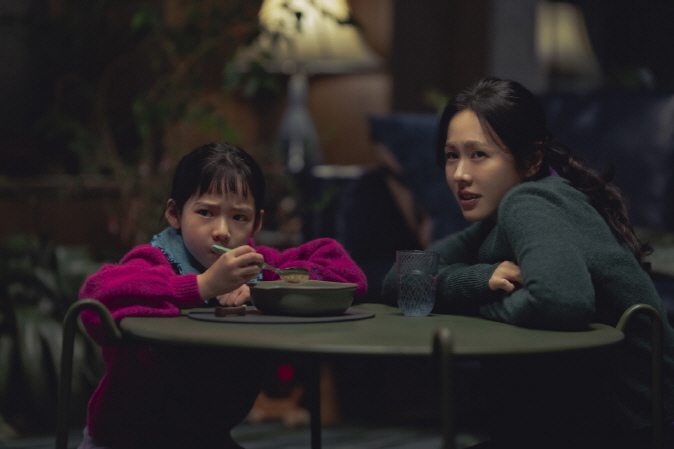
Above all, the movie is drenched in many numerous distinctive touches observed from many of Park’s previous films such as “Oldboy” (2003) and “Decision to Leave” (2022), and Park and his crew members including cinematographer Kim Woo-hyung and editor Kim Sang-bum did a commendable of filling the screen with enough mood and details. Thanks to a heap of interesting details inside and outside it, Man-soo’s house looks as impressive as that slick modern house in Bong Joon-ho’s “Parasite” (2019), and I particularly appreciate how the movie uses a certain favorite color of Park as frequently as many of Pedro Almodóvar’s movies did green and red.
While Lee holds the center as required with another fine performance in his acting career, several other cast members dutifully fill their respective spots around him. Son Ye-jin, who was memorable in “The Truth Beneath” (2016), has several good moments as her character is getting closer to Man-soo’s growing secret, and Park Hee-soon, Lee Sung-min, Yeom Hye-ran, and Cha Seung-won are well-cast in their substantial supporting parts.
Overall, “No Other Choice”, which was recently chosen as the South Korean submission to Best International Film Oscar, is not entirely without flaws (For example, its finale could be shortened a bit, and I also do not think a certain notable supporting actor, whose career was tarnished by alleged sexual harassment a few years ago, is really necessary), but it is another compelling work from Park, who has been one of the most prominent South Korean filmmakers during last 25 years. Although it does not reach to the level of “The Handmaiden” (2016) or “Decision to Leave”, the movie intrigued and engaged me enough on the whole, and that is more than enough for now.


 Seongyong's Private Place
Pingback: 10 movies of 2025 – and more: Part 2 | Seongyong's Private Place
Pingback: 10 movies of 2025 – and more: Part 3 | Seongyong's Private Place