
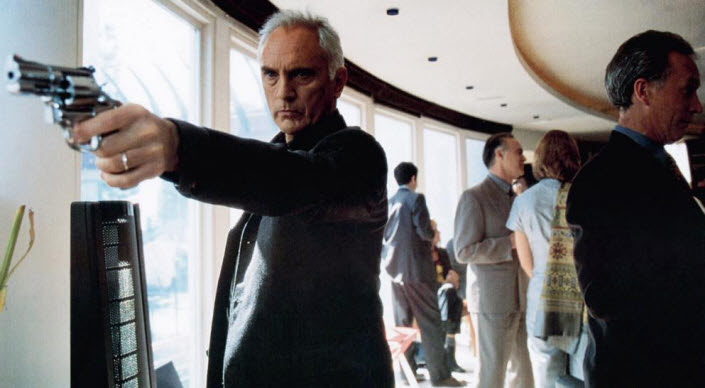
Steven Soderbergh’s 1999 film “The Limey” is a modest but slick genre flick about a little violent quest of one old British dude quite determined to find out what really happened to his dear daughter. While this is basically your typical revenge action thriller movie, it takes time in building up style and personality along the story instead of being merely driven by action, and it is also supported a lot by the considerable charisma and presence of its lead actor.
At the beginning, the movie does not show or tell much about Wilson (Terence Stamp), but we gradually gather bits of information about his criminal past in UK. He is one of those professional criminals, but he was imprisoned in jail during last several years since getting arrested due to the betrayal of his criminal associates, and now he is coming to LA for his little private investigation on his estranged daughter’s rather suspicious death.
Not long after he arrives in LA, Wilson encounters two different persons who were close to his daughter before her death. One is a local Latino guy named Eduardo Roel (Luis Guzmán), and he is the one who notified Wilson of his daughter’s death via a letter written by him. Although their first encounter is a bit awkward mainly due to Wilson’s Cockney accent (The title of the film is an American slang referring to Britons, by the way), Roel soon begins to assist Wilson’s private investigation, and so does Elaine (Lesley Ann Warren), a middle-aged actress who was the acting teacher of Wilson’s daughter.
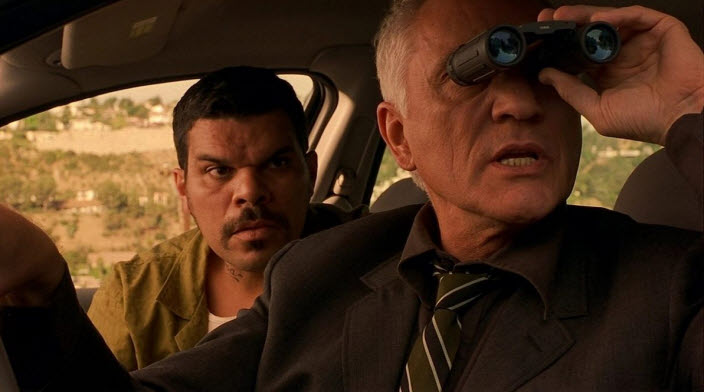
Along with Wilson, we get to know more about the rather questionable circumstance surrounding her daughter’s death. On the surface, she died due to an unfortunate vehicle accident, but there were several shady figures in her life, and they are associated with some local drug dealing. One of these people is an old but wealthy record producer named Peter Valentine (Peter Fonda), and Wilson’s daughter was quite close to him around the time of her death.
As Wilson subsequently embarks on his quest toward Valentine, Soderbergh takes a curiously restrained but undeniably effective approach during a few moments of action early in the film. When Wilson goes to a certain warehouse for getting the address of Valentine’s residence at one point, the mood naturally becomes a little intense as Wilson clashes a bit of his opponents, but then the movie holds itself as observing the following payoff moment from the distance. You may be baffled at first, but it becomes apparent that the movie tries something different with its genre conventions, and we get more interested in Wilson’s personal drama.
Mainly to his two accidental new friends, Wilson comes to reveal a bit of himself and his life along the story, and one of Soderbergh’s masterstrokes in the film comes from the occasional brief flashback scenes which are actually excerpts from Ken Loach’s directorial debut film “Poor Cow” (1967), one of the early films in Terence Stamp’s acting career. As Wilson talks more about his past, his phlegmatic words certainly resonate a lot with the image of the younger Stamp in Loach’s film, and that brings some genuine poignancy to the story.
Soderbergh and his editor Sarah Flack also did an interesting job of bringing some offbeat quality to the film. Mainly via the frequent non-chronological jump cuts throughout the film, the movie sometimes seems to flow freely along with the stream of consciousness inside its hero’s mind, and this makes us focus more on his feelings and thoughts.
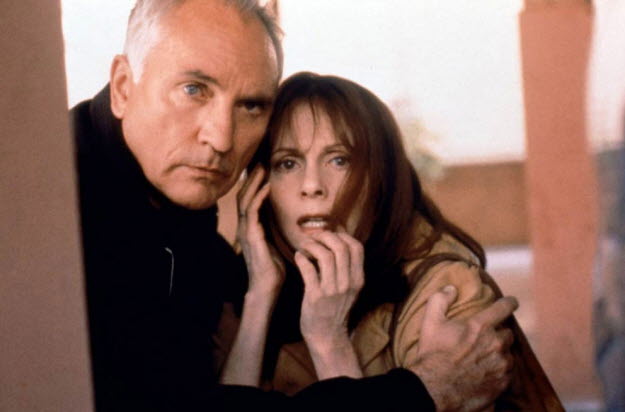
Around the narrative point where Wilson approaches closer to Valentine, the screenplay by Lem Dobbs still maintains its rather leisurely narrative pacing as usual without hurrying itself at all. While Valentine simply wants to avoid any possibility of annoyance or disturbance as much as possible, his right-hand guy Jim Avery (Barry Newman) is already quite ready to take care of the latest headache in their criminal business, and that leads to more complication in the conflict between Wilson and Valentine. What is eventually unfolded during the expected climactic part is not that loud or bombastic, Soderbergh deftly handles this part with considerable efficiency and impact, and we sense more of the inevitability in the circumstance surrounding Wilson and several other main characters.
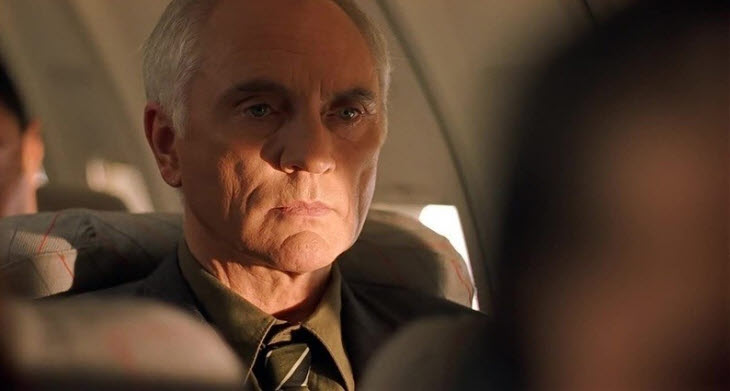
Stamp, who sadly passed way two days ago, brings his own quiet but distinctive intensity to the film as ably embodying his character’s gritty human qualities, and he is also surrounded by a number of colorful performers to remember. While Luis Guzmán, who has always been ready to play your average street-smart Latino dude during last four decades, provides some humor to the story, Lesley Ann Warren has a few tender scenes with Stamp as their characters come to befriend each other more, and Bill Duke briefly appears as a DEA agent willing to ignore Wilson’s ongoing private investigation. As the main villains of the story, Barry Newman and Peter Fonda are well-cast in their respective supporting parts, and Fonda surely brings a lot of his own image to his character just like Stamp. After all, both of these two legendary actors were once quite popular in the 1960s, and their considerably aged status in the later 1990s brings extra human dimension to the story.
Overall, “The Limey” may look less impressive as sandwiched between “Out of Sight” (1998) and “Erin Brockovich” (2000), but it is worthwhile to watch just like many other small but solid films in Soderbergh’s productive filmmaking career during last 25 years. Yes, he simply had a little fun along with his lead actor here, but the result is still entertaining, and that surely says a lot about his undeniable talent.


 Seongyong's Private Place