

Documentary film “Soundtrack to a Coup d’Etat”, which was recently nominated for Best Documentary Oscar, is a superb presentation of the hidden aspects of a political turmoil in Africa during the early 1960s. While it is simply a collage of archival records and quotes on the surface, the documentary is actually quite compelling as vividly drawing its big and complex historical picture in front of our eyes, and the result is all the more mesmerizing with our ears attuned to the soundtrack full of the jazz musicians from that time, who were connected with its main subject in one way or another.
The main subject of the documentary is the Congo Crisis around the beginning of the 1960s, when many of African countries including the Republic of Congo, which is the Democratic Republic of Congo (DR Congo) at present, became independent after many years of colonization by several European countries. As a bunch of newly independent countries in Africa and Asia soon joined the United Nations, both US and the Soviet Union began to play their Cold War diplomatic games over those countries, and, not so surprisingly, many of these countries tried to be independent from both sides as much as possible.
The US government, led by President Dwight D. Eisenhower during that time, had a big interest in the Republic of Congo mainly because of a huge amount of valuable resources in that country. The southern area of the Republic of Congo has many mineral mines including the ones which provided uranium to US during the World War II, and the US government was quite determined to have the Republic of Congo under its control by any means necessary – especially after Soviet leader Nikita Khrushchev openly and vigorously expressed the opposition to the post-colonial power trying to grab many African countries again.
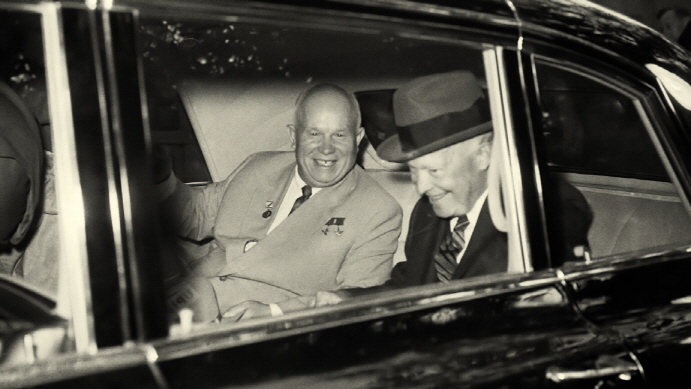
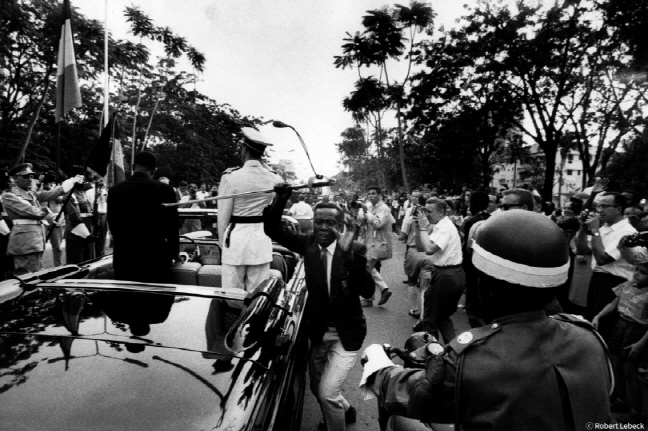
Along with the Belgian government, which occupied Congo for many decades before its independence, the US government attempted to overthrow Prime Minister Patrice Lumumba, who was the most important political figure of the Congolese government during that time. Right from when the independence of his country became official, Lumumba and his government tried to go their way just like many other fellow African countries including Ghana, and he and Kwame Nkrumah, who was the president of Ghana during that time and was also not approved much by US and many other western countries, were the leading figures in the movement for establishing the United States of Africa.
While plotting against Lumumba and his government behind its back, the US government also tried to win the hearts and minds of the Congolese people via a certain part of the American culture: Black American Jazz. While mostly unaware of this hidden intention, many African American jazz musicians ranging from Louis Armstrong to Dizzy Gillespie gladly went to Congo as “cultural ambassadors”, and they were all certainly welcomed by the Congolese people.
As busily shuffling its multiple narrative threads, director Johan Grimonprez, who deservedly received the Special Jury Prize when the documentary was premiered at the Sundance Film Festival early in last year, mixes numerous archival materials with many different pieces of jazz music during the 1960s. The resulting juxtaposition feels just amusing at first, but the jazzy soundtrack of the documentary, which consists of numerous familiar pieces such as Louis Armstrong’s “What a Wonderful World” and Nina Simone’s “Sinnerman”, gradually sets the tone and pace as we get to know more about the hidden sides of the Congo Crisis. In the end, we are chilled and horrified for good reasons at times while discerning more of the complicated political situation surrounding the Republic of Congo.

Although their first attempt to overthrow Lumumba, which happened shortly after the independence of the Republic of Congo, was failed, that did not stop US and Belgium at all, and the documentary pulls no punch about how the United Nations did not do anything about that while keeping its appearance as usual under the leadership of Dag Hammarskjöld, who was UN Secretary-General during that time. Although there was actually some progress in the United Nations, Hammarskjöld also indirectly assisted another American plot against Lumumba, and Lumumba consequently found himself cornered more and more until his eventual death in 1961.
Mainly via the quotes from a number of various sources including “My Country, Africa” by Andrée Blouin and “Congo Inc.” by In Koli Jean Bofane, the documentary also tells us a bit about the human sufferings resulted from the political interference from US and other western countries during that time. During next several decades, the people of Congo suffered one political turmoil after another, and they and their country are still exploited a lot even at this point, as the documentary briefly but sharply reminds us from time to time (Have you ever thought about where those precious metallic parts of your smartphone come from?)
In conclusion, “Soundtrack to a Coup d’Etat” is impressive for the dexterous handling of its rather complex main subject, and I am already quite willing to revisit for more appreciation on its considerable achievement. In short, this is one of the most interesting documentaries of last year, and I assure you that you will not forget easily the rich and compelling experience provided by this extraordinary documentary.


 Seongyong's Private Place
This film was my highlight of last year’s BIFF. I’m old enough to remember the events that followed the independence of the Congo (which is presently undergoing an invasion from Rwanda), and I learned more about the tragic story of Patrice Lumumba when I saw a play about his life n London a few years ago. The Korean friend who I saw the film with decided to see it again, with more Q&A, the following evening. I would have done so too if I’d been able.
SC: I would love to know more about its main subject, too.
Pingback: My Prediction on the 97th Academy Awards | Seongyong's Private Place