

During last several years, I and South Korean audiences have been fortunate to watch the works of Edward Yang (1947 ~ 2007), who was one of the leading figures in the Taiwanese New Wave during the 1980s alongside Hou Hsiao-hsien and Tsai Ming-liang. While “A Brighter Summer Day” (1991) and “Yi Yi” (2000) came first, “That Day, on the Beach” (1983), “Taipei Story” (1985), and “Terrorizers” (1986) happened to be released in local movie theaters one by one not long after the aforementioned two movies were re-released, and now here comes “A Confucian Confusion”, whose recent 4K restoration version was released here a few days ago.
The movie is a contemporary satiric comedy about the confusions and conflicts among a bunch of young people living and working in Taipei, and it will probably take some time for you to get accustomed to how the movie busily juggles and shuffles its many main characters. While you may be initially baffled a bit about what and how it is about (Full Disclosure: I was during my viewing), the movie will gradually let you to discern the whole picture of the rather complicated relationships and interactions among them, and you then will be quite amused for good reasons.
The center of the story is a small entertainment company run by a young woman named Molly (Suk Kwan Ni), which has been incidentally financed by her wealthy fiancé Akeem (Bosen Wang). Although Molly’s company looks pretty successful on the surface with the two main ongoing projects, it actually is pretty problematic to say the least as Akeem’s accountant Larry (Danny Dun) notifies to Molly later in the story, and Molly does not know what to do about that while maintaining her feisty appearance in front of others as usual.
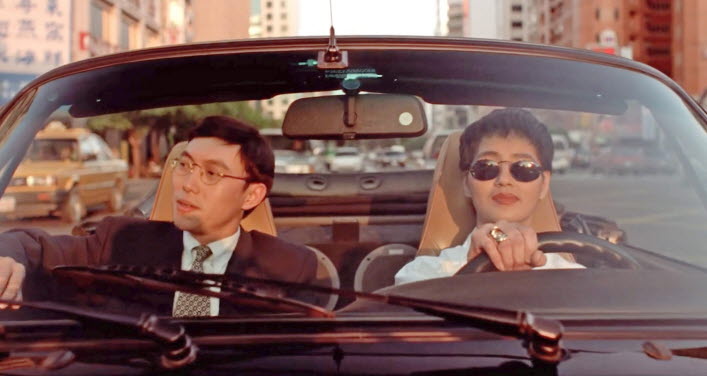
At least, Molly has Qiqi (Chen Shiang-chyi), her faithful assistant who has also been her best friend. Qiqi is always the one who takes care of any latest trouble for Molly and her company, and their latest trouble turns out to be rather tricky. They have been promoting a cocky young playwright named Birdy (Yeming Wang), but Birdy, who is incidentally an old college colleague of theirs, was recently accused of plagiarism, and this potentially serious circumstance happens to be involved with the novelist husband of Molly’s older sister, who has been enjoying her success as hosting a popular TV show promoted by Molly’s company.
Meanwhile, Qiqi has a few serious issues behind her back. She has been close to a young public servant named Ming (Weiming Wang), and they are expected to marry soon, but Ming, who has incidentally known both Ming and Qiqi since their college years, also turns out to have some personal issues to handle. We see how much he dislikes his father because his father left his mother for some other woman who is simply called “Auntie” (Elaine Jin), and there is also a subplot involved with his co-worker.
Frequently showing its wry comic attitude via a series of intertitles, the screenplay by Yang and his co-writer Hung Hung, who also played a crucial supporting character in the film, cheerfully hops from one humorous moment to another. As the main characters of the film come to clash with each other due to their silly misunderstanding as well as their apparent failure to communicate, the movie makes some sharp points on human nature and relationship, but it also gradually fleshes out its seemingly broad main characters, who may all live fairy well on the surface but are not so happy in addition to being confused and conflicted. While Molly becomes more uncertain about whether she can keep running her company as before, Qiqi may have to choose between her boss/best friend and her boyfriend, and several other main characters also come to have each own conflict in one way or another.
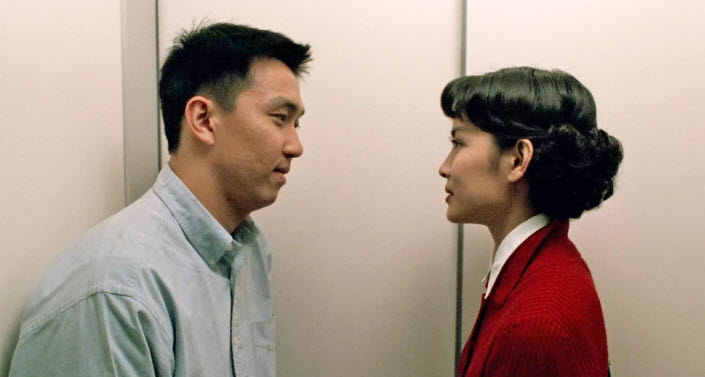
As taking time in developing each of its multiple plotlines more, the movie immerses us more into their lives and their society, and the movie often comes to function as the realistic presentation of the Taiwanese society during the early 1990s. As he did in his other films including “A Brighter Summer Day”, Yang did a deft job of filling the screen with vivid mood and details to be appreciated, and it is often engaging to observe how he and his cinematographer Longyu Li effortlessly achieved that. In many of the key scenes in the film, the camera often looks like statically observing the characters and their situations without much interruption, but it actually makes some subtle moves here and there for indirectly drawing more attention from us, and that is especially evident during a hilarious sequence where Akeem’s pathetic attempt to confront one certain character leads to a series of unexpected comic happenings. Again, the camera is calm and observant, but it does not overlook the absurdities surrounding the characters at all, and we become all the more amused as a result.
The main cast members of the film are all effective in their well-rounded acting. While Suk Kwan Ni and Chen Shiang-chyi hold the center as required, several other performers including Bosen Wang, Chen Limei, Yeming Wang, Danny Dun, and Weiming Wang, have each own moment to shine along the story, and Elaine Jin is particularly good when her busybody character shows more human depth than expected around the end of the story.
In conclusion, “A Confucian Confusion” is a funny human comedy to be admired for its witty and thoughtful storytelling, and it surely demonstrates well the more lightweight side of Yang’s masterful filmmaking. Although he only made seven feature films before he died in 2000, his achievements are quite impressive as far as I can see from “A Confucian Confusion” and his several other works, and I am already ready to revisit them someday for more appreciation and admiration.


 Seongyong's Private Place