

As watching Zia Anger’s fascinating feature film “My First Film”, I frequently wondered how much it actually reflects Anger’s life and career in real life. Yes, she did make her little first feature film “Always All Way, Anne Marie” between 2010 and 2012. Yes, she got really frustrated a lot as this micro-budget feature film of hers got rejected by one film festival after another. Yes, it was really “abandoned” as shown from her filmography on Internet Movie Database (IMDB) at present. Yes, she subsequently made a “live-interactive film” based on her experiences associated with “Always All Way, Anne Marie”, and that was the starting point where “My First Film” was developed by her and her co-writer Billy Feldman during the COVID-19 pandemic period.
Now your head may get a bit dizzy, but “My First Film” can still amuse and touch you a lot with its casual but ultimately poignant mix of fact and fiction. Mainly revolving around her fictional counterpart’s many struggles to make the first feature film, the movie provides a series of vivid and intimate moments to observe and admire, and you also appreciate how it humorously and thoughtfully juxtaposes filmmaking with female issues.
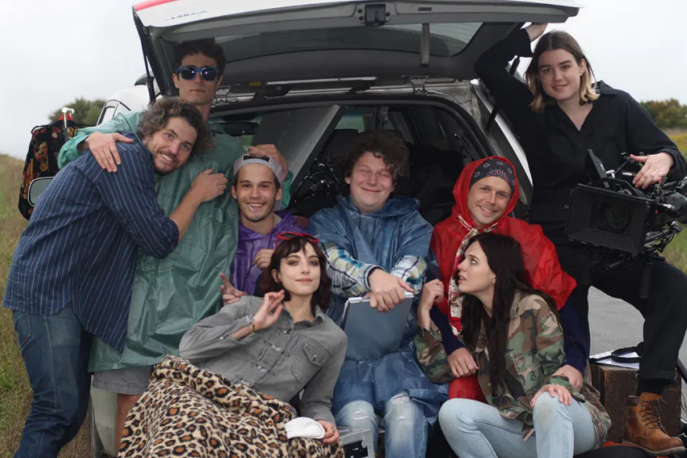
When Vita (Odessa Young) embarks on making her first feature film which is quite personal to herself in many aspects, she is quite hopeful and confident as fully supported by the small cast and crew members of hers, most of whom were incidentally her close friends. Although their production budget is pretty small to say the least, her crew members are all willing to take a big forward leap along with her, and we soon see them shooting their first scene together outside.
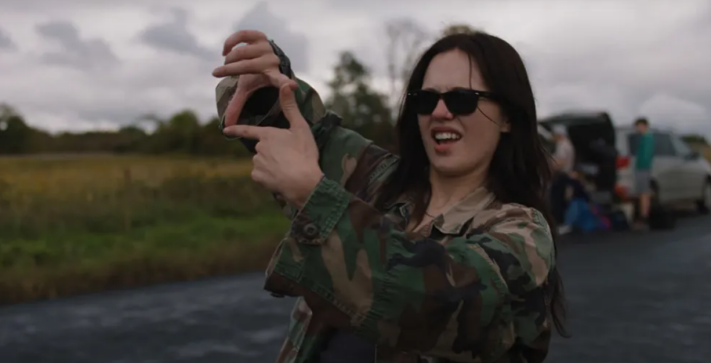
As Vita looks back on their following progress several years later, we come to gather what Vita’s first feature film, which is also “Always All Way, Anna Marie”, is about. It is inspired a bit by her rather complex childhood years, when she was raised by her two lesbian mothers who lived along with several others including her biological father in their little commune. Both Vita’s mothers and father gladly helped her when she tried to make one of her short films some time ago, and they seemed to have a really fun time together, but the result somehow failed to draw the attention of the folks at MUBI when she submitted it to them later (Ironically, “My First Film” is released on MUBI).
Once they shot their first scene, Vita and her colleagues become a bit more confident, but, not so surprisingly, things soon do not go that well for them. While they frequently have one trouble after another in shooting several other key scenes in the film, Vita sometimes feels like being at a loss about what and how her movie is about. Her colleagues try to help her as much as possible, but then they also get quite frustrated just like her, and you may be amused a bit when she frankly admits to us that she does not remember all of their names well (One of them is just called “Sound Guy”, by the way).
And there is also a little personal trouble involved with Vita’s boyfriend, who lets down her in more than one way. At one point, he interrupts her filmmaking process just because of his different opinion on a certain scene to be shot as soon as possible, and Vita has no choice but to have a brief private conversation with him later. It soon turns out that she is pregnant, and she already decides on having an abortion sooner or later, regardless of whether her boyfriend will accept that or not.
Nevertheless, Vita does not feel totally helpless as keeping going on along with her colleagues, and her lead actress Dina (Devon Ross) eventually comes to function as her enabler who really believes in Vita’s film. As shown from several amusing moments including the one where she has to be almost naked and covered with cheap fake blood, Dina, who also turns out to be quite knowledgeable about film history as shown from one brief scene, is ready for whatever is requested by her director, and we are not so surprised when they come to feel some attraction between them later in the story.
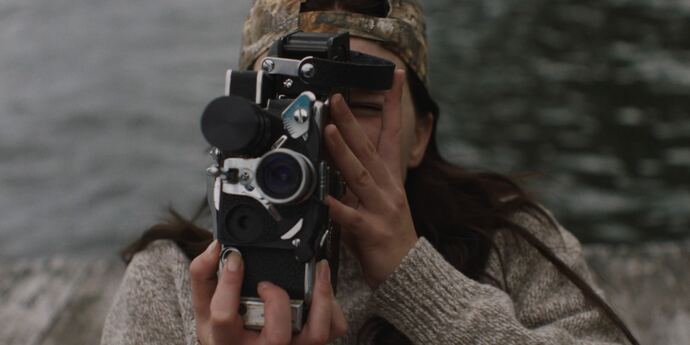
In the meantime, Vita’s filmmaking process is struck by an unexpected serious accident, and she is certainly devastated, but she continues to make her film as incorporating more personal elements into it. We are subsequently introduced her aging father, and their filmmaking scenes are as touching as those intimate father and daughter moments in Kirsten Johnson’s Netflix documentary film “Dick Johnson Is Dead” (2020).
It goes without saying that the ending of Vita’s filmmaking adventure is already determined from the beginning, but Anger develops something very sublime and uplifting from this predestined ending. I will not go into details here for your surprise, but you will be moved more by how powerfully the movie works as a female coming-of-age story of Vita’s life as well as her filmmaking career, and you may come to hope for better things to come into her (and Anger’s) life and career.
On the whole, “My First Film” is a little but precious gem which deserves more attention in my trivial opinion, and it will resonate more with you if you have ever had any experience with micro-budget filmmaking like a few acquaintances of mine. As a matter of fact, I would like to introduce the film to them as soon as possible, and I would love to hear their individual opinions.


 Seongyong's Private Place
Pingback: 10 movies of 2024– and more: Part 2 | Seongyong's Private Place