
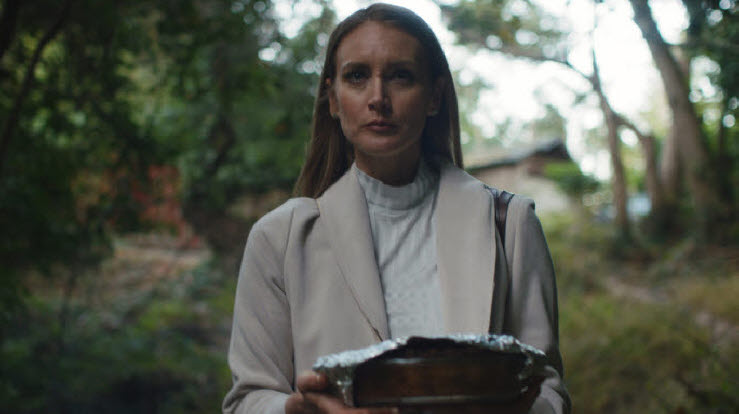
“Soft & Quiet” is a small but striking genre piece you will not easily forget. As it pulls no punch at all in its increasingly tense and disturbing presentation of racism, you will probably wince more than once, but the movie will hold your attention to the end thanks to its skillful handling of mood, story, and character, and it will surely make you reflect more on its sensitive main subject after the gut-chilling finale.
The movie opens with a white woman nervously doing a pregnancy test, and then we get to know a bit about her. She is a kindergarten teacher living in some suburban neighborhood, and we see her interacting a bit with one of her little students before going to some meeting, but then we gradually become uncomfortable about her – especially when she deliberately makes that innocent kid do a small act of racism to a colored janitor of her workplace.
After she subsequently arrives at a meeting where some other white women are waiting for her, she comes to reveal her true color along with a little special pie of hers. They are actually your typical white racists just like those deplorable American people unleashed by the political rise of Donald J. Trump, and their following conversation and discussion feel like a sort of twisted endurance test for any sensible audience. While they look surely absurd in justifying their disgusting racist belief, it is really unnerving to watch them casually and cheerfully exchanging their toxic ideas and thoughts among them, and you may often feel like watching what is happening among a group of anonymous racists at the dark corners of the Internet at every hour.
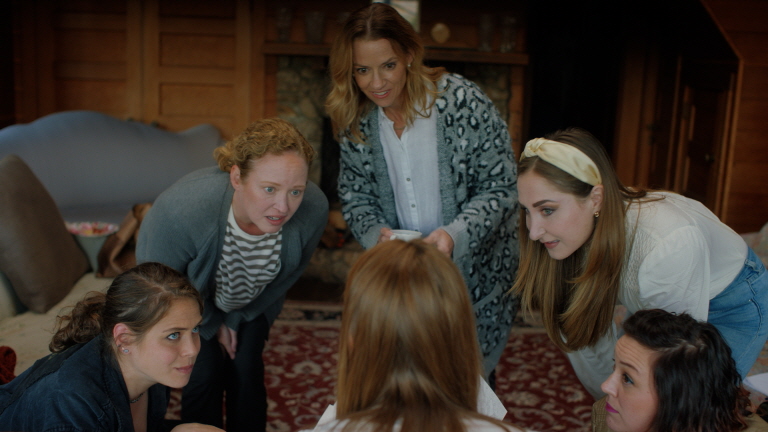
This is definitely not a pleasant sight to watch at all, but the movie keeps things rolling for a while among these detestable ladies, who are fleshed out bit by bit as they talk more and more with each other. While we come to observe them from the distance with more disgust and uneasiness, they look and feel plausible as persons you may come across inside the American society, and that is why their banality of evil is quite frightening to us – particularly when they discuss more about how they will propagate their racist ideas more out there in “soft & quiet” ways. Their strategies may sound silly and pathetic, but just think about how all those absurd and outrageous racists lies from that orange-faced prick are still appealing to millions of his despicable followers even at this point.
In addition, director/writer/co-producer Beth de Araújo and her crew members including cinematographer Greta Zozula did an impressive job of bringing a considerable amount of realism and verisimilitude to the story and characters. They present the whole movie in one continuous shot, and, though this visual approach has been a lot more common since Alejandro G. Iñárritu’s Oscar-winning film “Birdman or (The Unexpected Virtue of Ignorance)” (2014), the result is still very impressive because they actually shot the movie in real time. Later in the story, the movie moves along with its main characters from one spot to another, but the camera steadily follows them without any interruption, and that makes the following second half of the movie all the more intense.
Now I have to be a little careful about describing the second half of the story, which becomes a lot darker than expected. There is an unpleasant but undeniably tense scene between its racist main characters and a couple of young colored women, one of whom is incidentally associated with what recently happened to the brother of the teacher character. Not so surprisingly, she and her fellow racists become all the more spiteful after this very disagreeable encounter, and then they eventually decide to be more active with their racist belief.
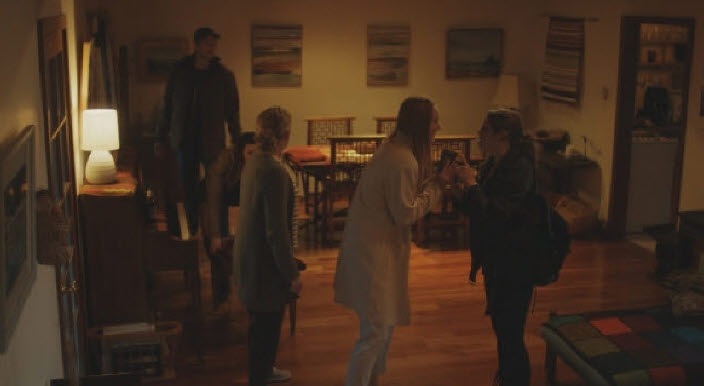
Around that narrative point, I could not help but reminded of that infamous home invasion scene of Stanley Kubrick’s “A Clockwork Orange” (1971), and the movie thankfully restrains itself a bit as they are driven further into cruelty and apathy by the vicious group mentality fueled by their racism. When they belatedly come to face the consequence of their actions, they are naturally thrown into more panic and fear, and then they find themselves going down further into the serious mess caused by them. Although we remain cold and distant to them as before, we are grabbed by the increasing level of tension around them, and you may be thankful for the very last shot, which is a bit contrived but necessary in literally bringing some air for us at least.
De Araújo, who made a feature film debut here after making several short films, also did a good job of pulling the credible performances from her small cast members. Stefanie Estes, Olivia Luccardi, Dana Millican, and Eleanore Pienta ably embody their characters’ deplorable aspects without too showy at all, and Luccardi is especially chilling when her character shows more willingness to go further than her fellow racist women. As the two crucial supporting characters in the story, Melissa Paulo and Cissy Ly are also effective, and Jon Beavers is also solid as the reluctant husband of Estes’ character.
On the whole, “Soft & Quiet”, which was incidentally distributed by the Blumhouse Productions in US (Jason Blum serves as one of its executive producers, by the way), is certainly not something you can casually watch on Sunday afternoon, but it skillfully leads us into the plain but ultimately chilling evil of racism. To be frank with you, I do not know whether I will be ever able to revisit it someday, but I am still impressed enough by the overall result, so I recommend it with some reservation.


 Seongyong's Private Place