
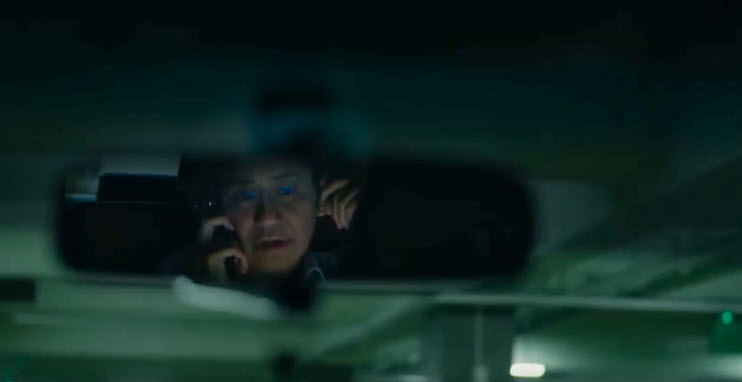
Documentary film “A Thousand Cuts” reminds us of the undeniable importance of good journalism – and how it can be so easily threatened in our current chaotic time. Even at this point, our world is still struggling with the disturbing rise of fascistic authoritarians accompanied with the growing crisis in professional journalism, and what is vividly presented in the documentary is certainly alarming to watch at times.
The documentary mainly revolves around a renowned Filipino journalist named Maria Ressa, who is the founder and the executive editor of a local online news site named Rappler. During the late 2010s, she and Rappler were frequently critical of President Rodrigo Duterte’s brutal war on drug, and Ressa and her fellow journalists were naturally harassed and oppressed a lot by Duterte’s government as they tried to stand up for press freedom as much as possible despite lots of obstacles they had to face day by day.
Director/writer/co-producer Ramona S. Diaz gives us a brief background information on how Duterte unexpectedly rose to the top in 2016. At first, he was just the relatively unknown mayor of a local city, but then his blatantly draconian policy against drug crime came to draw more attention and popularity during next several years, and many people in the Philippines came to embrace his authoritarian qualities without any hesitation just because he looked like an outsider who might handle things differently. Yes, this guy will surely remind you of a certain orange-faced con man who rose to the top of the American politics around that time, and it is no wonder that they seemed to get along with each other pretty well as fellow authoritarians.

Right from when he officially became the president, Duterte virtually sanctioned the extrajudicial killing of any drug addict or dealer out there, and the Filipino police were already ready for that. In fact, they promptly started his war on drugs shortly after his inauguration speech, and that was just the beginning of countless cases of killings around the country during next several years.
Ressa and her fellow journalists certainly reported a lot on the devastating consequences of this fascistic war on drug. One of the Rappler reporters recollects when she witnessed another killing incident not long after she and other reporters came for the one which happened first in the same neighborhood, and she is still haunted by how much the mother of the victim was devastated at that time.
As Rappler reported more and more on Duterte’s war on drug, Ressa and her fellow journalists were consequently far less welcomed by Duterte and his government. Just like that orange-faced prick, Duterte willfully spread misinformation while also accusing Rappler of producing, yes, “fake news”, and many of his ardent supporters on the Internet were certainly willing to attack Ressa and Rappler in one way or another.
Nevertheless, Ressa and her fellow journalists remained defiant, even while more and more frustrated with how their country was going down thanks to Duterte and his detestable cronies and supporters. Well aware that Rappler became the last stand for the Filipino journalism, Ressa stayed unflappable as before, but Duterte, who always makes me think of those vile and horrible figures in Joshua Oppenheimer’s memorable Oscar-nominated documentary “The Act of Killing” (2012), and his government continued to oppress her and Rappler, and she surely felt cornered more while getting arrested for more than once under outrageous false charges.

The plight of Ressa and her fellow journalists is often intercut with three different candidates running for the mid-term national election in 2019, and what we see from these figures is not so pretty to say the least. While we see some hope and possibility from one progressive female candidate strongly opposing to all the vulgar and toxic qualities of Duterte and his cronies, the two other candidates are the utterly deplorable emblems of what has been wrong with the Filipino politics for years, and you will not probably be so surprised by the eventual election result.
At least, Ressa and Rappler received a lot of support from the outside world, and she deservedly received the Nobel Peace Prize along with Russian journalist Dmitri Muratov in 2021. However, sadly, that was not enough to protect Ressa and Rappler. Around the time when the documentary came out in 2020, a court in Manila found her guilty of cyberlibel, and that was only the beginning of a long legal battle for her and the Rappler, which is still being continued even at this point.
On the whole, “A Thousand Cuts”, whose title is derived from one certain moment when Ressa explains how journalism can be killed along with democracy bit by bit, is recommendable for its powerful presentation of a serious case of journalism under crisis, and you will come to reflect more on the absolute necessity of good journalism for healthy democracy while also admiring a lot the courage and belief of Ressa and her fellow journalists. Things still do not look so bright for them and many others in the Philippines, but they will keep trying nonetheless, and I can only hope sincerely that their ongoing hard efforts will not amount to nothing in the end.


 Seongyong's Private Place