
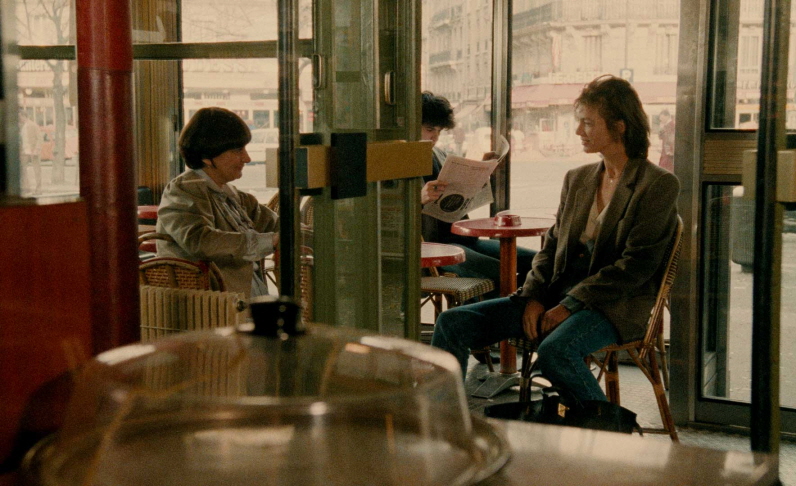
Agnès Varda’s 1988 docudrama film “Jane B. for Agnes V.”, which happens to be released in South Korean theaters a few weeks ago, is a charming playtime between its director and Jane Birkin, who also appeared in Varda’s another film “Kung Fu Master” (1988). As freely and spontaneously flowing from one moment to another, the movie is often brimming with an ebullient sense of fun around its two central figures, and we gladly follow their fun time even though occasionally baffled by its free-flowing style.
The film, which was produced along with “Kung Fu Master” as its sister project during that time, was conceived simply because of Varda decided to make a portrait of Birkin’s life and talent after Birkin confided to Varda on her growing concern on becoming 40. While Birkin might not be a great actress, she did have presence and talent as a photograph model who also appeared in a number of notable films such as Michelangelo Antonioni’s great classic film “Blowup” (1966), and Varda was willing to capture more of Birkin’s life and talent via her little impulsive personal project.
At first, Birkin tells a bit about her early years and her husbands and children, but the film soon comes to shift its focus more on her acting talent, and we are accordingly served with a series of creative moments generated from her frequent interactions with Varda throughout the film. While there are several loving moments which show the natural grace and beauty of Birkin as a photograph model, there are also some amusing scenes where she lets the line between fiction and reality blurred a bit in front of the camera, and Varda often adds humorous touches such as a big pink ribbon put upon an old house to be explored by them.
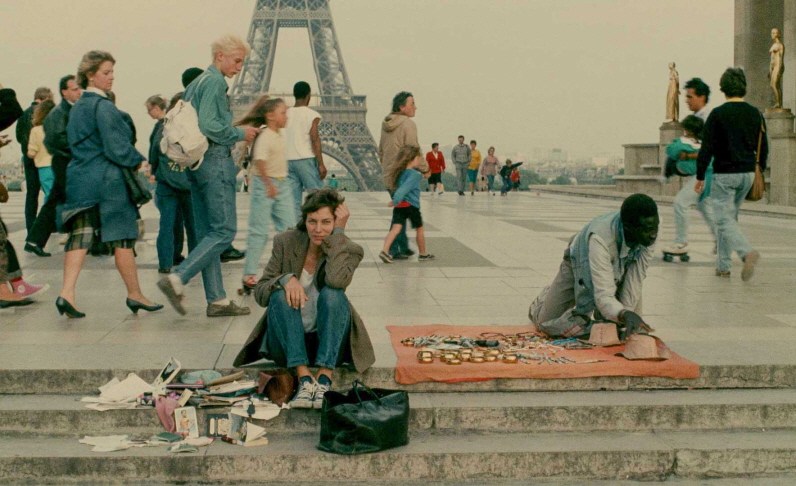
You may be confused a bit as Varda and Birkin casually hop from one scene after another without any apparent narrative direction, but you will probably admire the considerable spontaneity of their creative process. Whenever an idea comes upon them, they promptly embark on developing that impulsive idea in the very next scene, and I particularly enjoyed a little impromptu comedy sketch scene which is clearly a homage to Laurel and Hardy. While they may not be that good at comedy, Varda and Birkin willingly throw themselves into a series of silly comic moments, and we accordingly get a fair share of amusement from their joint efforts.
In addition, Birkin and Varda also try a bit on crime noir film around the beginning and end of the film. I must say that Varda is not exactly a suitable filmmaker for this genre while Birkin is not a very good action movie performer either, but I am sure that they were giddy about shooting a couple of action scenes featuring lots of gunshots and some fake blood. Yes, the result is quite rudimentary to say the least, but their joy of filmmaking behind and in front of the camera is palpable to us at least.
Birkin and Varda also talk a bit about which performer Birkin is eager to act with. Because Birkin’s No.1 pick, which is a certain famous American actor, is too expensive to recruit, Varda and Birkin consider several alternatives, and their eventual choice gives another inspired moment in the documentary. When Birkin later suggests making a short film about an adult woman attracted to a young adolescent boy, Varda recommends her young son Mathieu Demy, who incidentally appeared along with Birkin in “Kung Fu Master”, but both of them eventually decide that their story material is too uncomfortable to handle.
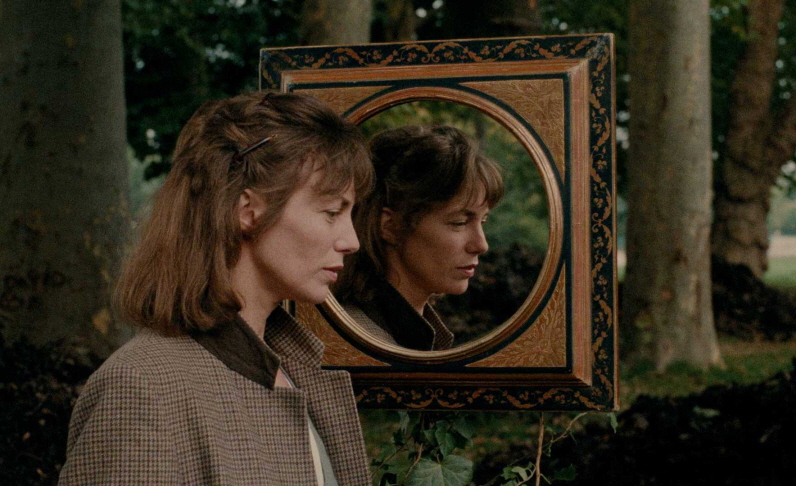
Although the film seems to be running out of ideas around its last several segments, the mutual admiration between Varda and Birkin keeps things rolling as before. As an actress and a filmmaker, they naturally discuss on the relationship between artists and their Muses at one point, and they come to respect each other more around the end of their creative journey. Yes, Birkin would get aged more and more as time passed by during next 35 years, but Varda gave a sincere tribute to her undeniable beauty and talent, and she was right when she told Birkin that it was the perfect time for that (However, Birkin’s daughter Charlotte Gainsbourg did not like much Varda and her crew camping in the family home for making the film and “Kung Fu Master”.)
In the end, Varda gives a wonderful gesture of affection as congratulating another birthday of Birkin, and this moment feels more poignant at present. Now both of these two wonderful female artists are not with us anymore, and the film becomes a time capsule recording the prime periods of their respective artistic careers. Because I remember Birkin, who sadly passed away in last year, mainly for “Blow Up” and that brief appearance of hers in Hong Sang-soo’s film “Nobody’s Daughter Haewon” (2012), I was entertained by watching Birkin trying many other things in front of the camera, and Varda, who died in 2019, always delighted me whenever gamely appearing along with Birkin on the screen.
Although it is relatively less impressive than Varda’s similar subsequent works such as “The Gleaners and I” (2000) and “Faces Places” (2017), “Jane B. For Agnes V.” is still engaging thanks to its bouncing charm and spirit. Although I belatedly came to know about Varda’s works around the late 2000s, I admired her more and more as watching more of her works, and this modest but likable film reminds me again that she was too great to be merely remembered as the “Grandmother of the French New Wave”. As Martin Scorsese once said, she was indeed “one of the Gods of Cinema”, and I am glad to watch one of her films on the big screen today.


 Seongyong's Private Place