
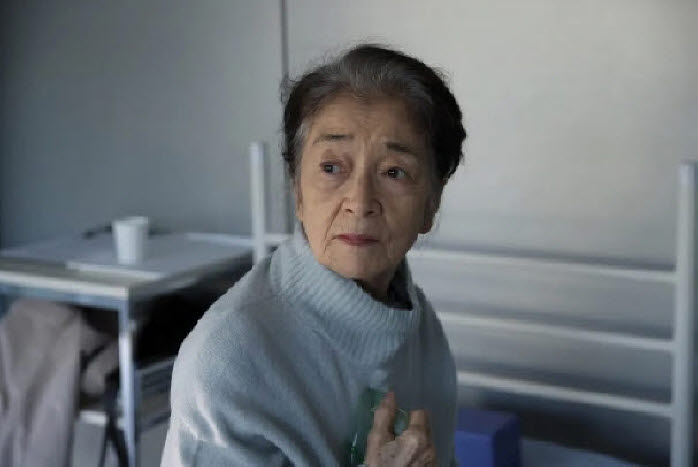
Japanese film “Plan 75”, which was selected as the Japanese entry for Best International Film Oscar in 2022, is calm and dispassionate about its gloomy dystopian subject. While its main subject is certainly thought-provoking to say the least, the movie often feels so clinical and alienating that it is a bit difficult for me to care about its story and characters despite the horror and sadness beneath the surface.
After the dry but shocking opening scene, the movie slowly establishes its grim story promise. Due to the growing problems from the rapidly aging population in the Japanese society, the government eventually decides to launch a legal public program called “Plan 75”, which recommends and provides free euthanasia services to old citizens over 75. While it causes lot of controversy at first, “Plan 75” has been gradually accepted in the public, and more aging people willingly accept it due to many reasons including their growing financial difficulties.
In case of a 78-year-old woman named Mishi Kakutani (Chieko Baisho), she does not feel any particular need for euthanasia because she has been doing fairly well in her ongoing daily life. While she has lived alone in her small shabby apartment, she is an independent lady who has diligently worked at a local hotel along with several colleagues around her age, so dying right now is the last thing she wants at present.
However, Mishi’s situation gets worse bit by bit. When one of her close colleagues becomes suddenly ill later, she and the other close colleagues of hers are requested to retire, and they have no choice at all. Mishi subsequently tries to get employed again, but, not so surprisingly, nobody wants to employ an old woman like her. To make matters worse, she will have to leave her apartment as the apartment building is going to be demolished sooner or later, so she begins to consider accepting Plan 75.
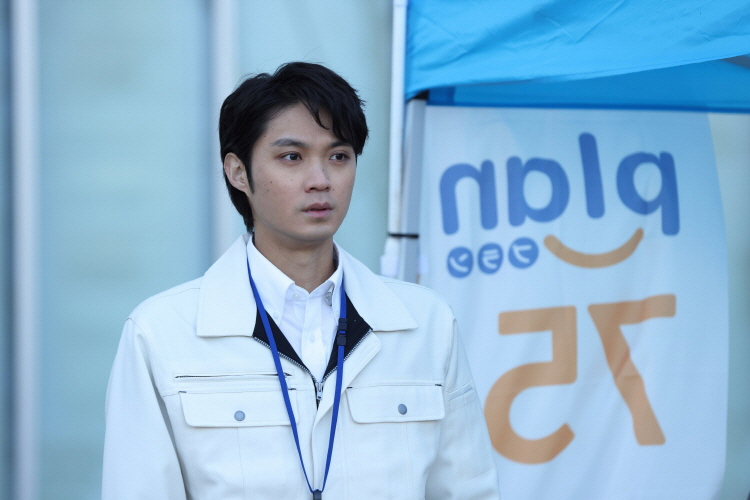
Meanwhile, we also observe two different persons involved with Plan 75. In case of a young man named Himoru Okabe (Hayato Isomura), he is one of the civil servants handling those old people applying for euthanasia, and he believes that he and his colleagues are really helping those old people, but then he begins to have doubts when he comes across an old man who turns out to be an estranged brother of his diseased father. While his uncle is ready to die once he has his 75th birthday, Himoru cannot help but feel conflicted, probably because his uncle is the only living part of his past.
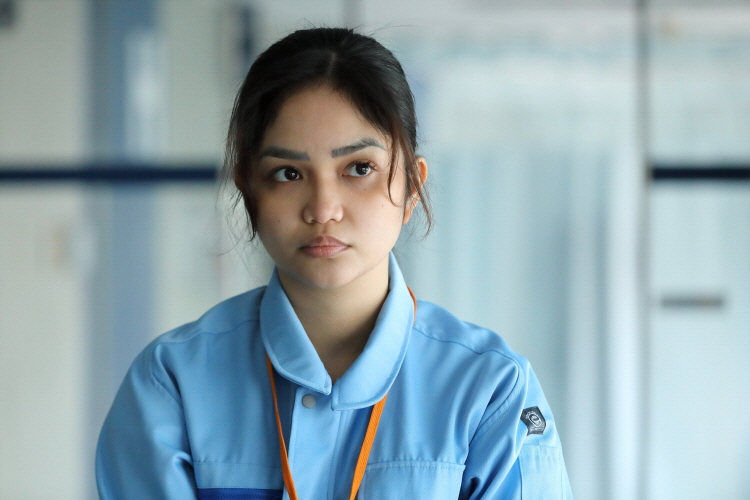
In case of a Filipino immigrant named Maria (Stefanie Arianne), she becomes involved with Plan 75 mainly because she needs to earn the money for her ill daughter as soon as possible. Regardless of how she feels about her new job at a facility where old people will be euthanized, she is willing to do whatever is demanded to her, though getting enough money for her daughter still looks like a distant possibility.
Shuffling among its three main plotlines, the screenplay by director/writer Chie Hayakawa, which is based on the story written by Hayakawa and her producer Jason Gray, steadily builds up its dystopian background surrounding its main characters, and there are a number of small moments of poignancy. After applying for euthanasia, Mishi comes to befriend a young counselor who turns out to be more caring than expected, and this young counselor surely feels guilty when Mishi is eventually about to go to that facility for euthanasia. When Himoru takes his uncle to the same facility, Himoru tries his best for his uncle’s last day, but he is only reminded that he is actually not that ready to let his uncle go.
While everything in the story is handled with restrained sensitivity, its cold and opaque storytelling approach keeps us from emotionally involved more in the story and characters. For example, we never get to know that much about any of its main characters, so we feel rather distant to whatever is churning behind their phlegmatic façade. As a matter of fact, the part associated with Maria is mostly shallow and redundant, and Stefanie Arianne’s earnest acting is under-utilized as a result.
At least, the movie is not entirely without interest. Under Hayakawa’s competent direction, the dystopian background of the film looks and feels believable in terms of mood and details. Although she does not seem to be signifying much on the surface, Chieko Baisho fills her role with life and personality to observe, and her nice low-key performance is particularly effective when her character shows a bit of the will to live more around the end of the story. While Hayato Isomura does as much as he can do with his rather plain role, Yuumi Kawai and Takao Taka are solid in their respective supporting roles, and Kawai has her own small moment when her character’s silent face speaks volumes at one point later in the story.
In conclusion, “Plan 75” is not entirely satisfying for me, but it shows that Hayakawa, who received the Special Mention award in the Caméra d’Or competition of the Cannes Film Festival in 2022, is another good filmmaker to watch. Although this is her first feature film, the movie shows her considerable potential, and I will certainly check out whether she will advance more in her next work.



 Seongyong's Private Place