
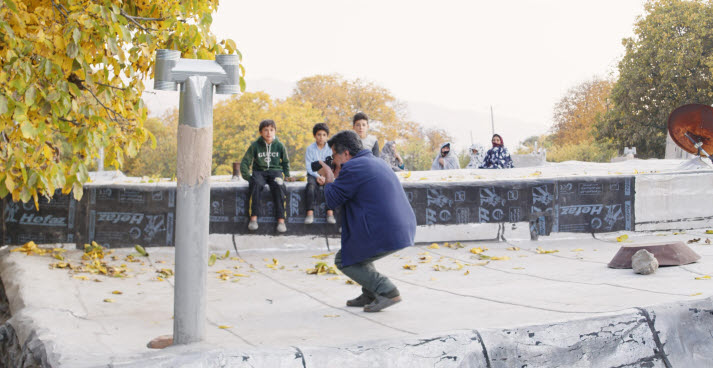
Iranian filmmaker Jafar Panahi’s latest film “No Bears”, which won the Special Jury Prize when it was premiered at the 2022 Venice International Film Festival, is fascinating for how the director willingly pushes his artistic vision further despite lots of obstacles and challenges around him and his work. While deliberately blurring the line between reality and fiction, the movie freely explores and examines its several main subjects including the ethics of filmmaking, and the result is surely another highlight in Panahi’s admirable filmmaking career.
The movie opens with the introduction of a couple who has been political exiles from Iran. Stuck in a Turkish city near the border between Turkey and Iran, they have been waiting for any chance to leave for Europe together, but only one of them can leave now, and that causes a serious conflict between them. While Bakhtiar (Bakhtiar Panjeei) sincerely wants his spouse Zara (Mina Kavani) to go first, she adamantly refuses to be separated from him because of her considerable emotional dependence on him during all those hard years of them.
This dramatic moment of theirs soon turns out to be a part of the filmmaking process directed by Panahi himself, who has been trying to make a docudrama film based on that couple’s personal story. Incidentally, he has to handle the shooting from a little rural village on the Iranian side of the border because he is not allowed to leave Iran due to his longtime conflict with the Iranian government, and we get a little amusing moment when he later attempts to reconnect with his crew and cast members after their communication line happens to be cut off.
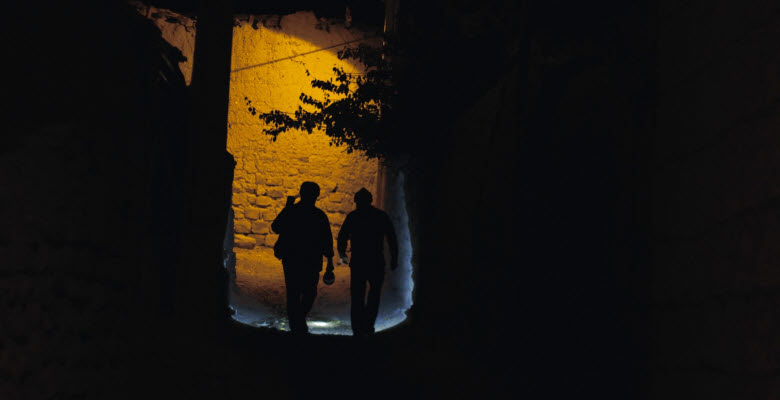
Meanwhile, a big engagement ceremony is being held outside the village. When Panahi asks him to shoot this ceremony, Ghanbar (Vahid Mobasheri), a villager who let Panahi stay in his residence, agrees to do that job for Panahi, though, to our little amusement. he is quite clumsy in handling Panahi’s digital camera as shown from the following result. As almost everyone gathers at the ceremony, the village becomes a little quieter, and Panahi casually takes some photographs outside his current staying place.
However, this casual act of Panahi later gets himself involved with an unexpected trouble in the village. Many of villagers including the village chief somehow come to believe that one of his photographs contains the sight of a lad and a young woman who has actually been engaged to some other guy in the village, so they demand Panahi to give them that particular photograph. Panahi insists that he did not shoot anything involved with those two young people, but the village chief and many other elders in the village keep pressuring on him, and this certainly makes him less welcomed in the village than before.
This situation eventually culminates to where Panahi is requested to make an oath in front of the village chief and many other villagers. While he is allowed to record his oath on his video camera, Panahi comes to express his personal opinion on the absurdity of the old traditions of the village, and this certainly leads to another unpleasant moment between him and the villagers.
In the meantime, things get more complicated for Panahi’s ongoing filmmaking process. When he has a brief meeting with one of his crew members near the border, he learns more about how the shooting becomes more difficult for his crew and cast members due to his absence. He actually considers crossing the border for directly handling the shooting, but then he comes to change his mind for understandable reasons.

Deftly alternating between these two narratives, the movie gradually engages us as Panahi tries to handle some ethically tricky matters along the story. For example, we are not entirely sure about whether Panahi’s camera actually captured the sight of those two young people, so we cannot help but observe his following actions with some reservation. He certainly does not want to cause any more trouble, but he inadvertently comes to cause to more troubles in the village, and it seems there is nothing he can do except observing and recording. In contrast, he attempts some manipulation on the two leading performers of his film, and this consequently leads to an emotionally painful scene where one of his leading performers finally decides that enough is enough.
As many of you know, Panahi was limited a lot by the Iranian government in one way or another during the production of “No Bears” in 2022, but the overall result feels more fluid and effortless than his previous film “Taxi” (2015), whose entirely narrative is unfolded inside a taxi driven by Panahi. While I admired Panahi’s defiant spirit behind “Taxi”, I also frequently noticed the inherent limits inside and outside that little film, and that was the main reason why I was less enthusiastic about it than others. In case of “No Bears”, Panahi demonstrates more artistic freedom and dexterity than before in addition to drawing good natural performances from himself and many other main cast members of his film, and the movie surely reminds us of how talented artists can sublimate their artistic challenges into golden opportunities for pushing themselves more.
While he was arrested right before the premiere of “No Bears” at the Venice International Films Festival, Parani was eventually released early in last year, and he is probably planning on making another work behind his back now. He is certainly one of the most important Iranian filmmakers at present, and I sincerely hope that he will keep going as before.


 Seongyong's Private Place