

I had some idea about what “God’s Country” is about after watching its trailer in last year. In fact, the movie did not surprise me in that aspect when I finally watched it yesterday, but it actually surprised me in how it is about. While working as a slowly tense genre flick on one level, it also works as an interesting character study on the other level, and I admire how the movie balances itself well between its two different things before eventually arriving at the inevitable finale waiting for its solitary heroine.
At the beginning, the movie gradually establishes its heroine’s ongoing personal loss and grief. Cassandra “Sandra” Guidry (Thandiwe Newton) is an African American woman who lived with her old mother at some remote rural area of Montana during last several years, but now her mother passed away, and there is no one around her in her house except her pet dog. She surely tries to focus more on her college job, and her colleagues show some support and condolence, but that reminds her more of being utterly alone now.
On one day, Sandra notices a big red truck on the driveway of her property, and she feels annoyed just because its driver enters her property without any permission from her. It soon turns out that the driver and his friend simply come for hunting, and she may just have to ignore them for a while, but she only becomes more determined to block them as much as possible.
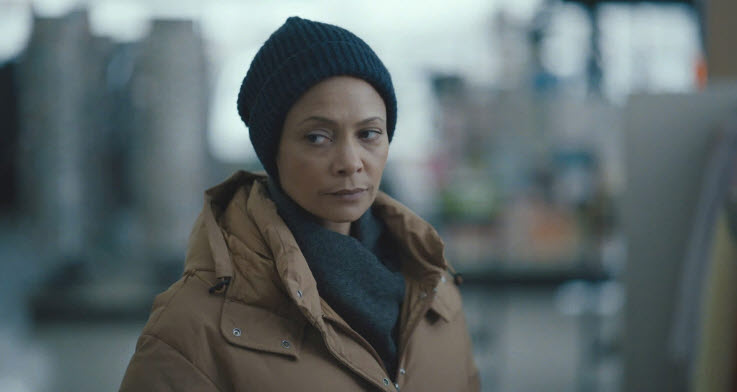
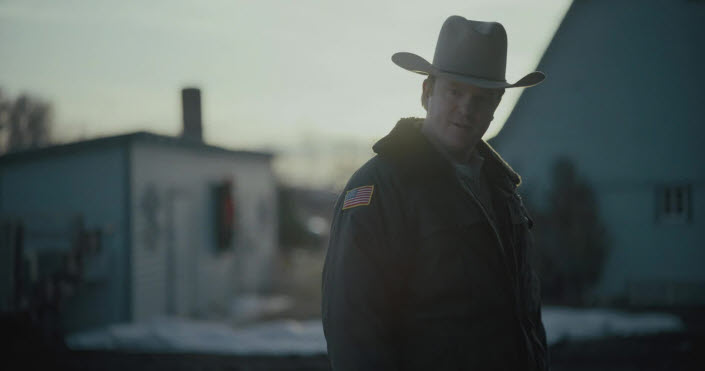
Not long after she gives them a couple of warnings, two disturbing incidents follow, so Sandra naturally calls for the local police. She is visited by the acting sheriff of the area, and he is rather impressed by how she thoroughly keeps several evidences of the incidents, but, to her frustration and exasperation, he does not help her much on the whole. Thanks to her remembering the license plate of that truck, Sandra and the sheriff actually can locate the driver, but the sheriff only warns the driver a bit, and he frankly admits to Sandra that there is nothing else he can really do for her at present.
To her annoyance, the driver and his friend keep entering Sandra’s property as before, and that is when she decides to handle the situation for herself. As revealed later in the story, she actually had a certain kind of professional career before beginning to teach at the college, and there is a quiet but bitter scene where she calmly reveals to the sheriff about how she came to quit her previous job and then move to Montana along with his mother.
However, the mood becomes a bit more introspective to our little surprise when Sandra follows and then confronts the driver. As observing a bit of humanity from the driver, she decides to show more tolerance and understanding, and it looks like their little conflict can be resolved once both of them step back a bit for avoiding any more trouble.
While recognizing this small possibility of resolution, the screenplay by director/co-producer Julian Higgins and his co-writer Shaye Ogbonna, which is based on James Lee Burke’s short story “Winter Light”, rolls the story and characters toward more conflict step by step. In case of that friend of the driver, he is really a nasty piece of sh*t, and Sandra’s encounter with this deplorable dude only increases her anger and frustration. In addition, she also comes to conflict a lot with the new dean of her college department, and she is reminded again of how fragile and isolated she really is at her workplace as the only colored female faculty member of the department.
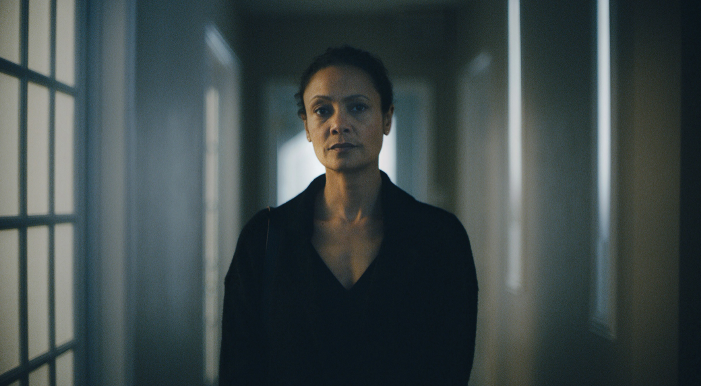
During the last act, the movie eventually becomes more intense than before with several devastating moments, but it still sticks to its dry and pensive attitude as before, and it is also held together well by the strong acting by Thandiwe Newton, a wonderful British actress who has steadily advanced during last 30 years since her charming performance in John Duigan’s criminally overlooked coming-of-age drama “Flirting” (1991). Effortlessly embodying her character’s strong will as well as vulnerabilities, Newton did a commendable job of conveying to us her character’s inner turmoil along the story, and she is particularly terrific when her character comes to have a complex moment of introspection around the end of the story.
Around Newton, several good performers come and go as effectively functioning as her counterparts. Jeremy Bobb has a couple of nice moments as his sheriff character shows some compassion and understanding to Sandra, and Joris Jarsky and Jefferson White make a good contrast with each other as those two unpleasant intruders in the story. Kai Lennox and Tanaya Beatty are solid in their small but substantial supporting roles, and Beatty has a little standout moment when her supporting character finds herself in a very tricky circumstance due to Sandra’s unwise act later in the story.
In conclusion, “God’s Country” did its own things well even while reminiscent of many other similar genre films such as, yes, Sam Peckinpah’s “Straw Dogs” (1971), but, unfortunately, it was forgotten quickly after it got a limited theatrical release in US in last year. In my humble opinion, it deserves some more attention considering Newton’s strong lead performance, and you will not be disappointed if you are looking for any kind of fresh genre variation.


 Seongyong's Private Place