

You may be a little relieved after watching Netflix documentary film “The Ivory Game”. Yes, it is really alarming to see how thousands of elephants in Africa were brutally slaughtered just because of their precious ivory tusks during last several decades, but, thanks to some global efforts glimpsed from the documentary, ivory trade has been more prohibited around the world than before, and we can only hope that those surviving elephants in Africa can prosper a lot via more protection and consideration in the future.
The documentary illuminates its important global issues via several different narratives respectively showing how complex and problematic the global ivory trade have been during last several decades. Although ivory trade is supposed to be strictly prohibited or regulated in many of African countries, many poachers and ivory merchants do not hesitate at all to get elephant tusks by means any necessary, especially after China recently emerged as a huge market for ivory trade. As a matter of fact, many of ivory merchants actually want elephants to get extinct in the end just because that will make their product all the more expensive than before.
We see how many local government officials and environmental preservationists, have certainly tried really hard to stop those poachers and ivory merchants – and how they often get quite frustrated in one way or another. While it is not so easy to monitor those surviving elephants constantly, it is also quite difficult to track down those poachers and their vast network of illegal ivory transaction, and there is even an elusive local criminal figure who has been quite notorious as occupying the top of his criminal business for some time.
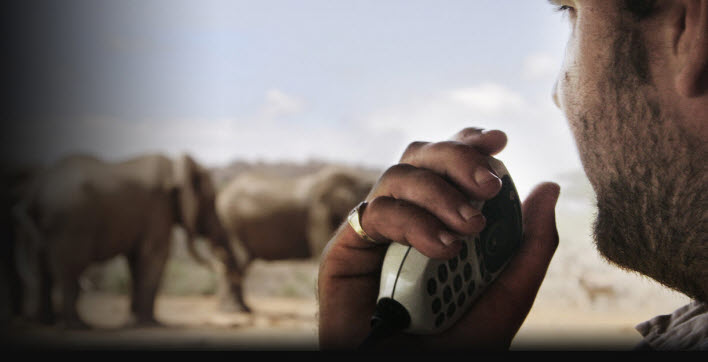
Nevertheless, many local government officials and environmental preservationists keep working as hard as possible because most of them really care about protecting those surviving elephants. In case of Elisifa Ngowi, the head of intelligence for the Task Force of the Tanzanian government, he has diligently worked on locating and then arresting that notorious criminal figure in question, there are several intense moments not so far from the climactic part of “Zero Dark Thirty” (2012). In case of Craig Millar, the head of security at the Big Life Foundation in Kenya, we see how he and his staff members tirelessly work in their preservation area, and we get to know how complicated their jobs can be. Besides always watchful of those poachers, they also occasionally have to deal with local people who do not like elephants much for understandable reasons, and there is a tense nocturnal scene where they manage to persuade some local people not to kill elephants just for ruining vegetable fields.
Meanwhile, the documentary also pays some attention to the illegal ivory trade in China via Andrea Crosta, the head of investigation for Wildleaks (Don’t confuse it with Wikileaks, please). Via his safe online network for informers and whistle-blowers, Crosta has tried to expose more of the illegal ivory trade in China, and he is helped a lot by a local investigative journalist named Huang Hongxiang. Although well aware of the considerable risks he is going to take, Huang is willing to do the right thing for those surviving elephants in Africa, and we subsequently see how he does some undercover works while disguising himself as a potential ivory buyer. At one point, he sneaks into a small local city in Vietnam which is virtually a port for the illegal ivory trade in China, and it is often chilling to see those ivory products openly displayed here and there throughout the city.
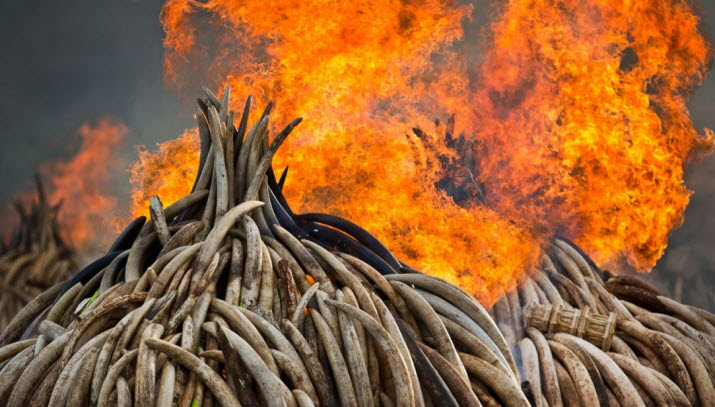
But that is nothing compared to the huge stacks of ivory stored in the government storage building in Kenya. After being thoroughly sorted out and then recorded, these stacks of ivory are now going to be destroyed forever, but we cannot help but reminded of the unjust death of countless innocent elephants in the past, and that resulting bitter impression does not go away at all even when these stacks of ivory are incinerated later.
For persuading the Chinese government more on banning ivory trade completely, Crosta and Huang delve further into the local illegal ivory trade, and the mood becomes more suspenseful when Crosta later gets some valuable help from one of his key local informers. Thanks to that informer, Crosta comes to behold some horrendous sights he will probably never forget, and I assure you that these sights, including a fur blanket supposedly made from the leg skins of at least 100 wild wolves, will even make Cruella de Vil look rather tame in comparison.
Things certainly looked quite dire as elephants in Africa were pushed more toward to extinction around 2015, but, fortunately, there came some considerable progresses later. Around the end of the documentary, Ngowi arrives at the closure for his longtime manhunt, and Crosta and Huang are certainly happy and excited when their investigative journalistic works actually leads to a significant global change. The Chinese government subsequently agrees to be much more restrictive about ivory trade, and this may become a big turning point for those surviving elephants in Africa.
Overall, “The Ivory Game” is effective in delivering its urgent environmental messages, and directors Richard Ladkani and Kief Davidson skillfully juggle its several plot lines without losing its narrative momentum. The human race may be the only species on the Earth which deserves to be annihilated, but we still have time and opportunity for doing the right things for many other species on our planet at least, and the documentary certainly makes a good point on that.


 Seongyong's Private Place