
It is often infuriating to watch Netflix documentary film “Victim/Suspect”, which was released in last week. Closely following one steady and persistent investigative reporting process, the documentary shows us how many of sexual assault survivors in US have been grossly mistreated by the system supposed to protect and then bring justice for them, and it is all the more exasperating to observe how things have not been changed that much for numerous sexual assault survivors out there.
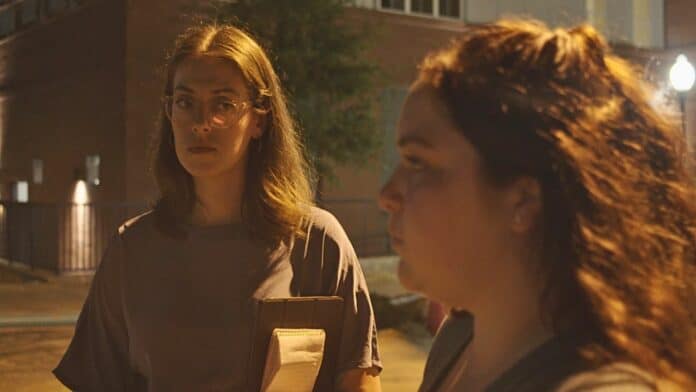
At first, the documentary mainly revolves around a reporter named Rachel de Leon, who happened to notice one seemingly simple case of a young woman who initially reported that she was raped and then arrested for her false report to the local police. Because this young woman already confessed to the local police not long before getting arrested, it looked like there was nothing to report there, but de Leon decided to get to the bottom of the case anyway, and then she found something quite unbelievable. It turned out that the local police actually coerced the young woman to do that confession, and they did not even do any proper investigation from the very beginning.
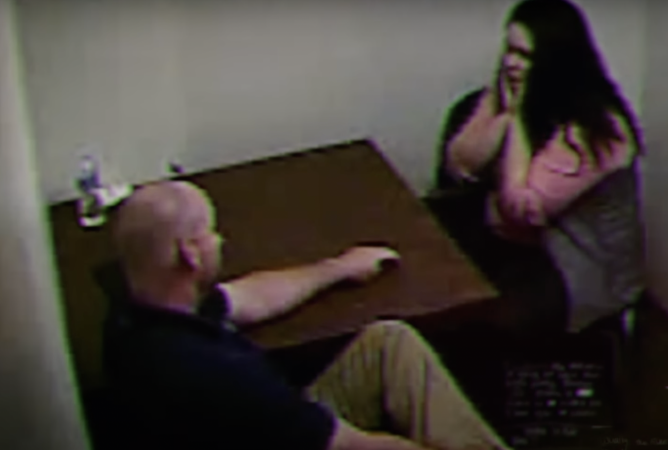
A series of police video recording clips clearly show how systemically the local police disregarded and mistreated the young woman without believing her story at all. A detective assigned to her case kept interrogating to her for more than one hour in a small interrogation room, and he even lied to her that there was a video clip from the surveillance camera around the crime scene which would contradict whatever she said to him. Besides, he often pointed out many inconsistencies in her testimony, and that surely made her feel more confused and cornered.
If you have ever watched the acclaimed Netflix miniseries “Unbelievable”, you surely know how wrong this really is. As an expert interviewee said in the documentary, most of sexual assault victims are quite confused as trying to process and understand what really happened to them, so their testimonies can be often incorrect and inconsistent to say the least. In addition, interrogating them again and again can be also quite traumatizing for their vulnerable minds, and that is why they need some psychiatric help if they really have to give a testimony for police investigation.
The more de Leon delves into the mistreatment of sexual assault survivors by the police, the more she came to learn of how prevalent it has been throughout the whole country. There were more than 150 publicized cases of “falsely reported rape” during one year, and it is quite possible that these cases are just a tiny tip of the big problem.
In case of a young woman in Alabama who eventually committed suicide after struggling a lot with the trauma from her sexual assault incident and its aftermath, she was quite disadvantaged from the beginning mainly because the man who allegedly raped her happens to have considerable power and money. The local police already believed that she was lying, and she was intensely interrogated for a long time while that man just briefly talked with a detective assigned to the case while his lawyer sat right next to him.
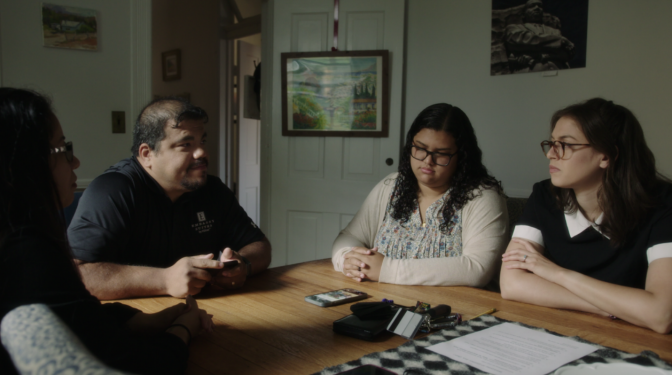
Later in the documentary, a retired police detective who had considerable experiences in handling sexual assault cases is interviewed and he is willing to tell a lot about how many police detectives are often willing to close those cases as soon as possible just because the cases are usually difficult and demanding to deal with. As a matter of fact, it will be so much easier if those women reporting sexual assault “confess” that they gave false report, and the same thing can be said about many others in the system ranging from sheriffs to prosecutors. All detectives have to do is using their familiar interrogation tactics on prime suspects, and sexual assault survivors are quite susceptible to that. Most of them eventually came to “confess”, and, to make matters worse, they sometimes got arrested and sent to the court for their “false report” while their cases were publicized for more shame and humiliation.
Although most of police detectives and sheriffs approached by de Leon declined to be interviewed by her, one certain detective, who handled the case of one of the sexual assault survivors appearing in the documentary, actually agreed to talk in front of the camera. He initially looks confident as frequently emphasizing how unbiased his investigation process is, but then de Leon gives something he should have found and then considered from the very beginning when he handled that case. Needless to say, he becomes quite embarrassed as looking more into his serious negligence.
Overall, “Victim/Suspect”, directed by Nancy Schwartzman, does not surprise me much mainly because I have been quite familiar with its main subject thanks to what I have learned from many other things including “Unbelievable” since the #MeToo Movement. I wish it was more focused instead of trying to handle lots of stuffs within 90 minutes, but this plain but impactful documentary reminds me again of why we still need a lot more changes. At least, as tentatively shown around the end of the documentary, more people have become aware of how tactfully and sensitively sexual assault cases should be handled, and that is why we should be more active about supporting and helping sexual assault victims out there.


 Seongyong's Private Place