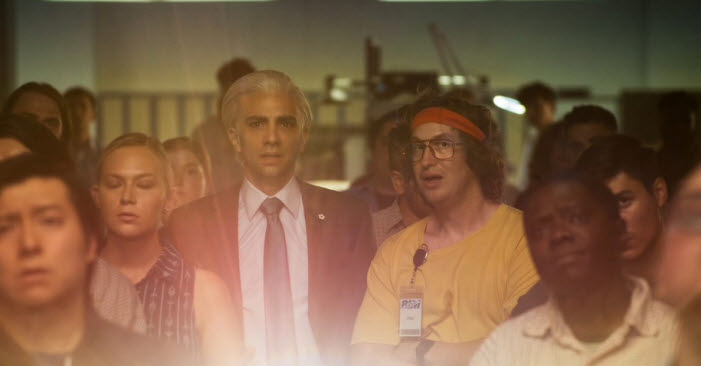
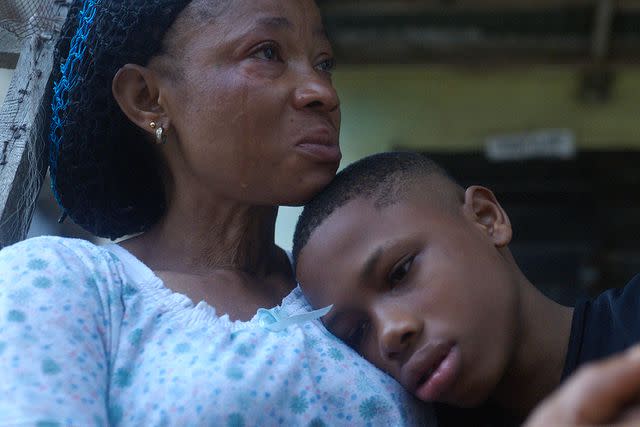
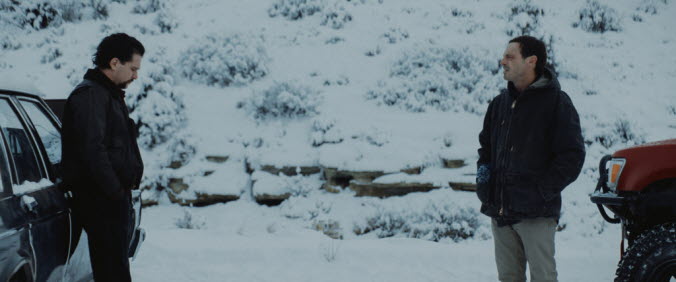
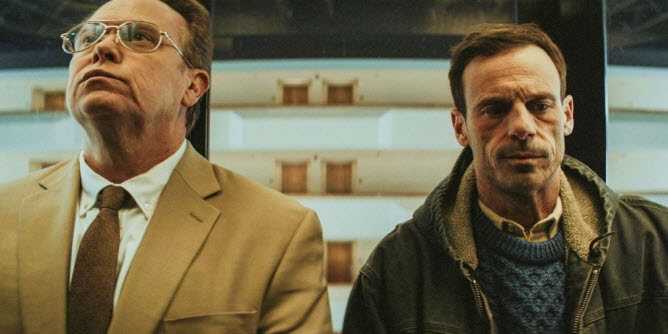
Birth (2022) ☆☆☆(3/4): A hell called pregnancy

South Korean film “Birth” was often difficult to watch for me. Because I saw its trailer a few weeks ago, I braced myself even before the screening was started, and, boy, it turns out to be as grimly intense as I could possibly expect. To be frank with you, I silently winced and cringed a lot during my viewing, but the movie still held my attention to the end thanks to its competent direction and admirable lead performances, so I will tell you in detail on why it is worthwhile to watch, even though I am still trembling inside my mind at present.

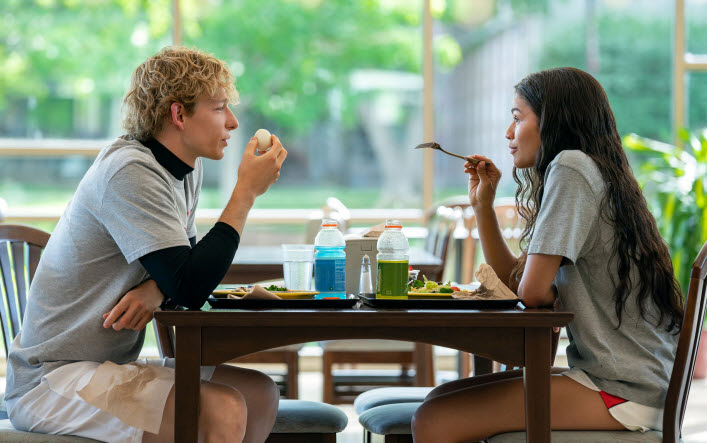
The opening part of the film slowly establishes the fairly good relationship between a young woman named Jae-i (Han Hae-in) and her boyfriend Geon-woo (Lee Han-ju). While Geon-woo works at a private English academy, Jae-i is a promising writer who has recently finished her second novel, and, according to her female editor, it looks better than the first one. As a matter of fact, the editor suggests that Jae-i should quickly move onto writing the next one, and Jae-i has no problem with that at all as becoming more confident than before. While she begins to write in a small flat where she and Geon-woo have lived, Geon-woo is willing to support her as before, and it looks like everything will be just fine for them as usual.

However, alas, there comes an unexpected matter for both of them. On one day, Jae-i goes to a women’s clinic for a little medical problem, and, what do you know, she turns out to have been pregnant for at least 3 months. Because she and Geon-woo agreed on not having a baby and have always been cautious about that, they are flabbergasted a lot by this surprising news, and Jae-i quickly becomes quite anxious and confused to say the least. She is currently in the middle of what may be the most important point in her writing career, and having a baby is certainly the last thing she wants right now.

Naturally, Jae-i decides to have an abortion as soon possible, but then she comes to have doubts on her initial decisions. A doctor tells her that abortion can be quite risky for her rather fragile physical condition, and, above all, Geon-woo is not particularly willing to accept her initial decision. He promises to her that he will do everything for not only her pregnancy but also her writing career, and his sincere promise eventually makes Jae-i change her mind.

However, as many of you have already expected, things soon do not go that well for both of them within a few months. Jae-i really tries a lot for balancing herself between her work and her ongoing pregnancy, but she only finds herself quite frustrated with how she often becomes emotionally and physically vulnerable – and how that frequently affects her writing process. She manages to complete her next novel, but then it is not accepted that well by her editor, who kindly recommends Jae-i to take some break for her pregnancy.

However, Jae-i cannot help but become more worried because her pregnancy may terminate her writing career, and, unfortunately, Geon-woo does not provide her enough support and help as becoming busier with several matters at his workplace. The director of his private English academy promises him promotion in exchange of doing some extra works, but he soon comes to realize that he was deceived from the very start, and his resulting anger and frustration exacerbate the accumulating conflict between him and Jae-i.

As we come to brace ourselves more for what may inevitably happen sooner or later, the screenplay by director/writer Yoo Ji-young, who previously made “Duck Town” (2017), slowly builds up tension under the surface. Although its running time (155 minutes) is a bit too long in my trivial opinion, the movie steadily engages us via realistic mood and details, and the gradual implosion of Jae-i and Geon-woo’s relationship is illustrated with considerable emotional intensity. Around the narrative point where they inadvertently come to hurt not only each other but also themselves, we are certainly shocked but not that surprised, because we have closely followed and observed what has been angering and frustrating them along the story.

The movie surely depends a lot on the strong performances of its two lead performers, who do not hesitate to delve into their respective characters’ human flaws. Han Hae-in is constantly compelling as palpably conveying to us her character’s dynamic emotional conflicts, and that is why it is a bit relieving for us to watch when Jae-i happens to have a little unexpected moment of empathy and consolation later in the story. On the opposite, Lee Han-ju is equally convincing as ably complementing his co-star, and I sincerely wish that his increasingly pathetic character will be an effective lesson to anyone with a pregnant girlfriend or spouse.

Overall, “Birth” is a tough stuff to say the least, but I recommend it mainly for being another well-made South Korean film about pregnancy after Namkoong Sun’s “Ten Months” (2020). While I think “Ten Months” is a better one, both of these two movies will definitely show you how things can be grim and difficult for pregnant women in the South Korean society, and you will not be surprised by how the birth rate in the South Korean society has been hitting the new bottom again and again these days. Things must really be changed for women as well as the whole South Korean society right now, but, seriously, will that ever happen, I wonder?

Posted in Movies | Tagged , , | Leave a comment

Big Sleep (2022) ☆☆1/2(2.5/4): His curt kindness

South Korean film “Big Sleep”, which is incidentally not associated with American classic noir film “The Big Sleep” (1946) at all, is a moody social drama which somehow fails to engage me. While it surely shows us well the harsh reality surrounding its two main characters on the screen, the movie often feels flat and deficient in terms of storytelling and characterization, and we only come to observe its two main characters from the distance without really getting to know them.

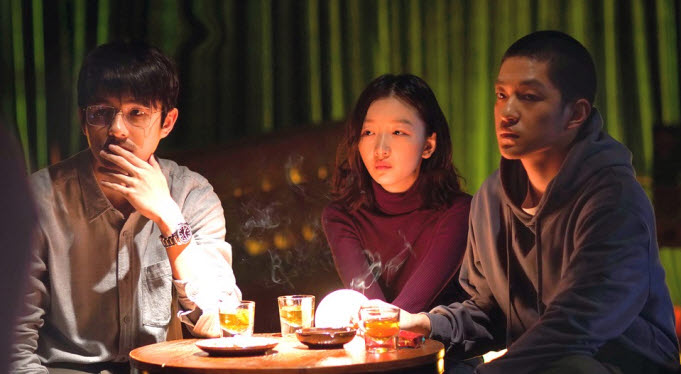
The early part of the film establishes how things have been hard and difficult for Gi-yeong (Kim Young-sung). He lives alone in a small apartment, and he has earned his meager living via working in some small local factory, but his detached face clearly shows how much he has been tired and frustrated with his life for years. At one point, he visits his ailing father’s residence, and it is very evident to us that he has some old issues with his father, but the movie never clarifies these issues except implying that he is still angry and resentful about his father.

When Gi-yeong leaves his apartment for his work on one cold winter morning, he finds an adolescent boy sleeping on a wooden bench in front of the apartment building. This boy, named Gil-ho (Choi Joon-woo), left his home due to his stepfather’s domestic violence, and he has been hanging around with several teenage runaways not so different from him. Although their first encounter is not so gentle to say the least, Gi-yeong subsequently lets Gil-ho into his residence, and Gil-ho is certainly grateful to him for that although he naturally feels awkward about this unexpected kindness of a stranger.

What follows next is how tentatively these two different characters open more of themselves to each other. After trusting Gi-yeong more during next several days, Gil-ho tells a bit about why he left his home, and Gi-yeong does not judge him at all while giving him some brutal advice as a guy who probably had a fair share of domestic problems in the past due to his father. Despite his rather curt and disaffected appearance, he turns out to be much more capable of kindness and compassion, and he is going to let Gi-ho stay longer at his residence as long as Gil-ho does not cause any trouble.

Of course, the situation becomes problematic due to Gil-ho’s fellow teenage runaways. When they come to learn that Gil-ho is staying in Gi-yeong’s house, they naturally want to come there, and Gil-ho cannot possibly say no because of the peer pressure upon him. Although he knows well that he is betraying Gi-yeong, but he only finds himself cornered by the aggressive leader of his group, and his unwise choice consequently leads to a big conflict between him and Gi-yeong.

Meanwhile, the screenplay by director/writer Kim Tae-hoon, who made a feature film debut here after making several short films, also focuses on Gi-yeong’s workplace problem. As the company has some serious business trouble, downsizing seems quite eventual, though the foreman assures to Gi-yeong that he will be all right in the end. When he is later instructed to do something quite illegal along with several other employees, Gi-yeong feels very conflicted, but there is nothing he can do about that.

However, this subplot does not lead to anything while only emphasizing how life remains hard and difficult for Gi-yeong, and the same thing can be said about the subplot involved with a young female employee. She seems to be interested in getting a little closer to Gi-yeong, but romance is the last thing Gi-yeong wants – even when she approaches to him more actively than before.

In the end, the story eventually arrives at the point where Gi-yeong really tries to do more for Gil-ho simply he cares about Gil-ho, but the movie does not build up much emotional ground for that. Not so surprisingly, Gi-yeong comes to clash with Gil-ho’s fellow teenage runaways and their leader later in the stry, but the following outcome is pretty predictable to say the least, and there is not much resolution for Gi-yeong and Gil-ho’s relationship even in the end. We do not get much sense of how their relationship has been changed, and we are only reminded that things remain quite uncertain for both of them because there is still that harsh reality outside.

At least, its two lead actors did a good job of embodying their respective roles without much pretension. While his character sometimes feels a little too obtuse, Kim Young-sung ably suggests the softer sides hidden behind his character’s weary attitude, and his solid performance dutifully carries the film to the end. On the opposite, Choi Joon-woo is stuck with his relatively underdeveloped character, but he holds his own place well besides his co-actor at least, and I think the movie could be more improved if it simply allowed more space and time for their acting talent.

In conclusion, “Big Sleep” is not entirely without engaging elements to notice, but it ultimately left me with dissatisfaction because its sincerity is frequently inhibited by its adamantly gloomy realism. It does care a lot about its story subject, but it is often too curt and restrained to show more of its heart just like its hero, and the result is just another solemn and depressing slice of South Korean life. No, I do not mind watching such a thing like that, but the movie does not distinguish itself enough on the whole, and that is all I can tell you for now.

Posted in Movies | Tagged , | Leave a comment

A Man Who Heals the City (2023) ☆☆☆(3/4): One decent old man

South Korean documentary film “A Man Who Heal the City” intrigues us as observing one decent old man from the distance for a good reason. Although he helped and supported many different people for several decades as a respected local patron and philanthropist in his small city, he was so humble and casual about that he was not so willing to say much in front of the camera, and there is some amusing tension between him and a local journalist doing some research on his many good deeds in the past.

At first, a bunch of interviewees in the documentary gladly tell us about what an exceptional human being he is. Thanks to his very successful oriental medicine pharmacy mainly driven by his good will and sheer diligence, Kim Jang-ha earned a considerable amount of money every day during the prime of his life and career in a small local city named Jinju, but, instead of spending on himself or saving for himself, he simply donated his money for many different causes ranging from scholarship to public welfare, and he is still willing to go on as much as possible even though he is about to retire now.

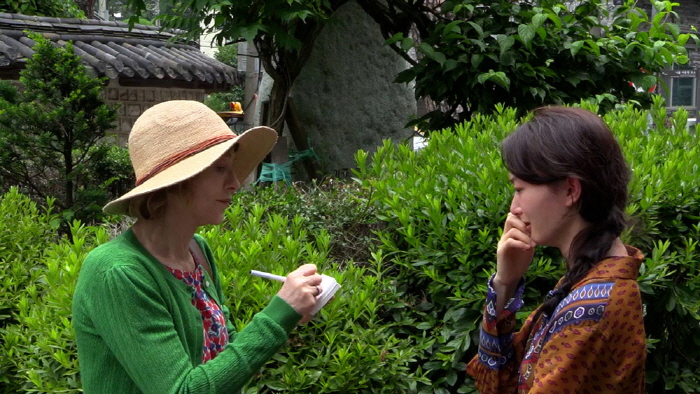
As a journalist who once worked in a local newspaper supported a lot by this admirable old man, Kim Joo-wan has been certainly interested in writing a book about him, but Kim Jang-ha is initially adamant about not telling anything about what he did for many other people out there. In his viewpoint, he simply did what was needed to be done for them, and he certainly did not want to boast about that at all. No matter how much Kim Joo-wan tries, Kim Jang-ha remains calmly unflappable, and the mood becomes a bit humorous as the camera focuses on a series of rather silent moments between them.

After that point, Kim Joo-wan decides to interview instead a number of people who know Kim Jang-ha, and all of them surely have plenty to tell in front of the camera as remembering how much they were respectively helped by him in one way or another. When Kim Joo-wan goes to a little country village where Kim Jang-ha started his pharmacy business, a couple who were his neighbors tell us about how Kim Jan-ha was quite philanthropic even during that time. There also were hundreds of poor students considerably helped by the scholarship funded by him, and one of them is currently working as one of the judges in the Constitutional Court of South Korea. As shown from one archival video clip, this man still remembers how much he was helped by his generous benefactor at that time, and I can only hope that he will continue to remember that to the end as a public servant.

Besides his scholarship, Kim Jang-ha also founded a private high school in the 1980s simply because he had enough money for that, and the former teachers of that school reminisce about how exemplar he was as the founder/board chairman. He never interfered with how they taught those students, and he also willingly protected them from the pressures from the power that be, just because he really trusted and supported them. When many of teachers formed a union several years later, he never objected to that from the beginning, and he did not give a damn at all about how much he was pressured or criticized for that.

In addition, Kim Jang-ha was quite open-minded about public welfare, and we see several examples of that. For instance, he has been the patron of a local theater company, and he supported an organization for illuminating many hidden pasts of his city. He has also been very passionate about several issues of equality, and he actually funded a local shelter for female domestic abuse survivors.

Later in the documentary, Kim Jang-ha becomes a bit more opened to Kim Joo-wan, though he remains as quiet and humble as usual. He still does not talk much about his private life, so Kim Joo-wan and director Kim Hyun-ji interview his wife instead for a while, but she simply implies that it has been not so easy for her and her family to live with him. After all, as the family members of a man who has been regarded like a living saint, they have to be rather cautious about their words and behaviors, don’t they?

In the end, there comes a bittersweet moment as Kim Jang-ha is going through what will be the last day for his pharmacy business, and it is touching to watch how he is appreciated by a bunch of people dropping by his pharmacy for showing genuine gratitude. Understanding how humble he is, they simply give a little flower bouquet, but that is more than enough for him to say the least, and he is already ready to move onto what will be the last chapter of his life.

Overall, “A Man Who Heals the City”, which was initially produced as a TV documentary but then got released in South Korean theaters a few weeks ago, is a modest but moving presentation of one remarkable human being who has spread good will throughout his whole life, and he would be certainly admired by my late mentor/friend Roger Ebert. Ebert once said this: “I believe that if, at the end of it all, according to our abilities, we have done something to make others a little happier, and something to make ourselves a little happier, that is about the best we can do.” As far as I can see from the documentary, Kim Jang-ha is a prime example of Ebert’s valuable standard of humanity, and I assure you that you will never forget this man after watching this little documentary.

Posted in Movies | Tagged , , , , | Leave a comment

12.12: The Day (2023) ☆☆☆(3/4): That infamous night in Seoul, 1979

South Korean film “12.12: The Day” is an intense fictionalized version of what happened at one terrible night of December 1979 in Seoul. Although I and many other South Korean audiences are well aware of how the story eventually ends, the movie did a fairly good job of holding our attention for more than 2 hours, and it wisely lets us reflect more on one of the darkest times in the South Korean history during the late 20th century when it finally arrives at its expectedly grim and bitter ending.

At the beginning, the movie quickly shows and tells how things became quite uncertain after the sudden assassination of Park Chung-hee, a military dictator who ruled over the country for 18 years since his coup d’état in 1961 and then got killed by one of his right-hand guys on October 26th, 1979. As everyone at the top of the South Korean government and military tried to handle the aftermath as much as possible, many people in South Korea demanded democracy more than before, and it looked like a spring of democracy would come to the country at last.

However, there was one ambitious military general on the rise, and the early part of the film depicts how insidiously he usurped the South Korean government and military step by step. After being charged with the investigation on Park’s assassination, General Chun Doo-gwang (Hwang Jung-min), who is clearly based on Chun Doo-hwan, promptly embarks on taking control here and there, and many of his inner circle members in the South Korean Army gladly support and assist him without any hesitation.

Of course, this does not look that good to Jeong Sang-ho (Lee Sung-min), who is apparently based on Jeong Seung-hwa, the South Korean Army Chief of Staff at that time. After seeing how Jeon and his people occupy one spot after another at the top of the South Korean Army, the chief naturally becomes warier of Jeon, so he appoints Lee Tae-shin (Jung Woo-sung), who is indubitably based on General Jang Tae-wan, as the new Commander of the Capital Garrison Command in Seoul because Lee is one of the most trustworthy and responsible generals in the South Korean Army.

However, around the time Jeong and General Lee attempt to stand on his way to the absolute power, General Chun has already been planning a coup d’état along with his inner circle members. First, they are going to “arrest” the chief for an utterly false charge, and they will quickly get the official authorization from the current President, who is your average pushover to be bullied or persuaded by General Chun.

Once he belatedly comes to realize what is happening right now, General Lee tries to do what he is supposed to do as a soldier who swore to protect his country and government, but, alas, he soon finds himself quite frustrated and exasperated not only outside but also inside. While General Chun and his accomplices gradually take the control of the ongoing situation outside, General Lee is frequently blocked by the sheer incompetence of top-ranking generals and government officials, and the possibility of defeat become more imminent to him and a few trusted soldiers and officials of his minute by minute.

I do not know how much the movie fictionalizes its real-life story, but director/co-writer King Sung-su and his crew members including cinematographer Lee Mo-gae and editor Kim Sang-beom did a commendable job of engaging us throughout its rather long running time (141 minutes). Although it often busily juggling a number of characters and storylines, the movie never gets us lost or confused, and it thankfully does not try any unnecessary melodrama as efficiently conveying to us a palpably suspenseful sense of urgency and desperation along the story.

In case of the main cast members of the film, they dutifully fill their respective spots with each own presence. Hwang Jung-min surely has the showiest role in the movie as expected, and he accordingly chews every scene of his as the movie coldly presents his character as a vile and domineering bully willing to go all the way for his despicable military gamble. On the opposite, Jung Woo-sung is effective as an unflappable man of integrity and honor, and he is especially good during one dramatic scene where his character valiantly stops alone a bunch of approaching soldiers on a bridge to Seoul. Several main cast members including Lee Sung-min, Park Hae-joon, Kim Sung-kyun, and Kim Eui-sung are also fine in their crucial supporting parts, and Jung Man-sik, who has been one of notable South Korean character actors since I and other South Korean audiences noticed his substantial supporting turn in Yang Ik-june’s powerfully gritty independent film “Breathless” (2008), makes the best of his rather brief appearance as a hardcore general who will not easily step back at all just like General Lee even when he is really against the wall.

In conclusion, despite some glaring weak points including its inherent lack of substantial female characters in the story, “12.12: The Day”, which is released as “Spring in Seoul” in South Korean theaters today, skillfully handles the tragic aspects of its gloomy historical aspects, and it feels rather timely considering how not only South Korean and many other countries in the world are more threatened by the ongoing rise of fascism day by day. Yes, this is surely a “feel-bad” film, but it engaged me enough in addition to inducing some thought and reflection in my mind after the screening, and that is what a good movie can do in my inconsequential opinion.

Posted in Movies | Tagged , , , , | Leave a comment

Rustin (2023) ☆☆1/2(2.5/4): A gay organizer behind the March on Washington in 1963

Netflix film “Rustin”, which came out in last week, wants to be two different things at once, but I do not think it succeeds as much as intended. On one hand, it wants to present a monumental historical event of the late 20th century American political history via the viewpoint of a certain openly gay figure who deserves to be known more, but it does not bring much new insight to be added to what I have learned from many different (and better) movies and documentaries. On the other hand, it also wants to explore who this interesting figure really was, but it only feels like scratching the surface despite the considerable efforts from its lead actor.

Colman Domingo, who has been quite more notable during last several years since his substantial supporting role in Barry Jenkins’ “If Beale Street Could Talk” (2018), plays Bayard Rustin, an African American civil rights activist who was one of the key figures behind the March on Washington in 1963 but did not get much recognition during his lifetime for an unfair reason. As shown right from the opening part of the film, his homosexuality was an open secret among many of his colleagues including Dr. Martin Luther King Jr. (Aml Ameen), and that was the main reason why he came to resign from his post in NACPP (National Association for the Advancement of Colored People) in 1960.

Three years later, Rustin is brought back in action once it looks like the Civil Rights Movement led by Dr. King and other prominent activists really needs a public boost for their noble cause. Although they have certainly gotten some support from President John F. Kennedy and many other liberal white politicians, that is still not enough for them nonetheless, and Rustin has one bold idea for drawing much more public interest on their cause. He proposes a massive political rally in the middle of Washington D.C., but many of his colleagues are skeptical about whether they can actually pull it off due to several understandable reasons. First, they need to organize and prepare for everything within a few months, and Rustin and his close colleagues also will have to deal with not only those staunch white officials but also certain prominent African American figures who do not like Rustin much.

The most interesting part of the film shows how hard and difficult it was for Rustin and his colleagues to coordinate among NACCP and many other political organizations involved with the Civil Rights Movement, each of which was not easily persuaded to gather together from the very beginning. At least, Rustin succeeds in persuading Dr. King to work with him as before, and his several old colleagues are also ready to help and support him as much as possible, but then they often feel like facing the dead end as they try to balance their big political project among NACCP and many other groups.

However, Rustin still sticks to his goal even though he is well aware that his homosexuality will definitely be a liability in one way or another, and he does not hide his homosexuality at all even at that point. He continues to live with a white activist who is more than a personal assistant of his, and he also does not mind at all when a certain young handsome African American pastor approaches closer to him in private for the reason they cannot openly tell outside. Although this guy is actually married, Rustin does not care much about that as long as he is willing to spend more time with Rustin.

As swinging back and forth between these two different narrative lines, the screenplay by Julian Breece and Dustin Lance Black attempts to delve more into its hero, but the result unfortunately feels shallow and scattershot at times. While many notable real-life figures besides Dr. King come and go around Rustin along the story, we seldom get the full picture of their preparation for the March on Washington in 1963, and the presentation of their strenuous efforts and the following eventual result is somehow flat and superficial while looking more like your average history lesson. In case of the part involved with Rustin’s personal life, we surely get some glimpses of Rustin’s struggle as an African American gay man, but the movie does not go further from that, and it also fails to generate enough emotion from Rustin’s rather complicated relationship with his long-suffering white companion.

The movie works whenever Domingo’s solid lead performance takes the stage, and he surely brings enough life and spirit into his several big scenes. Although he looks rather silly and flamboyant at first, Domingo gradually adds human nuances and details to his role, and he did a credible job of embodying his character’s irrepressible will and charisma while ably carrying the film to the end.

In case of several notable supporting performers in the movie, they mostly acquit themselves well despite their under-developed roles. While Chris Rock and Aml Ameen are occasionally rather strained, Glynn Turman, Michael Potts, Audra McDonald, CCH Pounder, and Jeffrey Wright are reliable as usual, and Da’Vine Joy Randolph, who has drawn more of my attention since her delightful breakout supporting turn in “Dolemite Is My Name” (2019) and may soon be on the road to Best Supporting Actress Oscar thanks to Alexander Payne’s “The Holdover” (2023), briefly appears as Mahalia Jackson around the end of the film.

In conclusion, “Rustin”, directed George C. Wolfe, is not so satisfying in many aspects. While it is less entertaining than Wolfe’s previous Netflix movie “Ma Rainey’s Black Bottom” (2020), its depiction of the Civil Rights Movement is less compelling than several similar films such as Ava DuVernay’s “Selma” (2014), and it is also less engaging as a queer drama compared to Gus Van Sant’s “Milk” (2008), which incidentally garnered Black a Best Screenplay Oscar. To be frank with you, I would rather recommend any of these three films instead, but Domingo’s diligent work here in the film makes the movie watchable to some degree, and you may come to hope that there will be better things in his advancing acting career just like I do.

Posted in Movies | Tagged , , , | 1 Comment

The Hunger Games: The Ballad of Songbirds and Snakes (2023) ☆☆1/2(2.5/4): How he came to rise

“The Hunger Games: The Ballad of Songbirds and Snakes” is totally unnecessary but fairly watchable at least. As a redundant prequel to The Hunger Games trilogy in the early 2010s, it will not give you much substance in terms of story and characters, but it is engaging to some degree at least because of the game efforts from its main cast members. The overall result is not good enough for recommendation, but I will not deny that I was amused by some nice moments in the film.

The story, which is adapted from the novel of the same name by Suzanne Collins by Michael Lesslie and Michael Arndt, is mainly about how President Coriolanus Snow, who was memorably played by Donald Sutherland in the Hunger Games trilogy, came to rise during his early years. As summarized during the opening part of the film, young Snow, played by Tom Blyth, has struggled a lot to maintain his and his family’s high-class appearance in front of others since his family went downhill due to his father’s death 13 years ago. Now he is eyeing a certain prestigious prize at a private academy in the capital city of Panem because that may bring back him and his family back in wealth, and it seems that he has a pretty good chance even though he is not highly regarded by the dean of the academy, who is incidentally played by ever-reliable Peter Dinklage.

However, Snow is belatedly informed by his best friend Sejanus Plinth (Josh Andrés Rivera) that things are changed at the last minute. They and other 22 selected candidate students are respectively tasked with “mentoring” those tributes sent from the 12 different districts surrounding the capital city for “The Hunger Games”, and the mentor of the winner will probably get that prize in the end.

If you are not so familiar with the Hunger Games trilogy, let me explain a bit on the story background. After the central government of the capital city won over those 12 districts after a long and terrible civil war, it demanded each district to send one young man and one young woman every year for the survival game to be held in the capital city, and now this survival game, named the Hunger Games, has been continued during last 10 years since that.

To the disdain of the power that be in the capital city, the Hunger Games, which has always been packaged into a twisted TV reality show to be consumed by the people of the Panem, has a serious rating problem during last several years, and that is why Dr. Volumnia Gaul (Viola Davis), who has been the head gamemaker, comes forward. Along with the host of the Hunger Games, Dr. Gaul is quite determined to bring any kind of interest and excitement into the Hunger Games by any means necessary, and she certainly has some truly diabolical stuffs in her secret laboratory.

Meanwhile, Snow finds himself tasked with Lucy Gray Baird (Rachel Zegler), a young woman sent from District 12 as one of its two tributes. Although she is not particularly combative or resourceful compared to the heroine of the Hunger Games trilogy, Baird, who turns out to be a very good entertainer, surely knows how to draw and hold the attention of others as shown from her very first scene in the film, and Snow instantly sees that she can actually be a beneficial wild card for him.

What follows next is how he comes to form a rather strained alliance with Baird, who also quickly comes to discern that Snow can be a good chance for his survival. As they interact more with each other along the story, Snow finds himself more emotionally involved in their increasingly risky circumstance, and that is when he begins to show how sneaky and manipulative he can be even for a good-willed goal.

Compared to the Hunger Games trilogy, the movie deliberately looks more old-fashioned in many aspects for being set in several decades ago, so we do not get much fun and excitement as the tributes are simply sent into a big arena building. At least, director Francis Lawrence, who previously handled most of the Hunger Games trilogy, and his crew members have some fun with filling the screen with Orwellian mood and details, and it certainly helps that Blyth and his co-star have enough presence and talent to hold our attention during its first two parts. Rachel Zegler, who was quite good in Steven Spielberg’s 2021 remake of “West Side Story” (1961), shines whenever her character shows off her considerable musical talent along the story, and Blyth complements her well without overshadowing her at all.

However, just like many supporting figures in the Hunger Games trilogy, several supporting cast members of the movie often provide juicier moments to be savored. While Dinklage brings some bitter remorse to his rather thankless character, Jason Schwartzman, who gives another good supporting performance after steadily delighting us in “Spider-Man: Across the Spider-Verse” (2023), “Asteroid City” (2023), and “Quiz Lady” (2023) throughout this year, enjoys his every flamboyant minute in the film, and Viola Davis magnificently chews her several big moments for demonstrating that she can easily eat Tyler Perry’s Medea for breakfast within a minute. In case of newcomer Josh Andrés Rivera, he only functions as a few bright spots in the story, but you may be amused a bit if you remember him playing a small but crucial supporting character in that Spielberg version of “West Side Story”.

On the whole, “The Hunger Games: The Ballard of Songbird and Snakes” is not a total waste of time at all, but it sometimes feels like the rushed summarization of several TV drama episodes. Its final part is particularly lackluster compared to the first two parts as slouching toward its expected ending, and you may find yourself becoming less interested in whatever may come next. I think we already spent enough time in Panem even long before this movie came, and, folks, I am almost ready to move on.

Posted in Movies | Tagged , , | Leave a comment

Iron Mask (2023) ☆☆☆1/2(3.5/4): A kendo player under challenge

In my trivial opinion, there are not many things as intense, spectacular, and compelling to watch as a human mind under challenge, and little South Korean independent film “Iron Mask” is a terrific example of that. On the surface, it is basically your average sports drama, but it powerfully drives its story and characters via sheer intensity and focus, and the result is another highlight of South Korean cinema of this year.

The movie quickly and succinctly establishes its young male hero and story premise within its first few minutes. Jae-woo (Joo Jong-hyuk, who is completely different from his hilariously odious supporting turn in popular South Korean TV drama series “Extraordinary Lawyer Woo”) is a promising kendo player who will soon go through the strict and arduous process of the national team selection process to be held at some remote rural place, and the movie holds our attention further as the camera is calmly and steadily watching over him going to that place.

If you are not familiar with kendo, let me quote a bit from Wikipeida: “Kendo (剣道, Kendō, lit. ‘sword way’, ‘sword path’ or ‘way of the sword’) is a modern Japanese martial art, descended from kenjutsu (one of the old Japanese martial arts, swordsmanship), that uses bamboo swords (shinai) as well as protective armor (bōgu).” It has been taught and practiced not only in Japan but also a number of other countries including South Korea, and, as far as I can see as a non-experienced outsider, this is surely far less dangerous than practicing with swords.

Anyway, each of many other candidate players besides Jae-woo is eager to be selected as one of the top five players to be sent to the upcoming international tournament to be held in South Korea, but we gradually come to gather that there is a hidden personal motive behind Jae-woo’s quietly intense appearance. He wants to confront and then beat a certain lad who has incidentally been regarded as the unbeatable top-ranked player, and he surely impresses others around him when he later plays against this figure in question on the very first day of their selection process.

Via a series of flashback scenes, the movie slowly reveals Jae-woo’s dark past associated with his main opponent. Several years ago, there was a devastating family tragedy caused by his main opponent due to some accident, and Jae-woo’s mind is still shaking and seething with the pain and anger from that unfortunate incident. In contrast, Jae-woo’s main opponent looks quite calm, serene, and confident without having any idea on who Jae-woo actually is, and that certainly makes Jae-woo all the more furious inside his increasingly trembling state of mind.

Not so surprisingly, Jae-woo’s emotional vulnerability becomes quite evident to those supervising coaches. One of the coaches, who is incidentally one of a few substantial female characters in the story, shrewdly points that out during her personal session with him where she thoroughly analyzes his movements, and that frustrates him more because 1) he knows she is indeed right and 2) he still does not know how to deal with this personal issue of his.

While taking an expected narrative route step by step along with its very conflicted hero, the movie captivates us with several tense scenes palpitating with a lot of tension and suspense as well as some realistic details to observe. We often see how strenuously Jae-woo and other players prepare for another day of their demanding selection process. We see how much they try to push themselves harder for eventually being included in the final selection. Director/writer/co-editor Kim Seong-hwan, who made a feature film debut here after making a few short films, and his crew members including cinematographer Lee Gwang-min did a tremendous job of immersing us into the utterly competitive mood among the kendo players in the film, and you may brace yourself a lot during some of the most intense moments in the movie.

Meanwhile, the screenplay adds a surprising amount of human complexity to its seemingly simple drama. While Jae-woo’s opponent, who is played well by Moon Jin-seung, turns out to be a lot more than a mere opponent to beat, Jae-woo’s personal motive is revealed to be much more complex than it seems on the surface, and the movie also shows some care and attention to several supporting characters in the story. In case of one certain older player, he probably should have quit from the beginning considering his age, but he tries as much as possible at least before his time to leave comes later in the story.

When it eventually arrives at the expected climactic part along with its hero, the movie is surely as intense and focused as its hero becomes after going through a number of ups and downs along his bumpy emotional journey. I will not go into details here, but I can tell you instead that the climactic part of the film reminded me of what my late mentor/friend Roger Ebert wrote in his review on Ang Lee’s great martial arts film “Crouching Tiger, Hidden Dragon” (2000): “The best martial arts movies have nothing to do with fighting and everything to do with personal excellence. Their heroes transcend space, gravity, the limitations of the body and the fears of the mind.”

In conclusion, “Iron Mask” is a seemingly modest but undeniably impressive genre piece to be admired for its effective handling of story, mood, and character. To be frank with you, I felt quite electrified and stupefied when I came out of the screening room at last night, and that is surely not something which happens to me that often. In short, this is one hell of experience to remember, and you should check it out if you ever come across it.

Posted in Movies | Tagged , , , | 1 Comment

Juhee from 5 to 7 (2022) ☆☆1/2(2.5/4): Her and some others from 5 to 7

I was disappointed to see that South Korean independent film “Juhee from 5 to 7” does not focus on its titular heroine as much as I expected from its very title. Here is a potentially interesting female figure to illustrate throughout its rather short running time (76 minutes), but the movie does not seem to trust its heroine and lead actress that much as often looking around some other characters more than necessary.

At first, the movie seems to be all about Juhee (Kim Joo-ryoung), a middle-aged college professor of theater who receives a bad news about her current medical condition during the opening scene. Her doctor explains to her that she needs to do a biopsy because of a possible malignant breast tumor, and she cannot help but become quite concerned as she returns to the college around 5 PM.

Yes, as many of you may have already guessed, this is not so different from the beginning of Agnès Varda’s classic film “Cléo from 5 to 7” (1962). In that great movie, its young artist heroine also becomes very nervous as waiting for her result of some important medical test to confirm whether she actually has a cancer or not, and her nervous desperation becomes more palpable to us along the story as the time for the confirmation on her medical test result is approaching minute by minute.

While “Cléo from 5 to 7” steadily sticks to its heroine from the beginning to the end, “Juhee from 5 to 7” is not fully committed to its heroine to my big dissatisfaction. Sure, the movie shows a bit more of its heroine as she interacts with one minor supporting character after another along the story, but its focus is also frequently shifted to several substantial supporting characters in the story, and the movie sometimes feels like being more about them instead of her.

One of these substantial supporting characters in the film is Juhee’s ex-husband Ho-jin (Moon Ho-jin), an actor who has been the leader of a small independent troupe for years. When the movie introduces him to us, he is preparing for the performance of a new play written by him, and we gradually come to gather that his play is inspired a lot by his problematic relationship with his ex-wife. Probably because of how much the play feels personal to him, Ho-jin often becomes quite demanding to a group of young performers working and studying under him, and he is particularly harsh to one of them just because he is not satisfied enough with the strenuous efforts from that young performer in question.

It is certainly interesting for us to muse on how much Ho-jun’s fiction is actually overlapped with his past with Juhee, but this feels rather distracting in my trivial opinion. We are supposed to get to know more about its titular heroine, but Ho-jin’s narrative often interrupts her narrative instead of complementing hers, and the movie eventually comes to distance itself more from its heroine as deliberately blurring the line between fiction and reality around the end of the story. While there are some nice surreal touches to be appreciated around that narrative point, they feel rather superficial instead of bringing more depth to the story and its titular character, and that is the main reason why the epilogue scene is not as dramatically effective as intended.

Anyway, the movie works whenever it fully pays attention to its titular heroine, and those several episodic moments of hers in the film are engaging in each own way. While we are touched when a female student drops by Juhee’s office for showing some sincere gratitude, we are amused when Juhee happens to have a brief talk with her fellow female professor, and we are saddened when Juhee is later visited by her mother and young daughter. While she does not say anything about her possibly grim medical condition to either of them, Juhee is clearly worried about these two family members of hers, and there is a poignant moment as she and her mother come to have a brief but honest conversation between them.

It is a shame that the movie does not utilize more of her considerable talent and presence, but Kim Joo-ryoung, who previously collaborated with director/writer/cinematographer/co-editor Jang Kun-jae in “Sleepless Night” (2012) and recently drew more attention for her substantial supporting turn in South Korean Netflix drama series “Squid Game”, leaves enough impression with her gracefully restrained performance at least. Unlike the film itself, she is quite focused on her character’s life and personality to the end, and I would not complain at all if the movie were absolutely committed to her character without showing anything else. In case of several other main cast members in the film, Moon Ho-jin is well-cast as Juhee’s ex-husband although the movie could be less about his character, and Park Hye-jin has her own small moment as Juhee’s mother later in the film.

In conclusion, “Juhee from 5 to 7” is a fairly competent work which has some good elements including its lead actress’ admirable efforts, but I don’t think it is as satisfying as Jang’s previous films “Sleepless Night” (2012) and “A Midsummer’s Fantasia” (2014), which I happened to choose as the best South Korean film of 2015. Because it was not a total waste of time at all, I will let you decide whether you should check it out or not, but I still have doubts on whether the movie really tries to delve into its titular heroine’s life and personality, and I would rather recommend you to watch Jang’s two aforementioned movies or “Cléo from 5 to 7” instead.

Posted in Movies | Tagged , , , | Leave a comment

A Wild Roomer (2022) ☆☆☆1/2(3.5/4): Things somehow happen to him…

South Korean independent film “A Wild Roomer” surprised me in one unexpected way or another. While it mostly feels dry and detached in terms of mood, character, and storytelling, the movie often catches us off guard with a series of offbeat moments, and you may be a bit amazed due to how it organically arrives at its last very scene even though it seems to be aimlessly wandering here and there along with its earnestly ordinary hero.

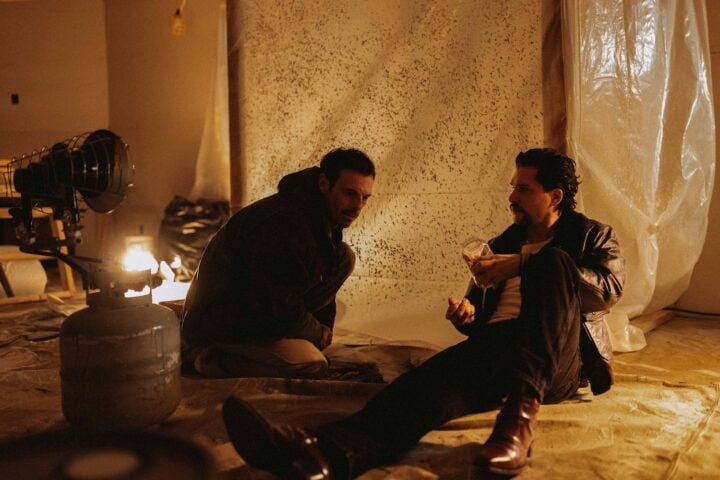
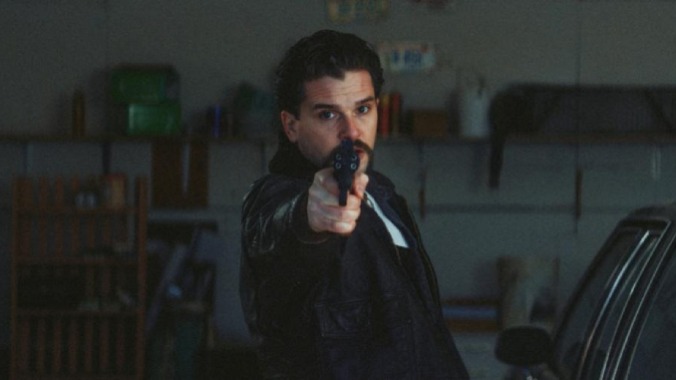
At first, we get to know how a young male bachelor named Gi-hong (Park Gi-hong) has earned his modest living in and around Seoul. He is a plain carpenter who has been doing one small interior work after another, and the early part of the movie quickly establishes his current status. He and several other workers including a close friend of his have worked on a little place inside one building which will be used by a young piano teacher, and the opening scene shows him and his friend entering the space at one night and then sleeping there because they are quite drunk and do not want to be late for the last day of their work.
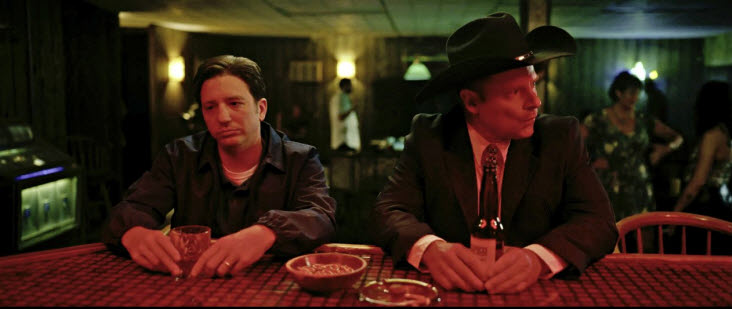
Gi-hong has resided in a little neighborhood outside Seoul, and the movie gradually depicts how he lives right next to his landlord couple. He lives in an additional house which is incidentally connected with the main house on the second floor, and his landlord, who has been unemployed for some unspecified reason, is often eager to have some drinking time with Gi-hong. While he does not seem to be really enjoying spending time with his landlord, Gi-hong is not particularly annoyed at least, and the landlord’s wife has no problem with that because her husband has someone to hang around with during her frequent absence.

In fact, her husband later confides to Gi-hong that she married him not because of loving him, and we naturally cannot help but wonder more about their rather ambiguous marital relationship – and how Gi-hong has been allowed into their daily life. Do they need Gi-hong merely for some extra income for them? Or do they actually need someone like him, who can easily fill some void between them without much disruption?

Anyway, Gi-hong’s rather uneventful daily life is suddenly disrupted when he belatedly discovers what happened to his van. There is a big dent on the roof of his vehicle, and it soon turns out that somebody jumped upon the van at that night when Gi-hong and his friend went into the building for sleeping there. As a matter of fact, there was a little strange thing noticed by his friend around that time, and this strongly suggests that there was someone else in the building besides them.

After checking the surveillance camera of his van, Gi-hong becomes quite convinced that this mysterious person caused the damage to his van as getting out the building via a bathroom window, but he does not have any idea on who the hell this mysterious figure is. Although this mysterious figure happened to be detected by the surveillance camera of the van around that time, the rather faint video image only shows that this mysterious figure is a young woman who may be one of those homeless delinquents out there, and that is the only clue for him for now.

Instead of letting itself driven by this little mystery, the screenplay by writer/director/co-producer/editor Lee Jeong-hong, who makes a feature film debut here after making several acclaimed short films, simply strolls along with its hero as he continues his daily life as usual, and it occasionally throws oddly interesting moments as deftly balancing itself between low-key comedy and unadorned realistic drama. In case of a part involved with Gi-hong’s family, it seems rather redundant at first, but we get to know more about his distant relationship with his family, and there are also several interesting visual moments including the one showing two figures riding bicycles in the middle of one dark night.

Around the point where its third act begins, the movie makes a little unexpected left turn via the accidental encounter between Gi-hong and a certain supporting character. As this character gets more involved with not only Gi-hong but also a few other characters around him, we come to wonder more about what is exactly going on among them, but the movie wisely does not clarify their situation much even when it eventually comes to its very last shot. Regardless of how you can interpret the circumstance surrounding Gi-hong, we can sense at least that now Gi-hong has several matters to handle in his life besides his work while another usual day of his is beginning.

I was not so surprised to learn later that most of the performers in the film are actually non-professional ones without any previous acting experience. Park Gi-hong, who is incidentally a close friend of the director, and several main cast members around him are quite natural in their unpretentious acting, and their characters are imbued with enough life and personality to interest us. While Park is subtly engaging as the humble center of the film, Ahn Joo-kin, Choi Kyung-joon, Lee Gi-bbeum, Lee So-jung, and Chun Gil are also solid in their respective supporting roles, and Ahn is particularly amusing whenever his landlord character tries to spend more time with Gi-hong in any possible way.

Overall, “A Wild Roomer”, which won several awards when it was shown at the Busan International Film Festival in last year, is one of more interesting South Korean films of this year, and I guess I can have some expectation on whatever will come next from its director, who clearly demonstrates here that he is a talented filmmaker who really knows how to interest and engage us. Sure, it will require some patience at first due to its slow narrative pacing and elusive tone, but it will draw you more into the story and characters once you accept what and how it is about, so I sincerely recommend you to give it a chance someday.

Posted in Movies | Tagged , | 1 Comment

The Marvels (2023) ☆☆1/2(2.5/4): A little too late for the ladies

Probably around “Avengers: Endgame” (2019), Marvel Comics Universe (MCU) passed its peak period mainly due to giving us so many similar products for more than 10 years. After the immense success of “Black Panther” (2018), the franchise belatedly started to try different things as shown from “Black Widow” (2021), “Shang-Chi and the Legend of the Ten Rings” (2021), and “Eternals” (2021), but, alas, we have become too tired and bored to cheer about that while also having to deal with heaps of TV drama stuffs from MCU.

Nevertheless, I came into the Dolby Cinema screening room of a local movie theater with some good will when I and a friend of mine were about to watch “The Marvels”. After all, this is another big female MCU film after “Black Widow”, and having no less than three female superheroes as its main characters is certainly not something I and others can see everyday.

However, unfortunately, I am rather depressed to report that I did not enjoy the movie as much as I hoped. While there is nothing wrong at all with the three lead actresses at its center, the movie often feels too hurried and clunky in terms of narrative and character development, and I frequently felt like being thrown into an expensive special episode in the middle of an unfamiliar TV drama series without much background knowledge.

Of course, I know a bit about Kamala Khan / Ms. Marvel (Iman Vellani) and her recent TV drama series even though I have never touched any of TV stuffs from MCU (Life is too short for me to check all of them, folks), but I wish the movie spent some more time on giving us more background information on not only her but also her new superhero colleagues: Carol Danvers / Captain Marvel (Brie Larson) and Monica Rambeau (Teyonah Parris), who is incidentally the daughter of Danvers’ best female friend. I remember that I enjoyed “Captain Marvel” (2019) when it came out, but, boy, it feels like a long distant memory now probably due to the following COVID-19 pandemic period, and now I wonder whether I should have revisited “Captain Marvel” in advance for understanding more of Danvers’ rather complicated relationship with Rambeau.

Anyway, let’s go back to the movie itself. The villain of the movie, who is as forgettable as most of recent MCU movie villains (That is why we should be more grateful to how awesomely Tony Leung brought a touch of class to “Shang-Chi and the Legend of the Ten Rings”, by the way), is attempting something potentially catastrophic in terms of space and time, and the opening scene of the film shows this villain figure finally finding one half of a powerful object called the Quantum Bands. Needless to say, getting the other half of the Quantum Bands is absolutely necessary for this villain figure, who certainly will stop at nothing for accomplishing the final goal.

If you are familiar with Khan’s TV adventure, you surely know that she happens to have the other half of the Quantum Bands, which is the main source of her superpower. While she has been enjoying her own superhero life, this plucky girl of one American middle-class Muslim family in Jersey City, New Jersey, is dreaming of becoming a friend/colleague of Captain Marvel someday, and, what do you know, she happens to get wish as she gets herself entangled with Danvers and Rambeau’s urgent situation due to that other half of the Quantum bands. For a reason I still do not wholly understand, they and Khan get their positions switched whenever they use each own superpower, and you may get quite confused when they try to be accustomed to this unexpected circumstance while going through the first big action sequence of the film.

Once they discern that they really need to stick together for saving not only the Earth but also the whole universe, they thankfully band together much faster than many male members of the Avengers. I wish the screenplay by director Nia DaCosta, who recently impressed us with her first two features films “Little Woods” (2018) and “Candyman” (2021), and her co-writers Megan McDonnell and Elissa Karasik takes its time more for the relationship development among its three main characters, but it is clear to us that Brie Larson, Teyonah Parris, and Iman Vellani are having a fun together at least, and I would not complain at all if the movie, which is rather short compared to many of MCU flicks, became longer to accommodate these three wonderful actresses more.

In contrast, many of the other main cast members are more or less than background elements. Zawe Ashton zealously chews her scenes like Faye Dunaway in “Mommie Dearest” (1981), but her effort is already limited by her thankless villain role from the beginning. In case of Samuel L. Jackson, he merely seems to be on an autopilot mode after playing his character so much during last 15 years, and he and many other supporting performers are far less impressive compared to a certain cute cat, which steals the show again as it did in “Captain Marvel”. To be frank with you, I will not deny that I chuckled a lot as watching how this cat provides an utterly outrageous moment accompanied with one of the most hideously catchy musical numbers from Andrew Lloyd Webber (I am not kidding at all, folks).

While it is not entirely without entertaining elements, “The Marvels” does not satisfy me enough for recommendation, and I become more convinced that it is already too late for the MCU franchise to embrace more diversity. After all those white male superheroes got all the fun and juice for more than 10 years, the franchise is now throwing leftovers to other superheroes without much consideration, and that is probably a very familiar situation to many of you. I do not know whether this is the beginning of the end of the era, but I still hope that we will at least get a bit more fun and excitement from whatever will come next after “The Marvels”.

Posted in Movies | Tagged , , | Leave a comment