Poor Things (2023) ☆☆☆1/2(3.5/4): The odd adventure of one wild creature

Yorgos Lanthimos’ latest film “Poor Things” is another idiosyncratic fun to be savored. While it is as darkly absurd as his recent films such as “The Lobster” (2015) and “The Killing of a Sacred Deer” (2017), it is also as deliciously funny as “The Favourite” (2018), and it is equipped with a number of saucy goodies including one of the best movie performances of last year.

The movie, which is set the fantasy version of the 19th century Europe, begins with the grotesque daily life of Dr. Godwin Baxter (Willem Dafoe). While he has been a prominent medical doctor with the vast and peerless knowledge on human anatomy, he is also your average mad scientist, and his heavily damaged physical status, which was resulted from his doctor father who was as demented as him, functions as a hilarious running gag throughout the film just like Lloyd Bridges’ goofy supporting character in “Hot Shots!” (1991).

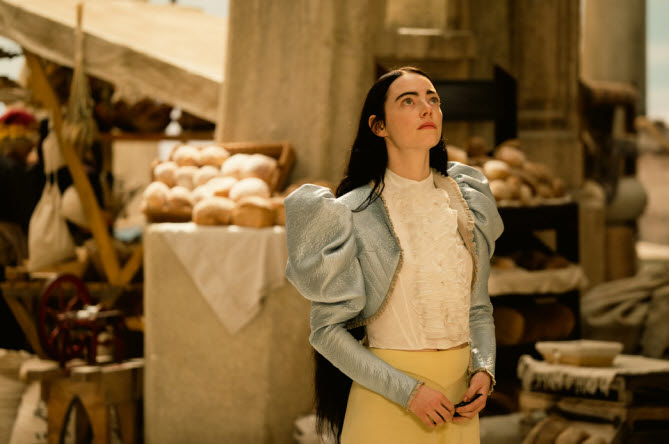
Dr. Baxter’s house, which is incidentally located somewhere in the middle of London, is full of the bizarre results of his loony experiments, but none of them can possibly top his latest scientific project. Just like the mad scientist hero of that famous classic SF horror novel by Mary Shelley, he successfully created a life from some dead body, and his creature, called Bella (Emma Stone), often shows extremely childish behaviors as swinging back and forth between willful innocence and embarrassing barbarity.

Anyway, Bella has shown some progress in terms of manner and communication, and that is where Dr. Baxter, whom she often calls, of course, “God”, recruits Max McCandles (Ramy Youssef), who is one of his students and certainly eager to do anything for impressing his mentor more. Along with Dr. Baxter, Max attempts to improve Bella with more knowledge and sophistication, and we are accordingly served with a series of silly but undeniably amusing moments tinged with some savage sense of black humor.

Consequently getting a lot more matured and sophisticated than before, Bella naturally becomes curious about the world outside, and Dr. Baxter tries to hold her via marrying her to Max, but this plan of his backfires when his lawyer Duncan Wedderburn (Mark Ruffalo) comes to his house for preparing the marital contract for Bella and Max. As your average lothario, Duncan quickly becomes quite interested in getting closer to Bella, and Bella willingly goes along with that when he promises to her that he will show more of the world besides lots of a certain R-rated pleasure which she recently discovered to her surprise and delight.

After Dr. Baxter, who turns out to be more soft-hearted than expected, lets her leave in the end, Bella embarks on her first experience of the world outside as accompanied with Duncan, and Lanthimos and his first-rate crew members, some of whom recently received Oscar nominations along with Lanthimos and his screenplay writer Tony McNamara, has a lot of fun as decorating the screen with small and big details to enrich the fantasy background surrounding Bella and several other main characters. While the cinematography by Robbie Ryan, which switches from black and white to color at this point, often emphasizes the warped reality of the main characters mainly via wide angle lenses, production designers James Price and Shona Heath and costume designer Holly Waddington have a field day as vividly creating the deliberately unrealistic version of the 19th century European on the screen, and the decidedly unconventional score by Jerskin Fendrix constantly keeps us on the edge with its sheer unpredictability just like our odd heroine.
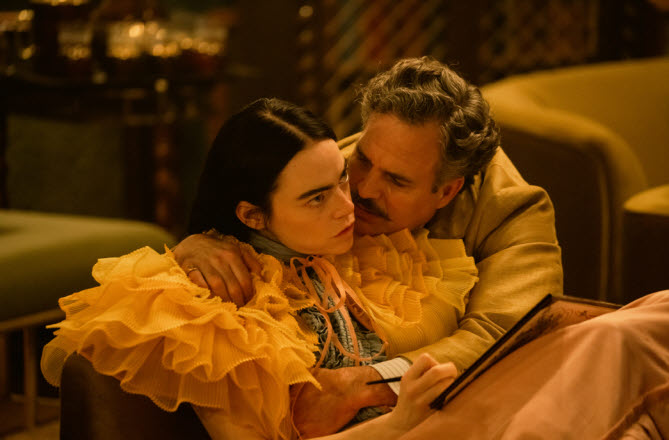
Above all, the movie, which is based on the novel of the same name by Alasdair Gray, is steadily fueled by the comically manic spirit of Emma Stone’s absolutely fearless performance, which deservedly garnered a Best Actress Oscar nomination. As she previously did in “The Favourite”. Stone takes no prisoner at all as willingly throwing herself into many challenging moments which will definitely make you wince or laugh, and she is not only engaging but also strangely touching in her bizarre character’s bumpy journey toward more liberation and maturation in terms of both body and mind.

The other main cast members surrounding Stone dutifully support her baroque lead performance. While Mark Ruffalo received an Oscar nomination for his dynamically comic supporting turn, Willem Dafoe, who is no stranger to playing weird and grotesque roles at all, deftly balances his character between horror and comedy, and Ramy Youssef is effective in his low-key acting as the most sensible person in the story. Christopher Abbott and Jerrod Carmichael, who incidentally appeared together in Carmichael’s debut feature film “On the Count of Three” (2021), add extra dark cynicism to the film during their respective brief appearances, and Kathryn Hunter, Hanna Schygulla, Vicki Pepperdine, Suzy Bemba, and Margaret Qualley hold each own small place well as the substantial female supporting characters in the story.

Although his earlier works felt like an acquired taste to me, Lanthimos has kept advancing in his own artistic field which has eventually become a bit more accessible and enjoyable to me and others, and “Poor Things” is surely another highlight to cherish after “The Favourite”. Sure, it may be a little too weird and crazy to be your cup of tea, but, folks, this is definitely not something you can see everyday, and I assure you that you will never forget your experience with this strikingly weird masterwork.

Posted in Movies | Tagged , , , , | 2 Comments

Robot Dreams (2023) ☆☆☆1/2(3.5/4): A dog and one robot

Animation feature film “Robot Dreams”, which recently got nominated for Best Animation Film Oscar, is sweet and touching with its charming style and heartfelt storytelling. While drawing your attention for its colorful background at first, the movie simply follows its modest but poignant story of friendship and relationship, but the result is unexpectedly sublime and poignant with some surprising emotional complexity, and I was deeply moved in addition to having lots of amused smiles during my viewing.

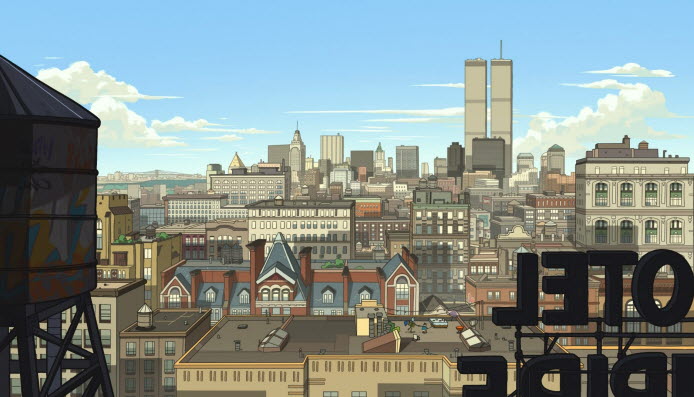
The story of the film is set in a fantasy version of New York City during the 1980s, which is incidentally populated with many different kinds of anthropomorphic animal figures not so far from those similar ones in Oscar-winning animation film “Zootopia” (2016). At first, we are introduced a canine character who is simply named “Dog”, and the film observes how this canine dude is merely going through another usual day of his in his apartment as mindlessly watching TV alone.

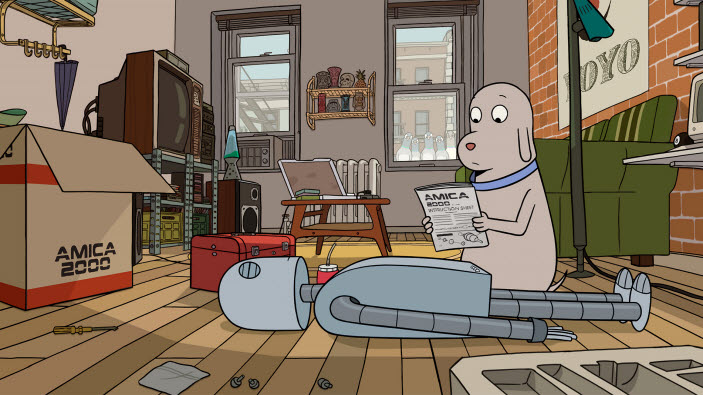
And then Dog happens to pay attention to a TV commercial advertising a new brand of robot as a possible companion. Without any hesitation, Dog, who seems to be male as far as I observe from the film, picks up the phone for ordering it, and his ordered robot is soon delivered, though he needs a lot of time for assembling its many different parts together just like we usually need many hours for assembling those IKEA products.

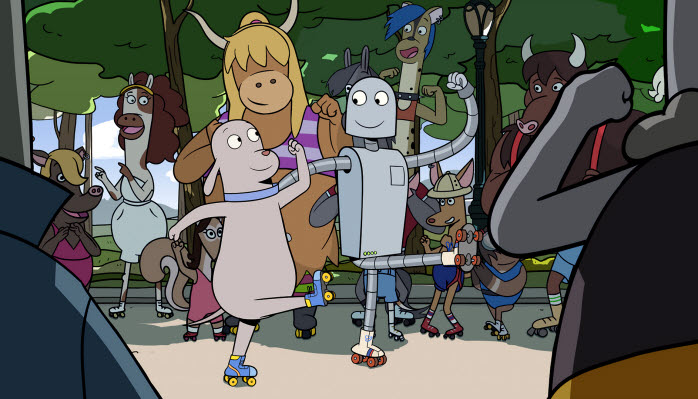
Once everything is fully assembled together and then Dog turns on its power switch, Robot eventually comes alive, and what follows next is a series of funny and heart-warming moments coming from their growing friendship. Although it is sometimes too naïve and innocent to our little amusement, Robot gradually becomes a best friend for Dog, and they come to spend time together here and there around the city. At one point, they go to a big public park not so different from the Central Park of New York City, and they have a lovely and fantastic moment as they try roller-skating with Earth, Wind & Fire’s classic pop song “September” being played on the soundtrack.

However, something unfortunate happens when they go to the beach outside the city. After Robot and Dog play and rest together on the beach for a while, Dog belatedly discovers that Robot becomes too rusty to move for itself, and there is really nothing Dog can do for now. After reluctantly leaving Robot on the beach for the following night, Dog hurriedly comes back to the beach on the very next day, but, alas, the beach is closed, and he cannot enter the beach until the first day of next June.

What follows next is Dog’s desperate attempts to retrieve and then repair Robot, all of which are failed in one way or another to his frustration. In the end, he has no choice but to wait till the opening day of the beach in next year, and he promises to himself that he will never forget his friend before the day eventually comes.

However, Dog often gets his mind distracted by one thing after another as next several months pass by. He later comes across a supposedly female animal figure, and it looks like for a while that he may be more serious his unexpected relationship with this figure. In the middle of the winter season, he decides to try something new for him, so he goes to a ski resort, and that leads to one of the most hilarious moments in the film.

Meanwhile, the story also focuses on what is happening around and inside Robot. While it remains stuck at the same spot in the beach as before, a series of incidents happen to it, and its robotic mind also goes through a number of imaginative moments as it keeps yearning for the reunion with Dog day by day. At one point, it comes to have a cheerful dream sequence clearly influenced by a certain famous Hollywood musical fantasy film, and we are alternatively amused and touched by that.

All these and many other memorable scenes in the film are effectively presented by its broad but distinctive animation style, and you will be more amazed to see how director/writer/co-producer Pablo Berger and his crew members deftly and effortlessly pull out genuine emotions from the process. The film, which is based on the graphic novel of the same name by American cartoonist Sara Varon, merely depends on a limited number of facial expressions without using any dialogue at all, but the overall result vividly and palpably conveys to us a various range of emotions inside its two main characters, and that is why we can clearly sense and understand the emotionally complex aspects of its bittersweet but ultimately optimistic finale.

On the whole, “Robot Dreams” is one of more interesting animation films which came out in last year, which was a curiously disappointing year for animation films. While we had a couple of big highlights via “Spider-Man: Across the Spider-Verse” (2023) and “The Boy and the Heron” (2023), there were actually not many animation films good enough to entertain and mesmerize us during last year, and we also had to endure “Migration” (2023) and “Wish” (2023) around the end of last year. In my trivial opinion, “Robot Dream” is a much better alternative to “Migration” or “Wish” for any audience out there, and I sincerely recommend you to check out this little gem as soon as possible.

Posted in Movies | Tagged , , , , , | 2 Comments

All of Us Strangers (2023) ☆☆☆1/2(3.5/4): A personal ghost story

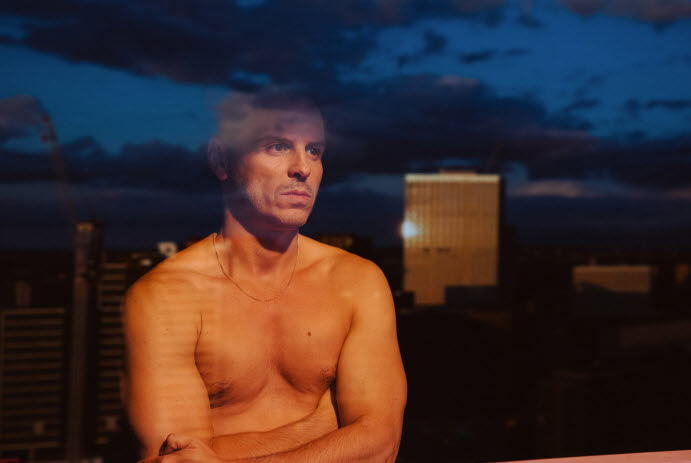
Andrew Haigh’s latest film “All of Us Strangers” is a gentle and intimate personal ghost story about loss, grief, loneliness, and love. Starting with a supernatural story premise, the movie gradually delves into the troubled state of mind of its lonely hero via its delicate mood and loving details, and it is quite touching to see how its hero comes to deal with his longtime emotional issues along the story.

At the beginning, the movie succinctly establishes the lonely and isolated daily life of Adam (Andrew Scott), a TV writer who has been going nowhere in writing a new screenplay. While he is struggling during another day without much progress at his small flat in London, a little incident suddenly happens, and that is how he encountered a guy named Harry (Paul Mescal), a lad who incidentally resides on the sixth floor of their apartment building. While it is clear that there is some instant attraction between them, Adam hesitates even though Harry is virtually flirting with him, mainly because he is more occupied with finishing whatever he is going to write.

It seems that Adam’s new screenplay is inspired by the childhood memories of his deceased parents, who unfortunately died when he was only 12. Probably for getting some more inspiration, he decides to go to their old suburban neighborhood, and we see him visiting several familiar places including the house where he and his parents once lived together.

And then something strange occurs to him. At a neighborhood park, Adam notices someone quite familiar to him, and he soon follows after this figure, who willingly invites Adam to where he lives with his wife. It turns out that this figure and his wife are none other than Adam’s father and mother, and it goes without saying that they are not living people at all, because they still look as young as they were at the time of their unfortunate death in addition to living in that house as before.

Despite the spooky aspects of this inexplicable happening of his, Adam chooses to spend some time with his dead parents because he has really missed them a lot for many years, and his ghost parents are glad to see how much their son has grown up since their death. To them, Adam is still a little son they raised together, and Adam is happy to experience their loving affection again regardless of whether his ghost parents are real or imagined.

Not so surprisingly, Adam’s homosexuality becomes an issue to talk about between him and his ghost parents, who have some struggle in accepting that their son is actually a gay even though they are aware of how things have changed during last several decades. At one point, Adam’s mother inadvertently hurts her son’s feelings a bit during their private conversation, and that reminds me of when my mother, who is still in the denial of my homosexuality, often tells me that I will be quite lonely without marrying a girl someday.

In case of Adam’s father, who evidently loves and cares about Adam as much as his wife, he comes to have a honest conversation with Adam about not only Adam’s homosexuality but also some emotional distance between him and Adam. Admitting that he was not always there for his young son who often needed his support during that time, Adam’s father sincerely opens more of himself to Adam, and I must say that I envied Adam a lot as because I have never had a really honest conversation with my father, who will probably never accept my homosexuality for the rest of his remaining life.

Feeling much happier than before, Adam becomes more active about his own private life. When he comes across Harry again, he lets Harry into his flat, and they soon move onto the next logical step once they clearly discern their growing mutual attraction. As he did in his little breakout film “Weekend” (2011), Haigh depicts the sexuality of his main characters with considerable realism and intimacy, and I was amused a bit by a little sticky detail during one particularly after-sex scene, while wondering whether Haigh used the same material he previously utilized in “Weekend”.

Haigh’s screenplay is based on Japanese writer Taichi Yamada’s 1987 novel “Strangers”, which was already adapted into Nobuhiko Obayashi’s “The Discarnates” (1988). If you have ever read Yamada’s novel or watched the 1988 film (I only watched the latter, by the way), you will surely know a substantial moment of surprise waiting around the end of the story, and Haigh and his crew members including cinematographer Jamie D. Ramsay pull that off with lots of emotional resonance coupled with some phantasmagorical qualities. While we come to look back on what we have observed from Adam and a few main characters around him, we also come to know and feel more of his sadness and loneliness, and the quiet but sensitive emotional moments during the last act will move you more than expected.

The four main cast members are pitch-perfect in their nuanced acting. While Andrew Scott, who received the Best Actor award from the National Society of Film Critics for this film in last month, ably holds the ground as the heart and soul of the film, Jamie Bell and Claire Foy are simply fabulous as Adam’s ghost parents, and Paul Mescal, who has become one of the new interesting actors to watch since his recent breakthrough Oscar-nominated turn in Charlotte Wells’ exceptional film “Aftersun” (2022), brings genuine tenderness to his seemingly thankless part in addition to clicking well with Scott throughout the film.

Overall, “All of Us Strangers” is another powerful work from Haigh, who has steadily advanced during last 13 years after drawing our attention with “Weekend”. Like “45 Years” (2015) and “Lean on Pete” (2017), the movie shows Haigh’s considerable talent in intimate character drama, and it is certainly one of the main highlights of last year.

Posted in Movies | Tagged , , , , , | Leave a comment

To Kill a Tiger (2022) ☆☆☆1/2(3.5/4): Standing by his daughter

Documentary film “To Kill a Tiger”, which recently received a Best Documentary Oscar nomination, is a calm but empathetic as following one Indian country farmer’s long and difficult personal journey for the justice for his young daughter who was brutally raped by three men. While it is sometimes infuriating to see numerous unjust things he and his family had to cope with in their pursuit of justice, it is also touching to see how they still stood by his daughter to the end, and those quiet but powerful moments in the documentary will linger on your mind for a while after it is over.

The central figure of the documentary is Ranjit, a farmer who has lived with his family in one little rural village of Jharkhand, India. On one day of 2017, his 13-year-old daughter happened to left alone at a wedding ceremony held inside the village, and Ranjit was devastated when she later returned and then told him everything about her rape incident. He subsequently decided to report this to not only the district chief but also the local police, but, not so surprisingly, things did not go that well for him and his daughter right from the very beginning. Almost everyone in the village including the district chief was not so pleased about this, and they even suggested that he should marry his daughter to one of those rapists just for saving his daughter from more disgrace while also maintaining the status quo of their small community.

However, Ranjit did not stand back at all as trying more for the justice for his daughter. Fortunately for him, he was later approached by an organization dedicated to female rights, and that certainly helped him to some degree. After all, he was ostracized a lot by many people in the village because what he did for his daughter, and he certainly needed some moral support from this organization as being more pressured from those villagers day by day.

Director/writer/co-producer Nisha Pahuja, who is incidentally an Indian-born Canada filmmaker, and her crew members closely followed Ranjit and several people from that organization for more than one year, and we get to know more about what Ranjit often had to endure in his village. As the camera of cinematographer Mrinal Desai calmly looks at him, Ranjit phlegmatically talks about his and his family’s ongoing predicament, and we can only imagine how much he has struggled behind his ever-gentle façade, which breaks a bit a few times throughout the documentary.

We also meet a number of villagers, who casually express their bigotry without any shame and hesitation to our shock and disgust. Nearly all of them say that Ranjit did not have to make such a big fuss to bring disgrace to their little community, and they also blame Ranjit’s daughter a lot. In case of a certain important figure in the village, he looks so impertinent as angrily arguing against Ranjit’s decision, and it is rather amazing that he willingly appeared in front of the camera without having his face blurred.

It is no wonder that Ranjit sometimes had doubts on whether he was really doing the right thing – or whether he and his family would eventually get the justice for his daughter as they all hoped. As a poor farmer who has to support his wife and children everyday, he surely had lots of stuffs to handle besides paying more attention to the upcoming trial for those rapists, and this naturally made several members of that organization a bit uneasy. They were all willing to go all the way for Ranjit and his daughter, but they really needed Ranjit to show more will and determination in his pursuit of justice, and that made Ranjit more pressured than before.

His daughter’s rape case eventually went to the court, but the system did not seem to be that helpful even though those rapists were jailed for the upcoming trial. The female lawyer assigned to the rapists gladly talks about how weak the case is from the beginning, and you may be more disgusted by how she regards the case without much consideration on Ranjit’s daughter. The following trial process, which is not shown at all in the documentary, turned out to be much more frustrating than expected, and a police officer assigned to the case was so clumsy and incompetent in his case investigation that even the judge presiding over the case chided him directly for that.

The documentary also focuses on Ranjit’s daughter, who incidentally allowed Pahuja and the crew members to show her in the documentary during its post-production period. Like any rape survivor, she is still affected a lot by what happened to her on that terrible day, and she usually remains silent whenever the camera looks at her. However, she eventually comes to open herself a bit more as time goes by, and the documentary handles this little private moment with thoughtful care and respect. Around the point where the outcome of the trial depends a lot on her, she is really ready for telling her whole story, and the following moment, which is only driven by her own words, is restrained but very poignant to say the least.

On the whole, “To Kill a Tiger”, whose title comes from what Ranjit says around the end of the documentary, did a respectful job of presenting its important social issues via a little but undeniably moving human story. After the #MeToo movement was started in 2017, we saw some significant changes during next several years, but our world still needs to be changed much more for millions of women around the world, and the documentary will surely remind you of that again.

Posted in Movies | Tagged , , , , , , , | 1 Comment

The Zone of Interest (2023) ☆☆☆1/2(3.5/4): The Banality of Evil Right Next to Auschwitz

Jonathan Glazer’s new film “The Zone of Interest”, which recently received the five Oscar nominations including the ones for Best Picture and Best International Film, is utterly chilling in its clinically uncompromising presentation of the banality of evil. Although lots of unspeakable things are happening beyond their little comfortable world everday, the main characters of the movie simply go through their plain daily routines without much concern or guilty at all, and we are all the more horrified as being more aware of whatever is going on beyond their world.

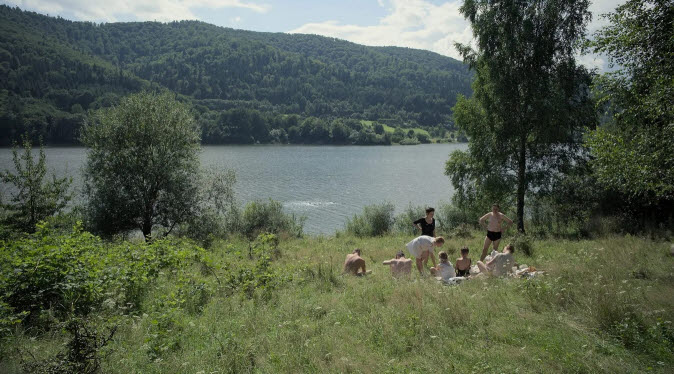
After the ominous main title sets the tone along with Mica Levi’s discomforting score, the movie gradually establishes its limited main background. At first, the camera simply and distantly observes a bunch of people enjoying one bright summer day in a riverside forest, and nothing seems particularly wrong on the surface as these people cheerfully spend their pleasant afternoon together for a while.

However, as they leave the spot, the movie, which is mainly set in Poland, 1943, slowly reveals how many of these people are actually associated with one of the most atrocious horrors of the World War II. In case of a married woman named Hedwig (Sandra Hüller), she is actually the wife of Rudolf Höss (Christian Friedel), who was, as some of you know well, the commandant of the Auschwitz concentration camp during that time.

The movie closely observes how Höss and his family live right next to Auschwitz day by day, and we often get chilled by the banality of their daily existence. While Höss is often absent for doing his jobs outside, his wife and children comfortably spend their time in their big house, and Mrs. Höss is usually occupied with taking care of her big garden outside the house whenever she is not handling those domestic matters in the house. 

Everything is fine and well on the surface for these people, but the movie slowly lets us sense more of the evil and horror outside this private area of theirs. We see a bunch of Nazi soldiers gathering for Höss’ birthday. We notice a few prisoners working inside and outside his house. Above all, we frequently hear the sounds coming from the concentration camp over the big fence surrounding the house.

The sound design of the movie is crucial in constantly reminding us more and more of whatever is happening outside Höss’ house. Early in the film, we just hear the distant sounds of shouting man or barking dog, but then the movie steadily adds more and more horrific aural details on the soundtrack along the story. While we frequently hear the arrivals of trains from the distance, we also become more aware of screams and gunshots heard over the fence, which are more than enough for us to fill the blanks for ourselves.

These and other aural details are often strikingly juxtaposed with the supposedly plain but clinically composed visual moments courtesy of cinematographer Łukasz Żal, who was previously Oscar-nominated for Paweł Pawlikowski’s “Ida” (2014) and “Cold War” (2018). Mostly sticking to its static position, Żal’s camera observes the characters and their surrounding environment from the distance, and we come to focus more on how horribly superficial their existence is. At one point later in the film, Mrs. Höss is not so pleased when her husband later notifies to her that he will be soon transferred, and we are more horrified as she casually talks about how much she likes to live along with her children right next to the concentration camp as usual.

The performers of the film tune their acting well to the overall mood of the film. While Christian Friedel is often frightening as his character flatly handles many matters of the concentration camp including developing and building a more efficient crematorium (He even suggests that they should apply for a patent, for Christ’s sake), Sandra Hüller, who has another stellar year thanks to this film and Justine Triet’s Oscar-nominated film “Anatomy of a Fall” (2023) in last year, is equally impressive as phlegmatically giving us an increasingly nauseating example of the banality of evil. Several other main cast members are also effective in their respective supporting parts, and Imogen Kogge is particularly good as Mrs. Höss’ visiting mother who gradually comes to face the horror beyond her supposedly comfortable staying place.

Overall, “The Zone of Interest”, which is based on the novel of the same name by Martin Amis, is another wonderful work from Glazer, who deservedly received the Grand Prix when the movie was premiered at the Cannes Film Festival early in last year (It also received the FIPRESCI Prize, by the way). Since he made a feature film debut with “Sexy Beast” (2000), Glazer only made “Birth” (2004) and “Under the Skin” (2013) before “The Zone of Interest”, but all of these four works are interesting and distinctive in each own way, and “The Zone of Interest” shows him at the top of his filmmaking mastery.

Yes, the movie is deeply uncomfortable to watch to say the least, but it is unforgettable for the skillfully effective handling of its very dark subject which surely feels all the more relevant these days, and, above all, it does not merely depict the banality of evil in the Holocaust. Around the end of the film, Glazer eventually reveals a bit of his attitude and feeling toward its main subject without never interrupting the overall tone at all, and that is quite enough for us in my inconsequential opinion.

Posted in Movies | Tagged , , | 2 Comments

The Space Race (2023) ☆☆☆(3/4): Hidden Astronauts

Documentary film “The Space Race” looks into a hidden part of the NASA history which deserves more attention in my humble opinion. Although it could delve more into its interesting historical subject, the documentary did a good job of presenting several relatively unknown figures who were surely trailblazers in one way or another, and it is always interesting whenever these admirable figures gladly tell us about their respective NASA experiences.

The documentary focuses on a number of notable African American astronauts working in NASA, and it can be said that everything was started with a black test pilot named Ed Dwight Jr. Around the time John F. Kennedy was elected as the new president of the United States in 1960, he promised to a bunch of black politicians and activists that his government would include black astronauts in the ongoing NASA space programs, and Dwight happened to be an ideal one for that. Although those white top-ranking military and NASA officials deliberately put some hard limits on their selection process, Dwight was actually able to meet their high standards thanks to his considerable military background, so he eventually got chosen for a bit of racial inclusion in NASA, which, as shown from Oscar-nominated feature film “Hidden Figures” (2016), was usually full of white guys during that period.

Dwight, who has been an active artist for years since leaving NASA a long time ago, reminisces about how much he had to cope with racial bias and prejudice right from when he joined NASA in the early 1960s. When he was going through the following training process under none other than Chuck Yeager, he often found himself pressured and ostracized a lot by many white people surrounding him, and Yeager himself was no exception. In fact, Yeager, who was incidentally Dwight’s longtime idol, actively tried to discourage Dwight by any means necessary, and that only made Dwight all the more determined to show his merit to Yeager and other white people.

In the end, Dwight eventually became a NASA astronaut officially, but then he had to face more difficulties on his way. Because he now became a sort of equivalent to Jackie Robinson in NASA, he had to be cautiously balanced about his public image, and he was even demanded to live again with his divorced wife just because of that. In addition, many black civil right activists pressured him more on being vocal about those civil right issues, but, not so surprisingly, that was not something he could easily talk about in public.

In the end, all of his hope was dashed when President Kennedy was assassinated a few years later. With no support from the White House, Dwight became more like a token astronaut than before, and this eventually made him leave NASA without looking back at all. Although he is now in peace with his past in NASA, Dwight cannot help but feel bitter about what he endured during that time, and we can only wonder how things would have turned out different if he had been allowed to go to the space just like many white astronauts during that time. As a matter of fact, US was actually behind the Soviet Union in that aspect, because the latter sent a black Cuban astronaut to the space in 1980 before the former eventually tried more racial inclusion in NASA.

Anyway, the Civil Rights Movement in the 1960s and the social/cultural prominence of African Americans in the following era came to open the door more for black astronauts. In addition, the subsequent development of space shuttles in the late 1970s boosted further the NASA space programs, and the NASA astronauts came to look relatively more racially diverse compared to how they looked in the 1950-60s.

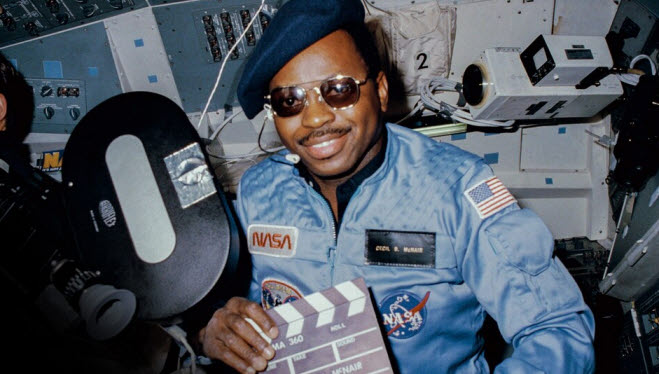
Guion Bluford was one of notable black astronauts during the 1980s, and he and other black astronauts including Charles Bolden, who eventually became the first black Administrator of NASA in 2009, surely have a lot of things to tell us in front of the camera. Bluford recollects with some amusement on how he somehow got selected as the first African American sent to the space – and how much he and other black astronauts were excited to go to the space one by one. When one of the key members in the group was killed along with several other astronauts during that tragic accident in 1986, they were all quite devastated to say the least, but they kept going while trying to find out what went horribly wrong at that time, because that was exactly what that dead member would have done if he had been in their position.

Around its last part, which examines the current position of NASA black astronauts and their vocal opinion on the Black Lives Matter Movement, the documentary became relatively less fascinating. Yes, race issues are still serious matters in the American society even at present, and it is touching to see many black NASA astronauts showing some solidarity after the George Floyd incident, but this part feels rather weak compared to the rest of the documentary, probably because it looks less revealing in comparison.

In conclusion, “The Space Program”, directed by Lisa Cortes and Diego Hurtado de Mendoza, accomplishes its goal as much as intended in its short running time (90 minutes), and it will surely make a good double feature show with “Hidden Figures”, which touchingly presents the story of unsung colored female figures in NASA during the 1960s. Although I still wish the documentary could show and tell more, but that thankfully remains a minor flaw at least, and I think you should check it out someday.

Posted in Movies | Tagged , , , , | Leave a comment

Bobi Wine: The People’s President (2022) ☆☆☆(3/4): A musician against autocracy

Documentary film “Bobi Wine: The People’s President”, which recently received a nomination for Best Documentary Oscar, focuses on a popular musician who became a defiant political fighter for his country and people. While he has been brutally oppressed a lot by the corrupt government and its autocratic leader, he does not give up at all even at this point, the documentary presents an informative presentation of his dramatic political journey as well as how things have gotten worse in his country during recent years.

The central figure of the documentary is Robert Kyagulanyi Ssentamu, a prominent Ugandan politician who is mostly known by his stage name Bobi Wine. After starting his musician career around the early 2000s, Wine was pretty successful during next several years, and then he decided to try on local politics after being quite vocal in his criticism against the Ugandan government. Once he won his first election and then became a parliament member, he quickly rose as one of the main public figures opposing against President Yoweri Museveni, who governed the country for more than 35 years after getting elected in 1981.

While he was initially welcomed a lot by many people in Uganda when he rose to the power shortly after the end of that infamous reign of terror by Idi Amin, Museveni became a very person he was supposed to be against, and, not so surprisingly, he was quite willing to extend his presidency more by any means necessary. Because the Ugadan constitution happened to have an article on the age limit on presidency, he technically could not run for the president in 2021, but he and his governing party was very determined to change that article in 2018, and that was certainly openly opposed by many figures of the opposition parties including Wine.

Not so surprisingly, Museveni and his government were already quite ready to achieve their goal when the parliament members were going to vote on that constitution article in question. He willfully used the Ugandan police and military against many of his opponents including the mayor of Kampala, and there is an alarming moment showing how the mayor was promptly arrested and then taken to somewhere even though many people including local reporters were watching the whole incident. When the voting day came, Museveni continued to impede his opponents in one way or another, and Wine and many other opposing politicians were not so surprised when Museveni eventually got what he wanted, though they all were certainly quite angry and disappointed about that.

Nonetheless, Wine continued his defiant stance against Museveni, and that surely made him targeted more by Museveni’s government more than before. When he was arrested for a trouble associated with a local independent candidate supported by him, he was immediately taken to a military base and then held there for next several days, and his wife tells us how much he suffered as being brutalized a lot by his captors. Around the time he was subsequently sent to a military court, he was visibly not so well to say the least, and he and many others were surely reminded again of how ruthless Museveni and his autocratic government can be.

At least, Wine was eventually released not long after that, and he was not daunted at all while gradually recovering from the first big blow against him. While receiving some international support from the outside world, he came to draw more supporters during next few years, and he was also active in helping the people of his country cope with the lockdown period caused by the COVID-19 pandemic in 2020.

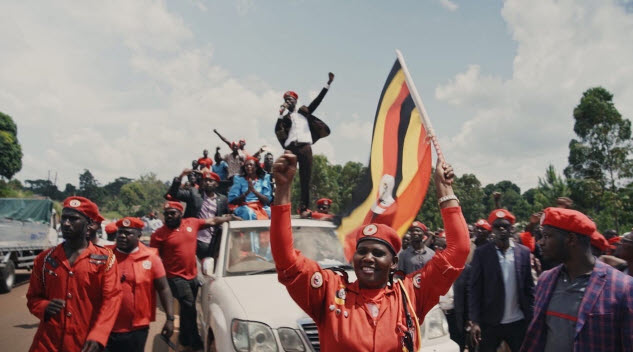
Meanwhile, Museveni and his government already embarked on fixing and then winning the next Presidential election to be held in 2021. As Wine and a number of other opposing candidates started their campaigns here and there around the country, they had to deal with various obstacles, and their powerful opponent was certainly willing to oppress them all again, even while throwing the whole country into more violence and chaos.

Not so surprisingly, Wine eventually got arrested and then detained in the middle of his election campaign, and that led to more protest and then more oppression while Museveni and his government only focused more on winning the election in the end. Although knowing well that there was not much chance for him and his supporters from the very beginning, Wine remained defiant as before, but then he and his wife, who has always stood by him since their marriage, became more concerned about the safety of the people dear to them, and there is a little poignant moment when they gently explain to their children on why they decide to have their children leave the country for a while.

I wish the documentary could show more of such private moments like that for letting us get to know Wine as a person, and I also think it could show a bit more of how he has worked as a politician besides his defiant stance against Museveni. Because Wine’s story is still being continued at present (He got arrested again in last year not long after the documentary was released in US, by the way), it feels rather limited at times, but “Bobi Wine: The People’s President, which is directed by Christopher Sharp and Moses Bwayo, is still engaging on the whole as steadily driven by Wine’s charismatic presence, and you may want to know more about this remarkable figure after watching it.

Posted in Movies | Tagged , , , , , | 1 Comment

Perfect Days (2023) ☆☆☆1/2(3.5/4): The daily life of one plain Tokyo toilet cleaner

Wim Wenders’ latest film “Perfect Days”, which was nominated for Best International Film Oscar in last month, is a sublime experience much richer than you might think at first. On the surface, it is just the plain observation on the daily life of one supposedly ordinary toilet cleaner working in Tokyo, but the result is somehow quite compelling and moving on the whole, and you will not easily forget those small but precious human moments in the film.

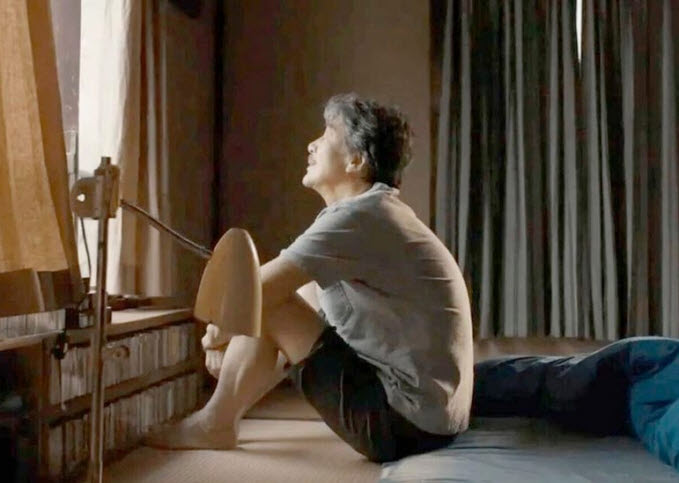
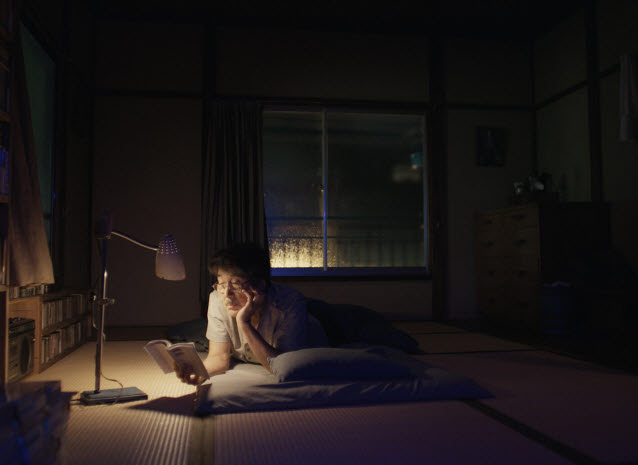
In the beginning, the movie slowly establishes the mostly consistent daily life pattern of its toilets cleaner hero played by Kōji Yakusho, who incidentally won the Best Actor award when the film was premiered at the Cannes Film Festival early in last year. We see how he starts his another day at his little cozy residence where he has lived alone by himself. We watch how he works in a number of different public toilets in the city. We observe how he spends the rest of the day once his worktime is over.

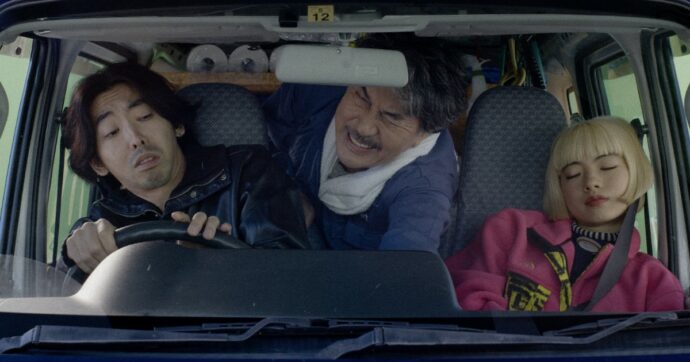
Now this sounds like your average artsy boredom, but you will admire how slowly and patiently the movie draws you more into the emerging rhythm of its hero’s daily life, which is sometimes interrupted in one unexpected way or another. His younger partner, who does not seem that reliable to say the least, is usually more occupied with how he can get closer to his girlfriend, and this lad certainly causes some annoyance for our toiler cleaner hero from time to time. In case of one certain old homeless guy, he seems to be leading his own lifestyle just like our toiler cleaner hero, and he surely brings some extra amusement for us whenever he appears on the screen.

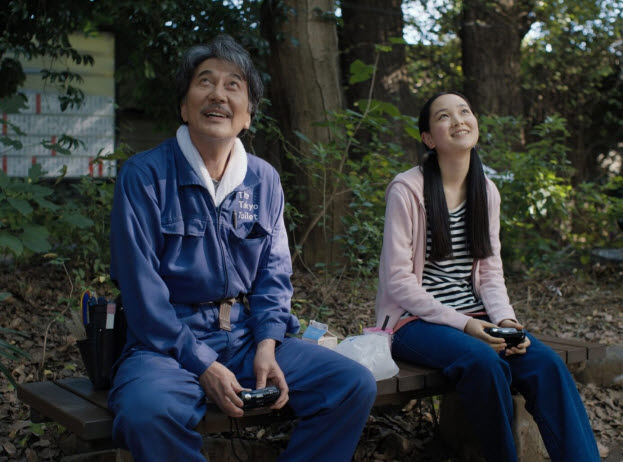
Meanwhile, the screenplay by Wenders and his co-writer/co-producer Takuma Takasaki adds one small detail after another to its hero’s inner life. At one point, we see him collecting one tiny tree sprout, and then he brings this sprout to one certain room in his residence, where he has carefully grown other small tree sprouts. In addition, he loves spending time at a certain spot in one particular public park full of tall trees, and we see how he tries to photograph the leaves of those trees with a little old film camera of his. The movie does not explain these little hobbies of his at all, but they function as interesting details to observe and reflect on, and we become all the more curious about who its hero really is.

The most notable aspect of our toilet cleaner hero is how he often enjoys listening to old recognizable pop songs via cassette tapes while driving his little van here and there in the city. Besides Lou Leed’s classic pop song “Perfect Day”, the movie effectively utilizes several notable pop songs such as Otis Redding’s “(Sittin’ On) The Dock of the Bay” throughout the story, and I especially like the impromptu performance of the Japanese version of “The House of the Rising Sun” at one point in the middle of the film.

Meanwhile, small but interesting things continue to happen around our toilet cleaner hero, and one of these interesting happenings is the sudden visit of a niece of his. Due to some conflict with her mother, who has incidentally been estranged from him for years, she wants to stay at his residence at least for a while, and, though he does mind her staying at his residence at all, her presence causes some inconvenience for him to our little amusement.

At least, he gradually comes to open up himself a bit as spending some time with his niece, and the mood becomes a bit brighter as he gladly shows her how he works everyday. While he remains taciturn as before, it is apparent that he cares a lot about his niece, and she certainly appreciates his hospitality even though she does not know what she should do about her current problem. The movie wisely sidesteps explaining too much when her mother eventually appears later in the story, and we can only guess a bit on the past between our toilet cleaner hero and his family, who looks much affluent as far as I can see.

While quite enigmatic at times, Yakusho’s gently nuanced acting speaks volume with numerous subtle touches to observe and cherish. As he sensitively illustrates his unassuming character, we come to see more of a man who has been quite fine and happy with his lifestyle of choice, and Yakusho is simply fantastic as steadily maintaining the delicate tone of the film along with his director. Around the end of the movie, the camera simply looks at his face for a while, but that is more than enough for pulling out a powerful emotional moment on the screen, and Yakusho does not disappoint us at all.

Wenders also assembles a number of various performers around his leading actor, and they all have each own small moment to shine as ably functioning as the colorful counterpoints to Yakusho’s low-key performance. While Tokio Emoto, Arisa Nakano, and Aoi Yamada fill their younger characters with youthful spirit and personality, Yumi Asō, Sayuri Ishikawa, and Tomokazu Miura are also well-cast in their small supporting roles, and the special mention goes to Min Tanaka, who humorously steals the show during every second of his brief appearance in the film.

Overall, “Perfect Days” is a wonderful surprise from Wenders, who has been known more for his several acclaimed documentaries such as “Pina” (2011) and “The Salt of the Earth” (2014). While it is surely something quite different compared to his recent works, the movie shows us that Wenders is still a great filmmaker who gave us “Paris, Texas” (1984) and “Wings of Desire” (1987), and I really hope he will surprise us more during next several years at least.

Posted in Movies | Tagged , , | 2 Comments

Io Capitano (2023) ☆☆☆1/2(3.5/4): An arduous immigrant odyssey across Africa

“Io Capitano”, which was recently nominated for Best International Film Oscar, follows one arduous journey across the African continent taken by the two young main characters at the center of the story. What we are going to see here is as grim and harrowing as you can possibly expect, but the movie steadily holds our attention to the end thanks to its skillful direction as well as its powerful immigrant drama, and you may also care about whatever may happen next after the end of the story.

The early part of the film is set in a shabby neighborhood of Dakar, Senegal, and we are introduced to a teenage boy named Seydou (Seydou Sarra) and his cousin/best friend Moussa (Moustapha Fall). As often working day by day, they have gathered a considerable amount of cash for going to Italy together someday, and both of them are hopeful about how much they will earn there for their families once they get there, though they are sternly warned about how things can be quite bad for them if they ever try to go there.

In the end, these two boys leave their neighborhood in one early morning, and that is the beginning of their journey across the African continent. Along with many different Africans as eager to go to Europe as they are, they will go across a number of central/northern African countries including Niger and Libya, and it looks like everything will go well for them as they eventually get out of their country with their fake passports.

What follows next is not so far from those heartbreaking news reports we come across from time to time these days. After managing to cross over the border between Mali and Niger, Seydou and Moussa soon come to face the harsh reality waiting for them, and they and other illegal immigrants are all forced to travel across the Sahara Desert without much help or assistance at all. Not so surprisingly, that is just the prelude to much more predicaments to come, and the movie phlegmatically observe a series of chilling moments of cruelty and savagery inflicted upon the boys and many unlucky folks around them.

The movie certainly could be devolved into your typical misery porn at any point, but it handles the story and characters with enough care and respect at least, and we become more emotionally involved into Seydou and Moussa’s struggles along the story. While they surely come to learn and experience more of how the world outside can be pretty bad for numerous illegal immigrants like them, both of them do not give up their hope and dream nonetheless even during the most despairing moments of their journey, and there is some poignancy from how desperately they try to stick together via their strong friendship.

And it is also touching to see how kindness and compassion are still possible despite this harsh reality. In case of one guy Seydou happens to be associated with, he willingly takes Seydou under his wing and then helps Seydou a lot without asking for anything from Seydou, and that is one of the most moving moments in the film. Later in the story, Seydou finds himself tasked with a serious task which may overwhelm him at any point, but he goes forward anyway despite his fear and anxiety, and many others around him stick around him to some degree for their eventual survival.

The movie is also quite impressive in terms of mood and details, and director/co-writer/producer Matteo Garrone, an Italian filmmaker who deservedly received the Silver Lion award when the film was premiered at the Venice International Film Festival in last year, and his crew members including cinematographer Paolo Carnera did a commendable job of immersing us more into Seydou and Moussa’s challenging odyssey. While it is constantly filled with a considerable amount of realism and verisimilitude, the movie occasionally provides some stunning visual moments whenever the camera looks at those vast landscapes shown along the boys’ journey, and it also even tries a bit of magic realism at times, which is somehow mixed fairly well with its gloomy realism on the whole.

Above all, the movie is equipped with a beating human heart at the center of its story, which is none other than the unadorned strong lead performance by Seydou Sarr, who richly deserves the Marcello Mastroianni Award he garnered at the Venice International Film Festival. He and his co-star Moustapha Fall are effortless as quickly establishing the bond between their characters early in the story, and we come to understand more of how much Seydou is driven by his friendship with Moussa as well as the need to survive. Especially during the last act unfolded in the middle of the Mediterranean Sea, Sarr is quite electrifying while his character swings back and forth between sheer despair and determination, and it goes without saying that his character certainly earns the title of the film in the end.

In conclusion, “Io Capitano” is another interesting work from Garrone, who drew my attention for the first time with his unforgettable crime drama film “Gomorrah” (2008). This is surely a tough stuff to watch, but it has enough human qualities to engage and then move us besides its top-notch technical aspects, and it certainly qualifies as a good movie which can function as an empathetic window to the life of many people different from most of us. In short, this is one of the better films I watched during the first several weeks of this year, and its many human moments will linger on your mind for a long time after it is over.

Posted in Movies | Tagged , , , , | 2 Comments

A Thousand Cuts (2020) ☆☆☆1/2(3.5/4): The threat against journalism in the Philippines

Documentary film “A Thousand Cuts” reminds us of the undeniable importance of good journalism – and how it can be so easily threatened in our current chaotic time. Even at this point, our world is still struggling with the disturbing rise of fascistic authoritarians accompanied with the growing crisis in professional journalism, and what is vividly presented in the documentary is certainly alarming to watch at times.

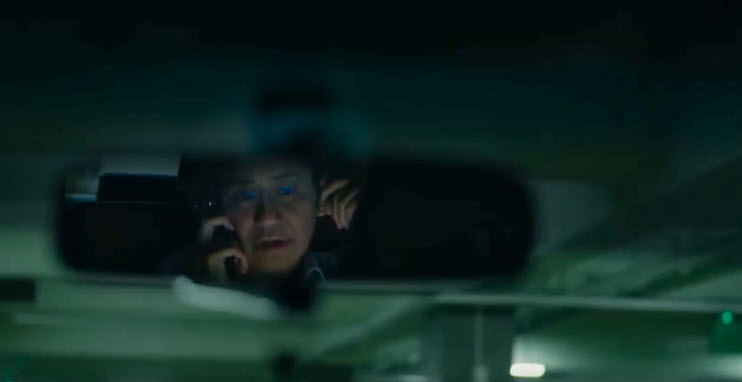
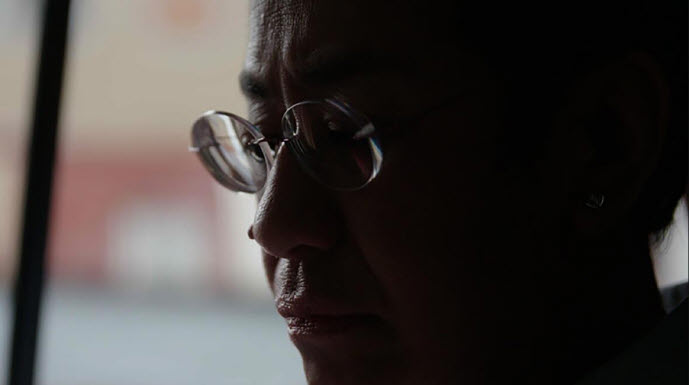
The documentary mainly revolves around a renowned Filipino journalist named Maria Ressa, who is the founder and the executive editor of a local online news site named Rappler. During the late 2010s, she and Rappler were frequently critical of President Rodrigo Duterte’s brutal war on drug, and Ressa and her fellow journalists were naturally harassed and oppressed a lot by Duterte’s government as they tried to stand up for press freedom as much as possible despite lots of obstacles they had to face day by day.

Director/writer/co-producer Ramona S. Diaz gives us a brief background information on how Duterte unexpectedly rose to the top in 2016. At first, he was just the relatively unknown mayor of a local city, but then his blatantly draconian policy against drug crime came to draw more attention and popularity during next several years, and many people in the Philippines came to embrace his authoritarian qualities without any hesitation just because he looked like an outsider who might handle things differently. Yes, this guy will surely remind you of a certain orange-faced con man who rose to the top of the American politics around that time, and it is no wonder that they seemed to get along with each other pretty well as fellow authoritarians.

Right from when he officially became the president, Duterte virtually sanctioned the extrajudicial killing of any drug addict or dealer out there, and the Filipino police were already ready for that. In fact, they promptly started his war on drugs shortly after his inauguration speech, and that was just the beginning of countless cases of killings around the country during next several years.

Ressa and her fellow journalists certainly reported a lot on the devastating consequences of this fascistic war on drug. One of the Rappler reporters recollects when she witnessed another killing incident not long after she and other reporters came for the one which happened first in the same neighborhood, and she is still haunted by how much the mother of the victim was devastated at that time.

As Rappler reported more and more on Duterte’s war on drug, Ressa and her fellow journalists were consequently far less welcomed by Duterte and his government. Just like that orange-faced prick, Duterte willfully spread misinformation while also accusing Rappler of producing, yes, “fake news”, and many of his ardent supporters on the Internet were certainly willing to attack Ressa and Rappler in one way or another.

Nevertheless, Ressa and her fellow journalists remained defiant, even while more and more frustrated with how their country was going down thanks to Duterte and his detestable cronies and supporters. Well aware that Rappler became the last stand for the Filipino journalism, Ressa stayed unflappable as before, but Duterte, who always makes me think of those vile and horrible figures in Joshua Oppenheimer’s memorable Oscar-nominated documentary “The Act of Killing” (2012), and his government continued to oppress her and Rappler, and she surely felt cornered more while getting arrested for more than once under outrageous false charges.

The plight of Ressa and her fellow journalists is often intercut with three different candidates running for the mid-term national election in 2019, and what we see from these figures is not so pretty to say the least. While we see some hope and possibility from one progressive female candidate strongly opposing to all the vulgar and toxic qualities of Duterte and his cronies, the two other candidates are the utterly deplorable emblems of what has been wrong with the Filipino politics for years, and you will not probably be so surprised by the eventual election result.

At least, Ressa and Rappler received a lot of support from the outside world, and she deservedly received the Nobel Peace Prize along with Russian journalist Dmitri Muratov in 2021. However, sadly, that was not enough to protect Ressa and Rappler. Around the time when the documentary came out in 2020, a court in Manila found her guilty of cyberlibel, and that was only the beginning of a long legal battle for her and the Rappler, which is still being continued even at this point.

On the whole, “A Thousand Cuts”, whose title is derived from one certain moment when Ressa explains how journalism can be killed along with democracy bit by bit, is recommendable for its powerful presentation of a serious case of journalism under crisis, and you will come to reflect more on the absolute necessity of good journalism for healthy democracy while also admiring a lot the courage and belief of Ressa and her fellow journalists. Things still do not look so bright for them and many others in the Philippines, but they will keep trying nonetheless, and I can only hope sincerely that their ongoing hard efforts will not amount to nothing in the end.

Posted in Movies | Tagged , , , | Leave a comment