Souleymane’s Story (2024) ☆☆☆1/2(3.5/4): An immigrant’s story in Paris

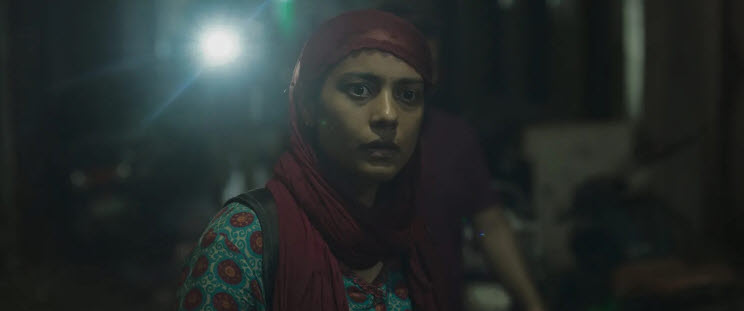
French film “Souleymane’s Story” follows the plight of one young immigrant from Guinea. He simply hopes to be allowed to live and work for himself as well as his dear family in Guinea, but his situation becomes quite desperate in one way or another as one important chance seems to slip away from him. Yes, this is another typical immigrant drama on the whole, but the movie is packed with considerable realism and verisimilitude to engage us, and, above all, it is firmly anchored by one of the best movie performances I saw during this year.

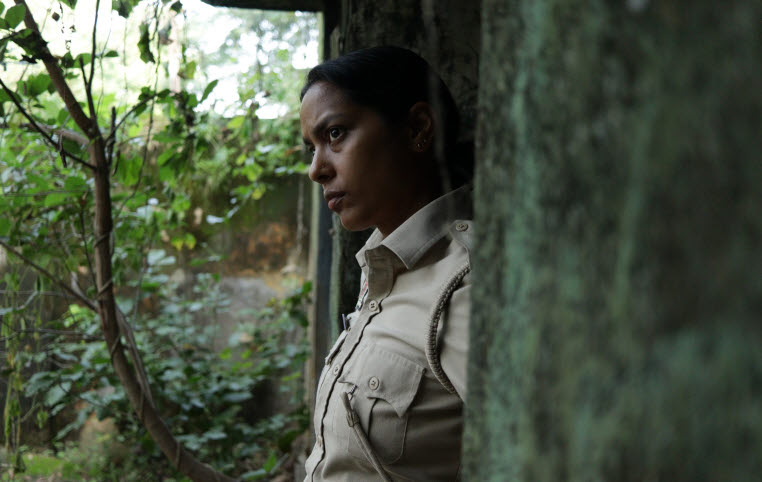
After the brief opening scene, the movie quickly establishes how things have been hard and difficult for Souleymane (Abou Sangaré). Some time ago, he left his country for working in France, but his current status is quite unstable to say the least. He has earned his meager living via working as a food delivery guy, and, mainly because he is not legally permitted to live and work there yet, he has to borrow the food delivery account of somebody else, whom he must pay a considerable part of his daily earning in exchange for that. In addition, because he is virtually homeless, he always has to depend on a local homeless shelter at every night, so he must finish his delivery job before being too late for the bus to take him and many others to that facility.

Meanwhile, as already shown from the opening scene, Souleymane has been trying to apply for political asylum, though he was just a mere mechanic in his home country. Needless to say, he must lie a lot about why he came to leave the country, and there is a little amusing scene where a fellow Guinean guy gives some advice to him and several others while also promising to give some necessary documents for political asylum application. Of course, the guy demands some money in exchange for that, but, alas, Souleymane does not have enough money to pay for those phony documents.

In the end, he has no choice but to work harder for earning more money. Because he is going to have an asylum application interview no less than two days later, Souleymane tries to memorize every detail of his fake history as much as possible, but he is not so sure about whether his lie can actually help him settling in Paris, especially when one of his colleagues tells a bit about how he miserably failed in the same attempt.

And he continues to work as usual. We often see him riding his bike here and there in city for one delivery job after another, and this takes my mind to Sean Beaker and Shih-Ching Tsou’s little but memorable movie “Take Out” (2004), which is about a young Chinese immigrant lad working as a delivery guy in New York City. Like the hero of “Take Out”, Souleymane must cope with various difficulties during his working time day by day, and we cannot help but observe how often he is callously disregarded by his clients.

Later in the story, something unexpected happens, and this makes Souleymane’s situation all the more frustrating. As he tries to handle this increasingly despairing circumstance of his, the camera of cinematographer Tristan Galand stays closer to our unfortunate hero for generating more verisimilitude on the screen, and I was not so surprised to learn later that the camera and the boom operator actually had to ride a bike for shooting all those bike-riding scenes in the film.

And the screenplay by director Boris Lojkine and his co-writer Delphine Agut gradually reveals some personal details on its hero. We come to learn later that he came to Paris mainly for earning enough money for taking care of his mentally ill mother more, and there is a sad moment when he talks with his mother in Guinea on the phone for a while. It is clear that her medical condition is getting worse, but he cannot possibly do anything about that. Furthermore, his girlfriend, who is also in Guinea, notifies to him that she is seriously considering marrying someone else now, and this naturally makes him wonder more about whether he made the right decision when he left his country.

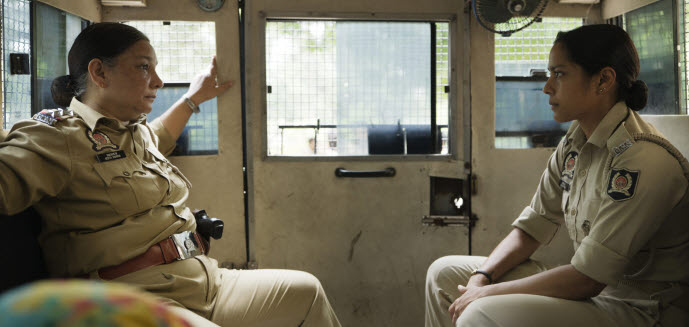
In the end, everything expectedly culminates to the asylum application interview between Souleymane and a female government official who is going to listen to his story and will decide whether he can stay in France as a political refugee. At first, things seem to be going fairly well for him, but we come to sense that the government official have seen a lot of guys not so different from him, and the mood accordingly becomes more tense later.

Before the production of his film, Lojkine, who received the Jury Prize when the movie was shown at the Un Certain Regard section of Cannes Film Festival early in last year, went through an extensive search for his leading actor, and he did find the right one from Abou Sangaré, a non-professional Guinean actor who had no previous acting experience before this film. While there is indeed a considerable overlap between his real life and his character, Sangaré, who received the Best Performance award at the Cannes Film festival and then recently received the Breakthrough Performance award at the Gotham Independent Film Awards, is totally compelling is his strong natural performance, and his excellent acting brings enough sincerity and honesty to prevent the movie from becoming another usual immigrant drama film.

In conclusion, “Souleymane’s Story” is another powerful immigrant drama film to notice thanks to Lojkine’s skillful direction and Sangaré’s unforgettable performance at its center. It may not surprise you that much in terms of its main subject, but it will engage you much more than expected, and you will never forget its hero after it is over.

Posted in Movies | Tagged , | 1 Comment

Familiar Touch (2024) ☆☆☆1/2(3.5/4): As her mind declines

“Familial Touch” is a gracefully elegiac drama film which follows the gradual mental decline of its aging heroine. She knows well her mind is fading away, but then there inevitably comes the point where she is often not totally aware of what is happening to her increasingly senile mind, and the movie quietly and sensitively illustrates her growing confusion and frustration along the story.

At the beginning, Ruth (Kathleeen Chalfant) seems fine and well on the surface. She has lived alone by herself in a cozy little house belonging to her, whose warm and sunny interior suggests a lot about her fairy good later years. We see her preparing a lunch for her and her son who is soon going to visit her, and then we observe how sincerely her son cares about her welfare, as they subsequently have a lunch and some conversation together.

However, from the quiet concern shown from her son’s face, we gradually come to sense that Ruth is not fine at all. After their lunch, he suggests a drive for them, but he does not tell anything about where he is going to take her. After Ruth is in her car, he puts a trunk full of her belongings, and we are not so surprised when they come to a facility for old people. Of course, Ruth is not so pleased about this seemingly sudden change, but she does need special care and support, considering that, as her son reminds her, she actually decided to move to this facility some time ago.

What follows next is how Ruth tries to adjust herself to this new environment of hers. She reluctantly accepts this considerable change, and the staff members of the facility are certainly ready to help her in addition to monitoring her mental condition day by day. As time goes by, she comes to befriend some of those residents in the facility, and she is also active in keeping her mind fine and stable as before.

However, despite her efforts and the constant support from the facility staff members, her senile mind only comes to show more symptoms of dementia. For example, she seems perfectly all right while examined by her doctor at one point in the story, but then her mind suddenly goes somewhere, and then she becomes quite confused about what she is doing right now – and whom she has been speaking with. During one morning, she suddenly comes into the kitchen just because she thinks she is a cook as she was many years ago, and then she quickly makes a little nice treat for everyone in the facility.

Now you will be reminded of many other similar films ranging from “Iris” (2001) to “Away from Her” (2006), but the movie sticks to its calm and somber mood even as things gets worse for Ruth. As her senile brain keeps getting wrong in one way or another, she certainly feels more confused and frustrated, and there is a brief but undeniably sad moment when she suddenly remembers her son’s name – and how she will forget that sooner or later.

Without showing or telling a lot about its heroine’s life, the screenplay by director/writer/co-producer Sarah Friedland, who deservedly received the Venice Horizons Award for Best Director when it was shown at the Venice International Film Festival in last year (She also received the Someone to Watch award at the Film Independent Spirit Award early in this year, by the way), carefully adds one small human detail after another. As her brain experiences more error and confusion, her mind often goes back to her past, and there is a surprisingly tranquil scene where she gets relaxed a bit and then is swept by some old memories from the past. At one point later in the film, her son rummages her old stuffs a bit before selling her house, and the little glimpse into her life makes her mental decline all the more harrowing.

And the movie also pays some attention to the facility members, who really care about Ruth and many other old people’s welfare in the facility. From their calm and patient handling of Ruth, we come to gather that they have already seen many other cases like hers. When Ruth inadvertently causes a big trouble later in the story, they remain practical as before, and it is clear to both Ruth and us that she really has to depend on them more than before.

Everything depends a lot on the excellent lead performance by Kathleen Chalfant, who is simply superlative as subtly and exquisitely embodying her character’s gradual mental deterioration along the story. While never asking for pity or sympathy, Chalfant fills her role with a lot of inner life to observe and reflect on, and that is why the eventual finale feels quite sad and poignant. Around Chalfant, Carolyn Michelle Smith, Andy McQueen, and H. Jon Benjamin are also solid in their respective supporting roles, and Friedland also brings a considerable amount of authentic realism as shooting her movie at a Continuing Care Retirement Community in Pasadena, California and having some of its residents and staff members serve as the extras for the film.

On the whole, “Familiar Touch” may look modest on the surface, but its many recognizable human moments will linger on your mind for a while after it is over. Yes, its heroine’s mind will irreversibly fade away more from herself as well as others who care about her, but, as reflected by the very title of the film and its penultimate moment, her body may still remember a bit even at that point. In my inconsequential opinion, the movie is one of the little highlights during this year, and I assure you that you will reflect more on life and aging after watching this small but precious gem.

Posted in Movies | Tagged | 1 Comment

Universal Language (2024) ☆☆☆1/2(3.5/4): A singular cinematic mix

Matthew Rankin’s “Universal Language”, which was selected as the Canadian submission to Best International Film Oscar in last year, is a singular cinematic mix to behold. While clearly influenced by the works of Guy Maddin, Wes Anderson, and Roy Andersson, the movie also distinguishes itself a lot with its own unconventional cultural concoction, and it also shows a bit of surprising human poignancy behind its many moments of deadpan comedy.

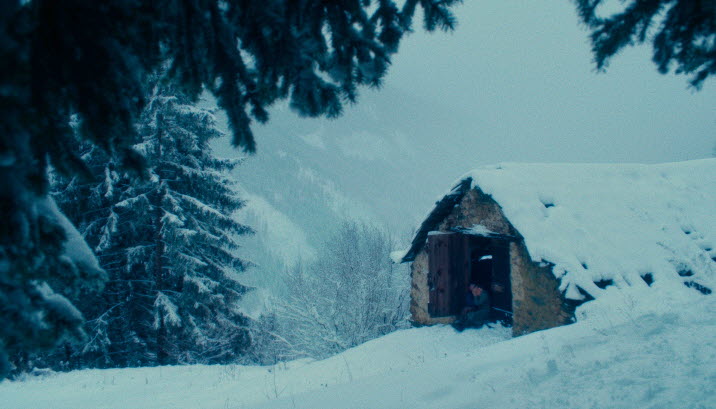
The movie, mainly set in Winnipeg of Canada, begins with the dryly absurd opening scene which clearly evoke the deliberately and humorously drab texture of many funny moments in Anderson’s several films such as “You the Living” (2007). On another very snowy day, a teacher comes to his classroom, but he somehow becomes quite annoyed by his perky students, and he comes to say some really bitter things to them, though none of them seems so dispirited by that.

Meanwhile, we notice more of the odd background setting of the film. The city and its citizens look like belonging to an alternative world where Iranian is a common language instead of English, though they still have to learn French for working in Quebec. Although many buildings in the city surely look Western, we observe a number of Iranian elements here and there on the screen, and this alternatively baffles and amuses us.

Anyway, we are later introduced to two young sisters Negin (Rojina Esmaeili) and Nazgol (Saba Vahedyousefi), whose innocent story may remind you a bit of Iranian children’s films such as Abbas Kiarostami’s “Where Is the Friend’s House?” (1987), Because one of her classmates lost his glasses due to a rather unbelievable incident which occurred when he was going to their school, Negin wants to help him as much as possible. At first, she and Nazgol simply try to find his glasses, and then they come across money frozen in ice, and they subsequently look for any possible way for retrieving it and then using it for buying the new glasses for Negin’s unfortunate friend.

Meanwhile, we get to know a bit about Matthew, who is a plain ordinary guy returning from Quebec after his many years of absence and is incidentally played by Rankin himself. He just wants to see his aging mother again, but, alas, he is only notified that his mother died some years ago, and his old family house is now resided by some other family. When he later goes to that house, the current owner of the house treats him with sincere hospitality, and there is a little sad moment when the camera lingers on something from his childhood past for a while.

Because somebody answered when Matthew tried to contact his mother on the phone, he cannot help but become curious about who this person is, and we are soon introduced to this person in question. Massoud (Pirouz Nemati) has worked as a tourist guide, and there are several absurdly amusing scenes where he guides a small group of tourists around a number of rather banal spots which are supposed to be, uh, historically important.
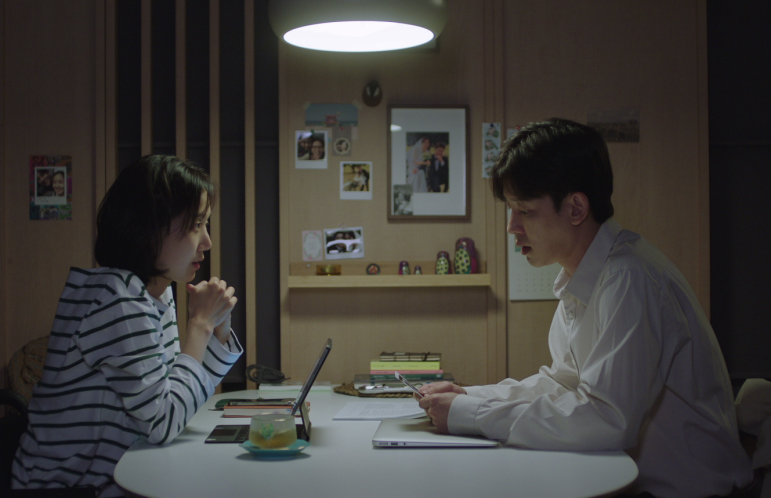
While several different narrative lines in the story eventually get intertwined with each other, the movie takes time for getting us more absorbed in its strange but somehow very realistic background. Rankin and his cinematographer Isabelle Stachtchenko frequently fill the screen with palpable wintry atmosphere, and that makes a good contrast with several unexpectedly colorful comic moments as stylized as the works of Wes Anderson. I particularly enjoyed the part involved with a local turkey shop and its eccentric owner, and the movie adds extra surreal touch via a bunch of living turkeys frequently roaming across snowy streets.

These and many other offbeat moments eventually function as the ground for what can be regarded as the emotional highpoint of the movie. When Matthew finally meets Massoud later in the story, Massoud tells Matthew more about the last years of Matthew’s mother, and Matthew comes to feel more guilt and sadness, especially when he goes inside a certain room and then experiences something quite surreal. I will not go into detail here, but the movie stays straight along with its performers, and that is the main reason why this strange moment works with genuine dramatic impact.

Even at that point, the movie does not lose any of its quirky sense of humor, and this often reminds me of Guy Maddin’s extraordinary film “My Winnipeg” (2007). Although these two films are quite different from each other in many aspects, they also share a lot of common things between them besides their main background, and that is quite evident whenever Rankin cheerfully goes back and forth between deadpan humor and surreal absurdity just like Maddin did in “My Winnipeg”.

Overall, “Universal Language” shines with a lot of offbeat style and humor to be savored, and I am willing to revisit its odd but interesting world just for cherishing more of its distinctive mood and details. Although I have not seen his first feature film “The Twentieth Century” (2019) yet, I can tell you instead that Rankin shows considerable talent in his very next feature film, and I will certainly look forward to watching what may come next from this promising filmmaker. In short, this is one of the best films I saw during this year, and I wholeheartedly recommend you to check it out as soon as possible.

Posted in Movies | Tagged | 1 Comment

Nouvelle Vague (2025) ☆☆☆(3/4): A lightweight reenactment of the Nouvelle Vague era

Richard Linklater’s “Nouvelle Vague”, which was released on Netflix in US several weeks ago, is a lightweight reenactment of how Jean-Luc Godard made one of the greatest films in the cinema history during a few weeks of 1959. While it does not delve that deep into him and many other notable figures around him, the movie is a vivacious pastiche to amuse anyone familiar with the Nouvelle Vague era of French cinema, and you may gladly overlook its rather superficial aspects.

The movie throws right into that exciting period surrounding Godard, played by Guillaume Marbeck, and his several fellow members of Cahiers du Cinéma, a legendary film magazine which was the starting point for not only their film criticism and filmmaking career but also many others in the group. Besides Godard, we are introduced to François Truffaut (Adrien Rouyard), Claude Chabrol (Antoine Besson), and Suzanne Schiffman (Jodie Ruth-Forest), and they certainly have a lot of things to talk about the latest film they watched together.

However, Godard feels like getting late as observing how many of his colleagues in Cahiers du Cinéma already and successfully moved onto filmmaking while he just made several minor short films. For example, Truffaut made a big critical/commercial success with his great film “400 Blows” (1959), and Chabrol and many others including Éric Rohmer (Côme Thieulin), Jacques Rivette (Jonas Marmy), and Agnès Varda (Roxane Rivière) are also beginning each own filmmaking career with more accomplishments compared to Godard.

Needless to say, Godard becomes more determined to prove himself (and his genius) to everyone, and there eventually comes an opportunity for making his first feature film. When producer Georges de Beauregard (Bruno Dreyfürst) approaches to him for discussing on the possibility of the production of a film based on the story written by Godard and Truffaut, Godard is not so willing at first, but then he accepts the producer’s offer simply because he sees the possibility of doing something quite new and different.

After that, he and several others around him prepare for the shooting of, yes, “Breathless” (1960). Although he does not say anything about what and how it will be about except its basic character setting, many crew members including cinematographer Raoul Coutard (Matthieu Penchinat) agree to work with him mainly because they regard his little movie project as a challenging but interesting task. In case of Coutard, he surely knows a lot about improvisation and spontaneity as a guy who learned cinematography during his military years, and it goes without saying that he was the ideal guy for Godard’s own free-flowing filmmaking approach.

In case of the two lead performers of “Breathless”, they are as baffled as many others even before the shooting is started. Because he had some fun while working with Godard for his short film several years ago, Jean-Paul Belmondo (Aubry Dullin) has no problem with working with him again, and he generously tells his co-star Jean Seberg (Zoey Deutch) a bit about what it will be like working for Godard. Although she wants something different to help her burgeoning movie acting career, Seberg soon finds herself getting much more than she wished for, but she also tries to be game as much as possible, and her natural charm and presence make Godard more convinced that he did choose the right actress for his film, though it costs a lot for getting her cast for the movie.

The screenplay by Holly Gent and Vincent Palmo, which is adapted by Michèle Halberstadt Laetitia Masson, has a lot of fun with how Godard tries one thing after another without much clear direction for many others around him – or himself. During the next 20 days, he frequently baffles and confounds his cast and crew as reaching for something supposedly special, and, not so surprisingly, he eventually exasperates his producer a lot, who is not so amused by Godard’s casual handling of the production. Now my mind goes back to what Woody Allen told my late mentor/friend Roger Ebert on how he felt during the shooting of Godard’s later film “King Lear” (1987): “He was very elusive about the subject of the film. First he said it was going to be about a Lear jet that crashes on an island. Then he said he wanted to interview everyone who had done “King Lear”, from Kurosawa to the Royal Shakespeare. Then he said I could say whatever I wanted to say. He plays the French intellectual very well, with the 5 o’clock shadow and a certain vagueness. Meanwhile, when I got there for the shoot, he was wearing pajamas–tops and bottoms–and a bathrobe and slippers, and smoking a big cigar. I had the uncanny feeling that I was being directed by Rufus T. Firefly.”

Nevertheless, something does begin to happen as days go by. Under Godard’s unorthodox direction coupled with some guerrilla filmmaking tactics, the cast and crew members come to enjoy themselves more as generating more chemistry generated among them, and the movie did a lovely job of recreating their joy of filmmaking across the screen. Shot on the grainy black and white film in the ratio of 1.33:1 by cinematographer David Chambille, the movie is filled with authentic period mood and details, and these elements instantly evoke the texture and spirit of “Breathless” and many other classic works of the Nouvelle Vague era. 

It surely helps that the movie has good performers effortlessly embodying their respective roles. Although we never get to know much about Godard as a human being even in the end, Marbeck has a dry fun with Godard’s lofty and distant attitude, and the movie reminds me again that Godard was a prick even when he was young and really talented. Zoey Deutch, Aubry Dullin, and Bruno Dreyfürst have some small but juicy moments, and Deutch brings extra charm to the film just like Seberg did to “Breathless”.  

In conclusion, “Nouvelle Vague” will not show you anything particularly new especially if you admire “Breathless” a lot, but it is still entertaining mainly for its good mood and style. Although I prefer his other recent film “Blue Moon” (2025) more, “Nouvelle Vague” is a fairly good love letter to filmmaking, and Linklater certainly had a productive time as giving us these two well-made works during this year.

Posted in Movies | Tagged , , , | 1 Comment

If I Had Legs I’d Kick You (2025) ☆☆☆1/2(3.5/4): The raw and intense portrayal of a troubled motherhood

Mary Bronstein’s second feature film “If I Had Legs I’d Kick You” is probably one of the most intensely uncomfortable movie experiences I have ever had during this year. Closely and vividly sticking to the increasingly unstable mindset of one very troubled mother, the movie constantly unnerves us via a series of emotionally tense moments which will definitely make you wince and cringe a lot, but it firmly holds our attention to the end mainly thanks to the unforgettable lead performance at the center of the story.

During the opening part, the movie succinctly and effectively establishes how things have been quite stressful for its heroine. After her husband went somewhere due to his busy work, Linda (Rose Byrne) has to take care of their little young daughter alone by herself during next several weeks, but she is already on the verge of having a nervous breakdown for several understandable reasons. Her daughter, whose face is incidentally seldom shown throughout the film, needs constant care due to her eating disorder and the following medical treatment on that, and Linda surely needs some mental support as often getting exhausted from taking care of her daughter everyday, but she is frequently too busy for that. As a psychiatrist, she has to deal with her apparently problematic patients day by day, and she does not get much help from her own psychiatrist, who is incidentally one of the colleagues at her workplace.

On the top of all these and other things, another thing happens to cause more stress and confusion in Linda’s daily life. Not long after she returns to her family house along with her daughter, she belatedly discovers a very serious problem on the ceiling of her bedroom. As a result, she has no choice but to move to a nearby motel along with her daughter, and then she becomes quite frustrated with the rather slow response from the landlord of the house, who is going to be absent for a while due to a very important family matter.

And we see more of how things keep getting stressful for her in one way or another. While she often has to tolerate and handle her daughter’s occasionally unruly behaviors, Linda keeps getting demanded to attend a therapy session for mothers under similar mental pressure, but she is reluctant despite being constantly cornered by many tasks thrown upon her everyday. She usually cannot help but feel guilty about not being a model mother who can handle everything, but she also does not want to face her growing despair and frustration, while only blaming herself again and again.

Not so surprisingly, Linda gradually depends more and more on drinking, and, of course, that does not help her much. At least, she later finds some solace from a kind and sympathetic black lad staying at the same motel, but then there comes another serious trouble when she takes him to her family house just for showing that remaining big problem in the house.

This is just one of many bad choices made by Linda along the story, and you will surely shake your head more than once during your viewing just like I did a few hours ago. Nevertheless, we keep observing her painfully human responses and behaviors thanks to the vivid mood and details swirling around her downward spiral. Right from the beginning, the movie makes us accept and then immerse ourselves more into its heroine’s increasingly unhinged viewpoint, so we are not so surprised by several sudden delusional moments later in the story.

The overall result is definitely quite grueling for us to watch at times, but Bronstein’s screenplay never loses its empathy on Linda’s worsening mental implosion. Sure, she can be quite shrill and abrasive from time to time, but we come to understand more of what makes her tick so often, and there is a somber but undeniably harrowing scene where she eventually confides to her psychiatrist a bit of what has been tormenting her. She comes to grasp more of her impending mental issues, but she also really needs to be more honest and active for getting some real help instead of hiding behind her usual self-blame, and her adamant refusal and denial consequently lead to more problems to come.

This surely makes Linda look all the more unpleasant and unlikable, but we still cannot take our eyes away from her, because Rose Byrne, who deservedly received the Silver Bear for Best Leading Performance when the movie was premiered at the Berlin International Film Festival early in this year, is fully committed in her uncompromising performance. Never making any cheap excuse on her achingly flawed human character, Byrne goes all the way for raw emotional intensity from the beginning to the end, and she also did a commendable job of bringing palpable human qualities to the story and her character. Thanks to her compelling efforts, the movie thankfully avoids becoming a mere misery porn, and she certainly deserve all the acclaims and awards she has received during the Oscar season of this year (She has already received the Best Actress awards from the New York Film Critics Circle and the National Board of Review, respectively).

While it can be said that Byrne’s lead performance is the whole show of the film, I must point out that several notable supporting performers have each small moment to shine. Danielle Macdonald, Christian Slater, and ASAP Rocky are well-cast in their respective supporting parts, and the special mention goes to Conan O’Brien, who, as Linda’s seemingly uncaring psychiatrist, demonstrates well here that he can ably dial down his comic persona for drama acting just like many other good comedians such as, say, Robin Williams.

In conclusion, “If I Had Legs I’d Kick You” is surely not something you can casually watch on Sunday afternoon, but it is worthwhile to watch for its considerable emotional intensity and the strong lead performance behind it. Although I have not watched her first feature film “Yeast” (2008) yet, “If I Had Legs I’d Kick You” shows me that Bronstein is another talented female filmmaker to watch, and it will be interesting to see what she will give us next after this powerful psychological drama film.

Posted in Movies | Tagged , , | 1 Comment

The Lord of the Rings: The Two Towers (2002) ☆☆☆1/2(3.5/4): The middle of an ambitious trilogy

Peter Jackson’s 2002 film “The Lord of the Rings: The Two Towers”, which is currently being shown in selected South Korean theaters, is an effective middle chapter of its ambitious trilogy. While you will surely need to watch “The Lord of the Rings: The Fellowship of the Ring” (2001) first, the movie is as wondrous and exciting as its predecessor as expanding the story and its fantasy world further, and I found myself enjoying it as usual when I watched it at a local theater today. 

The story, which begins right after the inevitable breaking of the Fellowship at the end of the first film, mainly consists of three separate narrative lines, and the first one is about the ongoing journey of Frodo Baggins (Elijah Wood) and Samwise Gamgee (Sean Astin), two young hobbits who must carry a powerful but dangerous magic ring to the dark territory of its malevolent creator for destroying it once for all. Without any guide for them, they soon get lost in the middle of somewhere near that dark territory, and then they encounter Gollum (Andy Serkis), a wretched and treacherous figure who once owned the ring before it accidentally came into the possession of Frodo’s uncle. Still under that seductive power and influence of the ring, Gollum tries to snatch the ring from Frodo, but, after his failed attempt, he comes to serve as a supposedly useful guide to take Frodo and Samwise to that dark territory.

Before the movie came out, I and many other audiences were quite curious about how Gollum would look like as a CGI character, and I can tell you again that some of the best moments in the film come from this alternatively pitiful and sneaky character. Vividly voiced and embodied by Andy Serkis, who would be revered as Ron Chaney of motion capture performances for CGI characters thanks to many notable movies such as Jackson’s “King Kong” (2005) and the recent trilogy of the Planet of the Apes series, Gollum gradually becomes a crucial part of the story instead of being a mere special effects demonstration, and things always get more unnerving whenever the movie focuses on his tricky inner struggle between his ever-growing obsession with the ring and his oath on serving Frodo as his ‘master’. 

Meanwhile, the movie also follows the ongoing search for two other hobbits in the story: Meriadoc Brandybuck (Dominic Monaghan) and Peregrin Took (Billy Boyd). Their three different comrades, Aragorn (Viggo Mortensen), Legolas (Orlando Bloom), and Gilmi (John Rhys-Davies), chase after a bunch of monstrous creatures who took away these two Hobbits, but then they come across the imminent danger upon a nearby kingdom. Eventually, they get involved more into this emergency along with Gandalf the White (Ian McKellen), who was supposed to get killed around the middle point of the first film but has now returned with much more power than before.   

The third narrative line involves with the adventure of Peregrin and Meriadoc, who manage to escape shortly before their captors are ambushed and then slaughtered. They subsequently run away into a nearby ancient forest filled with a lot of uncanny vibe, and that is where they come across a bunch of old tree-like creatures called the “ents”. I must say that these creatures sometimes look like wooden cousins of those big alien robots in those Transformer movies, but Jackson and his special effects team do not disappoint us at all as bringing enough life and personality to these interesting creatures. While Billy Boyd and Dominic Monaghan look convincing on the screen along with these CGI figures, John Rhys-Davis’s voice performance did a wonderful job of imbuing his CGI character with enough sense of age and power. Yes, these ents may usually talk and think pretty slowly, but they are definitely not someone you can mess with.

While taking its time in building up the narrative momentum, the movie often explores more of its fantasy world with a heap of nice touches and details to notice and admire. Again, many different wild landscapes of New Zealand are splendidly utilized for immersing us more into the world so palpably created inside the classic trilogy written by J.R.R. Tolkien, and I particularly appreciate more of some human moments observed from a number of minor characters in the story. Yes, many of the main characters are more or less than simple and broad archetypes, but the movie sometimes emphasizes what is being at stake for many ordinary people at the fringe of the story, and that is the main reason why we come to care more about the story and characters.   

In the end, the movie culminates to a big climax packed with a lot of actions unfolded simultaneously at several different places, and that is where Jackson and his crew members pull all the stops as expected. The digital special effects in the film look a bit dated especially during this part, but Jackson masterfully handles all these CGI spectacles with enough dramatic impact and intensity, and you will not complain at all although Tolkien himself might have found the movie a little too loud and violent for his taste, considering that his peace-loving hobbit characters always come first than any other character in the story.      

The main cast members of the film are solid on the whole. While Elijah Wood and Sean Astin eventually come to us as the small but precious soul and heart inside all those spectacles in the film, Ian McKellen has a lot of fun with his character as before, and several other notable cast members including Viggo Mortensen, Orlando Bloom, Bernard Hill, Christopher Lee, Hugo Weaving, Miranda Otto, David Wenham, Brad Dourif, Karl Urban, Liv Tyler, and Cate Blanchett are also effective in their respective supporting parts.

In conclusion, “The Lord of the Rings: The Two Towers” occasionally feels incomplete as the middle point between the first chapter and the following last chapter of its trilogy, but it still works a first-rate fantasy film thanks to Jackson’s confident storytelling and skillful direction. It did get me more energized for the concluding chapter to follow, and that says a lot about its effectiveness in my trivial opinion.

Posted in Movies | Tagged , | Leave a comment

Jay Kelly (2025) ☆☆☆(3/4): A star in middle-life crisis

Noah Baumbach’s latest film “Jay Kelly”, which was briefly shown in theaters before it is released on Netflix in this week, is a humorous story about the middle-life crisis of one big movie star. While it is quite typical in many aspects, the movie is packed with enough wit and insight as following its celebrity hero’s emotional journey, and it is also anchored well by the solid lead performance at its center.

George Clooney, who gives one of his best performances here in this film, plays Jay Kelly, a famous Hollywood actor who has just finished shooting another movie at the beginning of the story. While he will soon move onto the next movie to shoot, Kelly wants to spend some little private time with his adolescent younger daughter Daisy (Grace Edwards) before that, but she is soon going to travel around Europe before beginning to study in John Hopkins University, and that reminds him again of how distant they are to each other at times.

Meanwhile, his longtime manager Ron Sukenick (Adam Sandler) brings him a sudden sad news. Peter Schneider (Jim Broadbent), an old filmmaker who gave Kelly a big career breakthrough many years ago, died, and Kelly cannot help but feel guilty for a good reason. When Schneider requested a bit of help from him not so long ago, Kelly flatly rejected Schneider’s request without much thought. As watching Schneider’s son remembering his father at the following funeral, Kelly feels all the more regretful, and then there comes another figure who knew him during those early years of his career.

Of course, Kelly comes to reflect more on where his life has been going, and then he makes a rather impulsive decision to the surprise of everyone around him including Sukenick. He decides to accept the life achievement award given by some prestigious film festival to be held somewhere in Italy, just because that will make a good excuse for meeting and then spending some time with Daisy, who has already gone to Europe along with several friends of hers.

Needless to say, things do not go that well for Kelly and his several close associates right from when they arrive in France via a private jet plane, and they end up being stuck with many passengers on a train going to Italy. Not so surprisingly, Kelly is instantly recognized by the passengers, and he certainly charms them a lot with his own presence and charisma. After all, he is played by Clooney, and we cannot possibly expect anything less than that, right?  

And we also get to know more about Kelly’s many human shortcomings. As he sometimes looks back on his past, he comes to see more of how he has often ruined his relationships with a number of people close to him including Daisy and her older sister Jessica (Riley Keough), who has distanced herself from her father a lot for years. During one flashback scene, he sincerely tries to fix his damaged relationship with Jessica, and then he only ends up running away from facing her longtime pain and resentment caused by him.

In case of Daisy, she is not so amused to see her father again, and Kelly miserably fails to persuade her to join him in that film festival in Italy. In the end, only his aging father attends a little celebration party with Kelly, and Kelly’s father surely reminds Kelly of how Kelly is not so different from his father as becoming a lousy father just like him.

The screenplay by Baumbach and his co-writer Emily Mortimer, who also served as one of the executive producers of the film besides briefly appearing in the opening scene, feels a bit too leisurely at times, but it still engages us with several well-written moments to observe. Besides sharply observing how messy its hero’s private life, the movie also pays some attention to several main characters revolving around him, and it is poignant to observe how much Sukenick has devoted himself to Kelly’s career. Sukenick frequently disappoints his wife and kids a lot along the story due to being always busy with handling all those matters involved with Kelly, but they accept that simply because they understand and love him, and his loving relationship with his family surely makes a contrast with Kelly’s problematic relationship with his kids.

During the last act, the movie becomes more predictable, but it remains buoyed by its overall lightweight mood. Besides deftly handling the wonderful extended shot of the opening scene, cinematographer Linus Sandgren, who previously won an Oscar for Damian Chazelle’s charming musical film “La La Land” (2016), did a splendid job of filling the screen with warm and intimate atmosphere, and that is often accentuated by Nicholas Britell’s witty score.  

As Clooney, who has surely been aged enough to play his character, effortlessly holds the center, a number of various performers have each own moment to shine. While Riley Keough and Grace Edwards are terrific as Kelly’s two different daughters, Laura Dern, Billy Crudup, Stacy Keach, Jim Broadbent, Patrick Wilson, Greta Gerwig, Isla Fisher, and Alba Rohrwacher are effectively cast in their small supporting parts, and Adam Sandler, who previously collaborated with Baumbach in “The Meyerowitz Stories (New and Selected)” (2017), demonstrates again that he can ably dial down his rather abrasive comic persona for the more serious sides of his acting talent.

Overall, “Jay Kelly” is less impressive compared to Baumbach’s previous Oscar-winning Netflix film “Marriage Story” (2019), but it is at least two or three steps up from the disappointment of “White Noise” (2022), another recent Netflix film from Baumbach. I must point out that the movies about affluent white man’s middle-life crisis have been dime a dozen for years, but the movie is a fairly good one at least thanks to its competent handling of story and characters, so I will not grumble for now.

Posted in Movies | Tagged , , | 1 Comment

Sirāt (2025) ☆☆☆1/2(3.5/4): In the middle of a stark existential wasteland 

“Sirāt”, which was recently selected as the Spanish submission to Best International Film Oscar, impresses me a lot with its stark existential wasteland. As its few main characters are merely heading to somewhere across that vast and remote wasteland, the movie often captivates us with its striking visual qualities, and you will admire that more once you come to see what and how it is about.

The movie opens with a big outdoor rave party being held in the middle of some wasteland region of southern Morocco. After the camera wanders here and there around many different European people, the movie eventually comes to focus on a guy named Luis (Sergi López, who looks much shabbier compared to his memorably villainous role in Guillermo del Toro’s “Pan’s Labyrinth” (2006)). He comes along with his young son just for looking for his daughter, and they keep asking a number of people whether they saw her or not, but they only get frustrated more and more as time simply goes by. It seems that nobody saw her at all, and all they can learn is that she could already go to some other spot where another rave party is being held,

Anyway, not long after the arrival of this father and son, the rave party is aborted by the local soldiers due to a sudden global crisis. While most of the attendees follow the evacuation order, a small group of people impulsively decide to drive away and then go to another rave party, and Luis also chooses to follow after them mainly because he believes that they will probably lead him to his daughter’s whereabouts.

Of course, they soon come to see how the situation is much more serious than they thought at first. At one point, they see hundreds of local people evacuating from their region, but they are not so bothered about this while merely annoyed by how it becomes more difficult for them to get more fuel for their vehicles. Fortunately, despite being woefully unprepared for his journey, Luis can provide a bit of help to his new friends, who later help him and his son when his car cannot go across a rather wide stream unlike their vehicles.

Remaining distant to its story and characters, the screenplay by director/co-producer Óliver Laxe, who won the Un Certain Regard Jury Prize at the 2019 Cannes Film Festival for his previous film “Fire Will Come” (2019), and his co-writer Santiago Fillol provides a bit of spirit and humor while its main characters look more like driving into nowhere. As they keep driving their vehicles across a series of endless wastelands, you will probably be reminded of George Miller’s great science fiction action film “Mad Max: Fury Road” (2015), and we later get a little humorous moment when they suddenly decide to drive their vehicles faster for a while.

However, things gradually become more unnerving for the main characters as they drive deeper and deeper into the wasteland region. Although it seems the world is falling apart rapidly according to the radio news reports, they are still not so concerned about that while only focusing on getting to their aforementioned destination, and the movie comes to feel more like an existential drama along their seemingly endless journey.

And then something quite devastating happens later. For avoiding spoiling anything for you, I will only tell you that 1) the main characters of the film have to drive along a route as perilous and suspenseful as the one shown in Henri-Georges Clouzot’s great thriller film “The Wage of Fear” (1953) and 2) you will be surprised by how this sequence subsequently throws a shocking moment for its inevitable dramatic punctuation.     

This sequence certainly resonates a lot with the very title of the movie. Not long after I watched the film, I came to learn about its meaning thanks to my friend Wael Khairy, and that surely made me reflect more on what I observed from the climactic part of the movie. In Islamic belief, the Sirāt Bridge is a narrow and risky bridge which every person must cross on the Day of Judgment to enter Paradise (Jannah). This bridge is not only thinner than a hair but also sharper than a sword, and the faithful can cross this pretty easily, while those sinners may fall into Hell below. When one of the main characters tries what can be regarded as sort of a crossing of faith across a very dangerous area just like that, you will surely come to brace yourself more.  

The film is basically an exercise in style and mood, but Laxe and his crew members including cinematographer Mauro Herce and composer Kangding Ray, whose electronic score deservedly won Cannes Soundtrack Award when the movie was premiered at the Cannes Film Festival early in this year (It also won the Jury Prize along with Mascha Schilinski’s “Sound of Falling” (2025), by the way), did a splendid job of filling the screen with a stark sense of existential dread. The main cast members besides López are actually non-professional performers, but they look convincing in their respective roles, and López subtly takes the center while never trying to outshine his fellow cast members.

In conclusion, “Sirāt” is one of the most interesting films of this year, and I am willing to revisit it soon for appreciating more of its distinctive mood and style. Although I must point out that I was a bit disappointed with its eventual arrival point, the rest of the film vividly remains on my mind even at this point, and that is more than enough for recommendation in my inconsequential opinion.

Posted in Movies | Tagged , , | 1 Comment

Sorry, Baby (2025) ☆☆☆1/2(3.5/4): Before and after what happened to her

During the first 20 minutes of Eva Victor’s first feature film “Sorry, Baby”, I observed that its heroine is living a wonderful academic life which would have been envied by my late mentor/friend Roger Ebert, who could have taught literature or writing at college if he had kept studying for his doctoral degree course instead of continuing to work in Chicago Sun-Times. She is a fairly young (and popular) literature professor in some liberal arts college in a rural New England region, and she also lives alone in a nice and cozy house where she can work or read alone by herself. Watching her surrounded by many books at home, I could not help but become a bit jealous of her – and Roger could have felt pretty much the same in my inconsequential opinion.

Although it feels a little spirited during its opening part, the movie turns out to be much more serious than expected as gradually delving into what she has lived for a while. Considering that the two reviews I read several months ago did not reveal that much to me, I will also try not to reveal too much here, but I strongly recommend you not to read further if you want to experience its dramatic impact as fully as possible. 

The movie, which consists of several acts, begins with the casual weekend between Agnes (Eva Victor) and her best friend Lydie (Naomi Ackie) at Agnes’ house. Lydie, who is currently married, recently becomes pregnant via in vitro fertilization (IVF), and Agnes is certainly glad about that as her very close friend, but we come to sense that Lydie comes mainly for checking on Agnes’ current status – even when they frankly talk about sex and men. 

That becomes all the more evident to us when they later have a dinner with several others who studied along with them for their doctoral degree under some prominent professor some time ago. When one of them talks a bit too much about Agnes and their adviser, the mood becomes quite awkward to say the least, and Lydie makes some indirect criticism on that not long after Agnes suddenly leaves the spot for a moment.

The movie subsequently goes back to their graduate school years at the same liberal arts college where Agnes currently works. As their adviser keeps praising and encouraging her much more than the other students studying under him, Agnes certainly feels proud and excited, and she is not so concerned at all even when she recognizes to Lydie later that her adviser may actually be not so interested in her academic talent or potential.

In the end, there comes a moment which will affect Agnes and her life forever. The movie wisely distances itself from what happens to her, but the following dramatic impact is quite palpable to say the least. Although the camera simply watches her phlegmatically driving her car to her residence for a while, that is more than enough for us to sense how confused and devastated she really is.

As Agnes struggles to process what happened to her, the movie effortlessly swings between harrowing sensitivity and some dark humor. Fortunately, she gets full emotional support and consolation from Lydie, and that surely helps her a lot – especially when she comes to see that her school is more occupied with maintaining its reputation and avoiding any responsibility. Nevertheless, she does not lose her quirky sense of humor, and there are actually several little humorous moments including the one where Agnes frankly and blatantly confides to Lydie on what she could have done out of her anger and pain.  

And we observe more of how complicated Agnes’ situation has been. As trying to leave behind what happened to her, she kept going in her graduate course, and she gets promoted quite quickly once she began her academic career there. However, as reflected by a brief scene between her and a bitter colleague of hers, she cannot deny that what happened to her is one of the crucial factors in her rather fast career advancement, even though it is also true that she earns her recent promotion via her talent and intelligence. 

While clearly recognizing its heroine’s complex emotional state, Victor’s screenplay, which incidentally received the Waldo Salt Screenplay Award when it was premiered at the Sundance Film Festival early in this year, simply illustrates how she struggles to live more. There is a funny and intimate scene between Agnes and a male neighbor quite willing to accept a certain need of hers, and I was particularly touched by when Agnes finds an expected source of comfort at one point in the story, which will be appreciated a lot by any cat lovers out there (Full Disclosure: I am also a cat lover, though I am too busy with taking care of myself to have a cat).

Victor’s strong lead performance ably holds the center, and this promising new filmmaker also draws good supporting performances from the main cast members of the movie. While Naomi Ackie, who was also wonderful in Bong Joon-ho’s “Mickey 17” (2025), brings extra warmth and humor to her several key scenes with Victor, Kelly McCormack, Lucas Hedges, Lucas Hedges, Hettienne Park, E.R. Fightmaster, and John Carroll Lynch are also effective in their respective supporting parts, and, though he only appears in one single scene later in the movie, Lynch reminds us again that he is indeed one of the most dependable character actors working in Hollywood at present.

In conclusion, “Sorry, Baby” is superlative for its thoughtful and sensitive storytelling as well as a number of stellar performances to remember. It surely shows that Victor is another promising American filmmaker to watch, and I will have some expectation on whatever may come next from this new interesting filmmaker after this remarkable debut work.

Posted in Movies | Tagged , | 1 Comment

Planes, Trains and Automobiles (1987) ☆☆☆☆(4/4): An enduring Thanksgiving Day classic

As a South Korean who has seldom left his country during last 42 years, I have never experienced Thanksgiving Day for my whole life, but I could not help but amused and touched by John Hughes’ 1987 film “Planes, Trains and Automobiles”. While it looks like your average Thanksgiving Day season movie on the surface, the movie works as a surprisingly moving comedy of human nature and understanding, and I found myself again freshly learning its invaluable life lessons. 

The biggest reason for that is how I soon found myself wincing and cringing again thanks to one of its two lead characters. Yes, Del Griffith (John Candy), who is merely a traveling shower curtain ring salesman, is certainly a certain type of person who will make your eyes roll for good reasons, and I was annoyed again by his many flaws during the first 30 minutes of the film, but, surprise, I came to accept, tolerate, and understand him a lot just like I did when I watched the film for the first time around 20 years ago.

The secret of the success of the film is having someone who can function as an effective counterpoint to Del in addition to being changed a lot by his presence and influence. He is a New York City advertisement company executive named Neal Page (Steven Martin), and the first half of the movie has a lot of naughty fun with his amounting frustration from how he keeps struggling to get back in his family home in Chicago before Thanksgiving Day. First, he has to endure his boss’ exasperating indecisiveness on their latest project. Second, he must hurry to get a cab to take him to the airport, and, of course, he spectacularly fails to his annoyance, Third, he manages to arrive at the airport in time, but, what do you know, his airplane to Chicago gets not only delayed during next several hours but also has to land in somewhere else due to an unexpected snow storm in Chicago.

 In the midst of this unbelievable series of bad luck, Neal finds himself stuck with Del, who looks like the cherry on the top of the amounting layers of troubles for Neal. Right from their first formal introduction to each other, Del annoys Neal a lot to say the least, so Neal tries to distance himself away from Del’s friendly approach as much as possible, but, of course, he only gets more stuck with Del, especially when they come to stay in a motel after their airplane landed somewhere in Kansas instead. During the next several hours, Neal comes to learn more of how annoying Del can be in one way or another, and we are not so surprised when he eventually reaches to the breaking point and then becomes very, very, very brutally honest about Del’s many shortcomings.

And that is when the Huges’ screenplay comes to show much more heart than we expected. As cinematographer Donald Peterman’s camera focuses on Del’s face, we come to gather how much Del feels hurt by Neal’s brutal honesty, and it is also implied that this is not the first time when Del unintentionally rubs out others in wrong ways. Once Neal’s rather harsh assessment on his personality is over, Del makes a defiant and poignant argument on how he is not ashamed at all of who he is, and we are not so surprised when Neals soon regrets about what he just said to Del.

Once its two lead characters are established enongh for more development, the movie doles out a series of uproarious comic moments as they go through a series of ups and downs on their road to Chicago. In case of one particular scene which is probably the sole reason for the movie getting rated R, it has one of the most hilarious utilizations of a certain F-word, and the simple but undeniably priceless punchline for this very funny moment still tickles me a lot. I also enjoy that loony highway scene which virtually goes all the way for more laughs, and its coming timing is simply exquisite from the beginning to the end.

Just like many other American comedy films in the 1980s, the movie has some dated aspects to notice. The score for Ira Newborn, who has been mainly known for his contribution to the Naked Gun Trilogy, is mostly effective, but it feels rather old whenever it becomes dominated by those old-fashioned synthesizers, and that reminds me of why I personally believe that those supposedly cool contemporary electronic scores by Trent Reznor and Atticus Ross will quickly be old-fashioned just like that within 20 years. In case of that famous “Those arent’s pillows!” scenes, it only seems to exist for removing the possibility of any homosexual subtext between Neal and Del, while also unintentionally showing some homophobia. 

Nevertheless, Huges’ deft handling of his main characters still shines a lot with a lot of caring and affection, and Steve Martin and John Candy are an impeccable comic duo ably complementing each other from the beginning to the end. Martin brings genuine humanity to his role while never stepping away from his character’s neurotic side, and he is also believable as his character comes to accept and then care about Del a lot more than expected around the end of the story. On the opposite, John Candy imbues his character with a lot of good-natured jolliness and sincerity, and he also did a splendid job of adding subtle moments of pathos to his character.

 In conclusion, “Planes, Trains and Automobiles” has a lot of wonderful things to make into an enduring holiday season to be cherished, and it can be said that it sets a precedent for many different subsequent movies including Oscar-winning film “Rain Man” (1988). Like that classic film, “Planes, Trains and Automobiles” makes an indelible point on the importance of accepting and understanding others in our life, and I think the movie will keep giving that invaluable lesson to me as before.

Posted in Movies | Tagged , , | Leave a comment