Diane von Furstenberg: Woman in Charge (2024) ☆☆☆(3/4): On her life and achievement

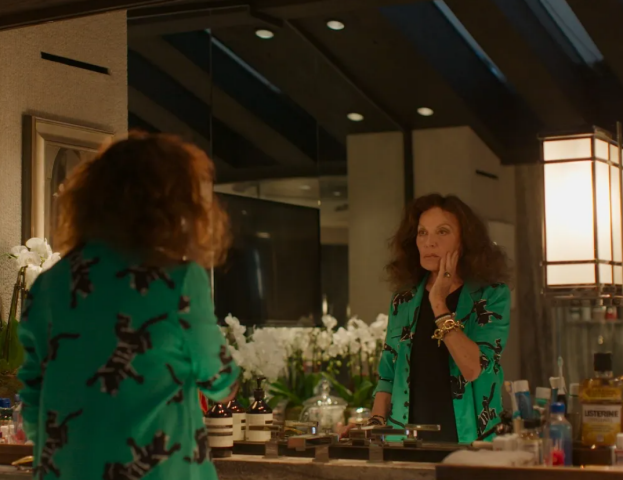
Documentary film “Diane von Furstenberg: Woman in Charge”, which is currently available on Disney+ in South Korea, broadly looks over the life and achievement of its very fascinating human subject. Although I wish it regarded this interesting figure with more honesty and insight, the documentary still works a fairly informative presentation, and I must admit that it also fills some blank spots in my deficient knowledge on fashion industry.

With its human subject constantly occupying its center, the documentary begins with her family background. Diane von Furstenberg, who will soon have her 78th birthday around the end of this year, was born as Diane Simone Michele Halfin in Belgium shortly after the end of the World War II, and she tells a bit about how things were quite grim and difficult for her Jewish mother during the war. Her mother eventually managed to survive the Holocaust and then reunite with her parents, and then she came to give birth to her daughter not long after marrying her first husband, though her doctor told her that having a child could be quite risky for her.

While von Furstenberg’s mother cared a lot about her daughter as showing some tough love to her, their life subsequently went through a big change as she suddenly had a divorce for some other guy. Young von Furstenberg was soon sent to a boarding school in Switzerland, and that is where she came to befriend and then fell in love with Prince Egon von Fürstenberg, a young and handsome German aristocrat who would become her first husband several years later.

After they eventually got married in 1969, von Furstenberg moved to New York City along with her husband, and she was already ready to live her life as fully as possible. She and her husband busily attended one big party after another as heedlessly being swept by the carefree mood of the city, and she also did not pay much attention to her husband’s increasingly infamous sexual promiscuity.

Meanwhile, von Furstenberg became more serious about what she really wanted to do with her own life. She and her husband were pretty fine with each other and also had two kids between them, but she really wanted to try a bit on fashion business, and she could easily access to a number of prominent figures in the American fashion industry mainly thanks to her husband’s considerable social status in New York City. Although things were not so easy for her right from the first day, she soon became more passionate and creative, and this eventually led to her creation of wrap dress, which quickly became quite popular among millions of American women during the 1970s.

Thanks to the enormous success of her wrap dress, von Furstenberg became an independent fashion designer/businesswoman who had her own company, and she did not hesitate at all when she felt that her marriage with her first husband was totally over. They eventually divorced, and she went all the way for more fun and pleasure just like her first husband while going up and up in the international fashion industry.

Although many years passed since that wild period of hers, von Furstenberg does not have much regret while frankly admitting that both she and her husband were not exactly good parents for her two kids, who incidentally grew up fairly well despite their parents’ wild and busy lifestyle. They cannot help but become amused as reminiscing about how promiscuous their parents often were during that time, and von Furstenberg told us about an amusing episode about how she could have slept with both two certain famous British musicians.

However, this wild period of hers was soon over around the early 1980s, when von Furstenberg and many friends were struck hard by the AIDS epidemic in the American society. Not so surprisingly, her first husband was subsequently diagnosed to be HIV positive, and his following death certainly hurt her a lot as she still regarded her first husband as a good friend. In addition, her fashion season started to go down as there came another considerable change in American female fashion, and that was surely another big blow to her.

Nevertheless, von Furstenberg tried to keep going as before, and the documentary glides over a series of following romantic relationships in her life. While she felt quite happy when a wealthy movie businessman who would later become her second husband, she also tried on several other guys one by one, and, again, she does not feel any regret of guilt because she was simply trying to discover more of herself and then find the next direction for her life.

In the end, von Furstenberg eventually found a breakthrough which brought back her to the top of fashion industry, and we see how she keeps going while bringing more opportunities and recognitions for many female models and designers out there. After marrying her second husband, she also became closer with her children and grandchildren, and she even let her granddaughter co-manage her company business with her.

On the whole, “Diane von Furstenberg: Woman in Charge”, which is directed by Trish Dalton and Sharmeen Obaid-Chinoy, presents its human subject with enough respect and admiration, but I must point out that it does not go beyond what von Furstenberg wants to tell and show us despite assembling a lot of various interviewees ranging from Fran Lebowitz to Hilary Clinton. Yes, it could be more truthful and perceptive in my humble opinion, but it did its job mostly well at least, so I will not grumble for now.

Posted in Movies | Tagged , , , | Leave a comment

The Vourdalak (2023) ☆☆☆(3/4): Staying in a vampire and his family’s house

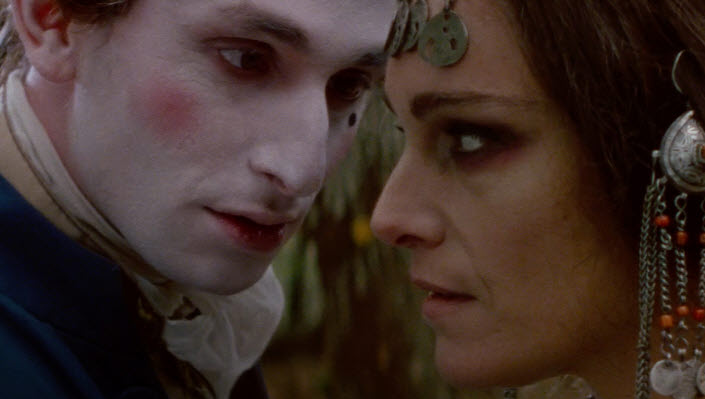
French film “The Vourdalak” is a dry but occasionally humorous horror film to be appreciated for its offbeat deadpan touches. As its unfortunate hero clumsily attempts to deal with the increasingly dangerous circumstance surrounding him, the movie phlegmatically doles out one creepy moment after another along with some dark sense of humor, and the result is alternatively chilling and amusing to the end.

At first, the movie quickly establishes the ongoing plight of Marquis Jacques Antoine Saturnin d’Urfé (Kacey Mottet Klein), a young French nobleman who was sent to somewhere in Eastern Europe during the 18th century as a courtier and envoy of the King of France. Regardless of whatever his mission actually was, Jacques has been all alone by himself after his horse and company were robbed, and the opening scene shows him desperately seeking for any help from some local dude, who flatly refuses to let Jacques in his residence but suggests that he should instead go to the house of some other local man who may let him in his house.

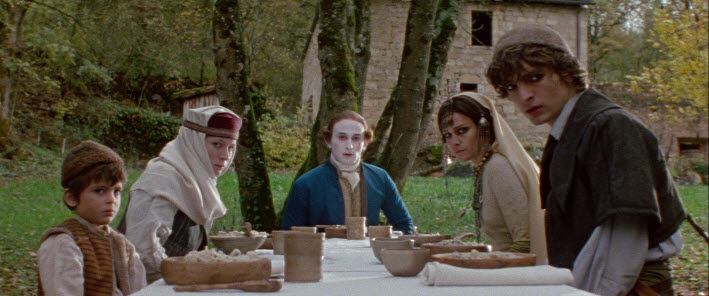
Although he subsequently gets lost in a local forest for a while, Jacques eventually comes across the two children of that man in question, and he is soon allowed to stay at the house of that man for a while, but we cannot help but sense something strange about his family. While that man is absent for some unknown reason, his older son Jegor (Grégoire Colin) functions as the de facto head of the house, and his two younger siblings, Sdenka (Ariane Labed) and Piort (Vassili Schneider), and his wife Ania (Claire Duburcq) have no problem with that at all, though they all seem quite nervous about something they are not so willing to tell Jacques.

Anyway, while frequently feeling uncomfortable about this rather odd family, Jacques soon finds himself attracted to Sdenka, who is very beautiful but will probably be stuck with her family for the rest of her life because of getting her reputation tarnished due to her forbidden romance with some outsider. Nevertheless, Jacques is still willing to draw more attention from her, and she seems a bit interested in whatever he may provide her despite her disaffected attitude.

Meanwhile, the situation becomes more unnerving for Jacques after Jegor’s father finally returns to the house after successfully accomplishing his personal mission. When he fully reveals himself in front of others including Jacques, his appearance is quite disturbing to say the least, and Jacques subsequently comes to learn more of how this dude has unnerved and terrorized his family members for some time.

Around that narrative point, the screenplay by director Adrien Beau, who incidentally makes a feature film debut after making two short films, and his co-writer Hadrien Bouvier, which is based on Aleksey Konstantinovich Tolstoy’s 1839 novella “The Family of Vourdalak” (He is a second cousin of Leo Tolstoy, by the way). comes to reveal more of what it intends to do. Yes, “Vourdalak” is an old local word for vampire, and it goes without saying that the patriarch of the house is actually a vampire quite ready to suck the blood of everyone in the house.

While Jacques comes to believe what Sdenka and Piotr tells him later, Jegor adamantly refuses to believe that his father is now your average bloodsucker. As a victim and supporter of his father’s toxic patriarchy, Jegor keeps trying to maintain the status quo of the house without listening to his other family members at all, and he does not change his position even when his father comes to crave for the blood of his little son.

As Jegor’s vampire father continues to his reign of terror over the others in the house, the movie subtly dials up the level of gloomy creepiness on the screen. Shot in 16mm film by cinematographer David Chizallet, the movie deliberately looks grainy and old-fashioned on the whole, and that naturally take us back to a number of old classic vampire films such as F.W. Murnau’s masterpiece “Nosferatu: A Symphony of Horror” (1922).

While it is sometimes alarming to watch how helpless Jacques and several other main characters are in front of an unspeakable horror to sweep upon them, it is also morbidly funny to observe the absurd aspects of their gradually horrific circumstance, and the main cast members keeps their acting as straight as possible without showing any hint of self-awareness. While Kacey Mottet Klein, a young Swiss actor who drew my attention for the first time via his excellent child performance in Ursula Meier’s “Home” (2008) and “Sister” (2012), willingly throws himself into his character’s pathetic silliness, Ariane Labed, Grégoire Colin, Vassili Schneider, and Claire Duburcq are also effective in their respective parts, and Beau has some little naughty fun as providing the voice of the vampire figure in the film.

In conclusion, “The Vourdalak” is a modest but competent genre piece peppered with distinctive style and personality to be savored. While it may require some patience from you due to its rather slow narrative pacing, the movie is a rewarding experience on the whole, and you should not miss it especially if you are a genre fan willing to try something different.

Posted in Movies | Tagged , , | Leave a comment

Before Sunset (2004) ☆☆☆1/2(3.5/4): When they meet again

Richard Linklater’s “Before Sunset”, the second chapter of his Before Trilogy which happened to be re-released in South Korean theaters not long after “Before Sunrise” was re-released there, made me a little nostalgic during my viewing. When the movie came out, I was just a wild and young moviegoer who had become a little more serious about watching and writing about movies, and I even had to check up “Before Sunrise” before watching it. When I watched it again at last night along with several other audiences, I observed its two main characters as a more knowledgeable 41-year-old movie reviewer who has had a fair share of hope and disappointment in his own life just like they did after “Before Sunrise”, and I was amused and touched more by how their playful interactions in the film resonate more with both of what happened before and what will follow next.

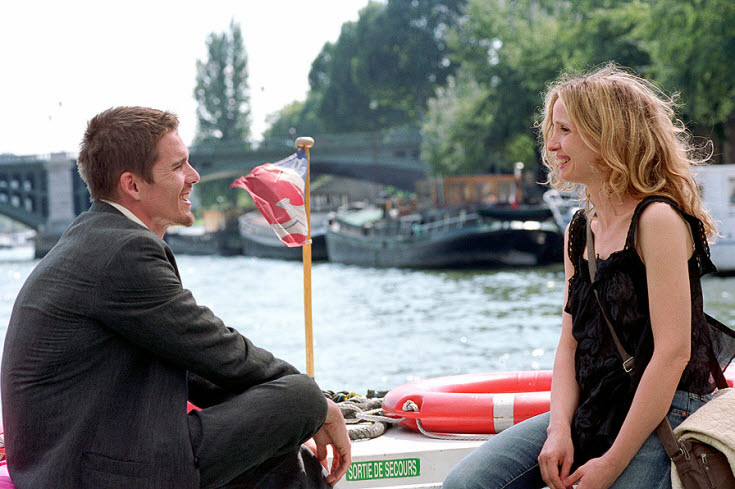
The movie begins with one of its two main characters going through the last part of his book tour in Paris during one sunny afternoon. After several years have passed since what happened between him and Céline (Julie Delpy) in “Before Sunrise” (1985), Jesse (Ethan Hawke) becomes a successful writer, and he recently published a book which is clearly based on his romantic experience with her during that time in Vienna. At a meeting being held at a certain famous old bookstore, he is asked about how much his novel is actually close to his real-life romance, but he only responds with vague answers, even while his mind cannot help but go back to that lovely time with Céline.

And then, what do you know, Jesse is quite surprised to notice Céline being in the bookstore, and he is certainly delighted to see her again. Although he will soon have to go to the airport for returning to New York City, he decides to spend some time with her before eventually leaving for the airport, and Céline gladly goes along with that.

As they walk and talk together, we get to know more about what happened after the end of “Before Sunrise”. For several accidental reasons, they never got any chance to meet again during last 9 years, and we come to learn that Jessie’s novel is more than a merely wistful reflection on that romantic time between them. He still misses her from time to time even after getting married several years ago, and she has always remembered him even though she has tried a number of other romantic relationships.

However, they also notice how much they are respectively changed from how they were during that time. While we can still see a smart and perceptive kid inside Jessie, he becomes more seasoned with more life experience and wisdom as trying to be a good adult and family man. Although we can see that slightly neurotic but utterly charming young girl inside Céline, she has also become more seasoned in her own way even while still hopeful and optimistic about whatever may happen next to her and the world surrounding them.

Nevertheless, as they talk more and more with each other, Céline and Jessie cannot help but sense how their old romantic feelings are being kindled again, especially as their conversation is led to them showing more of their respective personal thoughts and feelings. Both of them are not so satisfied with each own private life, and they surely have tried to deal with that as much as they can, but they wonder more about how things could become different for them during all those years which have passed around them.

Mainly because of the supposedly limited time between them, the movie gradually becomes more romantically suspenseful as the time for Jessie going back to New York City is approaching minute by minute, but the movie does not hurry itself at all as casually strolling around here and there along with its two main characters, and Linklater and his crew members did a commendable job of filling the screen with enough realism and verisimilitude. While being shot during only 15 days around several different locations in Paris, the movie effortlessly moves on from one extended scene to another, and we naturally become more immersed in whatever is being exchanged between Jessie and Céline.

Furthermore, the movie is constantly supported well by the flawless chemistry between Ethan Hawke and Julie Delpy, who were deservedly Oscar-nominated for their considerable contribution to the screenplay developed from the story written by Linklater and his co-writer Kim Krizan. You may sometimes wonder how much they actually put their own personal elements into the development of their respective characters, but Hawke and Delpy are always authentically engaging as deftly pulling and pushing each other throughout the film, and we eventually find ourselves arriving at the inevitable end of their little Parisian stroll after getting more amused and touched along the story. Yes, mainly due to “Before Midnight”, the last scene of “Before Sunset” is certainly far less ambiguous now, but you will probably find yourself smiling a bit around the very last shot of the film.

On the whole, “Before Sunset” still works as a very witty and charming romantic comedy film just like “Before Sunrise”, which also does not get aged much even though nearly 30 years passed since it came out. These two films and “Before Midnight”, which will be naturally re-released in South Korea a few weeks later, are one of the definite highlights in Linklater’s long and illustrious filmmaking careers filled with a number of interesting works ranging from “Dazed and Confused” (1993) to “Hit Man” (2023), and I will not mind at all if Linklater, Hawke, and Delpy would explore more of what they can do with their very likable characters.

Posted in Movies | Tagged , | Leave a comment

Victory (2024) ☆☆☆(3/4): Let’s cheer for them!

South Korean film “Victory” cheerfully and exuberantly dances and jumps around a number of familiar genre elements, and, what do you know, I liked it more than expected. While it will surely remind you of a bunch of similar films such as “Bring It On” (2000), the movie has enough charm and spirit to throw its story and characters high up in the air, and you will cheer and root for its young cheerleader characters while willingly overlooking a number of conventional aspects.

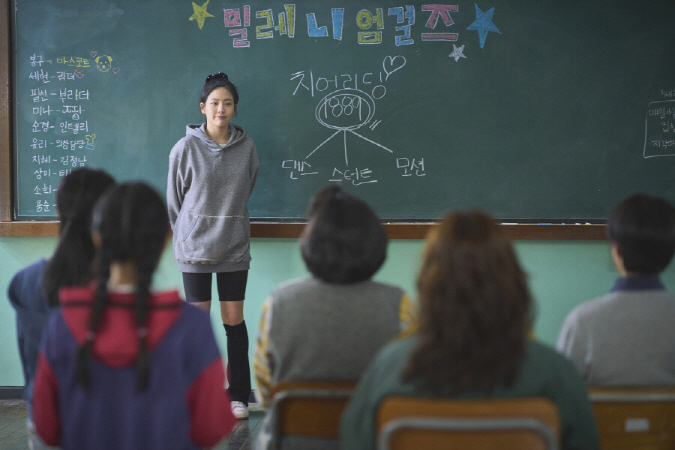
Set in one seaside industrial town in 1999, the movie opens with two female high school students showing off their considerable dancing skill in front of their schoolmates. They are Pil-seon (Lee Hyeri) and Mi-na (Park Se-wan), and they have hoped for succeeding as professional dancers in Seoul someday, but, to their frustration, their high school does not have a dance club where they can horn their dancing skill more.

And then there comes a good opportunity for them on one day. As the soccer team of their school has been struggling a lot during last several months, the principal recently recruits one talented player from Seoul, but it looks like the teams needs more help, and that is when Pil-seon and Mi-na suggest a possibly good idea to the principal. They convince him that the soccer team needs a group of cheerleaders, and they soon embark on establishing a cheerleading club even though they do not know anything about cheerleading from the beginning.

Fortunately, there is actually someone who can help them. She is Se-hyeon (Jo Aram), who is incidentally the younger sister of that talented soccer player. Although the first encounter between them and Se-hyeon is rather tense, they manage to persuade Se-hyeon to join their cheerleading club, and that is followed by a humorous sequence where these three girls attempt an audition for selecting any other girl good enough to dance along with them. Although many of those candidates are not so promising to say the least, they eventually come to choose six different girls who may get a bit better via the upcoming practice sessions.

As these girls try to train together, the screenplay by director Park Beom-soo, who previously directed “Single in Seoul” (2003), and his co-writers Kang Min-sun and Park Sung-hoon, hops from one conventional moment to another. Yes, their first public performance is a bit disastrous, but, of course, the girls come to move on as training and performing together day by day, and we are naturally served with a mandatory feel-good montage sequence where they gradually get better with more skill and experience.

However, the movie also does not overlook the glum reality surrounding them, which is mainly represented by Pil-seon’s working-class father. Like numerous other people in the town, Pil-seon’s father has devoted himself to his big shipbuilding company for many years, but he becomes quite conflicted when most of his fellow employees decide to protest about their harsh and unfair work environment. He surely knows that something must be done, but he only comes to hesitate more as a passive pushover who is easily bullied by his uncaring supervisor, and that certainly lets down his daughter at one point later in the story.

Things accordingly become melodramatic after that narrative point, and that is where the movie comes to lose some of narrative momentum, but it thankfully keeps things rolling as buoyed by the sincere relationship drama among Pil-seon and her fellow cheerleaders. Yes, there inevitably comes a point where they clash with each other in one way or another, but they are reminded again of the importance of friendship in the end, and they surely do not disappoint their schoolmates and teachers at all when they really need to galvanize their soccer team more than ever (Is this a spoiler?).

It surely helps that the main cast members of the film generate enough chemistry among themselves on the screen. While Lee Hyeri and Jo Aram are surely the standout in the bunch, Park Se-wan and several other cast members also did a good job of bringing enough life and personality to the group, and, above all, they all look believable during several cheerleading scenes in the film. I have no idea on how much they actually performed in these fabulous scenes, but the result looks mostly flawless as far as I can see, and the movie also effectively utilizes a number of notable hit songs from its period background.

In case of a number of other supporting performers in the film, they dutifully fill their roles while occasionally providing some extra humor or gravitas to the story. While Lee Jung-ha is hilarious as the rather clumsy goalkeeper who has carried a torch for Pil-seon since they were very young, Hyun Bong-sik has his own small moment to shine as Pil-seon’s soft-hearted father, and Joo Jin-mo has a little fun as the stern principal who turns out to be more caring than expected.

In conclusion, “Victory” is thoroughly conventional but fairly entertaining thanks to its ample amount of wit, energy, and heart, and I also appreciate some nice period details which made me feel a bit nostalgic for good reasons (Yes, I was around their age in 1999). Although it did not surprise me much, the movie really made me feel good after it was over, and that is enough for recommendation in my inconsequential opinion.

Posted in Movies | Tagged , , , , , | 1 Comment

Land of Happiness (2024) ☆☆(2/4): A tediously fictional presentation of one big trial

South Korean film “Land of Happiness” is a tediously fictional presentation of one historical trial which does not interest me much on the whole. Mainly because recent other South Korean film “12.12: The Day” (2023), which is incidentally set in the same period background while also overlapped with “Land of Happiness” to some degree in terms of story and characters, leaves a strong impression on me and many other South Korean audiences, the movie feels quite tame and bland in comparison, and, above all, it is not engaging enough to hold my attention.

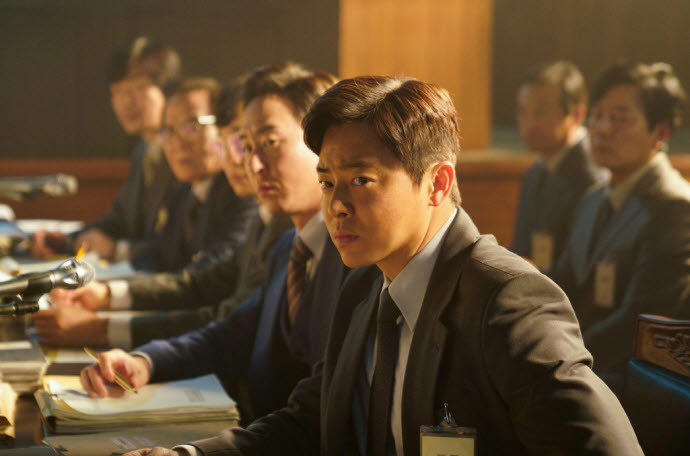
The story, which is set in South Korea during 1979-1980, is mainly depicted via the viewpoint of Jeong In-hoo (Cho Jung-seok), a young cocky lawyer who happens to be requested to represent one of the key figures in the assassination of President Park Chung-hee on October 26th, 1979. Although it is apparent from the beginning that there is not much hope for that figure in question, In-hoo eventually agrees to take this thankless case for free, just because that may help his currently imprisoned father.

However, his case turns out to be much more difficult than In-hoo expected. First, his client, Colonel Park Tae-joo (Lee Sun-kyun), is not particularly willing to try anything for avoiding being eventually executed for treason, and this certainly frustrates In-hoo a lot right from his first meeting with Colonel Park. In addition, the military judges presiding over the trial are already quite determined to hand out death sentence to Colonel Park and several other defendants including his boss, and they do not even hide their intention at all in front of many others in the courtroom.

Above all, there is a powerful and ambitious military figure watching over the trial. Although his name is different here in this film, I and South Korean audiences know too well that he is a fictional version of President Chun Do-hwan, another military dictator who ruled over South Korea after his successful coup d’état in 1979 December. As quickly suppressing the social turbulence caused by the assassination of President Park, he is preparing to go all the way to the top of the South Korean government, and getting Colonel Park and other defendants executed is simply another stepping-stone for his ongoing political rise.

Nevertheless, In-hoo tries his best for saving Colonel Park after getting to know more about his rather uncooperative client, who turns out to be a rare soldier of principle and integrity. Regardless of whether the assassination of President Park can be justified in the name of democracy, Colonel Park feels quite guilty about several guys killed by him in the middle of the assassination incident, but he still sticks to his position as a principled soldier who simply followed an order from his boss as shown from a series of occasional flashback scenes.

However, the movie fails to develop its two leading figures into really interesting humans to observe and care about. While Colonel Park remains mostly distant without revealing to us much about himself, we do not get to know a lot about In-hoo either, except his estranged relationship with his imprisoned father. Furthermore, many of the supporting characters around them are more or less than mere plot elements, and the movie is also seriously deficient in case of substantial female characters (I can only remember one or two minor female supporting characters except the devastated wife of Colonel Park, for example).

In case of several obligatory courtroom scenes, the movie unfortunately falters more than once. Although In-hoo is supposed to be your average wily lawyer, all he does throughout these courtroom scenes in the film is doling out one showy moment after another without helping the case much on the whole, and we become bored by his rather monotonous persistence instead of rooting more for him and his client.

Cho Jung-seok tries here as much as he did in his recent other film “Pilot” (2024), but his performance is sometimes excessive instead of boosting the story and characters more along the story. Both “Land of Happiness” and “Pilot” surely demonstrate the considerable range of his acting skill, but both of them sadly fail to support or control his efforts, and that is really a shame considering how his acting talent has been utilized much better in a number of notable films such as “Architecture 101” (2012).

On the opposite end, Lee Sun-kyun, who committed suicide several months ago due to a disgraceful drug/sex scandal and the following police investigation, simply looks as despondent as required, and the result is a rather disappointing footnote to his fairly solid acting career distinguished by several acclaimed films including Oscar-winning film “Parasite” (2019). As the main villain of the story, Yoo Jae-myung surely does everything for making his character look quite sleazy and deplorable, but his performance is bound to be compared or eclipsed by how grandly Hwang Jung-min chews every moment of his as the fictional version of President Chun in “12.12: The Day”.

Overall, “Land of Happiness”, directed by Choo Chang-min, is a mediocre minor work compared to “12.12: The Day” and “The Man Standing Next” (2019), which gives a closer look into the historical background of the assassination of President Park. Yes, I do not like “The Man Standing Next” enough for recommendation, and watching “12.12: the Day” was one of the most stressful movie experiences for me during last several years. Nevertheless, I think both of these two South Korean period drama films will enlighten and entertain you more as vividly showing how turbulent things were in South Korea during 1979-1980, and I assure you that you will have a more productive time as watching either of them instead.

Posted in Movies | Tagged , , , , | Leave a comment

The Sacrifice (1986) ☆☆☆1/2(3.5/4): Tarkovsky’s last work

Andrei Tarkovsky’s last film “The Sacrifice”, which happens to be released in South Korean theaters in this week, is definitely slow but undeniably fascinating in many aspects. While the story and characters are pretty simple on the surface, the movie will gradually immerse you into its calm and reflective mood once you go along with how it is about, and you may willingly go along with that even if you sometimes scratch your head on what it is about.

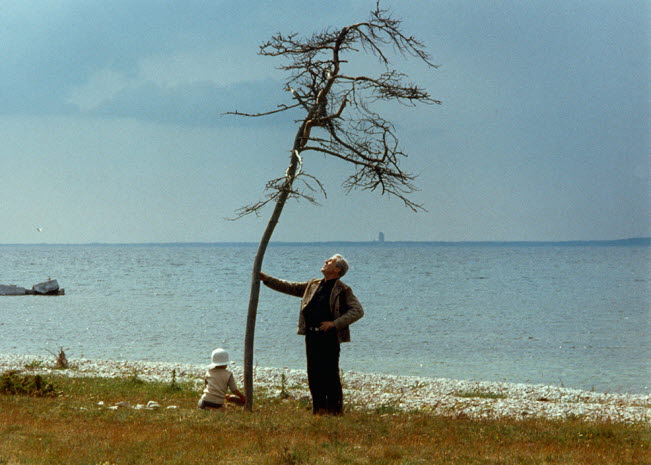
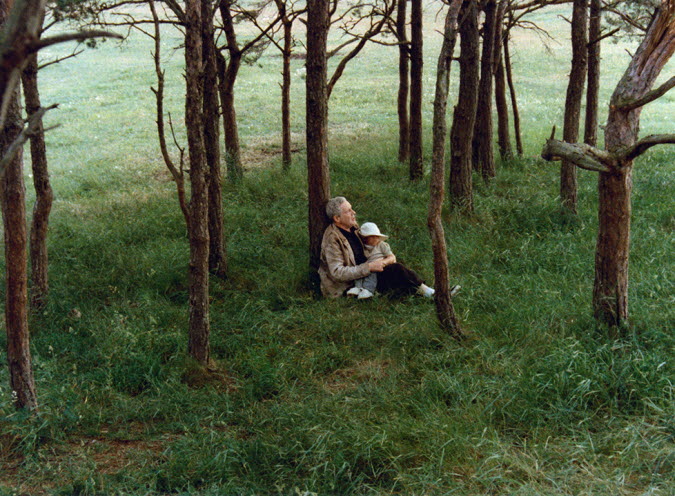
The movie is mainly set in and around a little country house belonging to Alexander (Erland Josephson), a middle-aged dude who was once a famous actor but retired to work as a critic and journalist at present. During the opening scene, we see him and his little son planting a dead tree outside his house, and the camera focuses on their ongoing activity from the distance as he talks about his purpose to his little son, who has incidentally been mute due to his recent throat surgery.

Anyway, it turns out that Alexander is about to have a little birthday party for himself, and we get to know a bit about several figures who will attend his birthday party. Besides his wife and their older daughter who have lived with him in his house, a close friend of his who is a doctor will join him along with a local part-time postman, and he and others will be served by the two housemaids during their upcoming party in the evening.

However, something quite unexpected happens later in the outside world. For some unspecified reason, the World War III is about to happen, and everyone in the house becomes quite alarmed and devastated after seeing a TV announcement on whatever will happen to them and many others in the whole world. As trying to process that the end might be quite near to them, Alexnader and the others in the house go through some soul-searching, and the mood among them naturally becomes a lot gloomier while they get isolated more and more from the outside world.

Watching a series of somber but intense human moments generated among a small number of characters within a small space, you will be instantly reminded of those powerful chamber drama movies of Ingmar Bergman, and you will not so surprised to see that some of the cast and crew members of the film actually worked in some of Bergman’s notable films. For example, Erland Josephson, who was particularly memorable in “Scenes from a Marriage” (1973), was one of Bergman’s frequent performers, and cinematographer Sven Nykvist was mainly known for how he closely worked with Bergman throughout their whole respective careers.

Nykvist, who won two Oscars for “Cries and Whispers” (1972) and “Fanny and Alexander” (1982), deservedly received the award for his technical contribution to “The Sacrifice” when it was shown at the Cannes Film Festival in 1986 (It also received the Grand Prix award, by the way). In most of many extended sequences in the film, his camera seems static at first, but then it makes some subtle moves here and there as steadily patiently focusing on the mood and characters, and the overall result is quite absorbing and striking to say the least. As the possibility of the apocalypse constantly hovers over the characters, the interior of Alexander’s house becomes darkened bit by bit, and Nykvist and Tarkovsky deliberately go for more color desaturation for accentuating the growing sense of existential dread among the characters.

Meanwhile, Alexander is approached by the aforementioned postman, who tells Alexander that Alexander can actually save not only him and others but also the whole world. According to the postman, all Alexander will have to do is approaching and then sleeping with one of his maids, who incidentally resides alone in a nearby abandoned church. Alexander naturally does not believe this at first, but, of course, as things get all the more desperate and hopeless later, he eventually goes to that maid’s residence later in the story.

What follows next is rather hard to describe, but the film steadily holds our attention while also making its hero’s viewpoint less reliable than before. Regardless of what actually occurs between him and that maid, Alexandre comes to reveal more of himself in front of her, and that leads to an ambiguous but utterly spellbinding moment to remember.

While being a bit baffled and then overwhelmed a lot by the following final act of the film, I was reminded of Akira Kurosawa’s “I Live in Fear” (1955), which is about a middle-aged man constantly anxious about the possibility of nuclear war. As comparing the devastating finale of “I Live in Fear” to the climactic part of “The Sacrifice”, I wonder whether the movie is actually the reflection of Alexander’s fear and anxiety on what may happen-to the world and his dear little son in the future, and I guess I can understand more of why Tarkovsky dedicated the film to his young son.  

 On the whole, “The Sacrifice” requires some patience at first, but it will eventually come to you as a rewarding cinematic experience to remember just like Tarkovsky’s other works including “Andrei Rublev” (1966) and “Solaris” (1972). Although I am still not so entirely sure about what and how it is about, the movie engaged me a lot as it did when I watched it for the first time more than 20 years ago, and I am willing to revisit it someday just for more appreciation and admiration.

Posted in Movies | Tagged , , | Leave a comment

The Book of Solutions (2023) ☆☆(2/4): Annoyingly whimsical

Michel Gondry’s latest film “The Book of Solutions” somehow annoyed me more than expected. While this is another typically whimsical piece of work from Gondry, it is sometimes difficult to watch its rather obnoxious hero behaving like your typical narcissistic jerk throughout the film, I must confess that I tried to stop myself from shouting at this prick more than once during my viewing.

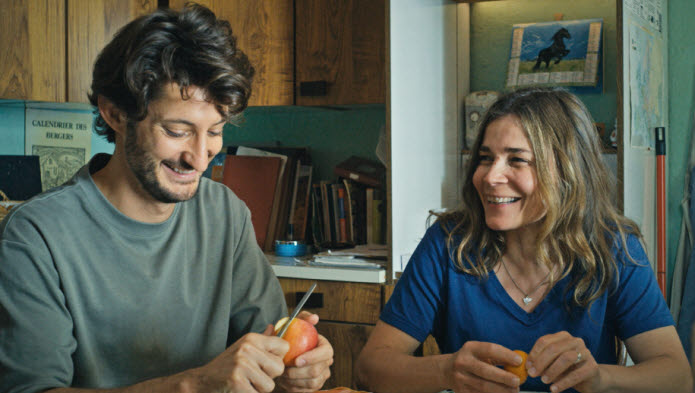
The movie is mainly about one young filmmaker’s desperate attempt to keep the artistic style and vision of his new film. When Marc (Pierry Niney) shows his rough cut to the people of the production company, they coldly respond to it for an understandable reason, and his producer willingly steps forward to taking care of their problem, but, of course, our filmmaker hero does not approve of that at all, though I think he has absolutely no idea on whatever he is going to do about his film.

Anyway, without any permission from the production company, Marc decides to take away all those stuffs shot by him and his crew, and his several key crew members gladly help him. Once they has all the materials in their car, they quickly get away from the production company, and then they go to some rural country where Marc’s old aunt Denise (Françoise Lebrun) resides. His aunt certainly welcomes him and his key crew members into her house, and they soon try to work on their project more while staying there for a while.

However, Marc does not seem to have any particular plan on what to do next. At first, he tries to shoot an extra scene in a very clumsy (and cheap) way. And then he talks a lot about how his movie should be edited in a very unconventional way. And then he tries to compose and record the score within a very short time. And then he also works on whatever he may do next after his current project is completed. As watching him constantly distracted by one impulsive thing to do after another, I was reminded of what my late mentor/friend Roger Ebert once said about James Joyce’s very elusive novel “Finnegans Wake”: “It is the stream of conscious of a man trying to write “Ulysses” and always running off to chase cats.”

I guess all these and other moments in the film are mainly for showing how Gondry’s preferred filmmaking method, and this demonstration sometimes works well enough to interest us. At one point, Marc modifies an old, abandoned truck into a makeshift editing room, and that looks rather amusing even though you may wonder whether it is actually practical or not. In case of the sequence where he tries to compose and then record the score for his film, he tries a lot of impromptu improvisation, but he somehow persuades a bunch of musicians to do whatever he wants, and then we get an unexpected moment of harmony and inspiration as they gladly go along with his very unconventional method.

However, I observed this supposedly creative process of his without much care mainly because it is evident from the beginning that Marc is your average egoistic asshole. So drunken with self-importance, he often mistreats his several key crew members without much thought or consideration, and his several key crew members, all of whom except one guy are incidentally female, have to tolerate him a lot just because they do care about whatever is being envisioned by him.

Around the midpoint, the movie comes to spin its wheels more than before as Marc continues to be willful and irresponsible as before, and you may become more uncomfortable with the depiction of his considerable mental illness in the film. As a guy who has depended much on medication due to occasional anxiety and depression, I was disturbed by how the movie regards medication as a negative influence on creativity, and I also did not like how it often makes an excuse from its hero’s increasingly problematic mental condition. I understand well that he frequently cannot help himself, but, folks, I also felt the growing urge to shake him up and then send him to any available medication and therapy as soon as possible.

Most of all, we still do not get to know that much about what and how the hell Marc’s movie is about. As far as I can see, it looks a bit too simple to work as a feature film, and the movie merely throws a little humorous moment of punchline when his eventually completed film comes to have an official premiere in front of many audiences.

The main cast members of the film try as much as they can do with their rather superficial roles. While Pierry Niney is often driven to numerous neurotic moments, Blanche Gardin, Françoise Lebrun, Frankie Wallach, and Camille Rutherford are stuck with a thankless job of functioning as a sensible counterpoint to Niney’s character, and you will probably be amused a little by the unexpected appearance of a certain famous musician in the middle of the film.

In conclusion, “The Book of Solution”, whose title incidentally comes from another impulsive stuff by its hero in the film, frustrates me with its supposedly free-flowing but ultimately pointless narrative, but I appreciate to some degree Gondry’s willingness to keep working as before. Although he has been less active for several years after his previous feature film “Mood Indigo” (2013), he shows here at least that he does not lose any of his own whimsical style, and I sincerely hope that I will be more intrigued and entertained by whatever may come next from him.

Posted in Movies | Tagged , , | Leave a comment

On the Come Up (2022) ☆☆(2/4): A conventional and messy mix of rap and coming-of-age drama

I saw through nearly everything in “One the Come Up”, a rather conventional mix of rap and coming-of-age drama. This is so predictable and contrived in terms of story and characters that I could easily guess each plot turn it was about to make, and it is also rather messy and superficial in how it handles several serious social issues. Above all, those rap songs in the film are not particularly catchy in my inconsequential opinion, and it is sometimes hard to believe in how talented its young heroine is.

Newcomer Jamila C. Gray plays Bri Jackson, a 16-year-old African American girl living in one slum neighborhood. Due to her father’s early death and her mother’s drug addiction problem, her childhood was pretty unhappy as shown from the opening scene, but she has been determined to become a rapper as good as her father was right before his unfortunate death, and we later see her attending a local rap battle competition along with her aunt Pooh (Da’Vine Joy Randolph). At first, Bri looks very confident on the surface, but, not so surprisingly, she gets frozen right from the first round, and she certainly feels quite humiliated as running away from the competition.

However, of course, Bri subsequently comes to show more of her talent in her next attempt, and that draws the attention of an influential producer named Supreme (Method Man), who incidentally worked once with her father before his death and willingly gives her an offer she cannot easily refuse. Mainly because her family can be evicted from their residence at any point, Bri comes to accept his offer, and she breaks up with her aunt, who has been her promoter/would-be producer and is surely disappointed with her niece’s decision.

What follows next is Bri experiencing the bright and dark sides of rap music business. Along with her two close friends, she goes to Atlanta, Georgia for what may be her first big break, and she soon finds herself making her first official single at a local recording studio under Supreme’s guidance. Unfortunately, her sincere personal pieces do not impress Supreme and others much, so she agrees to do something much more aggressive as advised by Supreme, though the movie does not fully present it to us because, well it is rated PG-13.

When that aggressive rap song makes a hit as expected by Supreme, it looks like Bri is going to be a new local star just like her father, and she is particularly delighted to take care of her family’s current financial problem, but, as many of you have already guessed, there comes a big problem. While getting more popular day by day, her song also becomes quite controversial due to its harsh and violent words, and we see how that song galvanizes her schoolmates when they protest for how she was brutally and unjustly handled by two school security guards early in the story. To make matters worse, her song displeases certain local criminals, and she inevitably comes to experience a traumatizing incident as a result.

However, the screenplay by Kay Oyegun, which is based on the novel of the same name by Angie Thomas, looks like being too afraid of delving more into its heroine’s problems and resulting conflicts. We only hear about what that controversial song of hers is about, so we do not get the full understanding of how it causes a lot of troubles in public, while only expected to side with her position to the end. In addition, the movie only comes to scratch the surface in case of her school problem, and this is further exacerbated by her rather passive attitude. She seems traumatized a lot by those two mean school security guards, but she is not particularly willing to express her trauma and anger on the incident, and she hesitates even when many of her schoolmates come forward for demanding the justice for her.

Above all, I could not help but notice how the soundtrack is not strong enough to linger on my mind at least for a while. Sure, what is performed during the expected climactic scene is fairly good enough to make the scene a bit exciting, but the rest of the rap songs in the soundtrack do not excite me that much on the whole, and that makes the artificial absence of Bri’s controversial hit in the movie all the more glaring.

Nevertheless, Gray’s earnest lead performance manages to hold the center as required, though she is sometimes eclipsed by several showier supporting performers around her. While Da’Vine Joy Randolph, who would advance more with her Oscar-winning supporting turn in “The Holdovers” (2023), quickly draws our attention, Sanna Lathan, who also directed the film (This is her first feature film, by the way), brings some sincerity and gravitas to the story as Bri’s flawed but caring mother. In case of Mike Epps and Method Man, they dutifully fill their flatly sleazy supporting roles, but the movie does not utilize their presence and talent much, and that is another disappointment in the film.

In conclusion, “On the Come Up” tries to do its own stuffs via its young female lead character, but the result is not satisfying enough to hold my attention to the end, and my mind often went to some other better rap music movies out there during my viewing. While “8 Mile” (2002) will immediately come to your mind, I also recommend “Bodied” (2017), which provides a series of genuinely electrifying (and disturbing) rap battle moments with some thought-provoking materials. These two movies are much more interesting in terms of storytelling as well as music, and I think you should spend your time on either of them instead.

Posted in Movies | Tagged , , , , | Leave a comment

One Life (2023) ☆☆☆(3/4): He simply tried to save them…

It is hard not to be touched by the story of “One Life”, which is about one compassionate British man who tried to save many kids right before the World War II. Once he saw what was going on at that time, he could not possibly walk away from that, and it is really moving to watch how he tried hard to the end – and how much his and several others’ humanitarian efforts were appreciated in the end.

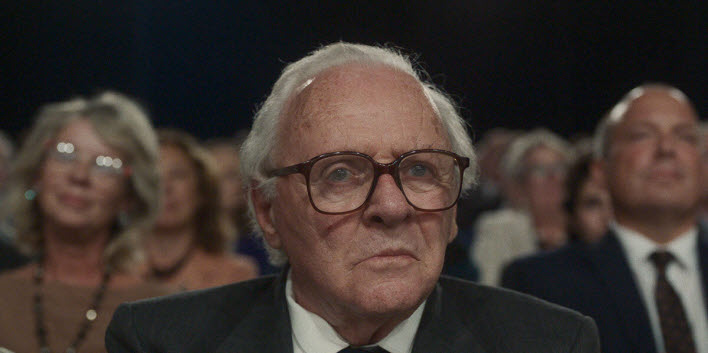
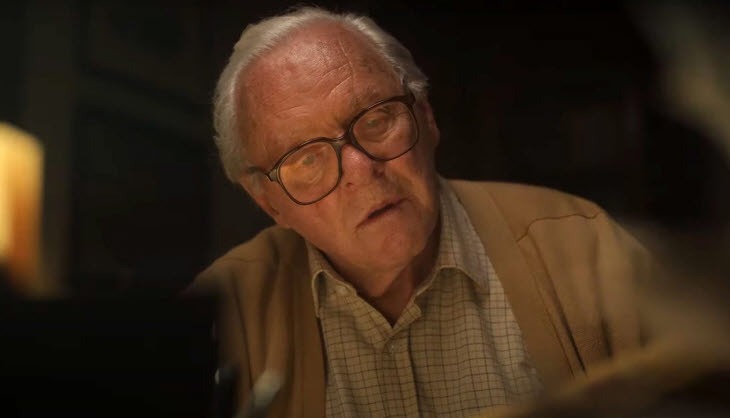
His name is Nicholas Winton, and the movie opens with how old Winton, played by Anthony Hopkins, lives day by day along with his wife in 1987. Whenever he is not handling those daily matters, old Winton focuses on some old documents from his past, and that often takes him back to when he and several others attempted to rescue refugee kids from the Nazi-occupied territory during 1938-1939.

At that time, young Winton, played by Johnny Flynn, was just a mid-level stockbroker. He was simply supposed to help his colleagues a bit in Prague, Czechoslovakia just for a few days, but he immediately changes his mind after seeing how things have been getting worse and worse for many Jewish refugees who fled from Nazi Germany. Around that time, Nazi Germany took over Austria and then the considerable part of Czechoslovakia, and it became quite more apparent that it was also going to occupy the rest of Czechoslovakia.

While trying to think of any possible way to help the refugees, Winton comes to have a rather daring idea. He and his colleagues are going to transport the children of the refugees from Prague to London, and, of course, they certainly have to set up their operation as quickly as possible, especially when the German takeover of Czechoslovakia looks more and more imminent. First, they must convince the refugees to cooperate with them, and then they must also gather enough money to fund their operation while also getting the approval from the British government.

All these and other things have to be quickly prepared within a very short time, but Winton and his colleagues manage to do that as pushing their noble cause as much as possible in public. In the end, they amass enough fund for their operation, and, above all, the British government approves of their operation, as long as they can provide foster parents willing to take care of those refugee kids at least for a while.

And we see how things go fairly well for their operation during next several months. While there is always considerable risk for those refugee children as they will pass through Germany for reaching to England, Winton and his colleagues become more confident after their first trial, and they come to handle far more refugee children than expected before Europe is eventually thrown into the World War II in September 1939.

Still feeling regretful over how their last attempt was tragically failed, old Winton wants the story of those refugee children to get known more in public, but he becomes frustrated as nobody seems to be particularly interested in the story. Some time later, he approaches to one certain public figure who might help him, and, what do you know, he soon finds himself appearing in a well-known BBC TV program.

While the part associated with young Winton’s efforts feels rather generic, the part involved with old Winston is undeniably poignant even though we can clearly see where it is heading. Yes, his and his colleagues’ efforts are surely recognized and appreciated in the end, and he certainly comes to have a big moment to remember. Nonetheless, this modest but powerful moment is presented well enough to move us, and it will surely remind you of the importance of doing the right thing for others in the need of help.

Anthony Hopkins, who has been always a pleasure to watch for more than 50 years since his solid debut performance in “The Lion in Winter” (1968), is inarguably the best thing in the film. As bringing some class and humanity to his several key scenes, Hopkins demonstrates again that he is still one of the best performers of our time, and his understated acting is especially wonderful when he subtly illustrates how much his character is surprised and then touched around the end of the story.

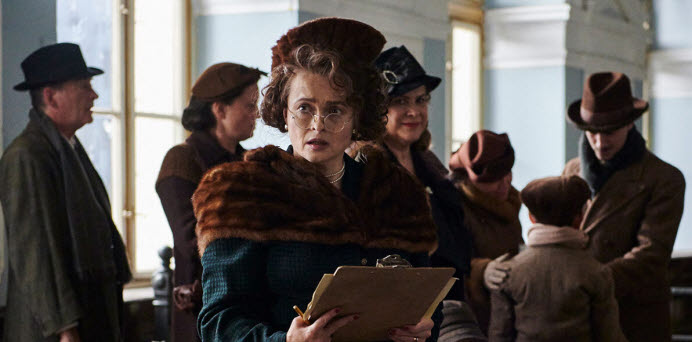
Around Hopkins, several other cast members dutifully fill their respective spots. While it is a bit difficult to connect his performance with Hopkins’ acting, Johnny Flynn acquits himself fairly well as effectively supported by Romola Garai and Alex Sharp, and Lena Olin, Jonathan Pryce, and Helena Bonham Carter fill their supporting roles with enough presence, though Olin does not have much to do as merely being around Hopkins.

In conclusion, “One Life”, which is adapted by Lucinda Coxon and Nick Drake from Barbara Winton’s nonfiction book “Into the Arms of Strangers: Stories of the Kindertransport”, is an engaging human drama, and director James Hawes did a competent job of handling the story and characters with enough respect and sensitivity. If you have ever watched Oscar-winning documentary film “Into the Arms of Strangers: Stories of the Kindertransport” (2000), you surely know that Winton’s story is just a small part of the bigger story, but the movie is still worthwhile to watch at least, and you will be certainly pleased to see Hopkins still active as usual.

Posted in Movies | Tagged , , , | Leave a comment

Freud’s Last Session (2023) ☆☆1/2(2.5/4): A fictional meeting of two minds

Any good two-hander movie should trust its characters and performers, but “Freud’s Last Session” does not do that much. Here are two fascinating real-life figures who might have an interesting conversation if they had really had a private meeting in real life, but the movie often gets distracted by some other things besides what is going on at the center of its story, and the overall result is rather middling despite the good efforts from its two lead performers.

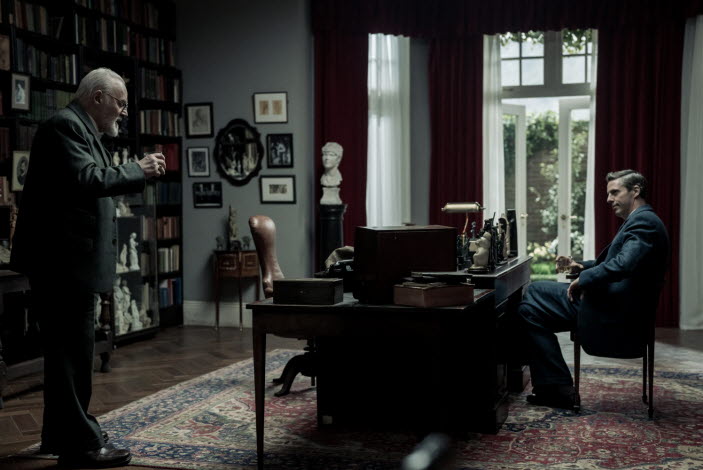
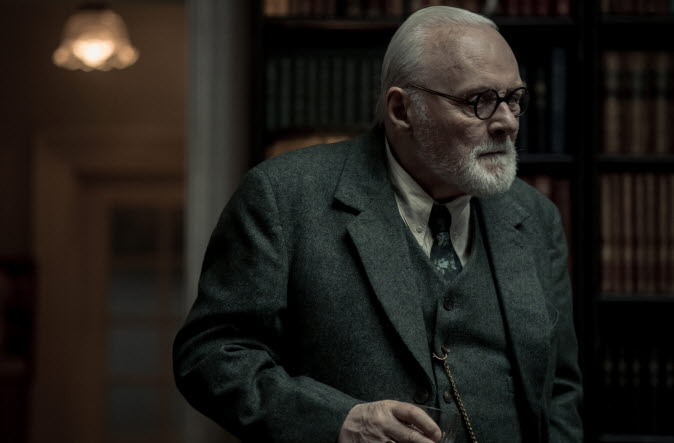
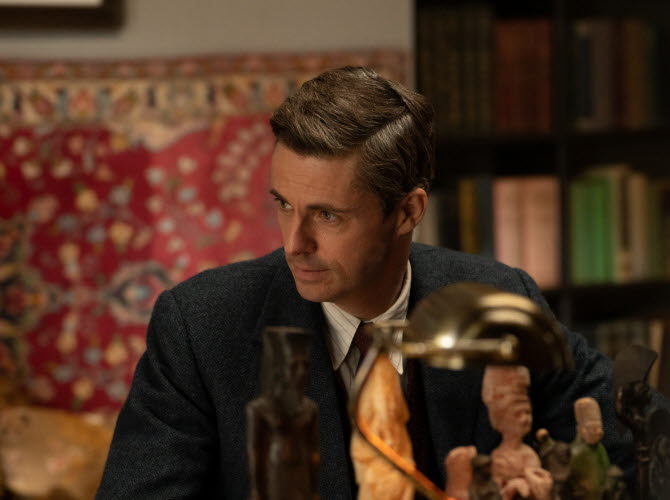
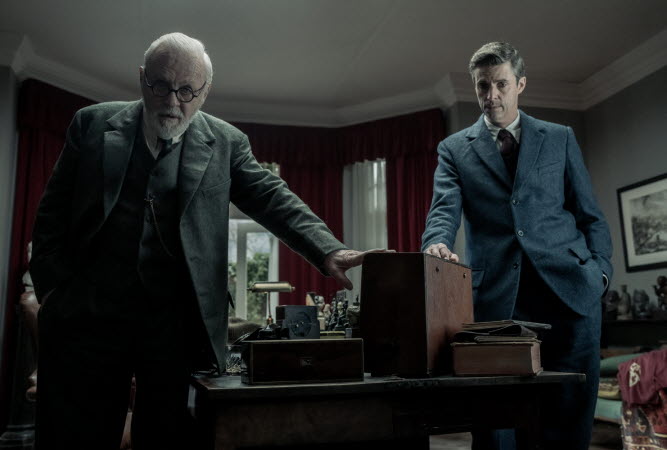
These real-life figures in question are Dr. Sigmund Freud and C.S. Lewis, and the movie, which is based on the stage play of the same named by co-writer Mark St. Germain, focuses on one fictional meeting between them shortly after the beginning of the World War II in 1939. As an Oxford professor who has a deep faith in God and religion, Lewis (Matthew Goode) surely has a lot of things to discuss with Dr. Freud (Anthony Hopkins), and Dr. Freud is eager to meet Lewis even though he knows well that his atheistic viewpoint will clash with Lewis’ religious faith in one way or another.

Once they meet each other in Dr. Freud’s current residence in London, they naturally begin to pull and push each other in their following intellectual conversations, and they certainly come to talk more about themselves to each other. While Lewis willingly talks about how his father became quite distant to him and his younger brother after their mother’s death, Dr. Freud tells a bit about his difficult relationship with his strict Jewish father, and he also shows his growing concern about the ongoing war in Europe. After all, he recently fled to England from his country along with his dear daughter Anna (Liv Lisa Fries), and his mind often cannot help but swept by the memories of how things were grim for him and his family in Austria due to the political rise of Adolf Hitler and his Nazi party.

Of course, their different viewpoints on God and religion lead to some argument between Lewis and Dr. Freud, but the movie somehow fails to generate more interest to hold our attention. Their argument simply shows what has been generally known about each of them to us, and it is also frequently interrupted by several things including an air raid alarm and Freud’s deteriorating medical condition. In addition, there is also a subplot involved with Anna’s complex relationship with her father, who still depends a lot on her but does not approve much of what is going on between Anna and her female romantic/professional partner.

If these and other supposedly minor plot elements just stayed around the fringe of the story instead of interrupting the narrative flow between its two main characters, the movie could be more focused in terms of story and characters. After all, it has two very talented performers at its center, and I wonder whether the movie could be more improved if it simply observed and listened to whatever is being exchanged between them for around 2 hours.

Their efforts are sadly undermined by the rather unfocused screenplay, but Anthony Hopkins and Matthew Goode are mostly solid whenever their characters make some interesting interactions across the screen. Hopkins, who remains active as before even though he will soon have his 87th birthday, has some fun with his role as expected, and that is always evident whenever we see the twinkles in his eyes. Although he is frequently reminded of how he is dying day by day, Dr. Freud still cannot resist having an intellectual argument with somebody as smart as him, and Hopkins did a good job of balancing his role between humor and pathos while thankfully not resorting to a thick German accent (I can easily imagine how Laurence Olivier would ham it up like he did in “The Boys in Brazil” (1978), you know).

On the opposite, Goode is less showy in comparison, but his unflappably earnest acting complements well Hopkins’ showier acting, and he is particularly good when his character, who was incidentally played by Hopkins in “Shadowlands” (1993), reminisces about how traumatizing his World War I experience was. Even though the movie throws another redundant flashback scene at that point, Goode manages to convey to us how his character was changed a lot by his war experience, and we come to understand a bit of his strong faith in God and religion.

Around Goode and Hopkins, there are several other performers who manage to leave some impression despite their thankless supporting roles. Liv Lisa Fries is well-cast as Freud’s long-suffering daughter, who surely deserves her own story to tell in my humble opinion. Jodi Balfour clicks well with Fries as Anna’s romantic/professional partner, and Jeremy Northam is rather under-utilized as a caring friend of Dr. Freud.

On the whole, “Freud’s Last Session”, directed by Matthew Brown, has some interesting moments to observe thanks to Hopkins and Goode, but it eventually fizzles without much satisfaction, and you probably should check out some other movies associated with Lewis or Dr. Freud instead. “Freud” (1962) and “Shadowlands” already came to my mind, and I especially recommend the latter, where Lewis comes to question a lot on his faith in God and religion as going through the joy and pain of his unexpected middle-age romance. After being dissatisfied with “Freud’s Last Session”, I felt an urge to revisit “Shadowlands”, and I will surely do that sooner or later.

Posted in Movies | Tagged , , , | Leave a comment