Anselm (2023) ☆☆☆(3/4): Inside Anselm Kiefer

Wim Wenders’ latest documentary film “Anselm” is as unconventional as you can expect from him. As he did in his previous documentary film “Pina” (2011), Wenders presents the artistry of his human main subject with considerable interest and thoughtfulness, and the documentary thankfully avoids explaining too much to us as simply letting us observe the artistic process and achievement of its human main subject.  

The main human subject of the documentary is Anselm Kiefer, a renowned German artist who has often caused controversies due to his daring artworks boldly confronting the dark and terrible past of his country during the 1930-40s. In case of one particularly photography artwork, he shot the photographs of himself doing the Nazi salute at a number of various locations around Europe, and this rather radical act of art certainly caused a lot of fuss in public to say the least.

However, this and many bold artistic activities throughout Kiefer’s career are not merely sensational publicity stunts at all, and the documentary shows us how deeply personal the themes and subjects of his artworks are to him. After all, he was born not long after the end of the World War II, and young Kiefer surely saw a lot from the devastating aftermath of the World War II in Germany, while also observing how many of his fellow countrymen tended to look away from the horror of the World War II and the Holocaust as trying to rebuild their country during next several years. 

Many of Kiefer’s works were guided by the poems of a Jewish poet named Paul Celan, who incidentally lost his parents to the Holocaust during that grim period. The documentary quotes a number of excerpts from Celan’s poems, and we come to sense more of how much Celan’s poems inspired Keifer’s early artistic period, and that is further emphasized by some of Kiefer’s early works shown in the documentary. In case of one particular artwork of his, Kiefer used a number of prominent real-life figures whose images and ideas were “abused” by Nazi Germany, and, not so surprisingly, this also caused considerable controversy at that time.

Nevertheless, Kiefer’s career continued to rise thanks to his sheer artistry, and it did not take much time for him to be recognized more in not only his country but also many other countries including US. Thanks to the resulting fame and success, he could freely explore more of his artistic creativity, and that led to a bunch of stunning artworks as he kept working in a warehouse located in some rural region in Germany during next several years.      

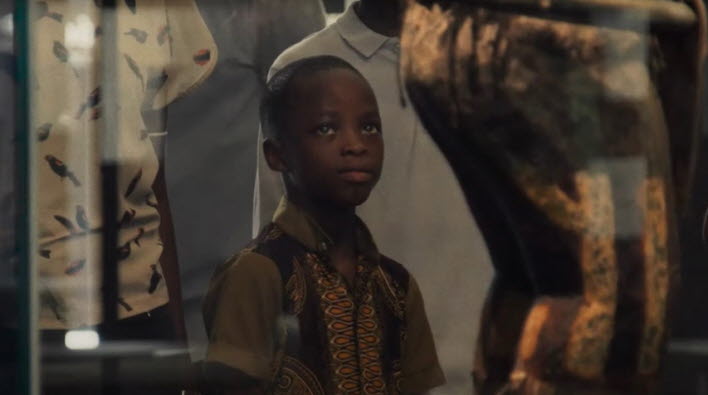
The documentary just calmly observes Kiefer’s works without much explanation, but these artworks will instantly provoke feelings and thoughts from you. Besides their stylish methods to admire, their artistic expressions on the World War II history of Germany are quite indelible to say the least, and this aspect is further accentuated by the fictionalized scenes showing Keifer as a child and then a young man (They are respectively played by Wenders’ great-nephew Anton Wenders and Kiefer’s son Daniel Kiefer, by the way). 

Meantime, Kiefer willingly shows us how he works on his latest artworks. We watch how he uses a number of various tools and materials including blowtorch and hot liquid metal, and how he carefully and steadily works on a certain big painting took me back to what I recently observed from the artist heroine in Kelly Reichardt’s latest film “Showing Up” (2022). Just like her, he simply works and works, and then there may come inspiration to behold later.

It should be noted that the documentary does not delve much into Kiefer as a human being. In several archival interview clips presented in the documentary, he comes to us as an artist of strong integrity while firmly sticking to his artistic vision and philosophy, but he also looks rather reserved and distant without showing much of himself, and the same thing can be said about his present self, who remains mostly quiet and reticent throughout the documentary without explaining anything about his artistic process.    

Nevertheless, the documentary is still a fascinating visual experience thanks to how Wenders vividly presents some of Kiefer’s works. As a matter of fact, Wenders and his cinematographer Franz Lustig shot his documentary in 3D format, and that is quite evident to me from time to time even though I watched the documentary in 2D early in this morning. There are several certain moments whose sense of perspective can be enhanced to considerable degree by 3D, and I am now really curious about how these interesting moments will actually look in 3D.

In conclusion, “Anselm”, which happened to be premiered along with Wenders’ another acclaimed work “Perfect Days” (2023) at the 2023 Cannes Film Festival, did a commendable job of presenting Kiefer’s works with enough care and skill. I wish It could show and tell more about Kiefer’s life and career, but the documentary is still satisfying in the thoughtful presentation of its main human subject, and the result surely reminds us again that Wenders is still one of the most interesting filmmakers of our time.

Posted in Movies | Tagged , , , | Leave a comment

About Dry Grasses (2023) ☆☆☆1/2(3.5/4): Stuck in a remote snowy region

You should have some patience in case of the works of Turkish filmmaker Nuri Bilge Ceylan. I saw “Once Upon a Time in Anatolia” (2011), “Winter Sleep” (2014), and “The Wild Pear Tree” (2018), and they are quite long in their running time. Nevertheless, they actually become more engaging than expected once you simply go along with their slow but steady narrative flow, and his latest work “About Dry Grasses”, which was selected as the official submission of Turkey to Best International Film Oscar in 2023, is no exception.

The movie, which is set in some remote region of Eastern Anatolia during one cold and snowy winter, mainly revolves around Samet (Deniz Celiloğlu), a teacher who has just returned to a village where he has worked during last few years. His holiday is over, and he and his colleague Kenan (Musab Ekici), who has incidentally lived with him as a housemate, now have to prepare for another semester in their school.

As observing how he and several other teachers start the first day of the new semester in their school, we come to sense more of how much Samet has been frustrated with his current status. Mainly because of the isolated rural environment surrounding the village, Samet has been eager to get any possible chance to be transferred to any city out there, but it seems that he will be stuck here for several years more, and his teaching work brings no particular joy or satisfaction to him at all, though he tries his best for teaching his classroom students more.

Besides Kenan, Samet does not have anyone to talk with in the village besides two guys who have been his frequent drinking companions. The mood gets lightened up a bit as they drink together later, but they still all feel depressed and miserable in each own way while talking more and more with each other, and this surely makes Samet all the more bitter about how his life and career have been going nowhere.

On one day, there comes an unexpected trouble to Samet and Kevan. Not long after Samet happens to clash a bit with one of his female classroom students who has been quite nice to him, he and Kevan are accused of some unspecified misconduct, and this certainly brings lots of headache to not only them but several others around them. Understandably quite exasperated, Samet attempts to get to the bottom of the situation, but nobody wants to talk openly about that allegation against him and Kevan, and he only comes to show his worse sides to others around him including his classroom students. 

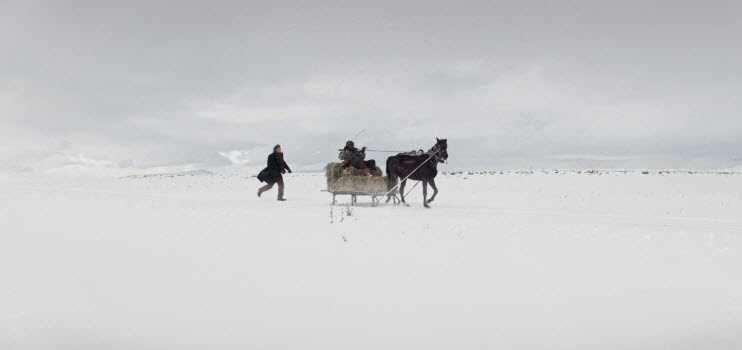
Now you may think the plot finally thickens a bit, but the screenplay by Ceylan, who also co-edited the film with Oğuz Atabaş, and his co-writers Ebru Ceylan and Akin Aksu continues to roll the story and characters slowly and steadily while focusing more on mood and characterization. As the camera of cinematographers Kürşat Üresin and Cevahir Şahin vividly captures the cold wintry atmosphere surrounding the characters in the film, the frequent shots of those vast snowy landscapes become more oppressive along the story, and we come to sense more of Samet’s growing exasperation and frustration.

Although he becomes more misanthropic as letting himself driven by his petty anger and resentment, Samet also comes to us as a believable human figure to observe at least, and Deniz Celiloğlu did a good job of embodying his character’s rather unpleasant human flaws. Even when Samet does not seem to signify much on the surface, Celiloğlu’s subtle performance ably conveys to us his character’s quietly sour state of mind, and this sometimes generates a considerable dramatic tension in case of several key scenes in the film, which are driven by long but tense dialogues as you can expect from Ceylan.

One of such scenes happens between Samet and Nuray (Merve Dizdar), a woman who came to work as a teacher after losing one of her legs due to some terror incident. When he is introduced to her early in the story, Samet is not very interested in her, and he remains distant even when Kenan becomes attracted to Nuray later in the story, but then he changes his mind after coming to learn something about Kenan. He deliberately makes her have a little dinner only with him at her residence, and their dinner is soon followed by a rather intense political conversation between them. As they push and pull each other over their very different sociopolitical viewpoints, the movie deftly builds up tension across the screen, and Celiloğlu and Dizdar, who deservedly won the Best Actress Award when the movie was premiered at the Cannes Film Festival early in 2023, are simply superlative in the gradually dynamic interactions between their characters. 

While its long running time (197 minutes) may feel cumbersome to you from the start, “About Dry Grasses” is another interesting work from Ceylan, and I admire it even though I struggled a bit to grasp what is actually about. I am not so sure about whether a certain moment of breaking the fourth wall works as well as intended, and I also think the epilogue part, which makes a striking visual contrast with the rest of the film for a good reason, is a bit redundant. Nevertheless, the movie is still worthwhile to watch thanks to Ceylan’s confident handling of mood, story, and characters, and you should give it a chance if you are ready for something different.

Posted in Movies | Tagged , | Leave a comment

Umberto Eco: A Library of the World (2022) ☆☆☆(3/4): A brilliant mind surrounded by lots of books

When I was young and wild during the 1990s, I voraciously consumed any book good enough to intrigue my innocent and curious mind. At first, it was just a bunch of science books which were the origin of my current professional career, When I grew up more later, I also got quite interested in reading novels, and my taste was rapidly widened as I willingly threw myself into the works of various novelists ranging from Agatha Christie and James Joyce to Stephen King and Sidney Sheldon. In other words, I was ready for anything, and I must tell you that my resulting wide taste has compensated for those occasional moments of snobbism during last 30 years.    

Among these numerous books I busily engulf during those exciting days of my childhood years, the first two novels of Umberto Eco (1932~2016) were two of the most important ones in my childhood years. Although I do not think I totally understood the subjects and themes of these two interesting novels at that time, I was genuinely impressed by not only his good storytelling but also his immense intelligence glimpsed between words and lines nonetheless, and I really wished to be as vastly knowledgeable as this acclaimed Italian academic figure someday.

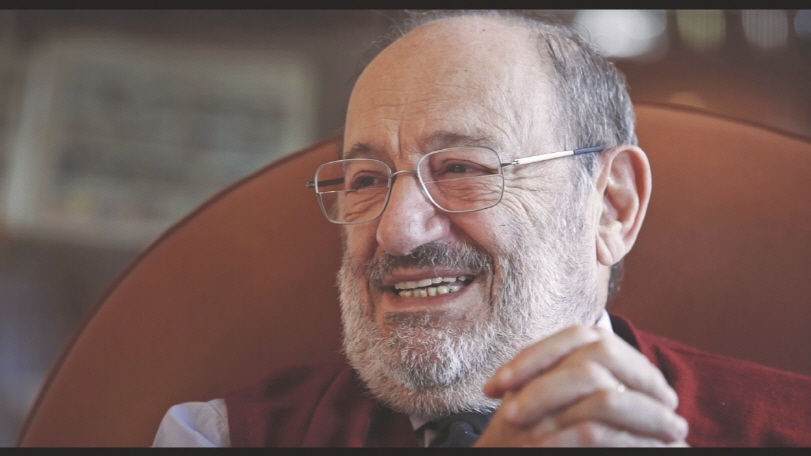
That is the main reason why I did not hesitate to grab the chance to watch documentary film “Umberto Eco: A Library of the World” at a small local independent movie theater early in this morning, and I am happy to report to you that the documentary alternatively delighted and enlightened me. Although it does not show that much about Eco as a human being, but it freely explores his immense personal library and a truly brilliant mind behind it, and that surely tells us a lot about Eco as a scholar.

At first, the documentary simply looks around Eco’s personal library, which incidentally occupies a lot of his residence for having around 30,000 books at least. Regardless of whether he actually read them all, a number of old books shown in the documentary convey to us Eco’s irrepressible intellectual curiosity in many different fields ranging from comic books to symbology, and he was surely an interesting figure to observe as shown from a bunch of archival interview clips shown in the documentary.

 Even as lots of books got digitalized day by day, Eco simply preferred to collect and read books instead because, as he correctly perceived, what is written on paper can actually last more than whatever has been stored in computers and data storage systems. In addition, he also discerned the growing importance of selecting and gathering real information and knowledge during our current digital era, and he made a shrewd point on how many people can be stuck in each own world due to the increasing chaos and confusion on the Internet.  

However, Eco was not your average snobbish scholar at all, considering how equally he evaluated many different subjects. While he was a first-class intellectual with the vast knowledge on history, culture, and language, he was fascinated with the popular culture stuffs such as Superman or Snoopy, and he could be quite funny with his carefree wit and humor, as shown from one brief interview clip in the middle of the documentary. His surviving family members including his wife also fondly remember him, and you may be get tickled a bit when his grandson remembers when he got some extra help on his little homework from his dear grandfather.

Meanwhile, the documentary has several figures quoting the excerpts from the essays written by Eco himself, and we get to know more about Eco’s own philosophy and intelligence. To be frank with you, I do not totally understand the contents as a guy not so familiar with philosophy, but they still intrigued me nonetheless, and I became more determined to check out more of Eco’s essay books later. 

Needless to say, the most interesting part of the documentary for me is how Eco became quite a popular public figure thanks to the unexpected success of his first novel “The Name of the Rose”. Although he was not so interested in writing stories at first, he eventually decided to write his first novel after being asked to write a short mystery story, and the big success of “The Name of the Rose” made him very famous not only in his country but also around the world.        

In my trivial opinion, Eco’s second novel “Foucault’s Pendulum” is more interesting in comparison, and it is a shame that the documentary does not delve much into how that compelling novel is a sort of anti-thesis to those passable novels of Dan Brown including, yes, “The Da Vinci Code”. As wryly making a intellectual fun on conspiracy theories, “Foucault’s Pendulum” makes an acerbic point on their inherent danger, and Eco certainly did not mince his words on Dan Brown at all.

Although it is rather short in its running time (80 minutes), “Umberto Eco: A Library of the World”, directed by Davide Ferrario, is still a fairly rich experience on the whole, and you will be definitely entertained if you are a typical bookworm like me. While my own little library is much more modest compared to Eco’s, I tend to keep whatever I read for preserving my own knowledge and experience to share with many others around me, and I sincerely hope that my library will be more bountiful as I keep reading during the rest of my life.

Posted in Movies | Tagged , , , , | Leave a comment

Piece by Piece (2024) ☆☆1/2(2.5/4): Merely pleasant and amusing

Morgan Neville’s new documentary film “Piece by Piece” is merely pleasant and amusing despite some novelty in the presentation of its main human subject. As that figure in question suggests early in the documentary, it surely sounds cool to present the story of his life and career in Lego animation, and I cannot help but notice how the form and content of the documentary often clash with each other without generating much synergy on the whole.

The main human subject of the documentary is none other than Pharrell Williams, who has been one of the most prominent African American musicians during last several years. I must confess that I do not know that much about his musician career, but I still fondly remember when he joyfully performed his Oscar-nominated song for “Despicable Me 2” (2013) at the 2014 Academy Awards ceremony, and his carefree attitude in the documentary certainly took me back to that delightful moment.

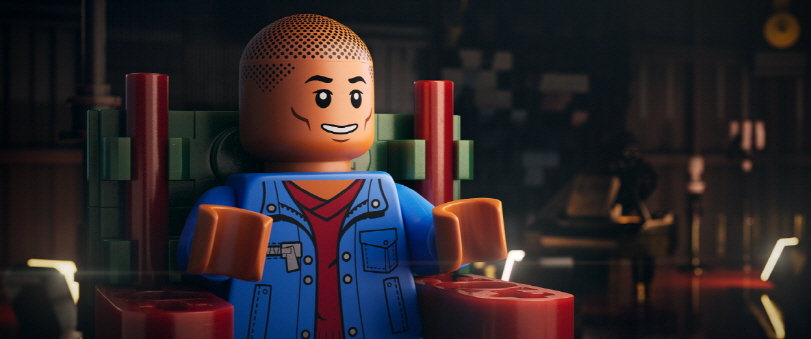
Presented in a Lego figure throughout the documentary, Williams looks quite willing to tell everything about his life and career. As many of you probably know, he was born and then grew up in an African American neighborhood in Virginia Beach, Virginia, and the early part of the documentary cheerfully presents his childhood period via various Lego figures and buildings. Although his parents, who also appear in Lego figures just like many other interviewees in the documentary, were rather poor, they tried their best in supporting their young son anyway, and they certainly encouraged him more when he began to show considerable interest and talent in music.

During his subsequent high school years, Williams came to form a band with his two close friends, and then there came a very fortunate chance for them not long after a certain famous record producer moved his business to Virginia Beach. When this dude held a talent show at their high school, the unadorned talent of Williams and his band was instantly noticed by this guy, and this eventually led to their first big step into the music business, though they had to train themselves under this guy for a while.

What follows next is how Williams and his colleagues struggled a lot for drawing more attention from any of those influential rap music producers out there, and the documentary generates some amusement as humorously presenting this rather desperate time of his and his colleagues. While Williams diligently made one piece of music after another, he and his band seemed to be going nowhere, and, above all, they eventually found themselves on the verge of getting totally broke without much prospect in front of them.

However, there eventually came another unexpected opportunity for them, and, what do you know, their career soon rose up quite quickly to everyone’s surprise. Everyone in the rap music business became very eager to work with Williams and his band, and his status got boosted more and more as more hit songs came from him.

Around that point, the documentary takes a very familiar narrative route, and that is when it became less interesting than before. Just like many other young musicians suddenly having the first taste of success, Williams let himself and his career driven by the need of more success to come, and he is quite frank about how he came to lose himself to some degree before inevitably experiencing a big downturn in his career not long after losing a family member who had been quite dear to him for many years.

However, this rather moody part does not fit well with the overall lightweight style and tone of the documentary, and the documentary feels like scratching the surface in case of handling the more serious parts of Williams’ life and career. For example, the part involved with Williams’ relationship with his wife is rather half-developed in my inconsequential opinion, and the documentary also does not delve much into his thoughts and feelings on the Black Lives Matter movement during the 2010s.

At least, the documentary does not disappoint us in case of its soundtrack, which utilizes well a number of old and new songs written by Williams himself. I must point out that many of his new songs are as catchy as that song for “Despicable Me 2”, but these songs support well several key moments in the documentary, and that certainly made me more interested in checking out William’s music career more later.

In addition, the documentary presents the interview clips of a bunch of various musicians as expected, and their respective appearances as Lego figures in the documentary bring some extra amusement. In case of Snoop Dog, his scenes with Williams are figuratively censored due to the PG-13 rating of the documentary, and you may wonder how their scenes would actually look and sound if it were not censored at all.

In conclusion, “Piece by Piece” entertained me to some degree, but I often got distracted by its superficial aspects, while thinking of a number of other notable animated documentary films out there. For instance, there is an Oscar-nominated Danish animated documentary film “Flee” (2021), and that documentary is much more remarkable and exceptional in many aspects. I would rather recommend that documentary first, but I will not prevent you from watching “Piece by Piece” – especially if you a fan of Williams.

Posted in Movies | Tagged , , , , | Leave a comment

Dahomey (2024) ☆☆☆1/2(3.5/4): The return of stolen artifacts

Mati Diop’s documentary film “Dahomey”, which won the Golden Bear award when it was premiered at the Berlin International Film Festival early in last year, mainly revolves around a number of stolen artifacts finally returned to their home country. As explained to us at the beginning of the documentary, around 7,000 of valuable artifacts from the Kingdom of Dahomey (1600 ~ 1904) in Africa were taken to France during the French colonial period (1872 ~ 1960), and the French government eventually agreed to return 26 of those royal treasures to the Beninese government in 2022 only after a public campaign for repatriation.

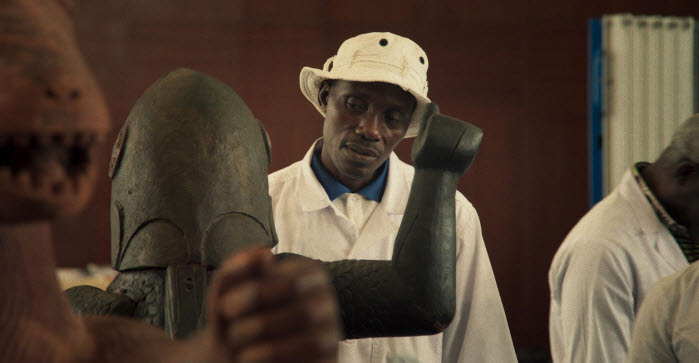
Instead of giving some more background information on this historical repatriation, the documentary takes a rather unconventional approach to its main subjects. As we observe how some of these 26 artifacts get carefully examined and then packaged inside wooden containers, they speak to us one by one via the voice of the Haitian writer Makenzy Orcel, who incidentally wrote this part of the documentary. This method feels a bit too odd at first, but the words “spoken” by these artifacts sound true and sincere as we pay more attention to them, and we come to reflect that most of those invaluable artifacts in numerous western museums are actually stolen from many other countries around the world.

As the camera of cinematographer Joséphine Drouin-Viallard sometimes looks closely at these artifacts, their historical/cultural value feels more evident to us. In case of the statures of two Dahomey kings, they look pretty simple as broadly depicting the kings as animal gods, but we can clearly sense their old history and culture, while also admiring the considerable artistry observed from these seemingly simple but undeniably striking artifacts.

Although the return of these and other stolen artifacts is certainly welcomed a lot by Benin and its people, the returning artifacts feel rather conflicted about their return, and so do many of Beninese people, who have some mixed feelings about this return. This is quite evident when the documentary looks at a student discussion meeting held at the University of Abomey-Calavi, which provides to us a close glimpse into what a complicated matter the return of those artifacts actually is. Throughout the discussion, it is frequently pointed out that only 26 artifacts were selected for repatriation, and some of the students sharply argue that this is just for improving the public image of the French government and the Beninese government, even while recognizing the importance of reclaiming some parts of their cultural heritage.

Many people in Benin also have some ambivalent feelings about the past represented by those returned artifacts, many of which reflect a certain unpleasant aspect of the Kingdom of Dahomey. As shown from recent Netflix documentary film “Descendants” (2022), the Kingdom of Dahomey was closely associated with the slave trade in Africa during the 19th century, and that is particularly evident when the camera focuses on the slave figures decorating the lower part of a royal throne.

While not trying to give any simple answer to these rather complicated issues surrounding those returned artifacts, the documentary just observes how the student discussion often gets intense thanks to the occasional arguments between conflicting viewpoints. The participants are all sincere and passionate in their arguments, and they all care a lot about not only the past but also the present and future of their country. Sure, it is really nice for them and many other Beninese people to see those valuable artifacts returned to their country, and their heated discussions sometimes emphasizes on how the country and its people should move on while also valuing their culture and history more.

The documentary subsequently moves back to those returned artifacts, and the mood becomes quite reflective as some of them muse a bit on their belated return. Yes, things have changed a lot in their home country during their absence, but life goes on as it always has for many centuries, and they express a bit of hope and optimism in the end.

Before making her first feature film “Atlantics” (2019), Diop made a number of short films and documentaries, and she did a commendable job of presenting the main subjects of her documentary with enough respect and sensitivity. Although I wish that it gave more information about those interesting artifacts, the documentary does not waste any second during its rather short running time (68 minutes), while succinctly making its points to us. In addition, Diop brings some subtle poetic qualities to the documentary as she did in “Atlantics”. As a result, the documentary feels more like a piece of musing to be experienced instead of a conventional history lesson, and some of its key moments will linger on your mind for a long time after it is over.

On the whole, “Dahomey”, which was selected as the Senegalese entry to Best International Film Oscar in last year (It was eventually included the shortlist for Best Documentary Oscar as well as Best International Film Oscar a few weeks ago, by the way), is one of more impressive documentaries of last year, and it surely demonstrates more of Diop’s considerable filmmaking talent. If you admired “Atlantics” as much as I did (I chose it as one of the 10 best films of 2019), the documentary is certainly something worthwhile to check out, and you will come to have more expectation on whatever may come next from Diop.

Posted in Movies | Tagged , , , | 1 Comment

Lust, Caution (2007) ☆☆☆(3/4): A spy caught between lust and caution

Ang Lee’s 2007 film “Lust, Caution”, which is currently being shown again in selected South Korean theaters, is a slow but sensual period drama which works best whenever it focuses on the guarded psychology of the two very different main characters at the center of its story. While both of them are quite reserved for each own reason, they are also helplessly attracted to each other, and the movie willingly goes all the way along with them as they heedlessly throw themselves into lust despite also being restricted by caution at the same time.

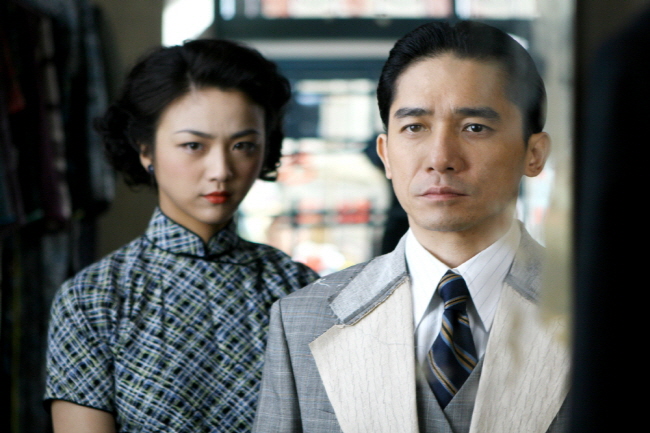
The prologue scene, which is set in Shanghai, China in 1942, shows four women playing Mahjong together inside a luxurious house belonging to one of them. She is Mrs. Yee (Joan Chen in a rather thankless supporting role), and we come to gather along the story that her husband, Mr. Yee (Tony Leung Chiu-wai), is a powerful high-ranking official of the puppet government installed by the occupying Imperial Japanese Army.

When Mr. Yee unexpectedly stops by the house, it becomes apparent to us that there is something going on between Mr. Yee and one of his wife’s Mahjong friends, who looks evidently younger compared to her fellow Mahjong friends. Not long after Mr. Yee leaves, she also leaves for somewhere, and then it turns out that she is involved in some clandestine operation against Mr. Yee.

And then the movie goes back to Hong Kong, 1938. “Mrs. Mak” is actually a college student/actress named Wong Chai Chi (Tang Wei), and the first act of the film shows us how she and her fellow performers try to assassinate Mr. Yee. Although they do not know anything about assassination from the beginning, they happen to have an opportunity to get closer to Mr. Yee while he is visiting Hong Kong, and Wong is certainly ready to push herself and her acting talent more for that. She and one of her colleagues present themselves as “Mr. and Mrs. Mak”, and, what do you know, she soon comes to spend more time with Mr. and Mrs. Yee while her “husband” is often conveniently absent.

When it is clear that Mr. Yee is quite attracted to “Mrs. Mak”, Wong and her colleagues decide to set a “honey trap” for killing their target, but there is one big problem. Wong happens to be quite inexperienced in case of, uh, physical intimacy, so there soon comes a rather painfully awkward moment between her and a certain colleague of hers who happens to be the only experienced one in their group.

However, there later comes an unexpected plot turn for Wong and her colleagues, and the screenplay by Wang Hui-ling and James Schamus, which is based on the novel of the same name by Eileen Chang, moves back to Shanghai in 1942. As going through another hard day just like many others in the city, Wong is approached by one of her former colleagues who is officially a resistance member now, and this colleague requests her to act again as “Mrs. Mak” in front of Mr. Yee.

While successfully entering the daily life of Mr. and Mrs. Yee again, Wong also draws the attention of Mr. Yee as before, but, what do you know, Mr. Yee turns out to be a much trickier target than expected. Even though he gets more and more attracted to Wong, he is quite watchful while not easily trusting anyone at all, and Wong must try her best for making her target lower his usual guard at least for a while.

For attaining her goal, Wong must submit herself to Mr. Yee’s darkest sexual impulses during their little secret private meeting, and that is where the movie becomes as sensually disturbing as “Last Tango in Paris” (1972) or “The Night Porter” (1974). Not so surprisingly, the movie was rated NC-17 at the time of its initial theatrical release in US, and it surely deserves that rating, considering how explicit its several sex scenes really are.

Nevertheless, these sex scenes are more about delving deeper into its two main characters’ conflicted inner feelings than merely illustrating their various carnal acts across the screen, and the two lead performers of the film are thoroughly committed in their daringly raw performance. Tony Leung Chiu-wai, who has been one of the most charismatic actors of our time as recently shown from his stellar villain performance in “Shang-Chi and the Legend of the Ten Rings” (2021), palpably embodies the dark human passion churning behind the reserved façade of his deplorably monstrous character, and his effective restrained performance is complemented well by the equally fearless performance by Tang Wei, who has steadily impressed us a lot with a series of excellent turns for more than 15 years since the movie came out.

It is a bit shame that the finale is quite anti-climactic compared to what has been slowly built up for more than 2 hours, but the movie is filled with goodies to be admired besides its dark and steamy sexual energy. Thanks to cinematographer Rodrigo Prieto, who deservedly received the Golden Osella Award when the movie was premiered at the 2007 Venice International Film Festival (The movie also won the Golden Lion Award for Best Film, by the way), the movie is often filled with vivid period atmosphere and details often evoking those old Hollywood classic films during the 1940s, and this is further accentuated by the elegant score by Alexandre Desplat.

In my consequential opinion, “Lust, Caution” remains on the middle range of Lee’s long and illustrious filmmaking career compared to his several better films including “Brokeback Mountain” and “Life of Pi” (2012), but it is still an interesting work to admire at least. It does not get closer to my heart even at this point, but I appreciate what Lee attempted with his cast and crew members here in this film as before, and that is certainly more than enough for recommendation.

Posted in Movies | Tagged , , , | Leave a comment

Heretic (2024) ☆☆☆(3/4): A twisted test on faith

“Heretic” is a modest but effective horror thriller film about religion and faith. Now it may sound solemn and ponderous to you, the movie does a fairly commendable job of balancing itself between humor and suspense, and it will keep you guessing on what is really going on among its main characters, until it eventually reveals all as expected around the finale.

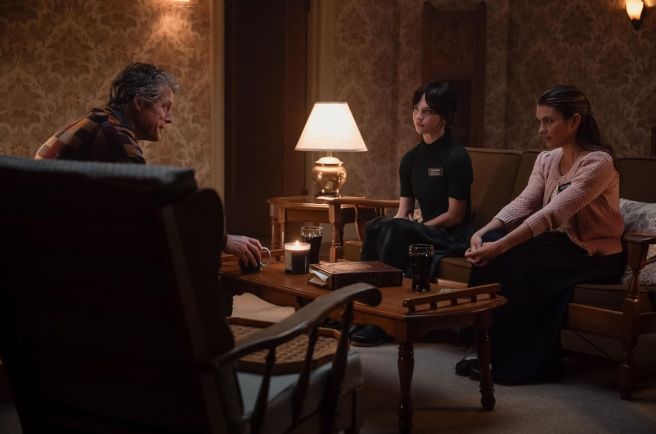
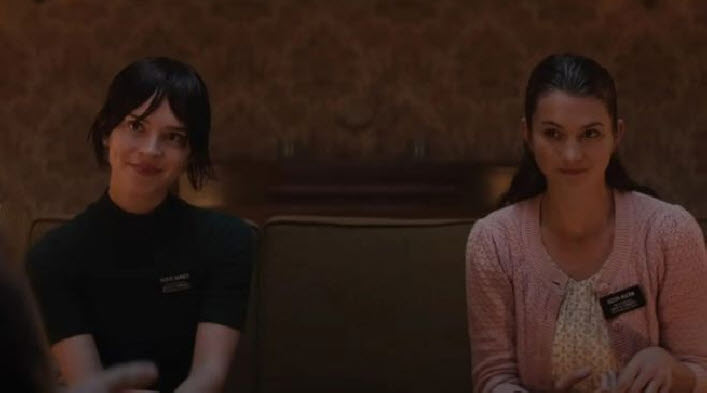
At the beginning, we are introduced to two young female Mormon missionaries: Sister Barnes (Sophie Thatcher) and Sister Paxton (Chloe East). After their casual conversation on a bench, they continue to do their job here and there in some unnamed town during one cold winter day, and then they come to a house belonging to Mr. Reed (Hugh Grant), a middle-aged guy who seems to be interested in their religion and then willingly suggests that they should come into his house for more discussion.

At first, everything feels mostly fine as Sister Barnes and Sister Paxton continue to talk more with Mr. Reed inside his house, but it does not take much time for them to sense that something is not right about him. For example, his wife is supposed to be making a blueberry pie to be served to them, but she never shows up while their conversation with Mr. Reed is being continued in the living room, and Sister Barnes later notices a certain object which makes her all the more suspicious about Mr. Reed.

As Sister Barnes and Sister Paxton become more unnerved, the movie subtly dials up the level of uneasiness on the screen. While the living room of his house looks fairly cozy, we cannot help but sense more of the growing sinister vibe under the surface, and a heavy snowstorm outside the house further emphasizes how much the main characters are isolated from the outside world. In the end, Sister Barnes and Sister Paxton have no choice but to go deeper into Mr. Reed’s house, and it goes without saying that he has a hidden plan for these two Mormon ladies.

I will not go into details for not spoiling any of your entertainment, but I can tell you instead that the movie has a morbidly suspenseful fun with toying with Sister Barnes and Sister Paxton’s supposedly strong religious faith. No, they are not your average conservative believer as shown from their conversation at the beginning of the film, but both of them seem quite devoted to their religion, and Mr. Reed is very willing to test their faith. Systemically cornering them and their faith in one way or another, he eventually pushes them into a simple but possibly risky moment of choice between two possible options, and both Sister Barnes and Sister Paxton become all the more anxious and uncertain about whether they can actually survive in the end.

The screenplay by directors/writer/co-producers Scott Beck and Bryan Woods, who previously co-wrote “A Quiet Place” (2018), is often intriguing as seriously exploring the nature of faith and religion. As Mr. Reed cynically points out at one point in the story, religion can be regarded as a mere product to be promoted and then sold while missionaries are no more than salespeople to sell it. According to him, every religion ultimately converges onto one simple thing, and he is surely ready to demonstrate his dark revelation to his two visitors once they make a choice between those two options.

When our two Mormon ladies eventually make a choice later in the film, the movie becomes less interesting than before. Nevertheless, it keeps the story and characters rolling toward to the inevitable conclusion waiting for them, and Beck and Woods and their crew members including cinematographer Chung Chung-hoon, who has been mainly known for his frequent collaborations with South Korean filmmaker Park Chan-wook, deftly maintains the level of tension to the end. As Sister Barnes and Paxton gets to know more about their host’s twisted sides, the mood naturally becomes darker step by step, and we are not so surprised when the movie briefly shows an old map associated with a certain famous classic work of Dante Alighieri.

The suspense of the film depends a lot on the talent and presence of its three main cast members, who all show considerable commitment without making any misstep throughout the movie. Hugh Grant, who has shown more of the other side of his talent during last several years since his delightful comic performance in “Florence Foster Jenkins” (2016), plays his increasingly diabolical character with sheer gusto, and he has some sly fun when he subtly conveys to us his character’s insidiousness while still looking quite well-mannered in his seemingly benign appearance. On the opposite, Sophie Thatcher and Chloe East are equally solid as complementing well Grant’s more colorful acting, and they fill their rather thankless roles with enough personality to engage us.

In conclusion, “Heretic” is a number of good elements including Grant’s surprisingly dark performance. To be frank with you, I am not that religious despite being a Buddhist on the record just like many of my family members, but I got intrigued and then entertained a lot by how the movie playfully and intensely handles the main subjects of its story, and I am really curious about how a Christian colleague of mine will respond to its thought-provoking moments. In short, this is certainly one of the more interesting genre films of last year, and I assure you that it will leave you something to think about in the end.

Posted in Movies | Tagged , , , | 1 Comment

Millennium Mambo (2001) ☆☆☆(3/4): Looking back at her messy life

Hou Hsiao-hsien’s 2001 film “Millennium Mambo”, whose 4K restoration version was released in South Korean theaters on the first day of this year, is an acquired taste for me just like many of Hou’s films, but it somehow engaged me to my surprise. While phlegmatically observing one messy young woman’s tale of romance from the distance, the movie handles her depressing human condition with some sensitivity and poetry, and its somber but poignant ending will linger on your mind for a while after it is over.     

The narration of the film is rather amusing to us now because the narrator observes its contemporary story and characters from 2010. When the movie came out in 2001, 2010 was merely a close future. As we are entering the middle point of the 2020s, 2010 becomes a distant past now, and the movie ironically feels more distant to us.

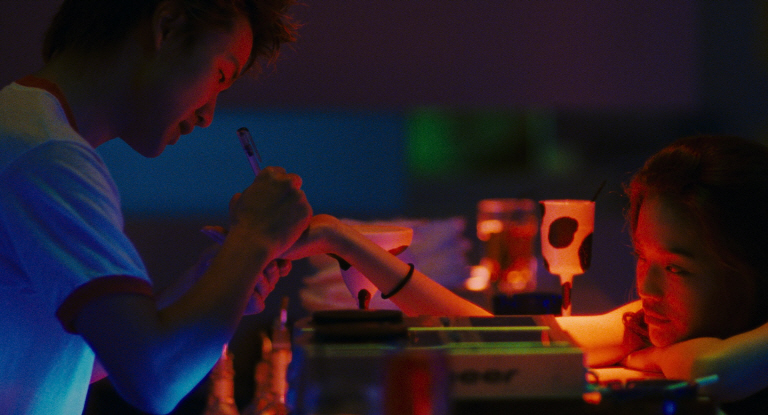
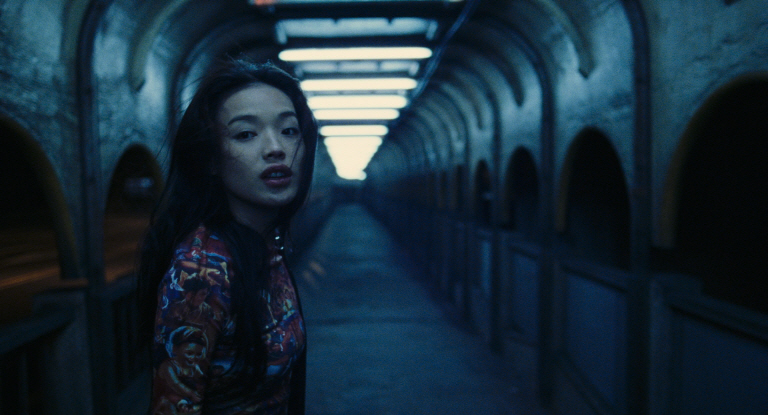
The first act of the movie revolves around the cheerlessly gloomy human condition of its young heroine, played by Shu Qi, and a lad with whom she has been stuck during last several years. Since they left their respective family homes for more fun and freedom, they have lived in a small and shabby place located somewhere in Taipei, Taiwan, but we see how often they aimlessly throw themselves into more fun and pleasure at every night. 

In case of their private life, they are often miserable to be with each other, but it is apparent that they have no other choice besides each other, regardless of whether they really love each other. In one particularly early scene, the lad tries to have some sexual fun with her, but she is not so interested to say the least, and what follows next is one of the most joyless sex scenes I have even seen during last several years.

The lad does not mind at all when his girlfriend later has to work at a local strip club for paying their delayed rent, and that is how she gets close to a local gangster who is actually more generous and understanding than her crummy boyfriend. Nevertheless, she cannot help but get attracted to her boyfriend again and again, and the same thing can be said about him, though they only cause more unhappiness between them as they always did.

 They and their night life are certainly not very pleasant to watch, but Hou and his crew members including cinematographer Mark Lee Ping Bin and sound designer Tu Duu-chih, who deservedly received the Technical Grand Prize when the movie was premiered at the Cannes Film Festival in 2001, did a splendid job of immersing us into the glum, stuffy, but undeniably realistic world inhabited by the main characters of the film. Steadily maintaining the distance between itself and the main characters, the camera patiently observes them during a number of extended scenes in the film, and you will appreciate more of the mood and details observed from the screen.         

Meanwhile, the overall melancholic mood of the film is sometimes interrupted by the occasional moments of unexpected warmth. At one point in the middle of the story, the heroine’s encounter with some Japanese Taiwanese lad leads to a montage sequence unfolded in his Japanese mother’s hometown, and several lovely moments surely bring some fresh air to the story and characters despite their chilly winter mood.

Another unexpected moment of warmth comes from the aforementioned gangster figure, who gladly lets the heroine into his little but cozy residence when she is let down again by her boyfriend. It seems that she may lean more on this dude instead of that crummy lad, but she still cannot give up her usual wild night life, and he is often distant from her due to whatever he must handle outside for his criminal business. 

Often casually wandering here and there just like its heroine, the movie surely requires some patience from us during its first act, but the poetic sensitivity gradually emerging from its seedy background under Hou’s thoughtful direction comes to hold our attention. When its heroine finds herself stuck with more aimless uncertainty around the end of the story, the movie pulls out a hauntingly beautiful moment, and I will let you behold its sublime beauty for yourself.

I must confess that I watched only three films of Hou before watching “Millennium Mambo” at last and was actually less enthusiastic about them compared to many others, but I still could appreciate Hou’s cinematic mastery nonetheless. While I have considered revisiting “Three Times” (2005) for more appreciation, I fondly remember those calm but lovely moments from his last feature film “The Assassin” (2015), and I may admire it more than when I wrote my 3-star review at that time, if I have a chance to watch it again on a big screen.

Although it is a shame that he is retired now because of Alzheimer’s disease, Hou is still regarded as one of the best filmmakers from Taiwan along with Edward Yang and Ang Lee. Besides, his movies still exert considerable influence on many other good filmmakers including Barry Jenkins, whose Oscar-winning film “Moonlight” (2016) definitely shows that Jenkins learned a lot from Hou’s cinematic artistry and sensibility. As long as cinema is alive and well, Hou will be remembered as one of the most interesting filmmakers of our time, and I am certainly glad that I watched one of his notable works at a local movie theater.

Posted in Movies | Tagged | Leave a comment

Armand (2024) ☆☆1/2(2.5/4): At her son’s school

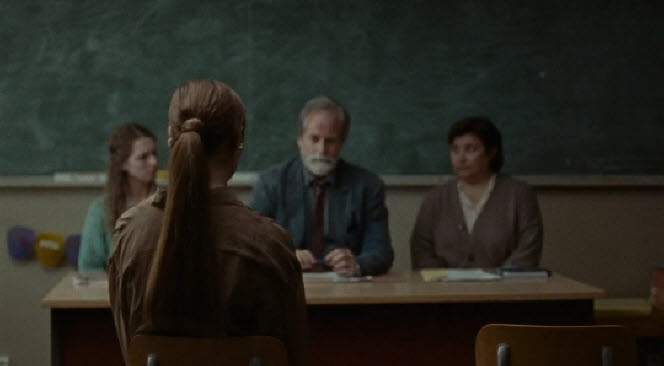
“Armand”, which was selected as the Norwegian entry for Best Internation Film Oscar in last year, attempts a sort of high-wire stunt between the chamber drama films of Ingmar Bergman and the psychological thriller movies of Roman Polanski. While I am not so sure about whether it works as well as intended, the movie distinguishes itself to some degree via mood and style, and it is also anchored by several good performances to notice.

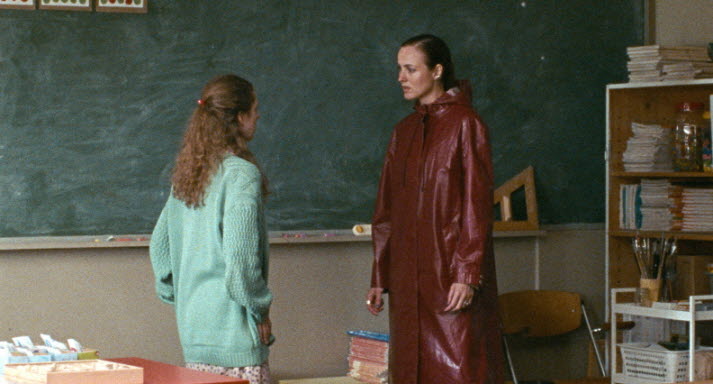
The movie opens with a woman hurriedly driving to somewhere. She is a single mother named Elizabeth (Renate Reinsve), and it gradually becomes evident that she is coming to her 6-year-old son Armand’s elementary school because it looks like he caused some serious trouble at the school. Still not knowing that well about her son’s trouble, she soon meets his classroom teacher Sunna (Thea Lambrechts Valuen) shortly after her arrival, but Sunna is reluctant to tell anything to Elizabeth mainly because the parents of the other kid involved with her son’s trouble have not arrived yet.

Once the parents of the other kid, Sarah (Ellen Dorrit Petersen) and Anders (Endre Hellestveit), arrive, we slowly gather some information about why they come to have a meeting with Elizabeth under Sunna’s supervision. A few days ago, Sarah and Anders’ son was found quite disturbed and distraught in a bathroom in the school, and it was suspected that their son was physically violated by Elizabeth’s son in a very atrocious way. Needless to say, Sarah is thrown into shock and disbelief, and she naturally tries to defend her son, while the others in the room often emphasize to her on how serious the situation may be for not only the kids but also themselves.

As the argument between Elizabeth and Sarah is going nowhere, things turn out to be more complicated than it seemed to us at first. Their sons have been pretty close to each other because Sarah is not only Elizabeth’s close neighbor but also her sister-in-law. Elizabeth’s husband, who incidentally died some time ago, and Sarah once attended the same school attended by Sarah and Elizabeth’s kids, and the school principal, who comes into the ongoing argument between Sarah and Elizabeth later in the story, still remembers when Sarah and her dead brother were his students.

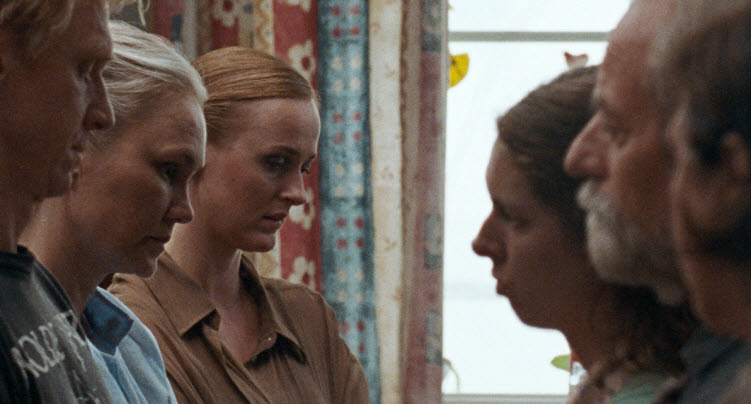
While these and a few other main characters including Sunna pull and push each other, the movie steadily builds up tension across the screen with the frequent close-ups during its several key scenes, and then it enters the realm of warped psychodrama after Elizabeth’s defiant facade eventually crumbles with hysterical laughter at one point in the middle of the story. Getting cornered by Sarah and the school principal in one way or another, she keeps getting exasperated and frustrated, and her state of mind becomes more unreliable as she wanders around the empty corridors of the school alone by herself. If the first half of the film is as tense and sobering as those Bergman chamber drama film, the second half of the film is often reminiscent of several notable Polanski films such as “Repulsion” (1965), and we are not so surprised when Elizabeth comes to lose herself more among hallucinatory figures.

However, the screenplay by director/writer Halfdan Ullmann Tøndel, who made a feature film debut here, adamantly sticks to its distant ambiguity without delving more into its rather broad characters. Constantly vague about many things outside the story besides what really happened between those two kids (They are almost never shown in the film, by the way), the movie just coldly observes its main characters’ increasingly isolated struggles from the distance, and it also feels rather contrived when it has to deliver an eventual resolution around the end of the story.

At least, the movie is fairly engaging thanks to the strong raw performance from Renate Reinsve, who has been more notable thanks to her acclaimed performance in Oscar-nominated Norwegian film “The Worst Person in the World” (2021). While we do not to get to know that much about her character, Reinsve fills her character with considerable intensity and personality, and she is particularly effective during that memorably hysterical scene of hers in the film. We are surely baffled and annoyed at first with Elizabeth’s uncontrollable laughter, but we gradually sense more of her anxiety and frustration as she keeps laughing to the embarrassment of others as well as herself.

In case of several cast members surrounding Reinsve, they are also solid in each way. While Thea Lambrechts Vaulen, Øystein Røger, and Vera Veljovic are well-cast as the three different schoolteachers in the story, Ellen Dorrit Petersen and Endre Hellestveit have each own moment along the story, and they have a dim but remarkably intense scene when their characters come to confront a number of issues in private later in the story.

Overall, “Armand”, which was released as “Everything Began from Armand” in South Korean theaters on the first day of this year, is not entirely satisfying, but it has some interesting elements including Reinsve’s commendable efforts. Tøndel, who received the Caméra d’Or at the Cannes Film Festival early in last year, shows some potential here as a promising new filmmaker, and it will be interesting to see whether he will impress us more in the next time.

Posted in Movies | Tagged , , | Leave a comment

The Apartment (1960) ☆☆☆☆(4/4): A definite comic masterpiece by Billy Wilder

Billy Wilder’s 1960 film “The Apartment” is about two desperate people who come to reflect more on what they really want during one particularly melancholic Christmas season. This is surely a gloomy story in many aspects, but the movie did a masterful job of balancing itself between humor and pathos, and that is why it remains as one of Wilder’s best works.

The hero of the story is C.C. “Bud” Baxter (Jack Lemmon), a young employee of some big insurance company in New York City who found a rather sneaky way of getting more chance for promotion. He lives alone at a small apartment somewhere in Manhattan, and that is how he can provide a private place to several male executives of his company eager to have an extramarital affair behind their back. Needless to say, this sometimes causes a trouble for Baxter in one way or another, and there is a little humorous moment between him and one of his neighbors, who mistakes him for a tireless lover and drinker.

Anyway, Baxter’s longtime efforts on indulging those philandering executives finally lead him to a little private meeting with Jeff D. Sheldrake (Fred MacMurray, who is as slick and smarmy as he was in Wilder’s another classic film “Double Indemnity” (1944)), the director of the personnel department. It does not take much time for Baxter to realize that Sheldrake also wants to use Baxter’s apartment for his own little extramarital affair, and Baxter cannot possibly say no, mainly because Sheldrake is one of the most powerful figures in the company.

Meanwhile, we come to see that there is another thing Baxter wants besides his promotion. He has been smitten with a young female elevator operator named Fran Kubelik (Shirley MacLaine) for a long time, and it seems that Kubelik also likes him, but it later turns out that there is one big problem unknown to him. She actually had an affair with Sheldrake, and now Sheldrake wants to meet her again, while promising her that he will really leave his wife this time.

Like many other comedy films of Wilder, the movie often generates bitter laughs as observing how much people can willingly bend themselves so low for more benefit and happiness. Although Baxter and Kubelik know what an untrustworthy guy Sheldrake really is, both of them choose to lower themselves in exchange for whatever Sheldrake promises them. They do not certainly like that at all, but they are also tempted a lot by the dangling possibility of success or happiness, and that is something we can still identify with, considering how many of us let ourselves manipulated and exploited by our capitalistic system.

The screenplay by Wilder and I.A.L. Diamond, which deservedly won a Best Screenplay Oscar (The movie won five Oscars including Best Director and Best Picture, by the way), is precise and succinct in its execution, while effortlessly rolling its two main characters toward their respective moments of revelation in the middle of a Christmas party held inside the company. While Kubelik happens to learn more about why she should not have trusted Sheldrake at all from the very beginning, Baxter comes to realize that she is the one Sheldrake is having an affair with, and this moment feels all the more heartbreaking as they keep their respective realizations to themselves.

Shot in black and white film, the movie often emphasizes the gloomy situations of Baxter and Kubelik while distancing itself from the usual cheery holiday mood. Early in the film, we see a vast office space where Baxter and numerous employees work day by day, and that reminds us again and again of his meek and lonely existence inside the company. In case of Kubelik, we cannot help but notice how she is often objectified by those despicable executives besides Sheldrake, and you will see how much the movie influences the recent acclaimed TV drama series “Mad Men”, which is also mainly set in a New York City company during the 1960s and often sharply notices the misogynistic aspects of the American business world dominated by white male executives.

The story becomes more serious when Kubelik attempts to commit suicide in Baxter’s apartment not long after Sheldrake leaves. After she is fortunately saved by Baxter and his neighbor who happens to be a doctor, both Kubelik and Baxter come to sense and then face more of their growing mutual feelings. Nevertheless, they still hesitate as recognizing and respecting their respective status, and there is a poignant moment when Kubelik indirectly expresses her emotional attachment to Baxter (“Why can’t I ever fall in love with someone nice like you?”).

The movie was a big turning point for the acting careers of Jack Lemmon and Shirley MacLane. Around that time, Lemmon quickly rose as a comedy actor after winning a Best Supporting Actor Oscar for his hilarious breakthrough turn in “Mister Roberts” (1955), but he began to demonstrate more serious sides of his talent in “The Apartment”, and that eventually led to a number of memorable works ranging from “Days of Wine and Roses” (1962) to “Glengarry Glen Ross” (1992). Just like Lemmon, MacLane was regarded as a new comedy performer to watch in Hollywood during that time, and “The Apartment” certainly boosted her career, which came to have a fair share of other excellent movies such as “Terms of Endearment” (1983).

On the whole, “The Apartment” is one of the highpoints in Wilder’s legendary careers, and it also has one of the best closing lines which deserves to be mentioned along with the last line of Wilder’s another great comedy film “Some Like It Hot” (1959). The finale may feel a bit too sentimental for some of you, but the movie definitely earns that along with its two main characters, and it will surely touch you a lot. After all, folks, isn’t it really nice for us to see ordinary people doing the right thing, considering these despairing days for the humanity during the 21st century?

Posted in Movies | Tagged , | Leave a comment