Silver Apricot (2024) ☆☆☆(3/4): Dealing with her dysfunctional family

South Korean independent film “Silver Apricot” is about one young woman who must deal with several flawed family members who have been estranged from her for many years. This is surely a familiar story setting, but the movie did a good job of balancing itself between humor and drama as deftly developing its main characters along the story, and we are alternatively amused and touched while having some understanding on our heroine and her family members.

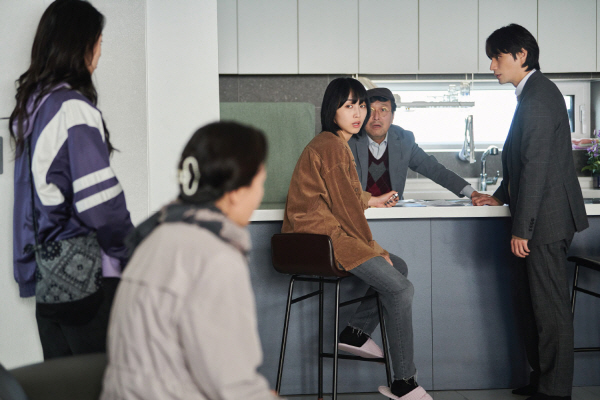
At first, the movie establishes how Jeong-seo (Na Ae-jin), a young female independent online cartoonist who has been earning her meager living as an office worker, happens to need to get a considerable amount of cash as soon as possible. She recently won an apartment application, and she and her boyfriend Kyeong-hyeon (Kang Bong-sung), who is one of the co-workers at her current workplace and has also been planning along with her on getting married sooner or later, are certainly delighted for that, but, alas, they do not have enough money to pay the deposit right now. Jung-seo later asks for some cash from her divorced mother Mi-yeong (Park Hyun-sook), but Mi-yeong only suggests that Jeong-seo should go to her father Young-joo (Ahn Suk-hwan) instead, who promised to pay his ex-wife 90 million won during their divorce but has not yet paid any of her alimony at all.

With a little old I.O.U. paper written by her father at that time, Jeong-seo goes to a little seaside town where her father has lived with his second wife Kyeong-ok (Yoon Seo-jung) and his stepdaughter Jeong-hae (Kim Jin-young). Not so surprisingly, Young-joo is not so willing to pay her 90 million won right now even though he willingly welcomes his daughter, and his second wife is certainly not so pleased with Jeong-seo’s visit, though Jeong-hae is delighted to see her older stepsister again.
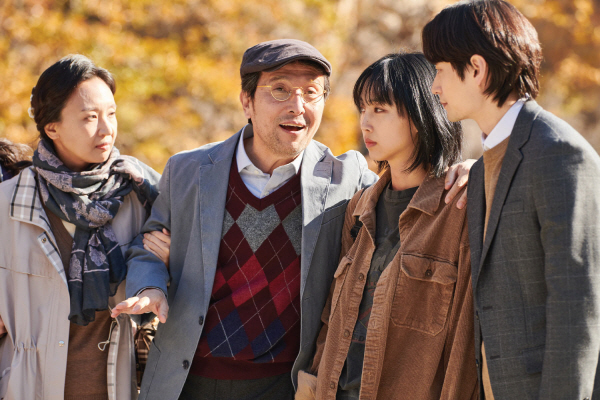
As getting stuck more and more with these family members of hers during next several days, Jeong-seo is reminded again and again of why she still does not like them that much. Her father keeps promising her that he will find an alternative for her urgent need of cash, but he only comes to show more of how unreliable he really is, and this becomes more evident to her when Jung-seo’s boyfriend eventually comes to meet her family members. While Kyeong-ok often emphasizes to Jung-seo that she will not step back at all for the interest of her and her daughter, Jeong-hae turns out to have a little motive behind befriending her older stepsister again, and that certainly brings more headache for Jeong-seo.

At least, Jeong-seo gets some consolation from her two old friends, though both of them remind her more of why she left her hometown. While Hae-jeong (Park Mi-so) is now working as a local taxi driver, Tae-joon (Jo Ha-sung) chose to pursue a military career instead of becoming a cartoonist just like her, and he and Jeong-seo come to have a bitter reflection on how things have changed for both of them, when they happen to have a little private time between them at one point in the middle of the story.

Leisurely rolling its story and characters, the screenplay by director/writer Jang Man-min, who makes a feature film debut here after making several short films, fleshes out its complicated main characters with more details and emotions. As not only her family members but also her boyfriend frustrate and annoy her more and more along the story, Jeong-seo comes to reflect more on what she really wants – what she really should do for that. Yes, she really wants to have a stable residence to help her pay more attention to drawing her little online cartoon, but she has also been becoming a mere office worker just like her boyfriend, and that makes her all the more conflicted about whether it is actually worthwhile to get the money by any means necessary for paying the deposit for her future apartment. While letting down her in one way or another, Jeong-seo’s family members turn out to have each own reason behind their back, and Jeong-seo comes to see more of herself from her younger stepsister, who is also eager to get away from her hometown as soon as possible just like Jeong-seo once was many years ago.

As the center of the film, Na Ae-jin, who incidentally received an award for her performance when it was shown at the Jeonju International Film Festival early in last year, is convincing as a jaded young woman who has had a fair share of disappointment and frustration throughout her whole life. Even when her character makes a couple of big decisions around the end of the story, Na steadily maintains her low-key acting without any misstep, and we come to root for her character more than before.

Around Na, Jang assembles a number of good performers, who have each own moment as ably supporting her. While Ahn Suk-hwan makes his utterly pathetic character somehow likable without any excuse at all, Yoon Seo-jung, Jo Ha-sung, Park Mi-so, Kang Bong-sung, and Kim Jin-young are also effective in their respective parts, and Park Hyun-sook is especially good when her character and Jeong-seo happen to have a brief private conversation on their strained relationship later in the story.

In conclusion, “Silver Apricot” is a solid family drama which distinguishes itself enough with engaging storytelling and performance, which thankfully compensate for several flaws to notice (I do not think changing the screen ratio more than once does not work as dramatically as intended, for example). In short, Jang made a commendable start here in this film, and it will be interesting to see what may come from him next.

Posted in Movies | Tagged , , , | Leave a comment

Heritage (2023) ☆☆(2/4): Two different young people in desperation

South Korean independent film “Heritage” is often frustratingly slow and opaque in my humble opinion. Mainly revolving around two different young persons in each own desperation, the movie attempts to make some point on the generational/social divides in the South Korean society, but the result is too bland and tedious as failing to make its main characters engaging enough to hold our attention.

I must confess that it is often hard to understand whatever is exchanged between its two main characters. Yes, it is clear that one of these two people really needs some help, but this figure remains a distant cipher to the end of the story to our frustration, and we cannot discern much of what the other main figure in the story really sees from him.

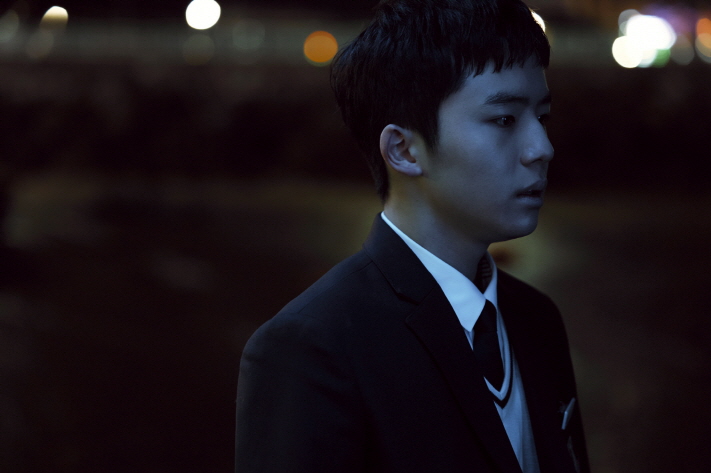
In the beginning, we are introduced to a lad named Jin-hyun (Yoon Hyeok-jin), who has worked in some local social service center located somewhere in Seoul. He has been handling a younger dude named Young-jin (Ahn Eun-son), and we come to gather that Young-jin was exempted from the mandatory military service and then has to do his conscription as a temporary employee at the center in exchange for that.

Anyway, Young-jin has often annoyed Jin-hyun and his department because he is frequently late for work, and then Jin-hyun happens to discover what Young-jin has been hiding behind his quiet passive appearance. Young-jin was recently kicked out of his house by his father for a rather unspecified reason, and there is no one around him to help him. As a result, he has spent many sleepless nights under the concrete highway bridge near to the social service center, and that is the main reason why he has been often late for his work.

Probably because of feeling sorry for Young-jin, Jin-hyun takes him to a little apartment where he has lived alone by himself. He is going to let Young-jin stay in his residence for a while at least before finding any possible way to support Young-jin more, but the social service center is not so willing to do anything more for Young-jin due to those regulations, and Young-jin becomes more burdensome for Jin-hyun as he continues to stay at Jin-hyun’s residence.

Meanwhile, the movie also pays some attention to what is going on between Jin-hyun and an old lady who frequently comes to the social service center. Just like Young-jin, this old lady needs more support and assistance from the center, but, again, Jin-hyun only gets more frustrated while not being able to help her, and he becomes quite exasperated as he later finds himself sandwiched between her and his uncaring supervisor.

Around that narrative point, we are supposed to get to know more Jin-hyun and several other characters in the story, but the screenplay by director/writer Lee Jong-su, who incidentally made a feature film debut here, does not flesh out its story and characters more to interest us. While we only get a bit of background information on Jin-hyun’s past, the movie does not specify much of Young-jin’s life on the whole, and it also does not even delve much into his thoughts and feelings except when it occasionally shows the video clips shot by his little video camera.

Most of all, whatever is happening between Jin-hyun and Young-jin is not particularly interesting. While Jin-hyun talks and talks, Young-jin merely exists right next to him as showing a bit of response from time to time, and the movie even makes a sort of statement when Jin-hyun talks about why he often watched movies some time ago. At one point, he says watching movies is like looking into the lives of others, but I must say that looking into the lives of him and others around him was not a very interesting experience for me because the movie simply observes them while not doing that much for any understanding or empathy. While there are several flashbacks for showing more of its main characters along the story, these flashback scenes only end up feeling quite contrived and superficial, and we still watch these main characters from the distance without much care.

In case of the three principal cast members in the film, they merely fill their respective spots as required while not having anything else to do besides that. Yoon Hyeok-jin did a good job of conveying to us the accumulating frustration behind his character’s phlegmatic appearance, but he is also often limited by his bland character, and the same thing can be said about Ahn Eun-soo, who gets stuck with a thankless task of looking dispirited and unresponsive throughout the film. In contrast, Na Ho-sook has a couple of relatively showy moments as the aforementioned old lady, and we come to have some understanding on her character’s growing desperation even when she happens to lash out at Jin-hyun later in the story.

In conclusion, “Heritage” bored and frustrated me due to its glacial narrative pacing and barebone narrative, and I felt more annoyed by the ending, which looks like tacked on the preceding scene without much dramatic effect. As another gloomy social drama about the dark sides of the South Korean society, it does not bring anything particular new to the territory, and I can only hope that the director will soon move onto better things to come.

Posted in Movies | Tagged , | Leave a comment

The Animal Kingdom (2023) ☆☆☆(3/4): When people are turning into animals

French film “The Animal Kingdom” is a modest but intriguing SF drama with enough style and substance to interest and then engage us. Although it is rather a bit too vague about its story premise, the movie stays focused on story and characters in addition to having a fair amount of mood and details to observe, and the result is an interesting genre piece with some haunting qualities to be appreciated.

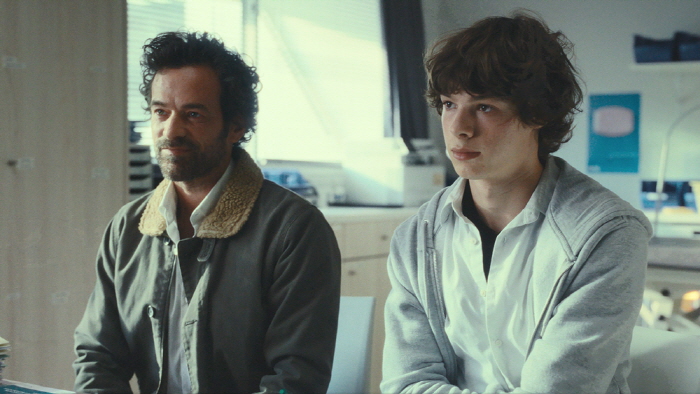
Right from the beginning, the movie throws us right into how things have become quite different for its two main characters, François (Romain Duris) and his teenage son Émile (Pual Kircher), and many others around the world. There has been the global outbreak of a mysterious disease turning humans into various animals, and the French government has been trying to get things under control via isolating many of those infected people as much as possible, though numerous people still get infected and then isolated everyday.

In case of François, his wife has been hospitalized since she turned out to be infected, and, despite his hope and efforts, his wife has only become less and less human instead. In the end, his wife is going to be sent off to some secluded area located somewhere in Southern France along with many other infected people, so he decides to move to that area along with his son, though Émile is not so particularly pleased about that as getting more distant from not only his father but also his infected mother.

However, an unexpected incident happens not long after François and his son move to that region. A carrier truck carrying those infected people including François’ wife crashed down to a river before its arrival, and it looks like many of those infected people in the truck managed to survive and then escape. As the local police embark on hunting for these fugitives, François decides to look for his wife for himself, and his son joins him although he still feels conflicted about his mother.

Not so surprisingly, François soon finds himself facing dead ends in his rather unproductive search process, while also reminded of how the circumstance becomes more serious for him and many others in the region. As a female local police officer informs him later, the military already join the search, and both the police and the military are ready to kill those infected people if that seems necessary.

This makes François all the more determined to find his wife, but this also makes him more distant to his son, who turns out to have some very serious issues behind his mostly passive attitude. While struggling to adjust himself to his new school, Émile also finds his own body beginning to show a number of alarming signs, and that makes him more withdrawn from his father.

Patiently rolling the story and characters, director/co-writer Thomas Cailley, who wrote the screenplay with Pauline Munier, also pays a lot of attention to bringing considerable realism to the screen. While it surely utilizes a lot of CGI in case of depicting several infected figures in the film, the movie dryly maintains a considerable degree of realism on the screen, and these infected figures certainly make a striking impression on us whenever they enter the plainly realistic background of the film.

Above all, the movie makes us care more about the relationship drama between its two main characters. While he is not exactly the one who can get the Father of the Year award, François simply does what he thinks is the best for his wife as well as his son, and Émile understands that to some degree. Although they do not communicate that well with each other, they also care a lot about each other nonetheless, and that is evident particularly when François makes a big important decision for his son later in the story.

Under Cailley’s competent direction, his several main cast members are convincing as ordinary people trying to handle their extraordinary situation. Romain Duris, who was terrific in Jacques Audiard’s “The Beat That My Heart Skipped” (2005), is effective as embodying his character’s gritty determination, and his intense performance is matched well with the sensitive low-key acting of Paul Kircher, who is incidentally the eldest son of Irène Jacob and Jérôme Kircher. Whenever they are together on the screen, Duris and Kircher deftly convey to us the shared long history between their characters, which comes to function as the solid ground for the eventual climactic part of the story.

In case of the other main cast members, they just occupy their respective spots around Duris and Kircher, but some of them manage to elevate their thankless supporting roles a bit. While Adèle Exarchopoulos, who has steadily advanced since her breakthrough performance in “Blue Is the Warmest Color” (2013), is rather under-utilized to my disappointment, Tom Mercier and Billie Blain are well-cast in their respective substantial parts, and they have each own moment to shine along the story.

In conclusion, “The Animal Kingdom”, which is the second feature film from Cailley after “Love at First Sight” (2014), works fairly well despite some weak points, and I admire its mood, storytelling, and performance enough on the whole. Although I have not seen “Love at First Sight” yet, “The Animal Kingdom” shows that Cailley is another promising filmmaker to watch, and it will be interesting to see what he may do next after this engaging genre film.

Posted in Movies | Tagged , , | Leave a comment

Memory (2023) ☆☆☆(3/4): An accidental romance tale between two troubled persons

Micheal Franco’s latest film “Memory” is about an accidental romance between two troubled persons. While both of them have each own issue to struggle with, they cannot help but attracted to each other after their rather unpleasant encounter, and the movie gently and thoughtfully depicts their emotional struggles with enough understanding and empathy.

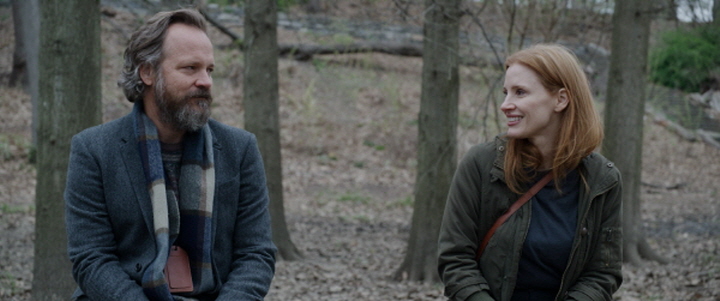
At first, the movie dryly establishes the daily life of Sylvia (Jessica Chastain), a single mother who has earned her living via working at a adult care center. As shown from the opening scene, she has been a recovering alcoholic during last 13 years, and we can only imagine how much she struggled before joining her support group for alcoholics 13 years ago. 

During one evening, Sylvia attends her high school reunion party along with her younger sister Olivia (Merritt Wever), and that is when she happens to draw the attention of one of the guys attending the party. When he approaches to her, she rejects his approach, and she becomes more disturbed when he is following after her for some unknown reason after she eventually leaves the party. In the end, he waits outside her residence, and this certainly makes Sylvia all the more disturbed.

In the next morning, this guy is still waiting outside Sylvia’s residence. After confirming that he does not mean any harm, she finds who she should call for him, and she soon comes to learn what his problem is. Saul (Peter Sarsgaard) has been suffering from the early onset of dementia, and he has been living along with his younger brother because of that.

Sylvia is later invited to Saul’s apartment, and then she and Saul have a little private time between them. While Saul does not remember anything about why he followed after her on that day, Sylvia tells something disturbing about her very problematic past. When she was about to enter her adolescence period, she was sexually abused by a certain older high school student and one of his friends, and she thinks Saul is the one who sexually abused her along with that horrible student at that time.

Mainly because Saul does not recognize her at all, Sylvia becomes quite angry as thinking more about that traumatic past of hers. As revealed to us later in the story, nobody believed her story of sexual abuse at that time, and that was the main reason why there has been considerable distance between her and her family members. While she and her younger sister remain cordial to each other, there is always some awkwardness between them, and she still does not want to see her mother again because her mother has refused to believe whatever she tried to tell her mother.

However, it subsequently turns out that Saul was actually not responsible at all for that sexual abuse upon her during that time, so Sylvia naturally apologizes to him, and she soon finds herself attracted to him just like he has been drawn to her – especially after she is requested to take care of him during his younger brother’s absence. While his ongoing illness is surely getting worse day by day, Sylvia steadily stands by him as his caregiver, and, what do you know, they look more like a couple as days go by.

Around that narrative point, Franco’s screenplay delves further into the issues of its two main characters, and we see more of how things are going to remain problematic for each of them. Saul eventually comes to stay at Sylvia’s apartment at least for a while, but, not so surprisingly, he comes to need constant care more than before as he becomes quite confused more often than before. In case of Sylvia, she comes to confront her old family problem again, and there is a hurtful moment when she eventually lets out her childhood trauma in front of her family members including her mother, who still adamantly does not listen at all to whatever her daughter says to her.

Like any good character drama, the movie relies a lot on its two lead performers, and their good performances steadily carry the film to the end. Jessica Chastain, who has kept going with her stellar acting career even after eventually winning an Oscar for “The Eyes of Tammy Faye” (2021), is often harrowing as gradually conveying to us her character’s emotional issues along the story, and she is complemented well by Peter Sarsgaard, who received the Best Actor award when the movie was premiered at the 2023 Venice International Film Festival. In case of several other cast members in the movie, they are sometimes limited by their underwritten characters, but Merritt Wever, Jessica Harper, Josh Charles, Brooke Timber, and Elsie Fisher ably fill their respective supporting parts, and it is certainly nice to see Fisher, who was quite memorable in Bo Burnham’s “Eighth Grade” (2018), being ready to move onto the next step of her burgeoning acting career, though she is rather under-utilized in her brief appearance here in this film.   

On the whole, “Memory” is somber but sensitive in terms of mood and storytelling, and the result is more satisfying than Franco’s previous films “New Order” (2020) and “Sundown” (2021). As a matter of fact, he already made his next film with Chastain, and I will surely pay some attention to its upcoming premiere at the Berlin International Film Festival early in this year.

Posted in Movies | Tagged , , , | Leave a comment

Dark Nuns (2025) ☆☆☆(3/4): It’s the time to bring nuns…

South Korean horror film “Dark Nuns”, which is a spin-off of “The Priests” (2015), is another typical exorcism flick with a bit of refreshing element. Again, the Catholic Church comes forward for fighting with the supernatural force of evil, but the movie has a couple of nuns instead, and, to our little amusement, they even do not hesitate to use everything ranging from local shamans to tarot cards for doing their holy job to the end.

The movie begins with a very intense exorcism ritual performed upon one adolescent boy clearly possessed by one of those infernal demons. When two Catholic priests eventually find themselves cornered by this stinking devil, an experienced nun named Sister Junia (Song Hye-kyo) promptly enters the scene, and she manages to chase away the devil from that poor boy, though he is not yet totally free from that devil yet.

Sister Junia subsequently seeks for the permission to continue the exorcism ritual for that boy, but the head of the Catholic Church in Seoul and other old priests are not so willing to give the permission. After all, the exorcism ritual of the Catholic Church is quite a sensitive matter, and they do not want to get into any more trouble. Besides, Sister Junia is not ordained yet, and she also officially cannot perform an exorcism because, well, she is not a priest but a nun (The movie often reminds us that the Catholic Church has virtually been a boys’ club which usually disregards women, by the way).

Although it is decided that the boy is going to be sent to a local Church hospital for getting some medical treatment under the supervision of Father Paolo (Lee Jin-wook), a priest/psychiatrist who firmly believes that the boy will be soon cured via his medical treatment instead of exorcism. With his protégé Sister Michaela (Jeon Yeo-been), who is also a psychiatrist, he is going to do his best for that boy, and the interference from Sister Junia is the last thing he wants right now.

However, still quite determined to save the boy from that powerful demon, Sister Junia is not deterred at all, and she actively approaches to Sister Michaela once she notices that Sister Michaela has a sort of sixth sense to sense the force of evil just like her. Needless to say, Sister Michaela does not want to get herself associated with Sister Junia, but then she only gets drawn more into the dark world of demon and exorcism because, as shown from the occasional flashback scenes, she actually had a fair share of experiences associated with exorcism and other supernatural stuffs a long time ago.

When the situation becomes all the more disturbing later, Sister Junia persuades Sister Michaela to do something as soon as possible without Father Paolo’s permission, and that is where the movie becomes rather amusing. They take the boy to a professional shaman who was once a nun just like them, and this shaman is willing to give some extra help once she sees that the boy does have a really serious spiritual problem. 

Of course, their infernal opponent turns out to be much more powerful than expected, and we are certainly served with a series of unnerving moments suggesting the evil influence surrounding that boy. While these dark moments will not surprise you much if you have seen “The Exorcist” (1973) and many of its countless juniors, they are intense and creepy enough to hold our attention for a while at least, and the movie steadily sticks to its utterly serious attitude as going all the way along with its two main characters. 

Around the last act, everything in the story culminates to an expected showdown between good and evil, and director Kwon Hyeok-jae and his crew members including cinematographer Choi Chan-min naturally pull all the stops for more shock and intensity. Although the overall result stays inside its familiar genre territory, the movie keeps focusing on what is being at stake for its main characters, and we come to care more about what may eventually happen to them.

It goes without saying that the movie depends a lot on the presence and talent of its two lead performers at its center. Song Hye-kyo, whom you may recognize for her brief but crucial supporting turn in Wong Kar-wai’s Oscar-nominated film “The Grandmaster” (2013), is believable as a woman quite dedicated to her spiritual battle with the force of evil, and she also did a good job of conveying to us the growing vulnerability behind her character’s intensely unflappable attitude. On the opposite, Jeon Yeo-been is effective as her co-star’s counterpart, and she certainly has a lot more things to do here in this film compared to her recent appearance in “Harbin” (2024). In case of several other cast members in the film including Lee Jin-wook, Moon Woo-jin, and Huh Joon-ho, they dutifully fill their respective spots around Song and Jeon, and you may be amused a bit by the special appearance by one of the main cast members of “The Priests” around the end of the film. 

In conclusion, “Dark Nuns” does not surpass “The Priests” or many of its seniors out there, but it is still a solid genre piece packed with enough thrill and entertainment. As your average seasoned moviegoer, I was not scared that much during my viewing, but I was intrigued and entertained enough on the whole, and that is enough for recommendation for now.

Posted in Movies | Tagged , , , , , , | Leave a comment

Handling the Undead (2024) ☆☆1/2(2.5/4): Facing an inexplicable happening

Norwegian film “Handling the Undead” is a dry and detached genre piece simply going all the way for its unsettling mood. Without explaining a lot about its story premise, the movie calmly and distantly observes its several main characters facing an inexplicable happening which gradually disturbs them along the story, and this is interesting for a while before eventually spinning its wheels around its inevitable conclusion.

 The early part of the film establishes the respective grieving status of the main characters. At first, we are introduced to a young woman and her aging father, and we come to gather that they have been quite devastated by the recent death by her young son. Both of them are so isolated in each own grief that they barely speak with each other, and the movie phlegmatically depicts how they go through each own daily life as struggling more and more with each own grief.

In case of one stand-up comedian, he and his two children happen to be suddenly struck by an unexpected bad news. His wife has a serious car accident, and she is already dead when he hurriedly arrives at a local hospital. While he is at a loss about how to deliver this bad news to his children, something quite unbelievable happens right in front of him. His wife’s body shows some movement, and it looks like she comes back from death.

Meanwhile, a similar thing happens to the aforementioned young woman and her old father. While grieving over his grandson’s grave, the old man hears something from the ground beneath the grave, and he soon begins to dig up the grave. What do you know, his grandson looks alive again, and we subsequently see him washing his grandson in his and his daughter’s apartment.

Needless to say, his daughter is quite shocked to see her son back in the apartment. As a matter of fact, she even thinks she is going crazy due to her immense grief, but she eventually comes to see that she is not crazy at all. Although she does not know what to do about her son just like her father, both of them are a bit glad to get back him again, and they are willing to keep him as much as possible.

Another part of the story involves with an aging lesbian couple. After one of them died, her partner is quite overwhelmed by the sense of loss, but then her dear spouse soon returns from death to her surprise. Just like the other “undead” people in the story, her dear spouse merely shows little signs of life while looking not so capable of communication, but she is happy to get her spouse back nonetheless, and there is a poignant but unnerving scene where she is trying to make her spouse eat a bit.

The screenplay by director Thea Hvistendahl and her co-writer John Ajvide Lindqvist, which is based on the novel of the same name written by Lindqvist, leisurely rolls the story and characters under the ominously ambiguous atmosphere. It turns out that there are many other cases of people returning from death, but the movie does not go into details on how this can happen, and we can only guess that this happening is associated with a mysterious incident which occurred right before that.

The tension of the movie comes from how the main characters feel conflicted about how they should respond to their respective circumstances. While the young woman and her father become more protective of her “undead” son, we cannot help but notice the decomposed status of his body, which is frequently emphasized by the buzzing sound of flies around him. In case of that old lesbian couple, the living partner of that “undead” woman tries to make everything comfortable for her “undead” spouse, but she is reminded more of the disturbing aspects of her circumstance.

Not so surprisingly, there come some nasty moments during the last act as expected, and that is where the movie begins to lose its tension and narrative momentum. As consequently entering familiar genre territories, the movie coldly disturbs us more, but we remain distant to the story and characters because of its rather thin storytelling and flat characterization, and that is the main reason why its last scene feels more like a mere whimper instead of being emotionally devastating.

At least, the main cast members fill their respective roles with some genuine emotions. While Renate Reinsve, who surely had a busy year as appearing in several other films including “A Different Man” (2024) and Apple+ TV drama series “Presumed Innocent”, and Anders Danielsen Lie, who incidentally appeared along with Reinsve in Joachim Trier’s Oscar-nominated film “The Worst Person in the World” (2021), are the most notable members in the cast, the other cast member including Bjørn Sundquist and Bente Børsum are equally solid in their substantial part, and Børsum deftly handles her several wordless but effective moments in the film. 

On the whole, “Handling the Undead”, which is Hvistendahl’s second feature film after “The Monkey and the Mouth” (2017), is admirable to some degree for its dry handling of familiar genre elements, but I must say that I felt impatient more than once during my viewing because of its glacial narrative pacing and shallow characterization. Anyway, Hvistendahl shows some potential as a good filmmaker, and I can only hope that her next film will interest and engage me more.

Posted in Movies | Tagged , | Leave a comment

A Different Man (2024) ☆☆☆1/2(3.5/4): A humorously ironic comedy on identity and appearance.

“A Different Man”, which won the Best Picture award at the Gotham Awards ceremony a few months ago, is often quite amusing as cheerfully exploring the issues of identity and appearance. After patiently building up its comic momentum during the first half, the movie is unexpectedly absurd and hilarious at times during its second half, and a number of humorous moments will surely make you more reflect on whether we are defined more by appearance or personality.

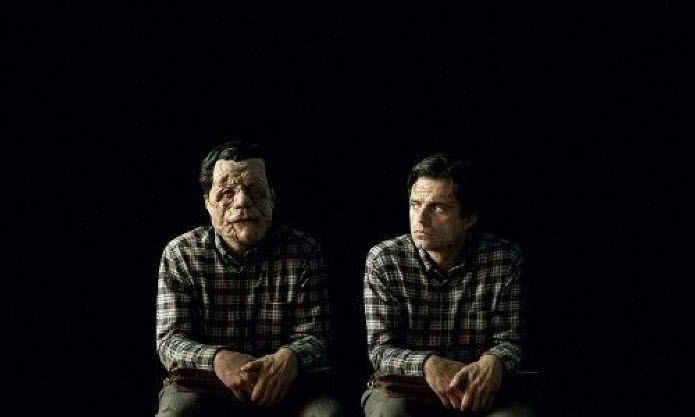
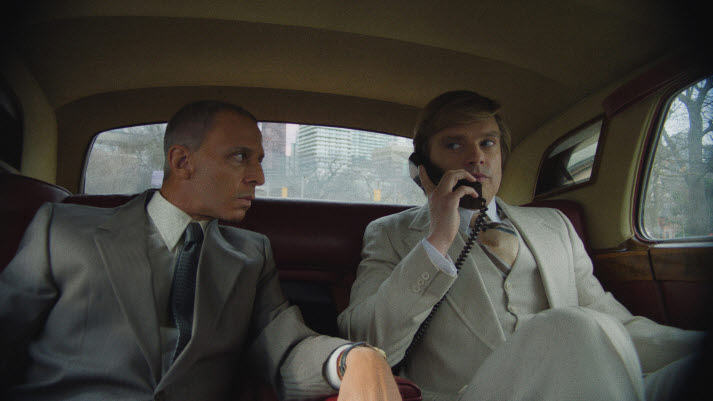
At the beginning, we meet Edward (Sebastian Stan), a struggling New York city actor whose face is considerably disfigured due to neurofibromatosis. He is recently hired along with a bunch of other disfigured people for the production of some educational video, but he usually does not feel that right about himself, and he understandably hesitates a lot when he happens to befriend Ingrid (Renate Reinsve), one of the neighbors in his apartment building who is incidentally an aspiring off-Broadway playwright.

However, there comes an unexpected opportunity which may change Edward’s life. He happens to participate in the clinical test of some new drug which seems to alleviate his current medical condition, and he initially does not expect much, but, what do you know, this drug in question turns out to be as amazing as, say, that drug in Coralie Fargeat’s “The Substance” (2024). After going through a brief moment of body horror, Edward’s old face is gone, and now he looks as dashing as the actor playing him.

Once its hero finds how things become different around him thanks to his new face, the movie moves forward to some time later. After completely leaving his old life behind, Edward is now working as a real estate salesman named “Guy” (Is this actually a nod to the actor’s other recent performance in Ali Abbassi’s “The Apprentice” (2024), I wonder?), and he looks much less socially awkward than before in addition to being quite successful in his job.

On one day, Edward comes across the audition for the lead role in the off-Broadway production of the latest play written by Ingrid, which is simply titled “Edward”. Needless to say, this play of hers is based a lot on Edward’s old self, so Edward decides to apply for the audition with a mask modeled after his old face at the beginning of that clinical test, and what do you know, he eventually gets the part thanks to his newly gained confidence.

As Edward subsequently collaborates with Ingrid during next several weeks, they become closer to each other than expected, but, of course, things become a bit more complicated than expected. While Edward is still hiding his old secret from Ingrid, Ingrid becomes more serious about her play, and she cannot help but wonder whether she should be more sensitive and thoughtful about her play. For example, shouldn’t she have cast a real disfigured guy instead as she intended from the very beginning, instead of casting a non-disfigured guy like “Guy”?

Around that narrative point, another unexpected thing happens in the story. When a disfigured guy named Oswald (Adam Pearson) comes to the ongoing rehearsal, he immediately draws the attention of Ingrid, and Edward comes to befriend Oswald when they happen to encounter each other again at a local bar. While also having neurofibromatosis just like Edward once did, Oswald is effortlessly funny and charming to others around him, and this certainly makes Edward feel conflicted about discarding his old self.

Director/writer Aaron Schimberg, who is no stranger to exploring appearance and identity as shown from his previous film “Chained for Life” (2018), keeps the story and characters rolling via the absurd comic logic of the plot, and there are several genuinely funny scenes I will let you watch for yourself. For instance, a certain very famous actor makes a surprise appearance later in the story, and this reminds me again that he really should utilize his singular intense persona more in comedy (After all, being absolutely serious is usually a necessary requirement for any good comedy film, right?).

The movie certainly depends a lot on the excellent comic lead performance from Sebastian Stan, who deservedly received the Silver Bear for Best Leading Performance at the Berlin International Film Festival early in last year (He also won the award for the Best Performance by a Male Actor – Musical or Comedy at the Golden Globe Awards a few weeks ago, by the way). Deftly balancing his role between comic irony and dramatic inner conflict, Stan did a fabulous job of building up his character even while wearing a lot of makeup during the first half of the film, and he gets funnier as willingly leaping from his established ground for more humor and laugh.

The two other main cast members in the film are equally engaging in their respective roles. While Renate Reinsve, who has been quite busy after her breakout performance in Joachim Trier’s Oscar-nominated film “The Worst Person in the World”, brings enough wit and intelligence to her part, Adam Pearson, who was utterly unforgettable in his brief appearance in Jonathan Glazer’s “Under the Skin” (2013) and previously collaborated with Schimberg in “Chained for Light”, steals every moment of his in the movie besides being an effective counterpart to Stan, and he surely deserves all the praises and recognitions he has so far received for the film during last several months.

Overall, “A Different Man” is both funny and thought-provoking because of its witty storytelling and compelling performances, and it also took me back to a person I happened to notice a few days ago. She was a woman whose face was as disfigured as Edward’s old self and Oswald, and I observed how she seemed totally fine with herself despite that. Now I am wondering how she may feel and think about the movie, and, in my trivial opinion, she will probably enjoy it as much as I did.

Posted in Movies | Tagged , , , | 1 Comment

The Apprentice (2024) ☆☆1/2(2.5/4): The early years of one deplorable figure

Ali Abbasi’s latest film “The Apprentice” looks into the early years of one deplorable figure who has been exerting toxic influences over not only the American society but also the whole world during last several years. While it surely drew a lot of attention when it was premiered at the Cannes Film Festival early in this year, the movie is merely superficial without providing much new insight into what makes this vile dude tick, and that is quite a disappointment considering the good efforts from the two performers at its center.

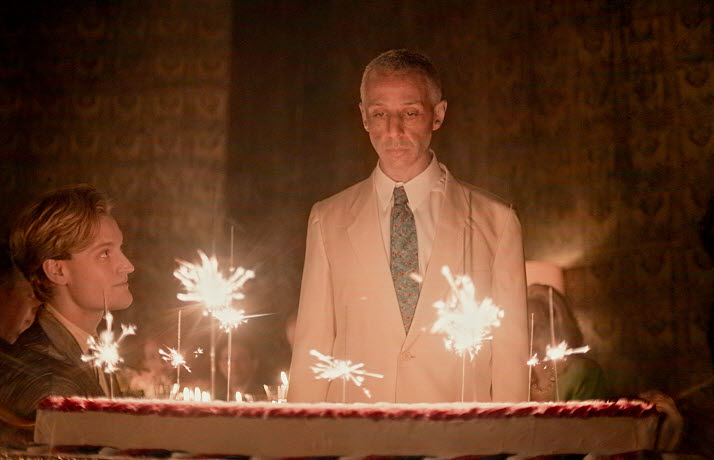
That figure in question is Donald J. Trump (Sebastian Stan), and the first half of the movie is set in New York City in the middle of the 1970s, when Trump was just a banal real estate developer trying to help his family business in deep trouble. His father, Fred Trump Sr. (Martin Donovan) and his company are recently sued for racial discrimination against many of the tenants of an apartment building built by his company, and it seems like the company will inevitably lose and then sink into bankruptcy.

However, Trump happens to encounter someone who may help him. He is a lawyer named Roy Cohn (Jeremy Strong), and Trump recently joined an exclusive club in New York City mainly for people with power and money like Cohn, who has incidentally been one of the most powerful figures in the city since his career was boosted by that infamous communist witch hunt by Joseph McCarthy in the 1950s. Once he comes to discern as Trump as another source for more power and money to him, he gladly befriends Trump, and Trump willingly seeks some legal help from Cohn, who certainly does not disappoint Trump at all as taking care of that difficult legal battle of his company.

As closely watching how Cohn does his jobs, Trump virtually becomes his, yes, apprentice, and Cohn shows all those nasty tactics of his for gaining more power and influence. At one point, he lectures a bit on his three main principles to Trump, and Trump soon begins to impress his mentor more as absorbing and then following these three principles as much as possible. In fact, he learned so well from Cohn that even Cohn cannot help but feel rather alarmed as Trump becomes much greedier and nastier as the American society subsequently entered the era of the Ronald Reagan administration in the 1980s. He ruthlessly and selfishly goes for any opportunity for more money and power without any shame and guilt at all, and this also influences not only his relationship with Cohn but also his marriage with his first wife Ivana (Maria Bakalova), whom he might have really loved at first but only comes to disregard her more and more as their marriage gradually gets crumbled.            

During its second half, the screenplay by Gabriel Sherman unfortunately comes to spin its wheels. While the first half is fairly engaging as examining how Trump was “educated” by Cohn, the second half is less interesting as hurriedly moving forward to the 1980s and then arriving at the completion of Trump’s vulgar public image. We surely see the foreshadowings of his shocking political rise in the middle of the 2010s, but they are more or less than footnotes, and the movie only ends up repeating more of what we have known about this despicable figure.

At least, the movie does not feel deficient in terms of style and performance. For getting us immersed more into the period mood of the American society during the 1970-1980s, Abbassi and his cinematographer Kasper Tuxen presented the film in deliberately low visual quality, and the movie effectively utilized several period pop songs to accentuate the authentic period details show on the screen.

The two main performers did as much as they could do with their rather broad roles. Sebastian Stan, who has shown more of the considerable range of his acting talent since he got his first break thanks to several Marvel Cinematic Universe flicks, willingly hurls himself into his character’s vulgar banality, and he did a commendable job on the whole, though he gave a more interesting performance in “A Different Man” (2024) in the same year. On the opposite, Jeremy Strong, who has been more notable since his Emmy-winning turn in HBO drama series “Succession”, is equally committed as Trump’s evil mentor, and his best moments in the film come from when his character finds himself betrayed by the human monster he willingly created. As many of you know, Cohn adamantly denied his homosexuality even when he was dying because of AIDS, and, as reflected by one key scene later in the story, Trump showed no real pity or compassion to his mentor at all while remaining as shameless and impertinent as before.  

Several other cast members in the film are under-utilized in one way another. While Maria Bakalova, who has steadily advanced since her Oscar-nominated breakthrough performance in “Borat Subsequent Moviefilm: Delivery of Prodigious Bribe to American Regime for Make Benefit Once Glorious Nation of Kazakhstan” (2020), is utterly wasted, Martin Donovan, Catherine McNally, and Charlie Carrick simply come and then go as Trump’s several family members, and Donovan is only required to look disapproving during most of his scenes in the film.

In conclusion, “The Apprentice” is dissatisfying for failing to illuminate anything new about Trump, and it is all the more disappointing compared to Abassi’s two previous films “Border” (2018) and “Holy Spider” (2022), which are more interesting in my inconsequential opinion. Yes, it is really depressing to think about how this reprehensible bastard will ruin our world more during next four years, and being merely reminded again of his evil and detestable sides is the last thing I want for now.

Posted in Movies | Tagged , , , | 1 Comment

Ripples (2023) ☆☆☆(3/4): The ripples in her mind

Japanese film “Ripples”, which happens to be released in South Korean theaters in this week, is a distant but occasionally amusing character study to observe. Although you may not like its rather neurotic heroine that much, you will also observe her behaviors with some fascination at least, and you will come to wonder more about what may happen in the end.

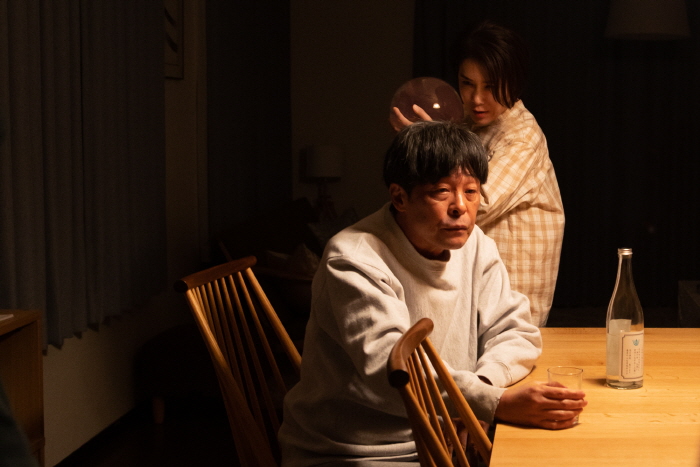
The opening part, which is set in 2011 March, introduces us to a middle-aged housewife named Yoriko Sudo (Mariko Tsutsui), and the movie observes how her daily life is abruptly disrupted in more than one way. As the whole nation is being shaken by the Fukushima nuclear accident, Yoriko tries to continue her daily life as usual despite being concerned about drinking water as much as her neighbors, but then her husband is suddenly gone missing for no apparent reason.

The story immediately moves forward to around 10 years later. After her husband’s inexplicable disappearance, Yoriko had to take care of her remaining family members including her dying father-in-law, and we later come to learn that she inherited everything from her father-in-law after his death. After her son eventually left for his college study, she has lived alone in the family house while working at a local supermarket for earning her living, and we often observe how she is particularly fastidious about the maintenance of a little Japanese dry garden inside her residence.

However, there is one serious matter in Yoriko’s daily life. Not long after her husband’s disappearance, she came to join a rather silly cult group strongly believing in a certain special water supposed to have a spiritual cleaning/healing power. Regardless of how much she actually believes, she has showed considerable devotion to her cult group, and we cannot help but amused by how she and several other cult members easily let themselves deceived by their questionable leader.

And then something unexpected happens on one day. When she returns to her residence, she is approached by her husband, and it turns out that he has been ill due to a very serious case of cancer. According to him, he needs to be treated with some very expensive medicine, and he certainly needs his wife’s help as having been virtually penniless and homeless during last several years.

It goes without saying that Yoriko does not welcome her husband’s return at all, but she lets him stay in the house, and he certainly begins to annoy her in one way or another. Besides rudely behaving as if he is entitled to live there, he often looks around here and there in the house for finding anything to benefit him, and, above all, he does not show much consideration on his wife’s religious activities. Naturally, Yoriko comes to lean more on her cult group and its leader, but the leader only sees more chance to deceive and then control Yoriko more than before.

As advised by her leader, Yoriko tries to be nice and good as suppressing any dark thought and feeling inside her, but, of course, that turns out to be not so easy to her frustration. Her husband keeps behaving like a jerk, and there is also a very rude old customer who often bullies Yorko and other supermarket employees. In addition, her son has some surprise news when he visits her residence later, and Yoriko cannot accept what he is soon going to do regardless of whether she approves of that or not.

Meanwhile, there comes an unexpected moment of friendship from a middle-aged janitor at Yoriko’s workplace. Whenever she spends some time with her unlikely new friend, Yoriko feels a little better mainly due to the no-nonsense attitude of her friend, though it subsequently turns out that she also has a fair share of personal issues just like Yoriko.

As one audience sitting near me during the screening observed, there is not any normal person in the story, but the movie continues to engage us even while continuing to maintain its distant attitude toward its heroine’s mental struggles along the story. As the camera of cinematographer Hideo Yamamoto often calmly sticks to its static position, we become more aware of the subtle emotional tension beneath the screen, and that is evident whenever Yoriko does her routine maintenance work on her dry Japanese garden.

The screenplay by director/writer Naoko Ogigami, who has steadily built up her filmmaking career since her first feature film “Yoshino’s Barber Shop” (2004), depends a bit too much on symbolism during several key scenes in the story, but it did a good job of steadily building the characters along the story, and the main cast members are mostly solid in their low-key performance. While Mariko Tsutsui firmly holds the center, several other main cast members including Ken Mitsuishi, Midoriko Kimura, and Hayato Isomura have each own moment to shine around Tsutsui, and Kimura is particularly fun to watch when her character casually provides some common sense to Yoriko at one point.

On the whole, “Ripples” works as a dryly wry mix of comedy and drama, though it may require some patience from you at first due to its rather slow narrative pacing. I must confess that I often got baffled or impatient during my viewing, but the movie is interesting enough on the whole, so I recommend you to give it a chance someday.

Posted in Movies | Tagged , , , | Leave a comment

A Real Pain (2024) ☆☆☆1/2 (3.5/4): A tour about pain

“A Real Pain” really amused and touched me more than once, and that is quite an achievement in my trivial opinion. While it initially seems fairly simple as a familiar buddy road comedy-drama film, the movie is often surprisingly funny and poignant as deftly balancing itself between humor and pathos along with its two main characters. Like any good character comedy-drama movies, the movie brings out more human depth and insight than expected along its thoughtful and sensitive story, and we really get to know a lot about both of them when the story eventually arrives at the end of their little journey.

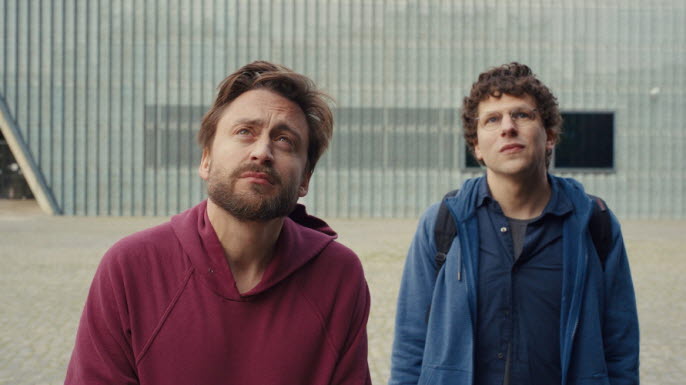
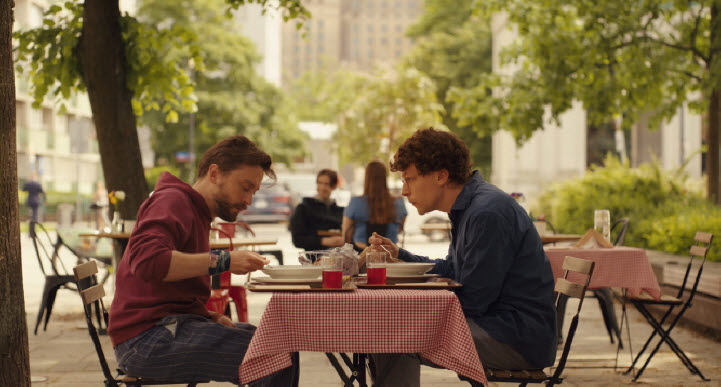
In the beginning, the movie quickly establishes the very different personalities of its two main characters. As shown from the very first scene, David Kaplan (Jesse Eisenberg) is often anxious and fastidious about almost everything in his life, but his cousin Benjamin “Benji” Kaplan (Kieran Culkin) is more casual and laid-back in comparison, and their personality difference is all the more evident when they meet at the JFK International airport outside New York City.

David and Benji are going to have a tour associated with the Jewish culture and history in Poland, and the main reason for their tour is quite personal to say the least. Besides a certain important cause involved with what recently happened in Benji’s life, he and David want to honor of the memory their Jewish grandmother who is no longer with them at present, and they are also going to visit where she once lived around the end of their tour.

The first half of the movie frequently generates small and big humorous moments as David and Benji show more of their contrasting personalities in front of us and several other people joining their tour under a British guide quite knowledgeable about the Polish Jewish history. Right from their first meeting, Benji lightens up the mood for everyone, but David seems rather embarrassed about his cousin’s carefree behavior, and this interesting behavioral pattern of theirs continues even when they finally have a time to have some rest before beginning another day of their tour.

As these two main characters and their fellow travelers go around here and there in Poland, the movie shows a number of interesting sights associated with the Polish history. We see several old buildings which are clearly the remains of the communist era during the late 20th century, and we also get to know a bit about the Jewish culture and history in Poland, which is actually more than, yes, the Holocaust and the World War II.

The purpose of the tour is getting to know and feel more of the Jewish history and culture in Poland, but Benji cannot help but express his thoughts and feelings on how the tour is about. When he and the other travelers visit a very old Jewish cemetery, he shrewdly points out to the British guide that he should do more than merely doling out bits of historical facts, and what he and the other travelers eventually do next actually means a lot for themselves.

Meanwhile, mainly via David’s frequently guarded attitude, we come to gather that there is something quite problematic about Benji. When they and the travelers have a little nice dinner together after visiting one of those infamous concentration camps during the World War II, both David and Benji come to show more of themselves as interacting more with the guide and their fellow travelers, and that is when David eventually lets out what has troubled him so much since what happened to his cousin.

Although the mood surely becomes quite melodramatic around that point, the screenplay by Jesse Eisenberg, who also directed and co-produced the film besides handling his lead role in front of the camera (This is his second feature film after “When You Finish Saving the World” (2022), by the way), dexterously swings around many different feelings including pain and joy while staying focused on the personalities of its two different main characters as before. While we come to have more understanding of David’s constant anxiety, we also get to have more empathy on Benji’s frequent mood swings, and we eventually come to care more about them just like their fellow travelers, who are incidentally more than mere background characters surrounding them.

Most of all, the movie depends a lot on the presence and talent of the two excellent actors at its center, and both of them did a fabulous job of illustrating credible characters to remember. Eisenberg, who is always natural whenever he is required to embody human anxiety, is flawless as subtly conveying to us David’s deep concern about himself as well as his cousin, and he is often complemented well by the equally nuanced performance from Kieran Culkin, who will surely get Oscar-nominated for giving one of the best performances in his commendable acting career. Although he was initially known as the younger brother of Macaulay Culkin (Remember that little cousin in “Home Alone” (1990), by the way?), Culkin has diligently built up his own career during last several decades as shown from his Emmy-winning turn in HBO TV drama series “Succession”, and his movingly complex human portrayal here in this film deserves every award and recognition he has received during this Oscar season.

In conclusion, “A Real Pain” shows a lot of understanding and empathy toward two different human figures who could look like, yes, a real pain in the ass. Although it is rather short in its running time (90 minutes), it succinctly and precisely did almost everything it can do with its two main characters, and they will probably stay inside your mind for a long time after it is over. Yes, many things remain uncertain for both of them even at the end of the story, but they come to recognize what and how they feel, and that is surely the start, isn’t it?

Posted in Movies | Tagged , , | 2 Comments