Maria (2024) ☆☆☆(3/4): Callas during her last days

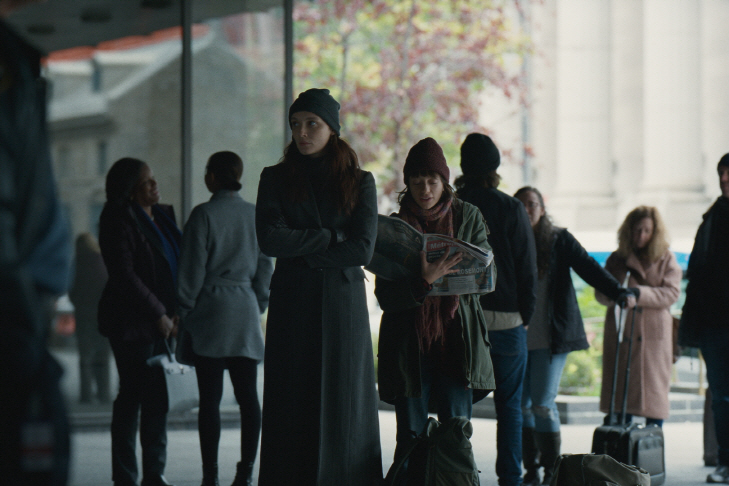
Pablo Larraín’s latest film “Maria”, which was released on Netflix in US a few months ago, simply walks here and there around its famous real-life female figure. As the last entry in Larraín’s trilogy after “Jackie” (2016) and “Spencer” (2021), the movie is surely as unconventional as these two previous films, and I enjoyed its mood and style enough although it does not show and tell a lot about its main subject on the whole.

This is probably because Larraín takes a relatively softer approach in his fictional presentation of the last days of Maria Callas, who was one of the greatest opera singers in the 20th century. In case of “Jackie” and “Spencer”, both Jacqueline Kennedy and Diana Spencer were more or less than figures to be closely but objectively observed in meticulous details, and that was the main reason why these two good films felt rather distant to me at times. In case of “Maria”, Larraín seems to care more about Callas, and the movie steadily maintains a respectful distance between itself and her while shrouding her in warm and soft lights at times.  

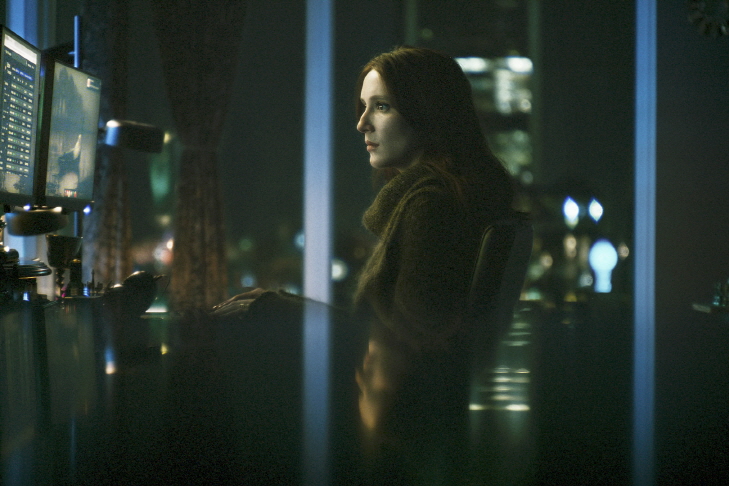
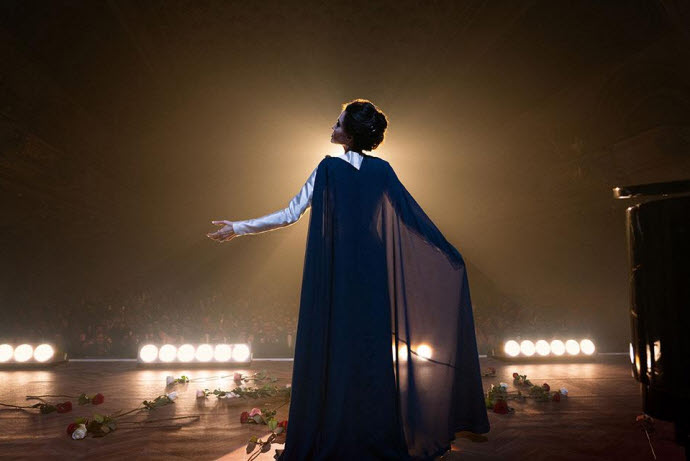
After the opening scene showing the day when Callas died in September 1977, the movie moves back to one week ago. Although she is currently retired due to her health problem, Callas (Angelina Jolie) has been trying to make a comeback someday, and we observe how things are not exactly good for her. While she lives in a fairly luxurious apartment, her medical condition is getting worse as she depends more on drug day by day, and her two dutiful servants, Ferruccio (Pierfrancesco Favino) and Bruna (Alba Rohrwacher), are certainly quite concerned about her.

Due to her constantly drugged state, Callas’ mind is frequently swept by old memories or hallucinations, and that allows the movie to bring more fictional elements to the story. At one point early in the film, she is visited and then interviewed by a young male journalist eager to record whatever she is going to say, but it soon turns out that he is just another hallucination experienced by Callas’ increasingly confused mind.

In case of Callas’ past, the screenplay by Steven Knight sometimes doles out a few personal moments to observe. We see how young Callas and her older sister had to earn their meager living during World War II, and that is not a pretty sight at all. We also see how Callas met Aristotle Onassis (Haluk Bilginer) for the first time, and then we observe how she got close to this wealthy Greek businessman, though their romance did not last long because he eventually married Jacqueline Kennedy (She incidentally does not appear in this film, by the way).  

Due to the rather elusive narrative of the film, you may be disappointed if you expect to know more about Callas’ life and career, but the movie fills the screen with a lot of atmosphere and emotion as watching its heroine struggling to live another day. After all, there is something inherently operatic about a dying diva during her last days, and the movie naturally provides a number of grand moments such as the one when Callas imagines her playing the heroine of Giacomo Puccini’s classic opera “Madame Butterfly”.

Although the overall result may look and feel a bit superficial at times, the technical aspects are often terrific to watch. Cinematographer Edward Lachman, who was deservedly Oscar-nominated for this film a few weeks ago, did a commendable job of imbuing the screen with an ample amount of style and beauty, and his stunning visual achievement here in this film is surely worthwhile to watch on big screen. In case of the soundtrack, the movie utilizes a bunch of recordings of Callas’ performance from the beginning to the end, and they are effectively incorporated into the story although often reaching to the level of overkill.

Most of all, there is the good lead performance by Angelina Jolie, who demonstrates here that she has not lost any of her talent or presence yet even though she seems to focus more on other things besides acting these days. Besides being convincing in a number of key scenes where she must look like singing in Callas’ voice, Jolie skillfully embodies her character with grace and dignity, and it is certainly one of the best performances in her career.

Around Jolie, several notable cast members in the film are required to fill their respective spots while humbly supporting her to the end. Pierfrancesco Favino, a charismatic Italian actor who was memorable in Marco Bellocchio’s “The Traitor” (2019), and Alba Rohrwacher bring some human qualities to their characters, and that is crucial in setting the attitude of the movie toward its main human subject. While Turkish actor Haluk Bilginer is always fun to watch as Onassis, Stephen Ashfield, Vincent Macaigne, and Valeria Golino did a bit more than demanded during their brief appearance, and Kodi Smit-McPhee is unfortunately stuck in his rather thankless supporting role.

In conclusion, “Maria” is less successful compared to “Spencer” or “Jackie”, but it is still another admirable work from Larraín, who has been quite prominent since his Oscar-nominated Chilean film “No” (2012). To be frank with you, I am not that enthusiastic about many of his films except “No” and “El Conde” (2023), but he is still an interesting filmmaker with distinctive style and talent to observe, and “Maria” reminds me of that again.
Posted in Movies | Tagged , | 1 Comment

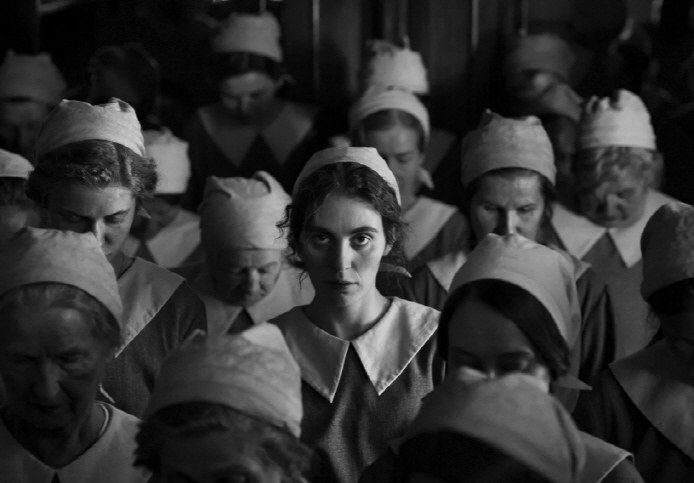
The Girl with the Needle (2024) ☆☆☆(3/4): A Seamstress’ tale

“The Girl with the Needle”, which was recently Oscar-nominated for Best International Film, is a stark and unnerving period drama about one unfortunate woman who happens to be under a very gloomy circumstance. As she struggles for life in one way or another, the movie shows more of the harsh reality around her, and we are all the more chilled as observing the evil and madness shown later in the story. 

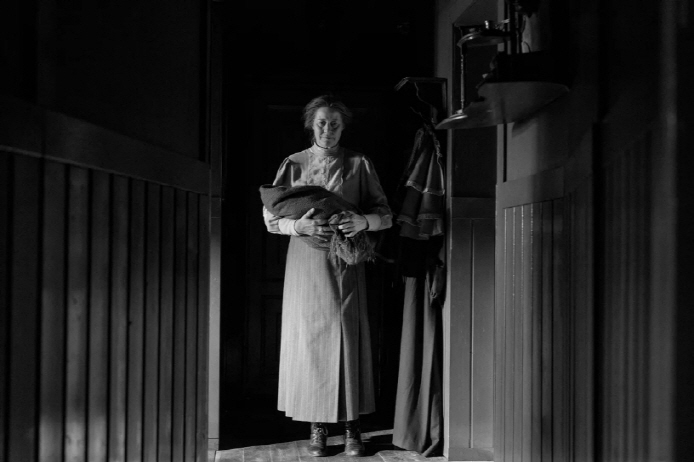
Set in Copenhagen, Denmark around the end of World War I, the story begins with how things have been desperate for Karoline (Vic Carmen Sonne), a married woman who has earned her meager living alone by herself since her husband went to the war several years ago. She works as a seamstress in a big local clothing factory, but that is not enough for her poor economic status, and the opening scene shows her being suddenly evicted by her landlord due to not being able to pay her rent during last several weeks. While she manages to find another place to live, Karoline still needs some financial help, so she later applies for widow’s compensation because her husband is presumed to be dead, but she is not allowed for that just because her husband’s death is not official yet.

Not long after Karoline eventually depends on the generosity of the wealthy owner of the factory and then gets pregnant because of him, her husband unexpectedly returns. Although she feels some pity toward his disfigured status, she promptly reveals to him that she is pregnant due to her current extramarital affair. She also notifies her pregnancy to the factory owner, who promises to marry her as soon as possible. Not so surprisingly, his stern mother, who has the total financial control over her son, does not approve of that at all, and that leads to a very painful moment of humiliation for our heroine.

Consequently abandoned while her baby is growing inside her body day by day, Karoline lives again with her husband who begins to work as a sideshow in a local circus troupe. He is actually quite willing to accept the baby as his child to take care of, but she still does not want the baby at all, and that leads to a gut-wrenching scene where she attempts something quite drastic at a local bathhouse for women. 

That is how she encounters a middle-aged woman named Dagmar (Trine Dyrholm) again, who is incidentally the new lodger of Karoline’s previous residence. After taking care of a little mess caused by Karoline, Dagmar tells Karoline that she can help Karoline a bit when the baby is born, and Karoline soon visits Dagmar not long after the eventual birth of her baby.

Quite welcoming to Karoline, Dagmar says that she will take the baby to some affluent couple willing to adopt the baby, and it looks like she has been doing this illegal business quite a long time while running her little candy store. After her baby is taken by Dagmar, Karoline suggests that Dagmar should hire her as a wet nurse, and Dagmar gladly has Karoline take care of those unwanted babies to come and then go.

The mood becomes more disturbing as Karoline comes to wonder more where Dagmar takes those babies later in the story, and the screenplay by director Magnus von Horn and his co-writer Line Langebek, which is loosely based on a notorious real-life criminal case in Denmark during 1910s, gradually reveals more horror and darkness under the surface. Cinematographer Michał Dymek, who shot the movie in black and white film in the ratio of 1.50:1, often fills the screen with a barren sense of despair and dread, and there are several emotionally shattering moments which are thankfully handled with enough restraint while still horrifying us enough on the whole.      

As the story eventually reaches to the inevitable finale waiting for its heroine, the movie still holds our attention thanks to the strong lead performance from Vic Carmen Sonne, who previously played one of the substantial supporting characters in “Godland” (2022). Often feeling quite jaded and tarnished in her weary appearance, Sonne also ably conveys well to us her character’s silent but defiant inner strength, and it is poignant to see how her character comes to find a way to care and love more after her grim emotional journey along the story.  

Around Sonne, several main cast members of the film have each own moment to demonstrate their considerable talent. Trine Dyrholm is quite effective especially when Dagmar casually justifies what she has done behind her back for years, and she and Sonne are convincing in the growing emotional dependency between their characters in the story. Around Sonne and Dyrholm, young performer Avo Knox Martin holds her own little place well as a little girl who is supposed to be Dagmar’s daughter, and Besir Zeciri, Joachim Fjelstrup, and Tessa Hoder are also solid in their substantial supporting roles. 

 In conclusion, “The Girl with the Needle” is definitely not something you can comfortably watch on Sunday afternoon, but it is still worthwhile to watch for its mood, storytelling, and performance. Considering how misogyny and sexism are still serious issues even at present, the movie certainly feels quite relevant like many other dark feminist tales out there such as Margaret Atwood’s “The Handmaid’s Tale”, and its utterly gloomy impression will haunt your mind for a while.

Posted in Movies | Tagged , | 1 Comment

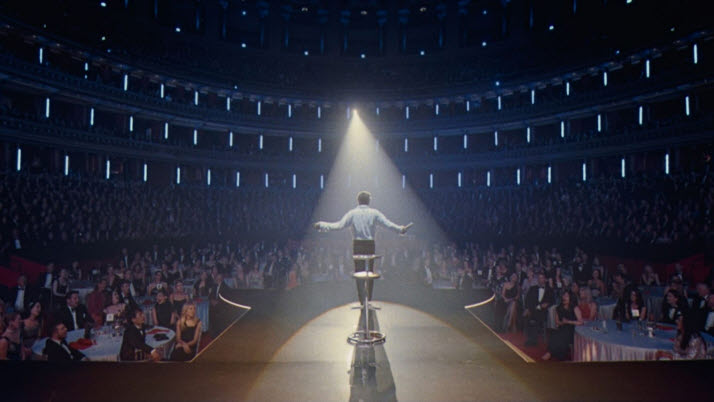
Better Man (2024) ☆☆☆(3/4): Robbie Williams presented as an ape (no kidding)

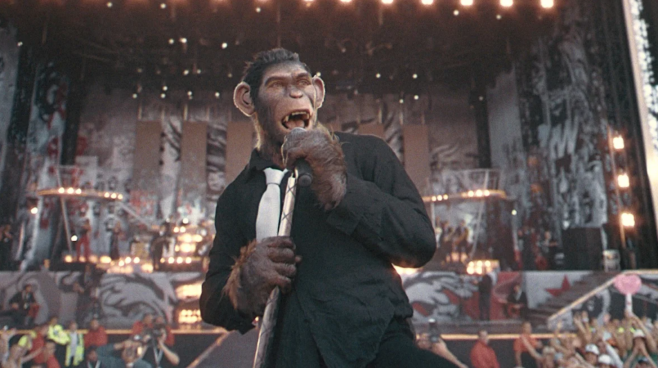
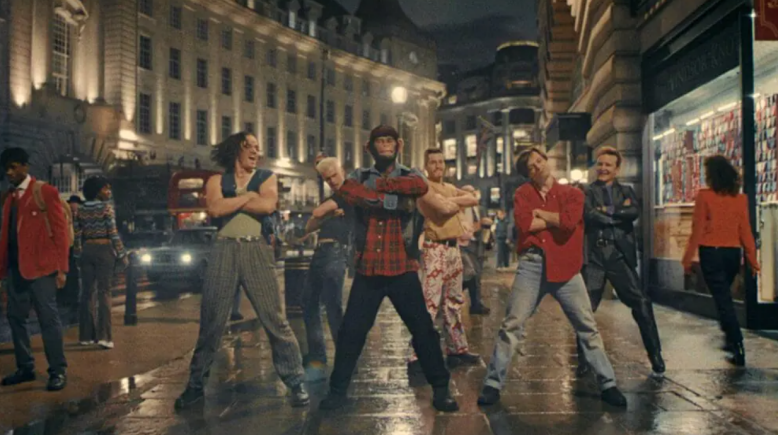
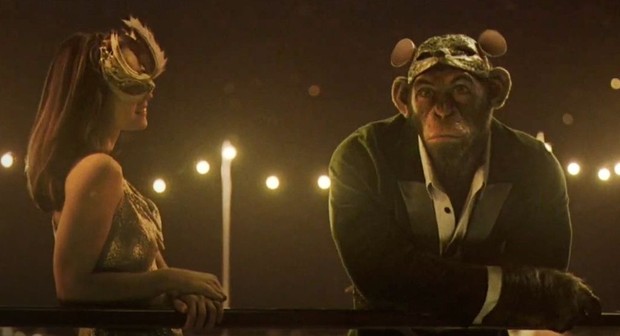
“Better Man” is another typical musician biography drama film with one notable difference. While it is surely filled with predictable ups and downs as illustrating the life and career of British musician Robbie Williams, the movie presents Williams as a talking ape, and that somehow makes sense considering how wild and immature he often was throughout his bumpy career.

I must point out that this odd storytelling choice is rather distracting at first. Sure, thanks to its recently Oscar-nominated special effects, our monkey hero in the film looks as realistic as those ape characters in the recent Planet of the Apes movies (The latest one also got Oscar-nominated in the same category in last month, by the way), but this is basically a one-joke setting quickly getting thin within the first 30 minutes. To be frank with you, I often found myself being more aware of the technical efforts behind it, instead of focusing on a real character to observe.

Fortunately, the movie has enough wit and spirit to keep things rolling during its rather long running time (135 minutes) thanks to the competent direction of director/co-writer/co-producer Michael Gracey, who previously made “The Greatest Showman” (2017). Whenever the movie shifts its gear onto musical mode, it becomes quite electrifying to say the least, and it does not mind going for more style and entertainment at all with its CGI monkey hero at the center.

The story itself begins with the childhood years of Williams, who is presented as a young monkey kid voiced by Carter J. Murphy during this part. Influenced a lot by his father’s enthusiasm toward music, young Williams aspires to become a famous musician someday, and he later shows considerable potential as a future entertainer when he manages to steal the show in the middle of a stage production hosted by his father.

Around the time when he becomes an adolescent monkey boy, Williams is more determined to realize his ambitious dream someday. When he hears about the audition for the members for a new boy band, he does not hesitate at all, and, what do you know, he leaves enough impression on Nigel Martin-Smith (Damon Harriman), who eventually becomes the manager for Williams and several other young musicians who come to form the band together.

What follows next is how Williams and his colleagues struggle a lot during the next several years. At first, they mostly perform at many gay nightclubs, and, though he is not gay, Williams feels quite liberated by the sense of freedom and acceptance from those gay nightclubs. In the end, he and his colleagues also begin to perform in front of young girls, and they soon come to have a lot of fans after they record a number of popular songs.

Of course, around that point, Williams begins to tumble toward the bottom of addiction as getting intoxicated with his big success and fame, and it does not take much time for others around him to see what a big trouble he has become. For example, when they are about to do another big concert in front of thousands of fans out there, Williams becomes almost unconscious due to his heavily drugged state, and it is rather amazing that he manages to perform fairly well on the stage not long after that.

As getting more troubled due to his addiction as well as his growing insecurity, Williams subsequently gets pushed out from the band, and that is when he comes across Nicole Appleton (Raechelle Banno), a young woman who is also the member of a popular girl band. As they quickly get fallen in love with each other, it seems that Williams will bounce from the bottom of his career, but he still has a lot of personal issues to deal with, and he also comes to break his girlfriend’s heart a lot because of his frequent acts of infidelity (Yes, there are a few brief moments in the film showing our monkey hero having a sexual intercourse with one woman or more than that).

It is not much of a spoiler to tell you that our monkey hero eventually finds himself at another bottom of his life and career, and that is where the movie becomes more serious than before. Although we cannot be totally serious about our monkey hero, his dramatic arc along the story works to some degree thanks to the good performance of Jonno Davies, who did a commendable job of preventing his character from becoming a mere CGI stunt in addition to deftly handling several song and dance moments in the film. Besides providing his songs, Williams himself is funny and acerbic in his narration, and several other main cast members including Steve Pemberton, Kate Mulvany, Alison Steadman, Damon Herriman, and Raechelle Banno dutifully fill their respective spots despite their rather clichéd supporting roles.

In conclusion, “Better Man” does not bring anything new to its genre territory except its CGI monkey hero, but it has enough energy and interest to compensate for a number of notable weak aspects including its predictable story and thin characterization. Although it does not reach to the level of several better musician biography drama films such as “Ray” (2004) or “La Vie En Rose” (2007), it is as amusing as, say, “Walk Hard: The Dewey Cox Story” (2007) at least, and you will certainly never forget its monkey hero for a while at least.

Posted in Movies | Tagged , , , | 1 Comment

Starring Jerry as Himself (2023) ☆☆☆(3/4): A little family project

Documentary film “Starring Jerry as Himself” works as a sort of sincere public service while also being a little family project for its main human subject. For showing what happened to him a few years ago, the documentary takes a rather unconventional approach, and the result is often sweet and amusing despite the very serious sides of its real-life story.

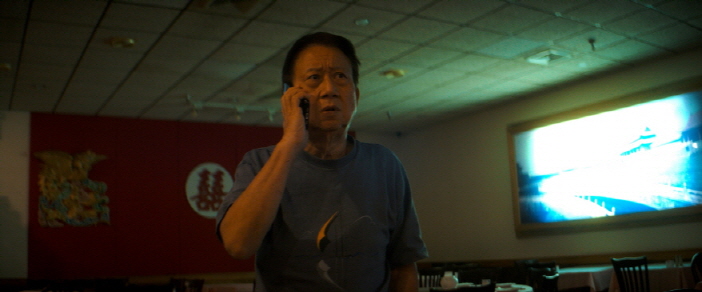
The center of the documentary is Jerry Hsu, a retired Taiwanese American who could be regarded as an example of American dream. Around 40 years ago, he emigrated to US and then worked hard for not only himself but also his wife and three sons, and he was about to enjoy his comfortable retired life in 2021 despite being alone due to his recent divorce.

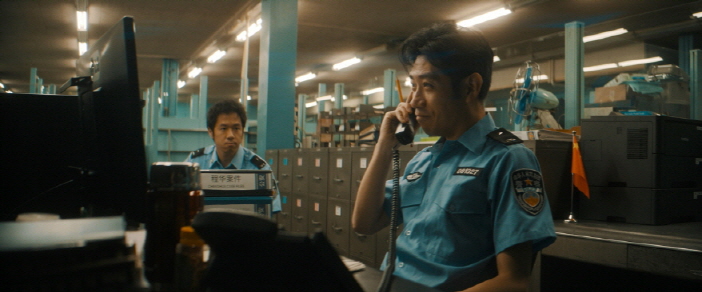
And then there came an unexpected call on one day. The caller was supposed to be some Chinese police officer, and he notified to Hsu that Hsu happened to get associated with some money laundering crime in China. While flatly warning that Hsu may get deported because of this serious crime, the officer also seemed rather generous and understanding, and then he requested Hsu to cooperate with him for more investigation.

At first, what that Chinese officer wanted was pretty harmless on the surface. He asked Hsu to work as a sort of undercover agent for him and his superior, and Hsu willingly went along with that because getting deported was the last thing he wanted right now. Besides supporting his ex-wife to some degree, he was about to help his eldest son buy a house, so he naturally did not say anything to his family, though they began to wonder why he was so often talking with someone on the phone.

Instead of having Hsu and several others around him talk about what happened at that time, the documentary, which is incidentally produced by his second son, has them do a series of reenactment scenes along with a few performers. As shown around the end of the documentary, those phone conversation scenes are really based on what was exchanged between Hsu and those two Chinese officers on the other end of the line (Hsu wrote the screenplay for himself, by the way), and the documentary becomes a bit amusing when Hsu and one of these two Chinese police officers are together on the screen as they talk more and more with each other.

We also get to know more about Hsu’s family. His wife is busy with starting her own life, and her shiny new residence certainly makes a big contrast with his small and plain apartment which is not so furnished much on the whole. In case of his three sons, each of them is usually busy with each own matter, and we cannot help but sense some distance between them and their father, even though they are sincerely concerned about their father’s welfare from time to time.

I have no idea on whether they really present themselves in front of the camera, but Hsu’s family members look mostly natural throughout the documentary, and they often bring some extra human element to the documentary. At one point, we observe Hsu’s youngest doing two part-time jobs for earning his meager living, and it looks like he is the one who really needs some financial help from his father. In case of Hsu’s ex-wife, she is quite a spirited woman with colorful personality, and she will give you some good laugh during a brief scene in the middle of the end credits.

Meanwhile, the documentary also shows what Hsu did as following more requests and instructions from those two Chinese police officers, and that is probably the point where you become all the more suspicious about what is really going on. As a matter of fact, some of you already saw through Hsu’s circumstance right from the very beginning, and the documentary can be quite a frustrating experience for you because of that.

Thankfully, director Law Chen, who also edited the documentary, keeps the whole process lean and succinct. Although the running time is less than 80 minutes, the documentary feels mostly compact and focused, and I was only a bit disappointed that it does not provide more time and space for Hsu and his family members to show themselves more. Sure, the last 10 minutes of the documentary becomes quite reflective and intimate as handling the bitter aftermath of Hsu’s incident, but it could delve more into their feelings and thoughts in my inconsequential opinion.

In conclusion, “Starring Jerry as Himself” is not entirely without weak aspects to notice, but it is one of those sincere and likable documentaries you will not be so willing to give any negative comment. I still want to know more about Hsu and his dear family, but I was entertained by its unconventional storytelling approach nonetheless, while occasionally touched by some personal moments observed from them. Yes, what eventually happened to Hsu and his family was quite irreversible to say the least, but it seems that the making of this documentary helped them having some meaningful time together, and it is moving to see them being reminded again that they are still a family despite the incident. To be frank with you, I sincerely hope that they will continue to move on as this documentary does some good things for many old, retired people like Hsu out there.

Posted in Movies | Tagged , , , , , | Leave a comment

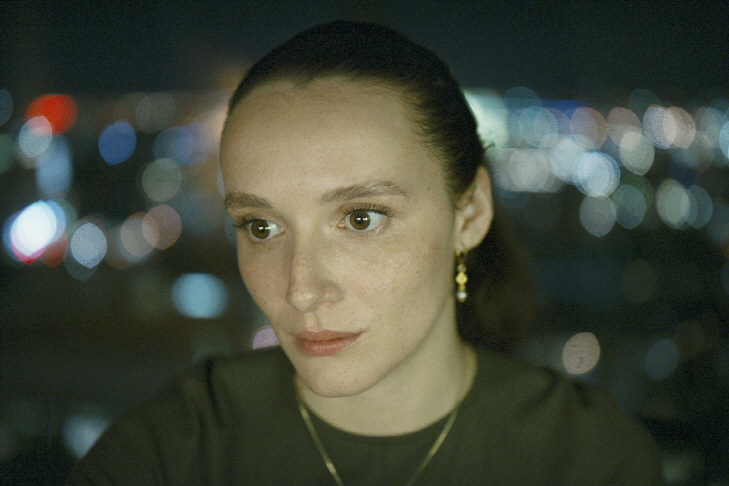
Red Rooms (2023) ☆☆☆1/2(3.5/4): The woman delving into a dark web crime

“Red Rooms” is a disturbing but compelling mix of psychological thriller and character study. Closely following the obsessive behaviors of its rather enigmatic heroine, the movie makes us all the more curious about what really makes her tick, and we also come to brace ourselves as she goes deeper and deeper into one unspeakable crime while not looking away at all.

The opening part of the movie succinctly and effectively establishes what Kelly-Anne (Juliette Gariépy) has been obsessed with. When she is not working as a model to be photographed, she spends most of her spare time onto a notorious dark web crime involved with serial killings, which was recently solved with the arrest of the culprit. Right from the first day of the following trial, she patiently waits near the courthouse building early in the morning for getting into the courtroom first, and then we soon see the beginning of the trial, which is impressively presented in one continuous take during next several minutes.

The crime in question is pretty heinous to say the least. The culprit is accused of murdering three adolescent girls not only for his twisted pleasure but also selling the video clips of his atrocious killings in the dark corners of the Internet. It is really fortunate that the culprit was eventually arrested after several months of investigation, but there is not any definite evidence to incriminate him besides several indirect pieces of evidence against him, and his lawyer is already quite determined to emphasize on the reasonable doubt on whether he is really the one who committed all those horrible crimes.

Kelly-Anne simply watches the ongoing trial day by day without signifying much on the surface, and we see more of how much she is obsessed with the case. Because she happens to have a particular set of skills involved with online search and hacking, she can go deeper into where the culprit was supposed to be operating before his eventual arrest, and we slowly come to gather that she has been searching for something important for a while.

However, neither she nor the movie specifies what she exactly wants, and that is the main source of suspense in the film. Does she simply wish for bringing the justice for those unfortunate young girls? Or, does she actually want to jeopardize the trial via whatever she is looking for? Regardless of whatever we think or feel about Kelly-Anne, she remains coldly focused on her little personal mission – even when she happens to befriend a young woman obsessed with the case as much as her.

That young woman’s name is Clémentine (Laurie Babin), and she is a lot more expressive than Kelly-Anne in comparison. As your average groupie, she is apparently quite smitten with the culprit, and she does not hesitate to insist in front of those reporters out there that he is wrongfully accused. It goes without saying that she is troubled as much as Kelly-Anne, but Kelly-Anne later lets Clémentine into her little apartment for an unspecified reason which may be elusive even for herself.

With Clémentine functioning as sort of counterpart for Kelly-Anne, the movie delves further into how willingly Kelly-Anne throws herself more into the case. Around the point where the video clips showing how two of the victims were murdered are presented in the story, the movie thankfully handles this alarming moment with considerable restraint and care, but we are still horrified and chilled even though we simply observe the emotional reactions caused by those reprehensible video clips.

And we come to sense more of how emotionally damaged Kelly-Anne is. Was she really a troubled person from the beginning? Or, was she actually traumatized by whatever she came across during her increasingly risky online investigation? We only keep guessing on her true motive even when she finally gets a golden opportunity to obtain what she has been looking for so long, and what consequently follows next is another powerful moment to remember.

Everything in the movie depends on the detached but undeniably electrifying performance of Juliette Gariépy. Although we do not get to know that much about her character even at the end of the story, there are several key moments where her poker face crumbles a bit to give us some glimpses into whatever is churning inside her character’s mind, and Gariépy did a terrific job of bringing considerable emotional intensity to the screen without any exaggeration at all.

In case of several other supporting performers around Gariépy, they are all effective in their respective roles. While Laurie Babin somehow makes her pathetic character a bit more sympathetic than expected, Elisabeth Locas is often harrowing as the grieving mother of one of the victims, Maxwell McCabe-Lokos is mostly silent but looks suitably creepy as the culprit.

On the whole, “Red Rooms”, directed and written by Pascal Plante, is worthwhile to watch for how it deftly and thoughtfully handles its very sensitive main subject while also working as a first-rate psychological thriller, though this is not definitely something you can watch casually on Sunday afternoon, As Friedrich W. Nietzsche once said, the abyss gazes also onto you when you gaze long into the abyss, but, this time, the abyss not only gazes onto her but also remains inside her, and that surely leaves some thoughts for us.

Posted in Movies | Tagged , , , , | Leave a comment

Infested (2023) ☆☆☆(3/4): Stuck wtih lots of spiders

French horror film “Infested” will definitely make one of my close friends wince and jump more than once. He really dislikes spiders to say the least, and he may think twice about watching “Infested” even though he actually enjoyed “Arachnophobia” (1990), which is also full of small and big venomous spiders but is relatively more cheerful in comparison.

After the disturbing opening scene set in the middle of some Arab desert area, the movie introduces us to Kaleb (Théo Christine), a young colored man who has tried to earn his meager living via selling sneakers to his multicultural neighbors in some big suburban apartment building. He has lived with his sister Manon (Lisa Nyarko) in their family apartment, but they have conflicted a lot with each other over whether they should sell their apartment after their dear mother’s recent death. While he does not want to leave for the memories of their mother, his sister is already preparing to renovate their apartment for selling it someday, and this certainly annoys him a lot.

Meanwhile, we get to know a bit about Kaleb’s little private hobby. He loves collecting and raising various rare animals and insects, and his latest purchase is a small exotic spider he recently bought from a local convenient store owner. Needless to say, that spider is one of those dangerous spiders shown in the opening scene, and the mood naturally becomes unnerving as Kaleb casually handles that spider in his room later while having no idea about the potential danger in front of him.

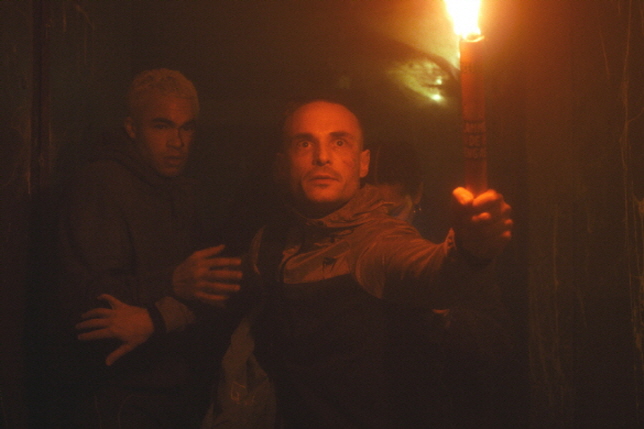
Of course, the spider soon escapes from his room, and we soon come to see how dangerous it really is. Besides being quite lethal, it can grow and reproduce a lot within a very short time, and how it reproduces is not a pretty sight to say the least. Exponentially growing in number and size hour by hour, the spiders eventually infest here and there in the apartment building, which is swiftly quarantined by the local police not long after the first victim is reported. Shortly after they belatedly come to realize what is really going on around them, Kaleb and several others around him including his sister find themselves hopelessly trapped inside the apartment building, and it looks like there is no possible way out for them.

Naturally thrown into more fear and panic, Kaleb and several others desperately try to find any chance for survival and escape while also attempting to warn many of neighbors in the building. However, not so surprisingly, things continue to get worse and worse while they remain trapped inside the building as before. Although they come to learn a bit about how to stop or chase away their deadly enemies at least for a while, the building is already filled with thousands of spiders and their silky webs, which surely add more creepiness to the screen.

As Kaleb and several other main characters come to stick together for their escape and survival, director/co-writer Sébastien Vaniček, who incidentally made a feature film debut here after making several short films, doles out a number of effective moments to accumulate more tension and dread on the screen. While there are some nasty moments as many people in the building get killed by the spiders in one way or another, there is also a suspenseful scene where Kaleb and several others must carefully and quickly go through a tunnel of web strewn with spiders, and this scene will surely keep you on the edge especially if you have any aversion to spider.

Although the mood surely becomes more frantic around the last act, the movie keeps focusing on the main characters and their desperate struggle along the story. While he feels like your average petty lad at times, Kaleb comes to show more depth later in the story, and there is a brief reflective moment when Kaleb comes to have a little personal conversation with one of the main characters. The movie also makes some points on how Kaleb and many other colored neighbors of his are often discriminated and ignored by the local police, and this certainly contributes to the cathartic aspects of the finale.

During the climatic sequence predictably filled with plenty of action and a lot of CGI spiders, the movie willingly goes for some overkill, though the result is a bit too long in my humble opinion. Fortunately, it still makes us care about whatever will happen to its main characters in the end, and it also allows a bit more character development around the end of the story.

The main cast members of the film are convincing in the increasing panic and fear felt by their characters. While Théo Christine dutifully holds the center as required, Sofia Lesaffre, Jérôme Niel, Lisa Nyarko, and Finnegan Oldfield have each own moment along the story, and Niel has several good moments as his character comes to show a lot more grit for helping not only Kaleb and several others than expected.

On the whole, “Infested” is a well-made genre piece which will scare or entertain you enough, though you may still hesitate to watch after reading my 3-star review. I must confess that some spiders such as, say, tarantula are sort of cute to me, but the movie makes me swear that I should never, never, never meddle with any kind of unknown exotic spider in any case, and that says a lot about its effectiveness.

Posted in Movies | Tagged , , | Leave a comment

Captain America: Brave New World (2025) ☆☆(2/4): Nothing new or brave here

I felt old as watching “Captain America: Brave New World”, another Marvel Cinematic Universe (MCU) product naturally connected with several previous MCU flicks in one way or another. One of those products in question is “The Incredible Hulk” (2008), and that reminded me that I was old enough to remember when superhero movies were going through a big breakthrough thanks to the considerable critical/box office success of “Dark Knight” (2008) and “Iron Man” (2008) many years ago.

After the enormous box office success of “Avengers: Endgame” (2019), MCU has attempted to recharge our interest in superhero movies during last several years, but the result was not that impressive in my humble opinion. While there were some interesting stuffs such as “Shang-Chi and the Legend of the Ten Rings” (2021) or “Black Panther: Wakanda Forever” (2022), there were also several disappointing products as shown from “Eternals” (2021) and “Ant-Man and the Wasp: Quantumania” (2023), and we only felt more exhausted about superhero movies.

In case of “Captain America: Brave New World”, it seems to try some new things on the surface, but it only ends up being quite bland and predictable instead, and that is a big letdown to say the least. While it seriously lacks substance and personality in terms of story and characters, the movie also feels deficient in technical aspects, and it only makes us more bored and tired in the end.

At first, the movie seems a bit promising as we watch how Sam Wilson (Anthony Mackie) is trying his best as the new Captain America along with his new partner who is now the new Falcon. After accomplishing his latest mission, Wilson and his partner are invited to the White House, where he meets President Thaddeus “Thunderbolt” Ross (Harrison Ford). Even though he and several other Avengers members were once quite defiant against Ross when Ross was a US Army general in “Captain America: Civil War” (2016), Wilson is willing to serve under Ross and his government, and Ross also seems ready to support Wilson despite their old conflict in the past.

However, of course, there soon comes a big trouble. When Ross is about to announce the international accord on a new big island which was created due to what happened in “Eternals” (2021), several figures suddenly try to assassinate him, and one of them is Isaiah Bradley (Carl Lumbly), who is incidentally a close friend of Wilson. As Bradley and several other assassins are subsequently arrested and then incarcerated, Wilson senses something fishy about the incident, and it becomes quite possible that Ross did not tell everything to him.

It is not much of a spoiler to tell that Ross is really hiding something behind him. Even if you have not seen the trailer yet, you can easily guess that right from his very first scene in the film, and that is the main reason why Wilson’s following investigation is not particularly compelling to watch. We are supposed to be surprised at the certain point where the main villain of the movie is eventually revealed, but that only reminds us more of how much the movie is limited by the ongoing narrative frame of its franchise. 

Furthermore, there is not much character development in Wilson or several other main characters to interest us, and this makes the narrative all the more tepid. Yes, there is some interesting character potential in Wilson for being a Black Captain America in addition to being a lot more physically vulnerable than his predecessor, but the movie does not delve much into that aspect, and the same thing can be said about Bradley, who seems an interesting figure for being a Black super soldier who fought in the Korean War but only ends up functioning as a mere plot element.

 Maybe you can just go for action scenes instead, but, alas, the action sequences in the film are not that exciting or interesting. There are surely lots of bangs and crashes during these action scenes, but they are devoid of style and personality despite being mostly competent on the whole, and we only become more aware of the heaps of CGI added onto the screen.

The main cast members try their best in filling their respective spots, though most of them are under-utilized at best and wasted at worst. Anthony Mackie, whom I will never forget when he played the lead role of Spike Lee’s amusingly flawed “She Hate Me” (2004) 21 years ago, has no problem with playing his familiar role again, but there is not much to do for him besides throwing himself into those perfunctory action scenes in the film. While Harrison Ford, who is replacing late William Hurt here, acquits himself well without embarrassing himself at all, Danny Ramirez, Shira Haas, Giancarlo Esposito, Tim Blake Nelson, and Carl Lumbly manage to leave some impression at least, and Haas has some fun with the unflappable attitude of her supporting character.

In conclusion, “Captain America: Brave New World”, directed by Julius Onah, is a middling product which has nothing new or fresh to provide while tepidly sticking to its increasingly stale narrative formula. After its ongoing Phase 5, MCU will soon move onto Phase 6, but its genre seems to be going down more these days, and I am afraid that I will be more depressed about enduring and then reviewing whatever may be produced next during several more years.

Posted in Movies | Tagged , | Leave a comment

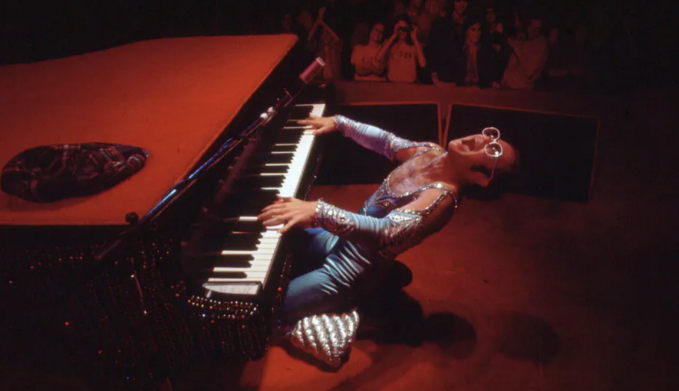
Elton John: Never Too Late (2024) ☆☆1/2(2.5/4): Entering the last chapter of his career

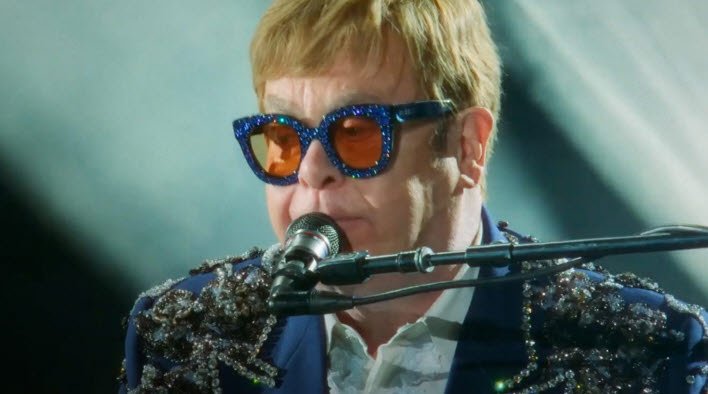
Documentary film “Elton John: Never Too Late”, which was released on Disney+ a few months ago, works whenever it focuses on what may be the last chapter of Elton John’s life and career. After all, considering that he is about to have his 78th birthday at this point, he is surely thoughtful about how to spend the rest of his life as well as how fortunate he has been during last several decades, and that makes the documentary a bit touching at times.

Closely looking into how he went through what would be his farewell concert tour in 2022, the documentary looks over John’s overall career and life. As some of you know, he was born to a rather unhappy and miserable couple in 1947, and he still remembers how he was often abused by his parents during his childhood years. That is why he came to focus more on music while showing considerable interest and talent in music, and he soon began to earn some money as playing piano in local bars.

Around the late 1960s, John was ready to go further as an aspiring musician, but he needed someone who could write better lyrics than him. By coincidence, he happened to be connected with a lad named Bernie Taupin, who eventually became a longtime professional partner and wrote many of John’s songs including that Oscar-winning song for “Rocketman” (2019). Once they clicked well with each other, John and Taupin became quite a productive team, and it did not take much time for them to get their first big success in UK.

After he became a rising new British singer to notice, John naturally went to US. Although his first performance in LA was rather modest, he quickly drew more public attention while doing more concerts here and there in US, and this surely boosted his career a lot. Around the beginning of the 1970s, he was regarded as the next big British superstar after the Beatles and David Bowie, and he became all the busier as relentlessly churning out a series of successful songs and albums during next several years.

Shuffling among a bunch of archival photographs and footage clips, the documentary tries to convey to us how exciting it was for him to be suddenly on the top of his field. He was really happy to perform his music in front of hundreds of audiences, and it is evident that he still enjoys that even during his farewell concert. Yes, he is not young anymore now, and he surely looks less active compared to those wild times in his past, but he is still ready for his performance nonetheless.

As approaching to 80, John becomes more aware of how precious the remaining life for him is, and that is the main reason why he decided to retire from doing concert tours. He wants to spend more time with his husband David Furnish, who incidentally directed the documentary with R.J. Cutler, and their two young kids, but you may sense some bittersweet feeling when he frankly admits that he may not live that long enough to see his dear two sons going to college and then having each own adult life.       

John is also quite open about some of his bad times. As being more aware of his homosexuality, he became more conflicted, and then he found himself experiencing his first romantic relationship, though his first boyfriend turned out to be alternatively helpful and toxic. While coming to work as his manager, John Reid helped John’s career in one way or another, but he was also frequently abusive to John, who had to endure his toxic boyfriend quite a lot during next several years before eventually breaking up with him.

Meanwhile, John also found himself going down into drug addiction after trying cocaine for the first time. To our disappointment, the documentary does not go into much detail on how he came to reach to the bottom of addiction and then started to get clean and sober around the 1990s, but we get a rather amusing episode on when he and John Lennon was surprised by the sudden visit of a certain famous figure while they were pretty high on drug and alcohol.   

John’s friendship with Lennon is certainly another interesting story in John’s life and career, though, again, the documentary does not delve much into this rich material. John was certainly excited when he and Lennon met each other for the first time, and he even helped Lennon to a considerable degree in more than one way. After making a surprise appearance in John’s concert in New York City, Lennon became more active and serious about his life and career than before, though, as many of you know, what could have been another interesting chapter of his was cut short by his tragic death in 1980. 

Overall, “Elton John: Never Too Late”, which recently garnered a Best Song Oscar nomination for John and his several collaborators including Taupin, is rather tame and unfocused while looking like scratching the surface of John’s remarkable life and career, and that is understandable to some degree considering its production background. After all, besides being co-directed by his husband, the documentary is co-produced by his production company Rocket Entertainment, so I was not so surprised to see that it takes a rather mild and conventional approach to its main human subject. Sure, I was not that bored during my viewing, but his life and career deserve more than this, don’t they?

Posted in Movies | Tagged , , , | 1 Comment

The Six Triple Eight (2024) ☆☆(2/4): These ladies deserve better than this…

The most interesting moment in Tyler Perry’s new film “The Six Triple Eight”, which was released on Netflix a few months ago, is its epilogue part, which briefly shows a series of interviews and archival records. Yes, there were really many African women who joined the US Army during the World War II, and these ladies actually did something important for the American soldiers during that time.

It is too bad that the rest of the movie is not so interesting compared to that. We all know that Perry, who also wrote the screenplay based on Kevin M. Hymel’s nonfiction book “Fighting a Two-Front War”, is not a very good storyteller, but the story is riddled with broad clichés and stereotypes in addition to being quite uneven in terms of tone and mood, and this frequently distracts us from the fairly good efforts from the main cast members.

The main subject of the movie is the 6888th Central Postal Directory Battalion, an all-African American female battalion during the World War II. The story begins with how a young African American woman named Lena Derriecott (Ebony Obsidian) becomes a member of the 6888th Battalion in 1944. She had a young Jewish lover in her hometown in Pennsylvania, but, alas, he died not long after joining the US Air Force, and, after grieving on his death for a while, she eventually decides to join the US Army.

As going to the army training camp in Georgia, Lena comes to befriend a number of young African American women also going to the same destination. Many of them know too well that the US Army will probably keep them and other African American female soldiers from going to Europe due to racism and racial segregation, but they come to join the US Army for various reasons anyway, and they are willing to do their best for becoming good soldiers.

Of course, right from their first day, they come to see how difficult and demanding it will be for all of them. Their battalion leader, Major Charity Adams (Kerry Washington), firmly emphasizes on how they must be always exemplary in front of those many white officers and generals out there, and Lena and her fellow recruits soon find themselves struggling a lot under Major Adams’ strict supervision.

Nevertheless, Lena does not lose her will and determination at all despite that, because, what do you know, the spirit of her dead lover keeps her going from time to time. This is just one of many blatant dramatic devices used by Perry’s screenplay, and he does not even seem to know how to use this utterly clichéd method more effectively.

In addition, Perry’s screenplay tries to juggle a bit too many stuffs within the 2-hour running time. Besides Lena’s main plot, there is a subplot involved with how Major Adams must deal with the racism from her superiors day by day, and then there is a possible romantic subplot between Lena and one African American male soldier who quickly finds himself smitten with her. Furthermore, there is also a subplot involved with how a concerned old mother comes to persuade President Franklin D. Roosevelt (Sam Waterston) to handle the literally accumulating issue with all those letters and packages sent from thousands of American soldiers or their family members in US.

When Major Adams and her African female soldiers are eventually sent to a city in Scottland in early 1945 for handling this serious mail delivery problem, the movie seems more focused than before, but Perry only throws more clichés and plot contrivances along the story without generating enough human interest for us. While Lena and many of her fellow African American soldiers are not fleshed out enough to engage us, Major Adams is mainly defined by her defiantly unflappable attitude, though she comes to show a bit of her humanity during a few obligatory dramatic moments including the one where she boldly defies her racist superior later in the story.

As getting more distracted and disinterested during my viewing, I only came to observe how much the main cast members are struggling to enhance whatever they are required to handle. Kerry Washington has some juicy moments as your average no-nonsense leader, but she also often finds herself limited by her rather flat character. Ebony Obsidian and several other actresses including Milauna Jackson, Kylie Jefferson, Shanice Shantay, and Sarah Jeffery try their best, but they are usually required to fill their respective spots without much else to do. In case of the more notable cast members in the film, Dean Norris, Sam Waterson, Susan Sarandon, and Oprah Winfrey just come and go in their brief appearance, and Norris is unfortunately saddled with a thankless task of delivering all those unpleasant racist insults whenever he appears on the screen.

On the whole, “The Six Triple Eight”, which recently received a Best Song Oscar nomination (This is incidentally Diane Warren’s 16th Oscar nomination – and she has not won yet while she received the Honorary Oscar in 2022), is well-intentioned but ultimately disappointing in many aspects. In my humble opinion, these exceptional ladies deserve better than this, and I can only hope that their extraordinary story will be presented more effectively by any better storyteller out there.

Posted in Movies | Tagged , , , , , , | 1 Comment

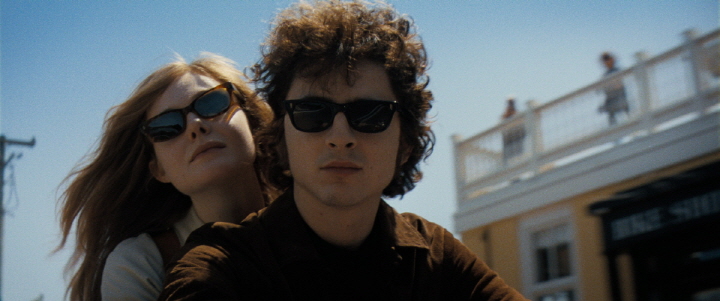
A Complete Unknown (2024) ☆☆☆(3/4): Still Unknown

As a human being, Bob Dylan is probably one of the most distant figures among the greatest American songwriters during the late 20th century. Sure, many of his songs have been remembered and admired for their timeless artistic qualities, but Dylan himself has been adamantly enigmatic to many of us during last 60 years, even though there have been many films and documentaries associated with him in the meantime.

James Mangold’s latest film “A Complete Unknown”, which received 8 Oscar nominations including the one for Best Picture, does not delve much into who the hell Dylan is as a human being, but it instead focuses on presenting one of the highlights in his career with enough mood and details to enjoy. Although I still do not get to know anything particularly new in the end despite being not so familiar with Dylan’s life and career from the beginning, the movie mostly succeeds in what it intends to do at least, and I was entertained enough despite some reservation.

The movie begins with how Dylan, played by Timothée Chalamet, gets associated with several prominent musicians who come to help him in one way or another during the early 1960s. In 1960, Dylan is just a young anonymous folk singer coming to New York City, but then he comes across an unexpected opportunity when he visits a hospital in New Jersey for meeting legendary folk singer Woody Guthrie (Scoot McNairy) there. Guthrie’s equally famous folk singer Peter Seeger (Edward Norton) is also visiting Guthrie right at that moment, and Seeger gladly takes Dylan under his wing once he sees Dylan’s little impromptu performance along with Guthrie.

Thanks to Seeger’s support, Dylan quickly rises as a new talent in the town while encountering a number of notable figures in American folk music besides Seeger. When he sees the performance of Joan Baez (Monica Barbaro), something clicks between them as they recognize each other’s considerable talent, and that is the beginning of their rather rocky personal/professional relationship during next several years. When Johnny Cash (Boyd Holbrook), whose life and career is incidentally the main subject of Mangold’s previous film “Walk the Line” (2005), shows a lot of enthusiastic admiration on Dylan’s songs, Dylan is certainly delighted to say the least, and he and Cash instantly hit off with each other when they finally meet later. 

Meanwhile, Dylan’s popularity goes up and up, but his romantic relationship with a young woman named Sylvie Rosso (Elle Fanning) gets more strained due to his increasingly aloof attitude. No matter how much she tries to understand and accept him, Rosso only becomes more frustrated with him, and there eventually comes a point where she notices something going on between him and Baez (Rosso is actually the barely fictional version of one of Dylan’s real-life girlfriends, by the way).    

 When the movie eventually moves onto 1965 later, the screenplay by Mangold and his co-writer Jay Cocks, which is based on Elijah Wald’s 2015 book “Dylan Goes Electric!”, sticks to its detached attitude just like its hero. As getting more pressured by many others just for being regarded as the new young leader of the American folk music, Dylan becomes more distant to others including Baez and Seeger, and then he fully demonstrates his determination to go his way in front of many audiences at the 1965 Newport Folk Festival.

Needless to say, Mangold and his crew members including cinematographer Phedon Papamichael and editors Andrew Buckland and Scott Morris pull all the stops during this climactic part, which gives a vivid look into how intense that controversial moment was. Yes, what Dylan did at that time certainly angered many audiences out there, but it also induced a lot of enthusiasm and excitement at the same time, and the movie did a commendable job of presenting this famous (or infamous) moment with enough thrill and energy.  

Although Dylan remains a very distant figure to the end, Chalamet, who was Oscar-nominated for this film, flawlessly embodies his character’s distinctive qualities instead of resorting to mere mimicry. While never flinching from how Dylan sometimes looks like your average stubborn artist prick, Chalamet ably suggests the insecurity and vulnerability behind his character’s aloof façade, and he is also excellent in a number of obligatory musical performances in the movie.

Several principal cast members in the film simply come and go around Chalamet, but they leave some impression on us despite that. Edward Norton is effective in his gentle supporting performance, and he is especially wonderful when his character comes to recognize and then accept that Dylan will never be the successor to Guthrie as expected by many others including Seeger. Monica Barbaro, who was Oscar-nominated along with Chalamet and Norton, and Elle Fanning are well-cast in their respective supporting roles, and the same thing can be said about a bunch of notable performers including Boyd Holbrook, Dan Fogler, Norbert Leo Butz, P.J. Byrne, Michael Chernus, and Scoot McNairy, who speaks volumes in his mostly silent performance.  

To be frank with you, I am still scratching my head on Dylan as a human being, but I must also admit that “A Complete Unknown” is a well-made biographical musical drama film. Sure, this is a conventional stuff relatively less ambitious and interesting than how Todd Haynes creatively and fascinatingly presented Dylan’s life and career in “I’m Not There” (2007), but there are some entertaining elements including the good efforts from Chalamet and several other cast members at least, and I will not grumble for now.

Posted in Movies | Tagged , , | 1 Comment