The Gorge (2025) ☆☆☆(3/4): What lies between them

“The Gorge”, which was released on Apple TV+ a few weeks ago, focuses on its two main characters first before eventually going for your average video game action, and I must confess that I enjoyed this process more than expected. While it is a bit slow in building up the story and characters at first, the movie is supported well by not only enough sense of fun but also the good chemistry between its talented lead performers, and we actually come to root for their survival.

The early part of the film patiently and succinctly establishes the two main characters of the story. After the opening scene, we meet a young ex-marine dude named Levi Kane (Miles Teller), and the movie provides a bit of background information on how he was selected as an ideal candidate for a certain clandestine operation supervised by the shady figure played by Sigourney Weaver, who certainly brings some authority to her character as she did around the end of “The Cabin in the Woods” (2011).

What Levi is supposed to do seems pretty simple on the surface. After being taken to some unknown remote area, he is going to replace his predecessor played by Sope Dirisu, who gamely handles a thankless job of explaining the mission during his brief appearance. During one year, Levi will work as the guard on a big and tall watchtower looking over a wide gorge full of fog, and he must be watchful about something inside the gorge all the time. According to his predecessor, his job is pretty much like guarding the gate of hell due to whatever exists beneath the foggy surface of the gorge, which is incidentally nicknamed “hollow man”.
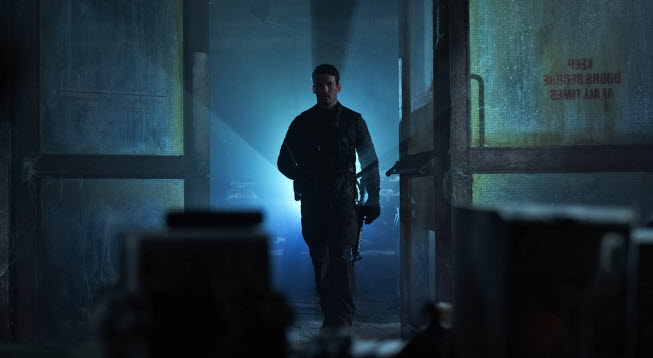
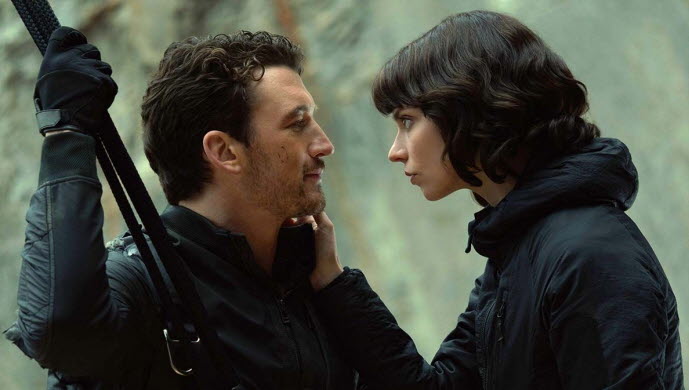
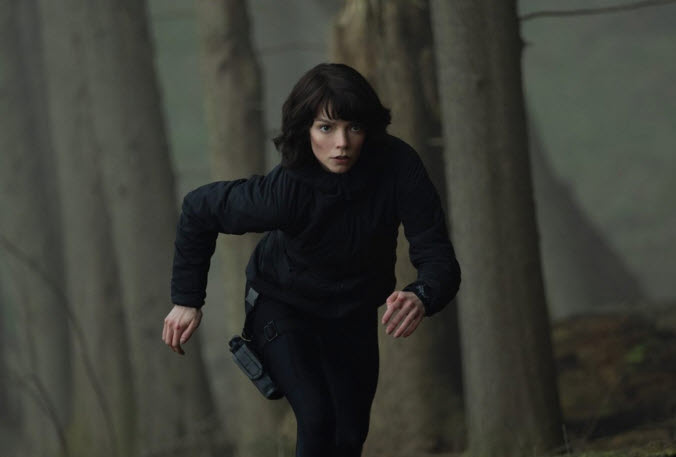
Anyway, as he begins the first days of his mission, Levi becomes more aware of another watchtower on the opposite side of the gorge, which is also guarded by someone who has just arrived there just like him. That figure in question is a young woman named Drasa (Anya Taylor-Joy), and, as shown from her first scene early in the film, she is also a mercenary with a particular set of skills. Just because she is quite bored, she tries a bit of communication between her and Levi, and, what do you know, something instantly clicks between them as they admire their respective first-rate snipe skill.

As days and months go by without much event, Levi and Drasa come to find more emotional comfort from each of them, and the movie throws some humorous touches on how they kill time together at times. If you remember how Miles Teller and Anya Taylor-Joy became more prominent via their respective breakthrough turns, you will certainly be tickled by when their characters play chess – or when they try a bit on banging drums.

Meanwhile, Drasa and Levi become more aware of what kind of threat they must handle from time to time. While they are fortunately equipped with a number of good weapons for defending their respective watchtowers, those “hollow men” still frequently climb along the walls of the gorge, and they look certainly as aggressive and frightening as those zombie figures in those Resident Evil flicks.

Nevertheless, as the people who probably experienced a lot of danger in one way or another, Levi and Drasa continues their mission as usual, and their mutual affection only grows stronger as they work together for fighting against the “hollow men” from time to time. In the end, Levi decides to do something quite risky just for one real good time between him and Drasa, and, not so surprisingly, that unfortunately leads to a very, very, very perilous circumstance for both of them.
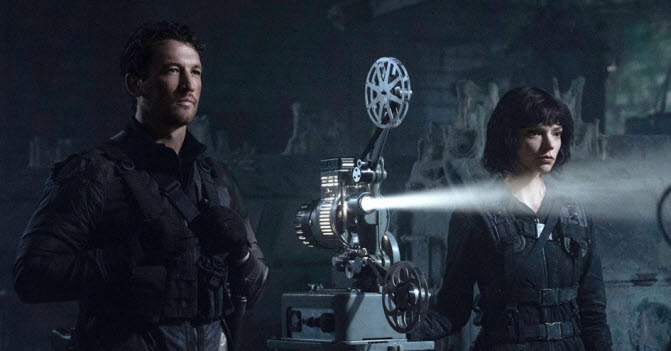
Around that point, the movie naturally becomes a little less interesting as its two lead characters come to learn a lot more about the gorge than expected. Yes, Drasa and Levi shoot a lot of hideous CGI figures popping out here and there around the screen, and what we accordingly get is pretty much like the slick demonstration clip of a latest video game to sell – especially whenever it is accompanied with Trent Reznor and Atticus Ross’ electronic score.

However, the film manages to distinguish itself from those Resident Evil flicks and many other similar action thriller movies to some degree, because it keeps focusing on the characters in the story as usual. While it surely provides a number of competent action sequences under director Scott Derrickson’s skillful direction, the movie also brings extra depth to its two main characters as they stick together more for their survival, and that is the reason why we continue to care about them even when they are chased by a lot of grotesque CGI figures.

Right from their very first scene, Teller and Taylor-Joy are effortless in their characters’ interactions while also filling their archetype roles with each own presence. While Teller hits the right note between intensity and amiability, Taylor-Joy is often charming with her own impish quality, and we can clearly see why Teller’s character cannot easily take his eyes away from her character from the beginning.

In conclusion, “The Gorge” is a solid piece of entertainment which has enough good elements besides the game efforts from its two lead performers. Although there is nothing particularly new or fresh here for you especially if you are familiar with its numerous similar predecessors, the movie has a fair share of fun within its modest playground at least, so I will not grumble for now.
Posted in Movies | Tagged , , | Leave a comment

The Last Stop in Yuma County (2023) ☆☆☆(3/4): Stuck in a diner together

“The Last Stop in Yuma County” is a simple but effective genre piece to entertain you. While clearly influenced by the works of Quentin Tarantino and Coen brothers, the movie plays its genre game mostly fair and straight, and the overall result is fairly engaging even though you will quickly have a pretty good idea on what will eventually happen in the end.

At first, the movie succinctly establishes its small and simple main background, which is your average American roadside diner located somewhere in a remote region of Yuma County, Arizona in the 1970s. When a knife salesman played by Jim Cummings arrives at a gas station/motel right next to the diner on one day, he is only notified by the owner of the gas station that there is not any gasoline at present, and he has no choice but to wait at the diner for the upcoming arrival of the gasoline delivery truck.

The diner is opened not long after his arrival, and we get to know a bit about a waitress who happens to run the diner alone by herself on that day. She has been married to a local sheriff, and it looks like they are fairly happy in their marriage, though her husband still does not prepare much for the upcoming 17th anniversary for their marriage.

As the knife salesman continues to wait for the gasoline delivery truck at the diner, two more people arrive at the diner. They also need to fill the gasoline tank of their car just like the knife salesman, so they also come to wait at a spot not so far from where the knife salesman is sitting, and then we sense something fishy about these two guys.

Because the movie already gives us a little obvious hint at the beginning of the story, it does not take much time for us to see that these two guys are the criminals who robbed a local bank early in the morning. Although they certainly try not to look suspicious to the two other people in the diner, one of them is virtually a loose cannon while the other one is intensely thoughtful to say the least. Needless to say, we can clearly discern a trouble to be ensued sooner or later among them and the two other people in the diner.

The situation become more tense as both the knife salesman and the waitress eventually realize that they are with very dangerous criminals, and then the plot thickens with more story elements to be added to the narrative step by step. Besides the owner of the gas station/motel who still has no idea on what is really going on inside the diner, there is an old Texan couple who also happens to wait at the diner just like the other customers, and there is also a banal young couple eager to follow the footsteps of Warren Beatty and Faye Dunaway in “Bonnie and Clyde” (1967) or Sissy Spacek and Martin Sheen in “Badlands” (1973).

Once all of its story elements are set and prepared, the screenplay by director/writer/editor/co-producer Francis Galluppi, who made a feature film debut here after making several short films and music videos, simply rolls them into one tricky situation after another. As some of the main characters try to outwit those two criminal figures, the movie provides several suspenseful moments including the one involved with three cups of hot coffee, and Galluppi and his crew members including cinematographer Mac Fisken did a commendable job of maintaining the level of tension beneath the screen.

Because we already know one crucial thing from the start, we naturally come to observe the main characters from the distance. Although many of these characters are more or less than broad archetypes, we still get some twisted fun from how their following desperate actions make the situation worse in one way or another along the story, and the movie deftly balances itself between black humor and some gravitas.

Needless to say, the movie depends a lot on the talent and presence of the main cast members, who sometimes did a little more than required by their respective parts for bringing a bit of extra personality to the film. Cummings, who has been one of the most dependable character actors since his little breakout film “Thunder Road” (2018), effortlessly embodies the neurotic qualities of his plain character, and we are not so surprised when one of the main characters says that his character looks like the hero of a certain famous Alfred Hitchcock film. On the opposite, Jocelin Donahue, who was once promising when she appeared in Ti West’s “The House of the Devil” (2009) but then unfortunately got herself crashed into “The Last Godfather” (2010), and Richard Brake, a seasoned character actor who has appeared in numerous films ranging from “Batman Begins” (2005) to “The Munsters” (2022), have each own moment to shine as the two other crucial main characters in the film, and you will be also delighted by several familiar performers including Barbara Crampton, Faizon Love, and Gene Jones, who was incidentally memorable as that unfortunate gas station owner in Coen brothers’ great film “No Country for Old Men” (2007).

In conclusion, “The Last Stop in Yuma County” may not bring anything particularly new to its genre territory, but it still works thanks to the skillful direction of Galluppi. He demonstrates here that he is another new promising American filmmaker to watch, and it will be interesting to see what may come next from him.

Posted in Movies | Tagged , , , , | 1 Comment

The Painter and the Thief (2020) ☆☆☆(3/4): One painter and her messy muse

Norwegian documentary film “The Painter and the Thief” observes a complex human relationship between two total strangers who happened to get involved with each other under one extraordinary circumstance. As alternating between their different viewpoints, the documentary makes us reflect more on human empathy and connection, and it is poignant to observe how its two human subjects came to understand each other more in the end.

Everything began from a small criminal incident which occurred at one art gallery in Oslo, Norway on one day of 2015. The two men broke into the art gallery and then stole the two paintings by a Czech female artist named Barbora Kysilkova, and they were eventually arrested not long after that, though neither of Kysilkova’s two paintings could not be retrieved even after their arrest.

When she came to learn about one of these two arrested criminals, Kysilkova became curious about who that person was, so she attended his following trial. He was a drug addict named Karl-Bertil Nordland, and, as reflected by a series of sketches accompanied with a piece of audio recording, she actually approached and then talked a bit to him when both of them were in the courtroom.

Some time later, Kysilkova approached to Nordland again, and she requested him to be the model for her latest painting. While not so willing to do that at first, Nordland eventually agreed to do some modelling for Kysilkova, and he could not help but become quite emotional when she later showed him his completed portrait. After that point, he and Kysilkova became close friends, and she also tried to understand more of how his life became quite messy. Despite experiencing some unhappiness during his childhood years, Nordland was a fairly promising young man, but then things went quite wrong – especially after he became a drug addict at some point.

Watching Nordland still struggling with his personal demons despite her help and support, Kysilkova became quite frustrated at times, and that also put considerable strain on her relationship with her Norwegian boyfriend. At one point, her boyfriend sharply points out the ethical aspects of how she regards Nordland as an artist, and she cannot help but become defensive as emphasizing that she really cares about Nordland.

The documentary also focuses on how Nordland felt about his accidental friendship with Kysilkova. While correctly sensing that she was often fascinated with his dark sides, he also appreciated her help and support, but then he became really incorrigible for not only Kysilkova but also a woman who was his girlfriend at that time. He was supposed to check himself into a local rehabilitation center, but he only ended up letting down these two good women, and that was when his girlfriend finally decided that enough is enough.

Anyone with some knowledge on addiction surely knows well that every addict is bound to reach the bottom of their addiction in the end, and Nordland was no exception, though he was more fortunate compared to many of those unlucky addicts out there. Not long after tumbling into his drug addiction again, he got himself into a real big trouble, and that was when he actively grabbed a good chance for becoming clean and sober.

Simply letting the story of its two human subjects roll by itself, the documentary often vividly captures a number of honest and powerful human moments to observe. There is a harrowingly painful moment when Nordland clashes with his girlfriend over his ongoing addiction problem, and the emotional intensity of this moment is quite palpable to us even though we do not see much of him and his girlfriend. Just like Nordland, Kysilkova was willing to show a lot of herself in front of the camera, and that is why several private moments between her and her boyfriend are exceptionally truthful to say the least. Both of them clearly discern how complicated their relationship issues are, but they are evidently struggling to resolve these personal issues – even though they care a lot about each other.

The documentary later puts some tension on the screen when Nordland and Kysilkova become quite distant to each other later in the story, and that is where it becomes a bit contrived to our distraction. It is not much of a spoiler to tell you that they eventually meet again, but then the documentary pulls out another narrative turn as Kysilkova reveals what she recently discovered by sheer coincidence. This surely makes their story more dramatic, but I wonder whether director Benjamin Ree, who also served as the co-cinematographer of his documentary, could present this little but crucial moment of revelation in a more organic way.

Anyway, “The Painter and the Thief”, which won the World Cinema Documentary Special Jury Award for Creative Storytelling when it was premiered at the Sundance Film Festival around the beginning of 2020 (How distant that time feels to many of us now because of the COVID-19 pandemic!), is a solid documentary with enough interesting human qualities to be observed and appreciated, and I admired the thoughtful handling of its compelling human story even while recognizing its few notable weak points. Yes, it could be more improved in my trivial opinion, but I assure you that you will never forget its two human subjects after watching it.

Posted in Movies | Tagged , , , , , | Leave a comment

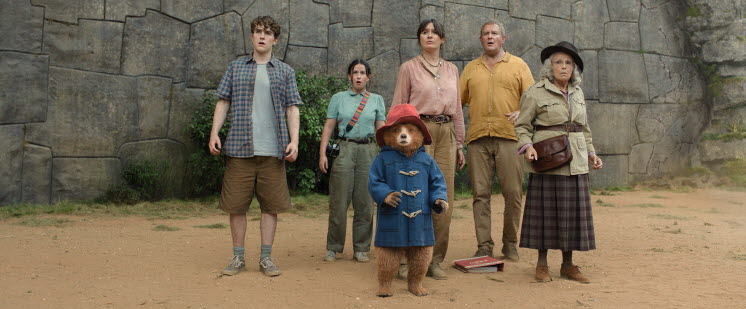
Paddington in Peru (2024) ☆☆☆(3/4): Back in Peru

“Paddington in Peru” is as amiable and pleasant as it can be despite being a bit underwhelming at times. Although you may be disappointed to see that it does not reach the sublime comic level of “Paddington 2” (2017), the movie still has a fair share of joy and amusement mainly thanks to the game efforts from its main cast members, and you will certainly root for its gentle bear hero and his lovable human family.

The story is set in some time after what happened in “Paddington 2”. As continuing to live with Mr. Henry Brown (Hugh Bonneville) and his family in London, Paddington (voiced by Ben Whishaw) officially becomes a British citizen at last, but then there comes an unexpected news from Peru. It seems that his old aunt Lucy (voiced by Imelda Staunton), who has resided in the home for retired bears in Peru, is not that well, so he decides to go back to Peru for checking on his aunt, and Mr. Brown and his family naturally accompany him.

However, when they eventually arrive at the home for retired bear, the Reverent Mother (Olivia Colman), a nun who is incidentally the supervisor of the home of retired bear, notifies to Paddington that Aunt Lucy was gone missing not long before Paddington and his human family arrive. When it turns out that Aunt Lucy possibly went to a certain mysterious place somewhere in the middle of the Peruvian Amazon region, Paddington becomes quite determined to get to the bottom of the situation, and Mr. Brown and his family come to join his following search.

Of course, as an insurance company employee quite fastidious about risk assessment, Mr. Brown is not so amused to say the least, but he cannot say no for a rather amusing reason. The new boss at his workplace has often emphasized embracing more risk, and that is the main reason why he agreed to accompany Paddington along with his family despite his initial reluctance.

However, no matter how much he tries to be calm and confident, Mr. Brown soon finds himself taking more risks along with his family than expected. For going into the middle of the Peruvian Amazon region, he and his family and Paddington have to get on an old ship belonging to a local dude named Hunter Cabot (Antonio Banderas), and what follows next will remind you a bit of Werner Herzog’s two great films “Aguirre, the Wrath of God” (1972) and “Fitzcarraldo” (1982). It is subsequently revealed that Hunter has been obsessed with discovering a lot of gold hidden somewhere in the Peruvian Amazon region, and, yes, the object of his longtime obsession is associated with wherever Aunt Lucy went. As this troubled dude eventually becomes more obsessive because of those ancestral ghosts who have haunted him for years (They are also played by Banderas, by the way), Paddington and his human family come to experience something not so far from the climatic part of “Fitzcarraldo”, and that certainly brings more laugh and some thrill for us.

While things eventually become a bit more serious as Paddington eventually arrives at that certain mysterious place as expected, the movie cheerfully continues to hop from one narrative point to another without being too serious at all. After all, how can you possibly be quite serious when the hero of the story is a talking bear adopted by one human family?

Above all, just like its two predecessors, the movie sincerely makes a good point on goodwill and kindness. While he often inadvertently causes small and big troubles for himself as well as others around him, Paddington is a likable figure full of goodwill and sincerity to affect others around him in one infectious way or another, and we can still see why he has been accepted and loved by his human family despite his occasional troubles.

As usual, Ben Whishaw’s earnest voice performance brings a lot of heart and soul to Paddington, and his character is supported well by a bunch of good performers. Hugh Bonneville is a constant fun to watch as his fastidious character struggles to take one risk after another along the story, and he gives us one of the most hilarious moments in the film during one expected scene involved with a certain dangerous bug later in the story. Although it is a bit of shame that Sally Hawkins could not return here, Emily Mortimer is also fine as Mrs. Brown, and several other cast members in the film including Jim Broadbent, Julie Walters, Madeleine Harris, Samuel Joslin, Carla Tous, Hayley Atwell, and Imelda Staunton are also solid in their respective supporting parts.

Just like “Paddington 2” is often elevated by the scene-stealing villain performance by Hugh Grant, the movie is frequently energized by the colorfully hammy supporting performances from the two certain main cast members. While Antonio Banderas willingly chews a number of ridiculous moments as often looking as unhinged as Humprey Bogart’s hero character in Jonn Huston’s masterpiece “The Treasure of the Sierra Madre” (1948), Olivia Colman delightfully overacts throughout the film, and she even has a silly musical scene which will instantly take you back to Julie Andrews in Robert Wise’s classic musical film “The Sound of Music” (1965).

Overall, “Paddington in Peru”, directed by Douglas Wilson, is less impressive compared to “Paddington 2” in some aspects, but it is still recommendable for being funny and heartfelt enough to entertain and touch us. I do not know whether there will be another sequel, but I will not object to that at all as long as the franchise has its heart at the right place just like its furry hero.

Posted in Movies | Tagged , , , , | Leave a comment

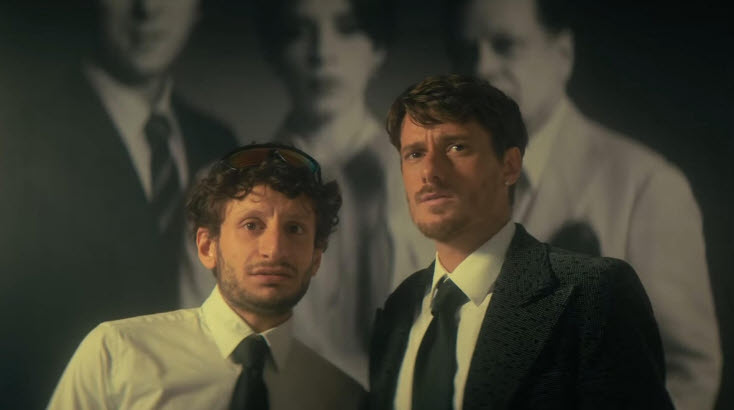
The Love Scam (2025) ☆☆1/2(2.5/4): Pleasant but no surprise

Italian Netflix film “The Love Scam”, which was released at the beginning of this year, is predictable to the core to say the least. Right from when its two main characters come across each other, you will quickly guess the rest of the story within a few seconds, and there is really not much surprise for you on the whole, but you may go along with its mostly watchable romantic comedy as long as you can forgive a lot of plot contrivance in the story.

 The movie, which is incidentally set in Napoli, Italy, begins with a comic premise driven by desperation. Vito (Antonio Folletto) is an earnest young man trying to support himself and his baby son after his son’s mother ran away some time ago, but, alas, he remains unemployed despite his sincere efforts, and that certainly does not look good at all to the social workers checking on him and his baby. 

And then things get all the worse for Vito and his young son thanks to his older brother Antonello (Vincenzo Nemolato), who has not been much of help as your average small-time crook. Antonello recently got himself involved with a serious financial matter, and Vito belatedly comes to learn that their apartment will be soon taken away by some company unless he pays a considerable amount of money within a very short time.

In the end, Vito and Antonello decide to visit that company in question, which turns out to be a prominent architecture company ready to demolish their old apartment building for building a hotel there. Because the owner of the company happens to be absent, they try to meet the owner’s daughter instead, but then they soon see how hard and difficult Marina (Laura Adriani) can be as often being quite focused on her company work.

After discovering that Marina actually has a soft spot for public charity, they quickly embark on planning their little scam. Although he is understandably quite reluctant at first, Vito certainly does not want to lose the custody of his young son, so he eventually agrees to disguise himself as someone who is supposed to be passionate about public charity as much as Marina.      

What follows next is a series of comic moments where Vito and Marina get drawn more to each other after their orchestrated Meet Cute moment. Although their first encounter is not so pleasant for both of them, Marina is initially quite annoyed as he keeps appearing around her, but, what do you know, she and Vito soon come to spend more time with each other. When Vito later lets her follow her personal passion toward cooking, she cannot help but feel happy and delighted, and she even agrees to work as the chef for his little charity meeting. 

Of course, Vito naturally feels more conflicted as, this is not a spoiler at all, he also falls in love just like Marina. What he and his older brother are doing to her is inarguably a cruel scam, and he knows that too well, but he keeps maintaining his fake identity anyway as he and his older brother are almost close to succeeding in their dirty scam.    

I must point out that this is rather uncomfortable to watch at times, but the movie keeps everything light and cheerful before the last act where the inevitable outcome of Vito and Antonello’s scheme is unfolded as expected. Yes, there is naturally an obligatory moment of heartbreak and disappointment. Yes, there is a mandatory sequence showing a bit of passage of time accompanied with background music. Yes, there is also a necessary moment when our two main characters realize that they still care a lot about each other.

Around that point, the story becomes more contrived with a certain supporting character functioning as a villain to be opposed by both Marina and Vito, and that is where the movie stumbles more than before. The new conflict during its last act is resolved too conveniently within a short time, and that is why the eventual happy ending feels rather artificial instead of being a real feel-good moment to embrace.

Anyway, the movie is supported mostly well by the engaging presence of its two lead performers, who instantly generate good comic chemistry between them during many of their key scenes in the film. Antonio Folletto makes his character sincere and likable even when his character manipulates or deceives Marina, and Laura Adriani is an effective counterpoint to her co-star. Her high-strung character surely feels unlikable at first, but Adriani gradually makes us care more about her as her character shows more heart and soul along the story, and we can clearly sense how much Vito is touched by that.

Around Folletto and Adriani, most of the other main cast members of the film simply fill their respective spots except Vincenzo Nemolato, who has some scenes to steal as Vito’s trouble-making older brother. He and Biagio Manna, who plays Antonello’s criminal associate, provide some goofiness to the story as demanded, and there is an amusing moment when their characters hurriedly disguise a bunch of local people as the wealthy people to attend Vito’s fake charity meeting.

Overall, “The Love Scam”, directed by Umberto Riccioni Carteni, is not a very satisfying genre product without anything new or fresh in terms of story and character, but it is not a total waste of time mainly thanks to the good comic efforts from its two lead performers who deserve better in my inconsequential opinion. Yes, there are many better romantic comedy films out there, but I will not stop you from watching this mildly pleasant Netflix product if you just simply kill your spare time.

Posted in Movies | Tagged , , | Leave a comment

The Sand Castle (2024) ☆☆1/2(2.5/4): The family stuck in an island

Netflix film “The Sand Castle”, which was released in last month, is an allegorical drama gradually revealing the underlying reality surrounding its main characters. The overall result feels a little too broad and symbolic, and it seems to lose its direction before eventually reaching to its last act, but it works to some degree thanks to its competent direction and the sincere efforts from its main cast members.

The main background of the movie is a little flat island located in the middle of some sea area, and we soon meet its four current residents: Nabil (Ziad Bakri), his wife Yasmine (Nadine Labaki), and their two children Jana (Riman Al Rafeea) and Adam (Riman Al Rafeea). For some unknown reason, they have been stuck there for quite a long time, and Nabil and Yasmine have been trying their best for taking care of their children while also searching for any possible chance for leaving the island.

Although the situation has not been exactly hopeful, things are not totally bad for them at least for now. While they have to be careful about consuming the remaining food for them, they stay in an abandoned lighthouse which they make into a little shelter of their own. Via the searchlight and the radio equipment of the lighthouse, Nabil attempts to make a contact with anyone near the island day by day, but, so far, nobody has responded to his desperate calling.

While their parents keep trying to maintain the status quo for the family, Adam and Jana spend their daytime here and there in the island. Because Adam prefers to be alone as your average sullen adolescent kid, Jana usually plays alone by herself, and we observe how often she seems to be immersed in her own little fantasy.

However, it looks like whatever she sees and experiences is not just a pigment of imagination at all. When Jana is playing with her sandcastle at the beach of the island at one point, she finds something odd beneath the sand layer of the beach, and what she innocently commits next seems to cause a big trouble for her parents.

The mood becomes more unnerving as more strange things happen around Jana and her family. When he and his son try to get some seafood to eat, Nabil experiences something quite disturbing and then gets seriously injured. As his physical condition becomes more and more deteriorated, Yasmine and her two children become more desperate than ever, but they are still stuck in their isolated status with no one to come and then help them, and they also come to sense more of the ominous vibe surrounding them.

Around that narrative point, the movie baffles us more as the respective viewpoints of its four main characters become a lot more unreliable. As they struggle in one way or another, we get some fragments of memories and hallucinations along the story, and we naturally wonder more about what is exactly happening to them.

The screenplay by director Matty Brown, who made a feature debut here after making several short films, and her co-writers Hend Fakhroo and Yassmina Karajah never clarifies whatever is really happening in the story until the last act, which is incidentally followed by a bit of explanation on the real main subject of the story. This can be quite frustrating at times, but Brown and her crew members including cinematographer Jeremy Snell did a fairly good job of establishing the increasingly surreal atmosphere from the beginning, and I was a bit surprised to learn later that they actually shot the film in a real flat island near Lebanon.

In addition, the movie is supported well by the engaging performance from its four main cast members, who are effortless in their interactions throughout the story and provide some heart and soul to the movie. While Ziad Bakri and Nadine Labaki, who has been mainly known for her powerful Oscar-nominated film “Capernaum” (2018), hold the ground as required, Riman and Zain Al Rafeea, who are real-life siblings and also appeared together in “Capernaum”, are often harrowing as the movie reveals a bit more about their characters’ reality, and the latter is particularly good when her character inevitably confronts her suppressed memory later in the story.

In conclusion, “The Sand Castle” is interesting for being somewhere between M. Night Shyamalan and David Lynch, but it does not work as well as intended due to its rather thin narrative which only gets muddled with more confusion before arriving at the last act. During that part, we finally understand what the movie is really about, but we remain baffled and dissatisfied about how it is about, and I think the movie could be more coherent with more details in terms of story and characters.

Nevertheless, I must say that it is nice to watch something different from those soulless stuffs we usually get from Netflix month by month, and I think Brown is a promising filmmaker who may move onto better works later. Considering the good efforts shown from the movie, she has considerable potential in my humble opinion, and I sincerely hope that I will be more satisfied in the next time.

Posted in Movies | Tagged , | Leave a comment

Maria (2024) ☆☆☆(3/4): Callas during her last days

Pablo Larraín’s latest film “Maria”, which was released on Netflix in US a few months ago, simply walks here and there around its famous real-life female figure. As the last entry in Larraín’s trilogy after “Jackie” (2016) and “Spencer” (2021), the movie is surely as unconventional as these two previous films, and I enjoyed its mood and style enough although it does not show and tell a lot about its main subject on the whole.

This is probably because Larraín takes a relatively softer approach in his fictional presentation of the last days of Maria Callas, who was one of the greatest opera singers in the 20th century. In case of “Jackie” and “Spencer”, both Jacqueline Kennedy and Diana Spencer were more or less than figures to be closely but objectively observed in meticulous details, and that was the main reason why these two good films felt rather distant to me at times. In case of “Maria”, Larraín seems to care more about Callas, and the movie steadily maintains a respectful distance between itself and her while shrouding her in warm and soft lights at times.  

After the opening scene showing the day when Callas died in September 1977, the movie moves back to one week ago. Although she is currently retired due to her health problem, Callas (Angelina Jolie) has been trying to make a comeback someday, and we observe how things are not exactly good for her. While she lives in a fairly luxurious apartment, her medical condition is getting worse as she depends more on drug day by day, and her two dutiful servants, Ferruccio (Pierfrancesco Favino) and Bruna (Alba Rohrwacher), are certainly quite concerned about her.

Due to her constantly drugged state, Callas’ mind is frequently swept by old memories or hallucinations, and that allows the movie to bring more fictional elements to the story. At one point early in the film, she is visited and then interviewed by a young male journalist eager to record whatever she is going to say, but it soon turns out that he is just another hallucination experienced by Callas’ increasingly confused mind.

In case of Callas’ past, the screenplay by Steven Knight sometimes doles out a few personal moments to observe. We see how young Callas and her older sister had to earn their meager living during World War II, and that is not a pretty sight at all. We also see how Callas met Aristotle Onassis (Haluk Bilginer) for the first time, and then we observe how she got close to this wealthy Greek businessman, though their romance did not last long because he eventually married Jacqueline Kennedy (She incidentally does not appear in this film, by the way).  

Due to the rather elusive narrative of the film, you may be disappointed if you expect to know more about Callas’ life and career, but the movie fills the screen with a lot of atmosphere and emotion as watching its heroine struggling to live another day. After all, there is something inherently operatic about a dying diva during her last days, and the movie naturally provides a number of grand moments such as the one when Callas imagines her playing the heroine of Giacomo Puccini’s classic opera “Madame Butterfly”.

Although the overall result may look and feel a bit superficial at times, the technical aspects are often terrific to watch. Cinematographer Edward Lachman, who was deservedly Oscar-nominated for this film a few weeks ago, did a commendable job of imbuing the screen with an ample amount of style and beauty, and his stunning visual achievement here in this film is surely worthwhile to watch on big screen. In case of the soundtrack, the movie utilizes a bunch of recordings of Callas’ performance from the beginning to the end, and they are effectively incorporated into the story although often reaching to the level of overkill.

Most of all, there is the good lead performance by Angelina Jolie, who demonstrates here that she has not lost any of her talent or presence yet even though she seems to focus more on other things besides acting these days. Besides being convincing in a number of key scenes where she must look like singing in Callas’ voice, Jolie skillfully embodies her character with grace and dignity, and it is certainly one of the best performances in her career.

Around Jolie, several notable cast members in the film are required to fill their respective spots while humbly supporting her to the end. Pierfrancesco Favino, a charismatic Italian actor who was memorable in Marco Bellocchio’s “The Traitor” (2019), and Alba Rohrwacher bring some human qualities to their characters, and that is crucial in setting the attitude of the movie toward its main human subject. While Turkish actor Haluk Bilginer is always fun to watch as Onassis, Stephen Ashfield, Vincent Macaigne, and Valeria Golino did a bit more than demanded during their brief appearance, and Kodi Smit-McPhee is unfortunately stuck in his rather thankless supporting role.

In conclusion, “Maria” is less successful compared to “Spencer” or “Jackie”, but it is still another admirable work from Larraín, who has been quite prominent since his Oscar-nominated Chilean film “No” (2012). To be frank with you, I am not that enthusiastic about many of his films except “No” and “El Conde” (2023), but he is still an interesting filmmaker with distinctive style and talent to observe, and “Maria” reminds me of that again.

Posted in Movies | Tagged , | 1 Comment

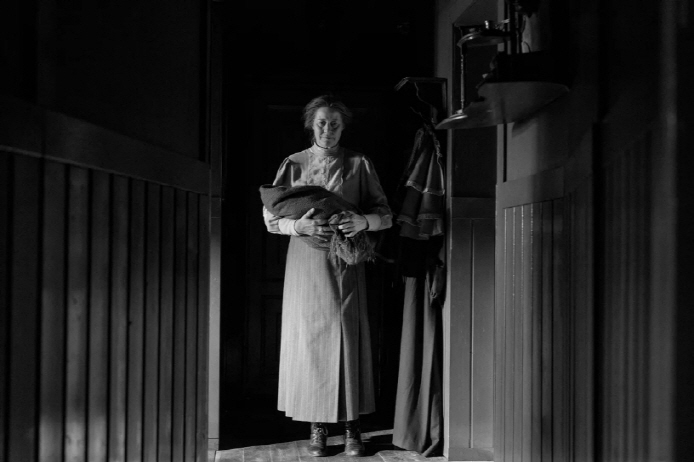
The Girl with the Needle (2024) ☆☆☆(3/4): A Seamstress’ tale

“The Girl with the Needle”, which was recently Oscar-nominated for Best International Film, is a stark and unnerving period drama about one unfortunate woman who happens to be under a very gloomy circumstance. As she struggles for life in one way or another, the movie shows more of the harsh reality around her, and we are all the more chilled as observing the evil and madness shown later in the story. 

Set in Copenhagen, Denmark around the end of World War I, the story begins with how things have been desperate for Karoline (Vic Carmen Sonne), a married woman who has earned her meager living alone by herself since her husband went to the war several years ago. She works as a seamstress in a big local clothing factory, but that is not enough for her poor economic status, and the opening scene shows her being suddenly evicted by her landlord due to not being able to pay her rent during last several weeks. While she manages to find another place to live, Karoline still needs some financial help, so she later applies for widow’s compensation because her husband is presumed to be dead, but she is not allowed for that just because her husband’s death is not official yet.

Not long after Karoline eventually depends on the generosity of the wealthy owner of the factory and then gets pregnant because of him, her husband unexpectedly returns. Although she feels some pity toward his disfigured status, she promptly reveals to him that she is pregnant due to her current extramarital affair. She also notifies her pregnancy to the factory owner, who promises to marry her as soon as possible. Not so surprisingly, his stern mother, who has the total financial control over her son, does not approve of that at all, and that leads to a very painful moment of humiliation for our heroine.

Consequently abandoned while her baby is growing inside her body day by day, Karoline lives again with her husband who begins to work as a sideshow in a local circus troupe. He is actually quite willing to accept the baby as his child to take care of, but she still does not want the baby at all, and that leads to a gut-wrenching scene where she attempts something quite drastic at a local bathhouse for women. 

That is how she encounters a middle-aged woman named Dagmar (Trine Dyrholm) again, who is incidentally the new lodger of Karoline’s previous residence. After taking care of a little mess caused by Karoline, Dagmar tells Karoline that she can help Karoline a bit when the baby is born, and Karoline soon visits Dagmar not long after the eventual birth of her baby.

Quite welcoming to Karoline, Dagmar says that she will take the baby to some affluent couple willing to adopt the baby, and it looks like she has been doing this illegal business quite a long time while running her little candy store. After her baby is taken by Dagmar, Karoline suggests that Dagmar should hire her as a wet nurse, and Dagmar gladly has Karoline take care of those unwanted babies to come and then go.

The mood becomes more disturbing as Karoline comes to wonder more where Dagmar takes those babies later in the story, and the screenplay by director Magnus von Horn and his co-writer Line Langebek, which is loosely based on a notorious real-life criminal case in Denmark during 1910s, gradually reveals more horror and darkness under the surface. Cinematographer Michał Dymek, who shot the movie in black and white film in the ratio of 1.50:1, often fills the screen with a barren sense of despair and dread, and there are several emotionally shattering moments which are thankfully handled with enough restraint while still horrifying us enough on the whole.      

As the story eventually reaches to the inevitable finale waiting for its heroine, the movie still holds our attention thanks to the strong lead performance from Vic Carmen Sonne, who previously played one of the substantial supporting characters in “Godland” (2022). Often feeling quite jaded and tarnished in her weary appearance, Sonne also ably conveys well to us her character’s silent but defiant inner strength, and it is poignant to see how her character comes to find a way to care and love more after her grim emotional journey along the story.  

Around Sonne, several main cast members of the film have each own moment to demonstrate their considerable talent. Trine Dyrholm is quite effective especially when Dagmar casually justifies what she has done behind her back for years, and she and Sonne are convincing in the growing emotional dependency between their characters in the story. Around Sonne and Dyrholm, young performer Avo Knox Martin holds her own little place well as a little girl who is supposed to be Dagmar’s daughter, and Besir Zeciri, Joachim Fjelstrup, and Tessa Hoder are also solid in their substantial supporting roles. 

 In conclusion, “The Girl with the Needle” is definitely not something you can comfortably watch on Sunday afternoon, but it is still worthwhile to watch for its mood, storytelling, and performance. Considering how misogyny and sexism are still serious issues even at present, the movie certainly feels quite relevant like many other dark feminist tales out there such as Margaret Atwood’s “The Handmaid’s Tale”, and its utterly gloomy impression will haunt your mind for a while.

Posted in Movies | Tagged , | 1 Comment

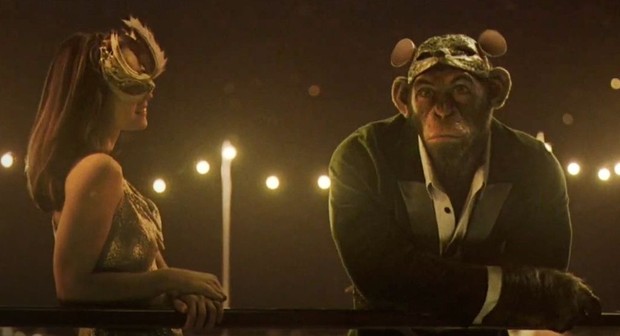
Better Man (2024) ☆☆☆(3/4): Robbie Williams presented as an ape (no kidding)

“Better Man” is another typical musician biography drama film with one notable difference. While it is surely filled with predictable ups and downs as illustrating the life and career of British musician Robbie Williams, the movie presents Williams as a talking ape, and that somehow makes sense considering how wild and immature he often was throughout his bumpy career.

I must point out that this odd storytelling choice is rather distracting at first. Sure, thanks to its recently Oscar-nominated special effects, our monkey hero in the film looks as realistic as those ape characters in the recent Planet of the Apes movies (The latest one also got Oscar-nominated in the same category in last month, by the way), but this is basically a one-joke setting quickly getting thin within the first 30 minutes. To be frank with you, I often found myself being more aware of the technical efforts behind it, instead of focusing on a real character to observe.

Fortunately, the movie has enough wit and spirit to keep things rolling during its rather long running time (135 minutes) thanks to the competent direction of director/co-writer/co-producer Michael Gracey, who previously made “The Greatest Showman” (2017). Whenever the movie shifts its gear onto musical mode, it becomes quite electrifying to say the least, and it does not mind going for more style and entertainment at all with its CGI monkey hero at the center.

The story itself begins with the childhood years of Williams, who is presented as a young monkey kid voiced by Carter J. Murphy during this part. Influenced a lot by his father’s enthusiasm toward music, young Williams aspires to become a famous musician someday, and he later shows considerable potential as a future entertainer when he manages to steal the show in the middle of a stage production hosted by his father.

Around the time when he becomes an adolescent monkey boy, Williams is more determined to realize his ambitious dream someday. When he hears about the audition for the members for a new boy band, he does not hesitate at all, and, what do you know, he leaves enough impression on Nigel Martin-Smith (Damon Harriman), who eventually becomes the manager for Williams and several other young musicians who come to form the band together.

What follows next is how Williams and his colleagues struggle a lot during the next several years. At first, they mostly perform at many gay nightclubs, and, though he is not gay, Williams feels quite liberated by the sense of freedom and acceptance from those gay nightclubs. In the end, he and his colleagues also begin to perform in front of young girls, and they soon come to have a lot of fans after they record a number of popular songs.

Of course, around that point, Williams begins to tumble toward the bottom of addiction as getting intoxicated with his big success and fame, and it does not take much time for others around him to see what a big trouble he has become. For example, when they are about to do another big concert in front of thousands of fans out there, Williams becomes almost unconscious due to his heavily drugged state, and it is rather amazing that he manages to perform fairly well on the stage not long after that.

As getting more troubled due to his addiction as well as his growing insecurity, Williams subsequently gets pushed out from the band, and that is when he comes across Nicole Appleton (Raechelle Banno), a young woman who is also the member of a popular girl band. As they quickly get fallen in love with each other, it seems that Williams will bounce from the bottom of his career, but he still has a lot of personal issues to deal with, and he also comes to break his girlfriend’s heart a lot because of his frequent acts of infidelity (Yes, there are a few brief moments in the film showing our monkey hero having a sexual intercourse with one woman or more than that).

It is not much of a spoiler to tell you that our monkey hero eventually finds himself at another bottom of his life and career, and that is where the movie becomes more serious than before. Although we cannot be totally serious about our monkey hero, his dramatic arc along the story works to some degree thanks to the good performance of Jonno Davies, who did a commendable job of preventing his character from becoming a mere CGI stunt in addition to deftly handling several song and dance moments in the film. Besides providing his songs, Williams himself is funny and acerbic in his narration, and several other main cast members including Steve Pemberton, Kate Mulvany, Alison Steadman, Damon Herriman, and Raechelle Banno dutifully fill their respective spots despite their rather clichéd supporting roles.

In conclusion, “Better Man” does not bring anything new to its genre territory except its CGI monkey hero, but it has enough energy and interest to compensate for a number of notable weak aspects including its predictable story and thin characterization. Although it does not reach to the level of several better musician biography drama films such as “Ray” (2004) or “La Vie En Rose” (2007), it is as amusing as, say, “Walk Hard: The Dewey Cox Story” (2007) at least, and you will certainly never forget its monkey hero for a while at least.

Posted in Movies | Tagged , , , | 1 Comment

Starring Jerry as Himself (2023) ☆☆☆(3/4): A little family project

Documentary film “Starring Jerry as Himself” works as a sort of sincere public service while also being a little family project for its main human subject. For showing what happened to him a few years ago, the documentary takes a rather unconventional approach, and the result is often sweet and amusing despite the very serious sides of its real-life story.

The center of the documentary is Jerry Hsu, a retired Taiwanese American who could be regarded as an example of American dream. Around 40 years ago, he emigrated to US and then worked hard for not only himself but also his wife and three sons, and he was about to enjoy his comfortable retired life in 2021 despite being alone due to his recent divorce.

And then there came an unexpected call on one day. The caller was supposed to be some Chinese police officer, and he notified to Hsu that Hsu happened to get associated with some money laundering crime in China. While flatly warning that Hsu may get deported because of this serious crime, the officer also seemed rather generous and understanding, and then he requested Hsu to cooperate with him for more investigation.

At first, what that Chinese officer wanted was pretty harmless on the surface. He asked Hsu to work as a sort of undercover agent for him and his superior, and Hsu willingly went along with that because getting deported was the last thing he wanted right now. Besides supporting his ex-wife to some degree, he was about to help his eldest son buy a house, so he naturally did not say anything to his family, though they began to wonder why he was so often talking with someone on the phone.
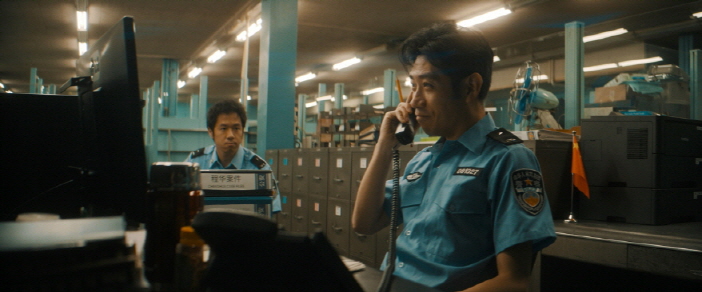
Instead of having Hsu and several others around him talk about what happened at that time, the documentary, which is incidentally produced by his second son, has them do a series of reenactment scenes along with a few performers. As shown around the end of the documentary, those phone conversation scenes are really based on what was exchanged between Hsu and those two Chinese officers on the other end of the line (Hsu wrote the screenplay for himself, by the way), and the documentary becomes a bit amusing when Hsu and one of these two Chinese police officers are together on the screen as they talk more and more with each other.

We also get to know more about Hsu’s family. His wife is busy with starting her own life, and her shiny new residence certainly makes a big contrast with his small and plain apartment which is not so furnished much on the whole. In case of his three sons, each of them is usually busy with each own matter, and we cannot help but sense some distance between them and their father, even though they are sincerely concerned about their father’s welfare from time to time.

I have no idea on whether they really present themselves in front of the camera, but Hsu’s family members look mostly natural throughout the documentary, and they often bring some extra human element to the documentary. At one point, we observe Hsu’s youngest doing two part-time jobs for earning his meager living, and it looks like he is the one who really needs some financial help from his father. In case of Hsu’s ex-wife, she is quite a spirited woman with colorful personality, and she will give you some good laugh during a brief scene in the middle of the end credits.

Meanwhile, the documentary also shows what Hsu did as following more requests and instructions from those two Chinese police officers, and that is probably the point where you become all the more suspicious about what is really going on. As a matter of fact, some of you already saw through Hsu’s circumstance right from the very beginning, and the documentary can be quite a frustrating experience for you because of that.

Thankfully, director Law Chen, who also edited the documentary, keeps the whole process lean and succinct. Although the running time is less than 80 minutes, the documentary feels mostly compact and focused, and I was only a bit disappointed that it does not provide more time and space for Hsu and his family members to show themselves more. Sure, the last 10 minutes of the documentary becomes quite reflective and intimate as handling the bitter aftermath of Hsu’s incident, but it could delve more into their feelings and thoughts in my inconsequential opinion.

In conclusion, “Starring Jerry as Himself” is not entirely without weak aspects to notice, but it is one of those sincere and likable documentaries you will not be so willing to give any negative comment. I still want to know more about Hsu and his dear family, but I was entertained by its unconventional storytelling approach nonetheless, while occasionally touched by some personal moments observed from them. Yes, what eventually happened to Hsu and his family was quite irreversible to say the least, but it seems that the making of this documentary helped them having some meaningful time together, and it is moving to see them being reminded again that they are still a family despite the incident. To be frank with you, I sincerely hope that they will continue to move on as this documentary does some good things for many old, retired people like Hsu out there.

Posted in Movies | Tagged , , , , , | Leave a comment