Noise (2025) ☆☆☆(3/4): A noisy and spooky apartment building

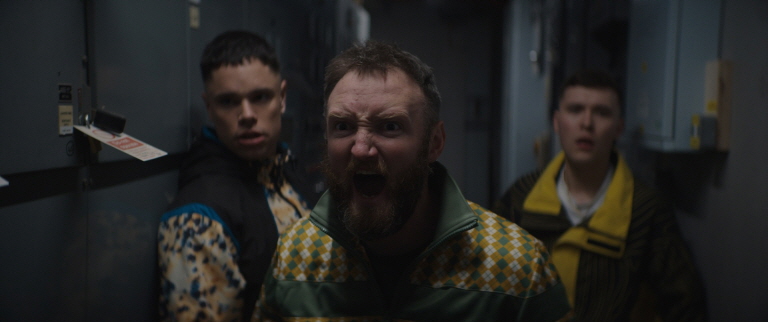
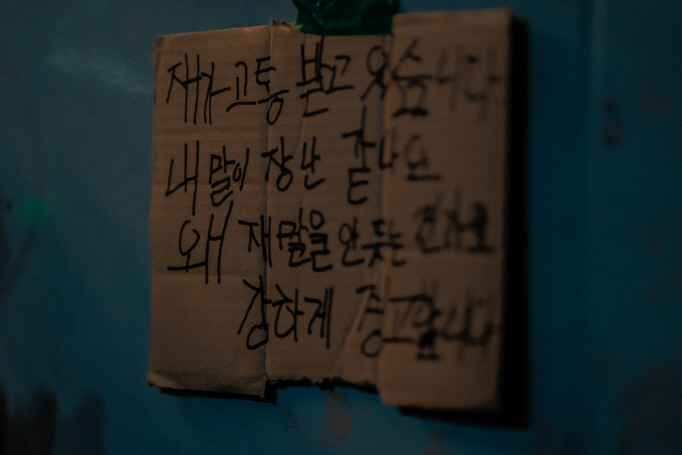
South Korean film “Noise” is a little disturbing horror flick about one noisy and spooky apartment building. If you are familiar with many other South Korean apartment horror movies such as “Possessed” (2009), you will know what you are going to get here, and the movie will not disappoint you at all as providing a fair amount of good moments of horror and dread.

After the disturbing opening scene, we are introduced to Joo-yeong (Lee Sun-bin), a young female factory worker with hearing impairment who has lived apart from her younger sister Joo-hee (Han Su-a) for a while due to a personal reason. She and Joo-hee lived together in one old apartment building, but they clashed with each other as Joo-hee became quite neurotic about the noises she often heard from somewhere in the apartment building, and Joo-yeong eventually decided to leave the apartment alone for avoiding more conflict with her younger sister.

On one day, Joo-yeong is notified that her younger sister suddenly disappeared without any trace, so she immediately goes to their apartment, and she is more baffled as there is no evident reason for her younger sister’s disappearance. Although it is clear that Joo-hee kept getting annoyed by those noises as before, she was also preparing for her older sister’s upcoming birthday right before her disappearance, and Joo-yeong becomes all the more determined to find any clue to her younger sister’s whereabouts.

However, most of the neighbors in the apartment building are not so friendly to say the least for understandable reasons. Many of them want their apartment building to be demolished and then reconstructed as soon as possible for their economic benefit, and these people are certainly ready to suppress the disappearance of Joo-yeong’s younger sister as much as they can, just because it may seriously jeopardize the approaching chance for the reconstruction.

Not so surprisingly, it is soon revealed to Joo-yeong that her younger sister’s disappearance may be a mere tip of whatever is going on inside the apartment building. While their apartment actually turns out to have a disturbing past, there is also a very disturbed man living in the apartment right below theirs, and he becomes more and more threatening to Joo-yeong as he complains more than once about the noises supposedly heard from Joo-yeong and her younger sister’s apartment.

While quite scared and flabbergasted about his increasingly menacing complains, Joo-yeong also begins to hear strange sounds just like her younger sister did. These sounds seem to come from the apartment right above theirs, but then she is told later that that apartment has actually been empty during last several months. As she gets more nervous day by day, she also comes to have a series of nightmares, and that makes her become more aware of the possibility of some malevolent presence lurking somewhere inside the apartment building.

Around that narrative point, you will probably have some good idea about whatever is happening around our heroine – especially when she eventually decides to check out a certain dark (and stinking) place right under the apartment building later in the story. I like one brief moment which is basically a variation of a certain well-known genre cliché (No, it is not a cat this time, by the way), and I also appreciate how the movie utilizes its heroine’s disability for more terror and suspense in a way not so far from “Wait Until Dark” (1967).

During the last act, the movie falters a bit as throwing its heroine into more horror and panic as required, but it is still held well together thanks to its palpably spooky atmosphere surrounding the story and characters. While the apartment building in the film looks more ominous with its shadowy corners, the supporting characters in the film contribute more dramatic tension to the story as required, and there are a couple of surprises for us as our heroine discovers a bit more about some of these characters.

The movie surely depends a lot on the presence and talent of its lead actress, and Lee Sun-bin gives a strong performance to carry the film to the end. Even when the movie falters a bit during its last act, Lee’s good efforts continue to our attention, and we come to care more about her character’s risky journey into fear and darkness as dreading more for the worst. In case of several substantial supporting performers in the film, Han Su-a, Kim Min-seok, Jeon Ik-ryung, and Baek Joo-hee are also well-cast in their respective roles, and they effectively support Lee in one way or another along the story.

On the whole, “Noise”, which is incidentally the first feature film of director Kim Soo-jin, is a modest but fairly solid horror movie, and it certainly scared and entertained me and several other audiences around me enough at last night. As I walked out of the screening room along with them, some of them joked that they were afraid of going back to their apartments, and I could not help but amused by that as reflecting a bit on my current solitary life in a new apartment building. Yes, I have sometimes heard the noises from the apartment above mine during last several months, but these noises are not that loud at least, and I guess I should be thankful that they are not insidious at all.
Posted in Movies | Tagged , , , , | 1 Comment

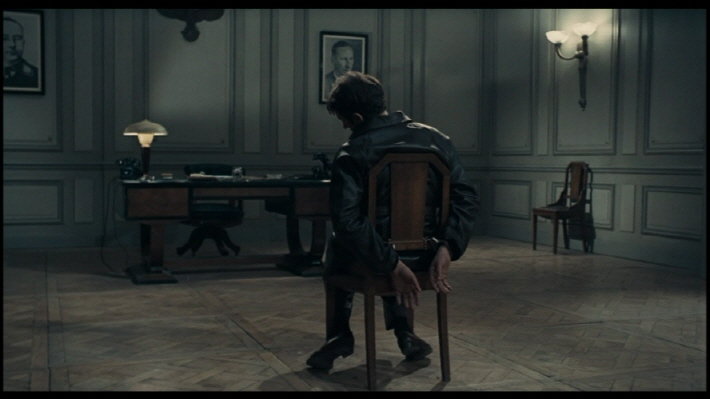
Army of Shadows (1969) ☆☆☆1/2(3.5/4): A gloomy World War II resistance drama

Jean-Pierre Melville’s 1969 film “Army of Shadows”, which was released in South Korean theaters on this Wednesday, is a cold and gloomy World War II drama about the perilous struggles of a bunch of French Resistance members in the middle of the wartime. While most of them believe in their righteous cause, there are always the possibilities of danger and death around them, and the movie stays focused on their grim human condition without any unnecessary sentimentality.

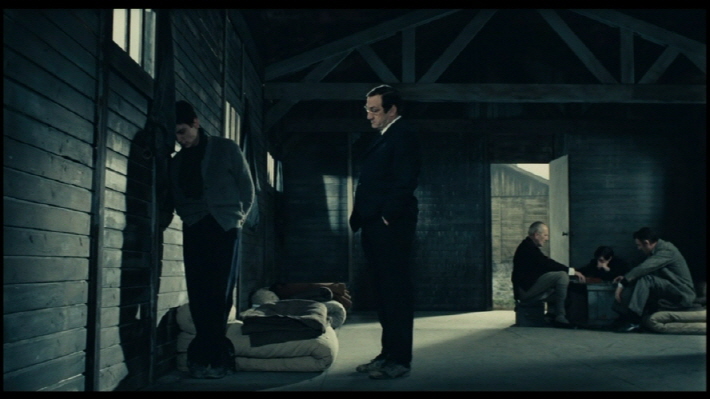
The movie, which is mainly set in France between 1942~1943, begins with the introduction of Philippe Gerbier (Lino Ventura), a civil engineer who has been the leader of a French Resistance cell but is now being sent to a prison after his recent arrest. As stuck with several other prisoners in one big cell, he patiently waits for any possibility for escape, and then there comes an unexpected opportunity later, and he manages to escape in the end.

Once Gerbier returns to his group, we get to know more about several other members working under him. Most of them were mere civilians before the war, and this aspect is evident when they are going to handle someone who betrayed one of them. Under Gerbier’s order, they seem ready to eliminate that traitor in question at first, but they turn out to be quite clumsy in accomplishing this questionable task, and that leads to a very uncomfortable moment which feels all the more disturbing because of the coldly objective attitude of the film to what eventually occurs among them.

The movie often conveys to us how dangerously Gerbier and his comrades operate in the midst a lot of uncertainty and ambiguity. While their opponents including those Nazi German soldiers and Gestapo officers remain firm and ruthless as before, there is not much help coming from the Allied Forces in UK, and the liberation of their country still seems beyond their reach no matter how much they struggle in corners and shadows. Furthermore, they must keep themselves in secret as much as possible, and there is an ironic scene where two close brothers do not reveal anything to each other without knowing at all that they actually work in the same Resistance group.

The movie is based on the novel of the same name by Joseph Kessel, which is partially inspired by Kessel’s own resistance experience. Melville, who adapted the novel, also had a fair share of resistance experience during the wartime, and that is the main reason why the movie sharply and coolly observes the story and characters with no pretension at all. Yes, Gerbier and his several comrades are courageous people indeed, but they often find themselves entering those gray moral areas as their belief is tested a lot in one way or another, and that is particularly evident from when Gerbier faces an impending matter of life and death later in the film. He certainly wants to stick to his belief to the end, but, ironically, his following brief moment of weakness comes to save him at the last minute, and he bitterly muses a bit on that later.

Meanwhile, the movie keeps holding our attention via several suspenseful sequences to remember including the one where several Resistance members attempt to save an incarcerated member of theirs. As they manage to avoid the suspicion of the German soldiers for infiltrating into the prison step by step, the movie deftly dials up the level of tension step by step under the surface, and the resulting tense mood surrounding the Resistance members is accentuated further by the absence of music.

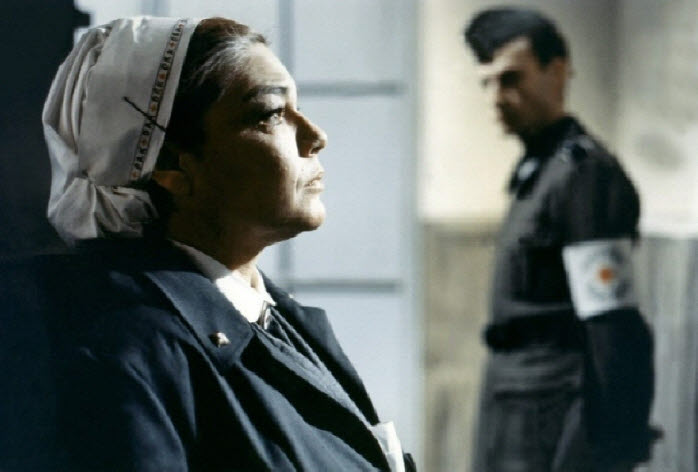
The movie also provides some little bright moments at times. When Gerbier and a senior member of his Resistance group come to London via a very tricky route, they come to have a short moment of respite, but they are also often reminded of how the war is being continued as before, and they eventually return to France for joining their comrades. One of their comrades is a woman named Mathilde (Simone Signoret), who turns out to be quite brave and resourceful and then becomes Gerbier’s right-hand figure, though she also has her own vulnerability just like her comrades.

Ably tunning their performance to the overall moody tone of the film, the cast members of the film are all excellent in their respective parts. While Lino Ventura steadily holds the ground as required, Paul Meurisse, Jean-Pierre Cassel, Claude Mann, Paul Crauchet, and Christian Barbier have each own moment to remember. As the sole substantial female character in the story, Signoret does much more than holding her own place among her male co-stars, and her best moment in the film comes from when her character confronts the inevitability of her impossible circumstance around the end of the story.

On the whole, “Army of Shadows”, which was incidentally not introduced to American audiences before 2006 mainly because it unfairly received the harsh political criticisms from many French movie critics when it was released in France in 1969 (They thought it was the glorification of Charles de Gaulle, by the way), is one of the best films from Melville, and it clearly shows his own distinctive touches to be appreciated. Just like his notable crime drama films such as “Bob le flambeur” (1956), “Le Samouraï” (1967), and “Le Cercle Rouge” (1970), the movie is shrouded in a dark and bitter mix of suspense and pessimism, and those Resistance members in the story actually do not look that different from those lonely or desperate criminal heroes of his crime drama films. Although this is not a comfortable experience at all, you will soon be engaged in its bleak but undeniable compelling drama once you go along with its patient storytelling, and you will be chilled more when it finally arrives at its stark epilogue.

Posted in Movies | Tagged , | Leave a comment

Sasquatch Sunset (2024) ☆☆1/2(2.5/4): One year of a Sasquatch clan

“Sasquatch Sunset” is an oddly interesting film which may frustrate you at times for good reasons. Steadily following one year of a small Sasquatch clan inhabiting somewhere in the wilderness of Northern California, the movie simply observes their behaviors and feelings, and it adamantly pushes its challenging story setting as much as it can, though it eventually stumbles more than once due to its rather thin narrative.

At first, we are introduced to the four members of that Sasquatch clan one by one, and we get some sense of hierarchy from them. The group is mostly dominated by the one who can be regarded as “Alpha Male” (Nathan Zellner, who incidentally co-directed, co-produced, and co-edited along with his brother David Zellner), and we soon see him having sex with the only female member of the clan, while the other two members including her child are watching this from the distance.

After that, we observe how these four Sasquatches go through another day in their forest. They often look for anything to eat, and there is a little amusing moment when the other male adult member of the clan, played by Jesse Eisenberg, has to give up what he just found to Alpha Male before trying to grasp the concept of counting.

Needless to say, there is always the possibility of danger around them in the wilderness as reflected by the occasional shots of various wild animals also inhabiting in the forest. At one point, they discover some plant berries to eat, but then Alpha Male discovers something else which turns out to be quite intoxicating. As a consequence, he ends up showing more of what a lousy leader he is, and this leads to a series of humorous moments including the one involved with a poisonous mushroom.

What eventually occurs after that narrative point makes the film feel a bit more serious than before. I will not go in detail here for not spoiling anything, but I can tell you instead that the Sasquatches come to show genuine emotions and this makes us more curious about what they are actually feeling or thinking. Although they are one or two steps below us in terms of evolution, they seem to be capable of showing some sincere consideration, and we come to observe them with more curiosity as well as more amusement.

As the story rolls along several seasonal changes, we come to sense more of a certain biological change from the female member of the clan, who is played by Riley Keough. She understandably becomes more sensitive about her current condition, and the male members around her including her child respect that to some degree, but the situation becomes quite desperate as winter is coming to the forest later.

Meanwhile, the screenplay by David Zellner has its main characters experience a few accident encounters with the world outside their habitat. At one point in the middle of the story, they happen to come across a paved road leading to somewhere outside the forest, and their surprise and bafflement are accentuated further by the unconventional score by the Octopus Project. In case of one particular scene accompanied with an unexpected musical moment, we become more conscious of the rather inexplicable absence of human beings in the film, and that impression is more emphasized around the end of the story.

As coming to lose some of its narrative momentum during its last act, and the movie seems to be at a loss just like its main characters, but you will admire the considerable efforts put on and behind the screen. The directors and their crew members including cinematographer Michael Gioulakis, who previously worked in “It Follows” (2014) and “Us” (2019), did a commendable job of establishing the vivid outdoor atmosphere on the screen, and the Sasquatches in the film look fairly convincing even though we are sometimes clearly see that they are just the performers wearing the costumes and a lot of makeup.

Nevertheless, the four performers of the film somehow bring enough personality and feeling to their respective roles, though I must confess that it took some time for me to distinguish one from another due to their very, very, very hairy appearance. Keough, who has been one of the most dependable actresses in American independent cinema since “American Honey” (2016), deftly and subtly builds up her character along the story, and her resulting good performance ably carries several key scenes in the movie. On the opposite, Eisenberg, who also participated in the production of the film along with Keough, willingly throws himself into an equally challenging task while not overshadowing his co-star at all, and Nathan Zellner and Christophe Zajac-Denek are also effective in their respective supporting parts.

Overall, “Sasquatch Sunset” is not good enough to compensate for its several weak aspects, but it is not entirely without interest, and I admire not only the efforts of its cast members but also the competent direction of David and Nathan Zellner, who previously worked together on “Kumiko, the Treasure Hunter” (2014) and “Damsel” (2018). The directors are already working on their next film at present, and I sincerely hope that I will be more entertained and satisfied.

Posted in Movies | Tagged , , | Leave a comment

Jurassic World Rebirth (2025) ☆☆(2/4): Or regurgitation, shall we say

“Jurassic World Rebirth” should be titled “Jurassic World Regurgitation” instead in my trivial opinion. While it is supposed to try to do some new stuffs, it only serves us the same old kinds of terror and action without bringing anything particularly fresh to its declining franchise, and I only ended up feeling more bored and exhausted when I left the screening room at last night.

At least, the movie indirectly recognizes how much we have been accustomed to watching big CGI dinosaurs on the screen since “Jurassic Park” (1993). After what happened in “Jurassic World Dominion” (2022), those dinosaurs become mundane things for the human civilization, and then, due to several issues including climate and disease, they eventually inhabit the remote tropical areas of the Equator region only.

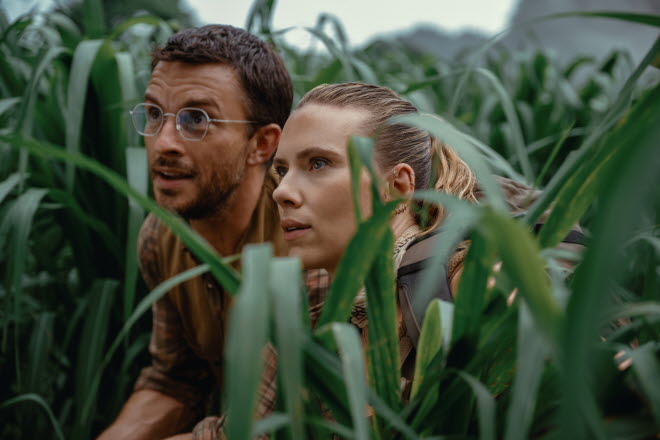
One of those remote tropical areas is a small island near South American continent, and it turns out that some big pharmaceutical company wants to extract a fresh biological sample from three certain dinosaurs for developing a drug to cure human heart diseases once for all. Zora Bennett (Scarlett Johansson), a covert operation expert, is hired for this highly dangerous mission, and we soon meet several other team members including her old colleague Duncan Kincaid (Mahershala Ali) and Dr. Henry Loomis (Jonathan Bailey), a young paleontologist who will willingly assist and help Bennett and her team.

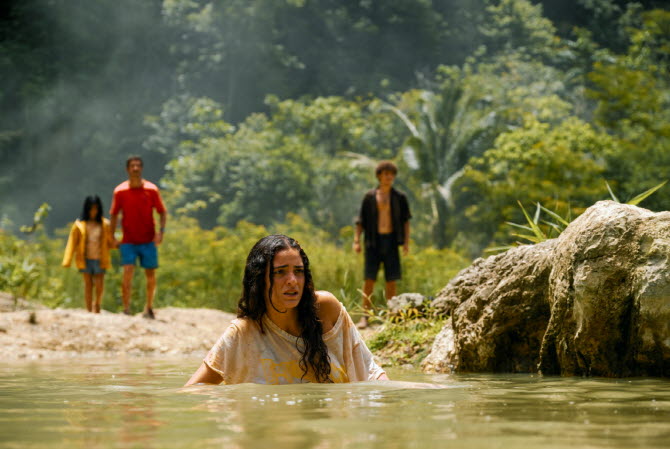
Of course, things do not go that well for them right from when they arrive at that island in question. The island turns out to be much more dangerous because it actually has an abandoned secret facility involved with developing new kinds of dinosaurs, and there is also a serious matter involved with an American family who happens to be sailing around the island.

Even though their plan is jeopardized to some degree due to rescuing that American family from an imminent danger, Bennett and her team keep trying to get their job done as soon as possible in the island, but the situation keeps becoming more perilous. They get separated from that American family as trying to deal with another dinosaur attack, and that is just the beginning of more troubles to come for them.

As the main characters try to survive their increasingly risky circumstance, the movie naturally throws some dinosaurs into the story as expected, but many of their scenes are less scary or awe-inspiring even compared to the three previous Jurassic World flicks. While there is a lovely moment where we are allowed to appreciate the view of a bunch of gigantic dinosaurs for a while as Alexandre Desplat’s score expectedly quotes the theme from “Jurassic Park” by John Williams, many dinosaur scenes feel utterly plain and mundane while mostly existing for scaring us, and this is particularly evident in case of an action sequence involved with T-Rex.

Above all, the new dinosaurs introduced in the film look merely ugly and hideous. Sure, they are supposed to be the freaks of genetic engineering, but they do not look particularly memorable on the whole. In case of a certain big dinosaur appearing later in the story, it looks so unimaginatively dreadful that you may laugh a bit instead of being amazed or excited at all.

In addition, the screenplay by David Koepp, who wrote the screenplay for “Jurassic Park” and its 1997 sequel, does not provide much human element to engage us. While Bennett and Kincaid have a few private moments to show a bit of their inner life, they remain as thin archetypes just like the other main characters including that American family. The subplot involved with the rather strained relationship between the father of that family and his elder daughter’s goofy boyfriend is quite predictable to say the least, and the same thing can be said about the one involved with a cute little dinosaur, which apparently exists only for merchandising.

The main cast members did try their best with their respective generic roles. Although this is not the first time when she played a covert operation expert (Remember all those Avengers flicks?), Scarlett Johansson dutifully holds the center as required, and Mahershala Ali, who is also too good for the movie just like his co-star, provides a bit of extra gravity to the story as required. In case of several other notable cast members, they do not have much to do from the start, but Rupert Friend is suitably sleezy as an employee of that pharmaceutical company, and Jonathan Bailey, who recently became more notable thanks to his supporting role in “Wicked” (2024) and will soon return in its following sequel in this year, manages to bring some humor and enthusiasm to his nerdy but handsome character (In addition, he also gladly participated in the recording of Desplat’s score as one of the session musicians, by the way).

In conclusion, “Jurassic Park Rebirth” is disappointing in many aspects even though director Gareth Edwards, who surely knows how to present big CGI creatures as shown from “Monsters” (2010) and “Godzilla” (2014), try his best with his crew members including Oscar-nominated cinematographer John Mathieson. If you simply want to see more of the same stuffs, you will be probably more entertained than I was, but, folks, don’t we deserve better than this cynical and pointless commercial product?

Posted in Movies | Tagged , , | 1 Comment

Crash (2004) ☆☆☆(3/4): Crashes among racial stereotypes in LA

I must confess that I had a rather complicated history with Paul Haggis’ 2004 film “Crash”. When it won several Oscars including the one for Best Picture right before getting released in South Korean theaters in early 2006, I was disappointed because I rooted for “Brokeback Mountain” (2005) or “Munich” (2005). When I finally watched the movie a few weeks later, I was quite annoyed with the early part of the film as becoming more convinced that the Academy voters indeed made a wrong choice, but, what do you know, my heart was knocked down more than once by the rest of the film, and I came to have some understanding on why my late mentor/friend Roger Ebert picked it as the best film of 2005.

Even though I still believe that “Brokeback Mountain” or “Munich” should have won the Best Picture Oscar instead, I also think “Crash” is not exactly the worst Best Picture Oscar winners during last 25 years (That dishonor should go to “Green Book” (2018), by the way), but, as revisiting it again at last night, I could not help but reminded of how much I and the world have changed since it came out 20 years ago. There was some hope and optimism with Barack Obama entered the White House a few years later, but then there came that Donald J. Trump, whose sheer cruelty and stupidity have exposed and then fueled the truly ugly sides of American racism. Considering what has happened during last 10 years thank to that bastard and his equally racist cronies, the main message of “Crash”, which is basically “Can we just get along well with each other?”, seems quite naïve to me at times now.

Nonetheless, the movie still works in terms of story and characters. Once it quickly establishes various stereotype characters during its first act, the screenplay written by Haggis and his co-writer Bobby Moresco catches us off guard more than once via unexpected dramatic moments, and we come to regard its many main characters with more complicated feelings. Yes, some of them are quite unpleasant to say the least, and that is one of the main reasons why I became so annoyed during my first viewing, but then I came to have some understanding and empathy on them even though I still did not like them much.

Like “Short Cuts” (1993) and “Magnolia” (1999), the movie draws our interest as juggling a bunch of many different characters who turn out to be connected with each other in one way or another as they are going through another day in LA. After the brief prologue scene involved with two detectives who happened to have a car accident right before arriving at a crime scene, the movie moves onto an unfortunate incident between a couple of young black man and a certain white couple, and then we see how that incident indirectly causes a very disturbing happening between a couple of patrolling cops and one black couple.

These and many other characters in the film frequently show each own racism as clashing a lot with each other during its first act, and I must say that this part still gets on my nerve as before. In my humble opinion, the movie tries a little hard on making the point on how we are often not so free from prejudice and bigotry in each own way, and this makes the film look like a mere educational film for school kids at times.

However, its supposedly broad main characters turn out to be a bit more complex than expected as the movie keeps rolling them along its interconnected narratives. For example, one of those two patrolling cops is apparently your average racist, but then there comes a surprisingly powerful emotional moment as he comes across someone who does not want to see him again at all. In case of the other cop, who is your typical rookie cop, he does not approve much of his partner’s racist behavior, but then there comes a tragic moment of irony later in the film, which always reminds me of what John Huston’s character says in “Chinatown” (1974): “You see, Mr. Gittes, most people never have to face the fact that at the right time and the right place, they’re capable of ANYTHING.”
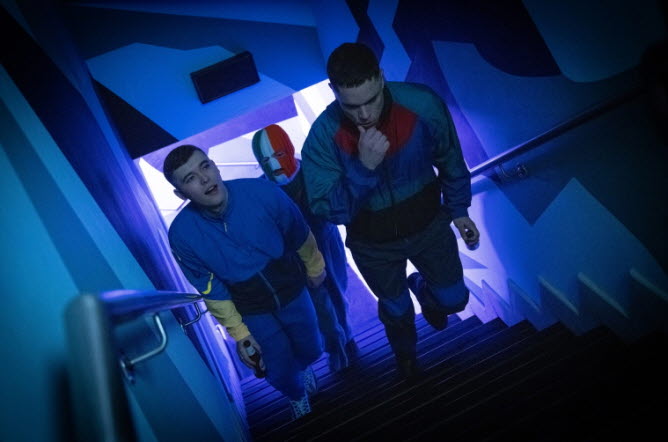
One of the most poignant moments in the film come from the subplot involved with a Latino locksmith. While he may look like your average Latino thug on the surface, he actually turns out to be a caring family man genuinely concerned about his little daughter’s welfare in their rather tough neighborhood, and their little private conversation scene is all the more touching, considering how it leads to another powerful moment later in the story.

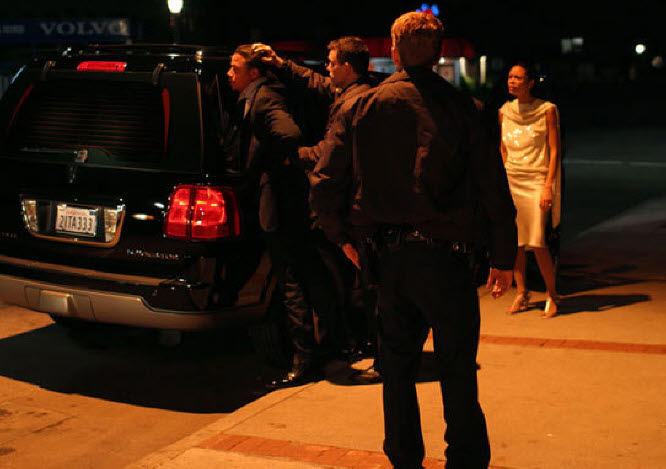
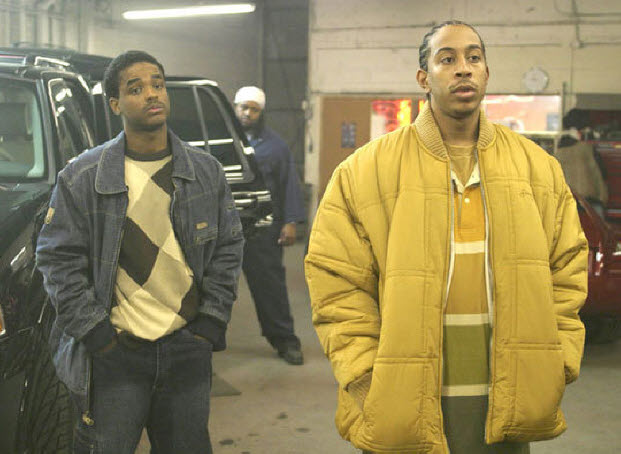
Around the last act, the movie loses some of its narrative momentum, but it is still supported well by its strong ensemble performance from its numerous cast members, which is incidentally the best thing in the film. While Don Cheadle humbly holds the center as a detective who must make some hard choice for his problematic family, Sandra Bullock, Brendan Fraser, Jennifer Esposito, Terrence Howard, William Fichtner, Shaun Toub, Loretta Devine, Michael Peña, Ludacris, Ryan Phillippe, and Larenz Tate have each own moment to shine, and Matt Dillon and Thandiwe Newton are particularly excellent in their respective parts. I still remember when I was quite overwhelmed by the painfully human reaction of Newton’s character to Dillon’s character during that dramatic moment, and this actually sensitized me to a considerable degree as a movie reviewer. Yes, Dillon’s character did the right thing for saving her during that scene, but he does not feel redeemed at all as reflected by a brief moment of his later in the film, and I think he will remember more of her pain and anger.

Overall, “Crash” does not age that well compared to its main Oscar competitor, but I think it is still a good film whose several strong elements compensate enough for a number of weak ones including its rather condescending presentation of its Asian characters. I initially gave it 3.5 stars out of four as a young moviegoer, but now I give it 3 stars as a seasoned one with more experience and knowledge, and I will let you decide your opinion on this rather flawed but engaging movie.

Posted in Movies | Tagged , , | Leave a comment

Brokeback Mountain (2005) ☆☆☆1/2(3.5/4): A classic tale of star-crossed romance 

Ang Lee’s 2005 film “Brokeback Mountain” has endured the test of time pretty well during last 20 years to my little surprise. While I regarded it as a major breakthrough in several aspects at that time, I also wondered whether it would get eventually aged as opening the door for its numerous juniors to come, but, what do you know, it still works as a classic tale of star-crossed romance with a lot of sincerity and sensitivity.

The early part of the movie, which is set in a rural area of Wyoming, 1963, begins with the first encounter between two different young men: Ennis Del Mar (Heath Ledger) and Jack Twist (Jake Gyllenhaal). They happen to be hired by some cranky rancher to take care of a big herd of sheep on Brokeback Mountain during next several months alone by themselves, and the movie observes how difficult and demanding their job is as they begin their first days on the mountain.

And we get to know these two lads bit by bit. Ennis is quite taciturn while usually focusing on doing his job day by day, but Jack is relatively more flexible about their work while being often quite open about whatever he feels or thinks right now. As a matter of fact, we gradually sense something being developed between Jack and Ennis, as the camera often lingers a bit more on how Jack looks at Ennis.       

In the end, Ennis comes to open himself a bit more to Jack, because, well, there is no one else to talk with besides his partner right now. Both of them come to see more of how lonely they have been in one way or another, and then there eventually comes a fateful moment when they find themselves quite attracted to each other. As observing how they instantly follow their sexual urge once they feel more of their mutual attraction, I was reminded of how I did not hesitate at all in my first sexual experience with a boy around my age in the middle of one night in early 1997. I certainly felt afraid, but I wanted to do that, and I and he immediately followed our urge without thinking anything else.

We subsequently told ourselves that we were not gays, like Jack and Ennis did after their first sex, but we continued our little secret relationship for a while, and that is why I am always a bit amused as observing how Ennis and Jack become more attracted to each other along the story. They surely want to look away from what they cannot totally understand or accept, but they also cannot help but follow what their hearts want, and the movie handles their clumsy but unadorned romance with tender thoughtfulness.

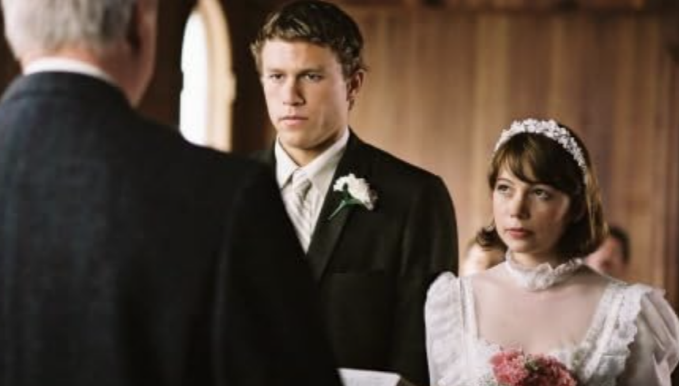
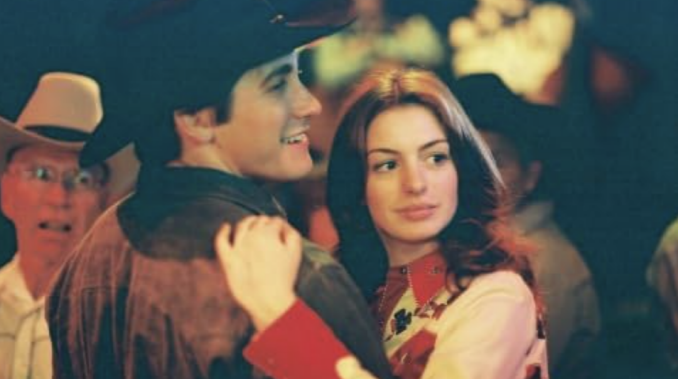
Some time later, Jack and Ennis come to part ways as their work is eventually over, but they cannot forget each other even after they respectively get married. While Ennis marries his longtime girlfriend Alma (Michelle Williams), Jack marries Lureen (Anne Hathaway), the daughter of some rich businessman in Texas. Both of them try to be happy with their respective married lives, but they only find themselves becoming more distant from their spouses, and Ennis does not hesitate at all when Jack tries to reach him later.

While being always happy to be with Jack during their “fishing trips”, Ennis still hesitates to go further because he is still not so comfortable with his homosexuality as haunted by one traumatic childhood incident involved with a murdered gay man. This tendency of his is continued even after he divorces Alma, and this certainly frustrates Jack, who really wants to have a real honest life with his lover someday.  

The screenplay by Larry McMurtry, who is no stranger to loneliness considering his several acclaimed novels such as “Lonesome Dove” and “The Last Picture Show”, and Diana Osana, which is based on the short story of the same name by Annie Proulx, handles several inherently melodramatic moments during the second half of the movie with considerable empathy and honesty. While we come to know and understand its two heroes more than before, we also come to have some sympathy toward their respective spouses, who have to deal with a fair share of emotional issues due to their increasingly distant husbands. 

Lee’s handling of the story and characters seems quite plain and transparent on the surface, but his deft direction makes us pay more attention to small but crucial emotional moments, and he and his crew members including cinematographer Rodrigo Prieto did a stellar job of filling the screen with an ample amount of mood and details to observe. As Prieto’s camera vividly and crisply captures the remote landscapes surrounding Ennis and Jack, we are more reminded more of how lonely they are – and how desperately they need each other. The sparse score by Gustavo Santaolalla, who won an Oscar for this film (The movie also won Best Director and Best Adapted Screenplay Oscar, by the way), effectively reflects the tentative yearning inside Jack and Ennis, and its best moment comes from when Ennis becomes a bit more honest about his feelings around the end of the story.

The movie was a major breakthrough for its four main cast members. While Heath Ledger, who would give us another memorable performance in “Dark Knight” (2008) right before his unfortunate death, is touching in his subtle embodiment of Ennis’ conflicting emotions, Jake Gyllenhaal ably complements his co-star, and Michelle Williams and Anne Hathaway do more than holding each own place around the story. Williams is particularly good when her character is quite confused and devastated after unexpectedly discovering Ennis’ big secret, and Hathaway has a brief but important moment when her character has a short phone conversation with Ennis later in the story. Randy Quaid, Linda Cardellini, and Anna Farris are also effective in their small supporting roles, and you may be amused by the brief appearances of David Harbour and Kate Mara, both of whom were starting their respective careers at that time.

While it may look a bit tame compared to many subsequent LGBTQ+ films ranging from “Carol” (2015) to “All of Us Strangers” (2023), “Brokeback Mountain” is still a powerful love story both universe and specific, and it also remains one of the best works from Lee, whose filmmaking career is as diverse as that of, say, Sidney Lumet. It does not seem so easy to find any common ground among “Sense and Sensibility” (1995), “Crouching Tiger, Hidden Dragon” (2000), “Hulk” (2003), “Lust, Caution” (2007), and “Life of Pi” (2012), but it is clear that he is a master filmmaker who always pays attention to story and characters first, and it is a shame that he has been rather quiet since the critical and commercial failure of his last two films “Billy Lynn’s Long Halftime Walk” (2016) and “Gemini Man” (2019). At least, he gave us a number of excellent movies besides “Brokeback Mountain”, and he certainly deserves our admiration as before.

Posted in Movies | Tagged , , | Leave a comment

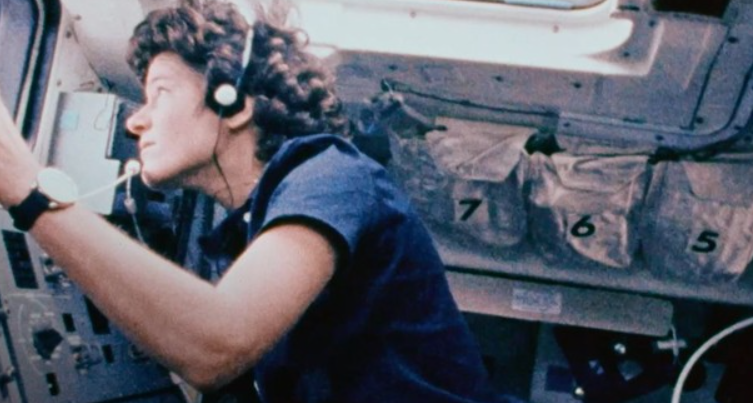
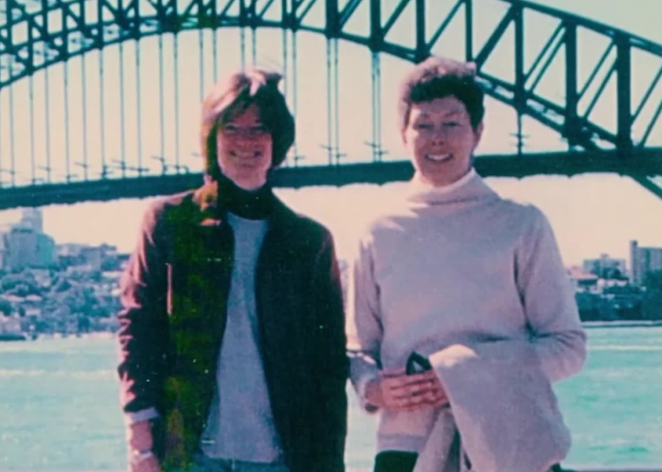
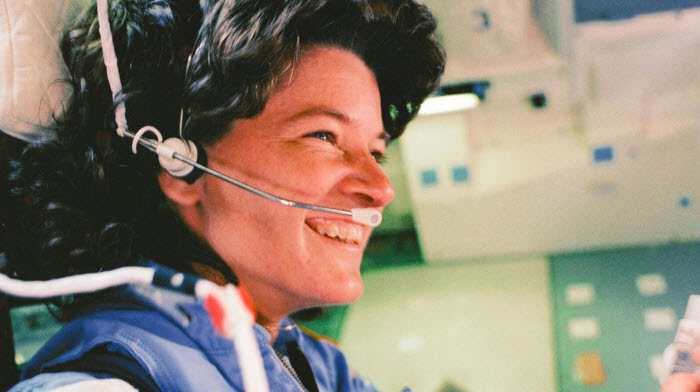
Sally (2025) ☆☆☆(3/4): Her personal sacrifice for being a trailblazer

Documentary film “Sally”, which is currently available on Disney+, presents the complex life story of Sally Ride, who was one of the most famous female trailblazers in US during the 20th century. She really tried hard to become a notable figure in the NASA history, and she did succeed in getting recognized and respected for her significant achievement, but she also had to sacrifice a lot of her personal feelings for understandable reasons.

On the surface, Ride was like an almost perfect model example showing that women can do anything as much as men. Thanks to her progressive parents, she and her younger sister were often encouraged to follow their hopes and dreams as much as they could, and, despite frequently daunted by all the bias and discrimination against girls, young Ride kept going before eventually applying for the NASA astronaut program around the late 1970s.

Fortunately, Ride was at the right time for her big aspiration. As shown in 2018 Netflix documentary film “Mercury 13”, NASA actually considered sending female astronauts to the space in the 1960s, and those female candidates selected at that time turned out to be more qualified than many of male astronauts, but, sadly, their hope and dream were discarded in the end due to a lot of sexism in the male-dominated environment of NASA. As shown in recent documentary film “The Space Race” (2023), which is also available on Disney+, NASA belatedly considered more inclusion for women and minority races in the next decade, and that was how Reid and five other women were eventually allowed to join NASA.

Of course, Ride and her fellow female astronauts were all aware well of how much they had to try and work for making that historical moment for women someday. Besides enduring the frequent sexism from many male astronauts and engineers in NASA, they also had to compete with each other everyday just because NASA allowed only one of them to go to the space, and, as her several surviving colleagues remember, Ride was quite competitive to say the least. Compared to her main competitor Judith Resnik, she was usually more focused without being that social, and that calmly professional attitude of hers eventually helped her earn that coveted opportunity in the end.

Of course, as she frankly admitted later, Reid was quite nervous as preparing for her first time in the space along with several male astronauts during several months of 1983. After all, anything could have gone quite right wrong once the launch of the space shuttle was started, but she stayed cool as demanded by her historical moment to come, and she succeeded in accomplishing her first space mission in the end. 

After returning from the space, Ride quickly became one of the most famous women in the world, and she enjoyed this sudden public fame to some degree, but there was a serious personal matter behind her. Around the time when she entered her adolescent period, she became aware of her homosexuality, and she actually had a girlfriend during her college years before joining NASA, though she did not tell anyone about that homosexual relationship of hers.  

In the middle of her NASA period, Ride married one of her male colleagues, but her ex-husband, who eventually divorced her several years later, frankly reveals that they were pretty much like roommates instead of a real married couple mainly because both of them were frequently busy with their respective jobs. In addition, Ride also found herself getting attracted to Tam O’Shaughnessy, an old friend of hers who had been a lot more honest about being a lesbian than Ride. At first, they frequently hung around with each other as close friends, but then they became franker about their mutual attraction, and that was the beginning of their long partnership, which turned out to be much more enduring than expected.

Nevertheless, Ride kept hiding their relationship from others in public to her partner’s growing frustration. When she subsequently left NASA after getting quite devastated and disillusioned due to a shocking tragic accident in 1986 which killed several NASA astronauts including Resnik, Ride became less burdened about her closeted status than before, but she still hesitated to come out of her closet. This led to a big crisis in her relationship with O’Shaughnessy, but, after a serious personal conversation between them, her partner chose to continue to live with Ride because, well, Ride still could make her laugh as before.

Ride did appreciate her partner’s patient understanding, and her last few years poignantly show that it is never too late as long as you are still alive. Becoming far less afraid of what others think about her around that point, Ride finally decided to do what should have been done for her as well as her dear partner, and O’Shaughnessy stood by her to the end as they showed more love and appreciation to each other. 

Although it could go deeper into its main subject for more insight, “Sally” provides us fairly enough enlightenment on Ride’s life and career at least, and director/co-writer/co-producer Christina Constantini handles her human subject with enough care and respect on the whole. It is often sad to observe how much she hid and sacrificed behind her strong and confident appearance, but Ride did her best for her life and career nonetheless, and that is certainly admirable in my inconsequential opinion.

Posted in Movies | Tagged , , , , | Leave a comment

Nausicaä of the Valley of the Wind (1984) ☆☆☆1/2 (3.5/4): Miyazaki’s first big break

Hayao Miyazaki’s 1984 animation feature film “Nausicaä of the Valley of the Wind”, which happens to be re-released in South Korean theaters a few days ago, is still a rich and enchanting work of awe, wonder, and interest. Although it was only his second animation feature film, the style, mood, and ideas observed from many of subsequent works from Miyazaki are already evident here this film, and it is all the more amazing to observe how much he has advanced from his first big break during last four decades.

Although the logo of the Studio Ghibli appears at the beginning of the film, “Nausicaä of the Valley of the Wind” is actually not the first official Ghibli animation film, though its commercial success contributed a lot to the subsequent foundation of the Studio Ghibli. After the disappointing local box office result of his first animation feature film “The Castle of Cagliostro” (1979), Miyazaki went through a brief period of professional slump, but, thanks to the encouragement from his future Ghibli producer Toshio Suzuki, he began to write a manga series titled, yes, “Nausicaä of the Valley of the Wind” in 1981, and the following considerable success of this manga series eventually led to Miyazaki adapting it into an animation feature film. 

As revisiting the film at a local theater with a friend of mine yesterday, I was impressed a lot again by its bountiful imagination and ideas. While it looks like your average post-apocalyptic tale at first, its backgrounds and characters are presented with an ample amount of style and personality to observe, and even the sights of those vast and bleak landscapes in the film often shine with mood and details to notice. Furthermore, the film wisely takes its time for establishing not only the story and characters but also its alien but interesting post-apocalyptic background more, and we find ourselves already quite immersed in this strange but compelling world when it goes for more action later in the story.

The heroine of the story is Nausicaä (voiced by Sumi Shimamoto), the strong-willed princess of a little kingdom located in the Valley of the Wind. Around 1,000 years ago, the human civilization and the Earth were destroyed a lot by not only some big war but also environmental pollution, and the remaining humans have struggled a lot for their survival under a very harsh condition. The main obstacle for their survival is those big and wide fungi forests called the “sea of decay”, and the Valley of the Wind is one of a few places safe from the toxic gas and dangerous spores from the sea of decay, mainly thanks to the constant presence of wind.

While many others in her kingdom try to stay away from the sea of decay as much as possible, Nausicaä has been quite curious about whatever is living inside the sea of decay besides those gigantic mutant bugs which sometimes threaten the remaining human survivors. As a matter of fact, it subsequently turns out that she has steadily studied the ecology of the sea of decay, and we come to learn later that she actually discovered something important about this supposedly dangerous place.

Meanwhile, the situation becomes quite troublesome for Nausicaä and her little kingdom. Not long after a big aircraft crashes into the Valley of the Wind, she and many others in the kingdom are threatened by those fungi spores which came along with that crashed aircraft, and they also find themselves stuck in a very tricky position in the middle of the ongoing battle between two other kingdoms out there.

These two battling kingdoms are mainly represented by Asbel (voiced by Yōji Matsuda) and Kushana (voiced by Yoshiko Sakakibara), respectively. While both of them are fairly reasonable persons capable of following their better sides, they are also quite willing to stop each other by any means necessary, and the film does not hesitate to show or imply the devastating consequences of their violent actions committed along the story.

Eventually placed among these two conflicting groups and the giant mutant bugs also willing to do anything for protecting the sea of decay as well as themselves, Nausicaä, who is incidentally a strong female character which will make many Disney Princess characters look quite docile and passive to say the least, tries her best even though all seems lost for her and her people, and she adamantly follows her pacific belief as before. Her following actions of goodwill and courage are depicted with earnest poignancy to touch us, and you may also be reminded of why we should not stop caring at any chance even though things have become a lot grimmer and more pessimistic these days.

Although I place it one or two steps below the greatness of “My Neighbor Totoro” (1988) and “Spirited Away” (2001), “Nausicaä of the Valley of the Wind” is still one of the better Ghibli animation films, and I was often entertained as noticing more of how much it has subsequently influenced not only Miyazaki himself but also many other filmmakers out there. Many of its elements eventually became the recurring ideas and themes of his later works such as “Princess Mononoke” (1997), and those big alien creatures in Bong Joon-ho’s recent movie “Mickey 17” (2025) are clearly inspired by the huge mutant bugs in the film. In short, this is a lot more than a mere milestone in Miyazaki’s career, and I assure you that you will soon embrace its awe and wonder.

Posted in Movies | Tagged , , , , | Leave a comment

F1 (2025) ☆☆☆(3/4): Driving fairly well along a familiar course 

“F1” drives fairly well along a familiar course, and I enjoyed that to some degree. Although predictably following numerous genre conventions and clichés, the movie gives us a series of top-notch car racing sequences definitely worthwhile to watch on big screen, and they will probably make you overlook its generic story and characters at least for a while

The hero of the movie is Sonny Hayes (Brad Pitt), a middle-aged racer who was once a promising Formula One (F1) driver many years ago before his professional career was struck by one devastating accident. The opening scene shows him working as a freelance racer in a 24-hour racing competition in Daytona Beach, Florida, and we see how deftly he accomplishes an important task for his current team.   

When he is ready to leave and then look for another team to hire him, Hayes is approached by his old colleague Ruben Cervantes (Javier Bardem). Cervantes is currently owning and running his own F1 team, and he needs some help from Hayes right now because his F1 team has been rather underachieving to say the least despite its rookie star racer Joshua Pearce (Damson Idris). Cervantes believes that Hayes can help the team as a more experienced racer to complement Pearce, and Hayes eventually agrees to accept his old friend’s request because he comes to realize that he is still hoping for being back in F1 someday despite getting older day by day.

Needless to say, Hayes and Pearce do not get along that well with each other right from the beginning due to many differences between them. However, we all know in advance that 1) Hayes will come to recognize Pearce’s aspiration and commitment as seeing a lot of himself from Pearce, 2) Pearce will also come to listen and learn from Hayes after clashing with him more than once along the story, and 3) they will come to work together more harmoniously for their common goal around the end of the story despite several setbacks for them their team.

Another predictable aspect of the story is involved with Kate McKenna (Kerry Condon), who is the technical director of Cervantes’ F1 team. Yes, besides trying to find a way to improve those racing cars for Hayes and Pearce, she surely must do some extra work for preventing any more conflict between these two willful boys who need to step back a bit for their team work, and Hayes naturally comes to admire her more than before. Yes, McKenna flatly emphasizes to Hayes that she does not want to get involved with him in more than one way, but, what do you know, she and Hayes only find themselves quite ready to cross the line between them later in the story.

Despite all these and other clichés on its back, the movie drives fast and furiously whenever it is on a race track along with its main characters, and director/co-producer Joseph Kosinski, who also wrote the story with screenplay writer Ehren Kruger, and his crew members including cinematographer Claudio Miranda and editor Stephen Mirrione did a terrific job of placing us right in the middle of several car racing sequences in the film. These sequences are constantly packed with considerable realism and verisimilitude besides expectedly providing us a lot of rapid thrill and excitement, and Kosinski, who previously impressed us a lot with “Top Gun: Maverick” (2022), demonstrates here again that he is a competent movie director who really knows how to engage and then electrify us via well-made moments of speed and action.     

The story itself is still less engaging in comparison, but that is compensated by the enduring star quality of Brad Pitt, who seems to be in the need of reminding us that he has not lost any of his vigor and charisma yet just like Tom Cruise has done again and again in “Top Gun: Maverick” and several recent Mission: Impossible flicks. Although the movie does not delve that much into Hayes’ supposedly troubled past, this sometimes resonates with Pitt’s problematic personal life during recent several years, and he ably generates enough gravitas to support his role while occasionally exuding his natural charm and charisma.

It is a bit disappointing that several other notable cast members do not have much to do around Pitt. Damson Iris complements his co-star well with his youthful confidence, but his character remains a generic archetype even though the story tries to bring more inner life to his role. While Javier Bardem, another star actor in the film who can be charismatic as Pitt, is mostly stuck in his thankless part, Tobias Menzies is suitably sleezy and sneaky as a rich businessman associated with Cervantes, and Kerry Condon, who has been more notable thanks to her recent Oscar-nominated supporting turn in “The Banshees of Inisherin” (2022), manages to overcome her clichéd character, though you may often notice a considerable age gap between her and Pitt (She is currently 42 while he is 61 at present, by the way).

On the whole, “F1” works quite well in technical aspects, and I was not that bored during its rather long running time (156 minutes) despite frequently recognizing many of its shortcomings including its predictable narrative course and superficial characterization. Although it is not better than “Top Gun: Maverick” or another recent car racing film “Ford v Ferrari” (2019), it is certainly two or three levels up from the recent Fast & Furious flicks at least, so I will not grumble for now.

Posted in Movies | Tagged , , | 1 Comment

Kneecap (2024) ☆☆1/2(2.5/4): Meet Irish rappers

“Kneecap”, which was selected as the Irish entry to Best International Film Oscar in last year, is a typical rapper movie with some local flavor. While it has a substantial amount of irreverent wit and bouncy energy to hold our attention, the movie feels rather flawed at times due to some plot contrivance and thin characterization, and that is rather disappointing considering its interesting main subject.

The movie is a fictional story loosely based on Kneecap, a real-life Irish hip-hop trio from Belfast, Northern Ireland. I have no idea on how much the movie is actually based on their real-life story, but the members of Kneecap, Liam Óg Ó hAnnaidh, Naoise Ó Cairealláin, and JJ Ó Dochartaigh, play themselves in the film besides writing the story with director/screenplay writer Rich Peppiatt, and I guess they bring a lot of themselves to the film in more than one way.

At the beginning, the story, which is set in Belfast around the 2010s, depicts how things are not so good for Liam and Naoise. two wild local lads who have not thought much about their future as throwing themselves into a lot of fun and drug. When they were little boys, Naoise’s father, played by Michael Fassbender, often reminded that they tried to speak Irish more as being prouder of their heritage, but he eventually left Naoise and her mother for evading the police due to his political activities during that time, and this certainly hurts both Naoise and his mother, who has never left their house since that point.

When Liam and Naoise are going through another hedonistic night of drug and music along with many other young people during one evening, the police ambush them all, and Liam is arrested while Naoise manages to escape. At the police station, Liam pretends that he does not know English at all, and that is how JJ, who incidentally works as a music teacher at some local school, is brought to the police station for functioning as a translator instead of his activist wife.

During the interrogation, JJ takes away Liam’s little notebook as asked by Liam, and that notebook contains something to interest JJ. After reading several song lyrics written in Irish, JJ attempts to juxtapose one of them with one of a piece of beat music created by himself, and, what do you know, the result is good enough to prompt him to do more. After subsequently meeting Liam and Naoise, they decide to make more hip-hop songs together in JJ’s little private space, and they also do a lot of drug just for more fun and excitement for themselves

Their first public performance, which is held at a little local pub, is not so successful to say the least, but, of course, someone eventually shoots their modest performance, and their music soon goes viral on the Internet in addition to causing the unexpected controversy in Belfast. As JJ’s wife and many other local activists and people demand that Irish should be recognized as a public language, the music and lyrics of Kneecap certainly draw more attention due to the sensitive contents, and that makes JJ quite conflicted – even while hiding his identity in public because he may lose his job because of his little musical activity.

In case of Liam and Naoise, they also find themselves facing a big problem as their popularity grows more and more day by day. A local republican paramilitary group is not so pleased about Kneecap because Kneecap causes a lot of trouble via not only its wild rap songs but also drug, and they are certainly ready to suppress Kneecap as much as possible just like the local police.

Around that narrative, we should care more about the main characters of the film, but the movie does not seem to have much thought and point on the serious aspects of their reckless musical activities. Sure, their music can bring some life and attention to their local language for the younger generation, but, as reflected by the rather disapproving stance of JJ’s wife, it can also be regarded as the thoughtless vandalism on Irish, and, not so surprisingly, Naoise’s father is not so amused by what his son is doing.

During the last act, the movie leans more on plot contrivance, but it is still supported well by its fairly good soundtrack. When everything culminates to what is going to be a major public breakthrough for Kneecap, Peppiatt and his crew members including cinematographer Ryan Kernaghan pull all the stops as demanded, and the result is fun and exciting as expected.

Regardless of how much their performances in the film are actually overlapped with their real lives, the three lead actors of the film are engaging in their unadorned acting, and the chemistry among them is always palpable whenever they perform together on the screen. In case of several supporting performers around them, Josie Walker, Fionnuala Flaherty, Jessica Reynolds, and Simone Kirby are rather under-utilized due to their underwritten characters, and the same thing can be said about Fassbender, who simply fills his thankless role as much as possible.

In conclusion, “Kneecap”, which received the NEXT Audience Award when it was premiered at the Sundance Film Festival early in last year, could be more improved in terms of story and character, and, after observing what is shown during its end credits, I wonder now whether their story would be more interesting if it were presented via a documentary instead. Sure, I had some fun during my viewing, but, folks, the movie could delve into its main subject more in my trivial opinion.

Posted in Movies | Tagged , , , , | Leave a comment