Mahjong (1996) ☆☆☆(3/4): A bunch of materialistic lads in Taipei, 1996

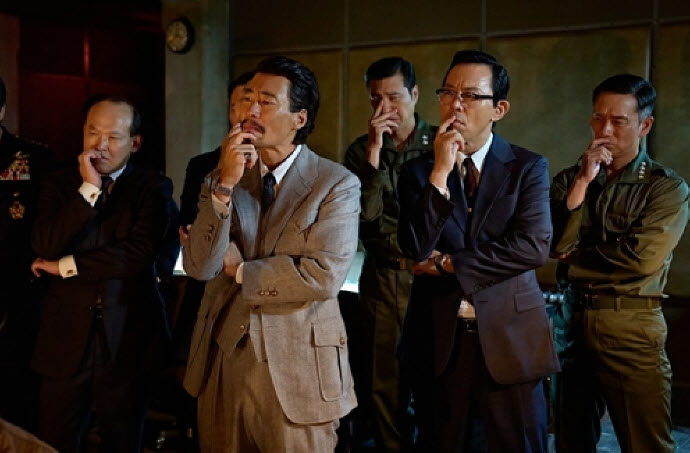
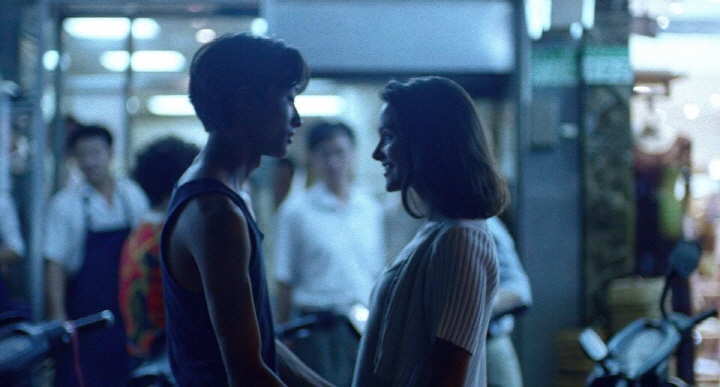
Taiwanese filmmaker Edward Yang’s 1996 film “Mahjong”, whose recent 4K restoration version happens to be released in South Korean theaters in this week, is a bleak comedy about a bunch of rather unpleasant lads in Taipei. As phlegmatically but starkly illustrating their materialistic lifestyle in the city, the movie is sometimes uncomfortable to watch, but it continues to hold our attention with its vividly realistic presentation of the urban mood of Taipei during the late 1990s, and it ultimately comes to us as an engaging time capsule to observe.

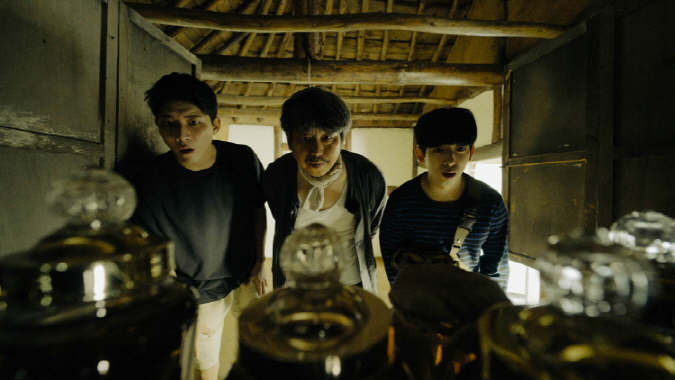
During its opening part, the movie introduces its four male main characters one by one. Red Fish (Tang Tsung-sheng), Hong Kong (Chang Chen), Lun-lun (Lawrence Ko), and Little Buddha (Chi-tsan Wang) have been living together in one shabby apartment in Taipei, and we get to know about how they have earned their living. Little Buddha mainly works as a soothsayer who seems to be very accurate on the surface, but his three friends actually make his predictions look quite precise in one way or another, and this fraud scheme of theirs has been fairly successful enough to provide them some extra income.

At a local nightclub, we also meet a couple of foreign figures associated with them, and one of them is a British dude named Markus (Nick Erickson), who has had a fairly substantial financial success as working as an interior designer. He is currently in the relationship with a local young woman named Angela (Carrie Ng), but then there suddenly comes a French girl named Marthe (Virginie Ledoyen), who was once quite close to him in the past. Needless to say, Markus is not so amused at all, and Marthe’s presence certainly disrupts his relationship with Angela, who eventually decides to dump him and then get involved with Hong Kong instead.

However, though he seems pretty nice on the surface, Hong Kong turns out to be much crummier than Markus. He frequently works as a male escort thanks to his very dashing appearance, and he is not willing to stop that even after he and Angela become closer to each other. Furthermore, he is also quite ready to share Angela with all of his three roommates, who are not so bothered by the shamelessly amoral aspects of this situation. It goes without saying that Angela becomes all the more furious, but then, probably because of her low self-esteem, she eventually allows herself to be regarded as a shared thing among Hong Kong and his roommates.

Meanwhile, there comes a big trouble to Red Fish as already shown to us at the beginning of the film. His supposedly wealthy father was recently driven to bankruptcy with a lot of debt, so he ran away along with his mistress, and this certainly angers his devastated wife more. Red Fish does not show much care or concern as having been estranged from his parents for a while, but there are a couple of thugs looking for him for getting any money from his father, and we see them getting closer to Red Fish and his roommates later.

Nevertheless, the movie patiently rolls its story and characters as before, while subtly establishing its realistic urban atmosphere with small details to observe and appreciate. As the camera of cinematographer Longyu Li and Li Yixu often leisurely follows or focuses on whatever is happening among its main characters, we get to know more about them even though we often observe them from the distance without much care, and there is some unexpected little poignancy from the surprisingly tender relationship development between Lun-lun and one of the substantial female characters in the story.

After the main characters are fully established during the first half of the film, its mood becomes a bit more intense as Red Fish and his roommates let themselves thrown further into the harsh reality surrounding them. Hong Kong continues to show more of his coldly uncaring sides to Angela’s frustration and exasperation, and then there comes a comically ironic moment of poetic justice for him, which painfully reminds him of how weak and inconsequential he really is. In case of Red Fish, he turns out to be a lot more vulnerable than expected behind his occasionally cocky attitude when he finds himself overwhelmed by more disillusionment toward the older generation represented by his parents, and we are not surprised when he suddenly commits a devastating act of violence around the end of the story.

The movie surely feels quite bleak and despairing at times, but it also shows some humor and warmth. While we get some good laughs from the clumsiness of the two aforementioned thugs, several brief scenes between Lun-lun and his accidental lover are illustrated with sensitive tenderness, and that is the main reason why the movie really earns the genuine emotions of its very last scene.

Yang also draws solid performances from his main cast members. While Chang Chen, who was incidentally several years after his unforgettable performance in Yang’s great film “A Brighter Summer Day” (1991) at that time, is certainly the most prominent cast member in the group, Tang Tsung-sheng, Lawrence Ko, and Chi-tsan Wang are well-cast in their respective parts, and Virginie Ledoyen, Carrie Ng, and Nick Erickson have each own small moments around the fringe of the story. 

Overall, “Mahjong” is relatively less impressive compared to Yang’s other films such as “A Confucian Confusion” (1994) and “Yi Yi” (2000), but it is still worthwhile to watch for its mood, storytelling, and performance. During last several years, I and my fellow South Korean audiences have had a fortunate chance to watch all of Yang’s seven feature films, and now our journey is over with “Mahjong”, but I am already willing to revisit them all. That says a lot about what a great filmmaker Yang is, right? 

S
Posted in Movies | Tagged | Leave a comment

Good News (2025) ☆☆☆(3/4): A South Korean disaster black comedy from Netflix

South Korean Netflix film “Good News”, which was released two days ago, is a disaster black comedy film loosely inspired by a real-life hijacking incident in March 1970. While it is clear from the beginning that most of its story and characters are fictional, the movie holds our attention with its cheerfully sardonic mix of absurd comedy and intense thriller, and the result is one of more entertaining products from Netflix during this year.

The first act of the film quickly establishes its period background. In 1970, the Japanese society was often disturbed by a radical communist terror group called the Red Army Faction, and we see how several members of the Red Army Faction could get on a Japanese passenger airplane with their hidden guns and knives on that day. Not long after the airplane left the Haneda Airport in Tokyo, they swiftly took it over as planned, and then they demanded to be flown to Pyeongyang in North Korea as soon as possible.

However, things did not go that well for them right from the start, and the movie gives us a series of absurd comic moments as a bunch of Japanese government officials struggle to handle this urgent situation. Thanks to the resourceful tactic of its pilot, the airplane subsequently lands on some other airport in Japan, but the hijackers remain adamant about their demand, and the airplane eventually leaves for Pyeongyang after a small group of hostages are fortunately released after some negotiation.

Now the ball is handled to the South Korean government as the airplane will soon fly over South Korea before entering North Korea, and the director of the Korean Central Intelligence Agency (KCIA) sees a good chance to impress the president more. The director happens to have a shadowy fixer figure known only as “Nobody” (Sul Kyung-gu), and Nobody proposes a rather risky plan to his boss, who understandably balks at the proposed plan at first but approves it anyway.

One of the crucial parts of Nobody’s plan is Seo Go-myung (Hong Kyung), a young South Korean Air Force lieutenant who is incidentally one of a very few certified South Korean Air Force officers who can handle a top-notch US military radar system. Although he is not so willing to break some rules for his sudden mission, Go-myung soon comes to see that he has no choice from the start. After all, he cannot possibly say no the direct order from the KCIA director, who can easily and instantly ruin his life and career as one of the most powerful figures in the South Korean government.

The task given to Go-myung is pretty challenging to say the least. He must pretend that he is an air controller in Pyeongyang, but he has to locate the airplane and then hijack the radio communication for contacting with its pilots first without drawing any suspicions from the hijackers, and that is not easy to do at all, especially considering that somebody on the North Korean side is already ready to outmatch him.

While Go-myung must tiptoe well among numerous risks, the movie steadily develops an immediate sense of urgency, but it also provides an ample amount of absurd humor as Nobody frequently pulls some strings here and there for the success of his risky plan. For example, he must turn the big airport in Seoul into the one in Pyeongyang within a few hours before the airplane is eventually led to there, and there is a hilarious scene showing how he can get things done within a short time thanks to a filmmaker in the middle of making his latest anti-communist propaganda.

Needless to say, the circumstance becomes more complicated due to a series of unexpected setbacks, and the movie does not pull any punch in its cynically broad depiction of many government official characters in the story. While the KCIA director is your average opportunistic bully, many of South Korean officials and military generals are no better than him as mostly caring more about saving their positions, and they are certainly willing to put all the blames on Go-myung and Nobody if the situation goes horribly wrong in the end.

While the movie continues to maintain the distance between itself and many of its main characters in the story for more absurdity and irony, we come to care a bit more about its two main characters. While his ultimate goal is boosting his military career more, Go-myung comes to care about the safety of those hostages much more than expected, and that makes him all the more frustrated with the incompetence and cowardice of those petty South Korean government officials. Although he is casually sardonic and indifferent on the surface, Nobody gradually comes to show little but genuine care and compassion along the story, and we are not so surprised when we get to know a bit more about how he ended up doing all those dirty works behind his powerful boss. As the contrasting duo of the movie, Sul Kyung-gu and Hong Kyung complement each other well throughout the film, and they are also supported well by a bunch of notable performers including Ryoo Seung-bum, who gleefully chews every scene of his in the movie as required.

In conclusion, “Good News”, directed by Byun Sung-hyun (He previously made Netflix film “Kill Boksoon” (2023), by the way), balances itself well between humor and gravitas without being too serious about itself, and a number of good elements in the film are enough to compensate for its several weak aspects including its rather long running time (136 minutes). It feels a bit too irreverent about its historical background, and I enjoyed its lightweight concoction of humor and suspense nonetheless, and that is enough for me for now.

Posted in Movies | Tagged , , , | 1 Comment

Journeys in Math and Genetics (2025) ☆☆(2/4): Looking for his biological father

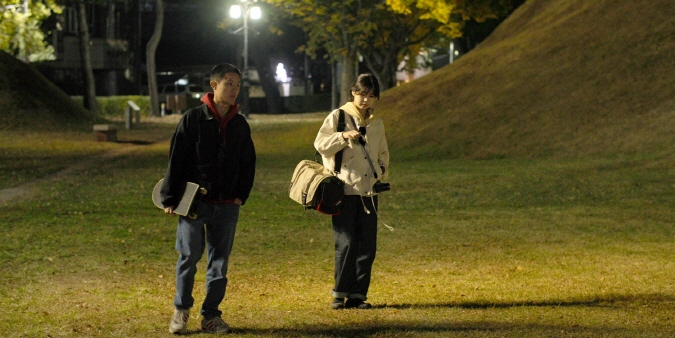
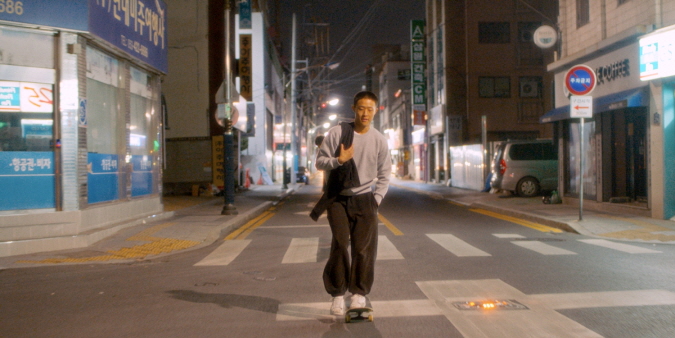
South Korean film “Journeys in Math and Genetics” is so formulaic from the beginning to the end that I hardly cared about its story and characters during my viewing. While this is certainly intended to be an earnest coming-of-age drama, I could only feel instead how trite and mechanical it is in many aspects, and I must confess that I rolled my eyes a lot whenever it clumsily attempts to bring some depth to the story and characters.

In my humble opinion, one of the main problems of the film is the failure in conveying to us the considerable intelligence of its adolescent hero Hyeong-joo (Jung Da-min), who is supposed to be your average math prodigy kid. Although he makes a lot of personal reflections based on many different mathematical stuffs throughout the story, but we never get any clear sense of how smart he really is, and I must tell you that I was particularly disappointed to see his room, which only has some unspecific books besides a big board vaguely filled with whatever he is studying on. 

Above all, Hyeong-joo is too bland and colorless to hold our attention. Although he looks like a fairly promising actor, Jung Da-min is unfortunately not allowed to bring any sense of life or personality to his role, and he is only demanded to look distant and disaffected on the whole unless he delivers those supposedly intelligent but ultimately banal comments such as “Numbers never lie”.

Anyway, the main conflict of the story begins with the sudden death of Hyeong-joo’s mother. Because the cause of her death is some rare genetic illness, Hyeong-joo naturally becomes anxious about his future life, and he wants to be sure about whether his risk of that genetic illness is relatively less compared to his mother. Eventually, he decides to request a DNA test on him and his parents without telling anything to his father at all, but, what do you know, he is only notified later that he is not actually the biological son of his father.

 While struggling to process this unexpected revelation, Hyeong-joo does what is logical in his viewpoint. First, he examines those old diaries left by his mother, and, with some unofficial help from his hacker friend, he comes to focus on three highly possible candidate figures, each of whom were closely involved with her mother around the time when he was conceived. In addition, he also discovered another hidden fact about his father, which further confirms that his father is not indeed his biological father.    

As Hyeong-joo embarks on preparing for his little private search, the movie shows more of how he is often distant to his flawed but loving family. While having been quite devastated by his wife’s unexpected death for a while, Hyeong-joo’s father is now ready to keep going as before, but he and his son remain distant to each other despite his sincere attempts for getting closer to his son. In case of Hyeong-joo’s aunt and younger sister, they are relatively less tolerant of his aloof attitude, but they sincerely support him like his father nonetheless, and they are all certainly proud of him.

And there is also Hyeong-joo’s plucky girlfriend, who looks quite talented in her field of interest as much as her boyfriend. Even though Hyeong-joo wants to do his little private search alone by himself, his girlfriend insists that she should accompany him, and Hyeong-joo reluctantly lets her join his search for his biological father.

It is not much of a spoiler to tell you that Hyeong-joo comes to learn much more about his mother than expected during his journey, but what is revealed along the journey is not particularly surprising as the story takes one predictable turn after another. For instance, those three candidates surely have each own stuff to impart to our young hero, but their supposedly important scenes are riddled with platitudes to bore you, and they remain to be more or less than plot elements to decorate our young hero’s journey. Around the narrative point where Hyeong-joo’s father goes after his son after belatedly coming to learn about his son’s little private project, we already have a pretty clear idea on the eventual conclusion for Hyeong-joo’s journey, and the movie does not go further than our expectation even during its very predictable finale.

Around Jung, several main cast members try to enliven the movie in one way or another, and they mostly acquit themselves well despite being stuck with their underdeveloped supporting roles from the start. As Hyeong-joo’s good-natured father, Kwak Min-gyu generates some amusement whenever his character is rather clueless about Hyeong-joo, and Kim Se-won often outshines Jung with her lively appearance.    

Overall, “Journeys in Math and Genetics” is too flat and generic to recommend, and it is also regrettably two or three steps from director Choi Chang-hwan’s solid previous film “The Layover” (2023). Yes, I am a guy who has not been that interested in mathematics for years, I can tell you at least that the movie is not intelligent enough for what it is trying to do with all those mathematical stuffs, and now I want to recommend you recent South Korean film “In Our Prime” (2022) instead. That film did a better job of presenting mathematics on the screen as a crucial part of its predictable but fairly engaging drama, and I assure you that you will get much more entertainment from it.

Posted in Movies | Tagged , , , , | Leave a comment

Home Behind Bars (2025) ☆☆☆(3/4): Meeting the daughter of an inmate

South Korean film “Home Behind Bars” is a somber but touching human drama about one seasoned female prison guard gradually discovering that she does have a heart to feel. Leisurely following her emotional journey involved with one particular inmate and her daughter, the movie slowly develops its story and characters via a number of quietly sensitive moments, and it surely earns some human poignancy in the end.

During its first act, the movie alternates between the respective daily lives of Tae-jeo (Song Ji-hyo) and Joon-yeong (Do Young-seo). Tae-jeo has worked as a guard in some big prison for female inmates for more than 10 years, and we observe how strict and unflappable she often is compared to many of the colleagues at her workplace. Joon-yeong is a teenage girl who happens to be the daughter of one of those inmates under Tae-jeo’s supervision, and we observe how she has lived with some help from an old friend of her mother, who willingly lets Joon-yeong stay in her shabby motel.

On one day, Joon-yeong’s mother, Mi-yeong (Ok Ji-young), is notified that her mother passed away, but she is not allowed to go outside and then attend her mother’s funeral. As Mi-yeong becomes rather depressed about this, Tae-jeo feels sorry for Mi-yeong, and she agrees to go to the funeral of Mi-yeong’s mother when a junior colleague of hers suggests that later.

At the funeral of Mi-yeong’s mother, Tae-jeo comes across Joon-yeong, who happens to be handling the funeral alone by herself. Feeling some pity on her, Tae-jeo impulsively gives her smartphone number to Joon-yeong even though she is not supposed to get involved with her more, and Joon-yeong unexpectedly calls her not long after that. Even though she knows well the possible complications resulted from that, Tae-jeo chooses to meet Joon-yeong again, and, of course, she comes to care about Joon-yeong more than before.

Now this looks like your average melodramatic story, but the movie is too thoughtful to become mellow and teary, and it patiently observes instead how the accidental relationship between its two main characters causes some small ripples in their respective daily lives. As showing more care toward Joon-yeong, Tae-jeo comes to reflect more on how barren and lonely her life has been especially since her divorce, though she remains mostly firm and strict to her inmates as usual. In case of Joon-yeong, her mundane daily life is brightened up a bit by the kind compassion from Tae-jeo, and she sincerely appreciates that while still struggling with her feelings toward her mother. So far, she has been fairly fine without her mother for a while, but now Tae-jeo reminds her of what has been deficient in her life.

Meanwhile, the screenplay by director/writer Cha Jeong-yoon also pays considerable attention to small and big moments at Tae-jeo’s workplace. Even though Mi-yeong sometimes does not get along with her fellow cellmates, they tolerate and understand her moody status nonetheless, and some of the most touching moments in the film come from how they show some solidarity to each other from time to time. Although Tae-jeo also does not get along that well with some of her colleagues either, they usually show her respect and recognition nonetheless, and there are several humorous moments involved with that junior colleague of hers, who is relatively inexperienced but turns out to be more resourceful than expected.

The story eventually becomes a bit melodramatic as Tae-jeo attempts to facilitate the re-connection between Mi-yeong and her daughter, but the movie still sticks to its dry and patient attitude with considerable realism. I must confess that I have no idea on how realistic the depiction of the female prison in the film actually is, but the prison scenes in the film are presented with enough sense of life at least. As a matter of fact, I am even considering showing the film to a friend of mine who once worked as a prison guard and then asking him about his opinion on the movie.

The main cast members of the film did a commendable job of embodying the mundane qualities of their respective characters. As the jaded but palpably beating heart of the film, Song Ji-hyo diligently carries the film with her restrained performance filled with subtle nuances to be appreciated. As her character gets softened along the story, Song slowly imbued her character with small warm human touches, and we can clearly sense her character’s slow but gradual inner change along the story. While young performer Do Yeong-seo does more than holding her own place opposite Song, Ok Ji-yeong brings enough human qualities to her character without overlooking her character’s edgy sides at all, and Kim Mi-sook and Yoon Hye-ri provide extra humor and warmth to the story as Tae-jeo’s two close colleagues.

In conclusion, “Home Behind Bars” is modest but admirable for its empathetic handling of its story and characters, and Cha, who previously co-wrote the screenplay for Lee Mi-rang’s debut feature film “Concerning My Daughter” (2023) before making a feature film debut here, demonstrates her considerable potential here in this film. As far as I can see from this debut feature film of hers, she is another talented South Korean female filmmaker to watch, and it will be interesting to see what may come next from her after this solid beginning.

Posted in Movies | Tagged , , , | Leave a comment

The Perfect Neighbor (2025) ☆☆☆(3/4): One neighborhood dispute

Netflix documentary film “The Perfect Neighbor”, which was incidentally released yesterday, focuses on one small neighborhood dispute which led to a devastating outcome for everyone involved with that. Mainly driven by a series of archival footage clips, it does not make any direct comment on this tragic incident on the surface, but it eventually makes a clear and strong point on how the American legal system failed to prevent that from the beginning, and it will surely make you reflect more on the serious social problems in the American society behind this alarming failure.

During the first half of the documentary, a number of police bodycam footage clips show us what occurred during several months before what happened in one neighborhood of Ocala, Florida on June 2nd, 2023. In that neighborhood, a middle-aged white lady named Susan Lorincz had kept making a fuss just because she was annoyed by a bunch of neighborhood children playing near her residence, and she frequently called the local police as accusing these kids of trespassing on the front yard of her residence.

Needless to say, many other residents in the neighborhood including the kids’ parents disliked Lorincz a lot. Whenever police officers came to neighborhood after receiving her call, they were not so amused to say the least, as reflected by several moments between them and police officers. Understandably, they all expected her to move away to somewhere else sooner or later, but she somehow did not do that all, even though she frequently said that she would leave the neighborhood someday.

While observing more of the neighborhood, we gradually become more aware of the racial aspects of the dispute between Lorincz and many other residents in the neighborhood. Many of her neighbors are black, and it is indirectly implied to us that her increasing hostility toward others in the neighborhood was fueled by the fear driven by her racial prejudice. 

 As Lorincz kept making more troubles and headaches for her neighbors and their kids, the local police did not do much for resolving this accumulating dispute while merely sticking to its neutral position. Those police officers simply listened to both sides and then just went away after giving some warning or advice, and it is clear that they did not take this matter seriously from the very start. As a matter of fact, Lorincz showed some other alarming behaviors besides her ongoing dispute with her neighbors, but they did not arrest her at all while just warning her a bit.

In the end, something really serious happened on that day of June 2023. When Lorincz harassed one of her kids, a young black mother named Ajike “AJ” Shantrell Owens, who already clashed with Lorincz more than once, decided that enough is enough, so she came to confront Lorincz again, but, unfortunately, she was shot and killed by Lorincz shortly after she angrily knocked on the front door of Lorincz’ residence.

What follows next, which is already shown a bit at the beginning, is the most harrowing part of the documentary. Not only Owens’ family members but also many of her neighbors were quite devastated by what had just happened, and their immense shock and sorrow are palpable despite the raw and rough visual qualities of police bodycam footage clips.

Of course, Lorincz was immediately arrested once the local police arrived, but the local police simply let her go after questioning her for a few hours at the police station, and that certainly brought more anger from Owens’ family members and neighbors. In addition, considering a certain state law on self-defense, Lorincz would not go to jail in the end, and it goes without saying that her status as a white woman could increase that possibility.

Because her sister-in-law was one of Owens’ close friends, director/co-producer Geeta Gandbhir and her partner and fellow producer Nikon Kwantu could get close access to the case, and the result is often alternatively compelling and infuriating. While firmly sticking to the calm and phlegmatic attitude of their documentary, Gandbhir, who deservedly received the U.S. Documentary Directing Award when it was shown at the Sundance Film Festival early in this year, and her crew members never lose the human dimensions of their main subject, and they also did a splendid job of assembling various archival footage clips into a vivid picture of social injustice and systemic failure. As many of you know too well, Owens’ case was just one of the numerous similar cases which occurred in the American society during many years, and the documentary makes a brief but sharp point on that right before the end credits which somberly presents Lorincz’s court trial.

 On the whole, “The Perfect Neighbor” may not surprise or shock you that much if you are already familiar with those countless similar cases including the killing of Trayvon Martin in 2012, but it is still worthwhile to watch for how it vividly and thoughtfully presents its main subject while balancing itself well between compassion and objectivity. Sadly, things have only gotten worse in the American society without much sign of change, but I can only hope that people will become more aware of its social/racial issues via such good documentaries like this one.

Posted in Movies | Tagged , , , | 2 Comments

Weapons (2025) ☆☆☆1/2(3.5/4): After they are gone…

“Weapons” is a creepy horror thriller film which works best if you do not know a lot about the story and characters before watching it. After drawing your attention with a substantial amount of creepiness and anxiety on the screen, it gradually builds up the story and characters step by step before eventually revealing the chilling darkness hidden at its center, and the result is quite compelling to watch.

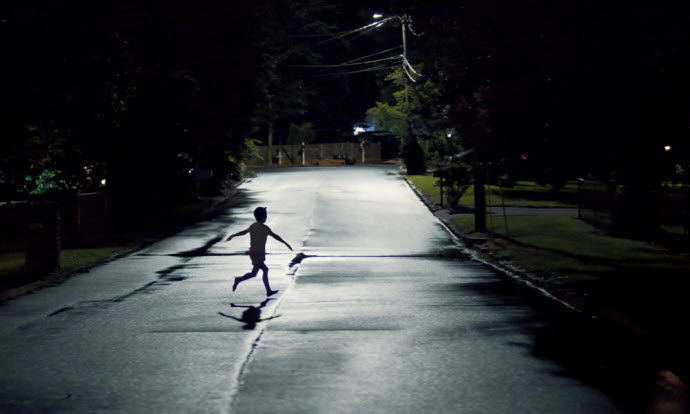
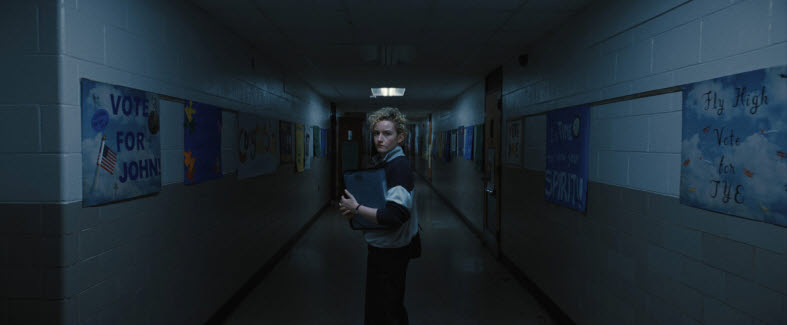
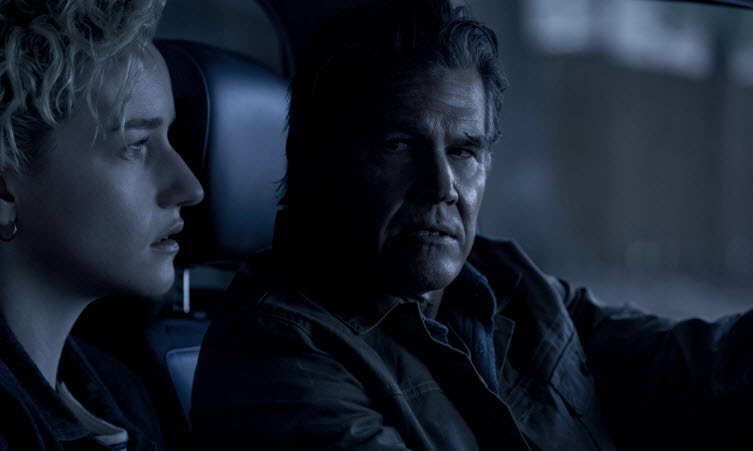
As the opening narration establishes an ominous undertone, we see how one plain suburban neighborhood is disturbed by one mysterious incident. In the middle of one night, no less than 17 children were suddenly disappeared without any trace, and, to everyone’s bafflement, it looked like they simply walked out of their houses and then ran away to somewhere at the exact same time. Because they all happen to be the students of the same class in a local elementary school, their class teacher Justine (Julia Garner) comes to receive a lot of attention as the local police embark on the following investigation, and many of the parents of the missing children including Archer (Josh Brolin) blame and suspect her more and more as the investigation is going nowhere,

Consisting of several chapters, the movie slowly develops the story and characters as shifting from one main character to another, and its first chapter focuses on how things have become quite problematic for Justine since the incident. No matter how much she tries to keep going as usual, she only finds herself facing more unjust blame and accusation despite some protection from the school principal, and her resulting frustration drives her to more alcohol and a few unwise choices including the one involved with James (Alden Ehrenreich), a local police officer who is also her ex-boyfriend. 

While the situation becomes messier for her later, Justine comes to pay more attention to one particular boy in her class, who is incidentally the only one who came to the class when all of the other class students were gone missing at that time. Just because of sensing that this boy seems rather troubled after the incident, Justine sincerely tries to approach to him and his parents even though this can be another unwise choice to make her life worse, and then she comes across something very baffling and unnerving to say the least. 

And the story becomes more interesting around the point where it subsequently shifts onto the viewpoint of Archer, who has become quite fixated on finding whatever really happened to his dear son and the other missing kids. When he happens to notice something odd from a surveillance video clip showing a glimpse of whatever occurred at the time of his son’s disappearance, a certain unlikely theory begins to form in his mind, and he is ready to go for that as his mind struggles more with grief and anxiety.

Patiently fleshing out these two main characters and several other main characters in the story including Paul along its emerging narrative, director/writer/co-producer Zach Cregger, who also composed the score along with Ryan and Hays Holladay, provides a number of striking moments to shock or baffle you. Cinematographer Larkin Seipie steadily fills the screen with a creeping sense of dread and uncertainty, and the deftly efficient editing by Joe Murphy keeps us constantly engaged although the plot often changes its course as hopping from one main character to another.

Around the point when the movie fully presents what has been insidiously lurking inside the story, the mood becomes more intense than before, and the movie also makes us care more about what may happen to several main characters in the end. Once everything is set and ready for its eventual climactic part, the movie goes all the way for a full-throttle horror mode, and it also provides some truly nasty fun during a number of key moments including the one featuring a certain kitchenware.

Cregger draws solid performances from his main cast members. They effectively fill their respective spots in the film, and some of them are quite believable as human characters trying to cope with an inexplicable happening in one way or another. Julia Garner, a wonderful actress who was simply unforgettable in “The Assistant” (2019), ably embodies her character’s accumulating anxiety and frustration along the story, and her edgy acting makes a good contrast with the stoic presence of Josh Brolin, who comes to hold the ground steadily along with Garner later in the story. In case of several other main cast members in the film, Alden Ehrenreich, who has been more prominent since his scene-stealing supporting turn in the Coen Brothers’ “Hail Caesar!” (2016), Austin Abrams, Benedict Wong, and Amy Madigan are also well-cast in their respective supporting parts, and the special mention goes to young performer Cary Christopher, who did a splendid job of conveying to us whatever his character is not so willing to reveal.   

  On the whole, “Weapons” is a top-notch work which deserves to be admired for its superlative mood and stellar performances, and it surely shows that Cregger, who previously drew our attention with “Barbarian” (2022), is a skillful filmmaker who does know how to engage and then thrill us. In short, this is one of the more impressive genre films of this year, and I assure you that you will not be disappointed at all once you give it a chance.

Posted in Movies | Tagged , , | 2 Comments

The Nature Man (2022) ☆☆1/2(2.5/4): Two YouTubers stuck in a remote place

To be frank with you, the most impressive part of South Korean independent film “The Nature Man” is its end credits. You will instantly see that its director did a lot of stuffs during the production of the film, and you will surely admire that even though the movie is a one-joke comedy which goes on a bit too long in my humble opinion.

The story mainly revolves around In-gong (Byun Jae-shin) and Byeong-jin (Jung Yong-hoon), two young YouTubers who are going to some remote rural mountain area at the beginning of the story. The main subject of In-gong’s YouTube channel is haunted places, and he was recently approached by some guy who claimed that he saw ghosts around his house. Although he does not believe this guy’s claim much, In-gong decides to go there anyway mainly because he desperately needs more subscribers and viewers right now, and Byeong-jin accompanies him just because this may also help his own YouTube channel.

However, as they get closer to where that “man of nature” lives, things do not go that well for them in one way or another. As they go deeper into that remote rural mountain area, they become more isolated from the outside world, and then some of the electronic equipments including their smartphones get broken due to a little unfortunate incident. While understandably being quite annoyed, In-gong keeps going anyway, and Byeong-jin has no problem with that at all.

When they finally encounter the man of nature, In-gong and Hyeong-jin are caught off guard a bit by his rather ominous appearance, and that is just one of many things to baffle them. Although he willingly takes them to his little residence and then shows them some hospitality, he is often rather gruff and aggressive for no apparent reason, and he also shows a number of bizarre behaviors. For example, his daily diet is pretty simple on the whole, but then In-gong witnesses him eating something else at night. When the host eventually tells a spooky experience he supposedly had some time ago, In-gong cannot help but wonder whether the host really tells him everything, and that makes the host look more suspicious than before.

In contrast, Byeong-jin simply goes along with this increasingly weird circumstance while casually enjoying more of their host’s hospitality, and this often makes In-gong quite annoyed and frustrated. No matter how much he tries to be nice to the host, those odd behaviors of the host continue to exasperate him in one way or another. Understandably, In-gong becomes a bit paranoid, and he even comes to suspect whether Byeong-jin is actually hiding something behind his back – especially when he sees Byeong-jin cheerfully having some private talk with the host at one point.

The screenplay by director/writer Noh Yong-seok, who handled many other things in the production of the film besides editing, music, and cinematography, also seems to be merely stuck with its main characters with no apparent direction, but then their situation becomes a little more interesting with an unexpected plot turn during the second half of the film. With more absurdity surrounding him along the story, In-gong eventually tries to get away as soon as possible, but, of course, he only gets stopped by one thing after another, while becoming all the more unnerved and confounded by whatever is going on around him.

However, it was rather hard for me to care about the story and characters. As sensing more of the repetitive aspect of its narrative, I could not help but feel impatient during my viewing, and I was not so particularly surprised by what is eventually revealed around the end of the story. Sure, this neatly explains almost everything in the story, and I also came to have some understanding on what the movie is actually about, but I think it would be more effective if it were delivered by a tighter narrative.

Moreover, the main characters of the film are a little too superficial to engage us. While In-gong and Byeong-jin remain to be your average banal YouTubers even at the end of the story, their host is simply defined by a bunch of strange behaviors without much interest to hold our attention, and we come to observe these three main characters from the distance without much care or attention. Considering how they play their scenes as straight as possible, I am sure that the main cast members of the film are good performers, but their mostly solid efforts are not supported enough on the whole, and that is another disappointing aspect of the movie.

In conclusion, “The Nature Man”, which was recently released in South Korean theaters despite being completed several years ago, is fairly amusing at times, but it is less successful compared to Noh’s first feature film “Daytime Drinking” (2008). Although it is clearly influenced by the works of Hong Sang-soo, that film amused me a lot more than expected, and it looked to me like the starting point of another promising South Korean filmmaker to watch at that time.

Sadly, Noh has been rather dormant during last several years after his second feature film “Intruders” (2013), and “The Nature Man” is not a satisfying comeback work, but I still admire his considerable efforts behind it. He will probably move onto making the next film, and I can only hope that I will be more entertained by whatever will come from him.

Posted in Movies | Tagged , , | Leave a comment

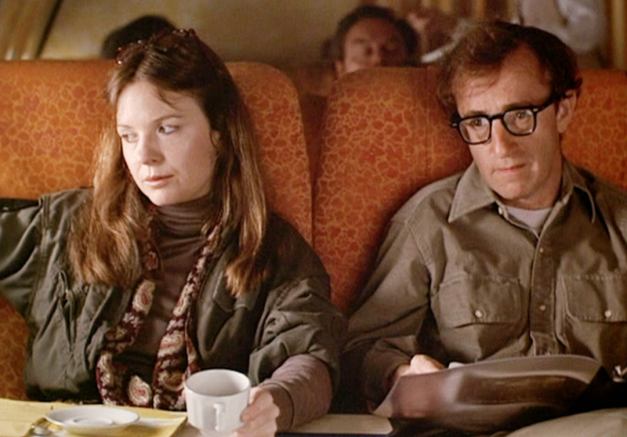
Annie Hall (1977) ☆☆☆1/2(3.5/4): Keaton still shines despite that

Several years ago, one South Korean critic said that it is a shame that we cannot enjoy Woody Allen’s 1977 film “Annie Hall” like we did for many years. Sure, the movie itself is still very witty, funny, and touching in addition to being one of the definite New Yorker comedy films from Allen, but now his iconic public image is not welcomed much in these days because we come to pay more attention to what has always been there in many of his notable works. After the #MeToo movement, I and many others became much more aware of what he allegedly committed behind his back in the past, and most of us consequently have stayed away from his works as much as possible while noticing their indubitable sexual aspects.

However, it is undeniable that Allen gave many of his actresses some of the best moments in their acting career. Yes, regardless of whether she likes it or not, it is really difficult to talk about Mia Farrow’s career without mentioning a number of Allen’s films she appeared, and one of the main pleasures of his films is how a bunch of many different talented actresses ranging from Diane Wiest to Cate Blanchett excel themselves in one way or another.

Some of these wonderful actresses deservedly won an Oscar for their significant contribution to Allen’s films, and one of such cases is Diane Keaton in “Annie Hall” (The movie also won Best Picture, Best Director, and Best Screenplay, by the way). Right from her very first scene in the film, Keaton, who sadly passed away a few days ago, instantly draws our attention with her natural charm and spirited presence, and her iconic performance remains as the best thing in the film even at present.   

As cheerfully bouncing along its non-linear narrative, the movie follows how Alvy Singer, played by Allen, struggles to process his thoughts and feelings on his relationship with his former girlfriend Annie Hall, played by Keaton. As wondering how their relationship was ended, Alvy’s mind naturally goes here and there among the memories of his past as well as his relationship, and it is still amusing to watch several absurd moments from Alvy’s childhood.

Throughout the film, Allen frequently talks directly to us in front of the camera, and I cannot help but observe how that becomes less funny than before. We were once amused a lot by how humorously he wields his neurotic comic persona on the screen, but now he often reminds more of all those allegations against him, and his character’s confusion and anxiety about those colorful young women in the film understandably look rather creepy at times.

However, Keaton constantly brings a lot of life and personality to her character besides that famously quirky attire of hers in the film, and her character comes to us a smart and independent young lady who knows a bit better about the matters of heart compared to her boyfriend. As revisiting the movie at last night, I noticed how much Keaton’s character was depicted through the viewpoint of Allen’s character, but Keaton’s charming performance easily jumps over that inherent storytelling limit, and her character eventually becomes the other half of the story.

Above all, she and Allen effortlessly click well with each other during their several comic key scenes to be savored and appreciated. During one certain scene, the movie suddenly uses subtitles to show what Alvy and Annie respectively think as talking with each other more and more. This may look like a mere attempt for a bit more laugh, but it is enhanced to a considerable degree by the good comic timing between Allen and Keaton, and that is why it is one of the most memorable moments in the film.

I must point out that several other comic moments in the movie including one particular animation scene are rather dated compared to what is wonderfully transpired between Keaton and Allen. These moments belong more to those early comedy films of Allen such as “Take the Money and Run” (1969) and “Bananas” (1971), which are fairly amusing but often feel a bit too thin as mainly driven by gags and jokes instead of story and character. After getting more recognition and praise thanks to “Annie Hall”, Allen wisely moved onto more sophisticated areas, and that led to not only a series of solid comedy films but also several surprisingly serious drama films such as “Interiors” (1978) and “Another Woman” (1986).

Around Allen and Keaton, several notable performers including Tony Roberts, Carol Kane, Shelley Duvall, and Collen Dewhurst come and go as providing some extra amusement to the movie. Christopher Walken, who would advance further with his Oscar-winning supporting turn in Michael Cimino’s “Dear Hunter” (1978), gives a brief but hilariously uncanny moment as Annie’s rather disturbed brother, and you may also notice Jeff Goldblum and Sigourney Weaver when they respectively appeared for a few seconds later in the film.  

In conclusion, “Annie Hall” is still a definite career high point for both Allen and Keaton even though its reputation has been irreversibly tarnished to some degree by the allegations against Allen during last several years. Although she sided with Allen even after the #MeToo movement, it is inarguable that Keaton was one of the greatest American actresses of our time, and I am glad to see that she still shines in “Annie Hall” as before.

Posted in Movies | Tagged , , , | Leave a comment

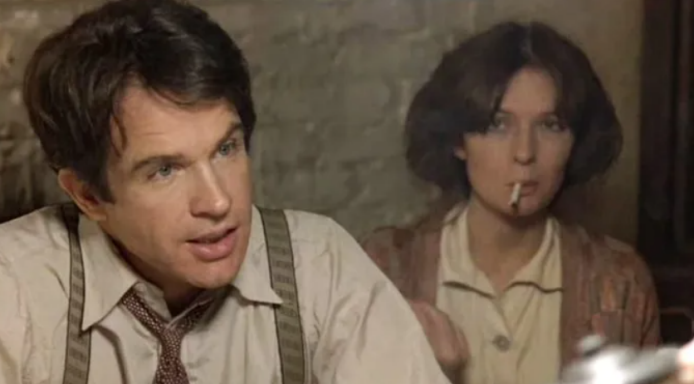
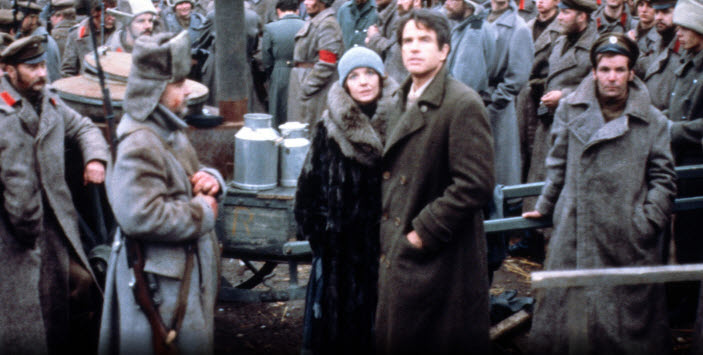
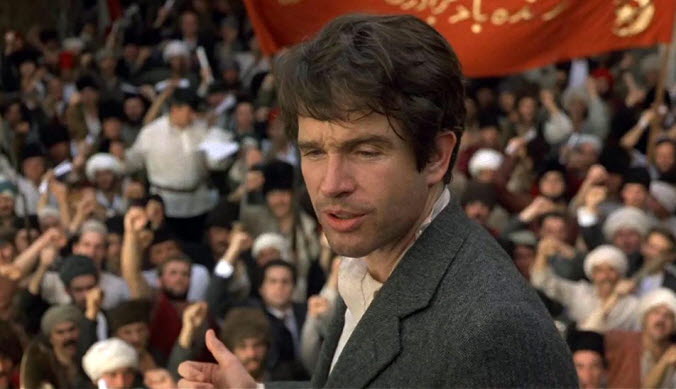
Reds (1981) ☆☆☆1/2(3.5/4): An epic left-wing period drama by Warren Beatty

While revisiting Warren Beatty’s 1981 film “Reds” at last night, I observed how it stays focused on ideas and emotions behind its grand and ambitious attempt to illustrate the life and career of its real-life left-wing American journalist hero. Yes, there are a number of epic moments to reflect the big historical changes surrounding him, but the movie is ultimately about his complicated relationship with a smart and interesting woman who tried to understand and deal with his left-wing idealism, and it handles their rather messy love story with a lot of care, intelligence, and sensitivity.

The hero of the movie is John Silas “Jack” Reed (1887 ~ 1920), who is incidentally played by Beatty himself. Although he was quite famous for his 1919 book “Ten Days That Shook the World” during his time, he was mostly forgotten when Beatty became interested in making a movie about him in the late 1960s, and it is really amazing that Beatty managed to get the production of this passion project of his green-lighted inside Hollywood around 10 years later, especially considering how the American society came to take a big right turn with the election of President Ronald Reagan in 1980.

The first act of the film establishes Reed’s relationship with Louise Bryant (Diane Keaton), who was quite a progressive liberal lady despite being married to some boring dentist in Oregon, Portland in 1915. At the beginning, Bryant simply encounters Reed as a writer/journalist interested in writing about him and his left-wing ideology, but, what do you know, they click so well with each other as they talk and talk with each other during next several hours. Eventually, Bryant agrees to go to New York City along with Reed, though she makes it quite clear to him from the beginning that she will not be a mere lover to elope with.

Once they come to New York City, Bryant soon finds herself often overwhelmed by the wild and passionate political mood among Reed’s artist and activist friends including Emma Goldman (Maureen Stapleton). In addition, despite being a caring lover, Reed is frequently absent due to his constant journalistic assignments here and there in the country, and that makes her all the more frustrated about their relationship. Even after they eventually move to a quieter place outside the city, Reed cannot help but driven more by his work and left-wing idealism, and this consequently leads to Bryant’s affair with Eugene O’Neill (Jack Nicholson), a legendary playwright who is a close friend of Reed but has been smitten with Bryant right from when he sees her for the first time.

In the end, Bryant decides to go for her own journalist career for herself without Reed’s help or support, but then they meet each other again in 1917 when they are reporting on the final chapter of World War I. When Reed suggests that they should go to Russia for reporting on the ongoing Bolshevik Revolution, Bryant hesitates at first, but she eventually accompanies him, and they come to have the most productive time in their relationship as enthusiastically reporting on one of the biggest historical moments in the early 20th century.

Around that narrative point, the movie immerses us more into the story of Reed and Bryant, and Beatty and his crew members including cinematographer Vittorio Storaro, who deservedly won his second Oscar for this film, throws a series of big and impressive moments which surely take you back to David Lean’s classic film “Doctor Zhivago” (1965). Never losing its personal perspectives, the movie vividly and dramatically conveys to us how the Bolshevik Revolution intrigued and excited many left-wing American figures like Reed during that time, and it also does not overlook the following frustration and disillusionment experienced by Reed and several other figures around him.

Meanwhile, the story is often intercut with the interview clips of a bunch of real-life figures who are simply presented as “the Witnesses”. As the people who knew Reed and Bryant during that time, they all surely have something to tell, and what they willingly tell provides extra insight on Reed, Bryant, and that interesting period surrounding them, while also bringing genuine human poignancy to the story.

Although the screenplay Beatty and his co-writer Trevor Griffiths trudges a bit during its last act, the movie continues to engage us up to its somber but powerful final scene under the excellent direction of Beatty, who won a Best Director Oscar for his movie (The movie received the total 12 nominations at that time, though it lost the Best Picture award to Hugh Hudson’s “Chariots of Fire” (1981)). The movie is certainly one of the high points in his legendary movie career, and it is a bit shame that he did not direct many movies after this remarkable achievement.

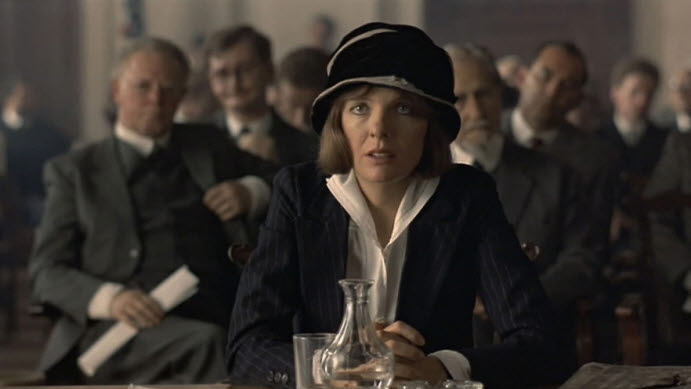
Beatty also gives an effective lead performance as the center of the story, and he is complemented well by the equally interesting performance by Diane Keaton, who sadly passed away a few days ago. From the beginning to the end, Beatty and Keaton are convincing as their characters pull or push each other along the story, and their good chemistry on the screen is one of the main reasons why the movie keeps engaging us despite its long running time (195 minutes).

Around himself and Keaton, Beatty assembles a bunch of notable performers to enjoy. Jack Nicholson, who ably dialed down himself here a lot right after his full-throttle manic performance in Stanley Kubrick’s “The Shining” (1980), has several sensitive moments with Keaton, and that led to another Oscar nomination for him. Although her appearance in the film is rather short. Maureen Stapleton quietly and effortlessly steals every moment of hers, and she rightfully garnered a Best Supporting Actress Oscar for that. While Gene Hackman briefly appeared early in the story, several recognizable performers including Edward Herrmann and Paul Sorvino are well-cast in their respective supporting parts.

On the whole, “Reds” may require a bit of patience from you as taking its time for developing its main characters and building up the big historical picture surrounding them, but it is still worthwhile to watch for its many top-notch aspects to be admired and appreciated. It may not be a great film, but it is an epic work to remember, and it deserves some more attention in my humble opinion.

Posted in Movies | Tagged , , , , , , , | Leave a comment

Demon Slayer: Kimetsu No Yaiba Infinity Castle (2025) ☆☆☆(3/4): A lot of actions in the middle of infinity

Japanese animation feature film “Demon Slayer: Kimetsu No Yaiba Infinity Castle”, which is still being shown in South Korean theaters despite being released in two months ago, keeps things rolling during its rather long running time (155 minutes), and I enjoyed that even though I often struggled to understand the story and characters during its first half. Just like another recent Japanese animation film “Chainsaw Man – The Movie: Rese Arc” (2025), it simply tries to entertain its main target audiences, but you may be entertained by its vivid style and striking action even if you have no background knowledge in advance like me.

The film is a direct sequel to the fourth season of the anime TV series “Demon Slayer: Kimetsu No Yaiba”, which is based on the manga series of the same name by Koyoharu Gotouge. Thanks to the huge popularity of the anime TV series, there also came several feature films such as “Mugen Train (2020)”, “To the Swordsmith Village” (2023), and “To the Hashira Training” (2024) during last several years, and “Demon Slayer: Kimetsu No Yaiba Infinity Castle” is actually the first chapter of the ambitious trilogy project to be completed.

The opening part of the film hurriedly establishes what happens not long after the end of the fourth season of the anime TV series. Thanks to a very, very, very powerful demonic figure who is the leader of many different demons against which they have been battling, a bunch of demon slayers are thrown into a dangerous area called the Infinity Castle, which is a seemingly infinite and constantly dynamic third-dimension labyrinth of castles and halls.

As these demon slayers, who happen to be divided into several groups as they are separately hurled into the Infinity Castle, try to find a way out in addition to slaying one demon after another, the film busily juggles several narrative lines before eventually focusing on the three different conflicts. The first one is associated with a smiling but fearsome demon, and his opposing female demon slayer certainly comes to test her limit to the end, while not only fighting against this demon but also dealing with some personal issues inside her mind. As their dynamic fight is continued, the film often tells and shows us whatever is going on in their respective minds within a few seconds, and that may allow you to catch some breath amid a series of busy actions rapidly unfolded between these two opposing figures.

The second conflict is set between two dudes who were brothers but now come to fight with each other as a demon slayer and a demon, and the mood surely becomes melodramatic as these two brothers come to confront their complicated past of love and hate. Although one seems more disadvantaged compared to the other, their fighting skills turn out to be more equal than expected, and it is not much of a spoiler to tell you that this part eventually culminates to when one of them discovers a way to overpower the other at the last minute.

In case of the third conflict, two certain demon slayers confront one of the most powerful demonic figures in the Infinity Castle, who seems to be quite invincible for a good reason. No matter how much these two demon slayers try to defeat him, this mighty dude can always evade or suppress their attacks in advance, and it does not take much time for one of the demon slayers to realize more of how mighty their opponent really is.

Around the point where their desperate fight against their seemingly unbeatable opponent expectedly reaches to a dramatic point, the story becomes surprisingly melodramatic with some genuine poignancy via a series of flashback scenes. I will not go into details for not spoiling any of your entertainment, but I can tell you instead that you may feel a bit sorry for that powerful demonic figure as observing how he let himself fallen into evil and darkness as understandably driven by anger and hate many decades ago.

Because I am a relatively less knowledgeable audience, it was often difficult for me to process and understand its every part, but the film kept holding my attention with a considerable amount of visual power and action nonetheless. Your eyes will be marveled whenever the film looks over the endlessly vast scale of the Infinity Castle, and it also adds some extra intrigue to the story as a trio of young little but very special girls are busily working on drawing the intricate maps of the Infinity Castle for helping those demon slayers trapped inside it. The action scenes in the film are presented with a lot of style and spirit to dazzle you from the beginning, and they are certainly more than enough for exciting you and then leaving you some expectation around the time when it arrives at its predictable cliffhanger ending.

In conclusion, “Demon Slayer: Kimetsu No Yaiba Infinity Castle”, directed by Haruo Sotozaki (He previously directed the anime TV series version as well as “Mugen Train”, by the way), feels inherently incomplete as the opening chapter for its trilogy, but it is fairly entertaining enough to compensate for its several weak aspects including the overlong running time. Thanks to not only this film but also “Chainsaw Man – The Movie: Rese Arc”, Netflix animation film “KPop Demon Hunters” (2025), and South Korean animation film “Exorcism Chronicles: The Beginning” (2024), I and many other South Korean audiences got served with a lot of demon slaying during this year, and I can only hope that we will be entertained again by whatever will come after “Demon Slayer: Kimetsu No Yaiba Infinity Castle”.

Posted in Movies | Tagged , , , | Leave a comment