
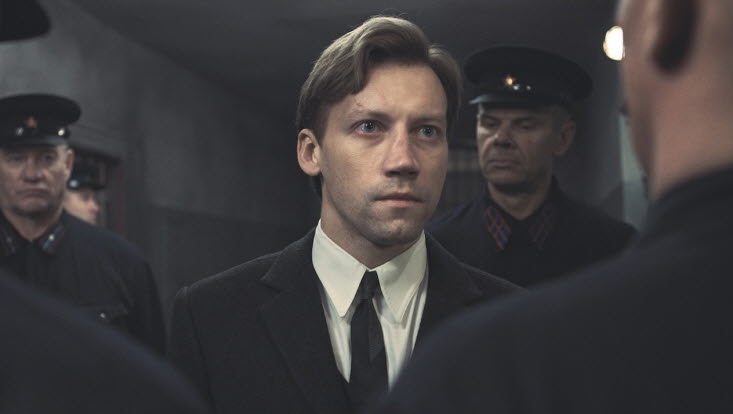
I found myself overwhelmed by the gradual sense of grim inevitability in “Two Prosecutors”, a moody but undeniably captivating historical drama film from Ukrainian filmmaker Sergei Loznitsa. Once its idealistic hero crosses the line at one point, we can instantly sense that his cruel and ruthless system will not ignore this at all, and we come to brace ourselves more as observing how thoroughly the system works against him to the end.
The story is set in the middle of Joseph Stalin’s Great Purge in the Soviet Union, 1937, and the opening part of the film phlegmatically observes another usual day in a prison of one rural region. We see a small group of prisoners forced to do some labor inside the prison, and then the movie focuses on one prisoner assigned to destroy all those desperate letters of petition written by numerous prisoners. At first, he just reads them a bit and then throws them into a little stove, but then one particular letter comes to draw his attention. In the end, he decides to send it to the office of the local prosecution as intended by its writer, though he can be severely punished for this serious act of violation.
Some days later, a young prosecutor named Kornyev (Aleksandr Kuznetsov) comes to the prison. He simply wants to have an interview with the prisoner who wrote that letter, but, not so surprisingly, he soon finds himself against the wall in one way or another. When he meets a prison warden, it is clear that the prison warden does not welcome Kornyev a lot, but Kornyev doggedly insists that he must be allowed to meet that prisoner in question. After patiently waiting for next several hours, he eventually gets the permission from the prison director, who is also not so pleased about Kornyev disrupting the usual order in his prison.
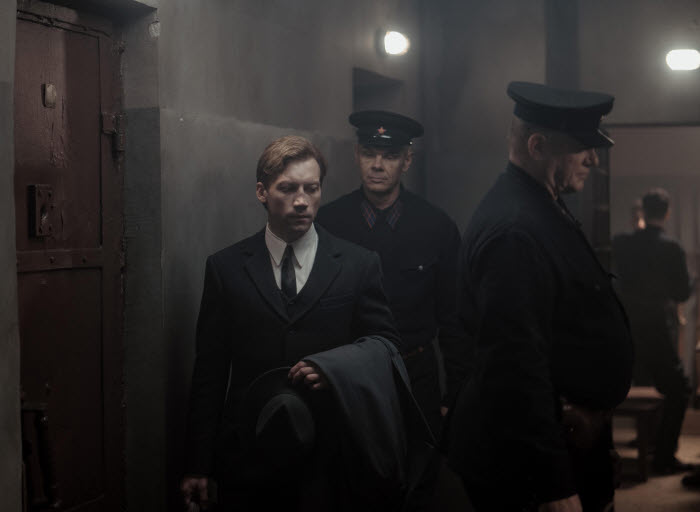
As Kornyev goes to meet that prisoner in question, the movie brings an increasingly palpable sense of oppression to the screen. As he follows the prison warden from one drab area of heavy security to another, we somehow feel like descending along several levels of hell (Why am I now reminded of that similar scene in “The Silence of the Lambs” (1991)?), and then we are more frightened as observing the truly ghastly condition of a cell where that prisoner in question has been incarcerated for a while.
Nevertheless, Kornyev is still willing to listen to this prisoner, mainly because of a little old connection between them. Before getting incarcerated in the prison, Stepniak (Aleksandr Filippenko) was a prominent elder member of the Soviet communist party, but then he was purged by the Soviet secret police, NKVD, just because he chose to do the right things against NKVD and its corrupt local associates.
Their conversation in the cell takes much longer than expected, but Loznitsa and his crew members including cinematographer Oleg Mutu, a Romania cinematographer who has been known for his considerable contribution to Cristian Mungiu’s several acclaimed films such as “4 Months, 3 Weeks and 2 Days” (2007) and has also steadily collaborated with Loznitsa since Loznitsa’ first feature film “My Joy” (2010), and editor Danielius Kokanauskis constantly keep us on the edge. Although the movie simply shows Stepniak telling a lot about how he got arrested, tortured, and then incarcerated, we come to sense the sheer evil and horror of the Great Purge, and we naturally gasp when Stepniak fully shows how his body has been brutalized by those NKVD agents.
Needless to say, Kornyev is quite horrified by what Stepniak shows and tells him, but we know too well that he was already marked by not only NKVD but also the system he has faithfully served without any doubt. At least, he knows that there is no one to help around him right now, so he instantly goes to Moscow for meeting the Procurator General of the Soviet Union in person, but then, not so surprisingly, he gets frustrated again as facing the firm and uncaring bureaucratic attitude of his system.
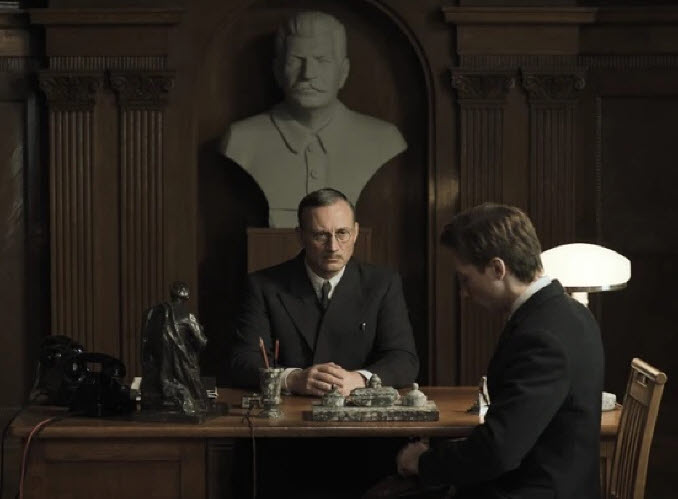
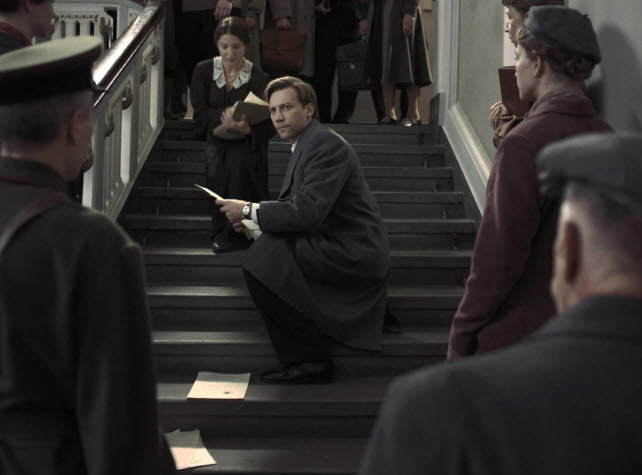
Again, the movie takes time for letting us get its big dark picture much more than its idealistic hero. There is a humorous scene where an old, disabled World War I veteran tells his old story involved with Vladimir Lenin in front of Kornyev and several other train passengers, and we cannot help but sense whatever is left unsaid among them for good reasons. We are initially amused when Kornyev has to wait a lot before the Procurator General finishes the meetings with many other people waiting for him in advance, but then we get slowly unnerved when Kornyev finally meets the Procurator General and then tells everything.
What eventually happens at the end of the story may not surprise you that much, but the movie, which is based on the novella of the same name by Russian novelist Georgy Demidov, continues to hold our attention before arriving its coldly logical finale, and its main cast members are convincing in their respective parts. While Aleksandr Kuznetsov’s earnest performance dutifully holds the center as required, Aleksandr Filippenko is splendid in both of his two crucial roles (You will be surprised when you check the end credits later), and Anatoliy Beliy is suitably unflappable as the Procurator General.
Overall, “Two Prosecutors”, which won the François Chalais Prize when it was premiered at the Cannes Film Festival early in last year, is another interesting work from Loznitsa, who drew my attention with his previous film “Donbass” (2018) several years ago. While I just admired “Donbass” to some degree, “Two Prosecutors” engaged me from the very beginning and then chilled me a lot in the end, and I may look back on this grim but unforgettable experience when I make my inconsequential annual movie list at the end of this year.


 Seongyong's Private Place