
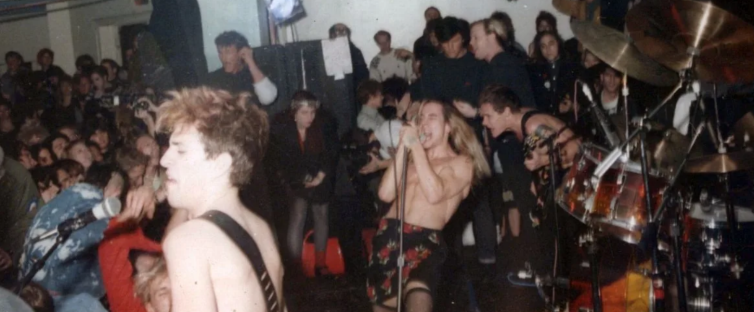
Netflix documentary “The Rise of the Red Hot Chilli Peppers: Our Brother, Hillel”, which was released a few weeks ago, focuses on the early years of the Red Hot Chili Peppers. Because I only know a bit about the Red Hot Chili Peppers, I wish the documentary could delve more into the long and bumpy career of the band, but its works as a sincere tribute to one of its key members at least.
That key member of the band in question is Hillel Slovak (1962 –1988), and the early part of the documentary shows and tells us how he and his two bandmates Anthony Kiedis and Flea became close friends during the late 1970s in LA. As they frankly admit during their respective interviews, both Kiedis and Flea were your typical young and wild adolescent troublemakers during that time, and then they were drawn to music more when they saw a performance by Slovak and his modest rock band at their high school. Not long after that, they came across Slovak by sheer coincidence, and they and Slovak came to spend more time together after that accidental encounter.
Around the time when they all managed to graduate from their high school, these three young dudes aspired to earn their living as rock musicians, and Slovak came to help Kiedis and Flea to considerable degree. Slovak suggested that Flea should join his band as a new bassist, and, though he did not know much about how to play a bass from the beginning, Flea managed to rise to the occasion in the end, and that was one of the early career highlights for him, though he later left the band for a while to Slovak’s disappointment.
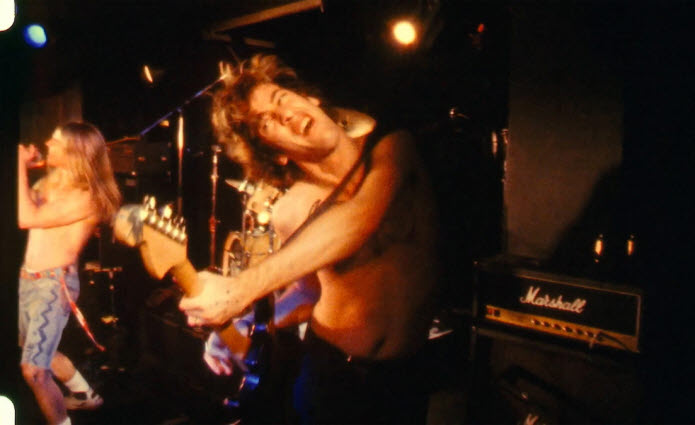
In case of Kiedis, he subsequently joined as the lyricist/singer for Flea and Slovak when Flea and Slovak came to work together again some time later, and, what do you know, he turned out to be a lot better than they expected. Once these three dudes clicked together on the stage, they all felt something special created among them, and this eventually led to the formation of the Red Hot Chili Peppers in 1982.
The band were luckily at the right time and the right place. Besides being influenced a lot by the flux of many different music genres including rock and hip hop during that time, the band was also boosted to a considerable degree by those music popular music videos on MTV, and they also received considerable influences from the bold and striking works of their performance artist friend Gary Allen, who encouraged them not to be afraid of expressing themselves more on the stage.
However, Slovak remained loyal to his old band, and both Flea and Kiedis understood that, but they all came to realize that their collaboration is the key to the success of the Red Hot Chili Peppers. While Flea and Kiedis were dissatisfied as trying to go on with their band without Slovak, Slovak also came to miss working with them, and he eventually returned to the band to his two close friends’ delight.
After that point, their band went up and up during next several years, but there was a big problem they had overlooked for years. They often abused drugs just for extra fun and excitement, and Kiedis and Slovak came to experience many bottoms of addiction. At one point, Kiedis became so drugged that he did not prepare at all when he came to a recording studio where others were waiting for him, and that was the first time when he realized that he did have a problem to deal with right now.
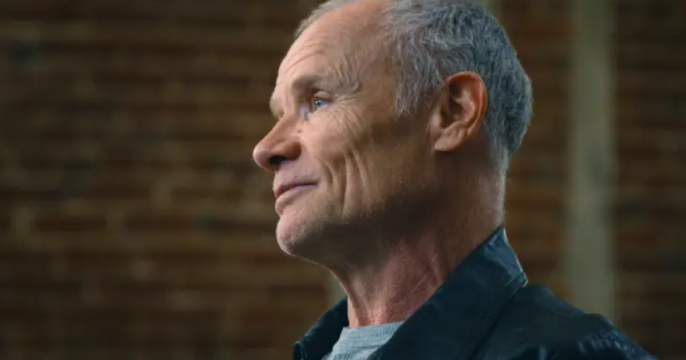
While Kiedis subsequently began his difficult journey toward sobriety, Slovak thought he could get things under control, but, of course, that did not work well at all for others around him as well as himself. While His girlfriend started to notice more and more of his worsening addiction problem, his other band members also became more alarmed about what was happening to him, and there eventually came a very embarrassing moment when his addiction problem seriously jeopardized their band career.
Via a number of drawings and writings from Slovak during that time, the documentary lets us sense a bit of how much he was troubled by his addiction problem. He knew well what was eating him, but he kept struggling without any improvement, and he unfortunately died in 1988. His friends and family members were certainly devastated by his early death, and Flea and Kiedis cannot help but become emotional as remembering that sad moment of theirs.
Both Kiedis and Flea tried to fill the empty spot left by their friend as much as possible, and, fortunately, they got a man talented enough to do the job. Although he soon came to see that he would never replace Slovak, John Frusciante did his best while also doing his own stuffs, and he remains active with Kiedis and Flea in the band even at his point.
On the whole, “The Rise of the Red Hot Chili Peppers: Our Brother, Hillel”, directed by Ben Feldman, is no more than a standard musician documentary, but it handles its main subject with enough care and respect at least. Although it falters a bit during the last 10 minutes (Frusciante’s interview clips feel like an afterthought at the last minute, for example), the documentary entertained me in addition to informing me enough on its main subject, and I guess that is enough for recommendation.


 Seongyong's Private Place