
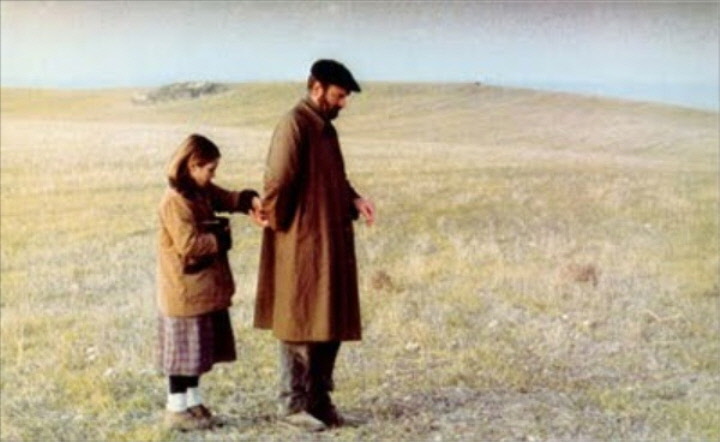
Víctor Erice’s 1983 film “El Sur”, whose 4k remastered version was recently released in South Korean theaters, is a simple but undeniably powerful coming-of-age drama to admire and savor. While it is relatively more forthright in terms of storytelling compared to Erice’s previous film “The Spirit of the Beehives” (1972), the movie is also filled with delicate mood and touches to be cherished from the beginning to the end, and the result is often poignant as we come to sense more of its heroine’s attempt to have more understanding on the adamantly elusive sides of her dear father.
After the opening scene where the young heroine of the story comes to learn about the tragic end of her father, the movie, which is set in Spain during the 1950s, moves backward to 7 years ago, and its narrator, who is the older heroine recollecting about all those memories between her and her father during that period, gives us some background information on her family. As left-wing intellectuals, both of her parents were scarred in one way or another by the Spanish Civil War during the 1930s, but they eventually settled in a northern area of Spain as your average middle-class family not long after their daughter was born, and their daughter, Estrella (Sonsoles Aranguren), grew up happily under their loving care and attention.
However, Estrella began to notice something odd about her father despite being only 8 years old, and the movie freely flows from one personal memory of hers from another. Whenever he comes back from his medical job, her father usually spends a lot of time in his little private place in the attic of the family house, and her mother emphasizes to Estrella that she should not disrupt whatever he is doing inside that place. While this surely baffles her a lot, Estrella still looks up to her father as watching him a bit of dowsing for local farmers via a supposedly special talent of his, and he gladly shows her a bit of how he can do that with a little pendulum belonging to him.
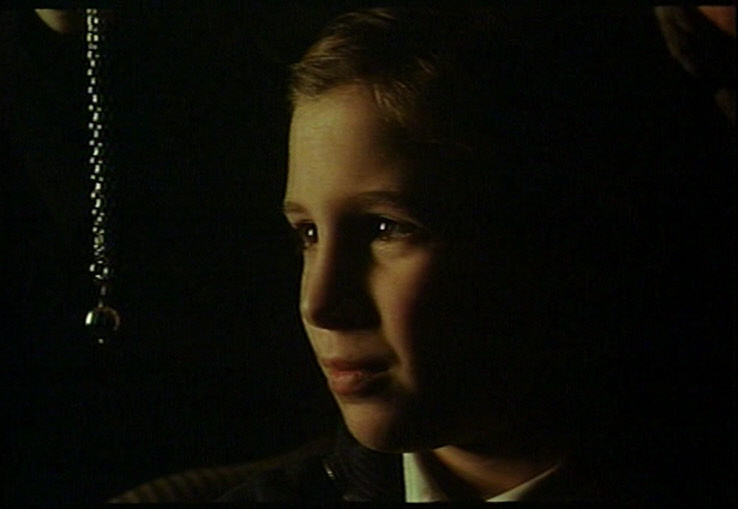
When her father’s mother and nanny visit for her First Communion, Estrella comes to learn a bit more about her father’s past. He and his family lived in a southern region of Spain around the time of the Spanish Civil War (The title of the movie means “the South” in Spanish, by the way), and he and his father, who incidentally passed away some time ago, were not so close to each other due to the difference in their respective political views. In the end, Estella’s father left his hometown once for all, and he still does not want to go back there even though he is clearly pleased to see his mother and nanny again after so many years.
As becoming all the more curious about her father’s past, Estrella comes to learn that there is actually something more behind his back. It seems that her father has some old feelings toward someone in his past, and it does not take much time for Estrella to sense that this figure in question remains as an inconvenient fact beneath her parents’ married life, though she does not dare to ask any question to either of her parents.
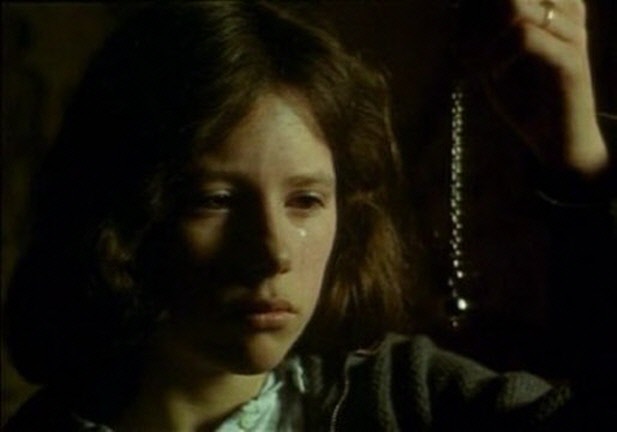
Even after she grows up a bit more to become a teenager, Estrella, who is now played by Icíar Bollaín, often feels frustrated about the remaining gap between her and her father, who is quite caring as before but is also still not so willing to talk about his past. At one point later in the story, there comes a moment when he and his daughter can have a more honest conversation, but then he steps back at the last minute, and he eventually becomes more elusive to his daughter to her sad disappointment.
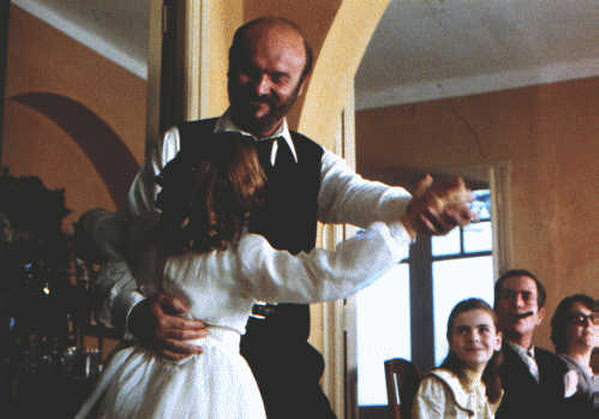
The movie, which is based on the novella of the same name by Adelaida García Morales, is actually the first half of what Erice envisioned at first. Although Erice was reportedly not very satisfied with the result, the movie is still often captivating for its sensitive handling of mood, story, and character, and it is interesting to observe that how much it is connected with “The Spirit of the Beehives” in many aspects. Although it is relatively less magical and ambiguous than “The Spirit of the Beehives”, the movie distinguishes itself a lot with its somberly poetic atmosphere just like that film, and cinematographer José Luis Alcaine provides a number of lovely visual moments which will instantly remind you of that striking chiaroscuro of the paintings of Johannes Vermeer.
As the unadorned emotional center of the film, young performers Sonsoles Aranguren and Icíar Bollaín are flawlessly connected along the story. While Aranguren carries the first two acts with her fetching presence, Bollaín is equally effective in several key scenes of hers during the last part of the film, and they are also supported well by several adult performers including Lola Cardona, Rafaela Aparicio, and Omero Antonutti, who fills his rather elusive character with enough human quality to observe and interpret.
On the whole, “El Sur” is inherently imperfect, but it is still worthwhile to watch for many good reasons besides being one of the only three feature films in Erice’s long but sparse filmmaking career. Compared to the greatness of “The Spirit of the Beehive” or “Close Your Eyes” (2023), it feels like a minor work at times, but there is a clear thematic connection between the movie and a group of subsequent films ranging from Kasi Lemmons’ “Eve’s Bayou” (1997) to Charlotte Wells’ “Aftersun” (2022), and I am sure that its status will grow more in the future as getting more discovered and then recognized.


 Seongyong's Private Place