
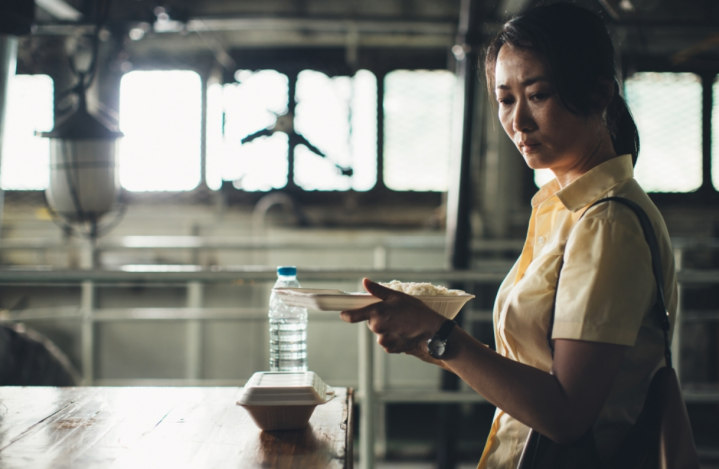
Jia Zhangke’s latest film “Caught by the Tides” is a modest but precious time capsule to be appreciated for many good reasons. Mainly consisting of what he shot for around 20 years, the movie works as a dry but fascinating collage vividly oscillating between fiction and nonfiction, and I was often captivated by that during my viewing, though I also often felt that I did not fully grasp the efforts and skills behind the screen.
Around the 2000s, I was just a young movie fan learning about many different master filmmakers of past and present, and I must confess that Jia was a rather distant figure to me during that time. Sure, I heard about his several notable works such as “Still Life” (2006), but I never got the chance to watch his films during that time, and I only became more aware of him when I watched “A Touch of Sin” (2013) in early 2014. I merely admired that film and his next film “Mountains May Depart” (2015), but then I was impressed more by “Ash Is the Purest White” (2018), which was definitely one of the best films I watched in 2019.
As all of you know too well, the COVID-19 pandemic followed early in the very next year, and that was one of the main factors to motivate Jia to make “Caught by the Tides”. He had already considered making a feature film out of what he had shot with his digital cameras for more than 10 years, but, as getting isolated due to the ongoing pandemic, he eventually embarked on the production of the movie, and he and his three editors, Yang Chao, Xudong Lin, and Matthieu Laclau, went through an extensive process to assemble something coherent from a heap of raw materials stored by him.
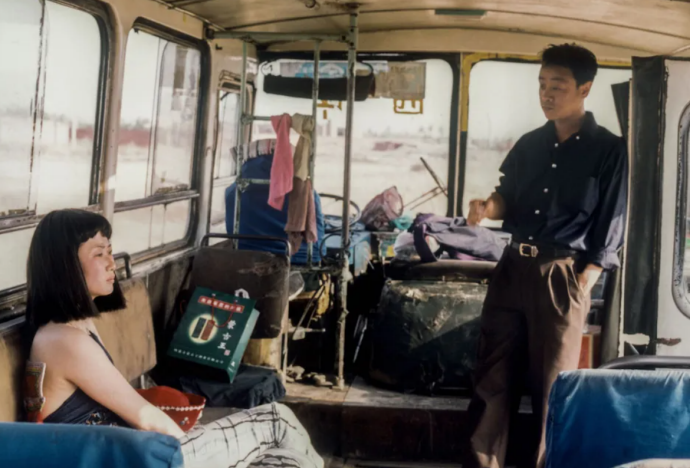
A considerable portion of the movie comes from what Jia shot here and there in a northern Chinese city which was the main background of “Unknown Pleasures” (2002) and “Ash Is Purest White” (2018). At the beginning, we see a footage clip of a group of middle-aged ladies having a pleasant private conversation together, and the mood is brightened up a bit when some of them sing later.
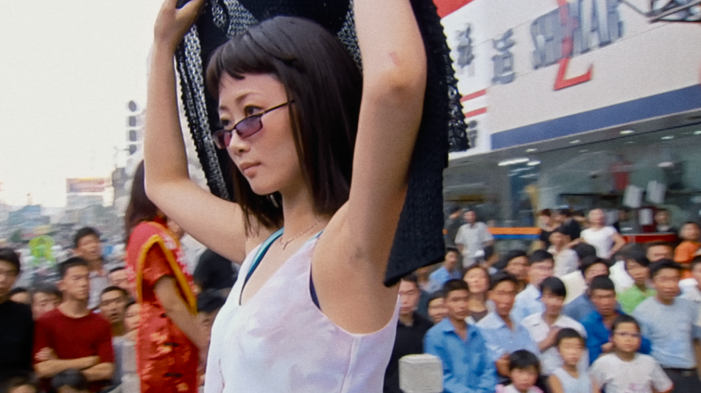
In the next crucial scene in the film, we see a big town hall where young women often sing in front of many workers for earning their meager living. A man explains a bit about how he has managed this public place, and then the movie moves onto the scenes from “Unknown Pleasures”, which are clearly based on what Jia learned and observed during the preparation process for that film.
And we cannot help but notice how young the leading actress Zhao Tao, who is incidentally married to Jia, was at that time. Her character in that film gradually becomes the human center of “Caught by the Tides”, and then the movie continues this character’s story via the excerpts from “Still Life” and “Ash Is the Purest White”. Even though she certainly got older along the passage of time, Zhao ably exudes her own grace and dignity without showing off herself at all, and you will understand why she has been an important professional partner to her husband for many years, as much as Gina Rowlands to her legendary filmmaker husband John Cassavetes.
Meanwhile, those raw archival footage clips from Jia in the film remind us of how things have changed in the Chinese society during last two decades. As the Chinese society went through a lot of development and advance, this caused a lot of social gap and inequality, and that is particularly exemplified well by the construction of the Three Gorges Dam and the following environmental changes upon many local communities. Jia simply presents this rather alarming reality without signifying anything on the surface, but you may sense a bit of his concern behind that.
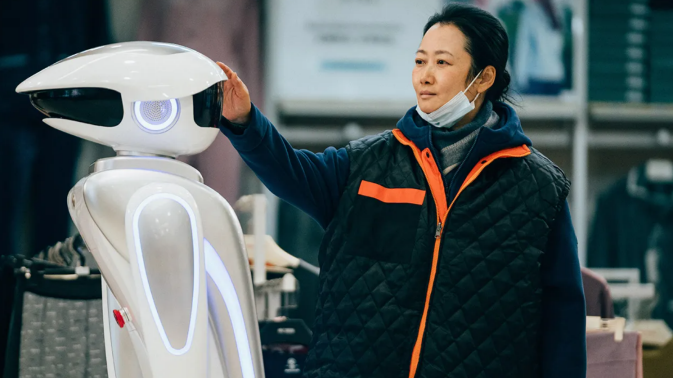
During its last act, the movie leans more toward fiction as mainly driven by what Jia and his crew shot during the pandemic, but this part is effortlessly connected with what has been steadily built up during the rest of the film. Whenever the movie shows some contemporary elements such as an AI robot, the passage of time feels all the more palpable to us, and Zhao steadily carries the film as usual.
At one point, Zhao’s character happens to come across one of the main characters from “Unknown Pleasures”, who is incidentally played the same actor who played that character. Although nothing much is exchanged between these two characters at first, but the following moment between them is quite poignant to say the least, and I will let you see for yourself how the movie touches you more with a sublime finishing touch to behold.
In conclusion, “Caught by the Tides” may require you to do some homework in advance for fully appreciating what Jia attempts to achieve and then succeeds, but it is surely another interesting work to be added to his long and illustrious filmmaking career. Even after 20 years, many of his works remain to be a sort of an acquired taste to me, but some of them have actually grown on me since I watched them, and I wholly agree with many other reviewers and critics that he is one of the best filmmakers in our time. Yes, it will demand you to have some patience just like all of his previous films, but I assure you that it will be a rewarding experience to linger on your mind for a long time.


 Seongyong's Private Place