
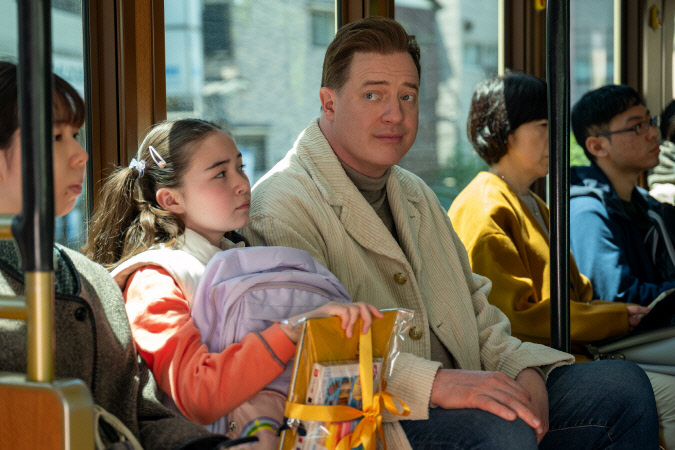
“Rental Family” draws your attention first with its curious story subject and then touches you more than expected. Inspired by a rather odd type of real-life service business in the Japanese society (Werner Herzog’s 2019 film “Family Romance, LLC” already tackled this fascinating subject, by the way), the movie subtly swings between humor and drama along with its American hero, and you will find yourself alternatively amused and moved in the end.
Brendan Fraser, who recently made a big comeback thanks to his Oscar-winning turn in Darren Aronofsky’s “The Whale” (2022), plays Phillip Vanderploeg, a struggling American actor currently living in Tokyo. Several years ago, Phillip got a supposedly big break thanks to a fairly popular local toothpaste commercial, but his acting career in Japan has been going nowhere since that, and he cannot say no when he gets hired for a mock funeral where he has to play one of its mourners.
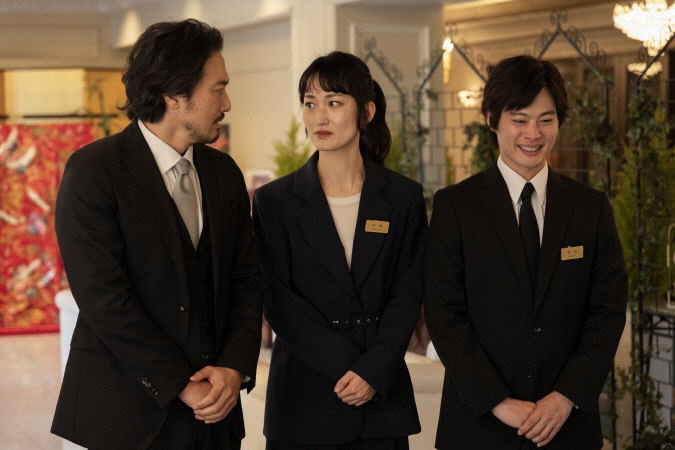
Phillip is later approached by a guy named Shinji (Takehiro Hira), who turns out to be the owner of a small company specializing in certain kinds of emotion service. His employees are usually hired to play stand-in friends or family members for his various clients out there, and Shinji thinks Phillip can be perfect for playing a “token white guy” for many of his potential clients.
Phillip naturally hesitates at first, but, after his rather difficult first job involved with a young lesbian woman who needs to have a fake wedding for her parents, he soon gets accustomed to whatever is required by his next roles to play. For example, he gladly plays a father for a young half-Japanese girl living with her single mother, and he also plays a journalist to visit and interview an old, retired actor whose senile mind has been fading day by day.
While clearly recognizing the inherent artificial aspects of what Phillip and his several new colleagues do for their clients, the movie gradually delves into their feelings and thoughts beneath the surface. As spending more time with that young half-Japanese girl as required, Phillip comes to care a lot more about her than expected, and it does not take much for his client to notice the growing emotional bond between him and her daughter. Because he is only supposed to be around her and her daughter for only a few weeks, she is naturally quite concerned, though she still needs more service from Phillip for helping her daughter get enrolled in some prestigious private school.
In case of Aiko (Mari Yamamoto), she often handles a very tricky kind of emotion service. Her adulterous male clients hire her as a stand-in mistress to apologize to their wives, and she sometimes must endure the anger and pain from their betrayed wives. She seems fine as long as she gets paid a bit more for her occupational hazard, but it goes without saying that she does not feel that right about what she has done for those cheating husbands.
Later in the story, our hero comes to cross the line to a serious degree just because he cares about one of his clients a bit too much, but the screenplay by director/co-producer Hikari and her co-writer Stephen Blahut steadily balances itself with calm sensitivity and non-judgmental attitude. What Phillip and his colleagues provide is basically lies, but their service of emotion feels real and authentic to their clients for a while at least, and this will make you reflect more on how we sometimes let us led by whatever our heart and mind want to believe instead of facing truth.
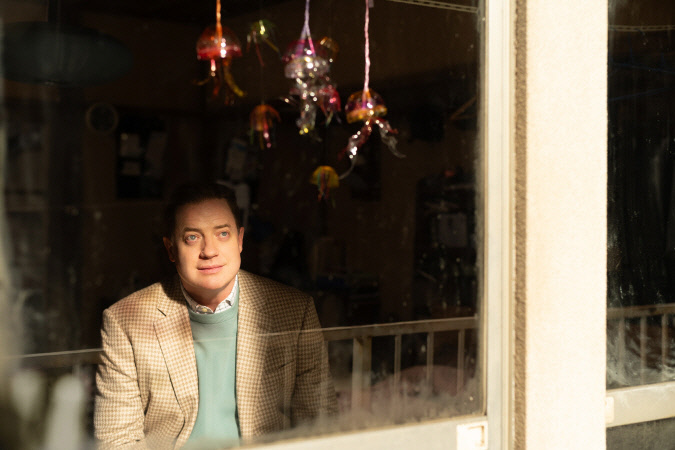
The movie surely depends a lot on the presence and talent of Fraser, who gives another good performance which is actually more interesting than his acclaimed acting in “The Whale”. While the latter often stumbles rather than elevating his committed performance, the former sets well the ground for the human details and nuances to be exuded from his low-key acting, and Fraser is particularly wonderful when his character must stay professional as much as possible during one somber but undeniably emotional scene later in the story.
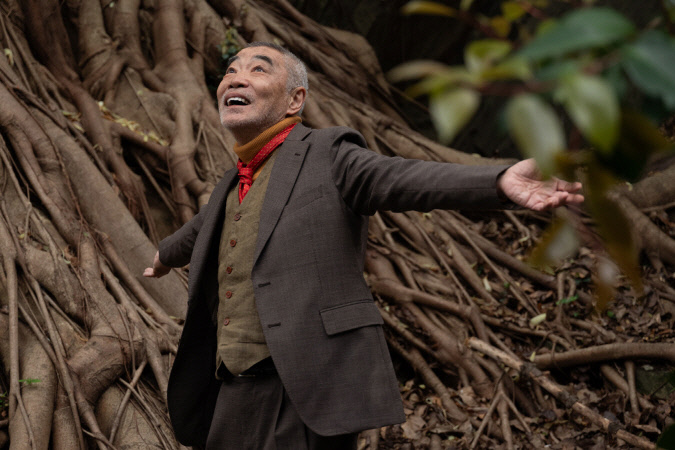
Around Fraser, several main cast members in the film diligently hold each own place. Takehiro Hira, who has been more notable thanks to his Emmy-nominated turn in the first season of acclaimed TV drama series “Shōgun”, has his own good moment when his character is revealed to be as lonely as Phillip, and Mari Yamamoto, Shino Shinozaki, and Kimura Bun are also solid in their respective supporting parts. While Akira Emoto, a veteran actor who has appeared in a number of notable Japanese films such as Hideaki Anno and Shinji Higuchi’s “Shin Godzilla” (2016) and Hirokazu Kore-eda’s “Shoplifters” (2018), is poignant as his character comes to rely much more on Fraser’s character than expected, young performer Shannon Mahina Gorman naturally steals the show with her unadorned natural performance, and she also effortlessly clicks well with Fraser during their several key scenes.
Overall, “Rental Family”, which is the second feature film from Hikari (She previously made a feature film debut with “37 Seconds” (2019), by the way), is a modest but powerful drama about human emotion and connection, and I admire the gentle and thoughtful handling of its story and characters. In my inconsequential opinion, this is one of the overlooked small gems from last year, and, considering Hikari’s considerable achievement here in this film, it will be interesting to see what may come next from her in the future.


 Seongyong's Private Place